1. Introduction and History
The 0C3 is a cold-cathode voltage regulator tube that represents a significant development in vacuum tube technology for precision voltage regulation applications. Also known by its military designation VR105, the 0C3 emerged during the mid-20th century as engineers sought reliable methods to stabilize power supply voltages in electronic equipment.
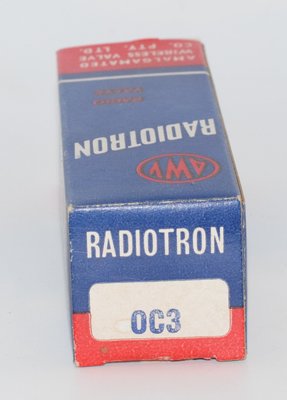
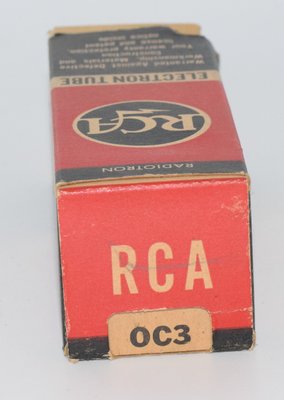
The tube was developed during an era when solid-state voltage regulation was not yet practical or economical. Manufacturers including RCA and Radiotron (AWV) produced the 0C3, with many examples still available as New Old Stock (NOS) tubes today. The 0C3 gained particular prominence in high-fidelity audio equipment, where its voltage regulation properties contributed to improved audio performance and equipment longevity.
The cold-cathode design represents a unique approach to regulation, differing fundamentally from heated-cathode tubes. This technology became standard in premium audio equipment throughout the 1950s and 1960s, and continues to be valued by audio enthusiasts and professionals who appreciate its sonic characteristics and reliability.
2. Technical Specifications and Design
Basic Parameters:
- Tube Type: Cold-cathode voltage regulator
- Nominal Regulation Voltage: 105V (±5V typical)
- Maximum Current Rating: 40-50 mA
- Minimum Current Rating: 5 mA
- Input Voltage Range: 115V to 165V DC
- Regulation Impedance: Approximately 500-800 ohms
- Filament/Heater: None (cold-cathode operation)
Physical Characteristics:
The 0C3 features a compact octal (8-pin) base design, measuring approximately 2.5 inches (6.4 cm) in height. The tube contains a cylindrical cold cathode and a central anode within a glass envelope filled with neon gas at low pressure. The absence of a heater filament simplifies circuit design and reduces power consumption compared to heated-cathode regulators.
Operating Principles:
The 0C3 operates through gas ionization rather than thermionic emission. When voltage is applied across the cathode-anode gap, the neon gas ionizes, creating a conductive plasma. The ionization voltage (strike voltage) is approximately 105V, and once ionized, the tube maintains a relatively constant voltage drop across its terminals regardless of current variations within its operating range. This property makes it an excellent voltage regulator.
The tube exhibits a negative resistance characteristic in its operating region, meaning that as current increases, the voltage drop slightly decreases. This inherent regulation property requires minimal additional circuitry for effective operation. The regulation improves with higher input voltages and becomes less effective near the minimum current rating.
Pin Configuration (Octal Base):
- Pin 1: Cathode (-)
- Pin 2: Anode (+)
- Pins 3-8: Typically unused or shield connections
3. Applications and Usage
Historical Applications:
The 0C3 was originally designed for precision voltage regulation in industrial and military equipment, laboratory instruments, and early computer systems. Its stable regulation characteristics made it ideal for applications requiring voltage reference standards. The tube was particularly valued in radar systems, test equipment, and communication devices where reliable voltage regulation was critical.
Audio Equipment Applications:
In audio amplifiers and preamplifiers, the 0C3 serves multiple critical functions. Most commonly, it regulates the B+ (high voltage) supply that powers output tubes and driver stages. By maintaining stable supply voltage, the 0C3 improves amplifier stability, reduces hum and noise, and extends the operational life of power tubes. Premium tube amplifiers from manufacturers like Marantz, McIntosh, and Audio Research often featured 0C3 regulation in their power supplies.
The tube is also employed in high-voltage power supplies for preamplifiers, where it regulates the voltage for early stages and small-signal tubes. This application demonstrates particular sonic benefits, as the 0C3's regulation helps minimize power supply-induced noise and distortion that can degrade audio quality.
Voltage Regulation Circuit Design:
A typical 0C3 application uses a series resistor between the higher input voltage and the tube. The tube conducts current through this resistor, maintaining its characteristic 105V drop. Load current is drawn in parallel with the tube, and the tube's negative resistance characteristic compensates for load variations. The series resistor must be sized appropriately to ensure the tube current remains within the 5-50 mA operating range.
The regulation quality improves with higher input voltage margins. For example, a 150V input regulated to 105V provides better regulation than a 120V input to the same output. This characteristic influenced the design of tube amplifiers, with engineers often designing for higher B+ voltages to improve regulation performance.
4. Sound Characteristics in Audio Applications
Sonic Contributions:
Audio professionals and enthusiasts consistently report that well-functioning 0C3 tubes contribute to improved sound quality in tube amplifiers. The primary sonic benefits include:
Noise Floor Reduction: The 0C3's stable voltage regulation minimizes power supply ripple and noise that would otherwise modulate the audio signal. This results in a lower noise floor, allowing quieter passages in music to be heard with greater clarity. The effect is particularly noticeable in the absence of background hum or noise that can mask subtle musical details.
Improved Dynamics: By maintaining stable B+ voltage under varying current demands (as different tubes conduct different amounts of current during different musical passages), the 0C3 ensures that the amplifier's output remains consistent. This stability translates to more controlled and articulate bass response, more defined midrange, and cleaner high-frequency extension.
Reduced Distortion: A stable power supply voltage reduces nonlinear distortion components that arise from voltage fluctuations. This results in cleaner harmonic reproduction and more accurate tonal balance. The improvement is subtle but cumulative—the overall presentation becomes more refined and less fatiguing during extended listening sessions.
Enhanced Imaging and Soundstage: Some experienced listeners report that proper 0C3 regulation enhances stereo imaging and soundstage presentation. This likely results from improved signal-to-noise ratio and reduced intermodulation distortion between channels, allowing the amplifier to more accurately reproduce spatial information encoded in recordings.
Tube Quality Variations:
The sonic quality of a 0C3 depends significantly on its age, manufacturing origin, and storage conditions. NOS (New Old Stock) tubes, particularly examples from premium manufacturers like RCA, are highly sought after by audio enthusiasts. RCA 0C3 tubes are often considered superior in sonic performance, offering smoother regulation and lower noise characteristics compared to some alternatives.
Vintage tubes that have been stored properly in stable conditions typically perform better than tubes exposed to temperature fluctuations or humidity. Testing 0C3 tubes with a tube tester before installation is recommended, as tubes with marginal characteristics may not provide optimal sonic benefits.
Synergistic Effects:
The 0C3's sonic impact is synergistic with other tube quality factors. When used in an amplifier with quality output tubes, transformers, and capacitors, the 0C3's contribution to overall sound quality is more pronounced. In lower-quality amplifiers, the effect may be less noticeable but still beneficial.
5. Usage in the Audio Community
Restoration and Vintage Equipment:
The audio restoration community widely recognizes the importance of the 0C3 in maintaining proper amplifier function. When restoring vintage tube amplifiers, technicians often prioritize testing and potentially replacing the 0C3 tube, even if other components appear functional. A failing 0C3 can cause excessive B+ voltage that damages output tubes and transformers, making it a critical maintenance item.
Tube Rolling and Experimentation:
Audio enthusiasts engage in "tube rolling"—the practice of substituting different tube types to optimize sound quality. With the 0C3, rolling involves testing different manufacturers' versions (RCA, Radiotron, GE, Sylvania, etc.) to determine which provides the best sonic characteristics in a particular amplifier. Many audiophiles maintain collections of 0C3 tubes from different eras and manufacturers for comparison purposes.
Collector Value:
Quality NOS 0C3 tubes, particularly RCA and Radiotron examples, command significant prices in the vintage audio market. Collectors and audio enthusiasts recognize that original, functioning 0C3 tubes are essential for maintaining the sonic integrity of classic tube amplifiers. This has led to careful preservation of remaining NOS stock and increasing interest in tube testing and evaluation.
DIY Amplifier Design:
Contemporary DIY tube amplifier builders continue to incorporate 0C3 voltage regulation in new designs, appreciating both its sonic benefits and the design simplicity it offers. The tube's straightforward operation requires minimal additional circuitry, making it attractive for hobbyists and small manufacturers producing high-end audio equipment.
Professional Audio Applications:
Professional mastering studios and high-end recording facilities often prefer tube amplifiers equipped with 0C3 regulation for their superior sonic characteristics. The tube's contribution to noise reduction and dynamic clarity makes it particularly valuable in critical listening environments where the highest audio fidelity is required.
Community Knowledge and Resources:
The audio community has developed extensive knowledge bases regarding 0C3 performance, testing, and selection. Online forums, tube amplifier manufacturer documentation, and audio enthusiast communities provide detailed information about identifying quality examples, testing procedures, and sonic characteristics. This collective knowledge has helped preserve expertise in tube technology as the community ages.
6. Equivalent or Substitute Types
Direct Equivalents:
- VR105: Military designation for the 0C3, functionally identical
- CV4013: British military equivalent with identical specifications
Similar Voltage Regulators:
- 0A2/VR80: Regulates at approximately 80V, used in lower-voltage applications
- 0B2/VR150: Regulates at approximately 150V, used where higher regulated voltage is required
- 0D3/VR200: Regulates at approximately 200V, for high-voltage applications
Substitution Considerations:
While other voltage regulator tubes exist, direct substitution of the 0C3 is limited to the VR105 and CV4013 equivalents. Using tubes with different regulation voltages (such as 0A2 or 0B2) requires circuit redesign and is not recommended as a direct replacement. The 105V regulation voltage of the 0C3 was specifically chosen for particular amplifier designs, and substitution with different regulation voltages will result in improper amplifier operation and potential component damage.
Solid-state voltage regulators can replace 0C3 tubes functionally, but audiophiles generally report that such replacements do not provide equivalent sonic performance. The tube's inherent characteristics contribute to the overall sound quality in ways that solid-state circuits cannot fully replicate.
7. Notable Characteristics
Reliability and Longevity:
The 0C3's cold-cathode design contributes to exceptional reliability and operational life. Without a heated filament, the tube experiences less thermal stress and typically outlasts heated-cathode tubes by a significant margin. Many NOS 0C3 tubes from the 1950s and 1960s remain fully functional today, testament to their robust design.
No Warm-up Time:
Unlike heated-cathode tubes, the 0C3 requires no warm-up period. It reaches full regulatory function instantly when voltage is applied. This characteristic makes it particularly suitable for equipment that must provide stable output immediately upon power-up.
Low Power Consumption:
The absence of a heater filament means the 0C3 consumes minimal power compared to heated-cathode regulators. This reduced power consumption also minimizes heat generation, contributing to improved equipment reliability and reduced thermal stress on surrounding components.
Compact Size:
The 0C3's small octal package allows it to fit easily into equipment designed with space constraints. This compactness, combined with its regulatory capability, made it ideal for portable and compact audio equipment designs.
Manufacturing Quality Variations:
Different manufacturers produced 0C3 tubes with varying quality levels. RCA tubes are generally considered superior, featuring tighter manufacturing tolerances and better long-term stability. Radiotron (AWV) tubes are also well-regarded. Tubes from other manufacturers may be functional but potentially exhibit higher noise levels or less precise regulation.
Testing and Verification:
Proper testing of 0C3 tubes requires specialized equipment capable of measuring gas-filled tube characteristics. Standard tube testers may not accurately assess 0C3 function, as they are designed primarily for heated-cathode tubes. Experienced technicians use specialized methods to verify regulation voltage and current characteristics.
Conclusion
The 0C3 vacuum tube represents a significant achievement in voltage regulation technology, combining elegant simplicity with reliable performance. Its cold-cathode design provides stable voltage regulation without complex additional circuitry, making it an ideal component for precision applications. In audio equipment, the 0C3 contributes meaningfully to sound quality through improved power supply stability, reduced noise, and enhanced dynamic performance.
For audio enthusiasts and professionals, understanding the 0C3's characteristics and proper application is essential for maintaining and optimizing tube amplifier performance. The continued demand for quality NOS 0C3 tubes reflects the audio community's recognition of their sonic and functional importance. Whether restoring classic amplifiers or designing new tube equipment, the 0C3 remains a valued component that bridges vintage audio technology with contemporary high-fidelity standards.