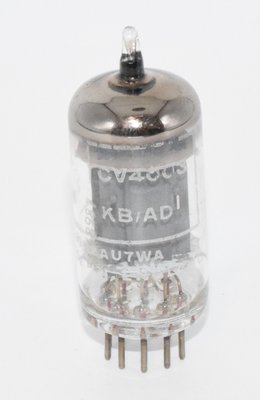
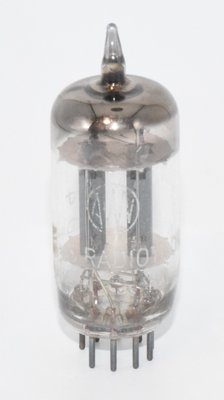
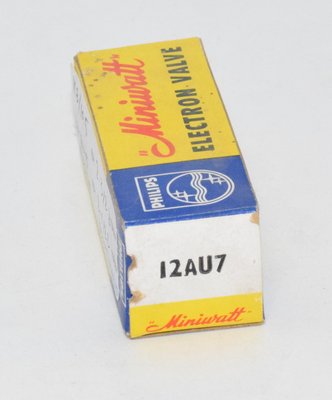
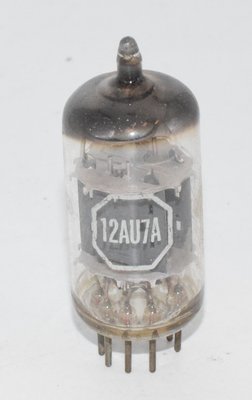
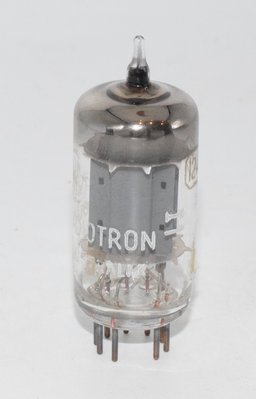
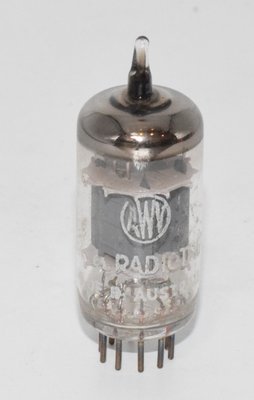
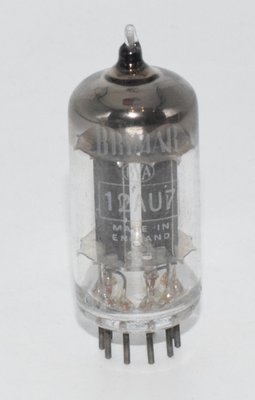
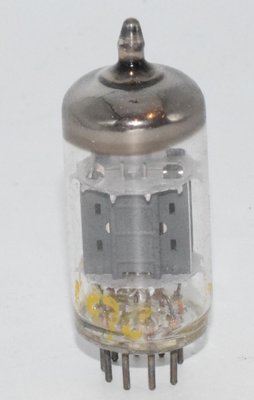
1. Introduction and History
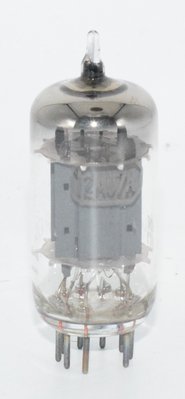
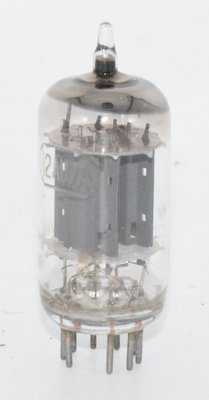
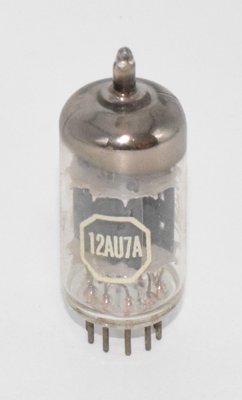
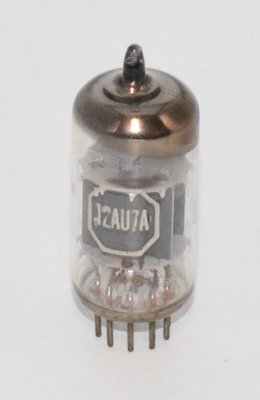
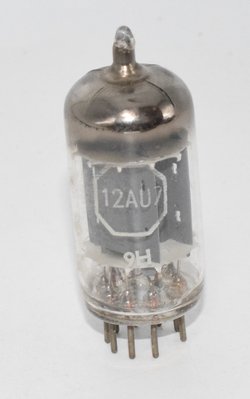
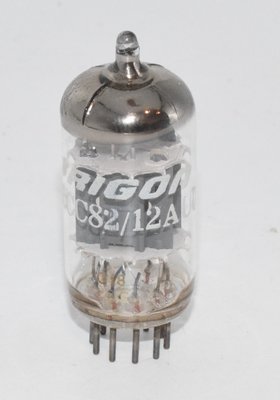
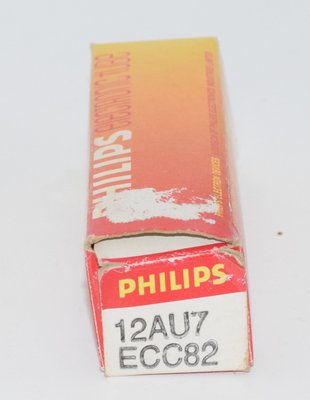
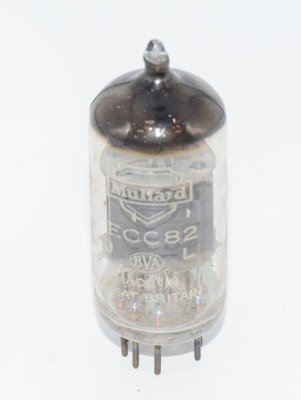
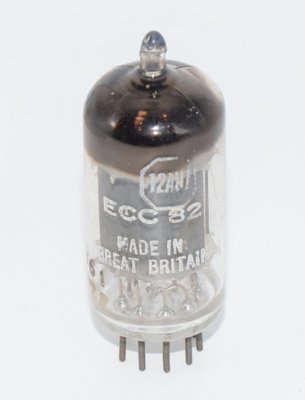
The 12AU7 is a miniature dual-triode vacuum tube (valve) that has earned its place as one of the most versatile and widely used signal tubes in audio electronics history. Designated ECC82 under the European Mullard–Philips naming convention, this tube was introduced in the late 1940s by RCA as part of the 12Axx family of dual triodes that also includes the 12AX7 (ECC83) and 12AT7 (ECC81). Together, these three tubes formed a comprehensive lineup of medium-mu (12AU7), high-mu (12AX7), and high-transconductance (12AT7) dual triodes sharing the same noval (B9A) base and heater arrangements.
The 12AU7 was developed to meet the growing demand for a reliable, low-cost dual triode suitable for a wide range of applications — from audio voltage amplification and phase splitting to oscillator and cathode follower circuits. Its moderate amplification factor (μ ≈ 17–20) and relatively low plate resistance made it uniquely suited for driving loads and serving as a buffer stage, roles where higher-mu tubes like the 12AX7 would be less effective.
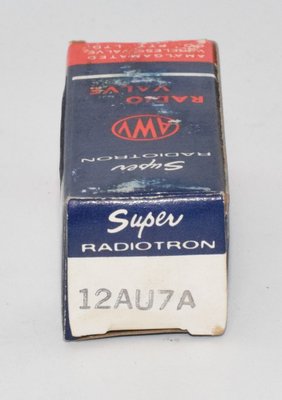
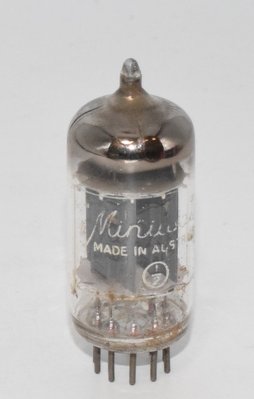
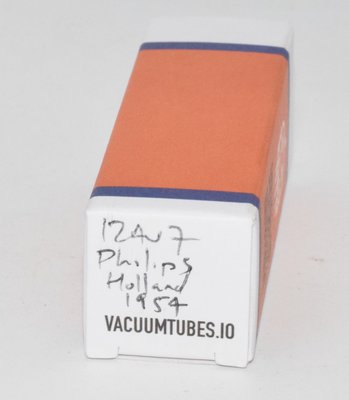
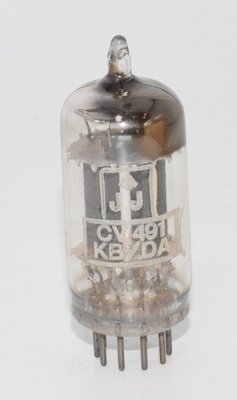
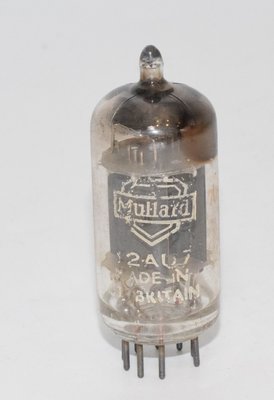
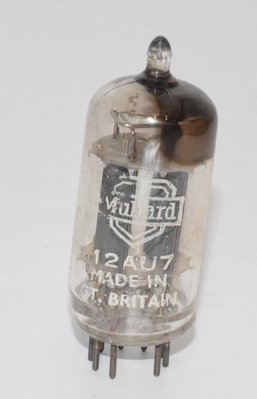
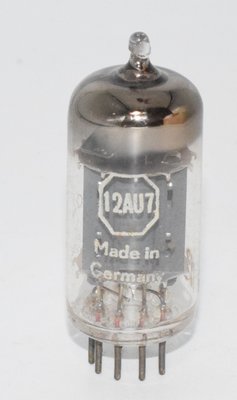
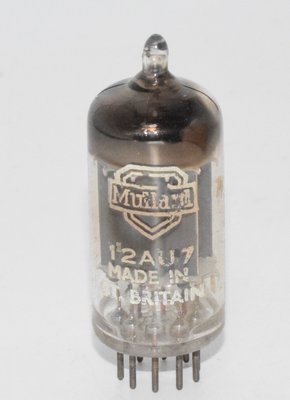
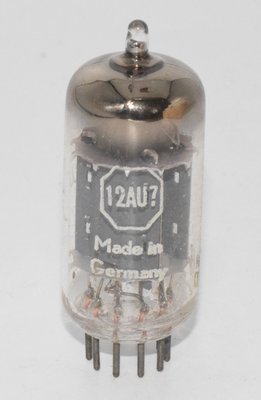
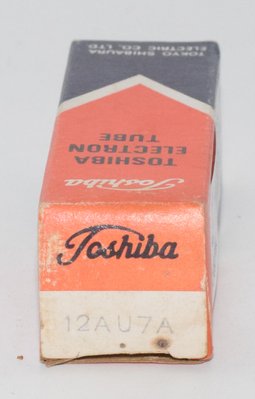
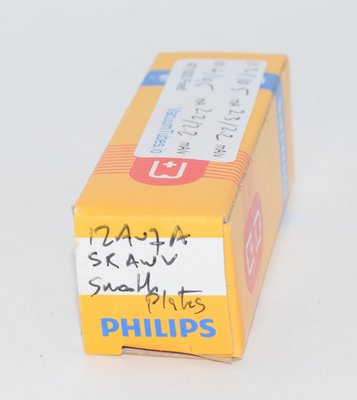
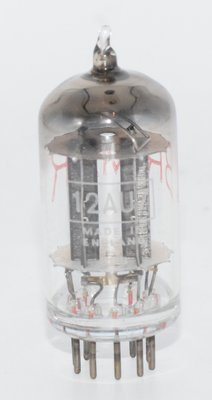
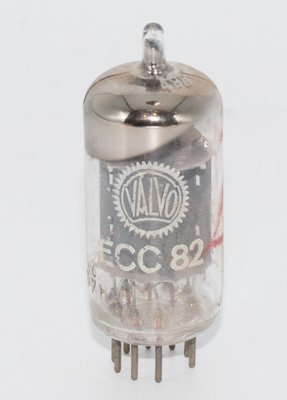
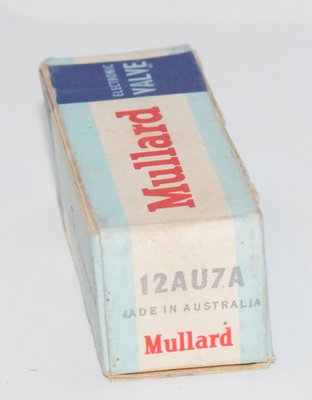
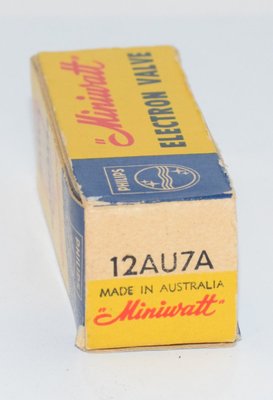
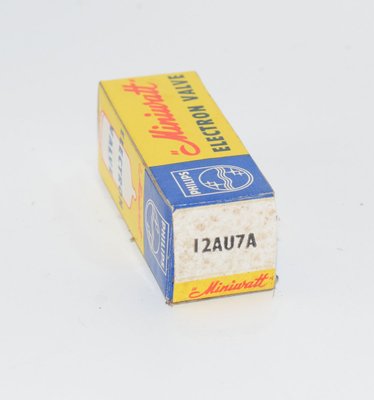
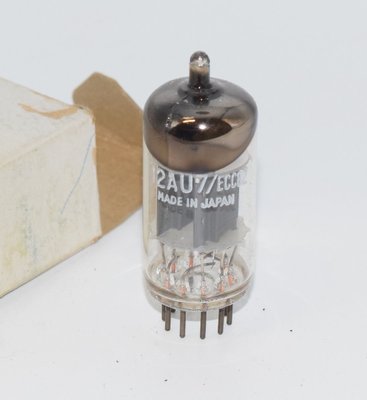
Throughout the 1950s and 1960s, the 12AU7 was manufactured by virtually every major tube producer worldwide. Notable manufacturers included RCA, GE, Sylvania, and Tung-Sol in the United States; Mullard (Blackburn, UK), Brimar (UK), Philips (Netherlands), and Valvo (Hamburg, Germany) in Europe; and Matsushita, Toshiba, and others in Japan. Philips Miniwatt branded tubes were also produced in Australia and India (through Bharat Electronics in Bangalore). The tube saw extensive military adoption under various CV (Common Valve) designations, attesting to its reliability and consistent performance.
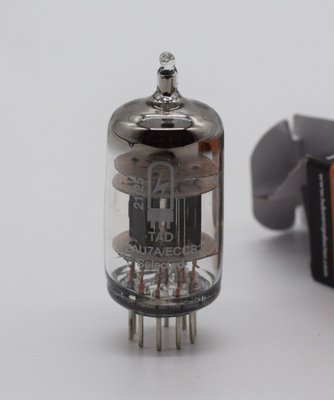
Today, the 12AU7 remains in active production from manufacturers such as JJ Electronic (Slovakia), Electro-Harmonix and Tung-Sol (New Sensor, Russia), Shuguang and Psvane (China), and others. It continues to be one of the most popular tubes in high-fidelity audio, headphone amplifiers, and guitar amplifiers, and NOS (New Old Stock) examples from premium manufacturers command significant prices among collectors and audiophiles.
2. Technical Specifications and Design
2.1 General Description
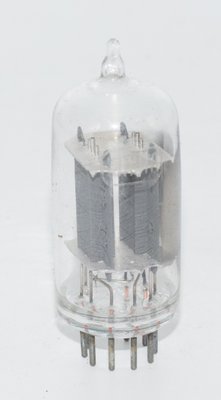
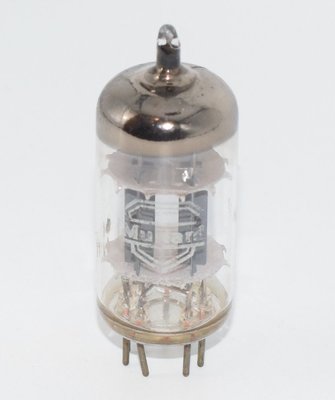
The 12AU7 is a medium-mu dual triode housed in a miniature glass envelope with a 9-pin noval (B9A) base. It contains two independent triode sections sharing a common cathode heater, which can be operated in either series (12.6V) or parallel (6.3V) configuration. The tube is designed for general-purpose amplification, phase inversion, and switching applications.
2.2 Heater Ratings
| Parameter | Value |
|---|---|
| Heater Voltage (parallel operation) | 6.3 V |
| Heater Current (parallel operation) | 0.3 A (150 mA per section) |
| Heater Voltage (series operation) | 12.6 V |
| Heater Current (series operation) | 0.15 A |
2.3 Maximum Ratings (Per Section)
| Parameter | Maximum Value |
|---|---|
| Maximum Plate Voltage (Va max) | 300 V |
| Maximum Plate Dissipation (Pa max) | 2.75 W |
| Maximum Cathode Current (Ik max) | 20 mA |
| Maximum Heater-Cathode Voltage (Vhk max) | 180 V |
2.4 Typical Operating Conditions and Characteristics
The 12AU7 exhibits different characteristics depending on the operating point. The following table presents verified data from manufacturer datasheets at four standard operating conditions:
| Parameter | Condition 1 | Condition 2 | Condition 3 | Condition 4 |
|---|---|---|---|---|
| Plate Voltage (Va) | 100 V | 170 V | 200 V | 250 V |
| Grid Voltage (Vg1) | 0 V | −4.0 V | −5.5 V | −8.5 V |
| Plate Current (Ia) | 11.8 mA | 10.0 mA | 11.0 mA | 10.5 mA |
| Plate Resistance (Ra / rp) | 6,250 Ω | 7,200 Ω | 7,200 Ω | 7,700 Ω |
| Transconductance (S / gm) | 3.2 mA/V | 2.5 mA/V | 2.5 mA/V | 2.2 mA/V |
| Amplification Factor (μ)* | ~20 | ~18 | ~18 | ~17 |
*Note: The amplification factor μ = gm × rp. The values shown are calculated from the verified gm and rp data. The 12AU7 is commonly characterized as having a μ of approximately 17–20, varying with operating point. The transconductance ranges from 2.2 mA/V (2,200 μmhos) at the 250V operating point up to 3.2 mA/V (3,200 μmhos) at the 100V operating point — it is important to note that no single value characterizes the tube across all conditions.
2.5 Physical Construction
| Parameter | Detail |
|---|---|
| Base Type | Noval (B9A) — 9-pin miniature |
| Envelope Type | Miniature glass (T-6½ typically) |
| Mounting Position | Any |
| Overall Length | Approximately 55–58 mm (varies by manufacturer) |
| Maximum Diameter | Approximately 22 mm |
2.6 Pin-Out (Bottom View)
        Pin 1 — Plate (Triode 1)
        Pin 2 — Grid (Triode 1)
        Pin 3 — Cathode (Triode 1)
        Pin 4 — Heater
        Pin 5 — Heater (center-tap for 6.3V operation)
        Pin 6 — Plate (Triode 2)
        Pin 7 — Grid (Triode 2)
        Pin 8 — Cathode (Triode 2)
        Pin 9 — Heater
For 6.3V parallel heater operation, pins 4 and 5 are connected together and fed 6.3V, with pin 9 as the return. For 12.6V series heater operation, pin 5 is left unconnected, and 12.6V is applied between pins 4 and 9. The internal shield (if present) is typically connected to pin 9.
3. Applications and Usage
The 12AU7's moderate gain, low plate resistance, and generous plate dissipation rating make it one of the most versatile dual triodes ever produced. Its principal applications include:
3.1 Audio Voltage Amplification
While the 12AU7 provides less voltage gain than the 12AX7 or 12AT7, its lower plate resistance and higher current capability make it an excellent choice for driving low-impedance loads. It is widely used in preamplifier stages where moderate gain with excellent linearity is required.
3.2 Phase Splitter / Phase Inverter
The 12AU7 is a classic choice for cathodyne (split-load) and long-tailed pair phase inverter circuits in push-pull amplifiers. Its balanced characteristics between the two triode sections and its ability to swing sufficient voltage make it ideal for driving power tube grids. Many legendary amplifier designs from McIntosh, Dynaco, Fisher, and Marantz used the 12AU7 in this role.
3.3 Cathode Follower / Buffer Stage
The tube's low plate resistance (6,250–7,700 Ω depending on operating point) makes it particularly effective as a cathode follower, providing low output impedance for driving cables, headphones, or subsequent stages. This is one of the 12AU7's most celebrated applications in high-fidelity audio.
3.4 Headphone Amplifiers
The 12AU7 has become the tube of choice for many headphone amplifier designs. Its ability to deliver up to 20 mA of cathode current per section and its relatively low output impedance in cathode follower configuration make it capable of directly driving many headphone types.
3.5 Line-Level Preamplifiers
Many high-end preamplifier designs use the 12AU7 for line-stage amplification, where its moderate gain prevents the need for excessive negative feedback and its low distortion characteristics are prized.
3.6 Oscillator Circuits
The 12AU7 was widely used in oscillator circuits in radio and television receivers, test equipment, and electronic organs. Its reliable operation and predictable characteristics made it a standard choice for these applications.
3.7 Guitar Amplifiers
In guitar amplifiers, the 12AU7 is commonly found in reverb driver and recovery circuits, effects loops, and phase inverter stages. Some players substitute a 12AU7 for a 12AX7 in preamp stages to reduce gain and achieve cleaner tones at higher volumes.
3.8 DAC Output Stages and Hybrid Amplifiers
Modern hybrid amplifier designs and tube-output DACs frequently employ the 12AU7 as an output buffer or voltage gain stage, taking advantage of its sonic characteristics while relying on solid-state devices for power delivery.
4. Sound Characteristics
The 12AU7 has a well-established sonic reputation among audiophiles and audio engineers. While subjective descriptions of tube sound should always be taken in context — the circuit design, operating point, and associated components all play critical roles — certain consistent observations emerge across decades of use:
4.1 General Tonal Character
The 12AU7 is widely described as having a warm, smooth, and musical character. Compared to the 12AX7, it tends to produce a more relaxed and open sound with less tendency toward harshness or stridency. Its moderate gain means that circuits using it typically operate with less negative feedback or in simpler topologies, which many listeners associate with a more natural, unforced presentation.
4.2 Frequency Response Characteristics
Audiophiles consistently note the 12AU7's full-bodied midrange and well-extended but non-aggressive treble. The bass response is often described as warm and slightly rounded rather than tightly controlled — a characteristic that contributes to the tube's reputation for musicality. The low plate resistance helps maintain good high-frequency response even when driving capacitive loads.
4.3 Distortion Character
When driven into distortion, the 12AU7 produces predominantly even-order harmonics (primarily second harmonic), which the ear perceives as warm and pleasant. This is a characteristic shared with most triode tubes but is particularly pronounced in the 12AU7 due to its operating characteristics. At normal signal levels in well-designed circuits, the 12AU7 exhibits very low distortion, contributing to its reputation for transparency and clarity.
4.4 Soundstage and Imaging
In high-fidelity applications, the 12AU7 is frequently praised for presenting a wide, three-dimensional soundstage with good depth and natural imaging. This quality makes it a favorite in preamplifier and buffer stages where spatial presentation is critical.
4.5 Manufacturer Variations
Significant sonic differences exist between 12AU7 tubes from different manufacturers and eras:
- Mullard (Blackburn, UK) — Renowned for a rich, warm, and lush midrange with a slightly dark tonal balance. Highly prized for vocal reproduction and jazz. The 1950s long-plate versions are particularly sought after.
- Brimar (UK) — Known for a detailed, slightly forward presentation with excellent dynamics. The black-plate, red-text versions from the 1950s and 1960s are especially valued.
- Philips/Valvo (Holland/Germany) — Praised for clarity, neutrality, and excellent extension at both frequency extremes. The 1950s Valvo Hamburg production is considered among the finest.
- RCA (USA) — Clear-top versions are famous for an open, airy sound with sparkling highs. Black-plate versions offer a warmer, more vintage character.
- Telefunken (Germany) — Smooth, detailed, and refined with exceptional low-level resolution. Among the most expensive NOS options.
- Sylvania (USA) — Bright, detailed, and dynamic with a slightly leaner tonal balance than Mullard. Excellent for rock and pop music.
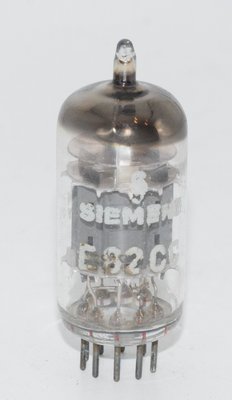
- Siemens (Germany) — Clean, precise, and highly resolving. The E82CC Siemens production is considered a premium variant.
- Matsushita/Toshiba (Japan) — Generally neutral and well-balanced, offering good value compared to European and American NOS tubes.
5. Equivalent and Substitute Types
Proper classification of equivalent and substitute tubes is critical for safe and optimal operation. The following lists are based on verified reference data and clearly distinguish between direct drop-in replacements and tubes with different ratings that are not guaranteed drop-in substitutes.
5.1 Close/Identical Substitutes (Direct Drop-In Replacements)
The following types are electrically identical or virtually identical to the 12AU7 and can be used as direct replacements without circuit modifications:
| Type | Notes |
|---|---|
| ECC82 | European (Mullard–Philips) designation for the same tube. Identical in all respects. |
| CV491 | UK military (CV) designation. Identical to 12AU7 with military-grade quality control. |
| CV4003 | UK military designation. Identical electrical characteristics. |
| CV8155 | UK military designation. Direct equivalent. |
| CV8221 | UK military designation. Direct equivalent. |
| CV10323 | UK military designation. Direct equivalent. |
| CV10666 | UK military designation. Direct equivalent. |
5.2 Different Rating Substitutes (NOT Drop-In Replacements)
The following types are related to the 12AU7 and may be physically compatible (same base and pinout), but they have different ratings, tighter tolerances, or modified specifications. While they may work in many 12AU7 circuits, they are not guaranteed drop-in replacements and the designer's specifications should be consulted:
| Type | Notes |
|---|---|
| 12AU7A | Improved version with controlled heater warm-up time and potentially different maximum ratings. |
| 12AU7WA | Military ruggedized version (JEDEC "W" suffix denotes military-grade mechanical ruggedness). |
| 5814 / 5814A / CK5814 | Military ruggedized versions with tighter specifications. Widely used as substitutes but have different rated parameters. |
| 5963 | Industrial/computer-rated variant. Different maximum ratings; closer to the 12AU7 family than tubes like the 12AX7 or 12AT7, but not a guaranteed drop-in. |
| 6067 | Related type with different ratings. |
| 6189 | Premium military version with tighter specifications. Often used interchangeably in practice, but officially has different rated parameters. |
| 6680 | Related type with different ratings. |
| 7489 / 7730 | Related types with different ratings. |
| E82CC | Premium European (Philips/Siemens) version with tighter tolerances, longer rated life, and different maximum ratings. Highly regarded in audio applications but not identical to the standard 12AU7. |
| ECC802 / ECC802S | Premium long-life European versions with enhanced specifications. |
| M8136 | UK military premium designation with tighter specifications. |
| CV3900 / CV4016 / CV9092 | UK military designations for related types with different ratings. |
| B329 / B749 | Related European designations with different ratings. Not direct drop-in replacements. |
| 6CC40 | Related type with different ratings. |
| E2163 | Related type with different ratings. |
5.3 Important Notes on Substitution
The 12AU7 is NOT directly interchangeable with the 12AX7 (ECC83) or 12AT7 (ECC81), despite sharing the same noval base and heater arrangements. These three tubes have very different amplification factors, transconductance values, and plate resistance characteristics:
- 12AX7 (ECC83): μ ≈ 100, gm ≈ 1.6 mA/V, rp ≈ 62,500 Ω — high gain, high impedance
- 12AT7 (ECC81): μ ≈ 60, gm ≈ 5.5 mA/V, rp ≈ 10,900 Ω — medium gain, high transconductance
- 12AU7 (ECC82): μ ≈ 17–20, gm ≈ 2.2–3.2 mA/V, rp ≈ 6,250–7,700 Ω — low gain, low impedance
Substituting between these types will dramatically alter circuit performance and may cause improper biasing, excessive distortion, or other problems. Such substitutions should only be made with full understanding of the circuit requirements.
6. Notable Characteristics
6.1 Versatility
The 12AU7's combination of moderate gain, low plate resistance, generous plate dissipation (2.75W per section), and high maximum cathode current (20 mA) makes it arguably the most versatile of the 12Axx dual triode family. It can serve effectively as a voltage amplifier, current amplifier, cathode follower, phase splitter, oscillator, or even a low-power output tube.
6.2 Linearity
The 12AU7 exhibits excellent linearity across its operating range, with relatively constant characteristics over a wide range of plate voltages and currents. This makes it particularly suitable for high-fidelity audio applications where low distortion is paramount.
6.3 Dual-Section Matching
For phase inverter and differential amplifier applications, matched sections are important. The 12AU7 generally offers good internal section matching, though premium types like the E82CC and military-graded versions (CV491, CV4003, etc.) are specified with tighter matching tolerances.
6.4 Heater-Cathode Voltage Rating
The 12AU7's maximum heater-cathode voltage of 180V is generous and allows the tube to be used in circuits where the cathode operates at elevated potentials relative to the heater, such as in series-string television receivers or in circuits with large cathode resistors. This rating should not be exceeded, as heater-cathode breakdown can cause catastrophic tube failure.
6.5 Microphonics
Standard 12AU7 tubes can exhibit microphonic behavior — mechanical vibrations coupling into the audio signal as unwanted noise. This is particularly relevant in high-gain preamplifier applications. Military-grade versions (5814A, 6189, CV491) and premium types (E82CC, ECC802S) were designed with enhanced internal structures to minimize microphonics. In critical applications, tube damper rings and shock-mounting sockets are recommended.
6.6 Longevity
The 12AU7 is known for excellent longevity. Under normal operating conditions, a quality 12AU7 can provide 5,000–10,000 hours of reliable service. Premium long-life versions such as the E82CC and ECC802S were rated for even longer operational life, making them favorites in professional and broadcast applications.
6.7 Construction Variations
Over its long production history, the 12AU7 was manufactured with numerous internal construction variations that are of great interest to collectors and audiophiles:
- Long plates vs. short plates — Early production typically featured longer plate structures, which many audiophiles prefer for their sonic characteristics.
- Smooth plates vs. ribbed plates — Different manufacturers used different plate surface treatments for thermal management.
- D-getter vs. O-getter vs. halo getter — The getter assembly evolved over time, with early "D" and "O" shaped getters giving way to top-mounted halo getters in later production.
- Clear-top vs. grey-glass — Some manufacturers (notably RCA) produced clear-glass versions that allow visual inspection of the internal structure.
7. Usage in the Audio Community
7.1 High-Fidelity Preamplifiers
The 12AU7 is a cornerstone tube in high-fidelity preamplifier design. Classic designs from Marantz (Model 7), McIntosh, Conrad-Johnson, Audio Research, and VAC have all employed the 12AU7 in various circuit positions. Modern boutique manufacturers continue to design around this tube, and it remains one of the most commonly specified tubes in high-end audio preamplifiers.
7.2 Headphone Amplifiers
The 12AU7 has become the de facto standard tube for headphone amplifiers. Designs from Woo Audio (WA2, WA6), Bottlehead (Crack), Schiit (Valhalla), Darkvoice, and numerous DIY projects use the 12AU7 as a driver or output tube. Its ability to deliver meaningful current into headphone loads while maintaining low distortion makes it ideal for this application. The wide availability of different 12AU7 variants also appeals to headphone enthusiasts who enjoy "tube rolling" — swapping different tubes to tailor the sound to their preferences and headphones.
7.3 Integrated Amplifiers and Power Amplifier Driver Stages
Many classic and modern integrated amplifiers and power amplifiers use the 12AU7 as a driver tube or phase inverter. The Dynaco ST-70 — one of the best-selling tube amplifiers of all time — uses a 12AU7 (or equivalent) in its driver board in some configurations. The Fisher, Scott, and Eico amplifiers of the golden age frequently employed the 12AU7 in driver and phase splitter roles.
7.4 Guitar Amplifiers
In the guitar amplifier world, the 12AU7 serves several important functions:
- Reverb circuits — Many Fender amplifiers use the 12AU7 (or the related 12AT7) to drive spring reverb tanks and recover the reverb signal.
- Effects loops — Send and return buffers in effects loops commonly use the 12AU7.
- Phase inverters — Some amplifier designs use the 12AU7 as a phase inverter to drive push-pull output stages.
- Gain reduction — Players sometimes substitute a 12AU7 for a 12AX7 in preamp stages to achieve a cleaner tone at higher volumes, though this should be done with awareness of the different operating characteristics.
7.5 Tube Rolling Culture
The 12AU7 is one of the most actively "rolled" tubes in the audio community. Because so many different manufacturers produced this type over several decades, there is an enormous variety of NOS and current-production tubes available, each with its own sonic character. Online forums, review sites, and YouTube channels are filled with comparative reviews and discussions about the merits of different 12AU7 variants.
Particularly sought-after NOS tubes include:
- Mullard Blackburn CV4003/CV491 — Considered among the finest for warmth and musicality
- Amperex Bugle Boy ECC82 — Prized for their holographic soundstage
- Telefunken ECC82 (diamond bottom) — Valued for smoothness and detail
- RCA Clear-Top 12AU7 — Popular for their open, airy character
- Brimar CV491 / 12AU7 (black plates) — Appreciated for dynamics and detail
- Siemens E82CC — Sought after for precision and resolution
- Valvo ECC82 (Hamburg) — Valued for neutrality and refinement
7.6 DIY Audio Projects
The 12AU7 is one of the most popular tubes for DIY audio projects due to its forgiving nature, wide operating range, and extensive documentation. Countless preamplifier, headphone amplifier, and buffer stage designs are available online, making the 12AU7 an excellent entry point for hobbyists new to tube audio. Its moderate plate voltage requirements (effective circuits can be built with B+ supplies as low as 100V) also make it safer and more accessible for home constructors.
7.7 Modern Production and Availability
Current production 12AU7/ECC82 tubes are available from multiple manufacturers, ensuring the tube's continued relevance:
- JJ Electronic (Slovakia) — Widely available and affordable, known for reliability
- Electro-Harmonix (Russia/New Sensor) — Popular current-production option
- Tung-Sol reissue (Russia/New Sensor) — Aims to recapture the character of vintage Tung-Sol production
- Mullard reissue (Russia/New Sensor) — Marketed as capturing the Mullard sound
- Shuguang / Psvane (China) — Range from budget to premium "Treasure" series
- Genalex Gold Lion reissue (Russia/New Sensor) — Premium current-production option
The 12AU7 remains one of the most important and widely used small-signal tubes in audio, bridging the gap between vintage and modern design philosophies. Its unique combination of moderate gain, low output impedance, and musical sonic character ensures its continued popularity for decades to come.