1. Introduction and History
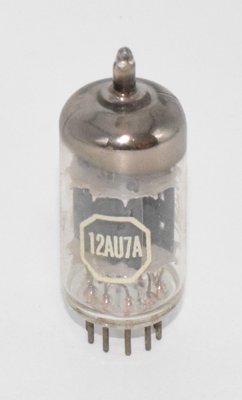
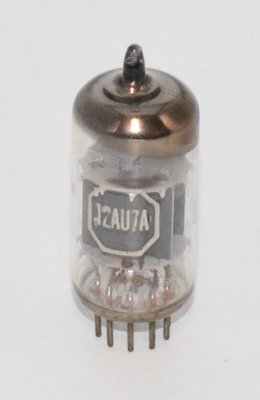
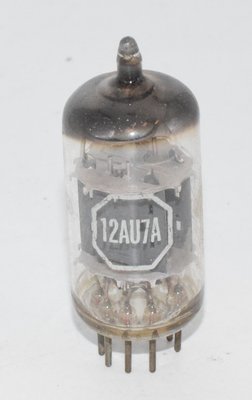
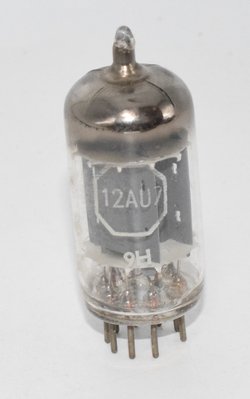
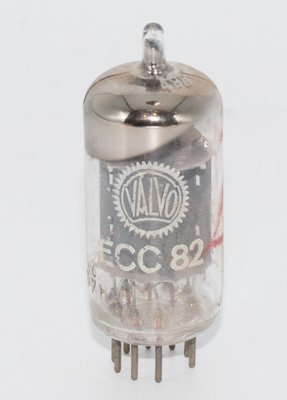
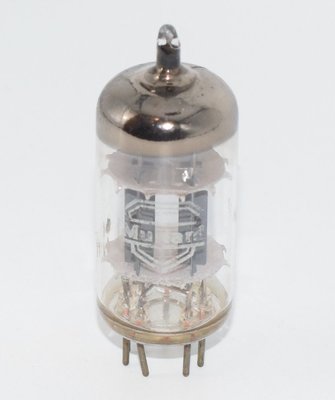
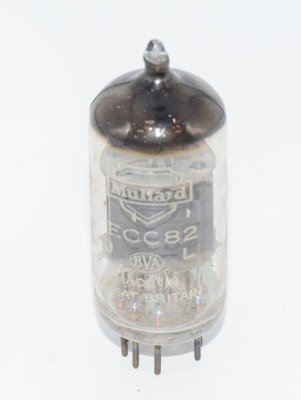
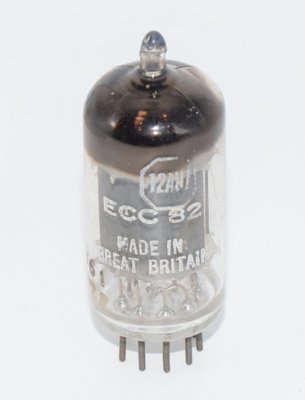
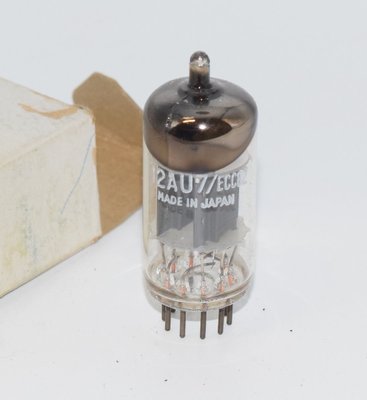
The 12AU7A is a miniature dual-triode vacuum tube (valve) that has earned its place as one of the most versatile and widely used tubes in audio electronics history. Designated ECC82 under the European Mullard–Philips naming convention and carrying the RETMA/EIA designation 12AU7A, this tube was developed in the late 1940s as part of the now-legendary 12A_7 family of nine-pin miniature dual triodes. The original 12AU7 was introduced by RCA around 1946, with the improved "A" suffix version (12AU7A) following shortly thereafter, offering tighter specifications and improved reliability.
The 12AU7A is the low-mu (low gain) member of the famous trio of compatible dual triodes that share the same pinout and heater arrangements. The correct ordering from highest to lowest amplification factor is:
- 12AX7 / ECC83 — μ ≈ 100 (highest gain)
- 12AT7 / ECC81 — μ ≈ 60 (medium-high gain)
- 12AU7A / ECC82 — μ ≈ 17 (lowest gain)
This low amplification factor, combined with relatively high plate current capability and low plate resistance, makes the 12AU7A uniquely suited for applications requiring linearity, current drive, and moderate voltage gain — characteristics that have made it indispensable in high-fidelity audio circuits, from preamplifier stages to phase inverters and headphone amplifiers.
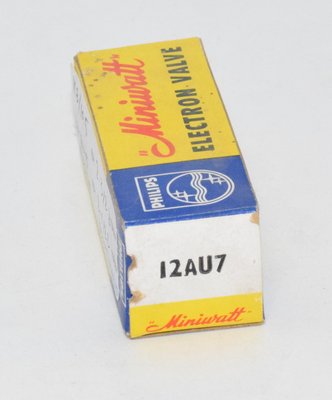
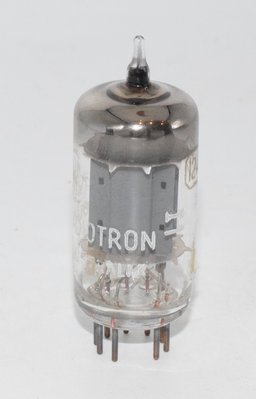
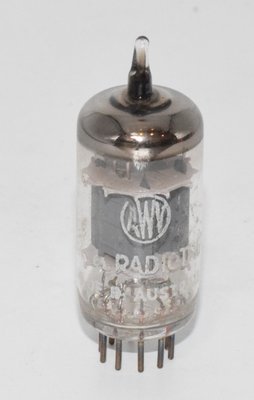
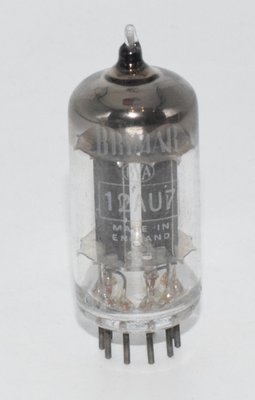
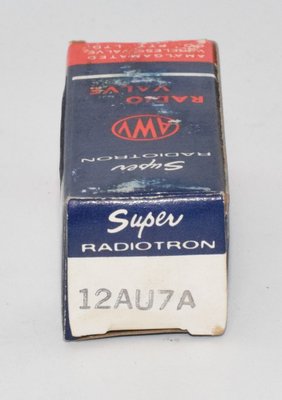
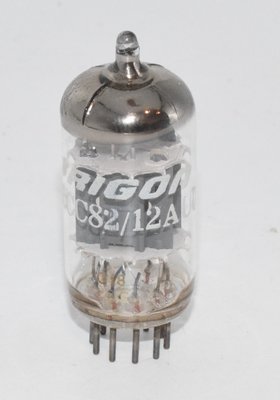
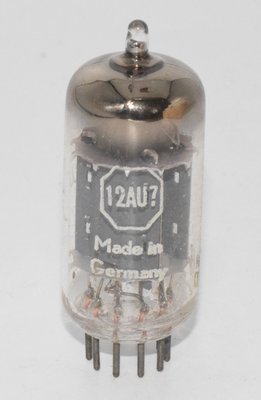
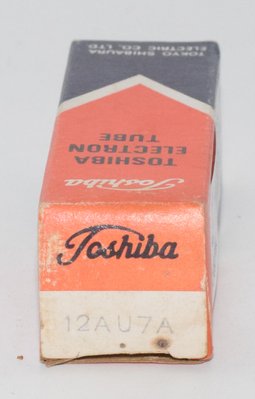
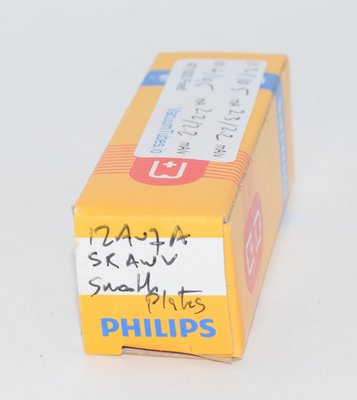
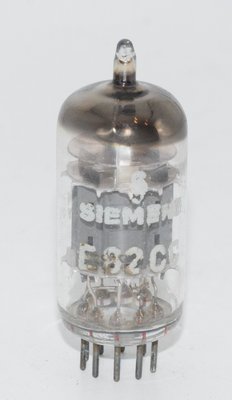
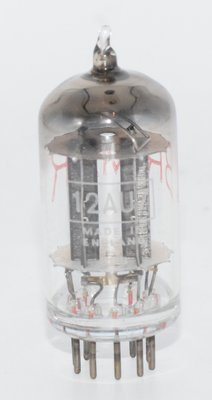
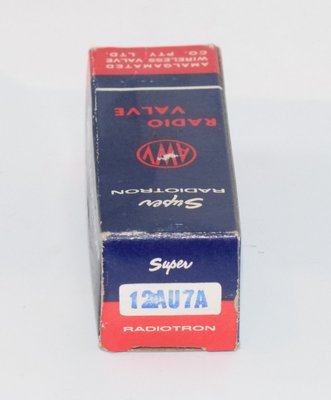
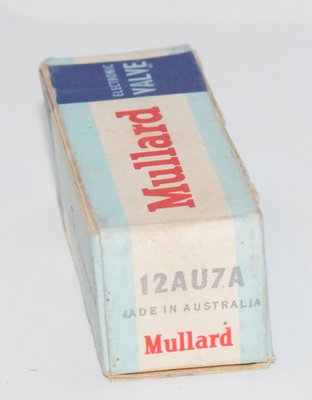
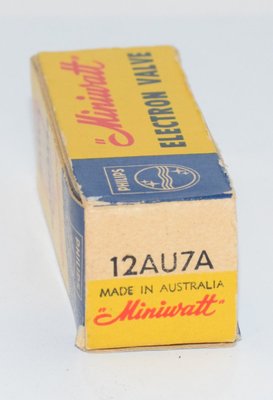
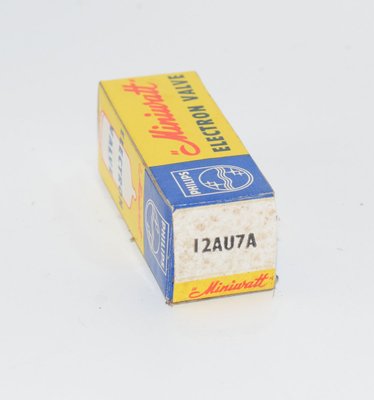
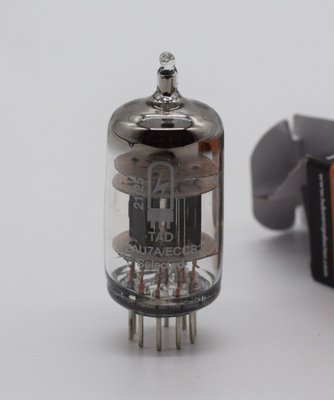
The tube was manufactured by virtually every major tube producer worldwide, including RCA, GE, Sylvania, Mullard, Philips, Amperex, Telefunken, Siemens, Brimar, Toshiba, Matsushita, and Australian manufacturers such as AWV (Amalgamated Wireless Valve Company, marketed under the Super Radiotron and Philips Miniwatt brands). Production spanned from the late 1940s through the 1980s in Western factories, and continues today from manufacturers such as JJ Electronic (Slovakia), Electro-Harmonix and Tung-Sol (New Sensor, Russia), Shuguang and Psvane (China), and TAD (Tube Amp Doctor, selected production).
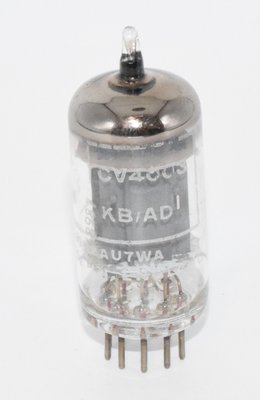
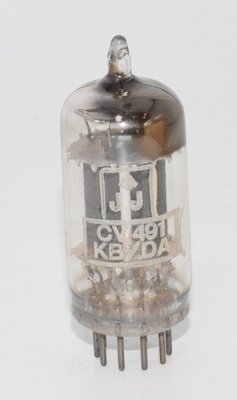
The British military equivalent is the CV4003, a ruggedized, tightly specified version of the ECC82 that commands premium prices among audiophiles for its exceptional consistency and build quality.
2. Technical Specifications and Design
2.1 Heater / Filament
| Parameter | Value |
|---|---|
| Heater Voltage (series operation) | 12.6 V |
| Heater Current (series operation) | 150 mA |
| Heater Voltage (parallel operation) | 6.3 V |
| Heater Current (parallel operation) | 300 mA |
| Heater Type | Indirect, center-tapped (pin 9 is heater center-tap) |
The center-tapped heater allows flexible operation: in the 12.6V series configuration, pins 4 and 5 are connected to the supply with pin 9 left unconnected. In the 6.3V parallel configuration, pins 4 and 5 are tied together for one side of the heater supply, and pin 9 (the center-tap) serves as the other heater connection.
2.2 Maximum Ratings (per section, JEDEC / RCA datasheet)
| Parameter | Value |
|---|---|
| Maximum Plate Voltage | 300 V |
| Maximum Plate Dissipation (per triode) | 2.75 W |
| Maximum Cathode Current (per section) | 20 mA |
| Maximum Heater-Cathode Voltage | ±200 V |
| Maximum Grid Circuit Resistance (fixed bias) | 1 MΩ |
| Maximum Grid Circuit Resistance (cathode bias) | 1 MΩ |
2.3 Typical Operating Characteristics (per section)
| Parameter | Condition 1 | Condition 2 |
|---|---|---|
| Plate Supply Voltage | 250 V | 100 V |
| Grid Voltage (Vg1) | −8.5 V | −4.0 V |
| Plate Current (Ib) | 10.5 mA | 6.0 mA |
| Amplification Factor (μ) | 17 | 17 |
| Transconductance (gm) | 2,200 μmhos (2.2 mA/V) | 2,000 μmhos (2.0 mA/V) |
| Plate Resistance (rp) | 7,700 Ω | 8,500 Ω |
Note: The relationship μ = gm × rp holds. At the 250V operating point: 2,200 × 10−6 × 7,700 ≈ 17, confirming internal consistency of the specifications.
2.4 Physical Construction
| Parameter | Detail |
|---|---|
| Base Type | Noval (B9A) — 9-pin miniature |
| Envelope Type | T-6½ miniature glass (approximately 20 mm diameter) |
| Overall Length | Approximately 55 mm (2.16 inches) excluding pins |
| Seated Height | Approximately 48–52 mm |
| Maximum Diameter | Approximately 22.5 mm (0.89 inches) |
| Mounting Position | Any |
| Weight | Approximately 12–15 grams |
2.5 Pin-Out (Bottom View, Noval B9A Base)
| Pin | Function |
|---|---|
| 1 | Plate (Anode) — Triode 1 |
| 2 | Grid — Triode 1 |
| 3 | Cathode — Triode 1 |
| 4 | Heater (one end) |
| 5 | Heater (other end) |
| 6 | Plate (Anode) — Triode 2 |
| 7 | Grid — Triode 2 |
| 8 | Cathode — Triode 2 |
| 9 | Heater center-tap (used for 6.3V parallel heater operation) |
The pin-out is identical to the 12AX7 and 12AT7, which is why these tubes are often discussed as a family of interchangeable types — though their very different gain, impedance, and bias characteristics mean that substitution requires careful consideration of circuit design (see Section 5).
3. Applications and Usage
The 12AU7A's combination of low gain, low plate resistance, and relatively high current capability makes it one of the most versatile small-signal tubes ever produced. Its applications span decades of electronic design:
3.1 Audio Preamplification
While its gain of 17 is too low for high-gain phono preamplifier stages (where the 12AX7 is preferred), the 12AU7A excels in line-stage preamplifiers, buffer stages, and tone control circuits where moderate gain and excellent linearity are paramount. Many classic and modern preamplifier designs use the 12AU7A specifically because its low mu results in lower distortion at typical signal levels.
3.2 Phase Inverters / Phase Splitters
The 12AU7A is extensively used as a cathodyne (split-load) phase inverter and in long-tailed pair (differential) phase splitter circuits in power amplifiers. Its low plate resistance and ability to drive significant current make it ideal for driving push-pull output stages. Classic amplifiers from manufacturers like Dynaco, Fisher, Scott, and McIntosh frequently employ the 12AU7A in this role.
3.3 Headphone Amplifiers
The tube's relatively low output impedance and ability to deliver meaningful current make it a natural choice for OTL (output-transformerless) headphone amplifiers. Designs from Bottlehead (Crack), Woo Audio, Schiit, and numerous DIY projects rely on the 12AU7A to directly drive headphones with impedances from 32Ω to 600Ω.
3.4 Cathode Followers and Buffers
With a plate resistance of approximately 7,700Ω, the 12AU7A makes an excellent cathode follower with an output impedance well under 1kΩ — useful for driving long cable runs, low-impedance loads, or subsequent solid-state stages in hybrid designs.
3.5 Voltage Regulators
The 12AU7A was widely used as a series-pass or error amplifier element in vacuum tube voltage regulator circuits, taking advantage of its current handling capability and linearity.
3.6 Television and Radio
Historically, the 12AU7 found extensive use in television receivers as sync separators, vertical oscillators, and AGC amplifiers. In FM radio tuners, it served in oscillator and mixer stages. The 12.6V heater option was particularly useful in series-string heater configurations common in AC/DC television receivers.
3.7 Musical Instrument Amplifiers
While less common than the 12AX7 or 12AT7 in guitar amplifiers, the 12AU7A appears in reverb driver circuits, effects loops, and phase inverter positions in various amplifier designs. Its lower gain is sometimes deliberately chosen by players seeking cleaner headroom or a different overdrive character.
4. Sound Characteristics
The 12AU7A has a distinctive sonic signature that audiophiles and recording engineers have appreciated for decades. While subjective descriptions of tube sound should always be taken in context — the circuit topology, associated components, and operating point profoundly influence the final result — certain consistent observations emerge across the audio community:
4.1 General Tonal Character
The 12AU7A is widely regarded as producing a warm, smooth, and musically natural sound. Compared to its higher-gain siblings, it tends toward a more relaxed, less "edgy" presentation. The low amplification factor means the tube operates with generous headroom in most circuits, resulting in lower distortion at typical signal levels and a sense of effortless dynamics.
4.2 Frequency Response Characteristics
- Bass: The 12AU7A is praised for delivering full, well-controlled bass with good weight and definition. Its low plate resistance helps maintain damping and control in the low frequencies, avoiding the sometimes "loose" bass character associated with higher-impedance tube types.
- Midrange: The midrange is typically described as rich, liquid, and harmonically complex without being overly colored. There is a natural warmth that adds body to vocals and acoustic instruments without masking detail.
- Treble: High frequencies tend to be smooth and extended but without harshness or excessive brightness. The tube's inherently low distortion at moderate signal levels contributes to a refined, non-fatiguing top end.
4.3 Harmonic Distortion Profile
When driven into distortion, the 12AU7A produces predominantly even-order harmonics (primarily second harmonic), which the human ear perceives as warm and musical. The transition from clean to clipped is generally smooth and graceful, lacking the abrupt onset that characterizes some higher-mu types. This makes the 12AU7A particularly appealing in applications where subtle harmonic enrichment is desired without aggressive coloration.
4.4 Dynamics and Imaging
The 12AU7A's low output impedance and current drive capability contribute to excellent transient response and dynamic contrast. In well-designed circuits, it can deliver a spacious, three-dimensional soundstage with precise imaging. The tube's linearity helps preserve micro-dynamic information — the subtle volume variations that convey the texture and atmosphere of a recording.
4.5 Variations by Manufacturer
Experienced listeners note significant sonic differences between manufacturers and production eras:
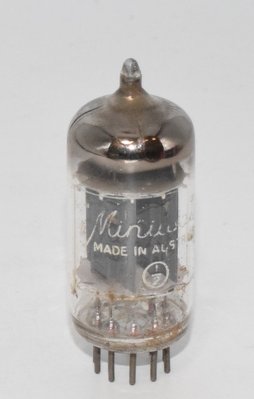
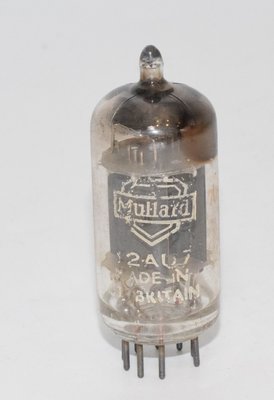
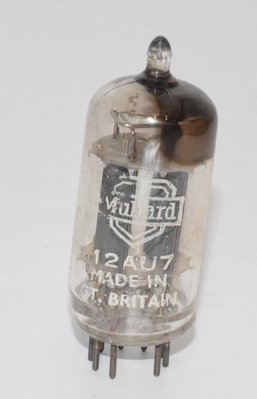
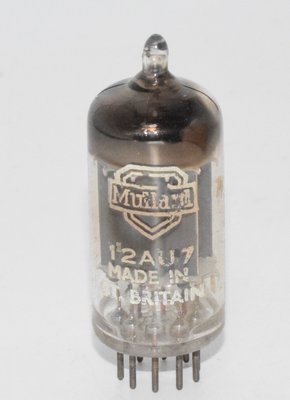
- Mullard (UK/Australia): Renowned for a lush, warm midrange with excellent harmonic richness. Often described as the "classic British sound" — smooth, musical, and slightly romantic.
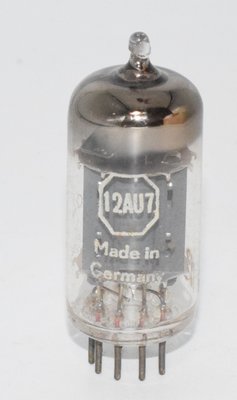
- Telefunken (Germany): Prized for exceptional clarity, detail retrieval, and a more neutral tonal balance. Often considered the most transparent and resolving of the vintage types.
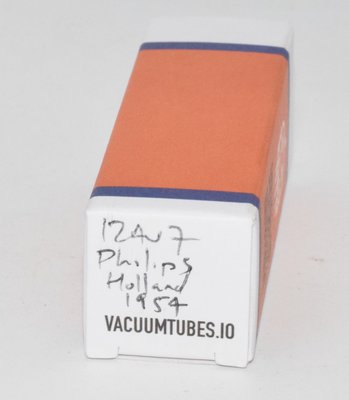
- Amperex/Philips (Holland): Known for a beautiful balance of warmth and detail, with a particularly engaging midrange. The famous "Bugle Boy" variants are highly sought after.
- RCA (USA): The "Clear Top" variants (with clear glass tops rather than the usual grey coating) are celebrated for an open, airy sound with excellent high-frequency extension and a lively, dynamic presentation.
- GE (USA): Generally characterized as clean, detailed, and slightly leaner than European types — a more "American" sound with good transient snap.
- Sylvania (USA): Often described as offering a nice balance between warmth and clarity, with good bass definition and a smooth treble.
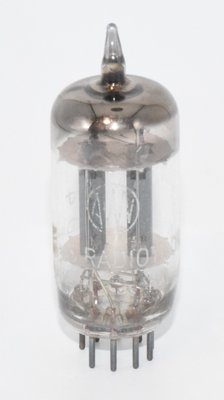
- AWV Super Radiotron / Philips Miniwatt (Australia): Australian-made tubes, produced on Philips/Mullard tooling, are increasingly appreciated for their excellent build quality and a sound character that blends Mullard warmth with good clarity. The rare smooth long-plate variants are particularly sought after for their rich, dimensional sound.
- Toshiba (Japan): Japanese production tubes are noted for clean, precise sound with good neutrality and reliability.
5. Equivalent and Substitute Types
The following types are generally considered direct equivalents or close substitutes for the 12AU7A. However, even among "equivalent" types, subtle differences in construction, specifications, and screening levels exist:
5.1 Direct Equivalents (same pinout, same electrical characteristics)
| Designation | Standard | Notes |
|---|---|---|
| ECC82 | European (Mullard/Philips) | The European designation for the same tube. Electrically identical. This is the most common equivalent designation. |
| 12AU7 | RETMA/EIA (USA) | The original version without the "A" suffix. The 12AU7A has tighter controlled characteristics, but is fully interchangeable. |
| CV4003 | British Military (MOD) | Ruggedized, tightly specified military version of the ECC82. Premium grade with enhanced reliability and consistency. Fully interchangeable. |
| B749 | Philips | Philips ordering code for the ECC82. |
| 6189 | US Military (JAN) | Military-grade version of the 12AU7A with tighter tolerances and enhanced reliability screening. Fully interchangeable. |
| 5814A | US Military | Premium military version with tighter specifications than the standard 12AU7A. Fully interchangeable and often preferred by audiophiles for its superior consistency. |
| 5963 | US Industrial/Computer | A computer-rated version with controlled heater warm-up time. Electrically similar but with a lower maximum plate voltage rating (typically 250V vs 300V). Interchangeable in most audio circuits operating within its ratings. |
| E82CC | European Special Quality | The SQ (Special Quality) version of the ECC82 with tighter tolerances, longer rated life, and enhanced reliability. Fully interchangeable and highly prized. |
5.2 6-Volt Heater Equivalent
| Designation | Notes |
|---|---|
| 6AU7 | Identical to the 12AU7 except with a 6.3V / 300mA heater (no center-tap). Same pinout for signal connections. Can be used in circuits designed for 6.3V heater operation only. |
5.3 Related but NOT Directly Interchangeable Types
Important: The following tubes share the same B9A pinout but have significantly different electrical characteristics. While they can physically be plugged into the same socket, they are not drop-in replacements without circuit modifications:
| Type | μ (approx.) | Notes |
|---|---|---|
| 12AX7 / ECC83 | 100 | Much higher gain, much higher plate resistance (~62.5kΩ), much lower plate current. NOT a substitute — will dramatically change circuit behavior, bias points, and may cause instability or clipping. |
| 12AT7 / ECC81 | 60 | Higher gain than the 12AU7A, higher plate resistance (~10–11kΩ), different bias requirements. Not a direct substitute in most circuits, though some designs can accommodate either type with adjusted operating points. |
| 12AY7 / 6072 | ~44 | Higher gain than the 12AU7A with different operating characteristics. Not a direct substitute. |
Substituting between these types should only be done with a thorough understanding of the circuit design and appropriate modifications to bias resistors, plate load resistors, and coupling capacitors as needed.
6. Notable Characteristics
6.1 Exceptional Linearity
The 12AU7A's low amplification factor is directly related to its excellent linearity. With a mu of only 17, the tube's transfer characteristic (plate current vs. grid voltage curve) is remarkably straight over a wide operating range. This makes it one of the most linear small-signal tubes available, producing very low distortion in properly designed circuits — a key reason for its enduring popularity in high-fidelity audio.
6.2 Current Drive Capability
With a maximum cathode current of 20 mA per section and a plate dissipation of 2.75W, the 12AU7A can deliver significantly more current than the 12AX7 (max 1.2W plate dissipation) or 12AT7 (max 2.5W). This makes it capable of driving low-impedance loads and delivering real power — essential for headphone amplifiers and cathode follower circuits.
6.3 Low Plate Resistance
The plate resistance of approximately 7,700Ω is remarkably low for a small-signal triode. This translates to excellent high-frequency response (less affected by stray capacitance), superior load-driving capability, and lower output impedance in cathode follower configurations. It also means the tube's gain is less affected by plate load impedance variations.
6.4 Microphonics
Like all vacuum tubes, the 12AU7A is susceptible to microphonic behavior — mechanical vibrations can modulate the electron stream and produce unwanted signals. However, its lower gain means that microphonic effects are generally less problematic than with higher-gain types like the 12AX7. Military and special-quality versions (CV4003, 5814A, E82CC) typically feature enhanced anti-microphonic construction including additional mica spacers, tighter element alignment, and sometimes internal damping structures.
6.5 Long Service Life
The 12AU7A is known for exceptional longevity. Under normal operating conditions, service life of 5,000 to 10,000 hours is typical, with many tubes continuing to perform well beyond these figures. The relatively modest operating conditions (compared to power tubes) and robust construction contribute to this reliability. NOS (New Old Stock) tubes from the 1950s and 1960s routinely test as new on emission testers, demonstrating the type's remarkable shelf life.
6.6 Structural Variations
Over its long production history, the 12AU7A was manufactured with numerous internal structural variations that collectors and audiophiles have catalogued extensively:
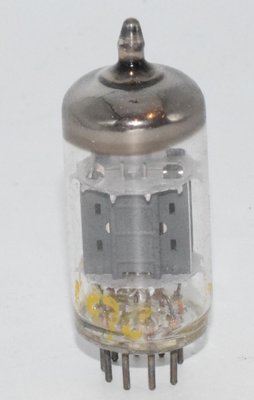
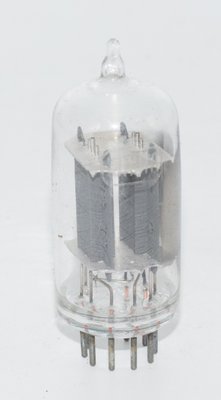
- Long plates vs. short plates: Earlier production often featured longer plate structures, which some listeners prefer for a richer, more spacious sound. The rare smooth long-plate variants (such as those from AWV Super Radiotron) are particularly sought after.
- Ribbed vs. smooth plates: Some manufacturers used ribbed (corrugated) plates for improved heat dissipation and mechanical rigidity, while others used smooth plates. Each construction type has its advocates among audiophiles.
- Clear tops vs. grey plates: RCA's famous "Clear Top" 12AU7A variants lack the grey internal coating (getter shield) on the upper portion of the glass envelope, giving a clear view of the internal structure. These are highly valued for both their sound quality and visual appeal.
- D-getter vs. O-getter vs. halo getter: The shape of the getter (the metallic element that absorbs residual gases) varied by manufacturer and era, and serves as an important identification marker for dating and authenticating tubes.
7. Usage in the Audio Community
The 12AU7A / ECC82 occupies a central position in the vacuum tube audio community, serving roles that span from entry-level hobbyist projects to reference-grade audiophile systems.
7.1 High-Fidelity Preamplifiers
The 12AU7A is a staple in high-end audio preamplifiers from manufacturers such as Audio Research, Conrad-Johnson, McIntosh, Rogue Audio, PrimaLuna, Cary Audio, and many others. In these applications, the tube typically serves in line-stage gain positions, buffer stages, or output stages. The low gain is often an advantage in modern systems where source components (CD players, DACs, streaming devices) output 2V or more — a high-gain tube would provide excessive amplification and potentially overload the power amplifier.
7.2 Headphone Amplifiers
The 12AU7A has become arguably the most popular tube for dedicated headphone amplifiers. Its ability to deliver current into relatively low impedances makes it ideal for this application. Popular headphone amplifiers using the 12AU7A include:
- Bottlehead Crack: A legendary DIY OTL headphone amplifier that pairs the 12AU7A driver with a 6080/6AS7 output tube.
- Woo Audio WA2, WA6: High-end OTL designs that use the 12AU7A as a driver tube.
- Schiit Valhalla: An OTL design using the 6N1P (which is related to the ECC88 family) but many similar designs use the 12AU7A.
- Darkvoice 336SE: A popular and affordable OTL headphone amplifier using the 6N1P/12AU7A family.
- Numerous DIY designs from communities such as Head-Fi, DIYAudio, and AudioKarma.
7.3 Power Amplifier Driver/Phase Inverter
Many of the most respected vacuum tube power amplifiers use the 12AU7A as a phase inverter or driver tube. Notable examples include:
- Dynaco ST-70: One of the best-selling tube amplifiers of all time, using a 12AU7 in its driver board (in the original circuit, alongside 12AX7 tubes).
- McIntosh MC275: The legendary McIntosh power amplifier uses 12AU7A tubes in its driver circuitry.
- Various Marantz, Fisher, and Scott amplifiers from the golden age of hi-fi.
7.4 DAC Output Stages and Hybrid Designs
The 12AU7A is frequently employed in the analog output stages of tube-hybrid DACs and CD players, where it serves as a buffer or gain stage following the digital-to-analog conversion. Products from manufacturers like Jolida/Black Ice, Musical Fidelity, and numerous Chinese hi-fi brands use the 12AU7A in this role, allowing users to "tune" the sound of their digital source by rolling different 12AU7A variants.
7.5 Tube Rolling
"Tube rolling" — the practice of swapping different tube brands and vintages to alter the sound of a component — is one of the great pleasures of vacuum tube audio, and the 12AU7A is one of the most popular tubes for this pursuit. The wide variety of available NOS and current-production options gives enthusiasts an extensive palette of sonic flavors to explore:
- Budget options: Current-production tubes from JJ, Electro-Harmonix, and Chinese manufacturers offer good performance at modest prices, making them ideal starting points.
- Mid-range NOS: Tubes from GE, RCA, Sylvania, and Australian manufacturers (AWV Super Radiotron, Philips Miniwatt Australia) offer a significant step up in sound quality at reasonable prices. The Australian-made tubes, produced on Philips/Mullard equipment, represent particularly good value.
- Premium NOS: Mullard (UK), Amperex (Holland), Brimar, and Telefunken tubes command premium prices but are considered reference-grade by many audiophiles. The Mullard CV4003 (military ECC82) is often cited as one of the finest 12AU7A variants ever produced.
- Ultra-premium/Rare: Telefunken ECC82 with diamond-bottom logos, early Amperex "Bugle Boy" ECC82, and rare structural variants (such as the AWV smooth long-plate) are collector's items that can command very high prices.
7.6 TAD Premium Selected
Tube Amp Doctor (TAD) offers premium-selected 12AU7A / ECC82 tubes that are individually tested and matched for critical audio applications. These selected tubes undergo rigorous testing for noise, microphonics, gain matching, and transconductance, providing a reliable option for audiophiles who want consistent, high-quality performance without the uncertainty sometimes associated with NOS tube purchases.
7.7 The Enduring Appeal
The 12AU7A's enduring popularity in the audio community rests on several pillars: its exceptional versatility, its inherent linearity and low distortion, its ability to drive real-world loads, the vast selection of available variants for tube rolling, and — perhaps most importantly — its ability to add a touch of warmth, dimensionality, and musical engagement that many listeners find lacking in purely solid-state designs. Whether serving as the heart of a minimalist single-tube headphone amplifier or as a critical driver stage in a reference power amplifier, the 12AU7A / ECC82 remains one of the most important and beloved tubes in the audio world.