1. Introduction and History
The 12BH7A is a medium-mu dual triode vacuum tube (valve) originally developed by RCA in the early 1950s. It was designed primarily as a vertical deflection oscillator and amplifier for television receivers, but its robust construction, relatively high current capability, and excellent linearity quickly made it a favorite among audio engineers and amplifier designers. The tube was introduced as an improvement over earlier dual triodes, offering higher plate dissipation and better performance in demanding circuits.
The 'A' suffix in the 12BH7A designation indicates an improved version of the original 12BH7, featuring tighter specifications and enhanced reliability. Throughout the 1950s and 1960s, the 12BH7A was manufactured by virtually every major tube producer, including RCA, GE, Sylvania, Tung-Sol, Raytheon, Mullard, Toshiba, Amperex, and many others. Its versatility made it one of the most widely produced miniature dual triodes of the era.
While the television industry that originally spawned the 12BH7A has long since moved to solid-state technology, the tube has experienced a remarkable renaissance in the high-fidelity audio world. Its ability to deliver substantial current while maintaining low distortion has made it a prized component in headphone amplifiers, preamplifiers, driver stages, and even certain output stage configurations. Today, the 12BH7A remains in active production and is one of the most sought-after tubes in the audiophile community.
2. Technical Specifications and Design
The following specifications are based on established manufacturer datasheets, primarily from RCA, GE, and Sylvania. All values represent typical or maximum ratings as noted. These figures have been cross-referenced against multiple published sources for accuracy.
Heater / Filament
| Heater Voltage | 12.6 V (series operation) or 6.3 V (parallel operation) |
| Heater Current | 300 mA at 12.6 V / 600 mA at 6.3 V |
Maximum Ratings (Per Section Unless Noted)
| Maximum Plate Voltage | 450 V |
| Maximum Plate Dissipation (per section) | 3.5 W |
| Maximum Total Plate Dissipation (both sections combined) | 6 W |
| Maximum Cathode Current (per section) | 20 mA |
| Maximum Heater-Cathode Voltage | ±200 V (DC) |
| Maximum Grid Circuit Resistance (fixed bias) | 0.5 MΩ |
| Maximum Grid Circuit Resistance (cathode bias) | 1.0 MΩ |
Note: The total plate dissipation limit of 6 W means that if one section is operated at its full 3.5 W rating, the other section must be limited to 2.5 W or less. Both sections cannot simultaneously operate at their individual maximum of 3.5 W.
Typical Operating Characteristics (Per Section)
| Parameter | Condition 1 | Condition 2 |
|---|---|---|
| Plate Voltage | 250 V | 250 V |
| Grid Voltage | −10 V | −15 V |
| Plate Current | 11.5 mA | 7.0 mA |
| Amplification Factor (μ) | 16.5 | 16.5 |
| Transconductance (gm) | 3,100 μmhos | 2,600 μmhos |
| Plate Resistance (rp) | 5,300 Ω | 6,350 Ω |
The relationship between these parameters follows the standard triode equation: μ = gm × rp. At the primary operating point (Vp=250V, Vg=−10V): 16.5 ≈ 3,100 × 10−6 × 5,300, which confirms internal consistency of the specifications.
Grid Bias Range
The 12BH7A operates with grid bias voltages typically ranging from 0 V to approximately −40 V depending on the plate voltage and desired operating point. At a plate voltage of 250 V, typical bias points range from −5 V to −20 V. At higher plate voltages (up to 450 V), correspondingly larger negative bias voltages are required to keep plate dissipation within safe limits.
Physical Construction
| Base Type | 9-pin miniature (Noval / B9A) |
| Envelope Type | T-6½ glass envelope (miniature) |
| Mounting Position | Any |
| Overall Length | Approximately 82 mm (3.23 inches) max |
| Seated Height | Approximately 62 mm (2.44 inches) max |
| Maximum Diameter | Approximately 22 mm (0.87 inches) |
Pin-Out (9-Pin Noval Base, Bottom View)
| Pin 1 | Plate (Section 1) |
| Pin 2 | Grid (Section 1) |
| Pin 3 | Cathode (Section 1) |
| Pin 4 | Heater |
| Pin 5 | Heater (center-tap for 6.3V operation) |
| Pin 6 | Plate (Section 2) |
| Pin 7 | Grid (Section 2) |
| Pin 8 | Cathode (Section 2) |
| Pin 9 | Heater |
For 12.6 V heater operation, pins 4 and 5 are connected together internally (or pin 5 is left unconnected and heater is applied across pins 4 and 9). For 6.3 V parallel heater operation, pins 4 and 5 are connected together, and pins 5 and 9 are connected together, with 6.3 V applied across the joined pins.
3. Applications and Usage
Original Applications
- Television vertical deflection: The 12BH7A was designed as a combined vertical oscillator and vertical output amplifier in television receivers. Its high current capability and good linearity made it well-suited for driving deflection yokes.
- General-purpose amplification: The tube found use in a wide variety of amplification circuits where moderate gain and good current delivery were required.
- Phase inverter / driver stages: The dual triode configuration made it ideal for split-load (cathodyne), long-tailed pair, and other phase-inverter topologies used to drive push-pull output stages.
Modern Applications
- Headphone amplifiers: The 12BH7A's relatively low plate resistance and high current capability make it an excellent choice for directly driving headphones, particularly high-impedance models (300Ω and above). Many boutique and DIY headphone amplifiers are built around this tube.
- Preamplifier stages: Used in high-fidelity preamplifiers where its moderate gain (μ of 16.5) provides a useful voltage gain without excessive amplification, reducing the need for heavy feedback.
- Driver stages for power amplifiers: The 12BH7A excels as a driver tube for power output stages, particularly when driving tubes like the EL34, KT88, 6L6, or 300B. Its ability to deliver current ensures clean, undistorted drive signals.
- Buffer stages: The low output impedance (due to low plate resistance) makes the 12BH7A an effective buffer between high-impedance sources and low-impedance loads.
- Cathode follower circuits: The tube's characteristics make it particularly well-suited for cathode follower applications where low output impedance and high current delivery are required.
- OTL (Output Transformerless) amplifiers: Some OTL designs use banks of 12BH7A tubes in the output stage, taking advantage of the tube's relatively low plate resistance and high current capability.
4. Sound Characteristics
The 12BH7A has earned a distinctive reputation in the audio community for its sonic qualities. While subjective descriptions of tube sound should always be taken in context — as the surrounding circuit design, passive components, and operating point profoundly influence the final result — certain consistent themes emerge from decades of audiophile and engineering experience with this tube:
Tonal Balance and Character
The 12BH7A is widely regarded as having a neutral to slightly warm tonal character. Unlike higher-mu tubes such as the 12AX7 or 12AT7, the 12BH7A does not impose a strongly colored signature on the signal. Its moderate amplification factor of 16.5 means that it is typically operated with less or no negative feedback, which many listeners associate with a more natural, open sound.
Bass Response
One of the 12BH7A's most praised attributes is its authoritative and well-controlled bass response. The tube's low plate resistance (approximately 5,300 Ω) and high current capability translate into excellent control over the low-frequency spectrum. Bass notes are described as tight, punchy, and well-defined, with good extension into the deep bass. This characteristic makes the 12BH7A particularly popular in headphone amplifiers, where bass control is critical.
Midrange
The midrange is typically described as clear, transparent, and slightly lush. The 12BH7A presents vocals and acoustic instruments with a natural presence and dimensionality. There is a gentle richness that avoids the clinical sterility sometimes associated with solid-state circuits, while maintaining enough clarity and detail to satisfy critical listeners.
Treble
High frequencies are generally characterized as smooth and extended without harshness. The 12BH7A avoids the sometimes aggressive or grainy treble that can occur with certain high-mu triodes operated at high gain. Sibilance is well-controlled, and the overall treble presentation is described as airy and natural.
Dynamics and Transient Response
Thanks to its high current capability and low plate resistance, the 12BH7A delivers excellent dynamic performance. Transients are fast and clean, with good macro-dynamic punch and micro-dynamic nuance. The tube handles sudden dynamic swings with composure, maintaining clarity even during complex, demanding passages.
Soundstage and Imaging
The 12BH7A is noted for presenting a wide, three-dimensional soundstage with precise imaging. Instrument placement is stable and well-defined, with good depth and layering. This characteristic is particularly valued in headphone amplifier applications, where the intimate listening experience makes soundstage qualities especially apparent.
Harmonic Distortion Character
Like most triodes, the 12BH7A produces predominantly even-order harmonic distortion (primarily second harmonic), which is generally perceived as musically pleasant. The distortion profile is smooth and graceful, contributing to the tube's reputation for a natural, engaging sound. When pushed harder, the clipping behavior is soft and gradual rather than abrupt, which adds to the tube's forgiving nature in audio circuits.
Brand-Specific Sonic Variations
Audiophiles frequently note differences between manufacturers:
- RCA (USA): Often considered the benchmark, with a balanced, slightly warm presentation and excellent dynamics.
- GE (USA): Praised for clarity and detail, sometimes described as slightly more analytical than RCA.
- Sylvania (USA): Known for a sweet, musical midrange and smooth treble.
- Tung-Sol (USA): Valued for punchy dynamics and solid bass.
- Mullard (UK/USA): Sought after for a rich, warm midrange and lush harmonic texture. The Mullard-branded 12BH7A tubes (often manufactured in the USA under license or relabeled) are prized by collectors.
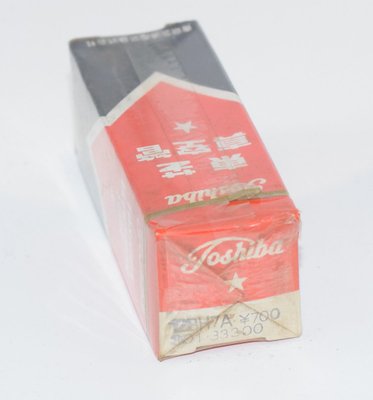
- Toshiba (Japan): Highly regarded for exceptional build quality, consistency, and a clean, detailed sound with excellent extension at both frequency extremes. NOS Toshiba 12BH7A tubes command premium prices.
5. Equivalent or Substitute Types
True drop-in equivalents for the 12BH7A are limited, as its specific combination of moderate mu, high current capability, and high plate dissipation is relatively unique among 9-pin miniature dual triodes. The following types are related but require careful consideration:
Direct Equivalents
| Type | Notes |
|---|---|
| 12BH7 | The original version without the 'A' suffix. Electrically identical but may have slightly looser manufacturing tolerances. Direct drop-in replacement. |
| ECC99 (JJ Electronic) | A modern tube designed by JJ Electronic as a functional equivalent to the 12BH7A. It shares the same 9-pin noval base and similar pinout. However, the ECC99 has somewhat different electrical characteristics (higher plate dissipation rating of 5W per section, different bias requirements). It can often be substituted in circuits designed for the 12BH7A, but operating points should be verified. Not a strict electrical equivalent — check circuit compatibility. |
Related Types (NOT Direct Substitutes)
| Type | Notes |
|---|---|
| 12AU7 / ECC82 | Another medium-mu dual triode (μ ≈ 17–20) with the same 9-pin noval base and identical pinout. However, the 12AU7 has significantly lower plate dissipation (2.75W per section) and lower current capability. It can sometimes be substituted in low-power circuits, but the 12BH7A's higher current and dissipation ratings make it unsuitable as a universal swap. Circuit modifications may be needed. |
| 6BH7A | The 6.3V heater version of the 12BH7A. Electrically identical in all respects except heater configuration — it has a 6.3V / 600mA heater without a center-tap. Uses the same 9-pin noval base. Can be substituted if the heater supply is 6.3V, but pinout differences in the heater connections must be verified. |
| 6BL7GT | Sometimes mentioned in the same context as the 12BH7A due to similar electrical characteristics (medium-mu, high-current dual triode). However, the 6BL7GT uses an octal (8-pin) base, which is a fundamentally different tube type physically. It is not a practical substitute for the 12BH7A in any existing circuit without complete socket and wiring changes. It also has a 6.3V heater only. |
| 6SN7GT / 6SN7GTB | An octal-based medium-mu dual triode with similar amplification factor (μ ≈ 20). While sometimes compared to the 12BH7A in terms of sonic character, it uses an octal base and is not physically interchangeable. Some amplifier designs offer both socket options. |
Important: When substituting any tube type, always verify the specific circuit requirements, operating points, heater supply configuration, and maximum ratings. Even tubes with similar specifications can behave differently in a given circuit, and exceeding maximum ratings can damage both the tube and the equipment.
6. Notable Characteristics
- High current capability: The 12BH7A can deliver up to 20 mA per section, which is substantially more than many comparable miniature dual triodes. This makes it exceptionally capable as a driver tube and in cathode follower applications.
- Generous plate dissipation: With 3.5 W per section (6 W total), the 12BH7A can handle significantly more power than tubes like the 12AU7 (2.75 W per section). This headroom contributes to its clean, dynamic sound and reliability.
- Low plate resistance: The approximately 5,300 Ω plate resistance is notably lower than many dual triodes in its class, enabling better load driving capability and lower output impedance in cathode follower configurations.
- Excellent linearity: The 12BH7A exhibits remarkably linear plate characteristics, producing low distortion even without negative feedback. This linearity is one of the key reasons for its popularity in high-fidelity audio applications.
- Mechanical robustness: Originally designed for the demanding environment of television receivers (which were subject to vibration and thermal cycling), the 12BH7A features sturdy internal construction that contributes to low microphonics and long service life.
- Heater flexibility: The center-tapped heater allows operation at either 12.6 V or 6.3 V, providing flexibility in power supply design and compatibility with a wide range of equipment.
- Thermal considerations: Due to its relatively high plate dissipation capability, the 12BH7A can run quite hot when operated near its maximum ratings. Adequate ventilation and appropriate socket materials (ceramic sockets are recommended for high-dissipation applications) should be used.
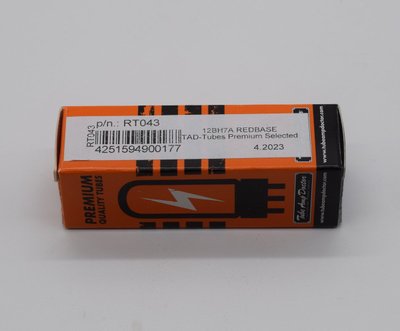
- Availability: Despite being a vintage design, the 12BH7A remains available as both new-old-stock (NOS) from various manufacturers and as current production from companies like TAD (Tube Amp Doctor), JJ Electronic (as the ECC99), and others. NOS examples from premium manufacturers like Toshiba, RCA, and Mullard command significant premiums.
7. Usage in the Audio Community
The 12BH7A occupies a special place in the modern audio community, valued for its unique combination of electrical characteristics and sonic qualities. Its usage spans several key areas:
Headphone Amplifiers
Perhaps the most prominent modern application of the 12BH7A is in dedicated headphone amplifiers. The tube's low plate resistance and high current capability make it uniquely suited for driving headphones, particularly high-impedance models from manufacturers like Sennheiser (HD600, HD650, HD800 series), Beyerdynamic, and AKG. Notable commercial headphone amplifiers using the 12BH7A include designs from Woo Audio, Bottlehead, and numerous boutique builders. The DIY community has also embraced the tube, with many popular headphone amplifier projects centered around the 12BH7A.
Preamplifiers and Line Stages
High-end preamplifier designers appreciate the 12BH7A for its moderate gain, which allows for simple circuit topologies without excessive feedback. The tube's low output impedance (especially in cathode follower configuration) makes it effective at driving long interconnect cables and low-impedance loads. Several respected preamplifier designs from companies like Audio Research, Conrad-Johnson, and others have employed the 12BH7A in various circuit positions.
Driver and Phase Splitter Stages
In power amplifier design, the 12BH7A excels as a driver tube for push-pull output stages. Its ability to deliver the current needed to charge and discharge the grid capacitance of large output tubes (such as KT88, 6550, EL34, or KT120) ensures clean, undistorted drive signals even at high frequencies and high power levels. Long-tailed pair phase splitters using the 12BH7A benefit from the tube's excellent balance between sections and its linear characteristics.
OTL (Output Transformerless) Amplifiers
The 12BH7A has been used in OTL amplifier designs, where its low plate resistance is a significant advantage. In OTL topologies, the output impedance of the amplifier is directly related to the plate resistance of the output tubes, making low-rp tubes essential. While dedicated OTL output tubes like the 6AS7G or 6080 are more common in the output stage, the 12BH7A serves effectively in driver positions and has been used in the output stage of some lower-power OTL designs.
DAC Output Stages and Buffers
Some hybrid digital-to-analog converter designs incorporate the 12BH7A as an analog output buffer stage, combining the precision of modern digital conversion with the harmonic richness and natural sound of a tube output stage. The tube's low output impedance in cathode follower configuration makes it well-suited for this application.
Tube Rolling and Collecting
The 12BH7A is a popular tube for "tube rolling" — the practice of swapping different brands and vintages of the same tube type to fine-tune the sound of an amplifier. Collectors and audiophiles actively seek out NOS examples from preferred manufacturers, with certain variants commanding premium prices:
- Toshiba NOS: Among the most sought-after, prized for exceptional construction quality and sonic refinement. Sealed, unused examples are particularly valuable.
- RCA clear-top: Vintage RCA 12BH7A tubes with clear glass tops are highly collectible and valued for their warm, musical sound.
- Mullard-branded: Whether manufactured in the UK or sourced from other factories, Mullard-branded 12BH7A tubes carry the cachet of the Mullard name and are sought after for their rich tonal character.
- Sylvania green-print: Early Sylvania production with green lettering is prized by collectors.
- TAD Redbase Selected: Modern selected production tubes from Tube Amp Doctor (TAD) offer consistent quality and are popular with players and audiophiles who prefer the reliability of tested, graded new production tubes.
DIY Community
The 12BH7A is extremely popular in the DIY audio community. Its forgiving nature, wide operating range, and excellent performance make it an ideal tube for hobbyist builders. Numerous published amplifier designs and kits feature the 12BH7A, and online forums dedicated to tube audio frequently discuss circuit designs, modifications, and tube rolling experiences with this versatile dual triode.
Professional Audio
While less common in professional recording studio equipment than tubes like the 12AX7 or 12AT7, the 12BH7A has found niche applications in professional audio, particularly in custom-built microphone preamplifiers, equalizers, and monitoring amplifiers where its current delivery and low distortion characteristics are advantageous.
In summary, the 12BH7A stands as one of the most versatile and capable dual triodes ever produced. Its combination of moderate gain, high current capability, low plate resistance, generous dissipation ratings, and excellent sonic characteristics ensure its continued relevance and popularity in the audio community, more than seven decades after its introduction.