1. Introduction and History
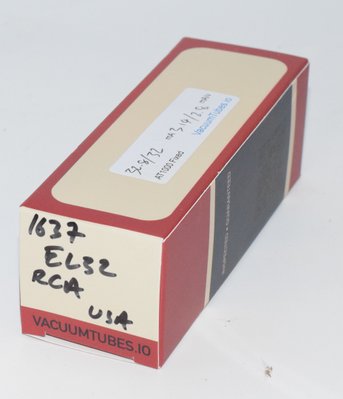
The 1637, also known by its European designation EL32, is a power amplification vacuum tube that emerged during the mid-20th century as part of the broader development of audio amplification technology. Manufactured by RCA in the United States and by various European manufacturers under the EL32 designation, this tube represents an important chapter in the evolution of consumer and professional audio equipment.
The 1637/EL32 was developed during an era when vacuum tubes dominated all electronic amplification. While not as ubiquitous as some of its contemporaries like the 6L6 or EL34, the 1637 found its niche in specific applications requiring its particular electrical characteristics. The tube's development coincided with the post-World War II expansion of home audio equipment and the growing demand for high-fidelity sound reproduction.
The RCA 1637 designation reflects American tube nomenclature conventions of the period, while the EL32 designation was standardized in European tube coding systems. Both refer to the same tube type, though manufacturing variations between RCA and European manufacturers (such as Mullard, Telefunken, and others) created subtle differences in performance characteristics that audiophiles continue to appreciate today.
2. Technical Specifications and Design
Basic Specifications
- Tube Type: Power Pentode
- Heater Voltage: 6.3V AC
- Heater Current: Approximately 1.4A
- Maximum Plate Voltage: 550V
- Maximum Plate Dissipation: 25W
- Typical Operating Plate Voltage: 330-500V (depending on application)
- Typical Operating Plate Current: 65-100mA per tube
- Output Power (Typical): 8-12W per tube (single-ended); 16-24W per pair (push-pull configuration)
- Plate Resistance: Approximately 8,000 ohms
- Amplification Factor: Approximately 9
- Transconductance: Approximately 5,500 micromhos
Physical Characteristics
The 1637/EL32 is housed in a standard octal (8-pin) tube envelope, measuring approximately 2.75 inches (70mm) in height with a diameter of approximately 1.1 inches (28mm). The tube features a glass bulb construction with an internal structure consisting of a directly heated cathode, control grid, screen grid, suppressor grid, and plate electrode.
Internal Design and Operation
As a power pentode, the 1637 incorporates five active elements within its envelope. The suppressor grid (third grid) is internally connected to the cathode and serves to prevent secondary emission effects that would otherwise reduce amplification efficiency. This pentode configuration provides superior linearity and output capability compared to simpler triode designs.
The tube's design emphasizes moderate power output with good efficiency, making it suitable for applications where 8-12 watts of single-ended power is acceptable. The screen grid requires voltage regulation to maintain stable operation, typically supplied through a resistive divider network or dedicated voltage regulator in well-designed circuits.
Electrical Characteristics
The 1637 exhibits relatively linear transfer characteristics, particularly in the mid-range of its operating envelope. Its plate resistance of approximately 8,000 ohms suggests the need for output transformers with impedance ratios appropriate for 8-16 ohm loudspeaker loads. The tube's transconductance of approximately 5,500 micromhos indicates moderate amplification capability, requiring approximately 2-3 volts of grid signal swing for full output power.
The tube operates most efficiently in push-pull (balanced) configurations where two tubes work in complementary phase opposition, allowing for cancellation of even-order harmonics and improved power output efficiency. In push-pull configuration, the 1637 pair can deliver approximately 16-24 watts of power with acceptable harmonic distortion.
3. Applications and Usage
Historical Audio Applications
The 1637/EL32 found primary application in mid-power audio amplifiers of the 1950s and 1960s, particularly in European and American consumer audio equipment. It appeared in:
- Integrated amplifiers rated between 10-20 watts per channel
- Tube-based guitar amplifiers with moderate power ratings
- Public address systems requiring 15-30 watts total output
- Professional monitoring amplifiers in broadcast and recording facilities
- Portable and tabletop radio receivers with internal amplification
Modern Audio Applications
Today, the 1637/EL32 experiences renewed interest within the vintage audio restoration and high-fidelity communities. Modern applications include:
Vintage Equipment Restoration: Enthusiasts restoring original amplifiers, radios, and audio equipment from the 1950s-1960s era seek original or compatible 1637 tubes to maintain authentic performance and appearance. NOS (New Old Stock) examples command premium prices due to scarcity and proven reliability.
Custom Amplifier Construction: Contemporary tube amplifier designers occasionally specify the 1637 in low-to-moderate power designs, appreciating its tonal characteristics and proven reliability. Its relatively modest power requirements make it suitable for applications where lower noise floors and simpler power supply designs are advantageous.
Guitar Amplification: The 1637 appears in boutique and vintage-inspired guitar amplifier designs, where its moderate output power and distinctive harmonic character appeal to musicians seeking specific tonal qualities associated with mid-century amplification.
4. Sound Characteristics of the 1637/EL32
Harmonic Profile and Tonal Character
The 1637/EL32 is renowned among audio enthusiasts for producing a warm, smooth tonal character with a pronounced presence in the midrange frequencies. This sonic signature stems from its pentode design and moderate amplification characteristics, which generate a specific harmonic distortion pattern that many listeners perceive as musically pleasing rather than fatiguing.
Harmonic Distortion Characteristics
When operating near rated output in push-pull configuration, the 1637 generates primarily second and third-order harmonics, with minimal higher-order harmonic content. Second-order harmonics add warmth and perceived loudness without introducing harshness, while third-order harmonics contribute to tonal complexity and depth. This harmonic signature contrasts with more modern solid-state amplifiers, which typically exhibit lower total harmonic distortion but with a different harmonic distribution.
The tube's relatively soft clipping characteristics when driven beyond linear operating range produce a smooth, compressed sound rather than harsh digital-like distortion. This characteristic made the 1637 particularly popular in guitar amplification, where intentional overdrive produces musically useful tonal coloration.
Frequency Response and Bandwidth
The 1637 exhibits a relatively flat frequency response across the audible spectrum (20Hz-20kHz), with gentle roll-off at frequency extremes. The tube's output impedance and typical output transformer design create a subtle presence peak in the upper midrange (2-5kHz), contributing to the perceived clarity and definition in vocal and instrumental reproduction.
Bass response is characterized by good extension with natural compression at very low frequencies, a result of the tube's plate resistance and typical coupling network designs. This compression can impart a sense of tightness and control to bass reproduction that some listeners prefer to more extended but potentially less controlled solid-state designs.
Transient Response and Dynamics
The 1637's transient response is characterized by smooth attack and natural decay, without the electronic precision of solid-state devices. This gentler transient handling contributes to the perception of reduced listener fatigue during extended listening sessions. Dynamic range is adequate for most audio applications, with approximately 80-85dB of dynamic range capability in well-designed amplifier circuits.
Noise and Hum Characteristics
Quality examples of the 1637 exhibit low noise floors, typically measuring 60-70dB below rated output. However, the tube is susceptible to mechanical vibration, particularly microphonic effects when subjected to acoustic feedback from loudspeakers. Proper mechanical isolation and tube dampers effectively mitigate this characteristic. Hum levels depend primarily on power supply design rather than tube characteristics, though some tube examples exhibit slightly higher hum contributions than others.
Tonal Comparison with Related Tubes
Compared to the EL34, the 1637 produces a smoother, less aggressive tonal character with reduced upper midrange presence. Versus the 6L6, the 1637 exhibits slightly more warmth with a less extended high-frequency response. The 1637 occupies a sonic middle ground, offering the smoothness of larger power tubes with the efficiency and moderate output of smaller designs.
5. Use in the Audio Community
Vintage Audio Enthusiasts
The 1637 occupies an important position within the vintage audio restoration community. Enthusiasts actively seek original RCA 1637 tubes and European EL32 variants (particularly Mullard and Telefunken examples) for restoration projects. The tube's sonic reputation has grown as more audiophiles experience restored vintage equipment featuring this tube type.
Online communities dedicated to vintage amplifier restoration frequently discuss the 1637's characteristics, with many users reporting superior sound quality compared to modern tube substitutes. This has created a market for NOS (New Old Stock) examples, with premium-grade tubes commanding prices significantly higher than modern production alternatives.
High-Fidelity Audio Designers
Contemporary high-fidelity amplifier designers appreciate the 1637 for several reasons: its proven reliability over decades of service, its moderate power output suitable for efficient loudspeaker designs, and its distinctive sonic characteristics that appeal to listeners seeking vintage-inspired sound quality. Some boutique amplifier manufacturers specify the 1637 in integrated amplifier designs rated 10-20 watts per channel.
The tube's moderate power dissipation (25W maximum) allows for simpler power supply designs compared to higher-power tubes, reducing component costs and improving reliability. This economic advantage, combined with sonic merit, makes the 1637 an attractive choice for small-scale amplifier manufacturers.
Musical Instrument Amplification
The 1637 has experienced a renaissance in guitar amplification, where boutique amplifier manufacturers design low-to-moderate power amplifiers (typically 5-15 watts) featuring this tube. Musicians appreciate the 1637's smooth overdrive characteristics and warm tonal signature, which contribute to the sought-after vintage amplifier sound.
Vintage guitar amplifiers featuring the 1637 or EL32 (particularly European models) have become increasingly desirable among professional musicians and collectors. This demand has increased the value of original amplifiers and created a market for replica designs incorporating the 1637.
Audio Measurement and Technical Communities
Technical audio enthusiasts and measurement enthusiasts study the 1637 as a representative example of mid-century pentode design. Its well-documented electrical characteristics make it valuable for educational purposes and for understanding how tube amplifier design evolved. Measurement data and listening tests comparing the 1637 to modern alternatives frequently appear in audio forums and technical publications.
Collector and Investment Community
Quality examples of the 1637, particularly NOS RCA tubes with original packaging and Mullard/Telefunken EL32 variants, have become sought-after collectibles. Some rare examples command prices exceeding $50-100 per tube, reflecting both scarcity and the audio community's recognition of their sonic and technical merit.
The investment potential of quality tubes has created a secondary market where knowledgeable collectors buy, sell, and trade examples. This market has helped preserve knowledge about tube characteristics and encouraged proper storage and handling of remaining NOS stock.
6. Equivalent or Substitute Types
Direct Equivalents
- EL32: European designation for the same tube; manufactured by Mullard, Telefunken, Philips, and others
- 6L6GC: Similar power output and operating characteristics; slightly different tonal signature
- EL84 (in pairs): Lower power output but similar tonal characteristics
Functional Substitutes
- EL34: Higher power output with more aggressive tonal character
- 6V6: Lower power output with similar operating characteristics
- KT66: Similar power output with extended high-frequency response
Substitution Considerations
While the 1637 accepts some substitute tubes, direct substitution should only be attempted with thorough understanding of electrical characteristics and proper circuit verification. The 1637's specific plate resistance, transconductance, and maximum ratings must be matched appropriately. Substituting tubes with significantly different characteristics can result in improper bias conditions, reduced output transformer efficiency, or potential circuit damage.
For restoration work, using original tube types is strongly recommended to preserve authentic performance and maintain amplifier value. For new designs, consulting tube substitution guides and verifying electrical compatibility is essential before attempting substitution.
7. Notable Characteristics
Reliability and Longevity
The 1637 is renowned for exceptional reliability, with many examples continuing to function perfectly after 60+ years of service. This durability reflects superior engineering and manufacturing standards of the RCA and European manufacturers. Well-maintained examples often require no restoration beyond cleaning of tube pins and sockets.
Tonal Signature Consistency
Quality examples of the 1637 demonstrate remarkable consistency in tonal characteristics across different manufacturing sources and production years. This consistency allows for predictable performance in amplifier designs and contributes to the tube's reputation among audio professionals.
Microphonics Susceptibility
The 1637, like many power tubes, exhibits some susceptibility to microphonic effects—mechanical vibration causing audible noise. Quality tube dampers and proper mechanical isolation effectively address this characteristic, which is more a design consideration than a tube defect.
Availability and Pricing
Original 1637 tubes have become increasingly scarce, with NOS examples commanding premium prices. This scarcity reflects limited original production quantities and the tube's popularity among audio enthusiasts. Modern production alternatives are not available, making original examples the only option for authentic restoration and for designs specifically calling for this tube type.
Conclusion
The 1637/EL32 vacuum tube represents an important chapter in audio amplification history. Its combination of moderate power output, smooth tonal characteristics, and proven reliability has earned it a dedicated following among audio enthusiasts, vintage equipment restorers, and contemporary amplifier designers. While not as universally recognized as some of its contemporaries, the 1637 occupies a unique position in the tube amplifier landscape, offering distinctive sonic qualities that appeal to listeners seeking authentic vintage audio reproduction.
For those restoring vintage equipment or designing new amplifiers, the 1637 offers a compelling combination of technical merit and sonic appeal. Its scarcity has elevated its status among collectors and enthusiasts, ensuring that this capable tube type will remain relevant within the audio community for decades to come.