Introduction and History
The 1X2B is a rare and specialized vacuum tube that represents a unique category within the broader vacuum tube ecosystem. Developed during the mid-20th century, the 1X2B emerged as manufacturers sought to create compact, high-efficiency rectifier tubes suitable for specific applications where space and power efficiency were paramount concerns.
The tube's designation follows the RMA (Radio Manufacturers Association) numbering system, where the initial "1" indicates a heater voltage of 1.4 volts, making it one of the lowest-heater-voltage rectifier tubes ever produced. This characteristic made it particularly valuable for portable equipment, battery-powered devices, and applications where power consumption needed to be minimized.
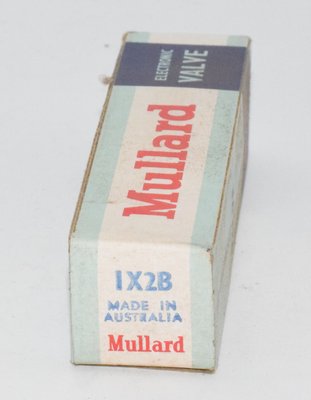
While not as widely documented as more common rectifier tubes like the 5Y3 or EZ81, the 1X2B gained recognition among specialized manufacturers and remains highly sought after by vintage equipment enthusiasts and restoration specialists. Mullard Australia produced notable examples of this tube, and original NOS (New Old Stock) specimens are considered premium components in the collector and audio restoration markets.
Technical Specifications and Design
Physical and Electrical Characteristics
The 1X2B is a compact, dual-diode rectifier tube housed in a miniature octal or noval base configuration, depending on the manufacturer. Key technical specifications include:
- Heater Voltage: 1.4V AC (extremely low, enabling efficient portable operation)
- Heater Current: Approximately 0.15A (minimal power draw)
- Maximum Plate Voltage: 330V DC (typical for low-voltage applications)
- Maximum Plate Current: 50-75mA per diode (modest current capacity)
- Peak Inverse Voltage (PIV): 1200V (suitable for standard rectification circuits)
- Typical Output Current: 40-50mA continuous (at rated conditions)
- Filament Type: Thoriated tungsten cathode (provides excellent emission characteristics)
Construction and Internal Design
The 1X2B features a dual-diode design with two independent rectifying elements within a single envelope. The tube contains:
- Two separate cathodes with individual heating elements sharing a common 1.4V heater supply
- Two independent anode structures optimized for rectification efficiency
- Internal construction designed to minimize interelectrode capacitance and leakage
- Robust mechanical design despite compact dimensions
The dual-diode configuration allows for full-wave rectification when properly connected in a bridge circuit, or can serve as two independent half-wave rectifiers depending on application requirements. The low-voltage heater design necessitates careful circuit design to ensure adequate current capacity from the power source.
Operating Characteristics
The 1X2B exhibits the following performance characteristics:
- Rectification Efficiency: Approximately 65-70% (typical for tube rectifiers of this era)
- Voltage Regulation: Moderate (approximately 10-15% under varying load conditions)
- Temperature Coefficient: Positive (slight increase in resistance with increased temperature)
- Warm-up Time: Approximately 30-45 seconds to reach stable output
- Tube Life: 2,000-3,000 hours typical under normal operating conditions
Applications and Usage
Historical Applications
The 1X2B was designed for and employed in several specialized categories of electronic equipment:
- Portable Radio Equipment: Battery-powered and AC-powered portable radios where heater current minimization was critical
- Military Communications: Field equipment and portable transmitters requiring low power consumption
- Early Television Sets: Particularly compact or portable television receivers
- Test Equipment: Laboratory instruments and measurement devices with strict power budgets
- Audio Amplifiers: Specialized low-power amplifier designs, particularly in European markets
Modern Applications and Restoration
Today, the 1X2B finds application primarily in:
- Vintage Equipment Restoration: Restoring original portable radios and communications equipment to working condition
- Tube Amplifier Design: Custom and boutique amplifier builders seeking unique sonic characteristics
- Collector Projects: Enthusiasts building working examples of historical electronic equipment
- Educational Purposes: Museum displays and educational demonstrations of early rectification technology
Sound Characteristics in Audio Applications
Sonic Profile
When employed in audio amplifier designs, the 1X2B exhibits distinctive sonic characteristics that differentiate it from more conventional rectifier tubes:
- Tonal Warmth: The tube's rectification characteristics impart a subtle warmth to the audio signal, with a gentle compression of dynamic peaks that some listeners perceive as musical coloration
- Harmonic Structure: The 1X2B produces a characteristic harmonic signature with emphasis on even-order harmonics, contributing to a smooth, tube-like quality that many audiophiles find pleasing
- Transient Response: The tube exhibits moderate transient response with a slight softening of attack characteristics, creating a more rounded, less aggressive presentation
- Frequency Response: Relatively neutral across the audio spectrum, though the rectifier's modest current capacity can influence overall amplifier headroom and dynamics
- Noise Floor: Generally quiet, particularly in well-designed circuits with adequate filtering
- Dynamic Range: Moderate compression of dynamic peaks creates a more compressed, intimate soundstage compared to solid-state rectification
Comparative Sonic Characteristics
Compared to other rectifier tubes and solid-state alternatives:
- vs. 5Y3: The 1X2B offers slightly warmer, more compressed characteristics, though with reduced current capacity
- vs. EZ81: More vintage character with less regulation; some prefer the 1X2B for its more pronounced tube coloration
- vs. Solid-State Rectification: Noticeably warmer and more compressed, with greater harmonic coloration and dynamic compression
Use in the Audio Community
Boutique Amplifier Design
The 1X2B has gained appreciation among high-end audio designers and boutique amplifier manufacturers, particularly those focused on:
- Low-power, single-ended triode (SET) amplifiers
- Vintage-inspired designs emphasizing sonic character over specifications
- Portable and battery-powered audio equipment
- Specialized applications where the tube's unique characteristics provide sonic advantages
Audiophile Community Appreciation
Within the audiophile community, the 1X2B is valued for several reasons:
- Rarity and Exclusivity: The tube's scarcity makes it desirable for collectors and those seeking unique sonic signatures
- Vintage Authenticity: Using original 1X2B tubes in restoration projects provides historically accurate operation and sound
- Sonic Character: Many listeners prefer the tube's warm, slightly compressed sonic presentation for certain music genres
- Investment Value: NOS (New Old Stock) 1X2B tubes, particularly quality examples from manufacturers like Mullard Australia, have appreciated in value
Restoration and Collector Markets
The 1X2B occupies an important niche in the vintage audio restoration market:
- Original Equipment Restoration: Essential for bringing vintage portable radios and specialized audio equipment back to original specifications
- Collector Demand: Enthusiasts actively seek NOS examples, particularly from respected manufacturers
- Premium Pricing: Original Mullard Australia 1X2B tubes command premium prices due to their quality reputation and rarity
- Authenticity Factor: Restorers prioritize original tubes for historical accuracy and proper equipment operation
DIY and Hobbyist Applications
Amateur radio enthusiasts and DIY tube amplifier builders appreciate the 1X2B for:
- Custom amplifier projects emphasizing sonic character
- Portable amplifier designs benefiting from low heater current requirements
- Experimental audio circuits exploring rectifier tube characteristics
- Educational projects demonstrating tube rectification principles
Equivalent and Substitute Types
Direct Equivalents
The following tubes are considered direct electrical equivalents to the 1X2B:
- 1X2: Earlier version with identical specifications; electrically interchangeable
- DL91: European equivalent with similar characteristics, though less commonly encountered
Functional Alternatives
While not direct replacements, the following tubes can substitute in many applications:
- 1B3: Higher current capacity (100mA), similar heater voltage; suitable for higher-power applications
- 1D3: Similar power envelope with different electrical characteristics
- 5Y3: Standard full-wave rectifier; requires 5V heater supply but offers greater availability and current capacity
- EZ81 (6CA4): Modern equivalent with better regulation; 6.3V heater supply
Important Substitution Considerations
When substituting rectifier tubes, consider:
- Heater Voltage Compatibility: The 1X2B's 1.4V heater requirement is unique; substitutes must match or be compatible with existing power supplies
- Current Capacity: Lower-current alternatives may limit amplifier output; higher-current tubes may overheat the power transformer
- Voltage Regulation: Different rectifier tubes exhibit different regulation characteristics, affecting amplifier performance
- Sonic Impact: Different rectifier tubes produce measurably different sonic characteristics
Notable Characteristics
Unique Features
Several characteristics distinguish the 1X2B from other rectifier tubes:
- Extremely Low Heater Voltage: At 1.4V, the 1X2B has one of the lowest heater voltages of any tube type, enabling unique circuit designs
- Compact Design: The miniature envelope contains dual-diode functionality in minimal space
- Specialized Application Focus: Unlike general-purpose rectifiers, the 1X2B was designed for specific, demanding applications
- Rarity Factor: Limited production runs and historical obscurity make original examples increasingly scarce
Manufacturing Quality
Mullard Australia examples of the 1X2B are particularly noted for:
- Excellent internal construction and attention to detail
- Superior emission characteristics and long operational life
- Consistent performance across production batches
- Reliability in demanding applications
- Collector value appreciation due to reputation and rarity
Identification and Markings
Authentic 1X2B tubes typically feature:
- Clear, legible markings indicating manufacturer and tube type
- Mullard examples often display the distinctive Mullard shield logo
- Date codes indicating manufacturing period
- Quality indicators such as construction details and internal structure clarity
Condition and Valuation
When evaluating NOS 1X2B tubes, consider:
- Vacuum Integrity: Original tubes should show no signs of gas leakage or internal contamination
- Visual Appearance: Clear glass envelope, clean internals, and legible markings indicate quality
- Manufacturing Reputation: Mullard Australia tubes command premium prices due to quality reputation
- Rarity: Original 1X2B examples are increasingly difficult to locate, supporting higher valuations
- Documentation: Tubes with original packaging or documentation are more valuable to collectors
Conclusion
The 1X2B represents a fascinating chapter in vacuum tube history, representing a specialized solution to the unique power requirements of mid-20th century portable and compact electronic equipment. While not as widely encountered as more common rectifier tubes, the 1X2B deserves recognition for its innovative design, reliable performance, and distinctive sonic characteristics in audio applications.
For restoration specialists, vintage equipment enthusiasts, and audiophiles seeking unique sonic character, the 1X2B offers genuine value and historical authenticity. Quality examples, particularly those from respected manufacturers like Mullard Australia, represent worthwhile investments for collectors and those building specialized audio equipment.
The tube's extreme rarity in today's market, combined with its unique electrical and sonic characteristics, ensures continued appreciation among enthusiasts. Whether restoring original equipment to working condition or exploring its sonic potential in contemporary audio designs, the 1X2B remains a tube of genuine interest and significance within the broader vacuum tube community.