1. Introduction and History
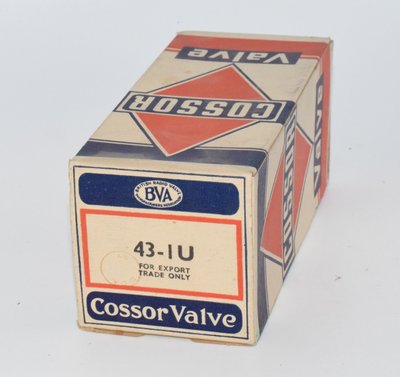
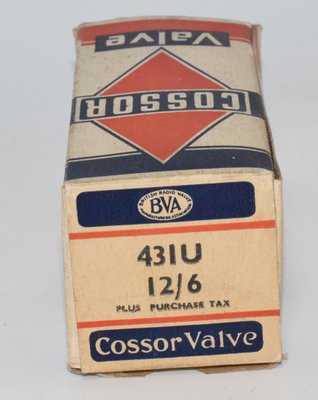
The 43IU is a vacuum tube rectifier manufactured by Cossor, a prominent British electronics company with a rich heritage in valve production. Cossor, founded in 1904, became one of the UK's leading manufacturers of radio and electronic components throughout the 20th century. The 43IU represents the company's expertise in designing reliable rectification tubes for audio and radio applications.
The 43IU emerged during the mid-20th century when vacuum tube technology dominated consumer electronics. As a rectifier tube, it was designed to convert alternating current (AC) to direct current (DC) for use in power supply circuits. The Cossor 43IU became a standard component in British radio receivers, amplifiers, and audio equipment, earning a reputation for reliability and consistent performance.
Today, the 43IU remains sought after by vintage audio enthusiasts, restorers, and audiophiles who appreciate the sonic qualities of tube-based equipment. NOS (New Old Stock) examples command premium prices due to their scarcity and the continued demand from the vintage audio community.
2. Technical Specifications and Design
Basic Electrical Specifications
Tube Type: Vacuum Tube Rectifier
Manufacturer: Cossor (UK)
Filament Voltage: Typically 4.0V AC
Filament Current: Approximately 1.5A
Maximum Plate Voltage: 330V (per plate)
Maximum DC Output Current: 120mA
Rectification Type: Full-wave rectification
Heater-Cathode Voltage Rating: 330V maximum
Physical Characteristics
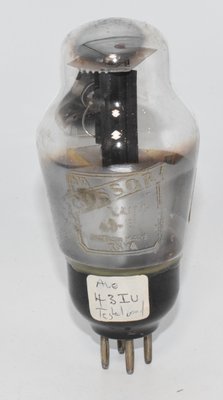
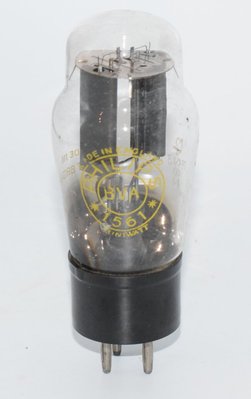
The 43IU employs a 4-pin base configuration, typical of British vacuum tubes from this era. The tube features a glass envelope with internal electrode structure optimized for rectification duties. The physical dimensions are compact, measuring approximately 2.5 inches in height, making it suitable for integration into space-constrained audio chassis designs.
Internal Construction
The 43IU contains two anodes (plates) and a centrally located heated cathode, enabling full-wave rectification in a single tube envelope. This dual-anode design allows the tube to rectify both halves of the AC waveform, resulting in smoother DC output with reduced ripple compared to half-wave rectification. The cathode is indirectly heated via a separate filament, allowing isolation between the heater circuit and the high-voltage rectification circuit.
Performance Characteristics
The tube exhibits excellent rectification efficiency with minimal forward voltage drop, typically around 15-20V per anode when conducting. This low voltage drop is crucial for maintaining adequate DC output voltage in power supply circuits. The 43IU demonstrates stable performance across its rated operating range and maintains consistent characteristics throughout its operational life when used within specifications.
3. Applications and Usage
Traditional Applications
The 43IU was primarily designed for use in:
- Radio Receivers: Power supply rectification in AM/FM radio sets
- Audio Amplifiers: Output stage power supply in tube amplifiers
- Test Equipment: Rectification in vintage laboratory instruments
- Industrial Electronics: General-purpose rectification in mid-20th century equipment
Modern Audio Applications
In contemporary audio applications, the 43IU serves as a rectifier tube in restoration and custom-build projects. Vintage audio enthusiasts employ the 43IU in:
- Tube Amplifier Restorations: Replacing original rectifier tubes in vintage amplifiers to restore original sonic characteristics
- Custom Amplifier Builds: Hobbyists and professional designers incorporating the 43IU into new amplifier designs that leverage vintage tube technology
- Preamp Restoration: Restoring vintage preamps and control amplifiers that originally used this tube type
- Specialized Audio Equipment: Mastering equipment and professional audio gear designed around tube rectification
Usage in the Audio Community
The 43IU occupies a specialized niche within the vintage audio community. While not as commonly discussed as output tubes like the EL34 or 300B, rectifier tubes like the 43IU are highly valued by knowledgeable enthusiasts who understand their impact on overall amplifier performance.
Restoration and Authenticity: Audio restorers prioritize original rectifier tubes when possible, as they contribute to the authentic sonic signature of vintage equipment. The Cossor 43IU, in particular, is prized for maintaining period-correct specifications and sound character.
Sonic Impact: Experienced tube amp users recognize that rectifier tubes significantly influence the overall sound of an amplifier. The 43IU imparts a smooth, natural rectification characteristic that many audiophiles associate with the warm, organic sound of vintage British audio equipment.
Collector Value: NOS Cossor 43IU tubes command premium prices in the vintage tube market, reflecting their scarcity and desirability. Collectors view these tubes as important examples of British valve manufacturing excellence.
Technical Forums and Communities: Tube audio enthusiasts actively discuss rectifier selection on audio forums, with the 43IU frequently mentioned as a superior choice for applications where it can be employed. Debates about sonic differences between various rectifier tubes often highlight the 43IU's particular characteristics.
4. Sound Characteristics of the 43IU
While rectifier tubes are often overlooked in discussions of tube tone, experienced audiophiles recognize that the 43IU contributes distinct sonic qualities to amplifier performance.
Tonal Characteristics
Smooth Rectification: The 43IU delivers exceptionally smooth rectification, resulting in clean DC output with minimal noise injection into the audio signal path. This cleanliness translates to a quiet background against which musical details emerge clearly.
Warm Midrange: The tube imparts a gentle warmth to the midrange, a characteristic associated with high-quality British tube equipment. This warmth is not colorations but rather a natural extension of the tube's rectification efficiency.
Organic Presentation: Users frequently describe the 43IU as contributing an "organic" quality to audio reproduction. This quality manifests as natural-sounding dynamics and transients that avoid artificial harshness.
Dynamic Headroom: The 43IU's efficient rectification provides excellent power supply regulation, allowing amplifiers to maintain dynamic headroom during musical peaks. This results in improved separation and imaging capabilities.
Frequency Response Influence
The rectifier tube's low forward voltage drop and efficient rectification characteristics minimize power supply sag during high-current demands. This maintains consistent voltage delivery to output stages, preserving frequency response linearity and preventing the compressed, fatiguing sound associated with inadequate power supply performance.
5. Equivalent or Substitute Types
Finding exact equivalents to the 43IU can be challenging due to its specific design parameters. However, several alternatives exist for applications requiring full-wave rectification:
Direct Equivalents
- Mullard GZ32: British-manufactured full-wave rectifier with similar electrical characteristics, though with slightly different heater requirements
- Telefunken EZ81: German equivalent offering comparable rectification performance with 6.3V heater supply
Functional Alternatives
- RCA 5Y3: American full-wave rectifier with similar current capacity, though different electrical ratings
- Mullard EZ81: European standard rectifier tube with broader availability in modern markets
Substitution Considerations
Direct substitution of rectifier tubes requires careful attention to heater voltage, maximum plate voltage, and output current specifications. The 43IU's 4.0V filament requirement is relatively uncommon in modern equipment, making substitution sometimes necessary but requiring circuit verification to ensure compatibility.
When substituting the 43IU, audiophiles should note that different rectifier tubes, even with similar electrical ratings, can produce subtle sonic differences. Some users report that certain substitutes alter the amplifier's character, emphasizing the importance of matching rectifier selection to the specific equipment and desired sonic outcome.
6. Notable Characteristics
British Manufacturing Excellence: As a Cossor product, the 43IU represents the high standards of British valve manufacturing during the golden age of tube electronics. Cossor's quality control and engineering contributed to the tube's reputation for reliability.
Scarcity of NOS Stock: Original Cossor 43IU tubes in New Old Stock condition are increasingly rare, with most remaining examples residing in private collections or specialized tube dealers' inventories. This scarcity drives premium pricing.
Robust Construction: The 43IU exhibits robust internal construction capable of handling the electrical stresses of rectification duty. Many examples from the 1950s-1960s remain fully functional today, testament to Cossor's engineering.
Historical Significance: The 43IU represents an important chapter in British electronics history, embodying the design philosophy and manufacturing capabilities of mid-20th century British industry.
Collector Interest: Beyond functional audio applications, the 43IU attracts collector interest as a significant artifact of vacuum tube technology and British industrial design.
Conclusion
The 43IU vacuum tube rectifier, manufactured by the respected British company Cossor, represents an important piece of audio and electronics history. Its efficient rectification characteristics, smooth sonic presentation, and reputation for reliability have secured its place in the hearts of vintage audio enthusiasts and professional restorers. While modern solid-state rectification offers convenience and reliability advantages, the 43IU remains a preferred choice for those seeking to preserve or recreate the authentic sonic character of vintage tube-based audio equipment. For collectors, restorers, and serious audiophiles, the Cossor 43IU exemplifies the quality and craftsmanship of British valve manufacturing at its finest.