1. Introduction and History
The 5U4GB is a heavy-duty, directly heated, full-wave vacuum rectifier tube designed for use in power supplies requiring high current output. It is the ruggedized, shorter-envelope successor to the original 5U4G, which was introduced in the late 1930s and early 1940s as a workhorse rectifier for high-power amplifiers, radio receivers, and industrial equipment. The 'GB' suffix denotes the tube's redesigned, more compact straight-sided glass envelope compared to the taller, shouldered ST-shape of the original 5U4G, while maintaining essentially the same electrical characteristics.
As a directly heated (filamentary cathode) rectifier, the 5U4GB's filament serves directly as the cathode — there is no separate cathode structure. The filament itself emits electrons and functions as the electron source for rectification. This is an important distinction from indirectly heated rectifiers such as the 5AR4/GZ34, where a separate cathode sleeve is heated by an internal heater element.
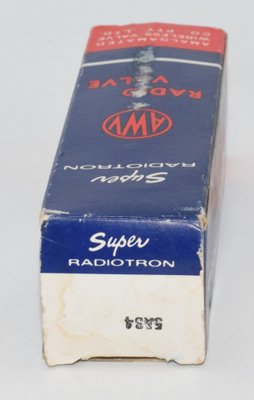
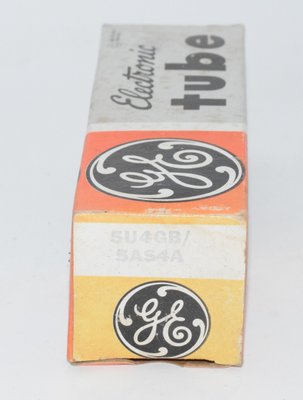
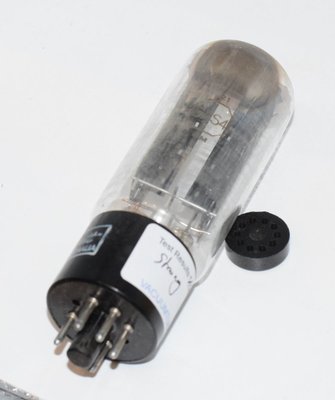
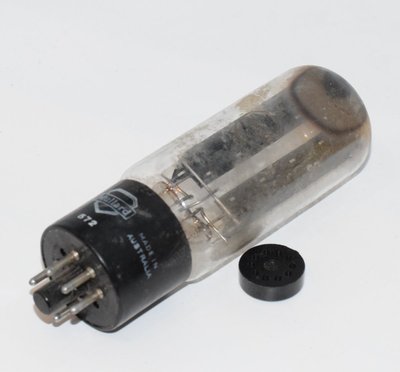
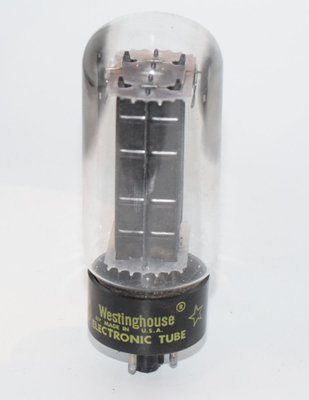
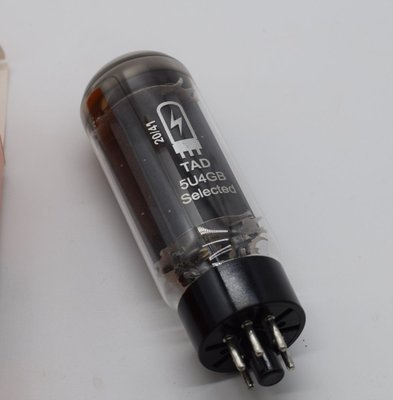
The 5U4GB was manufactured by virtually every major tube producer worldwide, including RCA, GE, Sylvania, Westinghouse, Tung-Sol, Mullard, Hitachi, and many others. It became one of the most widely used rectifier tubes in high-fidelity audio amplifiers, particularly in American-designed equipment from the 1950s and 1960s. Today, it remains in high demand among audiophiles and guitar amplifier enthusiasts, with new-old-stock (NOS) examples from manufacturers like RCA, GE, and Sylvania commanding premium prices. Current production versions are available from manufacturers such as TAD (Tube Amp Doctor) and various Chinese and Russian producers.
2. Technical Specifications and Design
General Description
- Tube Type: Full-wave vacuum rectifier (directly heated / filamentary cathode)
- Cathode Type: Directly heated (oxide-coated filament — the filament IS the cathode)
- Base Type: Octal (8-pin) — International Octal base
- Envelope: Straight-sided glass (ST-16 or similar tubular glass), shorter than the original 5U4G
- Mounting Position: Any (designed for universal mounting orientation)
Heater / Filament Ratings
- Filament Voltage (Ef): 5.0 V AC
- Filament Current (If): 3.0 A
- Filament Power: 15 W
Note: Because the 5U4GB is a directly heated rectifier, the filament serves as the cathode. The DC output (B+) is typically taken from the center-tap of the filament transformer winding, not from a dedicated cathode pin. This is a critical design consideration when implementing this tube in power supply circuits.
Maximum Ratings (Absolute Maximum Values)
| Parameter | Choke-Input Filter | Capacitor-Input Filter |
|---|---|---|
| Max AC Plate Voltage (RMS) per plate | 450 V | 450 V |
| Max Peak Inverse Voltage (PIV) | 1550 V | 1550 V |
| Max DC Output Current | 275 mA | 225 mA |
| Max Peak Plate Current per plate | 600 mA | 675 mA |
Note: Maximum ratings vary slightly between manufacturers. The values above are representative of standard RCA and GE datasheets. Always consult the specific manufacturer's datasheet for the exact production variant in use.
Typical Operating Conditions
The following are representative operating conditions from standard datasheets:
Capacitor-Input Filter Operation
- AC Plate Voltage (RMS per plate): 425 V
- Input Capacitor: 40 µF (typical maximum)
- DC Output Current: 225 mA
- Approximate DC Output Voltage: ~365 V (at 225 mA)
- Approximate Tube Voltage Drop: 46–52 V at full rated current (varies with load current and specific operating conditions)
Choke-Input Filter Operation
- AC Plate Voltage (RMS per plate): 450 V
- DC Output Current: 275 mA
- Approximate DC Output Voltage: ~355 V (at 275 mA)
Note: The voltage drop across the 5U4GB is notably higher than that of many other octal rectifiers (such as the 5AR4/GZ34). At full rated DC output current of 225–275 mA, the total voltage drop is typically in the range of 46–52 V, depending on filter type and load conditions. Some datasheets may show slightly different figures depending on test conditions. This relatively high voltage drop is a defining characteristic of the 5U4GB and must be accounted for in power supply design.
Rectifier-Specific Notes
As a rectifier (diode) tube, the 5U4GB does not have the following parameters that apply to amplifying tubes:
- Amplification Factor (µ): Not applicable — this is a rectifier, not an amplifying tube
- Transconductance (gm): Not applicable
- Plate Resistance (rp) as an amplifying parameter: Not applicable in the conventional triode/pentode sense. The relevant parameter is the effective internal resistance (forward voltage drop vs. current characteristic), which determines the tube's regulation behavior.
- Grid Bias: Not applicable — the 5U4GB has no control grid
Pin Configuration (Octal Base — Bottom View)
| Pin Number | Connection |
|---|---|
| Pin 1 | No connection (NC) |
| Pin 2 | Filament / Cathode (one end of filament) |
| Pin 3 | No connection (NC) |
| Pin 4 | Plate 1 (Anode 1) |
| Pin 5 | No connection (NC) |
| Pin 6 | Plate 2 (Anode 2) |
| Pin 7 | No connection (NC) |
| Pin 8 | Filament / Cathode (other end of filament) |
Important: Because the 5U4GB is a directly heated rectifier, pins 2 and 8 are both filament connections AND cathode connections simultaneously — the filament IS the cathode. In a typical full-wave rectifier power supply circuit, the B+ DC output is derived from the center-tap of the 5V filament transformer winding, not from a separate cathode pin on the tube socket. The center-tap of the filament winding effectively serves as the cathode output point for the rectified DC. This is fundamentally different from indirectly heated rectifiers where a dedicated cathode pin provides the DC output.
Physical Dimensions (Approximate)
- Maximum Overall Length: Approximately 117 mm (4.6 inches) — shorter than the 5U4G
- Maximum Diameter: Approximately 51 mm (2.0 inches)
- Envelope Type: Straight-sided tubular glass (T-12 or ST-16 depending on manufacturer)
Note: Physical dimensions can vary slightly between manufacturers. The 5U4GB is notably shorter than the original 5U4G, which used a larger ST-16 shouldered glass envelope and could be up to approximately 140 mm (5.5 inches) tall.
3. Applications and Usage
The 5U4GB was designed as a general-purpose, high-current full-wave rectifier for power supply applications. Its primary uses include:
- High-Fidelity Audio Amplifiers: The 5U4GB is found in the power supplies of many classic tube amplifiers, including designs from Dynaco, Fisher, Scott, McIntosh, Eico, and many others. It provides the high-voltage DC (B+) supply for output tubes such as the 6L6, EL34, KT66, KT88, 6550, and others.
- Guitar Amplifiers: Many classic and modern guitar amplifier designs use the 5U4GB, particularly those requiring higher current capability. It appears in various Fender, Marshall, and boutique amplifier designs.
- Radio Receivers and Transmitters: The original application for the 5U4 family was in high-power radio equipment requiring robust rectification.
- Industrial and Test Equipment: The tube's high current rating and rugged construction made it suitable for laboratory power supplies and industrial equipment.
- Organ Amplifiers: Many Hammond organ tone cabinets and other electronic organ amplifiers used the 5U4GB in their power supplies.
The 5U4GB is particularly well-suited to applications where moderate to high B+ current is required (up to 275 mA with choke-input filter) and where the relatively high voltage drop across the rectifier is acceptable or even desirable for its effect on power supply dynamics.
4. Sound Characteristics
While a rectifier tube does not directly amplify the audio signal, it profoundly influences the character of the power supply — and therefore the sonic behavior of the entire amplifier. The 5U4GB has a well-established reputation among audiophiles and guitar amplifier enthusiasts for its distinctive sonic contribution:
Tonal Qualities
- Warmth and Richness: The 5U4GB is widely regarded as contributing a warm, full-bodied tonal character to amplifiers. Its relatively high internal impedance and significant voltage drop create a power supply with inherently "softer" regulation compared to solid-state rectification or lower-impedance tube rectifiers like the 5AR4/GZ34.
- Natural Compression ("Sag"): One of the most celebrated characteristics of the 5U4GB is its contribution to dynamic "sag" — a subtle, natural compression effect that occurs when the amplifier is driven hard. As the output tubes draw more current during loud passages, the B+ voltage drops slightly due to the rectifier's internal resistance. This creates a gentle, musical compression that many players and listeners find highly desirable. The effect is more pronounced with the 5U4GB than with lower-impedance rectifiers.
- Smooth Transient Response: The directly heated filamentary cathode and the tube's inherent impedance characteristics contribute to a slightly softened attack on transients compared to solid-state rectification. This is often described as a more "organic" or "natural" feel.
- Midrange Presence: Many listeners report that the 5U4GB contributes a pleasing midrange fullness and presence, with a slightly rounded quality in the upper frequencies that avoids harshness.
- Bass Response: The higher internal impedance of the 5U4GB, compared to tubes like the 5AR4, can result in slightly less tight bass response under heavy load conditions. Some audiophiles prefer this characteristic for its musicality, while others seeking maximum bass definition may prefer a lower-impedance rectifier.
- Gradual Warm-Up: As a directly heated rectifier, the 5U4GB reaches operating temperature relatively quickly (within a few seconds), but the warm-up is not instantaneous. This provides a degree of soft-start behavior that is gentler on filter capacitors than an instant-on solid-state rectifier, though less gradual than the warm-up of an indirectly heated rectifier like the 5AR4/GZ34.
Sonic Differences Between Manufacturers
Audiophiles and tube enthusiasts frequently report sonic differences between 5U4GB tubes from different manufacturers:
- RCA (USA-made): Often considered the benchmark, with a balanced, warm sound and good dynamics. Black-plate versions are particularly sought after.
- GE: Frequently described as slightly more detailed and open in the top end compared to RCA, with solid bass performance.
- Sylvania: Often praised for a smooth, refined character with excellent midrange clarity.
- Tung-Sol: Valued for dynamic punch and a slightly more forward presentation.
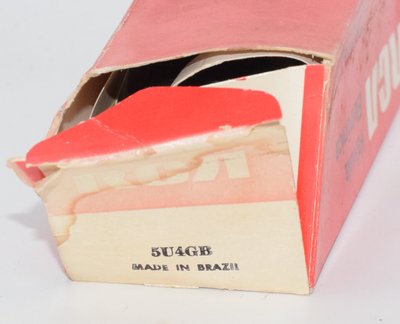
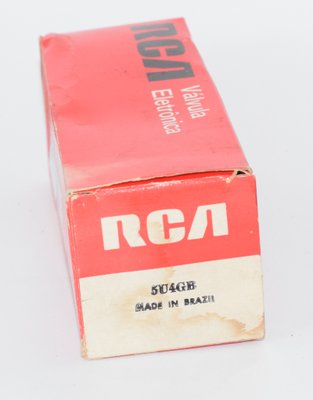
- RCA Brazil: NOS examples are popular as a more affordable alternative to USA-made RCA tubes, generally offering similar tonal characteristics with good reliability.
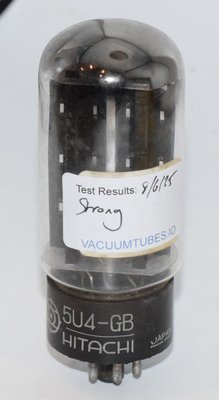
- Hitachi (Japan): Known for consistent quality and a clean, well-balanced sound.
- Current Production (TAD, etc.): Modern production 5U4GB tubes from companies like TAD (Tube Amp Doctor) offer reliable performance and are often selected and tested for quality. They provide a good baseline 5U4GB sound, though some enthusiasts prefer the character of specific NOS brands.
Note: Sonic descriptions of rectifier tubes are inherently subjective and system-dependent. The perceived differences between brands can be influenced by manufacturing tolerances, aging, and the specific circuit in which the tube is used. Nevertheless, the consensus among experienced listeners is that rectifier tube selection does have an audible impact on amplifier performance.
5. Equivalent or Substitute Types
Finding true equivalents for the 5U4GB requires careful attention to electrical ratings, pinout, and heating characteristics. The following information is organized by degree of interchangeability:
Direct Equivalents (Drop-In Replacements)
- 5U4G: The original version of the same tube with a taller ST-16 glass envelope. Electrically identical to the 5U4GB. The only difference is the physical size of the glass envelope — ensure adequate clearance in the chassis. A true drop-in replacement electrically.
- 5U4: The metal-envelope version of the same tube (where available). Electrically equivalent. Less commonly encountered.
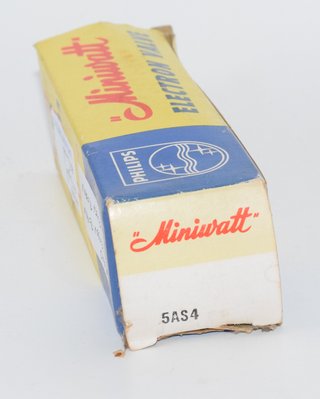
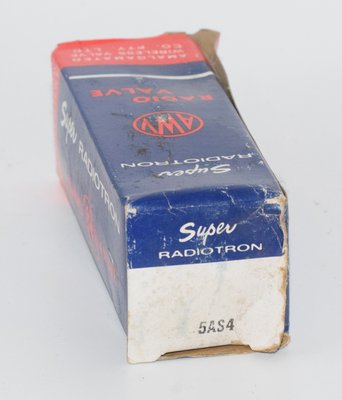
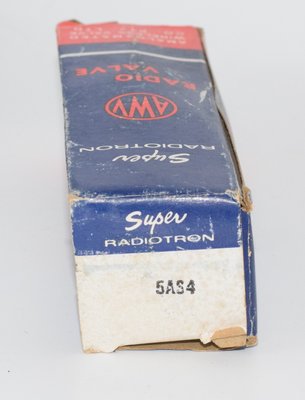
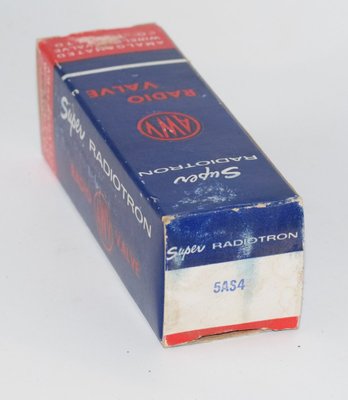
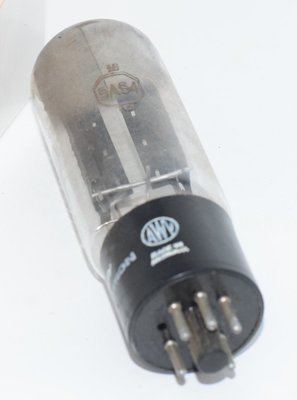
- 5AS4: An equivalent designation used by some manufacturers (notably RCA Brazil). Electrically identical to the 5U4GB. This is the same tube under a different type number, as confirmed by cross-reference listings. Many NOS tubes are marked "5U4GB / 5AS4."
- CV575: British military (CV) designation equivalent to the 5U4G/5U4GB.
- U52: British commercial designation equivalent to the 5U4G. Verify specific manufacturer ratings before substitution.
Possible Substitutes (With Caveats — NOT Direct Equivalents)
- 5AR4 / GZ34: This is NOT a direct equivalent and should NOT be treated as a drop-in replacement. The 5AR4/GZ34 is an indirectly heated rectifier with significantly different characteristics:
- Much lower voltage drop (approximately 10–17V vs. 46–52V for the 5U4GB at comparable currents)
- Different warm-up behavior (the indirectly heated cathode takes longer to reach operating temperature, providing a slower B+ rise)
- Different maximum current ratings
- The lower voltage drop means the B+ voltage will be significantly higher when a 5AR4 is substituted for a 5U4GB, which can overstress other components (filter capacitors, output tubes, output transformers)
Substituting a 5AR4/GZ34 for a 5U4GB requires careful circuit analysis and may necessitate modifications to resistor values, bias settings, or other components to accommodate the higher B+ voltage. Do not make this substitution without understanding the implications.
- 5R4GY / 5R4GYB: Another directly heated full-wave rectifier with the same octal base and pinout. However, the 5R4GY has different maximum ratings (higher maximum AC plate voltage of 700V per plate but lower maximum DC output current of 250 mA) and a different voltage drop characteristic. It can sometimes be used as a substitute in circuits that do not demand the full current capability of the 5U4GB, but the different voltage drop will affect B+ voltage. Not a direct equivalent.
- GZ37 / 53KU: A British full-wave rectifier using the same octal base and pinout. Electrically, the GZ37 has different ratings from the 5U4GB — it is typically rated for lower maximum current. While the pinout is compatible, the different electrical characteristics mean it is not a direct equivalent. Verify ratings carefully before substitution.
- 5V4G / 5V4GA: An indirectly heated rectifier with the same octal base. Lower current capability and different warm-up characteristics. Not a direct equivalent. The different voltage drop and warm-up behavior will affect circuit operation.
Solid-State Replacement
Plug-in solid-state replacements for the 5U4GB are available from various manufacturers. These typically use silicon diodes mounted on an octal plug base. While they provide reliable rectification with very low voltage drop and no warm-up period, they fundamentally change the power supply characteristics:
- B+ voltage will be significantly higher due to the near-zero voltage drop
- The "sag" and dynamic compression characteristics of the tube rectifier will be eliminated
- The instantaneous turn-on can stress filter capacitors
- Some solid-state replacements include time-delay and voltage-dropping resistors to partially mitigate these issues
Solid-state substitution is not recommended without appropriate circuit modifications, particularly the addition of series resistance to simulate the tube's voltage drop and a time-delay circuit to protect filter capacitors.
6. Notable Characteristics
- Directly Heated Filamentary Cathode: The 5U4GB uses a directly heated cathode — the filament itself is the electron-emitting surface. This is a fundamental design characteristic that distinguishes it from indirectly heated rectifiers. The B+ output must be taken from the center-tap of the filament transformer winding, as there is no separate cathode pin.
- High Voltage Drop: The 5U4GB has a relatively high voltage drop compared to many other rectifier tubes (approximately 46–52V at full rated current). This must be factored into power supply design calculations. While this is sometimes seen as a disadvantage from a pure efficiency standpoint, it is valued by many audio designers for its contribution to power supply dynamics and sonic character.
- Robust Construction: The 5U4GB was designed for demanding applications and features heavy-duty plate structures and a substantial filament. This contributes to long service life and reliable operation.
- High Filament Current: The 5.0V / 3.0A filament draws 15 watts, which is a significant load on the power transformer's 5V winding. This must be accounted for in transformer selection.
- Quick Warm-Up: As a directly heated rectifier, the 5U4GB reaches operating temperature within a few seconds. This is faster than indirectly heated rectifiers but means that B+ voltage appears relatively quickly after power-on. Many amplifier designs include a standby switch or time-delay relay to allow other tubes' heaters to reach operating temperature before B+ is applied.
- Capacitor-Input Filter Limitations: When used with capacitor-input filters, the maximum DC output current is derated to 225 mA (vs. 275 mA with choke-input filters) due to the higher peak currents associated with capacitor-input operation. The maximum input capacitance is also specified (typically 40 µF) to limit peak charging currents that could damage the tube.
- Internal Resistance and Regulation: The 5U4GB's relatively high internal resistance means that the DC output voltage varies more with load current than it would with a lower-impedance rectifier. This "soft" regulation is a key factor in the tube's sonic character, contributing to the dynamic "sag" effect prized by guitar amplifier players.
7. Usage in the Audio Community
The 5U4GB holds a revered position in the audio community, spanning both high-fidelity audiophile applications and guitar amplifier use.
High-Fidelity Audio
In the audiophile world, the 5U4GB is found in the power supplies of many legendary amplifier designs:
- Dynaco ST-70: Perhaps the most famous application, the Dynaco ST-70 stereo power amplifier originally shipped with a 5AR4/GZ34 rectifier, but many owners and modifiers have experimented with the 5U4GB (with appropriate circuit considerations) to alter the amplifier's sonic character.
- Dynaco Mark III and Mark IV: These monoblock amplifiers used the 5U4GB as their standard rectifier tube.
- Fisher, Scott, and other "Golden Age" amplifiers: Many American hi-fi amplifiers from the 1950s and 1960s specified the 5U4GB.
- DIY and Custom Builds: The 5U4GB is a popular choice among DIY tube amplifier builders, particularly for single-ended triode (SET) amplifiers and push-pull designs using output tubes like the 6L6GC, EL34, KT66, and KT88.
Audiophiles value the 5U4GB for the warmth, body, and natural dynamics it brings to a power supply. The tube's characteristics are seen as complementary to the overall "tube sound" that enthusiasts seek. NOS examples from premium manufacturers are actively traded and collected, with prices reflecting the strong demand.
Guitar Amplifiers
In the guitar amplifier world, the 5U4GB is prized for its contribution to amplifier "feel" and dynamic response:
- Fender Amplifiers: Various Fender amplifier models have used the 5U4GB, and it remains a popular rectifier choice for Fender-style circuits.
- Boutique Amplifiers: Many boutique amplifier builders specify the 5U4GB for its sag characteristics, which contribute to a more touch-sensitive, dynamically responsive playing experience.
- Tone Shaping: Guitar players often experiment with different rectifier tubes to fine-tune their amplifier's response. The 5U4GB's higher voltage drop and sag characteristics make it a popular choice for players seeking a more compressed, vintage-style feel compared to solid-state rectification.
Tube Rolling and Collecting
The 5U4GB is an active subject of "tube rolling" — the practice of swapping different brands or vintages of the same tube type to explore sonic differences. Collectors and enthusiasts particularly seek:
- RCA black-plate versions (USA-made)
- Tung-Sol round-plate versions
- Sylvania green-label or chrome-top versions
- GE five-star (military grade) versions
- Early production examples with specific construction features (top getter, bottom getter, D-getter, etc.)
The availability of current-production 5U4GB tubes from companies like TAD ensures that this tube type remains accessible to new builders and players, while the NOS market caters to enthusiasts seeking specific vintage characteristics.
Practical Considerations for Audio Use
- Transformer Requirements: Ensure the power transformer has a dedicated 5V winding rated for at least 3A to supply the 5U4GB's filament. The center-tap of this winding serves as the B+ output point.
- Filter Capacitor Sizing: Respect the maximum input capacitance specification (typically 40 µF for capacitor-input filters) to prevent excessive peak charging currents that can shorten tube life.
- B+ Voltage Calculations: Account for the 5U4GB's significant voltage drop (46–52V at full load) when designing the power supply. The actual B+ voltage will be substantially lower than the theoretical peak of the AC input.
- Substitution Caution: Do not substitute a lower-drop rectifier (such as the 5AR4/GZ34 or a solid-state plug-in) without recalculating B+ voltage and verifying that all downstream components can handle the resulting higher voltage.
- Testing: When purchasing NOS 5U4GB tubes, look for examples that have been tested on a calibrated tube tester (such as an AVO or Hickok) to verify emission and balance between the two diode sections.