1. Introduction and History
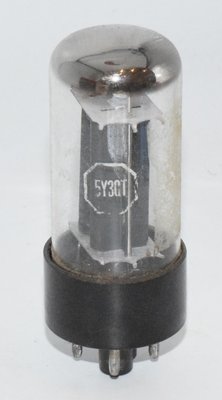
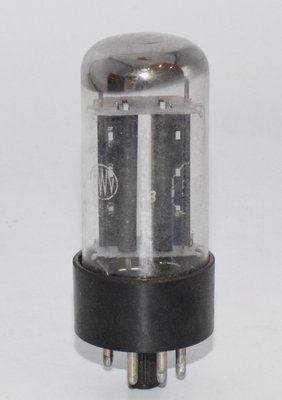
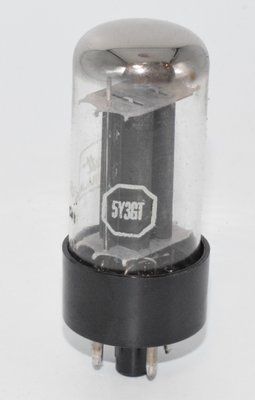
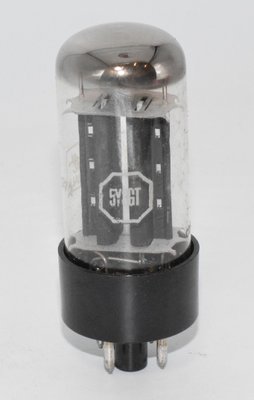
The 5Y3GT is a full-wave vacuum rectifier tube that became one of the most widely used power supply rectifiers in the history of consumer electronics and audio equipment. Introduced by RCA in the late 1930s as part of the GT (Glass Tubular) miniaturization of the earlier 5Y3G, this tube served as the heart of countless radio receivers, amplifiers, and test equipment power supplies from the 1940s through the 1960s.
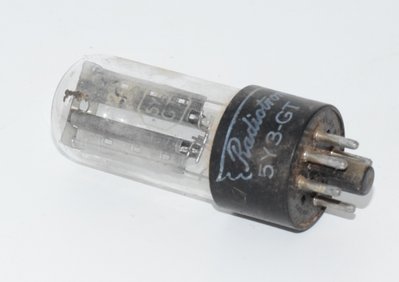
The 5Y3 family traces its lineage to the earlier 80-type rectifier, offering improved performance in a more compact envelope. The original 5Y3G used the larger ST-14 bulb with a medium-shell octal base, while the 5Y3GT adopted the smaller T-9 envelope with an inter-shell octal base, making it significantly more compact. Both variants share identical electrical characteristics and are fully interchangeable in circuit applications.
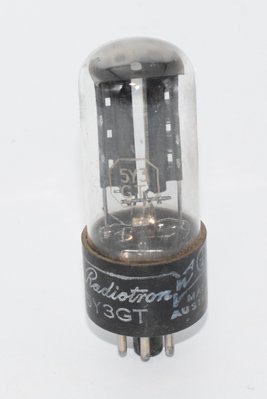
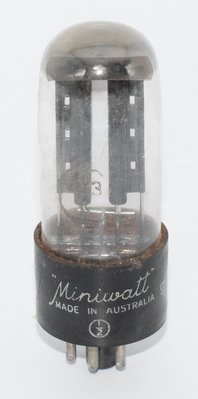
The tube was manufactured by virtually every major tube producer worldwide, including RCA, Sylvania, GE, Tung-Sol, Raytheon, Mullard, Philips Miniwatt (in Australia and Canada), Toshiba (Japan), Super Radiotron AWV (Australia), and many others. Its ubiquity in classic Fender guitar amplifiers — including the Tweed Deluxe, Tweed Champ, and early Princeton models — has cemented its legendary status in the audio world. The RCA datasheet used as the primary reference for this article is dated January 1, 1951, from RCA's Tube Department in Harrison, New Jersey.
2. Technical Specifications and Design
General Electrical Data
| Parameter | Value |
|---|---|
| Tube Type | Full-Wave Vacuum Rectifier |
| Filament Type | Coated (directly heated cathode) |
| Filament Voltage | 5.0 AC volts |
| Filament Current | 2.0 amperes |
Note: As a rectifier tube, the 5Y3GT does not have amplification factor (μ), transconductance (gm), or plate resistance (rp) ratings — these parameters apply only to amplifying tubes. Similarly, there is no grid bias range, as the tube has no control grid. Maximum plate dissipation is not separately specified; instead, the tube is rated by maximum current and voltage limits as detailed below.
Maximum Ratings (Design-Center Values)
| Parameter | Value |
|---|---|
| Peak Inverse Plate Voltage | 1400 volts maximum |
| Peak Plate Current Per Plate | 400 mA maximum |
| Hot-Switching Transient Plate Current Per Plate (0.2 sec duration) | 2.2 amperes maximum |
| AC Plate Supply Voltage (RMS) Per Plate | See Rating Chart |
| DC Output Current Per Plate | See Rating Chart |
| Typical Tube Voltage Drop | ~50V at 125 mA |
Typical Operation with Capacitor-Input Filter
| Parameter | Condition 1 | Condition 2 |
|---|---|---|
| AC Plate-to-Plate Supply Voltage (RMS) | 700 volts | 1000 volts |
| Filter-Input Capacitor | 10 μF | 10 μF |
| Total Effective Plate-Supply Impedance Per Plate | 50 ohms | 140 ohms |
| DC Output Voltage at Input to Filter (Approx.): | ||
| At Half-Load Current of 62.5 mA | 390 volts | — |
| At Half-Load Current of 42 mA | — | 610 volts |
| At Full-Load Current of 125 mA | 350 volts | — |
| At Full-Load Current of 84 mA | — | 560 volts |
| Voltage Regulation, Half-Load to Full-Load Current (Approx.) | 40 volts | 50 volts |
Typical Operation with Choke-Input Filter
| Parameter | Condition 1 | Condition 2 |
|---|---|---|
| AC Plate-to-Plate Supply Voltage (RMS) | 700 volts | 1000 volts |
| Filter-Input Choke | 10 henries* | 10 henries** |
| DC Output Voltage at Input to Filter (Approx.): | ||
| At Half-Load Current of 75 mA | 270 volts | — |
| At Half-Load Current of 62.5 mA | — | 405 volts |
| At Full-Load Current of 150 mA | 245 volts | — |
| At Full-Load Current of 125 mA | — | 390 volts |
| Voltage Regulation, Half-Load to Full-Load Current (Approx.) | 25 volts | 15 volts |
* This value is adequate to maintain optimum regulation in the region to the right of line L=10H on the Operation Characteristics curve with Choke-Input to Filter, provided the load current is not less than 35 mA. For load currents less than 35 mA, a larger value of inductance is required for optimum regulation.
** This value is adequate to maintain optimum regulation in the region to the right of line L=10H on the Operation Characteristics curve with Choke-Input to Filter, provided the load current is not less than 50 mA. For load currents less than 50 mA, a larger value of inductance is required for optimum regulation.
Physical Specifications
| Parameter | 5Y3-G | 5Y3-GT |
|---|---|---|
| Maximum Overall Length | 4-5/8" | 3-3/8" |
| Maximum Seated Length | 4-1/16" | 2-13/16" |
| Maximum Diameter | 1-13/16" | 1-5/16" |
| Bulb Type | ST-14 | T-9 |
| Base | Medium-Shell Octal, 5-Pin | Inter-Shell Octal, 5-Pin |
| Basing Designation (Bottom View) | G-5T | |
Mounting
The 5Y3GT may be mounted vertically or horizontally, with pins 2 and 8 in the horizontal plane when mounted horizontally.
Pin Configuration (Bottom View)
| Pin | Connection |
|---|---|
| Pin 1 | No Connection |
| Pin 2 | Filament |
| Pin 3 | No Connection |
| Pin 4 | Plate No. 2 |
| Pin 5 | No Connection |
| Pin 6 | Plate No. 1 |
| Pin 7 | No Connection |
| Pin 8 | Filament |
The 5Y3GT uses a standard 5-pin octal base (only 5 of the 8 pins are connected). The filament connections are on pins 2 and 8, with the two plates on pins 4 and 6. The center tap of the power transformer's high-voltage secondary connects to the filament center-tap (or one filament pin, depending on circuit design) to complete the rectifier circuit.
3. Applications and Usage
The 5Y3GT was designed as a general-purpose full-wave rectifier for power supply applications. Its primary role is to convert AC voltage from a power transformer's high-voltage secondary winding into pulsating DC, which is then smoothed by a filter network (either capacitor-input or choke-input) to provide the B+ supply voltage for vacuum tube circuits.
Common Applications
- Radio Receivers: The 5Y3GT was the standard rectifier in countless AM and FM radio receivers of the 1940s and 1950s, providing B+ voltages typically in the 250–350 volt range.
- Guitar Amplifiers: Perhaps its most famous application, the 5Y3GT was used in numerous Fender amplifiers including the legendary Tweed Deluxe (5E3), Tweed Champ (5E1/5F1), Tweed Princeton, and early Tweed Bassman models. It was also used in some Gibson, Supro, and other amplifier brands.
- Hi-Fi Amplifiers: Many vintage hi-fi amplifiers and preamplifiers used the 5Y3GT for power supply rectification, particularly in designs requiring moderate B+ current.
- Test Equipment: Oscilloscopes, signal generators, and other laboratory instruments of the era frequently employed the 5Y3GT.
- Public Address Systems: Small to medium PA amplifiers commonly used this rectifier.
Circuit Design Considerations
The 5Y3GT can be used with either capacitor-input or choke-input filter configurations. With a capacitor-input filter, the tube delivers higher output voltages but with poorer regulation and higher peak currents. With a choke-input filter, the output voltage is lower but regulation is significantly better (as low as 15 volts variation from half-load to full-load at 1000V plate-to-plate supply), and peak currents are reduced, extending tube life.
The Rating Chart provided by RCA shows that with a capacitor-input filter, the maximum DC output current per plate ranges from approximately 75 mA at low AC plate supply voltages down to lower values as the AC supply voltage increases toward 500V RMS per plate. With a choke-input filter, slightly higher currents are permissible at lower voltages.
An important design consideration is the relatively high internal impedance (voltage drop) of the 5Y3GT compared to solid-state rectifiers. The tube exhibits approximately 50 volts of drop at 125 mA total load current. This voltage drop is not a disadvantage in many audio applications — it provides a form of natural current limiting during power-up ("soft start") and contributes to the power supply's dynamic behavior, which many musicians and audiophiles find musically desirable.
4. Sound Characteristics
The 5Y3GT has earned a devoted following among guitarists and audiophiles for its distinctive influence on the sonic character of the amplifiers in which it is used. While a rectifier tube does not directly process the audio signal, its electrical behavior profoundly shapes the power supply's response to dynamic demands, which in turn affects the amplifier's overall sound.
Tonal Qualities
- "Sag" and Compression: The 5Y3GT is renowned for its pronounced power supply sag. Due to its relatively high internal impedance, the B+ voltage drops noticeably under heavy load (such as when a guitarist plays hard). This creates a natural compression effect — loud transients are slightly softened, and the sound "blooms" as the voltage recovers. This sag is a defining characteristic of the Fender Tweed tone and is highly prized by blues, rock, and country players.
- Warmth and Smoothness: The gradual voltage recovery of the 5Y3GT contributes to a perception of warmth and smoothness in the overall tone. Hard-edged transients are rounded off, giving the amplifier a more organic, "breathing" quality compared to amplifiers using silicon diode rectifiers or more robust rectifier tubes like the 5AR4/GZ34.
- Touch Sensitivity: Amplifiers using the 5Y3GT are often described as exceptionally touch-sensitive. The dynamic interaction between playing intensity and power supply voltage creates a responsive, expressive playing experience where the amplifier seems to react to the player's nuances.
- Soft Clipping Transition: As the power supply sags under load, the output tubes are driven into clipping more gradually, producing a smoother overdrive character. This is in contrast to the more abrupt clipping that can occur with stiffer power supplies.
- Low-End Character: The 5Y3GT's sag characteristics tend to produce a slightly looser, less tightly defined low end compared to rectifiers with lower internal impedance. This is often described as "pillowy" or "bouncy" bass response — desirable in many musical contexts but potentially less suitable for applications requiring tight, punchy bass.
Comparison with Other Rectifiers
Compared to the 5AR4/GZ34, the 5Y3GT has significantly more sag and a softer, more compressed feel. The 5AR4 provides a stiffer power supply with tighter bass and more headroom. Compared to the 5U4GB, the 5Y3GT has somewhat more sag and a lower maximum current capability. Against solid-state rectifiers, the difference is even more dramatic — the 5Y3GT provides a much softer, more dynamically responsive power supply.
Audiophile Perspective
In hi-fi applications, the 5Y3GT is valued for contributing to a relaxed, non-fatiguing presentation. Audiophiles often describe its influence as adding a sense of ease and naturalness to the music, with a slightly warm tonal balance. The tube's soft-start characteristic also provides a gentler power-up sequence for the amplifier's other tubes, potentially extending their lifespan.
5. Equivalent or Substitute Types
The following tubes are generally considered interchangeable with the 5Y3GT, though some differences in construction and performance characteristics should be noted:
| Type | Notes |
|---|---|
| 5Y3G | The original full-size version with ST-14 bulb and medium-shell octal base. Electrically identical to the 5Y3GT. Fully interchangeable where socket and physical clearance permit. |
| 5Y3GA | A later "industrial" version with tighter manufacturing tolerances. Electrically identical and directly interchangeable. |
| 5Y3WGTA | Military-grade version with ruggedized construction. Electrically identical, directly interchangeable, and often preferred for reliability. |
| 6087 | Military/industrial equivalent. Directly interchangeable. |
| 5Z3 | An older type with similar ratings but uses a 4-pin UX base — NOT pin-compatible. Requires a different socket. |
Tubes Sometimes Suggested but NOT Directly Interchangeable
- 5AR4 / GZ34: Same octal base and filament voltage (5V), but draws only 1.9A filament current (vs. 2.0A for the 5Y3GT) and has significantly different electrical characteristics — much lower internal impedance, higher current capability, and different voltage drop. While it will physically fit the same socket, substituting a 5AR4 for a 5Y3GT will result in significantly higher B+ voltages that may exceed the ratings of other components in the circuit. Do not substitute without verifying that the circuit can handle the higher voltages.
- 5U4G / 5U4GB: Same octal base and filament voltage (5V), but draws 3.0A filament current. The power transformer must be able to supply the additional filament current. The 5U4 also has different voltage drop characteristics and higher current capability. Check transformer ratings before substituting.
- 5V4G / 5V4GA: Indirectly heated cathode rectifier with 5V/2A filament. Same pin base but has a warm-up delay due to the indirectly heated cathode. Different internal impedance characteristics. May work in some circuits but is not a true drop-in replacement.
Important: When substituting rectifier tubes, always verify that the power transformer's filament winding can supply the required current, and that the resulting B+ voltage will remain within safe limits for all components in the circuit, including filter capacitors and output tubes.
6. Notable Characteristics
Directly Heated Cathode
The 5Y3GT uses a directly heated (filament-type) cathode, meaning the filament itself serves as the electron-emitting surface. This results in a very fast warm-up time — the tube begins conducting almost immediately when filament power is applied. This is in contrast to indirectly heated cathode rectifiers like the 5V4G, which have a deliberate warm-up delay that allows other tubes in the circuit to reach operating temperature before B+ voltage is applied.
Voltage Drop and Regulation
The 5Y3GT exhibits a characteristic voltage drop of approximately 50 volts at 125 mA of DC load current. This relatively high internal impedance (compared to tubes like the 5AR4) is a defining feature that contributes to the tube's signature power supply sag behavior. The voltage regulation from half-load to full-load is approximately 40 volts with a 700V plate-to-plate supply and capacitor-input filter, and approximately 25 volts with a choke-input filter at the same supply voltage.
Average Plate Characteristics
The RCA datasheet provides an average plate characteristic curve showing the relationship between plate voltage (DC) and plate current (milliamperes) at a filament voltage of 5.0 volts AC. The curve shows a gradual, non-linear increase in current with voltage — characteristic of a vacuum diode — with the "one plate only" curve reaching approximately 350 mA at 140 volts DC plate voltage.
Hot-Switching Transient Rating
The 5Y3GT can withstand transient plate currents of up to 2.2 amperes per plate for durations up to 0.2 seconds. This rating is important for handling the initial surge current that occurs when a capacitor-input filter is first charged at power-up.
Manufacturer Variations
The 5Y3GT was produced by dozens of manufacturers worldwide over several decades, resulting in considerable variation in construction details. Notable manufacturers include:
- RCA: The original designer and manufacturer, producing both the 5Y3G and 5Y3GT variants. RCA tubes are considered the reference standard.
- Sylvania: Known for consistent quality and slightly different internal construction. Some audiophiles prefer Sylvania versions for their perceived tonal characteristics.
- Tung-Sol: Highly regarded for build quality and reliability. Tung-Sol 5Y3GT tubes are sought after by collectors and audio enthusiasts.
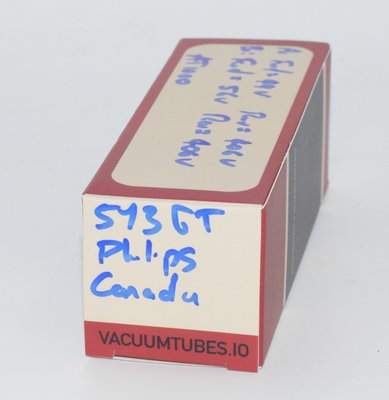
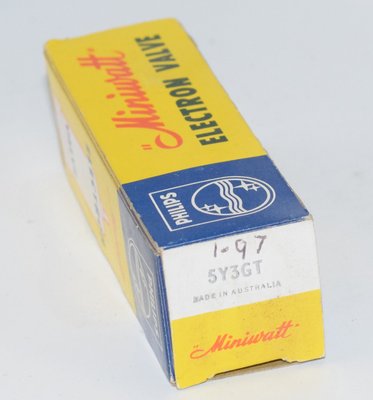
- Philips Miniwatt: Produced in Australia and Canada, these are well-regarded tubes with excellent build quality.
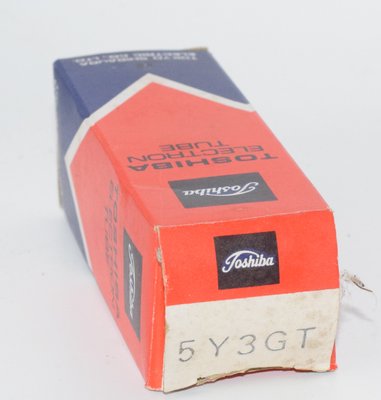
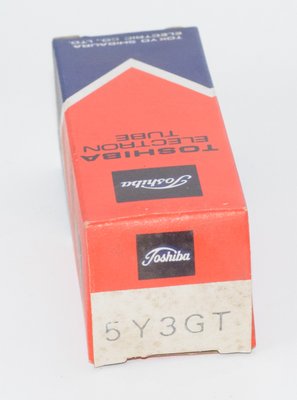
- Toshiba: Japanese-made versions known for good quality and consistency.
- Super Radiotron AWV: Australian-made tubes from Amalgamated Wireless Valve Company, produced under the Super Radiotron brand.
- GE (General Electric): Reliable production versions widely available in the NOS market.
Construction Variations
Over the years, internal construction of the 5Y3GT evolved. Early versions often featured larger, more robust plate structures, while later production versions sometimes used smaller, more economical internal assemblies. Collectors and audio enthusiasts often distinguish between "short plate" and "tall plate" versions, with earlier tall-plate versions sometimes commanding premium prices due to perceived superior performance and build quality.
7. Usage in the Audio Community
Guitar Amplifiers
The 5Y3GT is arguably the most iconic rectifier tube in the guitar amplifier world. Its association with the Fender Tweed-era amplifiers has made it an essential component for players seeking authentic vintage tone.
- Fender Tweed Deluxe (5E3): Perhaps the most famous application of the 5Y3GT. The Tweed Deluxe's legendary tone — warm, compressed, and incredibly touch-sensitive — owes much to the 5Y3GT's power supply sag. Players from Neil Young to Billy Gibbons have relied on this amplifier and its 5Y3GT rectifier.
- Fender Tweed Champ (5E1/5F1): The classic recording amplifier, used on countless hit records. The 5Y3GT provides the soft, compressed character that makes the Champ so musical at low volumes.
- Fender Tweed Princeton: Another classic small amplifier that benefits from the 5Y3GT's dynamic characteristics.
- Boutique and Custom Amplifiers: Modern boutique amplifier builders frequently specify the 5Y3GT in designs intended to capture vintage Tweed-era tones. Companies like Victoria, TopHat, Clark, and many others use the 5Y3GT in their Tweed-inspired designs.
- DIY Amplifier Projects: The 5Y3GT is a staple of the DIY tube amplifier community. Its straightforward application, wide availability, and affordable price make it an ideal choice for hobbyist builders constructing Tweed-style amplifiers.
Hi-Fi and Audiophile Applications
In the audiophile community, the 5Y3GT finds use in both vintage and modern hi-fi equipment:
- Vintage Receivers and Amplifiers: Many classic hi-fi amplifiers from the 1950s and 1960s used the 5Y3GT, and restoring these units to original specification requires sourcing quality replacement tubes.
- Modern Tube Amplifier Designs: Some contemporary audiophile amplifier designers deliberately choose the 5Y3GT for its sonic characteristics, particularly in single-ended triode (SET) amplifiers and low-powered push-pull designs where the tube's sag characteristics complement the amplifier's musical presentation.
- Preamplifier Power Supplies: The 5Y3GT is sometimes used in tube preamplifier power supplies, where its soft-start characteristic and moderate current capability are well-suited to the lower current demands of preamplifier circuits.
Tube Rolling
The 5Y3GT is a popular candidate for "tube rolling" — the practice of swapping different brands or vintages of the same tube type to explore tonal differences. Audiophiles and guitarists report noticeable differences between manufacturers:
- NOS (New Old Stock) tubes from RCA, Sylvania, Tung-Sol, GE, and others are highly sought after, with prices varying significantly based on brand, era, and condition.
- Current production 5Y3GT tubes are available from manufacturers such as JJ Electronic, Sovtek, and others, providing affordable alternatives to increasingly scarce NOS stock.
- Enthusiasts often report that NOS tubes from the 1950s and early 1960s offer superior build quality, longer life, and subtly different tonal characteristics compared to modern production tubes.
Practical Considerations for Audio Use
- Warm-Up Time: The directly heated cathode means B+ voltage appears almost immediately at power-on. In amplifiers without a standby switch, this means the output tubes receive plate voltage before their cathodes are fully heated, which can cause cathode stripping over time. A standby switch is recommended in amplifiers using the 5Y3GT.
- Filter Capacitor Selection: The RCA datasheet specifies a 10 μF filter-input capacitor for typical operation. Using excessively large input capacitors can increase peak charging currents beyond the tube's ratings, potentially shortening tube life. Many experienced builders recommend keeping the first filter capacitor at or below 20–22 μF with the 5Y3GT.
- Lifespan: Under normal operating conditions within its ratings, the 5Y3GT provides reliable service for thousands of hours. However, as with all directly heated cathode rectifiers, the filament coating gradually depletes over time, leading to increased voltage drop and eventually insufficient output. Regular testing is recommended in critical applications.
- Matching: Unlike signal tubes, rectifier tubes do not need to be "matched." Each 5Y3GT is a single, self-contained full-wave rectifier, and individual tube variation is accommodated by the power supply's filter network.