1. Introduction and History
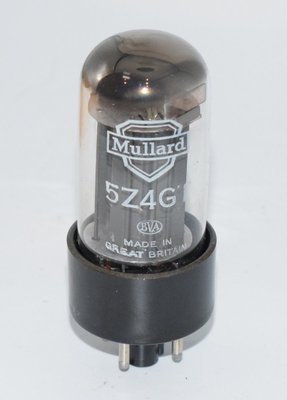
The 5Z4G is an indirectly heated, full-wave vacuum rectifier tube designed for AC mains power supply applications. Introduced in the late 1930s as part of the octal tube family, the 5Z4G became one of the most widely used rectifier types in both commercial and consumer electronics throughout the 1940s and 1950s. Its indirect heating design represented a significant advancement over directly heated rectifiers like the 5U4G and 5Y3GT, as the cathode reaches operating temperature more gradually, providing a gentler voltage ramp-up to the filter capacitors and downstream circuitry.
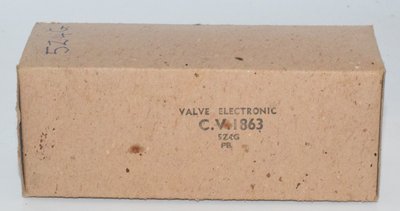
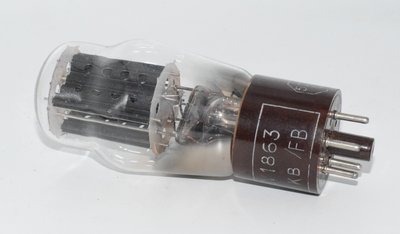
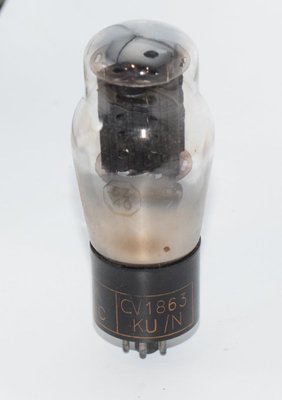
The 5Z4G was manufactured by numerous companies worldwide, including Brimar (STC) in the United Kingdom, RCA, Sylvania, and Ken-Rad in the United States, Philips/Mullard in Europe, and many others. The Brimar version, often carrying the British military designation CV1863, is particularly well-regarded among collectors and audio enthusiasts. Exceptionally rare variants, such as those manufactured by Nore Electric of Southend, are highly prized by collectors and are seldom encountered.
The tube was designed to serve as the heart of power supplies in radio receivers, amplifiers, and test equipment, providing clean, rectified DC from AC mains transformers. Its robust construction and conservative ratings made it a reliable workhorse in countless designs spanning several decades of electronics history.
2. Technical Specifications and Design
Absolute Maximum Ratings
| Parameter | Value |
|---|---|
| Heater Voltage (Vh) | 5.0 volts |
| Heater Current (Ih) | 2.0 amperes |
| Peak Inverse Voltage (PIV) | 1,400 volts max. |
| Peak Current (each anode) | 375 mA max. |
Characteristics as Full-Wave Rectifier — Condenser (Capacitor) Input
| Parameter | Value |
|---|---|
| R.M.S. Input per Anode | 350 volts max. |
| Supply Impedance per Anode | 30 ohms min. |
| Rectified Current | 125 mA max. |
| Reservoir Condenser | 32 μF max. |
Characteristics as Full-Wave Rectifier — Choke Input
| Parameter | Value |
|---|---|
| R.M.S. Input per Anode | 500 volts max. |
| Input Choke Inductance | 5 Henries min. |
| Rectified Current | 125 mA max. |
Physical Construction
- Base Type: Octal (International Octal, IO) — 8-pin
- Envelope: ST-16 (shouldered glass) shape, approximately 1-13/16" maximum diameter
- Maximum Overall Height: Approximately 4-5/8" max.
- Mounting Position: Typically vertical, base down (consult specific equipment manuals for other orientations)
- Cathode Type: Indirectly heated (oxide-coated unipotential cathode)
Pin Configuration (Octal Base — Bottom View)
| Pin Number | Connection |
|---|---|
| Pin 1 | No Connection (NC) |
| Pin 2 | Heater (h) |
| Pin 3 | No Pin (NP) |
| Pin 4 | Anode 1 (a) |
| Pin 5 | No Pin (NP) |
| Pin 6 | Anode 2 (a') |
| Pin 7 | No Pin (NP) |
| Pin 8 | Cathode (kh) — Heater/Cathode |
Note: As a rectifier tube, the 5Z4G does not have control grids and therefore specifications such as amplification factor (μ), transconductance (gm), plate resistance (rp), and grid bias are not applicable. The key performance parameters are the peak inverse voltage, maximum rectified current, and the forward voltage drop characteristics shown in the manufacturer's output curves.
Output Characteristics
The Brimar datasheet provides comprehensive output voltage vs. DC output current curves for both choke input and condenser input configurations. At typical operating conditions with condenser input (350V RMS per anode, 30Ω supply impedance), the tube delivers approximately 400V DC output at moderate current draws. With choke input (5H minimum, 8μF capacitor), higher AC input voltages of up to 500V RMS per anode are permissible, though the DC output voltage is somewhat lower due to the choke input filter topology. The curves show that DC output voltage decreases progressively as load current increases, which is characteristic of all rectifier tubes due to their internal resistance.
3. Applications and Usage
The 5Z4G was designed primarily as a power supply rectifier and found widespread use in numerous applications:
- Radio Receivers: The 5Z4G was a standard rectifier in many console and tabletop radio receivers of the 1940s and 1950s, providing the B+ supply voltage for the receiver's amplifier and detector stages.
- Audio Amplifiers: Used extensively in push-pull amplifier designs using tubes such as the 6V6, 6L6, EL34, and similar types. The 125 mA maximum rectified current is well-suited for medium-power amplifier designs up to approximately 25–35 watts.
- Test Equipment: Found in oscilloscopes, signal generators, and other laboratory instruments where a well-regulated, reliable DC supply was needed.
- Military Equipment: Under the designation CV1863 (and related CV numbers), the 5Z4G served in various British military electronic systems, where its rugged construction and reliable performance were valued.
- Public Address Systems: Commercial PA amplifiers frequently employed the 5Z4G in their power supply sections.
The indirectly heated cathode of the 5Z4G provides an important practical advantage: the cathode heats up relatively slowly, meaning that the B+ voltage rises gradually. This "soft start" characteristic helps protect filter capacitors and downstream tube circuits from voltage surges during warm-up, extending the life of all components in the signal chain. This feature makes the 5Z4G particularly desirable in amplifier designs where component longevity is a priority.
When designing with the 5Z4G, engineers must observe the minimum supply impedance of 30 ohms per anode in capacitor-input configurations. This impedance — provided by the transformer secondary winding resistance and any series resistors — limits the peak charging current through the rectifier and protects both the tube and the reservoir capacitor. The maximum reservoir capacitor value of 32 μF must also be respected to prevent excessive peak currents.
4. Sound Characteristics
While rectifier tubes do not directly process the audio signal, they have a profound and well-documented influence on the sonic character of a tube amplifier. The 5Z4G, as an indirectly heated rectifier, occupies a distinctive middle ground in the spectrum of rectifier tube sonics, and experienced listeners and amplifier designers consistently note several characteristic qualities:
- Smooth, Controlled Dynamics: The 5Z4G is frequently described as producing a smooth, refined presentation. Its moderate internal impedance provides a degree of natural dynamic compression — often called "sag" — that softens transient peaks in a musically pleasing way. This sag is less pronounced than in directly heated rectifiers like the 5Y3GT but more noticeable than in solid-state rectification, placing the 5Z4G in a sweet spot for many listeners.
- Warm but Defined Midrange: Audiophiles consistently note that the 5Z4G contributes a warm, full-bodied midrange character without excessive coloration. Vocals and acoustic instruments are rendered with a natural richness and body that many find highly engaging.
- Controlled Low End: Compared to directly heated rectifiers, the 5Z4G tends to deliver tighter, more controlled bass response. The indirectly heated cathode provides somewhat better voltage regulation under dynamic load conditions, resulting in bass that has good weight and definition without becoming loose or bloated.
- Gentle High-Frequency Roll-Off: Like most tube rectifiers, the 5Z4G imparts a subtle softening of the highest frequencies compared to solid-state rectification. This characteristic is generally perceived as a reduction in harshness or "digital glare," making the 5Z4G a popular choice in systems where listener fatigue is a concern.
- Musical "Sag" and Feel: Guitar amplifier enthusiasts particularly value the 5Z4G's dynamic response. When the amplifier is driven hard, the power supply voltage dips slightly under heavy transient demands, creating a compression effect that enhances sustain and gives the amplifier a more responsive, "breathing" feel. This interaction between the rectifier and the rest of the amplifier is a key component of what players describe as "touch sensitivity."
- Quiet Operation: The indirectly heated cathode design of the 5Z4G generally results in lower hum and noise compared to directly heated rectifiers, as there is no direct AC component on the cathode. This makes it an excellent choice for high-sensitivity amplifier designs and preamplifier power supplies.
It is worth noting that the sonic influence of the rectifier tube is inseparable from the overall power supply design. The same 5Z4G will sound different in a capacitor-input filter versus a choke-input filter, and the values of the filter components, transformer regulation, and load characteristics all interact to shape the final sonic result. Nevertheless, the 5Z4G is widely regarded as one of the most musically satisfying rectifier tubes available, offering an excellent balance between the lush warmth of directly heated types and the tight precision of solid-state rectification.
5. Equivalent and Substitute Types
Close / Identical Substitutes
| Type | Notes |
|---|---|
| GZ30 | European designation equivalent. Electrically identical to the 5Z4G with the same pinout and ratings. Direct drop-in replacement. |
Different Rating Substitutes (NOT Direct Drop-In)
The following types are related but have different ratings, construction, or characteristics. They should not be used as direct drop-in replacements without carefully verifying compatibility with the specific circuit:
| Type | Notes |
|---|---|
| 5AQ4 | Related rectifier type with different ratings. Verify voltage and current specifications before substituting. |
| 5Z4 | Earlier metal-envelope version. While electrically similar, physical dimensions and thermal characteristics differ. Check socket clearance and ventilation. |
| CV1863 | British military (CV) designation for the 5Z4G. Electrically identical but manufactured to tighter military tolerances. Fully interchangeable. |
| CV1864 | Related CV designation with potentially different screening or selection criteria. Verify specifications before use. |
| CV2748 | Another related CV designation. Confirm ratings match your application requirements. |
| VT74 | US military designation for the 5Z4 family. Verify specific variant ratings. |
Note: While CV1863 is listed among the "different rating substitutes" in some databases, it is in practice the direct British military equivalent of the 5Z4G and is fully interchangeable. The GZ30 is the confirmed closest identical substitute. Always verify heater voltage (5.0V), heater current (2.0A), and maximum voltage/current ratings when considering any substitute type.
Types That Are NOT Suitable Substitutes
The 5Z4G should not be confused with or substituted by higher-current rectifiers such as the 5U4G (3.0A heater) or the 5AR4/GZ34 (1.9A heater, different characteristics), even though they share the same octal base and 5V heater voltage. While these tubes may physically fit the same socket, their different current ratings, internal impedance characteristics, and voltage drop profiles can result in incorrect B+ voltages, excessive current draw from the power transformer heater winding, or damage to filter capacitors.
6. Notable Characteristics
- Indirectly Heated Cathode: The most distinguishing feature of the 5Z4G compared to many other octal rectifiers. The unipotential cathode provides slow, controlled warm-up that protects downstream components and reduces hum. This is a significant advantage over directly heated types like the 5Y3GT and 5U4G.
- Moderate Current Capability: At 125 mA maximum rectified current, the 5Z4G is ideally suited for medium-power amplifier designs. It is not intended for high-power applications requiring 200 mA or more — for those, the 5U4G or 5AR4/GZ34 would be more appropriate.
- High Peak Inverse Voltage: The 1,400V PIV rating provides a generous safety margin in most practical applications, making the 5Z4G robust against voltage transients.
- Dual Filter Topology Support: The 5Z4G is specified for both capacitor-input and choke-input filter configurations, with different maximum voltage ratings for each. The choke-input configuration allows up to 500V RMS per anode (versus 350V for capacitor input), making the tube versatile across different power supply topologies.
- Collector Interest: Certain manufacturer variants of the 5Z4G are highly sought after by collectors. Brimar/STC-manufactured examples (often marked CV1863) are well-regarded for quality, while extremely rare variants such as those from Nore Electric of Southend command premium prices and are considered exceptional finds.
- Long Service Life: When operated within its ratings, the 5Z4G is known for exceptional longevity. The conservative design margins and robust cathode construction mean that NOS (New Old Stock) examples from the 1940s and 1950s frequently test as new even after decades of storage.
- Minimum Supply Impedance Requirement: The 30-ohm minimum supply impedance per anode in capacitor-input service is a critical design parameter. This requirement must be met by the combination of transformer winding resistance and any added series resistance. Failure to observe this minimum can result in excessive peak currents that shorten tube life and may damage the reservoir capacitor.
7. Usage in the Audio Community
The 5Z4G enjoys a devoted following in the audio community, valued by both amplifier builders and discerning listeners for its unique combination of sonic qualities and practical advantages.
In Hi-Fi and Audiophile Amplifiers
The 5Z4G is a popular rectifier choice in single-ended (SE) and push-pull amplifier designs of moderate power. It pairs exceptionally well with output tubes such as the 6V6, EL84/6BQ5, and 6L6 in configurations drawing up to 125 mA of B+ current. Audiophile amplifier designers appreciate the tube's gentle warm-up characteristic, which eliminates the need for separate time-delay circuits to protect electrolytic capacitors and output tubes from voltage surges.
Many boutique amplifier manufacturers and DIY builders specifically design around the 5Z4G, taking advantage of its moderate internal impedance to achieve a particular sonic signature. The tube's ability to provide a subtle, musical compression effect is considered a feature rather than a limitation in high-fidelity applications, contributing to a presentation that many listeners describe as more "analog" and emotionally engaging than solid-state rectified designs.
In Guitar Amplifiers
The 5Z4G has found a dedicated niche in the guitar amplifier world, particularly in vintage-style and boutique designs. Players seeking a responsive, dynamic feel from their amplifiers value the 5Z4G's sag characteristics, which contribute to a more expressive playing experience. The tube's compression effect under heavy signal demands enhances sustain and smooths out pick attack, qualities that are particularly prized in blues, jazz, and classic rock playing styles.
Several notable vintage amplifier designs originally specified the 5Z4G or its equivalents, and modern reissue and boutique amplifiers continue to use the type. The tube's 125 mA current limit naturally suits it to amplifiers in the 15–30 watt range, which many players consider the sweet spot for tonal quality and stage volume.
Tube Rolling and NOS Market
Rectifier tube rolling — the practice of swapping different rectifier tubes to alter an amplifier's sonic character — is a popular pursuit among audiophiles, and the 5Z4G is a frequently discussed type in this context. Because the rectifier tube influences the entire amplifier's power supply behavior, changing from one brand or era of 5Z4G to another can produce audible differences in dynamics, bass response, and overall tonal balance.
On the NOS market, certain variants command significant premiums:
- Brimar / STC (CV1863): British-made examples are highly regarded for their consistent quality and refined sonic character. These are among the most sought-after 5Z4G variants.
- Nore Electric (Southend): Extremely rare and considered a collector's item. These may be among the rarest 5Z4G variants in existence.
- RCA: American-made RCA examples, particularly early production with the "meatball" logo, are valued for their warm, full-bodied sound.
- Sylvania: Known for slightly tighter bass and a more detailed presentation compared to some other brands.
- Ken-Rad: Prized for a rich, warm midrange character.
Current production of the 5Z4G is limited, which has driven increasing interest in NOS stocks. Audiophiles are advised to purchase from reputable dealers who test tubes on calibrated equipment, as decades-old stock can occasionally have issues with weak emission or internal shorts.
Practical Considerations for Audio Use
When using the 5Z4G in audio applications, several practical points should be observed:
- Ensure the power transformer's 5V heater winding can supply at least 2.0 amperes.
- Observe the 30-ohm minimum supply impedance per anode in capacitor-input designs. If the transformer's secondary winding resistance is insufficient, add series resistors to meet this requirement.
- Do not exceed the 32 μF maximum reservoir capacitor value. Modern high-capacitance electrolytics can easily exceed this limit; use appropriate values to protect the tube.
- For choke-input filter designs, ensure the input choke has a minimum inductance of 5 Henries to maintain proper operation.
- The 5Z4G's 125 mA maximum current rating should be respected with adequate margin. For amplifier designs requiring more than approximately 100–110 mA of continuous B+ current, consider a higher-rated rectifier type.
The 5Z4G remains a cornerstone of tube audio design, bridging the gap between the romantic warmth of directly heated rectifiers and the precision of modern solid-state solutions. Its enduring popularity in the audio community is a testament to the elegant engineering of this classic valve design.