1. Introduction and History
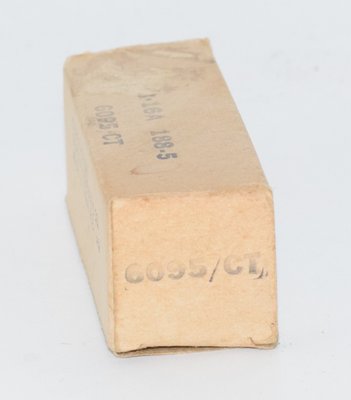
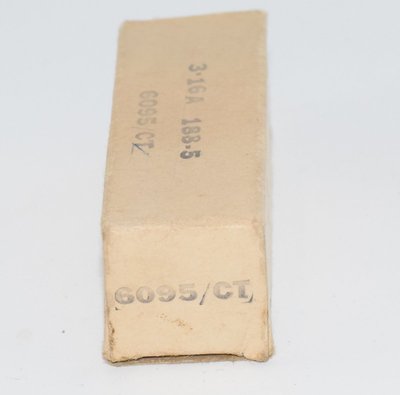
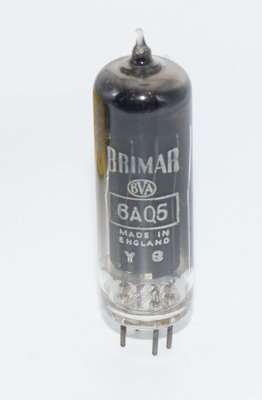
The 6095 is a miniature beam power pentode (sometimes classified as a beam tetrode) designed primarily for rugged military and industrial service. It belongs to the extended family of tubes derived from the popular 6AQ5/EL90 lineage — one of the most widely produced small power output tubes of the post-WWII era. The 6095 was developed as a ruggedized, tightly specified variant intended for applications where reliability under vibration, shock, and temperature extremes was paramount.
Manufactured principally by General Electric (GE) in the United States, the 6095 carries a JAN (Joint Army-Navy) heritage. It emerged during the 1950s and 1960s when the U.S. military demanded premium-grade versions of standard receiving tubes for use in airborne, shipboard, and field communications equipment. The 6095 is essentially a specially selected and tested version of the 6AQ5W — itself the ruggedized military variant of the civilian 6AQ5. The tube was built to withstand the punishing conditions of military electronics while maintaining consistent electrical parameters within tight tolerances.
The British military equivalent is designated CV3972, which is considered a close or identical substitute. The 6095 shares its fundamental circuit design with the broader 6AQ5 family but is distinguished by its enhanced mechanical construction, controlled characteristics, and stringent quality assurance testing.
2. Technical Specifications and Design
General Description
- Type: Beam power pentode / beam tetrode
- Base: Miniature 7-pin (B7G / button base)
- Envelope: Miniature glass (T-6½ typically)
- Mounting: Vertical or horizontal
- Construction: Ruggedized for military/industrial use
Heater Ratings
- Heater Voltage (Ef): 6.3 V
- Heater Current (If): 0.45 A
Maximum Ratings (Absolute Maximum Values)
- Maximum Plate Voltage (Va max): 275 V
- Maximum Screen Grid Voltage (Vg2 max): 275 V
- Maximum Plate Dissipation (Pa max): 12 W
- Maximum Screen Grid Dissipation (Pg2 max): 2.5 W (value typical for 6AQ5W family; confirm against specific 6095 datasheet)
- Maximum Cathode Current: 55 mA (typical for this family; confirm against specific 6095 datasheet)
Typical Operating Conditions (Class A1 Amplifier)
- Plate Voltage (Va): 250 V
- Screen Grid Voltage (Vg2): 250 V
- Control Grid Voltage (Vg1): −12.5 V
- Plate Current (Ia): 45 mA (zero signal)
- Screen Current (Ig2): ~5.5 mA
- Transconductance (gm): 4,100 µmhos (4.1 mA/V)
- Plate Resistance (rp): ~52 kΩ
- Amplification Factor (µ): ~215
- Power Output: ~4.5 W (single-ended Class A1)
- Load Resistance (RL): 2,500 Ω
Note: The transconductance, plate resistance, and amplification factor values listed above are characteristic of the 6AQ5W/6095 family under standard operating conditions. Exact values for the 6095 specifically should be confirmed against the manufacturer's original datasheet, as the 6095 may have tighter tolerance bands than the standard 6AQ5.
Pin Configuration (B7G Base — Bottom View)
| Pin | Connection |
|---|---|
| 1 | Grid 1 (Control Grid) |
| 2 | Cathode |
| 3 | Heater |
| 4 | Heater |
| 5 | Plate (Anode) |
| 6 | Grid 2 (Screen Grid) |
| 7 | Grid 3 (Suppressor Grid) — internally connected to cathode in beam tetrode versions |
Note: The suppressor grid (pin 7) is typically internally connected to the cathode in beam power tube configurations. Some references show the beam-forming plates connected internally. Verify pin connections against the specific manufacturer's datasheet before circuit implementation.
3. Applications and Usage
The 6095 was designed for and found widespread use in the following applications:
- Military Communications Equipment: The primary intended application. The 6095 served as an audio output stage in military radio receivers, intercoms, and field communications systems where reliability under harsh conditions was essential.
- Industrial Control Systems: Used in servo amplifiers, control circuits, and instrumentation where the ruggedized construction provided long service life in demanding environments.
- Airborne Electronics: The tube's resistance to vibration and mechanical shock made it suitable for aircraft radio and navigation equipment.
- Audio Output Stages: Capable of delivering approximately 4.5 watts in single-ended Class A1 operation, or significantly more in push-pull configurations (up to ~11 W in Class AB1 push-pull), the 6095 served as a compact audio power amplifier in both military and civilian equipment.
- Regulated Power Supplies: Occasionally used as a series pass element in regulated power supply circuits within military equipment.
The tube's combination of modest power output, small physical size, and exceptional reliability made it a workhorse in countless pieces of Cold War-era military electronics. Today, surplus stocks of NOS (New Old Stock) 6095 tubes — particularly those manufactured by GE — remain available and are sought after by audio enthusiasts.
4. Sound Characteristics
The 6095, like its close relatives in the 6AQ5 family, has earned a loyal following among audiophiles and guitar amplifier builders who appreciate its distinctive sonic qualities:
- Warm and Musical Midrange: The 6095 is frequently described as having a rich, warm midrange character that is quintessentially "tube-like." It imparts a pleasing harmonic coloration that many listeners find engaging and musical, particularly on vocals and acoustic instruments.
- Sweet Highs with Gentle Roll-off: The high-frequency response is smooth and non-fatiguing. Unlike some larger power pentodes that can sound aggressive or harsh in the treble, the 6095 presents high frequencies with a gentle, refined quality that audiophiles often describe as "sweet" or "silky."
- Tight, Articulate Bass: For a small power tube, the 6095 delivers surprisingly well-defined bass. While it cannot match the low-frequency authority of larger output tubes like the EL34 or 6L6, within its power range the bass is clean and articulate rather than bloated or loose.
- Graceful Overdrive Characteristics: When pushed into clipping, the 6095 exhibits a smooth, gradual compression that is musically pleasing. The onset of distortion is gentle rather than abrupt, producing predominantly even-order harmonics that the ear perceives as warm and natural. This makes it particularly appealing in low-wattage guitar amplifiers.
- Intimate Soundstage: In hi-fi applications, the 6095 tends to create a focused, intimate soundstage. The limited power output (approximately 4.5 W single-ended) means it pairs best with high-efficiency speakers, but in such systems it can produce a remarkably engaging and three-dimensional presentation.
- Military-Grade Consistency: Because the 6095 was manufactured to stringent military specifications, matched pairs and quads tend to be more consistent than their civilian counterparts. This translates to better channel balance in stereo amplifiers and more predictable performance in push-pull configurations.
Compared to the standard civilian 6AQ5, the 6095 is often perceived as slightly more refined and controlled — likely a result of its tighter manufacturing tolerances and premium materials. The GE-manufactured examples, in particular, are prized for their clarity and dynamic expression.
5. Equivalent or Substitute Types
Close / Identical Substitutes
- CV3972 — British military equivalent; considered identical to the 6095. Direct drop-in replacement with the same B7G base and equivalent specifications.
Different Rating Substitutes (NOT Direct Drop-In — Verify Before Substituting)
The following tubes share the same basic design lineage and B7G pin base, but have different ratings, specifications, or tolerance grades. They are not guaranteed drop-in replacements and may require circuit adjustments or bias changes:
- 6AQ5W — The ruggedized military version of the 6AQ5; very closely related to the 6095 but may have slightly different controlled characteristics or test parameters. Often considered nearly interchangeable in practice.
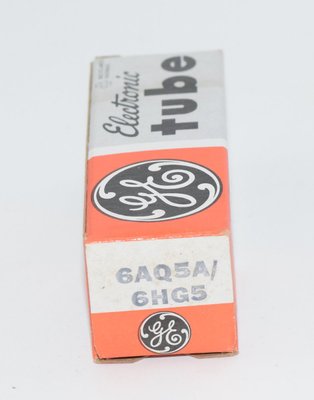
- 6AQ5 / 6AQ5A — The standard civilian versions. Same pinout and general characteristics but manufactured to less stringent tolerances. The 6AQ5A has slightly improved ratings over the original 6AQ5. Generally usable as substitutes in non-critical applications.
- 6005 / CK6005 — Another ruggedized variant in the same family. Similar characteristics but verify specific ratings.
- 6669 — Related type with potentially different operating parameters.
- EL90 — The European designation equivalent to the 6AQ5. Same B7G base and similar characteristics. Manufactured by European firms such as Philips, Mullard, and Telefunken.
- 6BM5 — Related type; verify pin compatibility and operating conditions before substituting.
- 6L31 — Related type in the same family.
- BPM04 — Industrial/military designation for a related type.
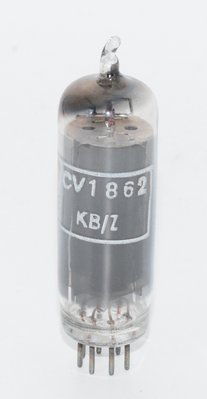
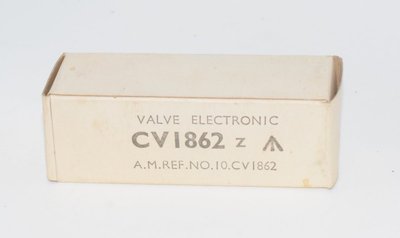
- CV1862 / CV4019 / CV5190 / CV8229 — Various British CV (Common Valve) designations for tubes in the 6AQ5/EL90 family. Each may correspond to slightly different specification grades.
- M8245 — Mullard military specification equivalent in the EL90 family.
- N727 — Related type; verify specifications before use.
Important Note: While all of the above tubes share the same B7G base and fundamental beam power pentode topology, the 6095 was manufactured to specific controlled-characteristic standards. Substituting a civilian-grade 6AQ5 for a 6095 in a circuit designed for the latter's tighter tolerances may result in degraded performance or reliability. In audio applications, however, most of these substitutes will function satisfactorily with appropriate bias adjustment.
6. Notable Characteristics
- Ruggedized Construction: The 6095 features reinforced internal structures, including supported mica spacers, shorter and stiffer electrode assemblies, and in many cases a more robust glass-to-metal seal. These features allow it to withstand significant mechanical shock and vibration — a critical requirement for military field equipment.
- Controlled Characteristics: Unlike standard commercial tubes, the 6095 is manufactured with tightly controlled electrical parameters. This means less variation between individual tubes, which is advantageous for matched-pair applications in push-pull amplifiers.
- Extended Life: Military-grade tubes like the 6095 were designed for extended service life under demanding conditions. Many NOS examples test at or near new specifications even after decades of storage, a testament to their superior construction quality.
- Compact Form Factor: The B7G miniature base and small glass envelope make the 6095 one of the most compact power output tubes available, enabling the design of physically small amplifiers.
- Excellent Linearity: The beam power tetrode design provides good linearity across its operating range, contributing to low distortion at moderate power levels — a characteristic that audiophiles particularly value.
- Low Microphonics: The ruggedized construction has the added benefit of reducing microphonic sensitivity, which is advantageous in high-gain audio circuits where mechanical vibration could otherwise introduce unwanted noise.
- NOS Availability: Significant quantities of NOS 6095 tubes, particularly from GE production, remain available in the surplus market. These tubes represent excellent value for audio experimenters, offering military-grade quality at reasonable prices.
7. Usage in the Audio Community
The 6095 has carved out a distinctive niche in the audio community, appreciated by both hi-fi enthusiasts and guitar amplifier builders:
Single-Ended (SE) Hi-Fi Amplifiers
The 6095 is a popular choice for low-power single-ended amplifiers in the 3–5 watt range. These amplifiers, when paired with high-efficiency speakers (95 dB/W/m or higher), can produce remarkably satisfying sound in small to medium-sized listening rooms. The tube's warm tonal character and graceful clipping behavior make it forgiving of source material quality while remaining musically engaging. DIY builders particularly appreciate the 6095 for SE projects because:
- NOS military-grade tubes are available at modest cost
- The B7G base simplifies chassis layout
- Modest plate voltage requirements (250 V typical) reduce power supply complexity and improve safety
- Output transformer requirements are readily met by commonly available units
Push-Pull Amplifiers
In push-pull configuration, a pair of 6095s can deliver approximately 8–11 watts of audio power — sufficient for many domestic listening situations with reasonably efficient speakers. The tight manufacturing tolerances of the 6095 make it easier to find well-matched pairs compared to civilian-grade 6AQ5 tubes, resulting in better push-pull balance and lower distortion.
Guitar Amplifiers
The 6095 has found enthusiastic adoption in the boutique and DIY guitar amplifier community. Low-wattage "practice" and "recording" amplifiers using one or two 6095 tubes offer:
- Pleasing overdrive characteristics at manageable volume levels
- A tonal palette reminiscent of classic American amplifier voicing
- The ability to achieve power tube saturation at bedroom-friendly volumes
- Reliable performance thanks to military-grade construction
Several boutique amplifier builders have designed models specifically around the 6095/6AQ5W, capitalizing on its combination of quality construction and affordable NOS pricing.
Headphone Amplifiers
The 6095's modest power output makes it well-suited for output-transformer-coupled (OTC) headphone amplifiers. In this application, the tube's low noise floor (thanks to its ruggedized, low-microphonic construction) and smooth tonal character are particularly advantageous. Several published headphone amplifier designs feature the 6095 or its close equivalents.
Restoration and Vintage Equipment
Audio restorers working on vintage military surplus receivers and communications equipment seek out NOS 6095 tubes to maintain original specifications and performance. The tube's presence in classic military receivers like certain Collins, Hammarlund, and military-specification sets means there is ongoing demand for quality replacement stock.
Community Perception
Within the audio community, the 6095 is generally regarded as a "hidden gem" — a high-quality tube that flies under the radar compared to more famous types like the EL84, 6V6, or 6L6. Its military pedigree assures quality, while its relative obscurity keeps prices reasonable. Experienced tube audio enthusiasts often recommend the 6095 to newcomers as an excellent starting point for a first tube amplifier build, combining forgiving circuit requirements with genuinely satisfying sonic performance.