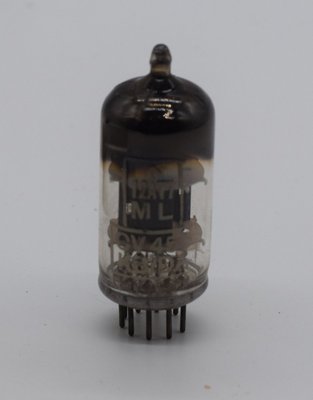
Introduction and History
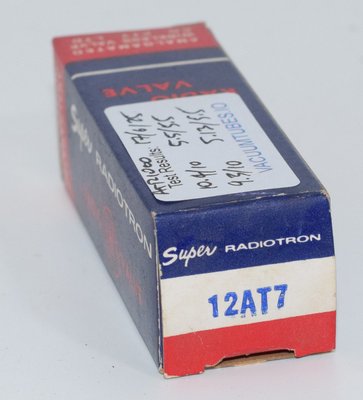
The 6201 is a premium-grade, high-reliability double triode vacuum tube that belongs to the 12AT7/ECC81 family. Developed during the late 1950s as a ruggedized, tightly-specified version of the standard 12AT7, the 6201 was designed to meet the demanding requirements of military, professional, and industrial electronics. It carries the European designation E81CC, where the "E" prefix denotes the long-life, special-quality (SQ) series, and the double "CC" indicates a double triode with enhanced specifications.
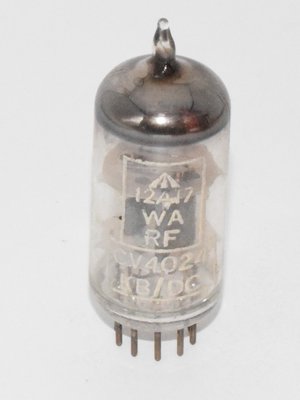
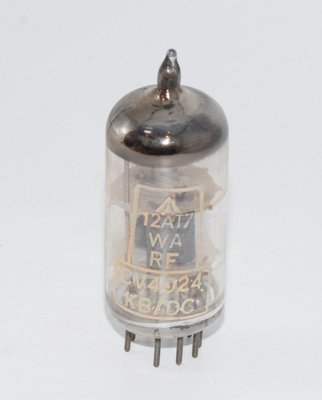
The 6201 emerged from the same era that produced many premium tube variants — a period when military and telecommunications applications demanded tubes with superior reliability, tighter parameter tolerances, lower microphonics, and extended service life compared to their commercial counterparts. The attached CSF (Compagnie Générale de Télégraphie Sans Fil) datasheet for the closely related 12AT7WA — dated December 1959 — illustrates the kind of reinforced internal construction and rigorous testing regimen (shock resistance to 450g, vibration fatigue testing, filament fatigue cycling) that characterized these premium types.
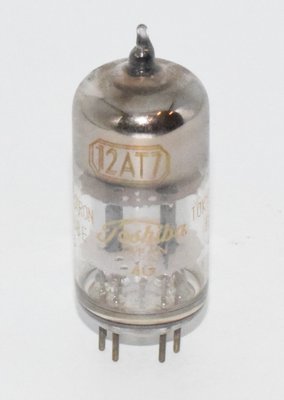
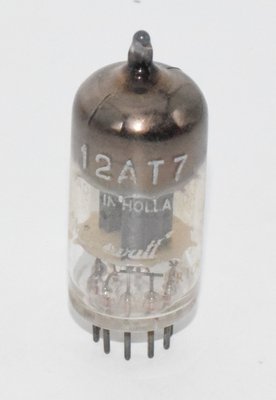
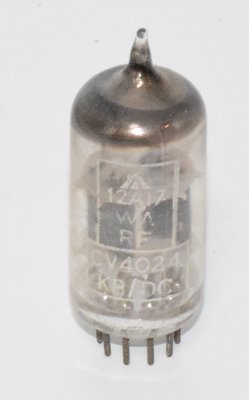
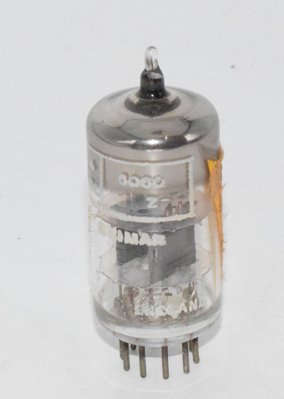
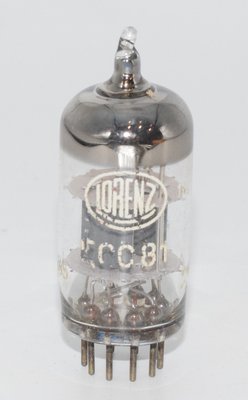
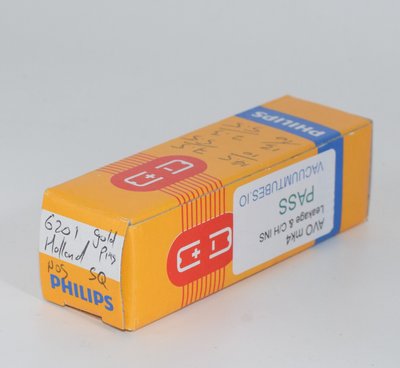
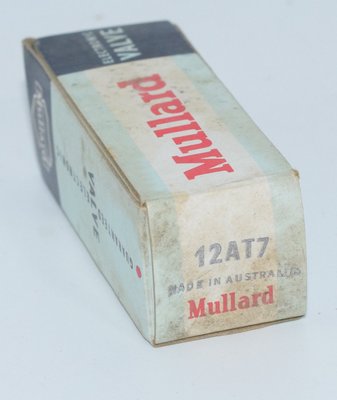
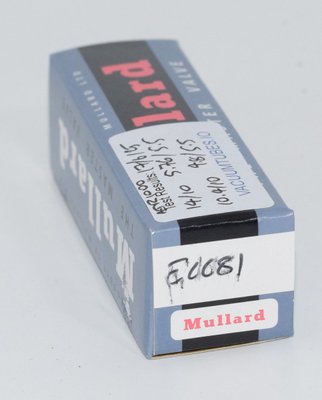
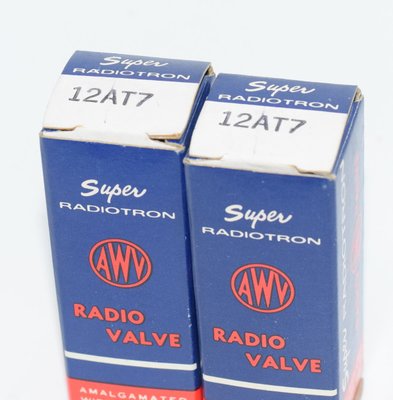
Manufacturers including Amperex, Philips (Miniwatt), Mullard, Siemens, Telefunken, GE, Sylvania, and Raytheon (who produced the CK6201 variant) all produced versions of this tube. The Philips Miniwatt / Valve Hamburg 1964 production with gold pins is particularly sought after by collectors and audiophiles today. The 6201 was originally intended for use in grounded-grid RF amplifiers, oscillators, and mixers at frequencies up to 300 MHz, as well as in precision instrumentation and computer circuits where long-term parameter stability was essential.
Technical Specifications and Design
General Description
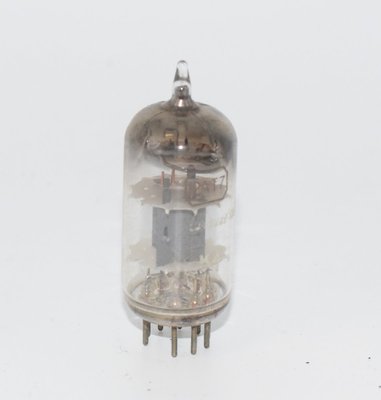
The 6201 is a miniature double triode with two electrically independent triode sections sharing a common envelope. It features oxide-coated cathodes with indirect heating and a center-tapped filament/heater, allowing operation at either 12.6V or 6.3V heater voltage. The tube is constructed with reinforced internal structures for enhanced mechanical robustness and operational reliability.
Heater / Filament Ratings
| Parameter | Value |
|---|---|
| Heater Voltage (series operation) | 12.6 V ± 10% |
| Heater Voltage (parallel operation) | 6.3 V ± 10% |
| Heater Current (series, 12.6V) | 0.15 A |
| Heater Current (parallel, 6.3V) | 0.3 A |
Absolute Maximum Ratings (per section)
| Parameter | Value |
|---|---|
| Maximum Plate (Anode) Voltage | 330 V |
| Maximum Plate Dissipation | 2.5 W |
| Maximum DC Grid Voltage (negative) | −55 V |
| Maximum Grid Resistance | 0.25 MΩ (250 kΩ) |
| Maximum Cathode-to-Heater Voltage | ±100 V |
| Maximum Bulb Temperature | 200 °C |
Note: The maximum plate dissipation for the 6201 is rated at 2.5 W per section. The closely related 12AT7WA datasheet from CSF specifies 2.8 W per element — this slight difference reflects the tighter derating applied to the premium 6201 designation to ensure longer operational life. Some manufacturer datasheets for the 6201 may specify 2.8 W; designers should consult the specific manufacturer's datasheet for the production lot in use.
Interelectrode Capacitances
| Parameter | Without Shield | With Shield |
|---|---|---|
| Grid to Plate (Cga), per section | 1.6 pF | 1.6 pF |
| Input Capacitance (Cgk), per section | 2.5 pF | 2.5 pF |
| Output Capacitance (Cak), Section 1 | 0.45 pF | — |
| Output Capacitance (Cak), Section 2 | 0.38 pF | — |
| Heater to Cathode | 2.8 pF | 2.8 pF |
| Plate to Plate (anode to anode) | 0.33 pF | 0.25 pF |
Note: The slight asymmetry in output capacitance between Section 1 (0.45 pF) and Section 2 (0.38 pF) is typical of the 12AT7/ECC81 family and results from the physical geometry of the two triode sections relative to the pin arrangement.
Typical Operating Conditions — Class A1 Amplifier (per section)
| Parameter | Condition A | Condition B |
|---|---|---|
| Plate Voltage (Va) | 250 V | 100 V |
| Cathode Resistance (Rk) | 200 Ω | 270 Ω |
| Amplification Factor (μ) | 60 | 60 |
| Plate Resistance (rp) | 10,900 Ω (≈10.9 kΩ) | 14,300 Ω (≈14.3 kΩ) |
| Transconductance (gm) | 5.5 mA/V | 4.0 mA/V |
| Plate Current (Ia) | 10.0 mA | 3.3 mA |
| Grid Voltage for Ig = 10 µA (approx.) | −12 V | −5 V |
Design Limits for Equipment Projects
| Parameter | Minimum | Maximum |
|---|---|---|
| Heater Current at 12.6V (mA) | 138 | 162 |
| Heater Current after 500h / 1000h | 138 | 162 |
| Plate Current Difference Between Sections (mA) | — | 3.2 |
| Transconductance per section (mA/V) | 4.5 | 6.5 |
| Transconductance after 500h / 1000h (mA/V) | 3.8 | 6.5 |
| Amplification Factor per section | 50 | 70 |
| Reverse Grid Current (µA) | — | 0.7 |
| Microphonic Voltage (mV) at 10g, 50 Hz | — | 100 |
Physical Construction
| Parameter | Value |
|---|---|
| Base Type | Noval (B9A), 9-pin miniature |
| Socket | 9C12 (9-pin miniature) |
| Envelope | Miniature glass (T-6½) |
| Maximum Diameter | 22.2 mm |
| Maximum Seated Height | 49.2 mm (approx.) |
| Maximum Overall Length | ~56 mm (including pins) |
| Net Weight | 12 g |
| Mounting Position | Any (all positions) |
Pin Configuration (Bottom View)
| Pin | Function |
|---|---|
| 1 | Plate (Anode), Section 2 |
| 2 | Grid, Section 2 |
| 3 | Cathode, Section 2 |
| 4 | Heater / Filament |
| 5 | Heater / Filament |
| 6 | Plate (Anode), Section 1 |
| 7 | Grid, Section 1 |
| 8 | Cathode, Section 1 |
| 9 | Heater Center Tap |
This pinout is identical to the standard 12AT7/ECC81 family, ensuring full pin-for-pin compatibility.
Ruggedization and Special Testing
As a premium/military-grade tube, the 6201 undergoes special control tests that far exceed those applied to commercial 12AT7 production:
- Filament Fatigue: 2,000 cycles of 1-minute on / 4-minute off at 7.5V with Vfk = 100V
- Shock Resistance: Five shocks of 450g applied successively in four directions along three perpendicular axes
- Vibration Fatigue: Sinusoidal vibration at 2.5g, 25 Hz, applied along three perpendicular directions for 3 × 24 hours
- Interelectrode Insulation: Minimum 100 MΩ between grid and other electrodes at 100V; minimum 100 MΩ between anode and other electrodes at 300V
- Life Testing: Parameters guaranteed to remain within specification after 500 and 1,000 hours of operation under rated conditions
Applications and Usage
The 6201 was originally designed for demanding professional and military applications:
- RF Amplification: Grounded-grid RF amplifiers operating at frequencies up to 300 MHz, where the tube's low interelectrode capacitances and high transconductance are advantageous
- Oscillators and Mixers: High-frequency oscillator and mixer circuits in communications receivers and transmitters
- Instrumentation: Precision measurement equipment requiring long-term parameter stability and low microphonics
- Computer Circuits: Early digital computing systems where reliability and consistent switching characteristics were critical
- Telecommunications: Carrier telephone systems, repeater amplifiers, and other telecom infrastructure requiring tubes with guaranteed long service life
- Audio Preamplification: High-fidelity preamplifier stages, phono stages, and line stages where the tube's low noise and tight tolerances provide superior performance
- Reverb Driver Circuits: Guitar amplifiers using spring reverb, where the 12AT7 family's moderate gain and good current delivery are well-suited to driving reverb transformers
- Phase Inverter / Driver Stages: Push-pull amplifier driver stages where matched triode sections and consistent gain are important for balanced operation
Sound Characteristics
The 6201 / E81CC is widely regarded among audiophiles and recording engineers as one of the finest-sounding tubes in the 12AT7 family. Its premium construction and tighter specifications translate into audible improvements that experienced listeners consistently identify:
Tonal Qualities
- Clarity and Detail: The 6201 is praised for its exceptional clarity and resolution. The low-noise construction and tight parameter control result in a notably "black" background from which musical details emerge with precision. Fine textural details in vocals, acoustic instruments, and ambient information are rendered with greater definition compared to standard 12AT7 production.
- Midrange Purity: Like all members of the 12AT7 family, the 6201 exhibits a clean, articulate midrange. However, the premium construction of the 6201 tends to produce a midrange that is slightly more refined and less "grainy" than commercial-grade equivalents. Vocal reproduction is often described as natural and present without being forward or aggressive.
- High-Frequency Extension: The 6201's design for RF applications up to 300 MHz means its high-frequency performance is inherently excellent. In audio circuits, this manifests as smooth, extended treble with good "air" and spatial information. The highs are typically described as detailed but never harsh or brittle.
- Low-End Performance: The bass response of the 6201 is tight, controlled, and well-defined. It does not exhibit the warmth or bloom that some listeners associate with the 12AX7 family; instead, it provides a more neutral, accurate low-frequency presentation.
- Dynamic Response: With a transconductance of 5.5 mA/V at 250V and relatively low plate resistance of 10.9 kΩ, the 6201 offers excellent dynamic capability. Transients are handled with speed and authority, contributing to a lively, engaging presentation.
- Noise Floor: The premium construction, including controlled grid emission (maximum reverse grid current of 0.7 µA) and rigorous vibration testing, results in a notably low noise floor. This is particularly important in phono stages and other high-gain applications where tube noise can be a limiting factor.
Comparison to Standard 12AT7
Compared to a standard commercial 12AT7/ECC81, the 6201 typically sounds more refined, quieter, and more detailed. The differences are most apparent in revealing systems and critical listening environments. In guitar amplifier applications, the differences may be less pronounced due to the higher signal levels and deliberate distortion involved, though players who use clean tones often appreciate the 6201's superior clarity.
Manufacturer Variations
Different manufacturers' 6201 production can exhibit subtly different sonic signatures:
- Amperex / Philips (Heerlen, Holland): Often described as warm yet detailed, with a rich midrange and smooth highs. The Bugle Boy branded versions are particularly prized.
- Philips Miniwatt / Valve Hamburg (Germany): The 1964 gold-pin production is legendary among collectors. These are noted for exceptional transparency, wide soundstaging, and a slightly leaner, more analytical presentation.
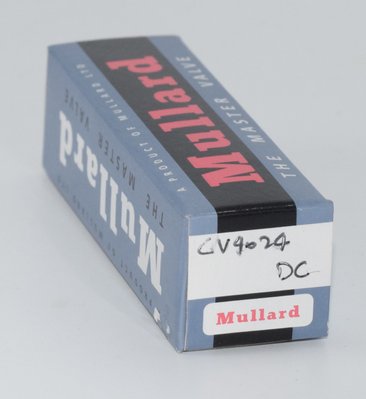
- Mullard (UK): Tends toward a warmer, more "musical" presentation with slightly rounded transients and a lush midrange.
- Telefunken (Germany): Known for crystalline clarity, precise imaging, and a neutral tonal balance. Diamond-bottom versions are especially sought after.
- Siemens (Germany): Similar to Telefunken in clarity but sometimes described as having slightly more body in the lower midrange.
Equivalent and Substitute Types
Close / Identical Substitutes (Direct Drop-in)
| Type | Notes |
|---|---|
| CK6201 | Raytheon designation for the 6201. Identical specifications. Direct drop-in replacement. |
Different Rating Substitutes (Functionally Compatible but NOT Identical Specifications)
The following types share the same pinout and basic function as the 6201 but may differ in maximum ratings, parameter tolerances, construction quality, or life specifications. They can generally be substituted in most circuits but are not identical to the 6201's premium specifications:
| Type | Notes |
|---|---|
| 12AT7 | Standard commercial equivalent. Lower reliability specs, wider parameter tolerances. Most common substitute. |
| 12AT7WA | Military-ruggedized 12AT7 (per the attached CSF datasheet). Similar enhanced construction but may differ in specific parameter limits. Plate dissipation rated at 2.8W. |
| 12AT7WC | Another military-grade variant with controlled heater warm-up characteristics. |
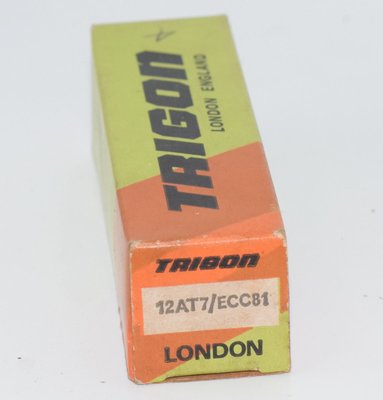
| ECC81 | European (Mullard/Philips) designation for the standard 12AT7. Direct functional equivalent. |
| E81CC | European SQ (Special Quality) designation equivalent to the 6201. Long-life, tight-tolerance version of ECC81. This is effectively the same tube under European naming conventions. |
| ECC801 / ECC801S | European ruggedized/special versions of the ECC81. The "S" suffix typically denotes a special-quality variant. |
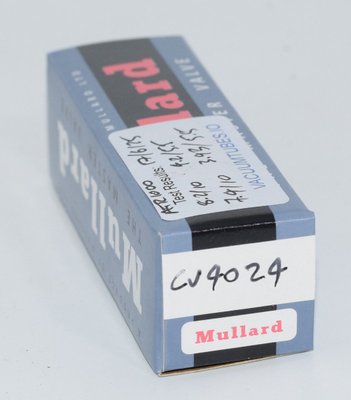
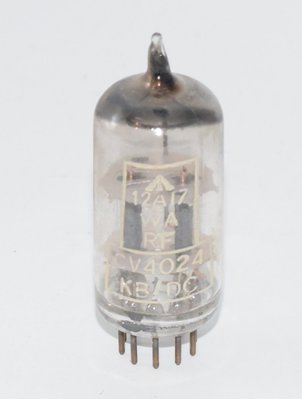
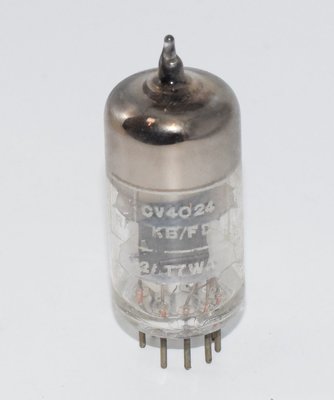
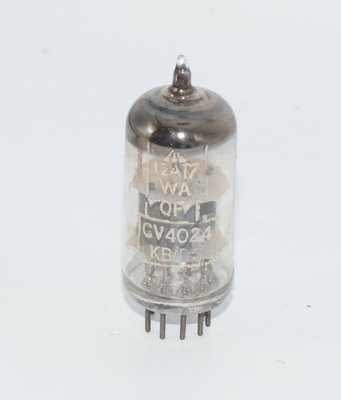
| CV4024 | UK military (CV) designation for the premium-grade ECC81/12AT7 type. Often considered equivalent to the 6201/E81CC in quality. |
| M8162 | UK military designation, equivalent to CV4024. Premium-grade ECC81. |
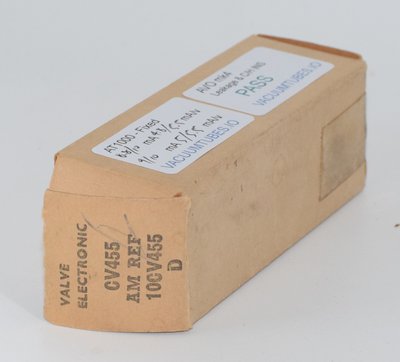
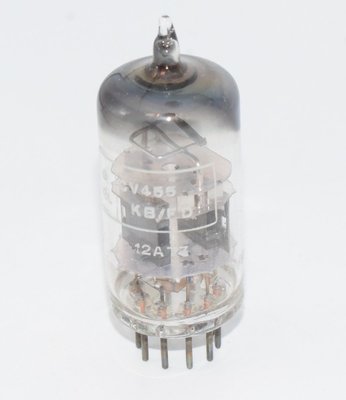
| CV455 | Earlier UK military designation for the ECC81 family. |
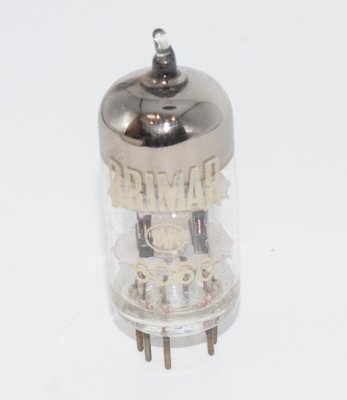
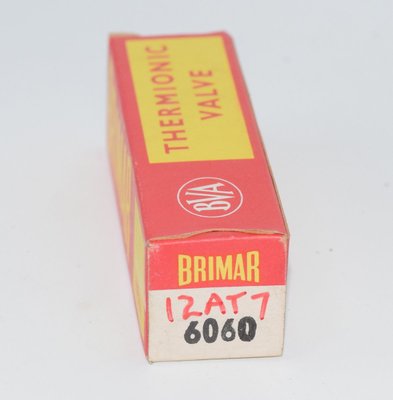
| 6060 | Industrial/computer-grade variant of the 12AT7 family. |
| 6679 | Low-noise, selected variant of the 12AT7 family. |
| 7492 | Industrial variant of the 12AT7. |
| 7728 | Special variant of the 12AT7 family. |
| A2900 | GEC/MOV designation for the ECC81 family. |
| B152, B309, B739 | Various European manufacturer designations for ECC81-family types. |
| CC81E | French designation variant. |
| CV10662, CV8154, CV9859 | Additional UK military CV-register designations for specific ECC81 variants. |
| E2157 | Telefunken internal designation. |
| QA2406, QS2406 | Additional cross-reference designations. |
Important Note: While all of the above types share the same Noval B9A pinout and basic electrical function, the 6201 / E81CC is specifically a premium-grade type with tighter parameter tolerances, enhanced mechanical construction, and guaranteed long-life performance. Substituting a standard 12AT7 for a 6201 in a circuit designed for the premium type may result in higher noise, greater microphonics, wider section-to-section imbalance, and shorter service life. Conversely, a 6201 can always be used in place of a standard 12AT7 — it simply exceeds the requirements.
Notable Characteristics
High Amplification Factor with Moderate Plate Resistance
The 6201 offers an amplification factor (μ) of 60, which is significantly higher than the 12AU7 family (μ ≈ 17–20) but lower than the 12AX7 family (μ ≈ 100). This positions it as an excellent choice for applications requiring moderate voltage gain with good current drive capability. The plate resistance of approximately 10.9 kΩ (at Va = 250V) is low enough to drive subsequent stages or loads with good authority, while the transconductance of 5.5 mA/V ensures responsive signal handling.
Excellent High-Frequency Performance
Designed for operation up to 300 MHz, the 6201's low interelectrode capacitances (Cga = 1.6 pF, Cgk = 2.5 pF, Cak = 0.45/0.38 pF) make it inherently suitable for wideband applications. Even in audio circuits operating well below its frequency ceiling, this translates to excellent phase margin and stability.
Tight Section Matching
The maximum allowable plate current difference between the two triode sections is specified at 3.2 mA — a relatively tight tolerance that makes the 6201 well-suited for differential amplifier, phase inverter, and balanced circuit applications without requiring external selection and matching.
Exceptional Mechanical Robustness
The 6201's reinforced internal structure allows it to withstand shocks of 450g and sustained vibration at 2.5g — specifications that far exceed those of commercial tubes. This makes it ideal for mobile, airborne, and shipboard installations, as well as for any application where mechanical vibration might induce microphonic noise.
Guaranteed Long-Term Stability
The datasheet guarantees that key parameters — including transconductance, heater current, grid emission, and interelectrode insulation — remain within specification after both 500 and 1,000 hours of operation. The transconductance minimum after 1,000 hours is 3.8 mA/V, representing a worst-case degradation of only about 16% from the initial minimum of 4.5 mA/V. This long-term stability is a hallmark of the premium 6201 designation.
Low Grid Emission
Maximum reverse grid current is specified at 0.7 µA, maintained even after 1,000 hours of operation. This is critical for low-noise applications and ensures stable bias conditions over the tube's service life.
Usage in the Audio Community
High-Fidelity Preamplifiers
The 6201 / E81CC is a favorite among hi-fi enthusiasts for use in tube preamplifiers, particularly in phono stages where its low noise, low microphonics, and tight section matching are most beneficial. Many classic and modern preamplifier designs that call for 12AT7-type tubes benefit significantly from the use of 6201s. The tube's moderate gain (μ = 60) makes it suitable for line-stage applications where the higher gain of a 12AX7 might be excessive, and its relatively low plate resistance allows it to drive long interconnect cables or low-impedance loads with ease.
Headphone Amplifiers
The 6201's combination of moderate gain, low output impedance (relative to higher-μ triodes), and excellent linearity makes it popular in tube headphone amplifier designs. Its ability to deliver clean current at moderate voltage swings is well-matched to the requirements of driving headphones, and the premium construction ensures a quiet, detailed listening experience.
Guitar Amplifiers
In the guitar amplifier world, the 12AT7 family — including the 6201 — is commonly used in several critical positions:
- Phase Inverter / Driver: The 6201's matched sections and moderate gain make it excellent in long-tailed pair phase inverters, as found in Fender, Marshall, and Vox amplifiers. The tight section matching reduces crossover artifacts in push-pull output stages.
- Reverb Driver: The 12AT7 family's ability to deliver higher current than the 12AX7 makes it the standard choice for driving spring reverb transformers. The 6201's premium construction can reduce reverb circuit noise and improve reverb tone quality.
- Effects Loop: Some amplifiers use 12AT7-type tubes in effects loop send/return stages, where the 6201's low noise and good drive capability are advantageous.
- Gain Reduction: Players seeking a cleaner, less distorted tone sometimes substitute a 12AT7/6201 for a 12AX7 in preamp gain stages. The lower gain (μ = 60 vs. μ = 100) reduces overdrive while maintaining good signal quality. Note that the different operating parameters mean the bias point will shift, but this is generally safe and often musically desirable.
DAC Output Stages and Buffers
Modern hybrid audio designs sometimes employ 6201 tubes as analog output buffers following digital-to-analog converters. The tube's linearity, low noise, and good drive capability make it well-suited to this application, adding the subtle harmonic richness that many listeners prefer while maintaining excellent measured performance.
Microphone Preamplifiers
Professional and boutique microphone preamplifiers frequently use 12AT7-family tubes, and the 6201 is a premium upgrade in these applications. Its low noise floor and controlled microphonics are particularly important when amplifying the very low signal levels produced by dynamic and ribbon microphones.
Collectibility and Market
Vintage 6201 / E81CC tubes are highly collectible, with certain production runs commanding premium prices on the used market. Particularly sought-after are:
- Philips Miniwatt / Valve Hamburg gold-pin production (1960s)
- Amperex Bugle Boy branded 6201s (Holland production)
- Telefunken diamond-bottom E81CC
- Mullard CV4024 / M8162 (Blackburn, UK production)
- Siemens E81CC (Munich production)
These vintage premium tubes can sell for $50–$200+ per tube depending on manufacturer, production date, condition, and test results. New-old-stock (NOS) examples with original packaging command the highest prices. The audio community values these tubes not merely for their specifications but for the perceived sonic superiority that results from the combination of premium materials, careful manufacturing processes, and the specific construction techniques employed by the great European tube factories of the 1950s and 1960s.
Modern Production
While no current manufacturer produces a tube specifically branded as "6201," several modern 12AT7 / ECC81 productions from manufacturers such as JJ Electronic, Electro-Harmonix (New Sensor), Tung-Sol (reissue), and Psvane are available. Some of these offer "premium" or "gold" versions with tighter selection and testing, though they generally do not meet the full military-grade specifications of the original 6201. For critical applications, NOS 6201 / E81CC tubes remain the gold standard in the audio community.