Introduction and History
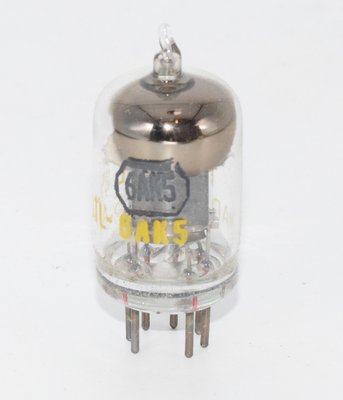
The 6AK5 is a miniature sharp-cutoff RF pentode vacuum tube that emerged during the latter years of World War II, originally developed for military radar and communications equipment. First appearing around 1944–1945, the tube was designed to meet the demanding requirements of compact, high-frequency amplifier stages in military electronics where reliability, small size, and excellent RF performance were paramount.
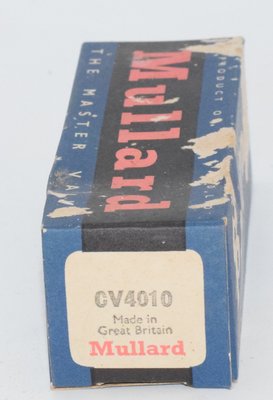
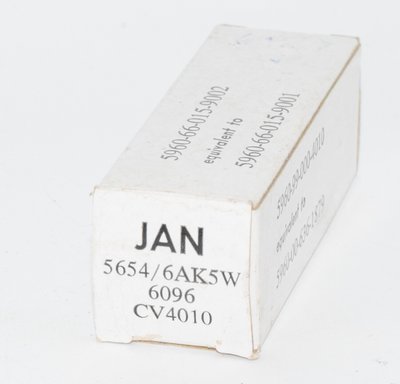
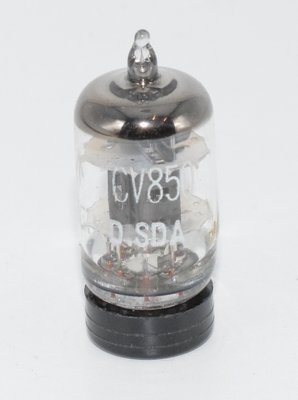
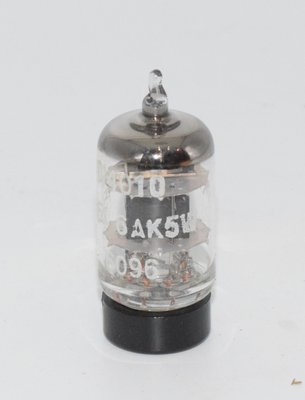
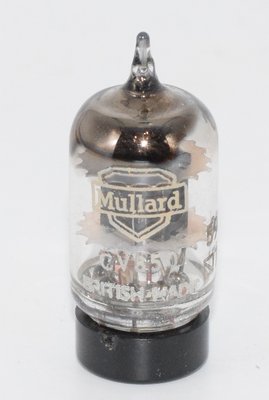
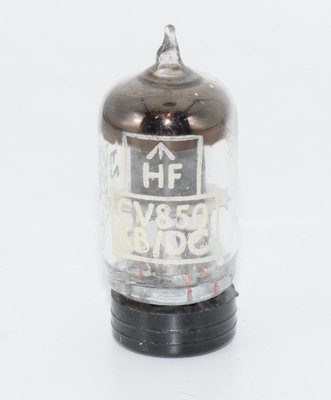
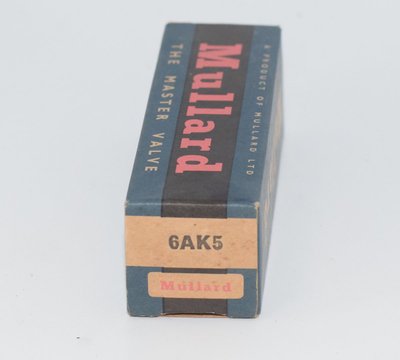
The 6AK5 was manufactured by virtually every major tube producer of the era, including Western Electric, Tung-Sol, RCA, Sylvania, Raytheon, Mullard, Philips, GEC, and many others. Its military designation in the United States was the 5654 (ruggedized version), while in the British CV (Common Valve) system it was designated CV850, CV8159, CV8225, and CV10100 among others. The French manufacturer CIFTE produced it under the Mazda-Belvu brand, and Amalgamated Wireless of Australia (AWA) also manufactured versions including the 6AK5W (the "W" suffix denoting a ruggedized military specification).
The tube was designed as a voltage amplifier pentode primarily intended for RF amplification, and its compact B7G miniature envelope made it ideal for the increasingly dense electronic assemblies of the post-war era. Its European equivalent is the EF95, manufactured by Mullard, Philips, and other European firms. The 6AK5 became one of the most widely produced miniature pentodes in history, with production spanning from the mid-1940s through the 1960s and beyond.
Notably, early production examples from Tung-Sol and Western Electric dating to 1945 are among the most sought-after by collectors and audiophiles today, representing some of the finest examples of wartime tube manufacturing quality.
Technical Specifications and Design
General Characteristics
| Parameter | Value |
|---|---|
| Tube Type | Sharp-cutoff RF voltage amplifier pentode |
| Cathode Type | Indirectly heated (unipotential cathode) |
| Filament Configuration | Parallel operation |
| Envelope | Miniature glass (A19-1) |
| Base | Miniature 7-pin (B7G / 7C10) |
| Mounting Position | Any (quelconque) |
| Maximum Envelope Diameter | 19 mm |
| Maximum Seated Height | 38.1 mm |
| Maximum Pin Length Below Base | 7.14 mm |
Heater Ratings
| Parameter | Symbol | Value |
|---|---|---|
| Heater Voltage | Vf | 6.3 V |
| Heater Current | If | 175 mA |
Interelectrode Capacitances (with external shielding)
| Parameter | Symbol | Value |
|---|---|---|
| Grid No. 1 to Anode (feedback capacitance) | Cg₁/a | 0.03 pF (20 mpF max per CIFTE data) |
| Input Capacitance | Ce (Cgk) | 4.0 pF |
| Output Capacitance | Cs (Cak) | 2.8 pF (CIFTE) / 2.1 pF (TDSL) |
Note: The CIFTE/Mazda-Belvu datasheet specifies Cs = 2.8 pF and Cg₁/a = 20 mpF max, while the TDSL reference data lists Cak = 2.1 pF and Cga = 0.03 pF. Minor variations between manufacturers and measurement conditions are normal for this tube type. The extremely low grid-to-anode capacitance (0.03 pF or less) is a hallmark of the 6AK5's excellent RF performance.
Absolute Maximum Ratings
| Parameter | Symbol | Maximum Value |
|---|---|---|
| Anode Voltage | Va | 200 V |
| Screen Grid (G2) Voltage | Vg₂ | 155 V |
| Anode Dissipation | Pa | 1.7 W |
| Screen Grid Dissipation | Pg₂ | 0.55 W |
| Cathode Current | Ik | 20 mA |
| Negative Grid No. 1 Voltage | -Vg₁ | 50 V max |
| Grid No. 1 Circuit Resistance | Rg₁ | 0.1 MΩ max |
| Heater-to-Cathode Voltage | Vfk | 135 V max |
Nominal Operating Characteristics (Pentode Connection)
| Parameter | Symbol | Value |
|---|---|---|
| Anode Voltage | Va | 120 V (CIFTE) / 180 V (TDSL) |
| Screen Grid Voltage | Vg₂ | 120 V |
| Cathode Bias Resistor | Rk | 200 Ω (at Va=120V) |
| Control Grid Voltage | Vg₁ | -1.8 V (TDSL) |
| Anode Current | Ia | 7.5 mA (CIFTE at 120V) / 7.7 mA (TDSL at 180V) |
| Screen Grid Current | Ig₂ | 2.5 mA (CIFTE) / 2.4 mA (TDSL) |
| Transconductance (Mutual Conductance) | S (gm) | 5 mA/V (CIFTE) / 5.1 mA/V (TDSL) |
| Internal Resistance (Plate Resistance) | ρ (rp) | 340 kΩ (CIFTE) / 500 kΩ (TDSL at 180V) |
| Amplification Factor | μ | ~1700–2550 (calculated from gm × rp) |
Note: The amplification factor μ is not directly stated in the attached datasheet but can be calculated from the relationship μ = gm × rp. Using the CIFTE nominal values (gm = 5 mA/V, rp = 340 kΩ), μ ≈ 1700. Using the TDSL values (gm = 5.1 mA/V, rp = 500 kΩ), μ ≈ 2550. The variation reflects different operating points and measurement conditions. The very high plate resistance and amplification factor are characteristic of a sharp-cutoff pentode designed for voltage amplification.
Pin Configuration (7C10 / B7G Base — Bottom View)
| Pin Number | Connection |
|---|---|
| Pin 1 | Grid No. 1 (Control Grid) |
| Pin 2 | Cathode, Grid No. 3 (Suppressor Grid) |
| Pin 3 | Filament (Heater) |
| Pin 4 | Filament (Heater) |
| Pin 5 | Anode (Plate) |
| Pin 6 | Grid No. 2 (Screen Grid) |
| Pin 7 | Cathode, Grid No. 3 (Suppressor Grid) |
The suppressor grid (Grid No. 3) is internally connected to the cathode, with both cathode connections brought out to pins 2 and 7. This dual cathode connection helps reduce lead inductance at high frequencies and provides flexibility in grounding arrangements.
Class A Amplifier Operating Conditions
The CIFTE datasheet provides extensive application tables for Class A amplifier service at 5% total harmonic distortion, with output voltage (Vs) measured at 2.0 Veff. These tables cover both low-impedance (~200 Ω) and high-impedance (~100 kΩ) source configurations across supply voltages of 90V, 100V, 180V, and 300V, with various anode load resistors (Ra) from 100 kΩ to 510 kΩ. Voltage gains (Av) ranging from approximately 42 to 390 are achievable depending on operating conditions, with higher gains obtained at higher supply voltages and larger screen grid resistor values.
Applications and Usage
The 6AK5 was designed as a versatile RF voltage amplifier pentode and has found application across an extraordinarily wide range of electronic equipment:
Original Military and Commercial Applications
- RF Amplification: The tube's primary intended application was as an RF amplifier in radio receivers, radar systems, and communications equipment. Its very low grid-to-anode capacitance (0.03 pF) made it exceptionally stable at high frequencies, minimizing unwanted feedback and oscillation.
- IF Amplifier Stages: Widely used in intermediate frequency amplifier chains in superheterodyne receivers, where its high transconductance and sharp cutoff characteristics provided excellent gain and AGC (Automatic Gain Control) performance.
- Video Amplifiers: The combination of high transconductance and relatively low interelectrode capacitances made it suitable for wideband video amplification in early television equipment and oscilloscopes.
- Test Equipment: Found in numerous pieces of laboratory test equipment including signal generators, spectrum analyzers, and precision measurement instruments from manufacturers such as Hewlett-Packard, Tektronix, and Boonton.
- Military Electronics: Extensively used in military radar, electronic countermeasures (ECM), and communications equipment throughout the Cold War era. The ruggedized 5654/6AK5W versions were specified for equipment subject to vibration and shock.
- Early Computers: Used in some early electronic computing systems where its reliability and compact size were advantageous.
Modern Applications
- High-fidelity audio preamplifiers: The 6AK5 has found a significant second life in audiophile preamplifier designs, where its high gain and musical characteristics are prized.
- Headphone amplifiers: Its modest power requirements and excellent linearity make it well-suited to driving headphones through appropriate output stages.
- Guitar amplifiers and effects: Some boutique guitar amplifier and effects pedal builders use the 6AK5 for its distinctive tonal character.
- Microphone preamplifiers: Used in some studio and DIY microphone preamp designs where its high gain and low noise are advantageous.
- DAC output stages: Some high-end digital-to-analog converter designs incorporate 6AK5 tubes in their analog output stages for tonal coloration and harmonic enrichment.
Sound Characteristics
The 6AK5 has developed a devoted following in the audio community, and its sonic character has been extensively described by audiophiles and audio engineers. While subjective descriptions of tube sound should always be taken in context — as the surrounding circuit design, operating point, and passive components all profoundly influence the final result — certain consistent themes emerge in descriptions of the 6AK5's tonal qualities:
General Tonal Character
The 6AK5 is generally described as having a clean, detailed, and slightly bright sonic signature compared to many other small-signal tubes. Its sharp-cutoff characteristic contributes to a precise, well-defined sound that audiophiles often describe as "articulate" and "transparent." The tube tends to present music with excellent clarity and resolution, particularly in the midrange and upper frequencies.
Frequency Response Characteristics
- Bass: The low-frequency performance of the 6AK5 is generally described as tight, controlled, and well-defined rather than warm or lush. It does not add significant low-frequency bloom or warmth, which some listeners prefer for accuracy while others may find slightly lean compared to tubes like the 12AU7 or 6SN7.
- Midrange: The midrange is where the 6AK5 truly excels according to most listeners. It is frequently described as having excellent presence, clarity, and detail retrieval. Vocals and acoustic instruments are rendered with a natural, immediate quality that many find engaging and lifelike.
- Treble: The high-frequency performance is typically described as extended, airy, and detailed. Some listeners note a slight emphasis in the upper frequencies that contributes to the tube's sense of "sparkle" and detail, though this can occasionally tip into brightness in poorly designed circuits or with certain tube brands.
Dynamic and Spatial Qualities
The 6AK5 is noted for its excellent micro-dynamic resolution — the ability to convey subtle dynamic shadings and textural details in music. Its high transconductance (5.1 mA/V) contributes to a lively, responsive feel that tracks musical transients with precision. Soundstage presentation tends to be well-organized with good depth and precise imaging, though it may not have the expansive, holographic quality that some larger triodes are known for.
Harmonic Distortion Character
As a pentode, the 6AK5's distortion spectrum includes both even and odd harmonics, with the balance depending heavily on the circuit topology. When operated in pentode mode, the odd-harmonic content is more prominent, contributing to a slightly edgier, more incisive character. When triode-strapped (connecting the screen grid to the anode), the harmonic spectrum shifts toward predominantly even-order harmonics, producing a warmer, smoother sound that many audiophiles prefer for music listening. Many audio designs using the 6AK5 employ triode strapping for this reason, trading some gain for a more euphonic harmonic signature.
Variations by Manufacturer
Experienced tube rollers report noticeable sonic differences between 6AK5 tubes from different manufacturers:
- Western Electric / Tung-Sol (1945 era): Highly prized for a rich, full-bodied sound with exceptional midrange presence and a slightly warmer tonal balance than later production tubes.
- Mullard (UK): Known for a smooth, refined sound with a slightly warm midrange and well-controlled treble. Mullard-made CV850 and EF95 equivalents are among the most sought-after for audio use.
- Philips Miniwatt (UK): Similar to Mullard production (often from the same factories), with a reputation for consistency and a balanced, musical presentation.
- Sylvania (USA): Often described as having a clear, detailed sound with good extension at both frequency extremes.
- RCA (USA): Tends toward a slightly warmer, more relaxed presentation compared to Sylvania production.
- Amalgamated Wireless Australia (AWA): Australian-made 6AK5W tubes are valued for their military-grade construction quality and are reported to offer a clean, neutral sound with good dynamics.
Equivalent and Substitute Types
The 6AK5 has numerous equivalents and near-equivalents across different naming conventions and military specification systems:
Direct Equivalents (Pin-for-Pin, Electrically Identical)
| Type Designation | Notes |
|---|---|
| EF95 | European (Pro-Electron) designation. Exact equivalent. Manufactured by Mullard, Philips, Valvo, Amperex, and others. |
| CV850 | British military (CV) designation. Direct equivalent of 6AK5. |
| CV8159 | British CV system designation. Equivalent to 6AK5. |
| CV8225 | British CV system designation. Equivalent to 6AK5. |
| CV10100 | British CV system designation. Equivalent to 6AK5. |
| CV4010 | British CV system designation for the ruggedized/premium version. Equivalent to 6AK5W/5654. |
Ruggedized / Military Premium Versions
| Type Designation | Notes |
|---|---|
| 5654 | US military ruggedized version of the 6AK5. Tighter specifications, more rugged construction. Directly interchangeable in most circuits. |
| 6AK5W | "W" suffix indicates ruggedized construction meeting military environmental specifications. Electrically identical to standard 6AK5. |
| 6AK5WA | Further improved ruggedized version with even tighter tolerances. |
| 5654W | Ruggedized version of the 5654. |
Related Types (Similar but Not Necessarily Drop-In)
| Type Designation | Notes |
|---|---|
| 6J1 (6Ж1П) | Soviet/Chinese equivalent. Same pinout and very similar electrical characteristics. Widely available and inexpensive. Generally considered a suitable substitute, though sonic characteristics may differ from Western-made originals. |
| 6J1P (6Ж1П) | Soviet designation. Equivalent to 6J1/EF95. |
| EF40 | Rimlock-based pentode with similar characteristics but different base — NOT pin-compatible. |
| 6AU6 | Similar miniature pentode but with different pinout and somewhat different characteristics — NOT a direct substitute without circuit modification. |
Important: When substituting tubes, always verify that the replacement has the same pinout, heater voltage/current, and that the operating point falls within the substitute tube's maximum ratings. The 5654, 6AK5W, EF95, CV850, and the various CV-numbered equivalents listed above are genuinely interchangeable with the 6AK5 in virtually all circuits.
Notable Characteristics
Exceptional RF Performance
The 6AK5's extraordinarily low grid-to-anode capacitance of just 0.03 pF (20 mpF maximum per CIFTE specifications) is one of its most remarkable features. This extremely low feedback capacitance enables stable amplification at frequencies well into the VHF range without neutralization, a significant advantage in RF amplifier design. Combined with its input capacitance of 4.0 pF and output capacitance of 2.8 pF, the tube offers excellent high-frequency performance in a compact package.
High Transconductance for Its Size
With a transconductance of 5.0–5.1 mA/V at typical operating conditions, the 6AK5 offers impressive gain capability for such a small tube. This high gm, combined with the very high plate resistance (340–500 kΩ), yields an amplification factor in the range of 1700–2550, enabling voltage gains of 42 to over 390 depending on circuit configuration, as documented in the CIFTE application tables.
Versatile Operating Range
The CIFTE datasheet demonstrates the tube's versatility with extensive application tables covering supply voltages from 90V to 300V, anode loads from 100 kΩ to 510 kΩ, and screen grid resistor values from 100 kΩ to 2800 kΩ. This flexibility allows designers to optimize the tube's performance for a wide variety of applications and available power supply voltages.
Modest Power Requirements
The 6AK5's heater draws only 175 mA at 6.3V (approximately 1.1W of heater power), and its maximum anode dissipation is just 1.7W with a maximum screen dissipation of 0.55W. Total cathode current is limited to 20 mA maximum. These modest power requirements make it easy to incorporate into battery-powered equipment or designs where power supply capacity is limited.
Dual Cathode Connections
The internal connection of the suppressor grid to the cathode, with both brought out to pins 2 and 7, provides design flexibility. At RF frequencies, having two cathode pins helps reduce the inductance of the cathode return path, improving high-frequency stability and performance.
Construction Quality Variations
The 6AK5 was produced over a span of more than two decades by dozens of manufacturers worldwide. Construction quality varies significantly, from the premium military-grade 5654W and CV4010 versions with their carefully selected materials and tight tolerances, to standard commercial production. Military-specification tubes (identified by JAN prefixes, "W" suffixes, or CV designations) generally exhibit lower microphonics, tighter parameter matching, and longer service life — qualities that are particularly valued in audio applications.
Usage in the Audio Community
The 6AK5 has experienced a remarkable renaissance in the audio community, transitioning from a utilitarian RF tube to a valued component in high-fidelity audio equipment. This transformation has been driven by several factors:
Headphone Amplifiers
The 6AK5 has become particularly popular in the headphone amplifier community. Its high gain, compact size, and modest power requirements make it ideal for desktop headphone amplifiers. Several commercially available headphone amplifiers use the 6AK5 or its equivalents (EF95, 5654) as voltage amplifier stages, typically driving a power tube or solid-state output stage. The tube's detailed, articulate sound character complements the intimate listening experience of headphones, and the ability to "tube roll" between different manufacturers' versions of the 6AK5 adds an element of customization that enthusiasts enjoy.
Preamplifier Designs
Audio designers have incorporated the 6AK5 into line-stage preamplifiers and phono stages, taking advantage of its high gain to amplify low-level signals from phono cartridges and other sources. When operated in pentode mode, a single 6AK5 stage can provide sufficient gain for a moving-magnet phono stage. In triode-strapped configuration, the gain is reduced but the distortion character becomes more benign, with predominantly even-order harmonics that are perceived as musical warmth.
DIY and Kit Building
The 6AK5 family is extremely popular in the DIY audio community for several practical reasons:
- Availability: Millions of 6AK5/5654/EF95 tubes were manufactured, and NOS (New Old Stock) examples remain widely available at reasonable prices, particularly the Chinese 6J1 equivalents and various military surplus stocks.
- Affordability: Unlike many sought-after audio tubes that command premium prices, the 6AK5 and its equivalents can often be purchased for modest sums, making experimentation and tube rolling accessible.
- Low Voltage Operation: The tube operates well at relatively low voltages (90–180V), reducing the complexity and danger of power supply design for hobbyist builders.
- Compact Circuits: The B7G miniature base allows for compact circuit layouts, and the tube's modest heater current means that multiple stages can be powered from a simple supply.
Tube Rolling Culture
The 6AK5 has become a favorite subject for "tube rolling" — the practice of swapping different brands and vintages of compatible tubes to explore sonic differences. The wide range of manufacturers and production eras available for this tube type provides an extensive palette for experimentation. Audiophiles commonly compare:
- Early Western Electric and Tung-Sol production (1945–1950) — considered the "holy grail" by many collectors
- Mullard CV850 and EF95 production from the Whyteleafe and Blackburn factories
- Philips Miniwatt UK production
- Various JAN (Joint Army-Navy) military specification tubes
- Amalgamated Wireless Australia (AWA) 6AK5W production
- Later Sylvania, RCA, and GE commercial production
- Chinese 6J1 tubes as an affordable starting point
The Mullard-made versions (including those branded as CV850, CV4010, and EF95) are consistently among the most highly regarded for audio applications, prized for their smooth, refined sonic character and excellent construction quality. The early Tung-Sol/Western Electric tubes from 1945 are legendary but increasingly rare and expensive.
Commercial Audio Products
Several commercial audio manufacturers have released products featuring the 6AK5 and its equivalents. These range from affordable Chinese-manufactured headphone amplifiers and DACs that use 6J1 tubes (the Chinese 6AK5 equivalent) to high-end boutique preamplifiers that specify premium NOS Mullard or Western Electric tubes. The tube's presence in the commercial audio market has helped sustain demand and interest in this classic valve type.
Microphone Preamps and Studio Use
Some recording engineers and studio equipment designers have employed the 6AK5 in microphone preamplifier circuits, where its high gain and relatively low noise floor (for a pentode) can be advantageous. The tube's characteristic midrange clarity and detail retrieval are valued for vocal recording applications, and its compact size allows for multi-channel preamp designs in standard rack-mount enclosures.
Practical Considerations for Audio Use
When using the 6AK5 in audio circuits, designers and builders should be aware of several practical considerations:
- Microphonics: As a miniature tube with relatively lightweight internal structures, the 6AK5 can be susceptible to microphonic pickup. Military-grade versions (5654, 6AK5W, CV4010) generally exhibit lower microphonics due to their more rigid internal construction. Proper mounting with vibration isolation is recommended for audio applications.
- Grid Resistor Limitation: The maximum grid circuit resistance is specified at 0.1 MΩ (100 kΩ), which must be respected in audio circuit design to prevent grid emission problems and ensure stable operation.
- Screen Grid Considerations: In pentode mode, the screen grid voltage and its decoupling significantly affect both the gain and the sonic character. Careful attention to screen supply filtering and regulation is rewarded with lower noise and improved sound quality.
- Triode Strapping: For audio applications where a warmer, more euphonic sound is desired, connecting the screen grid (pin 6) to the anode (pin 5) through a suitable resistor converts the pentode to triode operation. This reduces gain substantially but shifts the harmonic distortion spectrum toward the more musically pleasing even-order harmonics.