1. Introduction and History
The 6AQ5 is a miniature beam power pentode (often classified as a beam tetrode) designed for audio frequency power amplification. Introduced in the late 1940s by major American tube manufacturers, the 6AQ5 was conceived as a compact, miniature replacement for the larger octal-based 6V6 family, offering respectable output power in a significantly smaller 7-pin miniature (B7G) glass envelope. It was part of the post-war trend toward miniaturization that saw many classic octal designs re-engineered into smaller, more efficient packages.
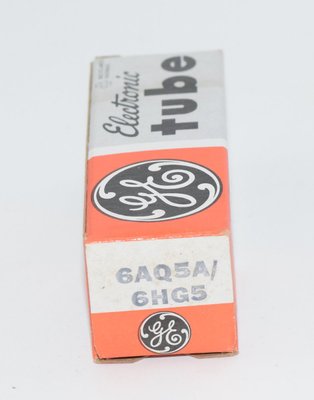
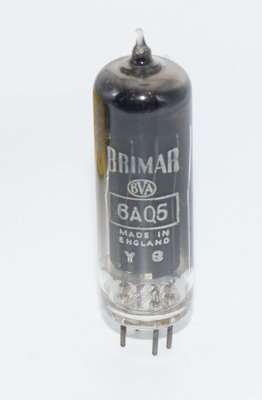
The tube quickly found widespread adoption in consumer electronics — particularly in table radios, small public address systems, intercoms, portable phonographs, and compact amplifiers of the 1950s and 1960s. Its modest power output of approximately 4.5 watts in single-ended configuration made it ideal for applications where space was at a premium but reasonable audio fidelity was still required. The 6AQ5 was manufactured by virtually every major tube producer of the era, including RCA, GE, Sylvania, Tung-Sol, Raytheon, Mullard, Brimar, and many European manufacturers under the designation EL90.
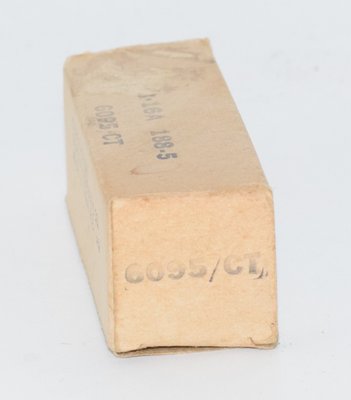
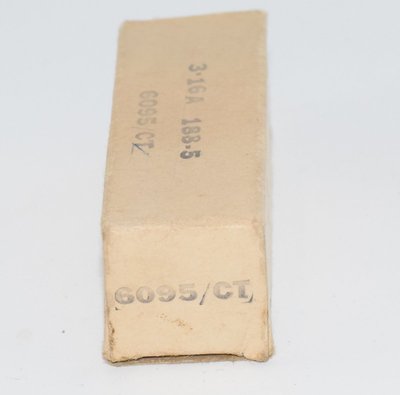
The tube's military significance is evidenced by its multiple CV (Common Valve) designations — CV1862 and CV8229 — indicating its qualification for use in British military and government equipment. Several ruggedized and special-quality variants were also developed, including the 6AQ5A (with higher ratings), the 6AQ5W (ruggedized for military use), and the 6005 (a reliable, long-life industrial version).
Despite being overshadowed by larger output tubes in high-fidelity circles, the 6AQ5 has enjoyed a renaissance among DIY audio enthusiasts and boutique amplifier builders who appreciate its sweet tone, low cost, and the simplicity of circuits it enables.
2. Technical Specifications and Design
Heater / Filament
| Parameter | Value |
|---|---|
| Heater Voltage (Vh) | 6.3 V |
| Heater Current (Ih) | 0.45 A |
| Heater Type | Indirectly heated cathode |
Maximum Ratings (Absolute Maximum Values)
| Parameter | Value |
|---|---|
| Maximum Plate Voltage (Va max) | 275 V (typical datasheet value; note that the 6AQ5A variant permits higher ratings) |
| Maximum Screen Grid Voltage (Vg2 max) | 275 V |
| Maximum Plate Dissipation (Pa max) | 12 W |
| Maximum Screen Grid Dissipation (Pg2 max) | 2.2 W (confirm against specific manufacturer datasheet) |
| Maximum Cathode Current | 54 mA (confirm against specific manufacturer datasheet) |
Typical Operating Conditions — Class A Single-Ended
| Parameter | Value |
|---|---|
| Plate Voltage (Va) | 250 V |
| Screen Grid Voltage (Vg2) | 250 V |
| Control Grid Voltage (Vg1) | -12.5 V |
| Plate Current (Ia) | 45 mA |
| Screen Grid Current (Ig2) | 4.5 mA |
| Transconductance (gm / S) | 4.1 mA/V (4,100 µmhos) |
| Plate Resistance (ra) | 52,000 Ω (52 kΩ) |
| Amplification Factor (µ) | ~213 (calculated: µ = gm × rp = 4.1 × 52 = 213.2; confirm against manufacturer datasheet) |
| Cathode Bias Resistor (Rk) | 250 Ω |
| Optimum Load Impedance (Zout) | 5,000 Ω |
| Power Output (Pout) | 4.5 W |
| Total Harmonic Distortion (THD) | 8% |
Physical Construction
| Parameter | Detail |
|---|---|
| Base Type | Miniature 7-pin (B7G / Noval variant) |
| Envelope | T-6½ miniature glass envelope |
| Mounting Position | Any (designed for universal mounting) |
| Overall Length | Approximately 59 mm (2.3 inches) (confirm against datasheet) |
| Maximum Diameter | Approximately 20.6 mm (0.81 inches) (confirm against datasheet) |
Pin-Out (B7G Base — Bottom View)
| Pin | Connection |
|---|---|
| Pin 1 | Control Grid (g1) |
| Pin 2 | Cathode (k) |
| Pin 3 | Heater (h) |
| Pin 4 | Heater (h) |
| Pin 5 | Plate (Anode) (a) |
| Pin 6 | Screen Grid (g2) |
| Pin 7 | Suppressor Grid (g3) — internally connected to cathode in beam tetrode versions |
Note: The 6AQ5 is technically a beam power tube rather than a true pentode; the beam-forming plates serve the function of the suppressor grid. In some documentation, pin 7 is listed as the beam plates connected internally to the cathode. Always verify the pinout against the specific manufacturer's datasheet for the production variant you are using.
Characteristic Curves
The 6AQ5 exhibits characteristic curves typical of a beam power tube: relatively flat plate current curves across a wide range of plate voltages at a given grid bias, with a well-defined knee region. The screen current remains low relative to plate current under normal operating conditions (approximately 10:1 ratio at the specified operating point), indicating good beam-forming efficiency. The relatively high plate resistance of 52 kΩ is characteristic of pentode/beam power operation and necessitates a well-matched output transformer for optimal power transfer.
3. Applications and Usage
The 6AQ5 was designed primarily as an audio frequency power amplifier for consumer and light-duty commercial equipment. Its principal applications include:
- Table and Mantel Radios: The 6AQ5 was one of the most popular output tubes in American AM/FM table radios of the 1950s and early 1960s. Its compact size and modest power requirements made it ideal for these space-constrained designs.
- Portable Phonographs and Record Players: Many portable and tabletop record players used a single 6AQ5 in the output stage, providing sufficient volume for domestic listening.
- Intercom Systems: Commercial and residential intercom systems frequently employed the 6AQ5 as the audio output stage.
- Public Address Systems: Small PA systems and paging amplifiers used single or push-pull pairs of 6AQ5 tubes.
- Television Audio: Some television receivers used the 6AQ5 for the audio output section.
- Test Equipment: Audio oscillators, signal generators, and other test instruments sometimes employed the 6AQ5 as an output driver.
- Military Communications: The ruggedized variants (6AQ5W, 6005) were used in military radio equipment, field telephones, and portable communications gear where reliability under harsh conditions was essential.
- Push-Pull Configurations: A pair of 6AQ5 tubes in push-pull Class AB1 can deliver approximately 8–10 watts of audio power, which was sufficient for many mid-century hi-fi applications.
In typical circuit configurations, the 6AQ5 is driven by a high-mu triode such as the 12AX7 or 12AT7, with the driver stage providing sufficient voltage swing to drive the 6AQ5 to full output. Cathode bias using the specified 250 Ω resistor (bypassed with a 25–50 µF electrolytic capacitor) is the most common biasing arrangement for single-ended operation.
4. Sound Characteristics
The 6AQ5 occupies an interesting sonic niche that has earned it a devoted following among those who have taken the time to listen carefully to this often-overlooked tube. Audiophiles and engineers describe its tonal qualities as follows:
- Warm and Sweet Midrange: The 6AQ5 is frequently praised for a warm, inviting midrange that shares some of the tonal family resemblance with its larger cousin, the 6V6. Vocals and acoustic instruments are rendered with a pleasing, natural warmth that avoids clinical sterility.
- Smooth, Non-Fatiguing Treble: The high-frequency response is generally described as smooth and gently rolled off compared to more aggressive output tubes. This characteristic makes the 6AQ5 particularly forgiving with bright or harsh source material and well-suited to extended listening sessions.
- Modest but Satisfying Bass: Given its relatively low power output, the 6AQ5 does not deliver the authoritative bass slam of larger beam tetrodes like the 6L6 or KT88. However, within its power envelope, the bass is described as tuneful, articulate, and surprisingly well-defined — particularly when paired with efficient speakers.
- Pleasant Harmonic Distortion: Like most beam power tubes, the 6AQ5 produces a mix of even and odd harmonics when driven into distortion. At moderate levels, the even-order harmonics predominate, lending a musical, euphonic quality to the sound. The 8% THD at rated output is typical for a single-ended beam power tube and is perceived as adding richness rather than harshness at normal listening levels.
- Intimate Soundstage: The 6AQ5's modest power output naturally lends itself to near-field and small-room listening, where it creates an intimate, engaging soundstage. It excels with jazz, vocal, chamber music, and acoustic genres.
- Comparison to 6V6: Many listeners note a strong family resemblance to the 6V6, with the 6AQ5 offering a slightly more delicate and refined presentation — sometimes described as a "miniature 6V6 with a touch more sweetness." The smaller tube's lower power means it reaches its sweet spot of gentle compression at lower volumes, which can be an advantage in domestic settings.
- Triode-Strapped Operation: When operated in triode mode (screen grid tied to plate through a suitable resistor), the 6AQ5 takes on an even more refined, linear character with reduced power output (typically 1–2 watts) but lower distortion and a more triode-like harmonic signature that some listeners prefer.
The overall sonic character of the 6AQ5 can be summarized as warm, sweet, and musically engaging — a tube that prioritizes tonal beauty and listenability over raw power and analytical detail.
5. Equivalent or Substitute Types
Direct / Identical Substitutes (Drop-In Replacements)
The following types are electrically identical and pin-compatible with the 6AQ5 and can be used as direct drop-in replacements:
| Type | Notes |
|---|---|
| EL90 | European (Mullard/Philips) designation for the same tube. Fully interchangeable. Widely available from European manufacturers including Mullard, Valvo, Philips, Siemens, and Telefunken. |
| CV1862 | British military (CV) designation. Identical to 6AQ5 but manufactured to tighter military tolerances. |
| CV8229 | Another British CV designation for the same type. |
| M8245 | British military special-quality designation. Premium-grade equivalent, often sought after by audiophiles. |
| BPM04 | Equivalent designation. Direct replacement. |
| CK6005 | Equivalent designation. Direct replacement. |
| N727 | Equivalent designation. Direct replacement. |
Related Types — NOT Direct Drop-In Replacements
The following types are closely related but have different ratings, specifications, or characteristics. They may require circuit modifications for proper operation and should not be treated as direct drop-in substitutes without careful verification:
| Type | Notes |
|---|---|
| 6AQ5A | Improved version with higher maximum ratings. Pin-compatible but rated for higher voltages. May work in 6AQ5 circuits but the reverse substitution (6AQ5 in 6AQ5A circuits) may exceed the original tube's ratings. |
| 6AQ5W | Ruggedized military version. Different mechanical construction and potentially different maximum ratings. Generally usable in 6AQ5 circuits but verify specifications. |
| 6005 | Industrial/military reliable version with potentially different ratings. Pin-compatible but check operating conditions. |
| 6095 | Related type with different specifications. Not a guaranteed drop-in replacement. |
| 6669 | Related type with different ratings. Verify before substituting. |
| 6BM5 | Similar tube but with different characteristics. Not a direct substitute. |
| 6L31 | Related type. Different ratings — verify before use. |
| CV3972 | British CV designation for a related but differently-rated type. |
| CV4019 | British CV designation for a related but differently-rated type. |
| CV5190 | British CV designation for a related but differently-rated type. |
Important Note: While the 6AQ5 is sometimes compared to the 6V6, these tubes are not interchangeable. The 6V6 uses an octal (8-pin) base while the 6AQ5 uses a miniature 7-pin (B7G) base, and their electrical characteristics differ significantly.
6. Notable Characteristics
- Compact Size, Useful Power: The 6AQ5's most notable characteristic is its ability to deliver a meaningful 4.5 watts of audio power from a tube barely larger than a preamplifier type. This made it a breakthrough for compact equipment design in the 1950s.
- Excellent Linearity at Low Power: At power levels below its rated maximum, the 6AQ5 exhibits surprisingly good linearity, making it well-suited for applications where sound quality matters more than raw output.
- Robust and Long-Lived: The 6AQ5 is known for its reliability and long service life. The relatively conservative operating conditions in most consumer equipment meant that these tubes often lasted thousands of hours. Military variants (6AQ5W, 6005) were designed for even greater longevity and resistance to vibration and shock.
- Low Microphonics: The compact construction of the 6AQ5 generally results in lower microphonic sensitivity compared to larger output tubes, an advantage in portable and vibration-prone equipment.
- Cathode Bias Simplicity: The specified 250 Ω cathode resistor provides proper self-bias at the standard operating point, eliminating the need for a negative bias supply and simplifying circuit design considerably.
- Versatile Operating Modes: The 6AQ5 performs well in pentode, ultralinear, and triode-strapped configurations, giving designers flexibility in balancing power output against distortion and damping factor.
- Abundant and Affordable: Due to the enormous quantities produced during the tube era, NOS (New Old Stock) 6AQ5 tubes remain widely available and relatively inexpensive compared to more sought-after audio output tubes. This makes the 6AQ5 an excellent choice for experimenters and budget-conscious audiophiles.
- Manufacturer Variations: As with many popular tube types, there are notable sonic differences between manufacturers. Brimar, Mullard (EL90), and Tung-Sol examples are often cited as particularly desirable for audio applications, while GE and RCA production is praised for consistency and reliability.
- Sensitivity to Output Transformer Quality: Given the 5,000 Ω optimum load impedance, the quality of the output transformer has a significant impact on the 6AQ5's performance. A high-quality output transformer with good low-frequency response and tight coupling will extract the best performance from this tube.
7. Usage in the Audio Community
The 6AQ5 has experienced a notable resurgence of interest in the audio community, driven by several converging trends:
DIY and Hobbyist Amplifier Projects
The 6AQ5 is one of the most popular tubes for first-time tube amplifier builders. Its low cost, wide availability, forgiving operating characteristics, and simple circuit requirements make it an ideal "learning tube." Numerous DIY amplifier projects based on the 6AQ5 have been published online and in hobbyist magazines, ranging from simple single-ended designs to more sophisticated push-pull configurations. A typical beginner's project might pair a 12AX7 dual triode driver with a single 6AQ5 output tube to create a complete single-ended amplifier with only two tubes.
Desktop and Near-Field Listening
The growing trend toward desktop and near-field audio systems has created a perfect niche for the 6AQ5. Its 4.5-watt single-ended output is more than sufficient to drive efficient bookshelf speakers or high-sensitivity headphones in a desktop environment. Several boutique manufacturers and kit suppliers offer compact 6AQ5-based amplifiers specifically designed for desktop use.
Guitar Amplifiers
The 6AQ5 has found a following among guitarists seeking low-wattage practice amplifiers with genuine tube tone. Its harmonic distortion characteristics when overdriven are musically pleasing, and the low power output allows players to achieve natural tube saturation at manageable volume levels. Some vintage guitar amplifiers, particularly small practice amps from the 1950s and 1960s, originally used the 6AQ5 and are now sought after as collectible "bedroom" amps.
Single-Ended Triode (SET) Community
Within the SET community, the 6AQ5 operated in triode mode offers an affordable entry point into the world of single-ended triode amplification. While the power output in triode mode is limited to approximately 1–2 watts, this is sufficient for high-efficiency speakers (such as those using Fostex, Lowther, or similar full-range drivers), and the sonic results can be remarkably satisfying.
Ultralinear Operation
Some designers have experimented with ultralinear output transformer taps for the 6AQ5, achieving a compromise between the power of pentode operation and the lower distortion of triode mode. This approach can yield approximately 3 watts with significantly reduced distortion compared to pure pentode operation.
Push-Pull Configurations
A pair of 6AQ5 tubes in push-pull Class AB1 can deliver approximately 8–10 watts with considerably lower distortion than a single-ended stage. This configuration was used in some vintage hi-fi equipment and remains popular among DIY builders who want more power while retaining the 6AQ5's tonal character.
Headphone Amplifiers
The 6AQ5 has been adapted for use in output-transformerless (OTL) and transformer-coupled headphone amplifiers. Its modest power output is well-matched to headphone loads, and the warm, musical character of the tube translates beautifully to headphone listening.
Vintage Equipment Restoration
Restorers of vintage radios, phonographs, and other consumer electronics frequently need 6AQ5 tubes to return equipment to original operating condition. The tube's continued availability in NOS form makes these restorations practical and affordable.
Tube Rolling
Audiophiles who own 6AQ5-based equipment enjoy tube rolling — comparing tubes from different manufacturers and eras to find their preferred sonic signature. Popular choices include Mullard EL90 (known for warmth and richness), Brimar 6AQ5 (praised for clarity and detail), Tung-Sol 6AQ5 (valued for dynamic punch), and various military-spec variants like the M8245 and CV1862 (sought after for their premium construction and consistent performance).
In summary, the 6AQ5 represents one of the best values in the vacuum tube audio world — an affordable, readily available, and genuinely musical tube that rewards careful circuit design and component selection with a sound quality that belies its humble origins as a mass-market consumer tube.