1. Introduction and History
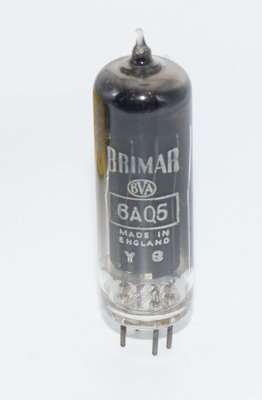
The 6AQ5A is a miniature beam power tube designed for audio output service, originally developed as an improved version of the 6AQ5. Manufactured by RCA and subsequently produced by virtually every major tube manufacturer worldwide, the 6AQ5A was introduced in the early 1950s as part of the industry's transition from octal-based tubes to the more compact miniature (B7G) platform. It was designated as an industrial type under the RETMA numbering system, with the RCA industrial designation 6669/6AQ5A.
The 6AQ5A was conceived primarily for use as an output amplifier in mobile communications equipment, but its compact size, modest power requirements, and respectable audio output quickly made it a favorite in consumer electronics. It found widespread use in table radios, small public address systems, intercoms, portable phonographs, and compact hi-fi amplifiers throughout the 1950s and 1960s. The tube can be thought of as a miniature equivalent of the venerable 6V6, offering similar performance in a significantly smaller package.
The European equivalent is the EL90 (Mullard/Philips designation), and the tube was manufactured under numerous designations by factories around the world, including Sylvania, GE, Tung-Sol, Mullard, Philips, Amperex, Matsushita, and many others. Its reliability and versatility ensured production continued well into the 1970s, and NOS (New Old Stock) examples remain readily available today.
2. Technical Specifications and Design
General Description
The 6AQ5A is a miniature beam power tube used as an output amplifier primarily in mobile communications equipment. It uses outlines section 5D and requires a miniature 7-contact socket.
Physical Characteristics
| Parameter | Value |
|---|---|
| Base Type | Miniature 7-pin (B7G) |
| Envelope | T-6½ miniature glass |
| Mounting Position | Any |
| Outline | Section 5D |
| Socket | Miniature 7-contact |
Pin Configuration (7BZ Base)
| Pin | Connection |
|---|---|
| 1 | Grid No. 1 (Control Grid) — G1 |
| 2 | Cathode (K) |
| 3 | Heater (H) |
| 4 | Heater (H) |
| 5 | Plate (P) |
| 6 | Grid No. 2 (Screen Grid) — G2 |
| 7 | Grid No. 3 (Suppressor Grid) — G3 |
Note: Grid No. 3 (suppressor) is internally connected in beam power tube fashion. Pin 7 connects to G3 which is tied to the cathode internally in some versions, while in others it may be brought out separately. The beam-forming plates serve the function of a suppressor grid.
Heater Ratings
| Parameter | Value |
|---|---|
| Heater Voltage (ac/dc) | 6.3 ±20% volts |
| Heater Current | 0.45 ampere |
| Heater Warm-up Time (Average) | 11 seconds |
| Heater-Cathode Voltage (Peak) | ±100 max. volts |
Direct Interelectrode Capacitances (Approx.)
| Parameter | Value |
|---|---|
| Grid No.1 to Plate | 0.4 pF |
| Grid No.1 to Cathode, Heater, Grid No.2, and Grid No.3 | 8 pF |
| Plate to Cathode, Heater, Grid No.2, and Grid No.3 | 8.5 pF |
Maximum Ratings — Class A₁ Amplifier (Design-Maximum Values)
| Parameter | Value |
|---|---|
| Plate Voltage | 330 volts |
| Grid No.2 (Screen-Grid) Voltage | See curve page 300 |
| Grid No.2 Supply Voltage | 330 volts |
| Grid No.1 (Control-Grid) Voltage — Negative bias value | 55 volts |
| Grid No.1 (Control-Grid) Voltage — Positive bias value | 0 volt |
| Plate Dissipation | 12 watts |
| Grid No.2 Input | 2 watts |
| Bulb Temperature (At hottest point on bulb surface) | 225 °C |
Typical Operation and Characteristics — Class A₁ Amplifier
| Parameter | Value |
|---|---|
| Plate Voltage | 250 volts |
| Grid No.2 Voltage | 250 volts |
| Grid No.1 (Control-Grid) Voltage | −12.5 volts |
| Peak AF Grid No.1 Voltage | 12.5 volts |
| Zero-Signal Plate Current | 45 mA |
| Max.-Signal Plate Current | 47 mA |
| Zero-Signal Grid No.2 Current | 4.5 mA |
| Max.-Signal Grid No.2 Current | 7 mA |
| Plate Resistance (Approx.) | 52,000 ohms |
| Transconductance | 4,100 µmhos |
| Load Resistance | 5,000 ohms |
| Total Harmonic Distortion | 8% |
| Max.-Signal Power Output | 4.5 watts |
| Cathode-Bias Resistor | 250 ohms |
Maximum Circuit Values
| Parameter | Value |
|---|---|
| Grid No.1-Circuit Resistance — Fixed-bias operation | 0.1 megohm |
| Grid No.1-Circuit Resistance — Cathode-bias operation | 0.5 megohm |
Class AB₁ Amplifier Operation
The 6AQ5A is also rated for push-pull Class AB₁ service, where maximum ratings remain the same as for Class A₁ operation.
| Parameter | Value |
|---|---|
| Plate Voltage | 250 volts |
| Grid No.2 Voltage | 250 volts |
| Grid No.1 (Control-Grid) Voltage | −15 volts |
| Peak AF Grid No.1-to-Grid No.1 Voltage | 30 volts |
| Zero-Signal Plate Current | 70 mA |
| Max.-Signal Plate Current | 79 mA |
| Zero-Signal Grid No.2 Current | 5 mA |
| Max.-Signal Grid No.2 Current | 13 mA |
| Effective Load Resistance (Plate to plate) | 10,000 ohms |
| Total Harmonic Distortion | 5% |
| Max.-Signal Power Output | 10 watts |
Power Output at Reduced Heater Voltage
| Parameter | Value |
|---|---|
| Average Value | 4.1 watts |
Conditions: heater volts = 5, plate volts = 250, grid-No.2 volts = 250, grid-No.1 volts = −12.5, rms signal volts = 8.8, and load resistance (ohms) = 5000.
3. Applications and Usage
The 6AQ5A was designed and widely deployed across a broad range of applications:
- Mobile Communications Equipment: The tube's primary intended application, as stated in the RCA datasheet. Its compact size, rugged construction, and ability to operate reliably under vibration made it ideal for vehicular and portable radio transmitter/receiver output stages.
- Consumer Audio Equipment: Table radios, console radios, portable phonographs, and compact hi-fi amplifiers of the 1950s and 1960s frequently employed the 6AQ5A as a single-ended output tube or in push-pull pairs.
- Public Address Systems: Small PA amplifiers and intercom systems used the 6AQ5A for its adequate power output in a compact package.
- Test Equipment: Various pieces of laboratory and industrial test equipment used the 6AQ5A as an audio output stage or as a driver in servo amplifiers.
- Military Equipment: The ruggedized versions (6AQ5W, 6005) saw extensive military use in communications gear, where the tube's reliability under harsh conditions was valued.
- Guitar Amplifiers: Several small practice amplifiers and recording amplifiers used the 6AQ5A, including some models from Gibson, Supro, and other manufacturers. These compact amplifiers became prized for their ability to achieve natural overdrive at manageable volume levels.
In single-ended Class A₁ configuration, the 6AQ5A delivers 4.5 watts of output power with 8% THD into a 5,000-ohm load. In push-pull Class AB₁ configuration, a pair of 6AQ5A tubes can deliver 10 watts with only 5% THD into a 10,000-ohm plate-to-plate load. These power levels were perfectly adequate for the domestic listening environments and small venue applications of the era.
4. Sound Characteristics
The 6AQ5A has earned a devoted following among audiophiles and guitar players who appreciate its distinctive sonic signature. While subjective descriptions of tube sound always carry a degree of personal interpretation, several consistent themes emerge from the audio community's experience with this tube:
Tonal Character
The 6AQ5A is frequently described as having a warm, sweet midrange that is characteristic of beam power tubes in the 6V6 family lineage. Its tonal balance sits between the lush warmth of a 6V6 and the slightly leaner, more focused sound of an EL84/6BQ5. The midrange is where this tube truly excels — vocals and acoustic instruments are rendered with a natural, present quality that many listeners find immediately engaging.
Bass Response
Bass reproduction through the 6AQ5A is tight and well-defined rather than deep and thunderous. Given the tube's modest power output of 4.5 watts in single-ended operation, bass extension is naturally limited compared to larger output tubes, but what bass is present has good articulation and avoids the woolly, indistinct quality that can plague some small output tubes. The relatively high plate resistance of 52,000 ohms means that the damping factor in single-ended operation is modest, contributing to a slightly softer bass character that many find musically pleasing.
Treble and Detail
The high-frequency response of the 6AQ5A is smooth and refined, without the aggressive brightness that some pentode/beam power tubes can exhibit. There is a gentle, natural roll-off in the upper frequencies that contributes to the tube's fatigue-free listening quality. Detail retrieval is good for a tube of this class, with a presentation that favors musicality over analytical precision.
Overdrive Characteristics
When pushed into overdrive — a characteristic particularly valued by guitar players — the 6AQ5A produces a creamy, harmonically rich distortion that is predominantly even-order in character. The transition from clean to overdriven is gradual and musical, without the harsh clipping that solid-state devices produce. At 4.5 watts, single-ended amplifiers using this tube reach natural breakup at volume levels that are manageable in home and studio environments, making them excellent recording tools.
Soundstage and Imaging
In hi-fi applications, the 6AQ5A presents a compact but well-organized soundstage. Imaging is precise within its power limitations, and the tube has a quality of intimacy that makes small-ensemble music, jazz, and vocal recordings particularly rewarding. The presentation is more "near-field" than expansive, which suits the small-room listening environments where these low-powered amplifiers are typically deployed.
Comparison to Related Types
Compared to the 6V6GT, the 6AQ5A is often described as slightly more forward in the midrange with a touch less bass weight. Compared to the EL84/6BQ5, the 6AQ5A is warmer and more relaxed, with less top-end sparkle but greater midrange richness. These are subtle distinctions, and the 6AQ5A occupies a satisfying middle ground that has its own distinct appeal.
5. Equivalent and Substitute Types
Close/Identical Substitutes (Direct Drop-in Replacements)
The following types are considered electrically identical or very closely matched to the 6AQ5A and can be used as direct replacements without circuit modifications:
| Type Designation | Notes |
|---|---|
| EL90 | European (Mullard/Philips) designation. Electrically identical. |
| BPM04 | Equivalent designation. Direct replacement. |
| CK6005 | Equivalent designation. Direct replacement. |
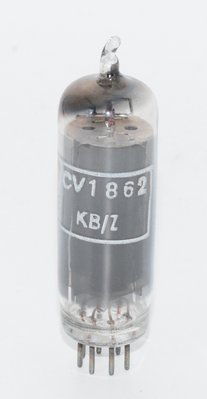
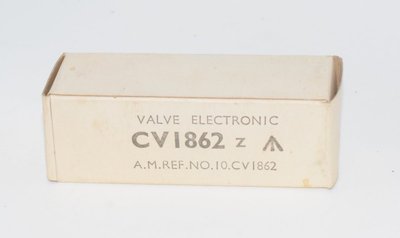
| CV1862 | British military (CV) designation. Direct replacement. |
| CV8229 | British military (CV) designation. Direct replacement. |
| M8245 | Mullard special quality designation. Direct replacement, often preferred for premium applications. |
| N727 | Equivalent designation. Direct replacement. |
Different Rating Substitutes (NOT Direct Drop-in)
The following types are related but have different ratings, specifications, or operating conditions. They may require circuit adjustments and should not be treated as direct drop-in replacements without careful evaluation:
| Type Designation | Notes |
|---|---|
| 6005 | Ruggedized military version with tighter specifications. May have different maximum ratings. |
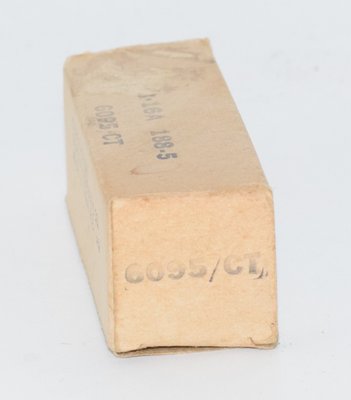
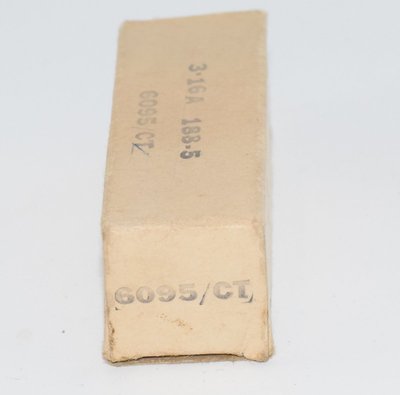
| 6095 | Related type with different operating parameters. |
| 6669 | RCA industrial designation for the 6AQ5A family. Check specific ratings. |
| 6AQ5 | Original version; the 6AQ5A is an improved type with higher ratings. The original 6AQ5 has lower maximum plate dissipation. |
| 6AQ5W | Ruggedized military version designed for severe environmental conditions. |
| 6BM5 | Related type with different bias and operating conditions. |
| 6L31 | Related type; verify pin compatibility and ratings before substitution. |
| CV3972 | British military designation for a related variant. Check specifications. |
| CV4019 | British military designation. Different ratings from the standard 6AQ5A. |
| CV5190 | British military designation. Different ratings from the standard 6AQ5A. |
Important Note: While the original 6AQ5 and the 6AQ5A share the same pinout and general characteristics, the 6AQ5A has improved maximum ratings (notably higher plate dissipation at 12 watts vs. the original 6AQ5's lower rating). In most circuits designed for the 6AQ5, a 6AQ5A can be safely substituted, but the reverse is not always true — circuits designed to exploit the 6AQ5A's higher ratings may overstress an original 6AQ5.
6. Notable Characteristics
- Compact Size with Respectable Power: The 6AQ5A delivers 4.5 watts in single-ended operation and 10 watts in push-pull from a miniature 7-pin envelope — an impressive power-to-size ratio for its era. This made it the go-to choice for equipment designers who needed meaningful audio output in a small package.
- Robust Plate Dissipation: At 12 watts maximum plate dissipation, the 6AQ5A has considerable headroom for a miniature tube. This generous dissipation rating contributes to long tube life under normal operating conditions and allows for a degree of overdriving without immediate risk of damage.
- High Transconductance: The transconductance of 4,100 µmhos (at 250V plate, 250V screen, −12.5V grid) provides good sensitivity, meaning the tube requires relatively little input signal to achieve full output. This simplifies driver stage requirements.
- Quick Warm-up: With an average heater warm-up time of only 11 seconds, the 6AQ5A reaches operating conditions rapidly — an important characteristic for communications equipment where quick readiness was essential.
- Shock and Vibration Resistance: The industrial designation reflects the tube's enhanced mechanical ruggedness. The compact miniature construction inherently provides better resistance to shock and vibration than larger octal-based tubes.
- Self-Bias Simplicity: With a cathode-bias resistor of only 250 ohms, the 6AQ5A is exceptionally easy to bias in self-biased (cathode-biased) circuits. This simplicity made it popular with equipment designers and continues to make it attractive for DIY amplifier builders.
- Versatile Operating Range: The tube operates well across a range of plate voltages from below 200V to its maximum of 330V, giving designers flexibility in power supply design. Even at reduced heater voltage (5V), the tube still delivers 4.1 watts of output power.
- Low Grid-Circuit Resistance Requirement: The maximum grid-circuit resistance of 0.5 megohm for cathode-bias operation is generous enough to allow direct coupling from many driver stages without the need for coupling capacitors in some circuit topologies.
7. Usage in the Audio Community
Vintage Amplifier Restoration
The 6AQ5A appears in numerous vintage amplifiers and receivers from the golden age of hi-fi. Restorers of equipment from manufacturers such as Fisher, Scott, Heathkit, Eico, and others frequently seek quality NOS 6AQ5A tubes to maintain original performance. The tube's continued availability as NOS stock from GE, Sylvania, RCA, Tung-Sol, and others makes restoration projects practical and affordable.
DIY Single-Ended Amplifier Projects
The 6AQ5A has become a popular choice for DIY single-ended triode (SET) and single-ended pentode/ultralinear amplifier projects. Its appeal in this context stems from several factors:
- Low cost and wide availability of NOS tubes
- Simple bias requirements (250-ohm cathode resistor)
- Modest power supply demands (250V B+ is easily achieved)
- Sufficient power output (4.5W) for high-efficiency speakers
- Excellent sound quality for the price
- Compact physical size allowing small chassis designs
Many DIY builders use the 6AQ5A in triode-strapped configuration (screen grid tied to plate), which reduces output power to approximately 1–2 watts but yields a more linear, triode-like sound with lower distortion. This configuration is particularly popular among SET enthusiasts who pair these amplifiers with high-efficiency speakers (95 dB/W/m and above).
Guitar Amplifiers
The 6AQ5A has a significant presence in the guitar amplifier world, both in vintage and modern contexts:
- Vintage Amps: Several classic small guitar amplifiers from the 1950s and 1960s used the 6AQ5/6AQ5A, including models from Gibson (GA-5 Skylark), Supro, National, and Valco-built amplifiers. These "student" and practice amplifiers have been rediscovered by players and collectors who prize their natural overdrive tone at bedroom-friendly volumes.
- Modern Boutique Amps: Contemporary boutique amplifier builders have embraced the 6AQ5A for low-wattage designs aimed at studio recording and small-venue performance. The tube's ability to deliver satisfying overdrive at low volume levels makes it ideal for the modern trend toward lower-powered tube amplifiers.
- Amp Modifications: Some technicians modify amplifiers originally designed for other output tubes (such as the 6V6) to accept 6AQ5A tubes, taking advantage of the different tonal character and lower power output.
Headphone Amplifiers
The 6AQ5A has found a niche in the headphone amplifier community. Its power output of 4.5 watts is far more than needed for headphone driving, allowing operation at very low distortion levels well below clipping. Builders typically operate the tube at reduced plate voltages or in triode mode for headphone applications, achieving excellent linearity and the warm, engaging sound that tube headphone amplifier enthusiasts seek.
Push-Pull Amplifier Designs
A pair of 6AQ5A tubes in push-pull Class AB₁ delivers 10 watts — sufficient power for most domestic listening situations with reasonably efficient speakers. Push-pull 6AQ5A amplifiers offer an excellent balance of power, sound quality, and economy. The low cost of the tubes (compared to premium types like EL34 or KT88) makes push-pull 6AQ5A amplifiers an accessible entry point for those exploring tube audio.
Tube Rolling and Sonic Variations
Audiophiles who use the 6AQ5A enjoy exploring sonic differences between manufacturers and production eras. Generally observed preferences in the community include:
- RCA: Warm, full-bodied sound with good bass weight. Considered the "reference" by many.
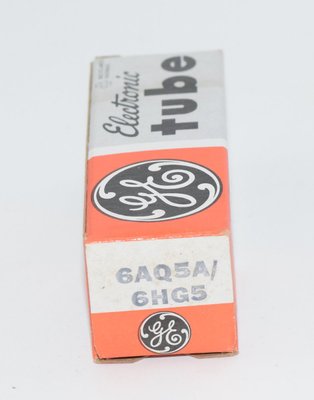
- GE: Slightly brighter and more detailed than RCA, with excellent clarity. GE NOS 6AQ5A/6HG5 tubes are particularly sought after.
- Sylvania: Balanced presentation with smooth highs and articulate midrange.
- Tung-Sol: Rich harmonics with a slightly forward midrange presentation.
- Mullard EL90: European production examples are prized for their refined, sophisticated sound with excellent depth and imaging.
As with all tube rolling observations, these descriptions represent general community consensus and individual results may vary based on circuit design, associated components, and personal listening preferences.
Availability and Market
The 6AQ5A remains one of the most affordable and readily available vintage output tubes on the market. Large quantities of NOS production from multiple manufacturers ensure that hobbyists and restorers can obtain quality tubes at reasonable prices. This accessibility, combined with the tube's excellent sonic characteristics and ease of use, ensures that the 6AQ5A will continue to be a valued component in the audio community for years to come.