Introduction and History
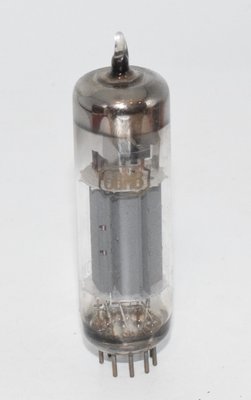
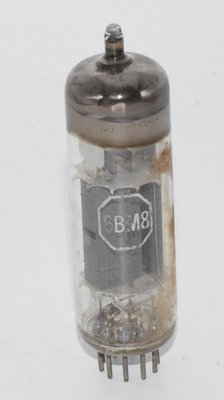
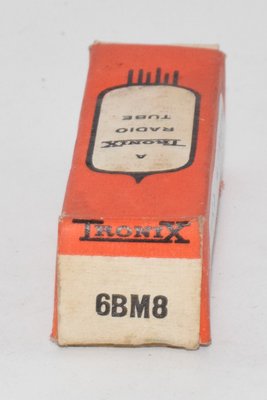
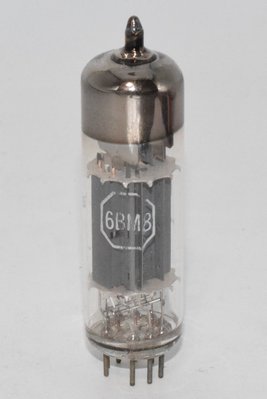
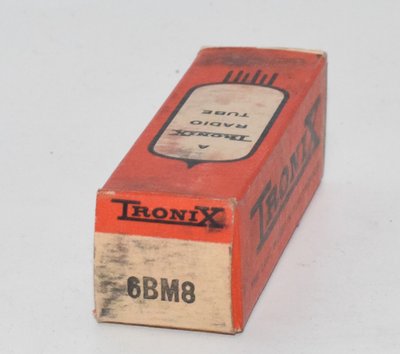
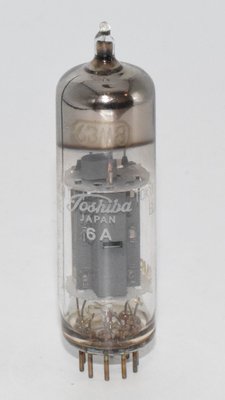
The 6BM8, known in Europe as the ECL82, is a composite (or combination) vacuum tube containing a high-mu triode and a power pentode within a single miniature glass envelope. Developed in the 1950s for use in television receiver applications, the 6BM8 was designed to serve dual roles: the triode section as an oscillator or audio-frequency voltage amplifier, and the pentode section as an audio output stage. This elegant integration of two functional sections into one envelope made it a cost-effective and space-saving solution for consumer electronics manufacturers.
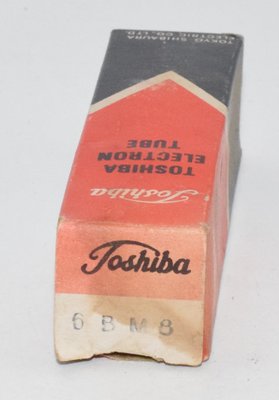
The tube was manufactured by virtually every major valve producer of the era, including Philips (under the Miniwatt brand), Mullard, Toshiba, AWV (Amalgamated Wireless Valve Company) under the Super Radiotron brand in Australia, and various European manufacturers. Its European designation ECL82 follows the Mullard–Philips naming convention: 'E' for a 6.3V heater, 'C' for a triode, and 'L' for a power pentode output stage. The type 50BM8/UCL82 is identical except for heater ratings (50V, 0.1A), designed for series-string heater operation in AC/DC receivers.
Originally intended for television applications—specifically color and black-and-white television receiver circuits—the 6BM8 found a second life in the audio world, where its compact, all-in-one design makes it ideal for building simple yet surprisingly capable single-ended amplifiers. Today, the 6BM8/ECL82 enjoys a devoted following among DIY audio enthusiasts and boutique amplifier builders worldwide.
Technical Specifications and Design
General Data
| Parameter | 6BM8 / ECL82 | 50BM8 / UCL82 |
|---|---|---|
| Heater Voltage (ac/dc) | 6.3 V | 50 V |
| Heater Current | 0.78 A | 0.1 A |
| Peak Heater-Cathode Voltage | 100 max V | ±200 max V |
| Base Type | Noval (B9A), 9-pin miniature | |
| Envelope | Miniature glass, outline section 6G | |
| Socket | 9-contact miniature (Noval) | |
| Basing Diagram | 9EX | |
Pin Configuration (9EX Base)
| Pin | Connection |
|---|---|
| 1 | Grid (Triode) — GT |
| 2 | Plate/Anode (Pentode) — KP, G3P, IS (Internal Shield) |
| 3 | Grid No.1 (Pentode) — G1P |
| 4 | Heater — H |
| 5 | Heater — H |
| 6 | Plate/Anode (Pentode) — PP |
| 7 | Grid No.2 / Screen Grid (Pentode) — G2P |
| 8 | Cathode (Triode) — KT |
| 9 | Plate/Anode (Triode) — PT |
Note: Pin 2 connects to the pentode cathode, pentode suppressor grid (G3), and internal shield. The triode and pentode sections share a common heater but have separate cathodes, allowing independent biasing of each section.
Direct Interelectrode Capacitances (Triode Section)
| Capacitance | Value |
|---|---|
| Grid to Cathode (Cgk) | 2.7 pF |
| Anode to Cathode (Cak) | 4.0 pF |
| Grid to Anode (Cga) | 4.0 pF |
Note: Capacitance figures given are for the triode section.
Triode Section — Class A1 Amplifier
Maximum Ratings (Design-Center Values)
| Parameter | Triode Unit |
|---|---|
| Plate Supply Voltage | 550 V |
| Plate Voltage | 300 V |
| Cathode Current | 15 mA |
| Plate Dissipation | 1 W |
Typical Operating Characteristics
| Parameter | Value |
|---|---|
| Plate Voltage (Va) | 100 V |
| Grid-No.1 Voltage | 0 V |
| Amplification Factor (μ) | 70 |
| Plate Resistance (rp, approx.) | —* (see note) |
| Transconductance (gm) | 2,500 μmhos (2.5 mA/V) |
| Plate Current (Ia) | 3.5 mA |
| Anode Load Resistance (Ra) | 27,000 Ω |
* The plate resistance of the triode section can be calculated from the relationship rp = μ / gm = 70 / 0.0025 = 28,000 Ω (approximately 28 kΩ). The RCA datasheet does not explicitly list a plate resistance for the triode at this operating point, but this calculated value is consistent with the published amplification factor and transconductance.
Pentode Section — Class A1 Amplifier
Maximum Ratings (Design-Center Values)
| Parameter | Pentode Unit |
|---|---|
| Plate Supply Voltage | 900 V |
| Plate Voltage | 600 V |
| Grid-No.2 (Screen) Supply Voltage | 550 V |
| Grid-No.2 Voltage | 300 V |
| Cathode Current | 50 mA |
| Plate Dissipation | 7 W |
| Grid-No.2 Input | 1.8 W |
Typical Operating Characteristics
| Parameter | Value |
|---|---|
| Plate Voltage | 200 V |
| Grid-No.2 Voltage | 200 V |
| Grid-No.1 Voltage | −16 V |
| Amplification Factor (G2 to G1) | 9.5* |
| Plate Resistance (rp, approx.) | 0.02 MΩ (20 kΩ)* |
| Transconductance (gm) | 6,400 μmhos |
| Plate Current | 35 mA |
| Grid-No.2 Current | 7 mA |
* The amplification factor of 9.5 is specified as Grid-No.2 to Grid-No.1. The plate resistance of approximately 0.02 megohm (20 kΩ) is from the RCA datasheet.
Maximum Circuit Values
| Parameter | Triode Unit | Pentode Unit |
|---|---|---|
| Grid-No.1 Circuit Resistance (fixed bias) | 1 MΩ | 1 MΩ |
| Grid-No.1 Circuit Resistance (cathode bias) | 2 MΩ | 2 MΩ |
Applications and Usage
The 6BM8/ECL82 was originally designed for television receiver circuits, where its dual-function nature was exploited to reduce tube count and simplify chassis layout. Typical original applications included:
- Television audio output: The pentode section served as the audio output stage while the triode section functioned as the audio voltage amplifier or phase inverter, providing a complete audio channel in a single tube.
- Oscillator and AF amplifier: In television receivers, the triode section was commonly used as a vertical oscillator or local oscillator, while the pentode provided the output drive.
- Radio receivers: Used in high-quality AM/FM radio receivers as a combined AF amplifier and output stage.
- Record players and phonograph amplifiers: Many European and Australian console stereo systems and portable record players used the 6BM8 as the heart of their amplifier circuits, often with just one or two tubes per channel.
The tube's separate cathodes for the triode and pentode sections provide design flexibility, allowing independent biasing of each section. This is a significant advantage over some other composite tubes where shared cathodes constrain circuit design options.
Sound Characteristics
The 6BM8/ECL82 has earned a reputation in the audio community for delivering a sound that belies its humble origins as a television tube. Audiophiles and engineers commonly describe its sonic signature as follows:
- Warm and musical: The 6BM8 produces a characteristically warm, inviting midrange that is often described as "sweet" and "liquid." This warmth is partly attributable to the pentode output section's harmonic distortion profile, which tends to emphasize even-order harmonics—particularly the second harmonic—at moderate power levels.
- Surprisingly detailed: Despite its modest power output (typically 3–5 watts in single-ended configuration), the 6BM8 delivers surprising clarity and detail, particularly in the midrange frequencies where vocals and acoustic instruments reside. The high-mu triode section provides clean, low-distortion voltage gain that preserves signal integrity.
- Smooth treble: The high-frequency response is generally described as smooth and non-fatiguing, without the harshness or grain that can characterize some output tubes. This makes it well-suited for extended listening sessions.
- Controlled bass: Bass response is adequate but not authoritative, as one would expect from a tube delivering only a few watts. With efficient speakers (90 dB/W/m or higher), the bass is described as tight and tuneful rather than deep and powerful.
- Intimate soundstage: The 6BM8 excels at creating an intimate, "you are there" presentation that works beautifully with small-ensemble jazz, vocal recordings, chamber music, and acoustic genres. The soundstage tends to be focused and coherent rather than expansive.
- Pentode vs. triode-strapped operation: When the pentode section is operated in triode mode (screen grid tied to plate), the sound becomes even more linear with lower distortion, though at the cost of reduced output power. Many audiophiles prefer this triode-strapped configuration for its purity of tone, while others prefer the slightly more dynamic and lively character of pentode or ultralinear operation.
The overall sonic character of the 6BM8 is often compared favorably to more expensive and exotic tubes. Its sound has been described as having a "classic European" character—refined, musical, and elegant rather than bold or aggressive.
Equivalent or Substitute Types
Direct / Identical Substitutes (Drop-in Replacements)
| Type | Notes |
|---|---|
| ECL82 | European designation; electrically and physically identical to the 6BM8. The most common equivalent. |
| 6PL12 | Close/identical substitute per TDSL data. |
| CV9167 | British military (CV) designation; identical to 6BM8/ECL82. |
Different Rating Substitutes (NOT Direct Drop-in)
| Type | Notes |
|---|---|
| 50BM8 / UCL82 | Identical to 6BM8/ECL82 except for heater ratings: 50V at 0.1A. Designed for series-string heater circuits. Not interchangeable without heater circuit modification. |
| PCL82 | Similar composite triode-pentode but with different heater ratings (approximately 18V series-string heater). Different pin or bias considerations; not a drop-in replacement. |
| CV10726 | Different rating substitute; not a direct drop-in replacement. |
Important: Only the ECL82, 6PL12, and CV9167 are genuinely interchangeable drop-in replacements for the 6BM8. The UCL82/50BM8 and PCL82 types require heater circuit modifications and should not be substituted without appropriate design changes.
Notable Characteristics
- Separate cathodes: Unlike some composite tubes, the 6BM8 features independent cathodes for the triode and pentode sections (pins 8 and 2 respectively). This allows completely independent biasing of each section, giving circuit designers maximum flexibility.
- High triode mu: With an amplification factor of 70, the triode section provides substantial voltage gain, often sufficient to drive the pentode section to full output from a line-level source without additional gain stages.
- Respectable pentode transconductance: At 6,400 μmhos, the pentode section offers good sensitivity and efficiency for its size class.
- Moderate heater power: The 6.3V, 0.78A heater draws approximately 4.9 watts—reasonable for a composite tube but worth considering in power supply design.
- Complete amplifier in one envelope: The 6BM8 can form a complete single-channel amplifier (voltage amplifier + power output) using just one tube, making it uniquely suited for minimalist designs.
- Pentode plate dissipation of 7 watts: This allows practical single-ended output power of approximately 3–5 watts depending on operating conditions and output transformer quality.
- Internal shield: The tube includes an internal shield connected to the pentode cathode (pin 2), helping to reduce interaction between the triode and pentode sections.
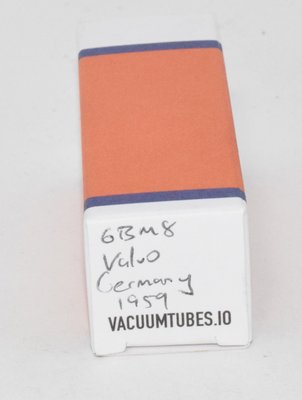
- Wide manufacturing base: Produced by Philips, Mullard, Toshiba, AWV/Super Radiotron, Valvo, Siemens, and many others, ensuring good availability of NOS (New Old Stock) specimens even today.
Usage in the Audio Community
The 6BM8/ECL82 has experienced a remarkable renaissance in the audio community, transforming from an overlooked television tube into one of the most popular choices for DIY and boutique tube amplifier projects. Its appeal stems from several factors:
DIY Amplifier Projects
The 6BM8 is arguably the most popular tube for building simple, high-quality single-ended (SE) amplifiers. Because a single 6BM8 contains both a voltage amplifier (triode) and a power output stage (pentode), a complete stereo amplifier can be built with just two tubes. This simplicity makes it an ideal "first project" tube for newcomers to tube audio, while its sonic quality ensures that experienced builders continue to return to it.
Numerous published designs exist for 6BM8-based amplifiers, ranging from simple single-ended pentode circuits to more sophisticated ultralinear and triode-strapped configurations. Popular designs include:
- Single-ended pentode amplifiers: Typically delivering 3–5 watts per channel, these are the most common 6BM8 designs and pair beautifully with high-efficiency speakers.
- Single-ended triode-strapped amplifiers: With the pentode section wired as a triode (screen tied to plate), output power drops to approximately 1.5–2.5 watts, but distortion decreases and the sound takes on a more linear, "pure triode" character.
- Ultralinear configurations: Using a tapped output transformer, ultralinear operation offers a compromise between pentode power and triode linearity.
- Push-pull designs: Some builders use pairs of 6BM8s in push-pull configuration, with the triode sections serving as phase splitters, achieving 8–12 watts per channel.
Commercial and Boutique Amplifiers
Several boutique amplifier manufacturers have produced commercial amplifiers based on the 6BM8/ECL82, recognizing its excellent price-to-performance ratio. These amplifiers are typically marketed as desktop, nearfield, or bedroom listening amplifiers, where their modest power output is perfectly adequate. The tube's availability from multiple manufacturers—including highly regarded NOS examples from Philips, Mullard, and Toshiba—adds to its appeal for the audiophile market.
Headphone Amplifiers
The 6BM8 has found a natural home in headphone amplifier designs. The pentode section's power output is more than sufficient for driving headphones, and the tube's musical character is particularly well-suited to intimate headphone listening. Some designs use only the triode section as a headphone driver, while others employ the full triode-pentode chain for maximum gain and drive capability.
Guitar Amplifiers
A small but enthusiastic community of guitar amplifier builders has adopted the 6BM8 for practice amplifiers and recording amplifiers. The tube's harmonic distortion characteristics when pushed into overdrive produce pleasing, musical breakup that guitarists find appealing. At 3–5 watts, these amplifiers are loud enough for bedroom practice and studio recording while remaining manageable in terms of volume.
Availability and Pricing
The 6BM8/ECL82 remains readily available as NOS (New Old Stock) from various sources. Common brands found on the market include Philips, Philips Miniwatt (Australia), Mullard, Toshiba (Japan), AWV Super Radiotron (Australia), Valvo, Siemens, and various Eastern European manufacturers. Prices remain reasonable compared to more sought-after audio tubes, making the 6BM8 an excellent value proposition. Some current-production equivalents may also be available from manufacturers in Russia and China, though NOS European and Japanese examples are generally preferred by audiophiles for their perceived superior build quality and sonic characteristics.
Speaker Pairing
Given its modest power output, the 6BM8 performs best with high-efficiency loudspeakers. Popular pairings in the audio community include:
- Full-range single-driver speakers (Fostex, Lowther, Tang Band) in back-loaded horn or bass-reflex enclosures
- High-efficiency bookshelf speakers (90+ dB sensitivity)
- Vintage high-efficiency speakers (Altec, JBL, Klipsch)
- Horn-loaded speaker systems
With appropriate speaker matching, the 6BM8 can deliver a remarkably satisfying listening experience that challenges amplifiers costing many times more, cementing its status as one of the great hidden gems of the vacuum tube world.