1. Introduction and History
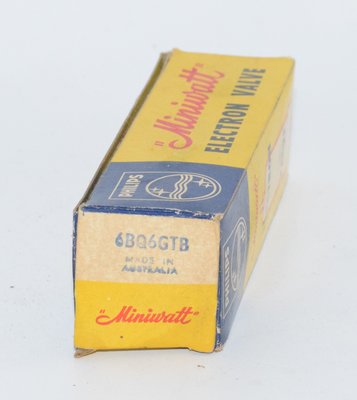
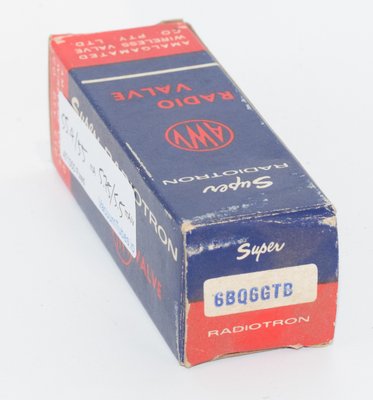
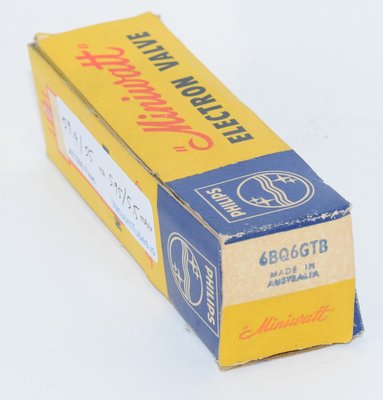
The 6BQ6GTB is a beam power tube originally designed for use as a horizontal-deflection amplifier in black-and-white television receivers. Developed during the golden age of television in the 1950s, this rugged tube was manufactured by virtually every major valve producer of the era, including RCA, Philips/Miniwatt, Mullard, Sylvania, GE, and the Australian Super Radiotron (AWV) brand. The tube belongs to the 6BQ6 family, which evolved through several iterations — from the original 6BQ6G (with a larger glass ST-type envelope) through the 6BQ6GT and 6BQ6GTA, culminating in the 6BQ6GTB with its refined ratings and improved reliability.
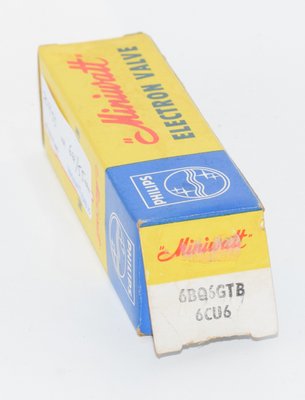
The "GTB" suffix indicates the final iteration of the GT (Glass Tubular) envelope series, incorporating design improvements that enhanced the tube's ability to withstand the demanding conditions of horizontal-deflection service — particularly high peak plate voltages and significant pulse currents. The 6BQ6GTB is also cross-referenced as the 6CU6, with which it is directly interchangeable. While its primary application was in television, the tube's robust construction, high peak voltage capability, and generous plate dissipation have attracted interest from the audio community, particularly among builders of guitar amplifiers and experimental hi-fi designs.
2. Technical Specifications and Design
General Data
| Parameter | Value |
|---|---|
| Tube Type | Beam Power Tube |
| Base Type | Octal (8-pin) |
| Envelope | Glass Tubular (GT) |
| Mounting | Vertical or Horizontal |
Heater Ratings
| Parameter | Value |
|---|---|
| Heater Voltage (ac/dc) | 6.3 volts |
| Heater Current | 1.2 amperes |
| Heater-Cathode Voltage (Peak) | ±200 max volts |
| Heater-Cathode Voltage (Average) | 100 max volts |
Maximum Ratings (Design-Maximum Values)
| Parameter | Value |
|---|---|
| DC Plate Voltage (Max) | 600 volts |
| Peak Positive-Pulse Plate Voltage (Absolute Max) | 6,000 volts |
| Peak Negative-Pulse Plate Voltage | 1,250 volts |
| DC Grid No.2 (Screen-Grid) Voltage (Max) | 200 volts |
| Peak Cathode Current (Max) | 400 mA |
| Average Cathode Current (Max) | 110 mA |
| Plate Dissipation (Max) | 11 watts |
| Grid No.2 Input (Max) | 2.5 watts |
| Bulb Temperature (At hottest point) | 220°C |
Interelectrode Capacitances
| Parameter | Value |
|---|---|
| Grid No.1 to Plate (Cga) | 0.6 pF |
| Grid No.1 to Cathode, Heater, Grid No.2, and Grid No.3 (Cgk) | 15.0 pF |
| Plate to Cathode, Heater, Grid No.2, and Grid No.3 (Cak) | 7.0 pF |
Horizontal-Deflection Amplifier Service (525-line, 30-frame system)
The primary design application for the 6BQ6GTB is horizontal-deflection amplifier service. Per the RCA Receiving Tube Manual, the maximum ratings for this service are:
| Parameter | Value |
|---|---|
| DC Plate Voltage | 600 volts |
| Peak Positive-Pulse Plate Voltage (Absolute Max) | 6,000 volts† |
| Peak Negative-Pulse Plate Voltage | 1,250 volts |
| DC Grid No.2 (Screen-Grid) Voltage | 200 volts |
| Peak Negative-Pulse Grid No.1 (Control-Grid) Voltage | 300 volts |
| Peak Cathode Current | 400 mA |
| Average Cathode Current | 110 mA |
| Plate Dissipation* | 11 watts |
| Grid No.2 Input | 2.5 watts |
| Bulb Temperature (At hottest point) | 220°C |
† Pulse duration must not exceed 15% of a horizontal scanning cycle (10 microseconds). Under no circumstances should this absolute value be exceeded.
* A bias resistor or other means is required to protect the tube in absence of excitation.
Class A₁ Amplifier Characteristics
While the 6BQ6GTB was not primarily designed for audio Class A₁ service, it can be operated in this mode. The characteristics listed below are from the closely related 6BQ6GTB/6CU6 data in the RCA manual. Note that the plate voltage listed under "Characteristics" at 60V, 150V, and 250V with screen at 150V provides operating points for this tube in amplifier service:
| Parameter | Condition 1 | Condition 2 | Condition 3 |
|---|---|---|---|
| Plate Voltage | 60 V | 150 V | 250 V |
| Grid No.2 Voltage | 150 V | 150 V | 150 V |
| Grid No.1 Voltage | 0 V | −22.5 V | −22.5 V |
| Plate Resistance (Approx.) | — | — | 14,500 ohms |
| Transconductance | — | — | 5,900 µmhos |
| Plate Current | 260* mA | — | 57 mA |
| Grid No.2 Current | 26* mA | — | 2.1 mA |
| Grid No.1 Voltage (Approx.) for Ip = 1 mA | — | — | −43 volts |
* These values can be measured by a method involving a recurrent waveform such that the maximum ratings of the tube will not be exceeded.
Maximum Circuit Value for Grid No.1-Circuit Resistance
| Horizontal-Deflection Amplifier | 0.47 megohm |
Pin Configuration (Octal Base, 6AM Basing)
The 6BQ6GTB uses the standard octal base with the 6AM basing diagram. Viewed from the bottom of the socket:
| Pin | Connection |
|---|---|
| Pin 1 | No Connection (NC) |
| Pin 2 | Heater (H) |
| Pin 3 | Plate (P) |
| Pin 4 | Grid No.2 (Screen Grid, G2) |
| Pin 5 | Grid No.1 (Control Grid, G1) |
| Pin 6 | No Connection (NC) |
| Pin 7 | Heater (H) |
| Pin 8 | Cathode (K) / Grid No.3 (Suppressor Grid, G3) |
Note: Pin No.1 may be omitted on the tube. The type may be supplied with pin No.1 omitted. The suppressor grid (Grid No.3) is internally connected to the cathode.
3. Applications and Usage
Primary Application: Horizontal-Deflection Amplifier
The 6BQ6GTB was designed specifically for the demanding role of horizontal-deflection output in television receivers. In this application, the tube must handle extremely high peak plate voltages (up to 6,000 volts in pulse form) while maintaining reliable operation over thousands of hours. The horizontal output stage generates the sawtooth current waveform needed to sweep the electron beam across the CRT face, and simultaneously produces the high-voltage pulse used (via a flyback transformer) to generate the EHT (Extra High Tension) supply for the CRT anode — typically 10–20 kV in black-and-white sets.
This application demands a tube with:
- High peak plate voltage capability (6,000V)
- Substantial peak cathode current handling (400 mA)
- Robust construction to withstand thermal and electrical stress
- Consistent performance over long service life
Audio Amplifier Applications
Although not its intended purpose, the 6BQ6GTB has found use in audio amplifier circuits, particularly among DIY builders and experimenters. With a plate resistance of approximately 14,500 ohms and transconductance of 5,900 µmhos at typical operating points, the tube can deliver reasonable audio performance in properly designed circuits. Its 11-watt plate dissipation allows for modest single-ended output power, while push-pull configurations can deliver more substantial output.
The tube's Class A₁ characteristics with 250V plate and 150V screen voltage show a plate current of 57 mA and screen current of 2.1 mA, providing a workable operating point for audio service. However, designers must be mindful that the maximum screen voltage is only 200 volts, which limits the available operating conditions compared to purpose-designed audio output pentodes like the 6L6 or EL34.
Other Applications
- Regulated power supplies: The tube's high voltage capability makes it suitable for series-pass regulator service in high-voltage supplies.
- Industrial switching circuits: The fast switching characteristics designed for horizontal deflection translate well to industrial pulse and switching applications.
- RF oscillators and amplifiers: Some amateur radio operators have used the 6BQ6GTB in transmitter applications, taking advantage of its beam power tube characteristics.
4. Sound Characteristics
The 6BQ6GTB was never designed as an audio tube, and its sonic character reflects its television heritage. However, those who have employed it in audio circuits report distinctive tonal qualities:
Tonal Profile
The 6BQ6GTB tends to produce a raw, aggressive, and somewhat gritty sound compared to purpose-designed audio output tubes. When driven into distortion, it generates a thick, harmonically rich overdrive that many guitar players find appealing. The distortion character is often described as having a pronounced second and third harmonic content, with a somewhat compressed and "crunchy" quality.
Clean Characteristics
At lower signal levels within its linear operating range, the 6BQ6GTB can produce surprisingly clean tones, though the overall character tends to be slightly darker and less refined than premium audio pentodes like the EL34 or 6L6GC. The midrange is present but not as articulate, and the high-frequency extension is somewhat limited — partly due to the relatively high interelectrode capacitances (Cgk of 15.0 pF, Cak of 7.0 pF) which were acceptable for horizontal-deflection service but can roll off treble in audio applications.
Overdrive and Distortion
When pushed hard, the 6BQ6GTB produces a thick, saturated distortion that has been compared to a more aggressive version of the 6L6 family's breakup character. The beam power tube construction contributes to a relatively sharp transition from clean to clipping, which can be desirable for certain guitar tones. The limited screen voltage rating (200V max) means the tube tends to compress and distort earlier than higher-rated audio tubes, which some players consider a feature rather than a limitation.
Bass Response
The low-frequency response is generally described as solid but somewhat loose, lacking the tight, controlled bass of premium audio output tubes. This characteristic can add a pleasing warmth to certain musical styles but may be considered a drawback in high-fidelity applications where bass definition is paramount.
Overall Assessment
The 6BQ6GTB is not a tube that audiophiles would typically choose for critical listening applications. Its strengths lie in its raw character, affordability, and availability. The sound is best described as utilitarian and characterful rather than refined — making it more suitable for guitar amplifiers and experimental projects than for high-end hi-fi equipment.
5. Equivalent or Substitute Types
Direct Drop-In Replacements (Identical or Close Equivalents)
| Type | Notes |
|---|---|
| 6CU6 | Identical tube with a different type number. Fully interchangeable in all applications. This is the most common direct equivalent. |
| 6BQ6GA | Close/identical substitute. Directly interchangeable with the 6BQ6GTB. |
Related Types — NOT Direct Drop-In Replacements
The following types are related to the 6BQ6GTB but differ in heater ratings, envelope style, or other specifications. They are not direct drop-in substitutes without circuit modifications:
| Type | Key Difference |
|---|---|
| 6BQ6G | Earlier version with larger ST-type glass envelope; may have different ratings |
| 6BQ6GT | Earlier GT version; may have slightly different maximum ratings |
| 6BQ6GTA | Intermediate version between GT and GTB; check ratings carefully |
| CV5040 | Military/CV equivalent; verify specifications against specific application requirements |
| 12BQ6GA / 12BQ6GTB / 12CU6 | 12.6V heater versions (0.6A heater current). Require different heater supply; otherwise similar characteristics |
| 17BQ6GTB | 16.8V heater version. Designed for series-string heater chains in AC/DC television sets |
| 25BQ6GA / 25BQ6GTB / 25CU6 | 25V heater versions (0.3A heater current). For series-string heater applications |
Important: The 12-volt and 25-volt heater versions (12BQ6GTB, 25BQ6GTB, etc.) have identical electrical characteristics apart from the heater ratings. They can be substituted if the heater supply is appropriately modified, but they are absolutely not drop-in replacements in circuits designed for 6.3V heater operation.
6. Notable Characteristics
Exceptional Peak Voltage Rating
The most remarkable specification of the 6BQ6GTB is its ability to withstand peak positive-pulse plate voltages of up to 6,000 volts. This extraordinary rating — far beyond what most receiving tubes can handle — was essential for horizontal-deflection service where the flyback pulse generates very high voltage spikes. This rating makes the tube inherently robust and resistant to voltage transients that would destroy many other tube types.
Beam Power Construction
The 6BQ6GTB employs beam-forming plates rather than a conventional suppressor grid. The beam power design concentrates the electron stream into dense sheets, which provides several advantages: higher power sensitivity, lower screen current, and sharper cutoff characteristics. The suppressor grid (Grid No.3) is internally connected to the cathode at the socket.
Thermal Considerations
With a maximum bulb temperature of 220°C at the hottest point, the 6BQ6GTB runs hot by design. Adequate ventilation is essential in any application. The 11-watt plate dissipation combined with the 2.5-watt screen dissipation means the tube can dissipate up to 13.5 watts total, requiring proper thermal management in enclosed chassis designs.
Screen Voltage Limitation
The maximum screen-grid voltage of only 200 volts is a significant design constraint for audio applications. This relatively low screen voltage limits the available operating points and maximum output power compared to audio-optimized tubes. Designers must ensure the screen supply is well-regulated and does not exceed this rating, particularly during transient conditions.
Heater Power
At 6.3V and 1.2A, the 6BQ6GTB draws 7.56 watts of heater power — a substantial amount that reflects the tube's relatively large cathode area needed for high peak current capability (400 mA peak). This heater current draw should be factored into power transformer selection.
Wide Manufacturing Base
The 6BQ6GTB was produced by numerous manufacturers worldwide, including RCA, Philips/Miniwatt (both European and Australian operations), Mullard, Sylvania, GE, Tung-Sol, and many others. NOS (New Old Stock) examples remain available from brands including Philips Miniwatt Australia, Super Radiotron AWV, and Mullard. The wide manufacturing base means that tube quality and characteristics can vary somewhat between manufacturers, though all should meet the published specifications.
7. Usage in the Audio Community
Guitar Amplifier Applications
The 6BQ6GTB has found its most enthusiastic audio following among guitar amplifier builders and experimenters. Several factors drive this interest:
- Affordability: As a television sweep tube produced in enormous quantities, NOS 6BQ6GTB tubes remain significantly cheaper than popular audio output tubes like the 6L6GC, EL34, or 6V6GT.
- Availability: Millions were manufactured, and substantial NOS stocks remain available from multiple brands.
- Unique tone: The raw, aggressive distortion character appeals to players seeking unconventional sounds outside the mainstream tube amplifier palette.
- DIY appeal: Building an amplifier around an "unconventional" tube is part of the creative challenge that attracts experimenters.
Sweep Tube Amplifier Designs
The 6BQ6GTB belongs to a broader category of television horizontal-output "sweep tubes" that have been repurposed for audio use. This category includes types like the 6DQ6, 6GW8, 6HB5, and others. A small but dedicated community of builders has developed amplifier designs specifically optimized for these tubes, sharing schematics and listening impressions through online forums and DIY audio communities.
Typical sweep tube amplifier designs using the 6BQ6GTB feature:
- Plate voltages in the 250–350V range (well within the tube's 600V DC maximum)
- Screen voltages carefully regulated to stay within the 200V maximum
- Cathode bias (self-bias) configurations, as the tube's characteristics are well-suited to this approach
- Output transformers with primary impedances in the 3,000–5,000 ohm range for single-ended designs, or 8,000 ohms plate-to-plate for push-pull
Push-Pull Configurations
In push-pull Class AB₁ configuration, a pair of 6BQ6GTB tubes can deliver approximately 10–17 watts of audio output power, depending on operating conditions. This power level is suitable for practice amplifiers, small venue performance, and home listening at moderate levels. The push-pull configuration also helps cancel even-order harmonics, resulting in a cleaner sound than single-ended operation.
Single-Ended Applications
Single-ended (SE) amplifier designs using the 6BQ6GTB are limited by the 11-watt plate dissipation to perhaps 3–5 watts of clean output power. While modest, this power level is sufficient for high-efficiency speaker systems and near-field listening. The single-ended topology preserves the tube's characteristic even-order harmonic content, which many listeners find musically pleasing.
Practical Considerations for Audio Use
Audio builders working with the 6BQ6GTB should be aware of several practical considerations:
- Screen voltage regulation: The 200V maximum screen voltage is the most critical constraint. A regulated or well-filtered screen supply with appropriate dropping resistors is essential.
- Output transformer matching: Standard audio output transformers designed for 6L6 or EL34 service may not provide optimal impedance matching. Experimentation with different transformer ratios may be needed.
- Bias adjustment: The tube's characteristics in audio service differ from purpose-designed audio tubes. Careful bias setting is needed to balance distortion, power output, and tube longevity.
- Heater current: At 1.2A per tube, a push-pull pair draws 2.4A from the 6.3V heater supply — ensure the power transformer can handle this load.
- Microphonics: As a television tube, the 6BQ6GTB was not designed with anti-microphonic measures typical of premium audio tubes. Some examples may exhibit microphonic behavior, particularly at high gain settings.
Community Perception
Within the audio community, the 6BQ6GTB occupies a niche position. It is respected as an affordable and interesting alternative to mainstream audio output tubes, particularly for experimental builds and guitar amplifiers where its raw tonal character is an asset. It is generally not recommended for high-fidelity audiophile applications where sonic refinement and low distortion are priorities. However, its robust construction, wide availability, and low cost make it an excellent choice for builders learning tube amplifier design, as the financial risk of damaging a tube through experimentation is minimal.
The tube's association with brands like Mullard and Philips Miniwatt also adds a certain collector appeal, as NOS examples from these prestigious manufacturers carry the cachet of vintage European tube craftsmanship, even if the tube itself was designed for the humble task of sweeping electrons across a television screen.