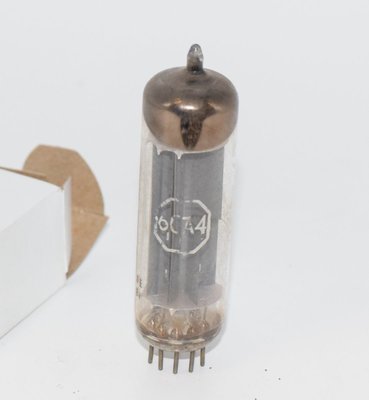
Introduction and History
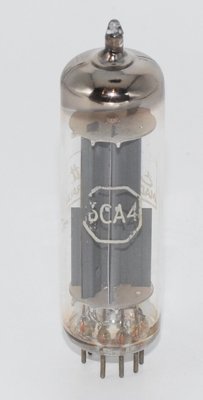
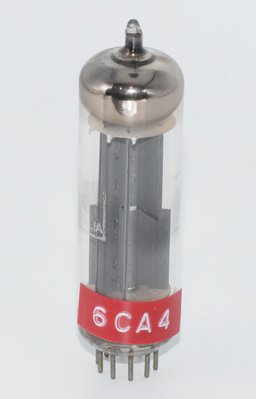
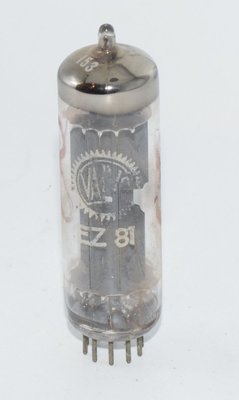
The 6CA4, known in European nomenclature as the EZ81, is a miniature full-wave vacuum rectifier tube designed for use in power supplies of compact audio equipment and other electronics requiring moderate DC current. Developed during the 1950s as part of the transition from octal to miniature (noval) tube bases, the 6CA4 represented a significant step forward in rectifier design, offering reliable performance in a smaller envelope than its octal predecessors such as the 5Y3GT and 5V4G.
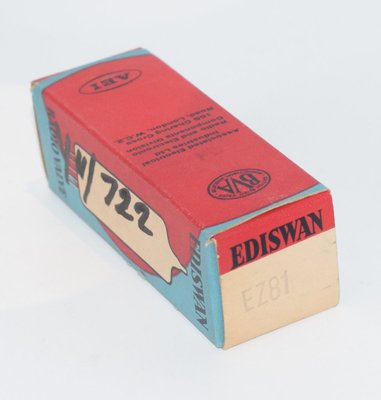
The tube was manufactured by numerous companies worldwide, including RCA in the United States, Philips/Mullard in Europe and Australia, Amperex, Siemens, Telefunken, and various Eastern European manufacturers. Philips Miniwatt Australia and Mullard's Blackburn (UK) factory were particularly notable producers, with NOS (New Old Stock) examples from these facilities being highly sought after by audiophiles today. The Mullard Blackburn production from the late 1950s onward is especially prized for its build quality and consistency.
As a rectifier, the 6CA4/EZ81 was originally intended for use in the power supply sections of radio receivers, small public address amplifiers, and other consumer electronics. However, its enduring legacy lies firmly in the world of high-fidelity audio, where it continues to serve as the rectifier of choice in many tube amplifier designs.
Technical Specifications and Design
General Description
The 6CA4 is a miniature full-wave vacuum rectifier tube used in power supplies of compact audio equipment having moderate DC requirements. It uses a 9-pin miniature (noval) envelope and, like other power-handling tubes, should be adequately ventilated during operation.
Heater Ratings
| Parameter | Value |
| Heater Voltage (ac/dc) | 6.3 volts |
| Heater Current | 1.0 ampere |
Full-Wave Rectifier Maximum Ratings (Design-Center Values)
| Parameter | Value |
| Peak Inverse Plate Voltage | 1000 volts |
| Peak Plate Current (Per Plate) | 450 mA |
| AC Plate Supply Voltage (Per Plate, rms) with Capacitor Input to Filter | 350 volts |
| Average Output Current | 150 mA |
| Peak Heater-Cathode Voltage | −500 volts |
Typical Operation with Capacitor Input to Filter
| Parameter | Condition A | Condition B | Condition C |
|---|---|---|---|
| AC Plate-to-Plate Supply Voltage (rms) | 500 volts | 600 volts | 700 volts |
| Filter-Input Capacitor | 50 µF | 50 µF | 50 µF |
| Total Effective Plate Supply Impedance per Plate | 150 ohms | 200 ohms | 240 ohms |
| DC Output Voltage at Input to Filter (Approx.) for DC output current of 150 mA | 245 volts | 293 volts | 347 volts |
Note: When capacitor-input circuits are used, a maximum peak current value per plate of 1 ampere during the initial cycles of the hot-switching transient should not be exceeded.
Physical Characteristics
| Parameter | Detail |
| Base Type | Noval (B9A) — 9-pin miniature |
| Envelope | Miniature glass (9M outline section 6G per RCA manual) |
| Socket Required | Miniature 9-contact socket |
| Mounting | Any position; adequate ventilation required |
Pin Configuration
The 6CA4 uses a 9-pin miniature (noval) base. The pinout is as follows:
| Pin | Function |
| Pin 1 | Plate (Diode 1) — PD1 |
| Pin 2 | No Connection (Internal Connection) |
| Pin 3 | No Connection |
| Pin 4 | Heater |
| Pin 5 | Heater |
| Pin 6 | No Connection (Internal Connection) |
| Pin 7 | Plate (Diode 2) — PD2 |
| Pin 8 | No Connection (Internal Connection) |
| Pin 9 | No Connection (Internal Connection) |
Important Note: Pins 2, 6, 8, and 9 are internal connections and must not be connected to external circuitry. The cathode connection is made through the center tap of the heater winding, as the cathode is internally connected to the heater (indirectly heated cathode design in some versions, or directly heated in others depending on manufacturer). In most implementations, the cathode is brought out separately or the heater center-tap serves as the B+ output point.
Key Design Notes
- The 6CA4 is a full-wave rectifier, meaning it contains two diode sections sharing a common cathode, designed to work with a center-tapped power transformer secondary winding.
- The tube provides a controlled, gradual voltage rise during warm-up, which is inherently gentler on filter capacitors and downstream tubes compared to solid-state rectifier replacements.
- Maximum average output current of 150 mA makes it suitable for powering amplifiers in the 15–35 watt range, depending on circuit topology.
Applications and Usage
The 6CA4/EZ81 was originally designed for the power supply sections of various electronic equipment:
- Audio Amplifiers: The most common and enduring application. The 6CA4 provides B+ rectification for small to medium power tube amplifiers, typically those using output tubes such as the EL84/6BQ5, EL34/6CA7, 6V6, or 6L6 in lower-power configurations.
- Radio Receivers: Used in the power supplies of higher-quality AM/FM radio receivers during the 1950s and 1960s.
- Preamplifiers: Some high-end preamplifier designs use the 6CA4 for B+ rectification, particularly where the designer wants the sonic benefits of tube rectification.
- Guitar Amplifiers: Found in numerous vintage and modern guitar amplifier designs, where its sag characteristics contribute to the playing feel and tonal response.
- Test Equipment: Used in the power supplies of various laboratory instruments and test equipment of the era.
The tube's 150 mA average current capability and 350V rms AC plate supply voltage rating make it well-suited for amplifiers requiring B+ voltages in the 250–350 VDC range at moderate current draws. Its peak inverse voltage rating of 1000 volts provides a comfortable safety margin in most audio applications.
Sound Characteristics
As a rectifier tube, the 6CA4/EZ81 does not amplify the audio signal directly. However, its influence on the power supply behavior has a profound and well-documented effect on the sonic character of the amplifier it serves. Audiophiles and engineers have consistently noted the following characteristics:
Tonal Qualities
- Warmth and Smoothness: The 6CA4 is widely praised for imparting a warm, smooth quality to the overall sound of an amplifier. The inherent voltage drop and slight impedance of the tube rectifier contribute to a power supply that is less "stiff" than solid-state alternatives, resulting in a more organic, natural presentation.
- Controlled Sag: One of the most valued characteristics of the 6CA4 is its gentle "sag" under dynamic signal demands. When the amplifier draws more current during transient peaks, the B+ voltage dips slightly, creating a natural compression effect. This is perceived as a more musical, less fatiguing listening experience in hi-fi applications, and as enhanced touch sensitivity and expressiveness in guitar amplifiers.
- Soft, Natural Attack: The slight power supply compliance results in transient attacks that are perceived as more natural and less harsh compared to silicon diode rectification. Notes bloom rather than snap, which many listeners find more pleasing and lifelike.
- Midrange Richness: Amplifiers using the 6CA4 are often described as having a particularly lush and detailed midrange, with a slight emphasis on harmonic richness that flatters vocals and acoustic instruments.
- Gentle Top End: The high frequencies tend to be smooth and extended without harshness or grain, partly due to the natural filtering effect of the tube rectifier's impedance on power supply noise.
- Gradual Warm-Up: The slow voltage rise during the warm-up period (typically 15–30 seconds to reach full operating voltage) is beneficial for the longevity of electrolytic filter capacitors and downstream tubes, and contributes to the perception of the amplifier "settling in" to its optimal sound.
Manufacturer Variations
Experienced listeners report subtle but discernible differences between 6CA4 tubes from different manufacturers:
- Mullard (Blackburn): Often considered the gold standard, prized for exceptional midrange warmth, rich harmonics, and a three-dimensional soundstage. The 1959 and early 1960s production is particularly sought after.
- Philips Miniwatt (Australia): Known for excellent build quality and a sound that is very close to the Mullard, with perhaps slightly more extended bass response. These test consistently strong on AVO valve testers.
- Amperex (Heerlen, Holland): Valued for a slightly more detailed and transparent presentation while retaining the characteristic warmth of tube rectification.
- Telefunken: Noted for precision, clarity, and a tighter bass response, with a somewhat more neutral tonal balance.
- RCA: The American production tends toward a warm, full-bodied sound with good reliability.
Equivalent and Substitute Types
The following types are confirmed as close or identical substitutes for the 6CA4:
| Type | Relationship | Notes |
|---|---|---|
| EZ81 | Identical — European designation | Same tube, different naming convention. The EZ81 is the Mullard/Philips designation; 6CA4 is the American RETMA designation. Fully interchangeable with no modifications. |
| CV3996 | Identical — UK military designation | British military Common Valve (CV) equivalent. Built to tighter military specifications but electrically identical. Direct drop-in replacement. |
| CV5072 | Identical — UK military designation | Another British military CV number for the same tube type. Direct drop-in replacement. |
| U709 | Identical — alternative designation | Direct equivalent designation. Fully interchangeable. |
| 6V4 | Near equivalent | Sometimes listed as an equivalent; users should verify specific ratings against their circuit requirements before substituting. |
Non-Equivalent Types Often Confused
The following rectifier tubes are not direct substitutes for the 6CA4, despite sometimes being suggested as alternatives:
- 5Y3GT: Octal base, different pinout, lower voltage ratings. Not interchangeable without socket and circuit modifications.
- 5AR4/GZ34: While also a noval-based full-wave rectifier, the GZ34 has significantly higher current capability (250 mA vs. 150 mA) and different internal characteristics. It can sometimes be used in circuits designed for the 6CA4 if the socket wiring is compatible, but the reverse substitution (6CA4 in a GZ34 circuit) may exceed the 6CA4's ratings. Always verify circuit requirements before substituting.
- EZ80/6V4: Similar but with lower current ratings (90 mA). Can sometimes substitute in lower-demand circuits but is not a full equivalent.
Notable Characteristics
- Robust Peak Inverse Voltage: The 1000-volt PIV rating provides excellent margin in typical audio applications, contributing to long-term reliability.
- Generous Peak Current Capability: With 450 mA peak plate current per plate, the 6CA4 handles the demanding current pulses of capacitor-input filter circuits without stress.
- Heater-Cathode Voltage Rating: The −500 volt peak heater-cathode voltage rating is important in designs where the rectifier cathode sits at a high DC potential relative to the heater supply. This generous rating allows flexible power supply design.
- Compact Size: The miniature noval envelope allows the 6CA4 to fit in smaller chassis designs compared to octal rectifiers, making it ideal for compact integrated amplifiers.
- Internal Connections: Pins 2, 6, 8, and 9 are internal connections. This is important for PCB designers and those wiring point-to-point — these pins must be left unconnected to avoid short circuits or damage.
- Capacitor Input Filter Compatibility: The 6CA4 is specifically rated for use with capacitor-input filters (up to 50 µF shown in the RCA data), which is the most common filter topology in audio amplifier power supplies.
- Longevity: Well-made examples from quality manufacturers (Mullard, Philips, Amperex) are known for exceptional service life, often lasting 5,000–10,000 hours or more in typical audio applications.
- Slow Start: The inherent warm-up time of the tube rectifier provides a soft-start function that protects electrolytic capacitors from voltage surges and extends the life of signal and output tubes by allowing them to reach operating temperature before full B+ voltage is applied.
Usage in the Audio Community
The 6CA4/EZ81 occupies a special and enduring place in the audio community, valued by both hi-fi enthusiasts and guitar amplifier players alike.
Hi-Fi and Audiophile Applications
In the audiophile world, the 6CA4 is a staple rectifier in numerous highly regarded amplifier designs. It is commonly found in:
- Single-Ended (SE) Amplifiers: Many SE amplifier designs using EL84, 6V6, or similar output tubes rely on the 6CA4 for B+ rectification. The tube's current capability is well-matched to the modest demands of single-ended circuits, and its sag characteristics complement the inherently musical nature of SE topology.
- Push-Pull Amplifiers: Small to medium push-pull designs (up to approximately 20–25 watts) frequently use the 6CA4, particularly those based on EL84/6BQ5 output tubes. Classic designs from manufacturers like Dynaco, Fisher, Scott, and Leak have used this rectifier or its equivalents.
- Preamplifier Power Supplies: Some high-end preamplifier designs incorporate the 6CA4 in their power supply sections, where its low noise and smooth rectification characteristics are particularly beneficial.
Audiophiles frequently engage in "tube rolling" with the 6CA4 position, comparing NOS examples from different manufacturers and production eras. The differences, while subtle, are consistently reported by experienced listeners. Mullard Blackburn production (identifiable by factory codes beginning with "B") and Philips Miniwatt Australian production are among the most sought-after variants, commanding premium prices in the NOS market.
Guitar Amplifier Applications
In the guitar amplifier world, the 6CA4/EZ81 is valued for its contribution to amplifier "feel" and dynamic response:
- Touch Sensitivity: The power supply sag provided by the 6CA4 creates a dynamic compression effect that makes the amplifier more responsive to picking dynamics. Soft picking produces cleaner tones, while harder attack drives the amplifier into natural overdrive more readily.
- Vintage Tone: Many vintage amplifier designs from the 1950s and 1960s used the 6CA4, and players seeking to recreate those classic tones insist on tube rectification.
- Boutique Amplifiers: Modern boutique amplifier builders frequently specify the 6CA4 in their lower-wattage designs, recognizing its contribution to the overall playing experience.
DIY and Kit Building
The 6CA4 is extremely popular in the DIY tube amplifier community. Its moderate current capability, straightforward circuit requirements, and wide availability make it an ideal choice for home-built amplifier projects. Many published amplifier designs and commercial kit amplifiers specify the 6CA4, and it is commonly stocked by specialty tube retailers worldwide.
Market and Availability
As of the current market, the 6CA4/EZ81 remains available from several sources:
- NOS (New Old Stock): Vintage production from Mullard, Philips, Amperex, Telefunken, RCA, and others is available through specialty dealers and online marketplaces. Prices vary significantly based on manufacturer, production date, and condition, with premium examples (Mullard Blackburn, early Amperex) commanding $40–$100+ per tube.
- Current Production: Several manufacturers produce new 6CA4/EZ81 tubes, including JJ Electronic (Slovakia) and others. These provide a more affordable option for players and listeners who prefer not to invest in NOS stock.
- Testing: When purchasing NOS 6CA4 tubes, buyers should look for examples that have been tested on calibrated equipment (such as AVO valve testers) and confirmed to test at strong emission levels, as rectifier tubes can weaken with age even when unused.
Practical Considerations for Audio Use
- Ventilation: As noted in the RCA data, the 6CA4 should be adequately ventilated. In amplifier chassis design, ensure sufficient airflow around the rectifier tube.
- Capacitor Input Filters: The tube is rated for use with capacitor-input filters up to 50 µF per the RCA specifications. Modern designs sometimes use larger values; designers should ensure that inrush current limits are respected.
- Series Resistance: The total effective plate supply impedance (including transformer winding resistance and any added series resistance) should be maintained within the ranges shown in the operating data (150–240 ohms per plate) to ensure proper operation and tube longevity.
- Solid-State Replacement: While plug-in solid-state replacements exist for the 6CA4 socket, many audiophiles and guitar players strongly prefer the original tube rectifier for its sonic and dynamic characteristics. Solid-state replacements eliminate the beneficial sag and soft-start properties that make tube rectification desirable in audio applications.