1. Introduction and History
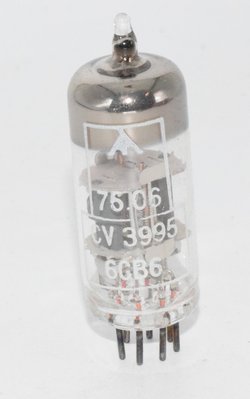
The 6CB6 is a medium-mu triode vacuum tube that was developed in the mid-20th century as a versatile amplification device for both radio frequency (RF) and audio frequency (AF) applications. Introduced during the golden age of vacuum tube electronics, the 6CB6 became a staple component in consumer electronics, professional audio equipment, and industrial applications throughout the 1950s and 1960s.
The tube was designed to provide a balance between amplification capability, power handling, and practical operating characteristics suitable for general-purpose amplification. Its popularity was particularly pronounced in television sets, radio receivers, and mid-range audio amplifiers where moderate gain and reasonable power dissipation were required. The 6CB6 remained in production for several decades and continues to be sought after by vintage audio enthusiasts and equipment restorers.
The designation "6CB6" follows the RCA tube naming convention, where the "6" indicates a 6.3-volt heater supply, and "CB6" identifies the specific tube type and its characteristics. The tube is also known by the British military designation CV3995, which indicates its use in professional and military applications where standardized component specifications were critical.
2. Technical Specifications and Design
Physical Characteristics
The 6CB6 is housed in a standard 9-pin miniature vacuum tube envelope (also called a noval tube). The tube measures approximately 2.5 inches (64mm) in height and features a glass bulb construction with an internal structure of carefully arranged electrodes. The nine-pin base follows the standard miniature tube configuration, allowing for easy insertion into compatible sockets.
Electrical Specifications
| Parameter | Specification |
|---|---|
| Heater Voltage | 6.3V AC or DC |
| Heater Current | 0.45A |
| Plate Voltage (Maximum) | 330V |
| Plate Dissipation (Maximum) | 2.0W |
| Grid Bias Voltage | -2V to -8V (typical) |
| Amplification Factor (μ) | 16.5 (medium-mu) |
| Plate Resistance (rp) | Approximately 7,700 ohms |
| Transconductance (gm) | 2,200 μmhos (typical) |
| Tube Type | Medium-mu triode |
Internal Design and Construction
The 6CB6 features a traditional triode configuration with three primary electrodes: the cathode (where electrons are emitted), the control grid (which modulates electron flow), and the plate or anode (which collects electrons). The tube's internal structure is designed with careful attention to spacing and geometry to optimize performance characteristics.
The cathode is typically an indirectly heated type, meaning it is heated by a separate heater filament rather than being directly heated. This design allows for AC heater operation without introducing hum into the audio signal. The cathode material is usually a nickel tube coated with a barium-strontium oxide mixture that provides excellent electron emission characteristics.
The control grid is a spiral-wound structure positioned between the cathode and plate. Its design determines the tube's amplification factor and operating characteristics. The grid's close proximity to the cathode allows for sensitive control of plate current with relatively small grid voltage variations.
The plate is constructed from nickel and is designed to dissipate the heat generated by electron bombardment. The moderate plate dissipation rating of 2.0W makes the 6CB6 suitable for moderate-power applications without requiring elaborate cooling solutions.
3. Applications and Usage
Original Commercial Applications
The 6CB6 was extensively used in television receivers manufactured during the 1950s and 1960s, where it served in various RF and IF (intermediate frequency) amplification stages. Its moderate gain and excellent linearity made it ideal for these applications, where stability and predictable performance were essential.
In radio receivers, the 6CB6 appeared in both AM and FM circuits, providing reliable amplification across a wide frequency range. The tube's ability to operate at relatively low plate voltages made it compatible with the power supply designs of consumer electronics from this era.
Professional audio equipment manufacturers incorporated the 6CB6 into microphone preamplifiers, mixing consoles, and monitoring amplifiers. Its low noise characteristics and excellent frequency response made it particularly valuable in recording studios and broadcast facilities.
Audio Community Applications
In contemporary audio applications, the 6CB6 has found renewed interest among vintage audio enthusiasts and professional restoration specialists. The tube is particularly valued in the following contexts:
Vintage Amplifier Restoration: Audio engineers and hobbyists restoring classic tube amplifiers from the 1950s-1970s often need to source replacement 6CB6 tubes. The tube's continued availability (particularly NOS—New Old Stock units) makes restoration projects feasible. Restorers appreciate the 6CB6's reliability and the fact that it performs consistently with original design specifications.
Preamp and Buffer Stages: Some contemporary high-end audio designers incorporate 6CB6 tubes in preamp circuits and buffer stages. The tube's moderate gain and low noise characteristics make it suitable for applications where the input signal must be amplified with minimal coloration. The tube's plate resistance characteristics allow for straightforward impedance matching with passive components.
DIY Audio Projects: The 6CB6 is popular among DIY audio enthusiasts building tube amplifiers and preamplifiers. Its moderate power requirements, straightforward biasing, and well-documented operating characteristics make it an excellent choice for hobbyists learning tube electronics. The availability of detailed specifications and application notes from the tube's original manufacturers facilitates successful circuit design.
Vintage Microphone Amplifiers: Professional audio technicians restoring vintage microphone preamplifiers and mixing consoles frequently encounter 6CB6 tubes in the original circuitry. The tube's performance in these applications is well-understood, and replacement NOS tubes can restore equipment to original specifications.
Tube Rolling and Experimentation: Audio enthusiasts engaged in "tube rolling" (the practice of substituting different tube types to alter amplifier characteristics) sometimes experiment with 6CB6 variants and equivalent tubes. Different manufacturers' versions of the 6CB6 can exhibit subtle sonic variations that appeal to listeners seeking specific tonal qualities.
4. Sound Characteristics of the 6CB6
Frequency Response and Tonal Balance
The 6CB6 exhibits a relatively neutral frequency response across the audio spectrum, making it well-suited for applications where transparency and accuracy are desired. The tube's internal design provides good high-frequency response, with the upper audio frequencies typically extending cleanly to 20kHz and beyond with minimal distortion.
In the midrange, the 6CB6 is known for its clarity and detail. The tube's moderate transconductance (2,200 μmhos) provides sufficient gain for adequate signal amplification while maintaining good linearity. This characteristic contributes to a presentation that many listeners describe as "open" and "uncolored."
The low-frequency response is clean and controlled, with good extension down to 20Hz and below. The tube does not typically introduce excessive bass bloom or muddiness, making it suitable for accurate reproduction of low-frequency information.
Harmonic Distortion Characteristics
The 6CB6 produces harmonic distortion that is predominantly in the lower-order harmonics (primarily second and third harmonics) when operated within its specified parameters. This type of distortion is generally considered musically pleasant by audio enthusiasts, as it tends to add warmth and fullness to the sound without introducing harsh or fatiguing artifacts.
When operated at moderate signal levels, the 6CB6 maintains low total harmonic distortion (THD), typically in the range of 0.5-2% depending on operating conditions and circuit configuration. This performance allows for high-fidelity reproduction with minimal audible coloration.
Dynamic Response and Transient Handling
The 6CB6's moderate plate resistance (approximately 7,700 ohms) contributes to good transient response. The tube responds quickly to changes in grid voltage, allowing for accurate reproduction of fast transients in music and other audio signals. This characteristic is particularly valued in applications where percussive instruments and vocals must be reproduced with clarity and impact.
The tube's power handling capability (2.0W plate dissipation) provides adequate headroom for moderate signal levels without compression or distortion artifacts. This allows for dynamic passages in music to be reproduced without obvious limiting or clipping.
Noise Characteristics
The 6CB6 is considered a low-noise tube, with noise levels suitable for preamplification and other sensitive audio applications. The tube's well-designed cathode structure and modern manufacturing techniques (particularly in NOS tubes from reputable manufacturers) result in very low microphonic noise—the unwanted noise generated by mechanical vibration of the tube's internal structure.
Properly selected 6CB6 tubes can exhibit noise floors that are sufficiently low for professional audio applications, allowing for signal-to-noise ratios exceeding 90dB in well-designed circuits.
Subjective Audio Qualities
Audio professionals and enthusiasts often describe the sonic character of the 6CB6 as follows:
- Transparent: The tube imparts minimal coloration to the signal, allowing the characteristics of the source material to come through clearly.
- Detailed: The tube's good frequency response and low distortion allow for excellent reproduction of fine details in the audio signal.
- Warm (in context): While not inherently warm-sounding, the 6CB6's harmonic distortion characteristics can add a subtle warmth that many listeners find appealing, particularly in comparison to solid-state designs.
- Controlled: The tube does not add excessive bloom or coloration to any particular frequency range, maintaining good balance across the spectrum.
- Musical: The combination of good frequency response, low distortion, and natural harmonic character contributes to a presentation that many describe as "musical" and engaging.
5. Equivalent or Substitute Types
Direct Equivalents
6CB6A: This is an improved version of the 6CB6, with slightly enhanced specifications and tighter manufacturing tolerances. The 6CB6A is a direct drop-in replacement for the 6CB6 and will function identically in most applications. In many cases, the 6CB6A is preferable due to its superior consistency and reliability.
CV3995 (British designation): This is the British military equivalent of the 6CB6, manufactured to more stringent specifications than commercial versions. CV3995 tubes are often highly sought after by audio enthusiasts due to their superior construction and consistency. The CV3995 is directly interchangeable with the 6CB6 and typically commands a premium price in the used tube market.
Functional Equivalents with Similar Characteristics
6CG7: This dual-triode tube can function as a substitute in some applications, though it features higher amplification factor (mu ≈ 17.7) and different impedance characteristics. The 6CG7 can provide similar or slightly higher gain, making it suitable for applications where additional amplification is desired.
6BK7: This is a more powerful triode with higher plate dissipation (3.5W), making it suitable for applications requiring greater power handling. However, its higher amplification factor makes it less suitable for direct substitution in sensitive applications.
6N6P (Soviet equivalent): This Russian-manufactured tube offers similar electrical characteristics to the 6CB6 and can function as a substitute in many applications. Soviet-era 6N6P tubes are often available at lower cost than Western equivalents, though quality and consistency can vary.
Considerations for Substitution
When substituting alternative tube types for the 6CB6, several factors must be considered:
- Pin Configuration: Ensure that the substitute tube has an identical or compatible pin configuration. Most modern triodes use the 9-pin noval configuration, but pin assignments vary.
- Heater Requirements: The 6CB6 requires 6.3V at 0.45A. Substitute tubes must have compatible heater specifications to function properly in the existing circuit.
- Operating Parameters: Differences in amplification factor, plate resistance, and transconductance may require circuit adjustments, particularly regarding bias resistor values and load impedance.
- Plate Dissipation: Substitute tubes must be capable of handling the power dissipation required by the circuit. Using tubes with lower plate dissipation ratings in high-power applications may result in premature tube failure.
- Audio Characteristics: Different tube types will impart different sonic characteristics. Substitution for audio applications should be approached with careful listening evaluation.
6. Notable Characteristics
Reliability and Longevity
The 6CB6 is renowned for its reliability and long operational life. Tubes manufactured by reputable makers such as RCA, Mullard, Telefunken, and others typically exhibit excellent reliability when operated within specified parameters. Many examples of 6CB6 tubes manufactured in the 1950s and 1960s remain fully functional today, more than 60 years after manufacture.
The tube's moderate operating parameters contribute to its longevity. The plate dissipation of 2.0W is moderate enough that thermal stress is minimized, and the tube's robust internal construction can withstand typical mechanical and electrical stresses encountered in normal operation.
Availability and Market Considerations
NOS (New Old Stock) 6CB6 tubes remain reasonably available in the used tube market, though prices have increased as vintage audio equipment has become more popular. Quality examples from reputable manufacturers command premium prices, with CV3995 military-grade tubes being particularly sought after.
When purchasing 6CB6 tubes, buyers should seek examples that have been properly stored and can be tested to verify functionality. Reputable tube dealers typically provide test results or functional guarantees, ensuring that purchased tubes perform as specified.
Tube Testing and Selection
Proper tube testing is essential when sourcing 6CB6 tubes for audio applications. Quality tube testers can verify that tubes meet specified electrical parameters and exhibit low noise and microphonic characteristics. Audio enthusiasts often employ listening tests in addition to electrical measurements to select tubes that provide desired sonic characteristics.
Matched pairs or quads of 6CB6 tubes (tubes with identical electrical characteristics) are particularly valuable for applications using multiple tubes, as matching ensures balanced performance and optimal sound quality.
Manufacturing Variations
Different manufacturers' 6CB6 tubes exhibit subtle variations in sonic character, even when electrical specifications are identical. These variations result from differences in internal construction, materials, and manufacturing processes. Audio enthusiasts often express strong preferences for tubes from specific manufacturers, with European tubes (particularly Telefunken and Mullard) being particularly prized for their tonal qualities.
These manufacturing variations have created an active "tube rolling" community among audio enthusiasts, who experiment with different manufacturers' tubes to achieve preferred sonic characteristics in their equipment.
Operating Temperature and Thermal Characteristics
The 6CB6 operates at moderate temperatures, with the glass envelope reaching approximately 200-250°C during normal operation. This relatively moderate operating temperature contributes to the tube's longevity and reliability. The tube's thermal characteristics allow it to be mounted in equipment without requiring elaborate cooling provisions, though adequate ventilation around the tube is still important for optimal performance and longevity.
Conclusion
The 6CB6 represents an important chapter in the history of vacuum tube electronics. Its balanced combination of performance, reliability, and practical operating characteristics made it a staple of mid-20th century consumer and professional electronics. Today, the tube continues to be valued by audio professionals and enthusiasts who appreciate its transparent sound character, low noise, and proven reliability.
Whether restoring vintage equipment to original specifications or incorporating the 6CB6 into new audio designs, users can rely on well-established specifications, abundant technical documentation, and the continued availability of quality NOS examples. The 6CB6 remains a testament to thoughtful vacuum tube design and continues to deliver excellent audio performance more than 70 years after its introduction.
For those interested in tube audio, the 6CB6 represents an excellent entry point—offering superior performance at reasonable cost, with characteristics that appeal to both measurement-focused audiophiles and those who prioritize subjective listening evaluation.