1. Introduction and History
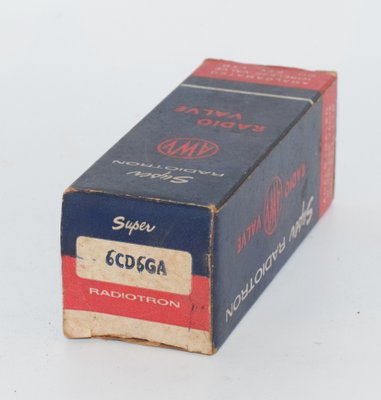
The 6CD6GA is a medium-power output vacuum tube that emerged during the golden age of vacuum tube electronics in the 1950s. Developed as an improvement over earlier output tube designs, the 6CD6GA became a staple in radio frequency (RF) and audio amplification applications throughout the 1950s and 1960s.
The tube was primarily manufactured by RCA under their Radiotron brand, with the "GA" suffix denoting a specific construction variant optimized for reliability and performance. The 6CD6GA represents the culmination of decades of tube engineering, incorporating design features that made it particularly suitable for both consumer and professional audio equipment.
During its heyday, the 6CD6GA was utilized in high-end audio amplifiers, guitar amplifiers, and professional broadcasting equipment. Its introduction coincided with the transition from lower-powered tubes to more robust designs capable of delivering higher output levels with improved fidelity. The tube remained in production and use well into the 1970s, and today it is highly sought after by vintage audio enthusiasts and restoration specialists.
2. Technical Specifications and Design
Physical and Electrical Characteristics
| Specification | Value |
|---|---|
| Tube Type | Medium-Power Output Pentode |
| Heater Voltage | 6.3V AC/DC |
| Heater Current | 1.05A |
| Maximum Plate Voltage | 660V |
| Maximum Plate Dissipation | 22W |
| Maximum Screen Voltage | 330V |
| Typical Plate Impedance | 2,000 ohms |
| Typical Amplification Factor (μ) | 70 |
| Typical Plate Current (at rated conditions) | 100mA |
| Typical Transconductance | 11,000 micromhos |
Construction Details
The 6CD6GA employs a pentode configuration with five active elements: a heated cathode, a control grid, a screen grid, a suppressor grid, and a plate (anode). This five-element design provides superior linearity and efficiency compared to earlier tetrode designs.
The tube features a robust octal base (8-pin configuration) with a 1-inch diameter glass envelope. The internal construction utilizes heavy-duty materials capable of withstanding sustained high-voltage and high-current operation. The plate structure is designed for excellent heat dissipation, allowing the tube to safely dissipate up to 22 watts of power.
The 6CD6GA incorporates a remote-cutoff characteristic, making it suitable for automatic gain control (AGC) applications in receivers. The control grid design allows for smooth gain variation across a wide range of input signals without abrupt changes in tube behavior.
Operating Parameters
In typical output stage applications, the 6CD6GA operates with plate voltages ranging from 330V to 660V. At moderate operating points, the tube can deliver approximately 15-20 watts of audio power with acceptable distortion levels. The high transconductance (11,000 micromhos) ensures responsive control and excellent linearity across the operating range.
The tube's screen grid design provides excellent stability and prevents secondary emission effects that plagued earlier designs. This makes the 6CD6GA particularly reliable in push-pull configurations where matched pairs are essential for balanced operation.
3. Applications and Usage
Historical Audio Applications
The 6CD6GA found extensive use in several key audio applications:
- Guitar Amplifiers: Used in the output stages of vintage tube guitar amps, particularly in the 1950s-1970s era. Its robust design and moderate power output made it ideal for achieving the warm, breakup characteristics prized in rock and blues amplification.
- High-Fidelity Amplifiers: Integrated into high-end audio amplifiers designed for home listening. The tube's linearity and low distortion made it suitable for critical listening applications.
- Professional Audio Equipment: Employed in broadcast transmitters, public address systems, and recording studio equipment where reliability and consistent performance were paramount.
- Radio Receivers: Used in AM/FM receivers and short-wave equipment, where its RF handling capabilities and stable gain characteristics proved valuable.
Modern Audio Community Usage
Today, the 6CD6GA remains highly valued in the vintage audio restoration and modification community. Audio enthusiasts and professional technicians seek out NOS (New Old Stock) examples for several reasons:
- Vintage Amplifier Restoration: Collectors and musicians restore classic tube amplifiers to original specifications, requiring authentic 6CD6GA tubes. The tube's availability in NOS condition makes it relatively accessible compared to rarer types.
- Tone Enhancement: Musicians and audio engineers recognize that 6CD6GA tubes impart a particular sonic character—warm, musical, with a natural compression quality—that many prefer over modern solid-state alternatives or newer tube designs.
- Boutique Amplifier Design: Contemporary boutique amplifier manufacturers sometimes incorporate 6CD6GA tubes in new designs, valuing their proven performance characteristics and the vintage aesthetic they provide.
- Audio Experimentation: Tube enthusiasts and DIY builders use 6CD6GA tubes in custom amplifier projects, appreciating their robust construction and well-documented specifications.
4. Sound Characteristics
Tonal Profile
The 6CD6GA is renowned for its distinctive sonic signature that has made it a favorite among discerning audio professionals and musicians:
- Warmth and Musicality: The tube exhibits a naturally warm character with a slight emphasis in the lower midrange, contributing to a full-bodied, engaging sound. This warmth is not colored or artificial but rather a natural consequence of the tube's harmonic distortion profile.
- Smooth Compression: When driven into saturation, the 6CD6GA produces a gentle, musical compression effect. This natural limiting characteristic prevents harsh peaks while maintaining dynamic responsiveness, making it particularly appealing for guitar amplification.
- Clear Midrange: The tube's transconductance characteristics produce a clear, articulate midrange that preserves vocal clarity and instrument definition. This makes it excellent for both music reproduction and voice applications.
- Controlled High-Frequency Response: Rather than presenting an extended or exaggerated high-frequency response, the 6CD6GA delivers a balanced treble that avoids harshness while maintaining clarity and detail.
Distortion Characteristics
The harmonic distortion profile of the 6CD6GA is predominantly second and third harmonic, which are generally considered musically pleasing. At moderate drive levels, distortion remains below 1-2%, ensuring transparent amplification. As the tube approaches saturation, the distortion increases gradually and musically, without the sudden breakup or harshness associated with some alternative designs.
Dynamic Response
The 6CD6GA demonstrates excellent transient response with fast attack and decay characteristics. This makes it particularly suitable for dynamic instruments like guitar, drums, and bass, where quick response to input signal changes is essential for authentic tone reproduction.
5. Equivalent or Substitute Types
Direct Equivalents
- 6CD6: The original version without the "GA" designation. Functionally identical but potentially with slightly different internal construction and reliability characteristics.
- 6CD6GC: A variant designation used by some manufacturers, offering similar performance characteristics.
Functional Substitutes
- EL84: A European pentode offering lower power output (approximately 5-10W) but similar sonic characteristics. Suitable for lower-powered applications.
- 6L6: A medium-power output pentode with similar power handling capabilities. Often used as a substitute, though with slightly different impedance characteristics.
- EL34: A European power pentode with comparable power output and sonic characteristics, though with different tube biasing requirements.
- 6V6: A lower-power alternative suitable for reduced-output applications, though lacking the robust construction of the 6CD6GA.
Substitution Notes
While some tubes may function as substitutes, direct replacement with authentic 6CD6GA tubes is always preferable for original equipment. Substitutions may require adjustment of bias points, output transformer impedance matching, and may produce different sonic results. Consultation with qualified technicians is recommended before attempting substitutions in vintage equipment.
6. Notable Characteristics
- Robust Construction: The 6CD6GA features heavy-duty internal components capable of sustained high-power operation without degradation.
- Excellent Reliability: The tube demonstrates exceptional longevity, with many examples remaining functional after 60+ years of service.
- Linear Amplification: The pentode design provides superior linearity compared to tetrode alternatives, resulting in lower distortion at moderate operating levels.
- Stable Operation: The screen grid design prevents secondary emission effects and parasitic oscillations, ensuring stable performance across a wide range of operating conditions.
- High Transconductance: The tube's high gm value (11,000 micromhos) allows for efficient power amplification and responsive gain control.
- Remote-Cutoff Characteristic: The control grid design enables smooth gain variation suitable for AGC applications in receivers.
- NOS Availability: Unlike many vintage tubes, genuine NOS 6CD6GA examples remain relatively available, making restoration projects feasible.
- Sonic Character: The tube imparts a distinctive warm, musical character that many audio professionals and musicians actively seek out for its tonal qualities.
Conclusion
The 6CD6GA represents a pinnacle of vacuum tube design and manufacturing from the golden age of electronics. Its robust construction, excellent electrical characteristics, and distinctive sonic signature have secured its place in audio history. Whether in restored vintage equipment or contemporary boutique amplifier designs, the 6CD6GA continues to deliver reliable performance and musical amplification that modern solid-state alternatives often struggle to replicate. For audio enthusiasts and professionals committed to preserving and celebrating tube-based audio, the 6CD6GA remains an indispensable component.