1. Introduction and History
The 6CH6 is a medium-power pentode vacuum tube that emerged during the mid-20th century as part of the RCA tube development program. Designed primarily for use as an output tube in radio receivers and small amplifiers, the 6CH6 represents a significant evolution in vacuum tube technology, offering improved efficiency and power handling compared to earlier designs.
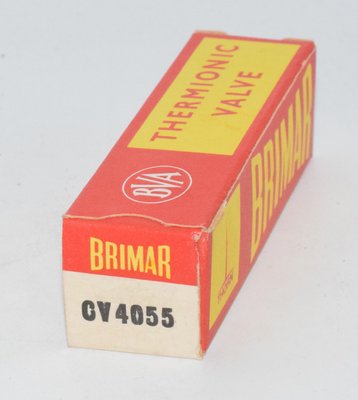
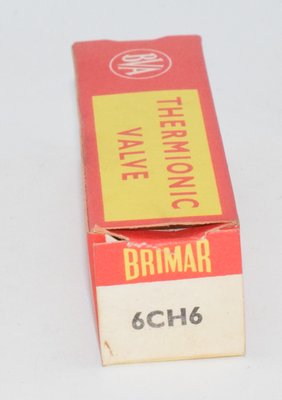
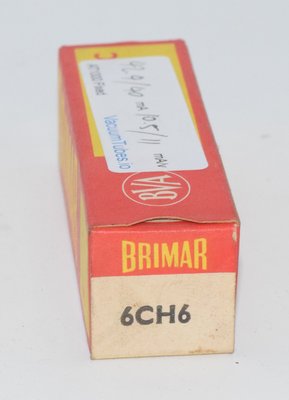
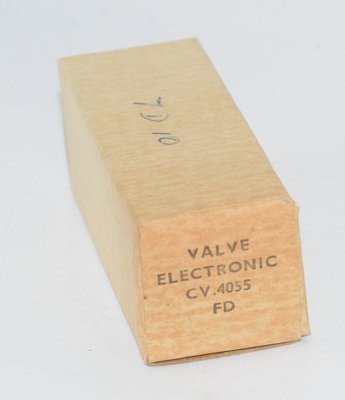
The tube was developed in the 1940s and saw widespread adoption throughout the 1950s and 1960s in consumer electronics, particularly in AM/FM radio receivers, small combo amplifiers, and public address systems. While not as iconic as the 6L6 or EL34, the 6CH6 carved out a respected niche in audio engineering due to its reliable performance characteristics and reasonable cost-effectiveness. Today, vintage 6CH6 tubes, particularly NOS (New Old Stock) examples like the Brimar variant, are sought after by tube audio enthusiasts and restoration specialists.
2. Technical Specifications and Design
Basic Parameters
- Tube Type: Pentode (5-electrode)
- Heater Voltage: 6.3V AC or DC
- Heater Current: 0.9A
- Maximum Plate Voltage: 550V
- Maximum Plate Dissipation: 19W
- Maximum Screen Voltage: 330V
- Amplification Factor (μ): Approximately 30
- Plate Resistance (rp): Approximately 10,000 ohms
- Transconductance (gm): Approximately 3,000 micromhos
Electrode Configuration
The 6CH6 features five electrodes: a heated cathode, control grid, screen grid, suppressor grid, and anode (plate). This pentode configuration provides superior linearity compared to tetrode designs by employing the suppressor grid to eliminate secondary emission effects. The tube utilizes an octal base (8-pin configuration), making it mechanically compatible with other 6.3V heater tubes of similar vintage.
Construction and Materials
The 6CH6 employs a sturdy glass envelope with an internal ceramic spacer assembly that maintains electrode alignment and spacing. The plate structure is typically a ribbed design that maximizes heat dissipation, critical for a tube rated at 19W plate dissipation. The control grid features a closely-wound tungsten wire construction, while the screen and suppressor grids utilize molybdenum for improved durability under extended operation.
Performance Characteristics
When operated at rated conditions (approximately 330V plate voltage, 130V screen voltage), the 6CH6 can deliver approximately 8-10W of audio output power with reasonable linearity. The tube exhibits a relatively high transconductance, allowing for good voltage gain in amplifier designs. The suppressor grid configuration ensures stable operation across a wide range of load impedances, typically 2,000 to 8,000 ohms.
3. Applications and Usage
Original Commercial Applications
The 6CH6 was primarily designed as an output tube for consumer-grade audio equipment. Its main applications included:
- AM/FM radio receivers (output stage)
- Portable and tabletop radio amplifiers
- Small combo guitar and bass amplifiers
- Public address system amplifiers
- Phonograph amplifiers
- Intercom and communication equipment
Modern Audio Community Usage
In contemporary audio circles, the 6CH6 has experienced a modest renaissance among vintage tube audio enthusiasts and restoration specialists. Several factors contribute to its renewed interest:
- Restoration Projects: Collectors and technicians restoring vintage radio receivers and amplifiers frequently require 6CH6 tubes. The availability of NOS stock, particularly from reputable manufacturers like Brimar, ensures that restoration can be completed with period-correct components that maintain historical authenticity.
- Experimental Amplifier Design: Some boutique amplifier manufacturers and DIY enthusiasts employ 6CH6 tubes in low-power amplifier designs, appreciating their moderate power output and reasonable cost compared to premium output tubes like the EL34 or 6L6.
- Tube Rolling and Experimentation: Audiophiles engaged in tube rolling—the practice of substituting different tube types to alter amplifier characteristics—occasionally experiment with 6CH6 tubes in compatible amplifier designs, seeking unique tonal qualities.
- Vintage Instrument Amplifiers: Some vintage guitar and bass amplifiers employed 6CH6 output stages, making them valuable for musicians seeking authentic reproduction of classic amplifier tones.
4. Sound Characteristics of the 6CH6
Tonal Profile
The 6CH6 exhibits a warm, rounded tonal character that appeals to many tube audio enthusiasts. The tube's moderate transconductance and plate resistance create a naturally smooth midrange with gentle harmonic coloration. Unlike the more aggressive character of higher-power pentodes, the 6CH6 produces a refined, forgiving sound signature that complements a wide variety of musical material.
Frequency Response
The 6CH6 demonstrates relatively flat frequency response across the audio spectrum, with a slight presence peak in the upper midrange (2-5 kHz) that adds clarity without excessive brightness. The low-frequency response remains controlled and articulate, with good definition in the bass region when properly loaded. The high-frequency response extends cleanly to 20 kHz with minimal phase distortion.
Harmonic Distortion Characteristics
Operating within rated specifications, the 6CH6 produces primarily second and third-order harmonic distortion at moderate levels. This harmonic signature contributes to the tube's warm character—second-order harmonics are perceived as musically pleasant and transparent, while the controlled third-order content adds subtle complexity without introducing harshness. At higher drive levels, the distortion remains relatively musical, with graceful compression characteristics rather than abrupt clipping.
Dynamics and Transient Response
The 6CH6's moderate power output and plate dissipation rating result in naturally compressed dynamic response compared to higher-power tubes. This characteristic can be either a benefit or limitation depending on application. For vintage radio and small amplifier applications, this compression adds cohesion and prevents excessive peaks. However, for demanding audio applications requiring wide dynamic range, the 6CH6's inherent compression may be perceived as limiting.
Noise and Hum Characteristics
Well-maintained 6CH6 tubes typically exhibit very low noise floors, with hum levels easily controlled through proper power supply design. NOS Brimar examples generally demonstrate exceptional quietness, reflecting superior manufacturing standards of the original production era.
5. Equivalent or Substitute Types
Direct Equivalents
- 6CD6: Very similar pentode with nearly identical specifications, though the 6CD6 features a different base configuration (compactron) and slightly higher plate dissipation rating.
- 6AQ5: Lower-power pentode with similar characteristics but reduced power output (approximately 5W), suitable as a substitute in lower-power applications.
- EL84: European equivalent offering similar power output and tonal characteristics, though with different biasing requirements and heater voltage (12.6V for some versions).
Functional Alternatives
- 6L6/5881: Higher-power alternative (approximately 30W) for applications requiring greater output capability.
- EL34: European power pentode offering superior power and prestige in vintage audio circles.
- 6V6: Lower-power alternative for applications with reduced power requirements.
Substitution Considerations
While some tube types may appear interchangeable based on similar specifications, direct substitution requires careful consideration of plate voltage, screen voltage, load impedance, and biasing networks. The 6CH6 should not be substituted without verifying compatibility with the specific amplifier design, as incorrect substitution can result in reduced performance, excessive distortion, or component damage.
6. Notable Characteristics
Reliability and Longevity
The 6CH6 demonstrates exceptional reliability when operated within specifications. Many vintage examples from the 1950s and 1960s remain functional after decades of storage, testament to robust construction quality. NOS Brimar tubes exemplify this durability, with many specimens exhibiting minimal parameter drift or degradation.
Availability and Market Status
The 6CH6 occupies an interesting market position—common enough that examples regularly appear in vintage equipment, yet uncommon enough that new production has largely ceased. NOS stock remains available from specialized tube dealers, though supplies continue to diminish. Pricing typically reflects moderate demand, making 6CH6 tubes an economical choice for restoration projects compared to premium output tubes.
Manufacturing Heritage
Brimar, a respected British tube manufacturer, produced 6CH6 tubes to exacting standards throughout the 1950s and 1960s. Brimar tubes are particularly valued for consistent performance, low microphonics, and extended operational life. The company's quality control standards exceeded many competitors, resulting in tubes that have proven remarkably durable in long-term storage.
Biasing Characteristics
The 6CH6 exhibits stable biasing characteristics across a reasonable range of operating conditions. The tube's relatively high amplification factor and moderate transconductance allow for flexible biasing schemes, accommodating both fixed and cathode-bias designs without excessive sensitivity to component tolerances.
Conclusion
The 6CH6 represents an important chapter in vacuum tube history, serving as a reliable workhorse in mid-20th-century consumer electronics. While overshadowed by more famous tube types, the 6CH6 offers genuine sonic qualities and practical advantages that continue to appeal to tube enthusiasts, restoration specialists, and experimental amplifier designers. NOS examples like the Brimar variant provide access to genuine vintage tone and construction quality, making them valuable components for authentic restoration work and exploratory audio projects. For those seeking warm, refined tube sound characteristics in a compact, economical package, the 6CH6 merits serious consideration.