Introduction and History
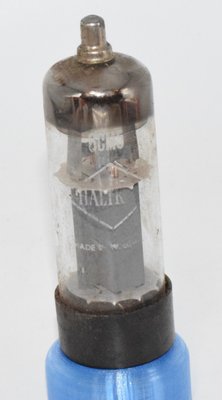
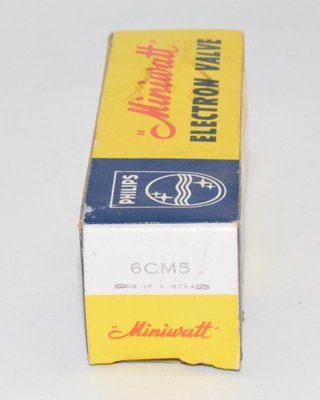
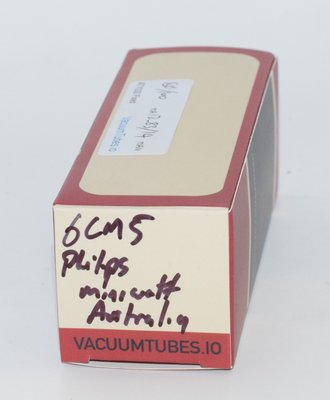
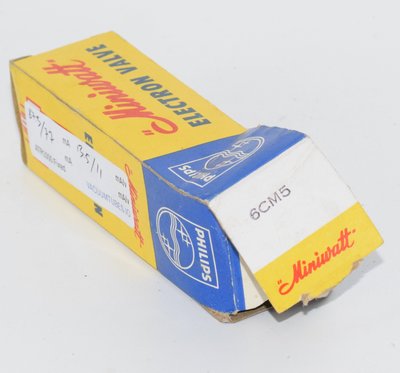
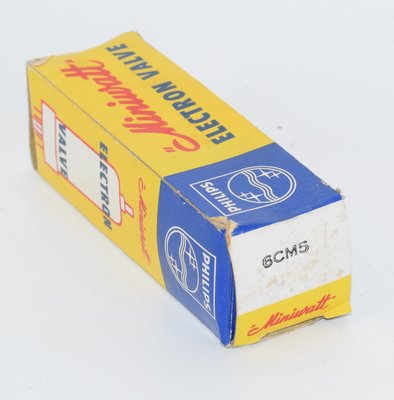
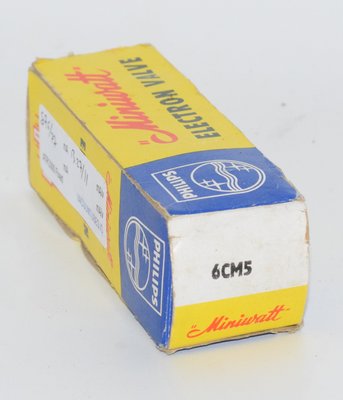
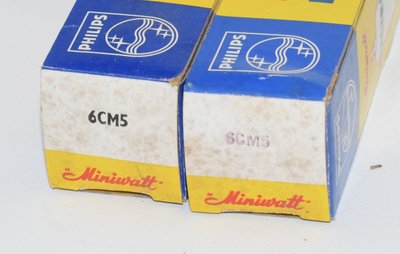
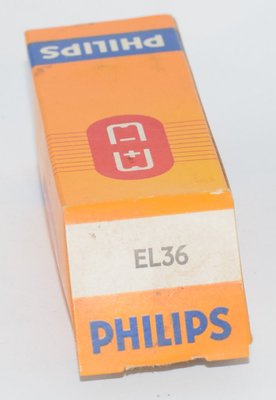
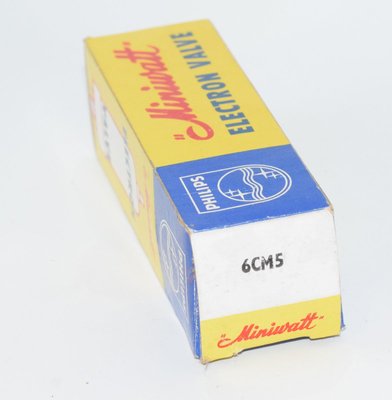
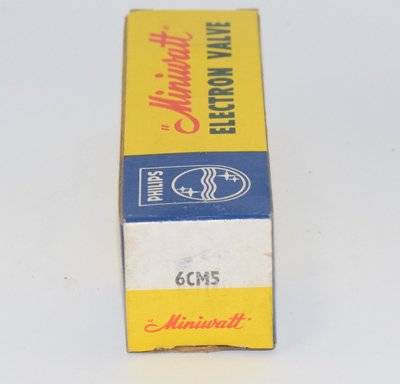
The 6CM5, known in European designation as the EL36, is a power pentode vacuum tube originally developed in the 1950s for use as a horizontal (line) deflection output tube in television receivers. Manufactured by Philips and its associated brands — including Mullard (UK), Miniwatt (Australia and Holland), Amperex, and Siemens (who produced the closely related E236L variant) — the 6CM5 was one of the workhorses of the television era. Its robust construction, high peak voltage capability, and substantial current handling made it ideally suited for the demanding sweep circuits of CRT-based televisions.
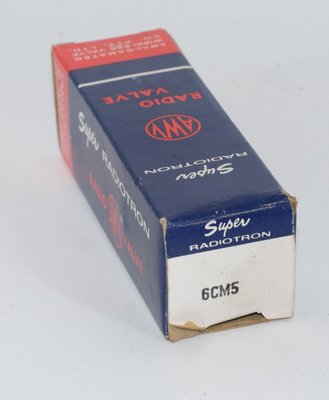
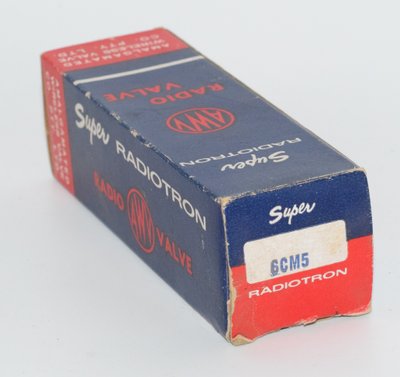
The tube was produced in enormous quantities throughout the 1950s and 1960s by factories across the globe, including Philips plants in Holland (Sittard), the UK (Mullard's Blackburn factory), Australia (AWV/Super Radiotron and Philips Miniwatt), and Japan. The military equivalent was designated CV2940. As television technology evolved toward solid-state designs in the 1970s, the 6CM5 gradually fell out of its primary application, but it found a second life in the audio community where its high transconductance, low plate resistance, and generous power handling made it an attractive — and affordable — candidate for audio power amplifier designs.
The Siemens E236L is a premium long-life variant of the same basic design, manufactured to tighter tolerances and rated for over 10,000 hours of service life. The attached Siemens datasheet (RöK 3283/15.8.60) provides extensive characterization data for this tube type, including detailed operating curves for both pentode and triode-connected configurations, as well as push-pull Class B amplifier operating data.
Technical Specifications and Design
General Description
The 6CM5 / EL36 is an indirectly heated power pentode with a low internal resistance and high transconductance. Per the Siemens datasheet, it features an interlayer-free special cathode ("Zwischenschichtfreie Spezialkathode") designed for long life and high reliability. The tube exhibits high shock and vibration resistance.
Physical Characteristics
| Parameter | Value |
|---|---|
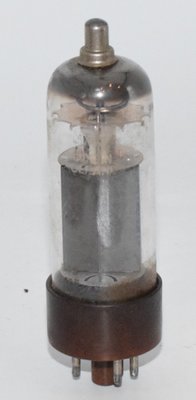
| Base Type | Octal (8-pin) |
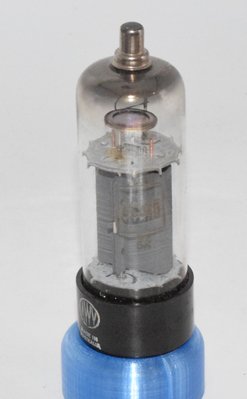
| Envelope | Glass, ST-type (tubular) |
| Maximum Dimensions | 33 mm diameter × 110 mm height (max), seated height 44.5 mm (per Siemens E236L) |
| Weight | Approximately 35 g (per Siemens E236L) |
| Mounting Position | Any (beliebig) |
Pin Configuration (Octal Base)
Viewed from the bottom of the socket (pin side):
- Pin 1: i.V. (internal connection / not used)
- Pin 2: Heater (f)
- Pin 3: i.V. (internal connection)
- Pin 4: Screen Grid (g2)
- Pin 5: Control Grid (g1)
- Pin 6: i.V. (internal connection)
- Pin 7: Heater (f)
- Pin 8: Cathode, connected to Suppressor Grid (k, g3)
- Top Cap (a): Anode (Plate)
Note: The anode connection is via a top cap, not through the octal base. This is characteristic of the tube's original television deflection application where high peak voltages required physical separation from the base pins.
Heater Ratings
| Parameter | Value |
|---|---|
| Heater Voltage (Vf) | 6.3 V |
| Heater Current (If) | 1.2 A (±0.08 A per Siemens E236L) |
| Heater Type | Indirectly heated, AC or DC |
| Heater Power | ~7.56 W |
Note: The Siemens E236L life guarantee requires that heater voltage not deviate more than ±5% from the nominal value.
Interelectrode Capacitances (per Siemens E236L)
| Parameter | Value |
|---|---|
| Input Capacitance (Ce) | 19 ± 1.5 pF |
| Output Capacitance (Ca) | 10 ± 1.0 pF |
| Grid-to-Plate Capacitance (Cag1) | < 1.1 pF |
Absolute Maximum Ratings
| Parameter | Maximum Value |
|---|---|
| Anode Voltage (Va max, DC) | 250 V (per verified reference); 400 V (per Siemens E236L Grenzdaten) |
| Anode Peak Voltage (Va peak) | 7,000 V |
| Negative Anode Peak Voltage | 1,500 V (per Siemens E236L) |
| Anode Voltage (no signal, Vao) | 650 V (per Siemens E236L) |
| Screen Grid Voltage (Vg2 max, DC) | 300 V (per Siemens E236L) |
| Screen Grid Peak Voltage (Vg2 peak) | 550 V (per verified reference); 650 V (per Siemens E236L no-signal) |
| Max Plate Dissipation (Pa max) | 12 W |
| Max Screen Grid Dissipation (Pg2 max) | 5 W (5.5 W per Siemens E236L) |
| Max Combined Dissipation (Pa+g2) | 16 W (per Siemens E236L) |
| Max Cathode Current (Ik max) | 200 mA (per verified reference); 220 mA (per Siemens E236L) |
| Max Cathode Peak Current (Iksp) | 1.2 A (per Siemens E236L) |
| Max Heater-Cathode Voltage (Vhk max) | 100 V (per verified reference); 250 V positive / 200 V negative (per Siemens E236L) |
| Max Grid Resistor (Rg1) | 0.5 MΩ (per Siemens E236L) |
| Max Bulb Temperature (tkolb) | 220°C (per Siemens E236L) |
| Max Pulse Duration (tav) | 10 ms (per Siemens E236L) |
| Max Negative Grid Peak Voltage (-Ug1sp) | 1 kV (per Siemens E236L) |
Note per verified reference data: Max Pa and Pg2 ratings are not available simultaneously — the combined dissipation limit of 16 W must be observed.
Characteristic Data — Pentode Operation
Measured at Va = 100 V, Vg2 = 100 V, Rk = 75 Ω (per Siemens E236L):
| Parameter | Min | Nominal | Max |
|---|---|---|---|
| Anode Current (Ia) | 85 mA | 100 mA | 118 mA |
| Screen Current (Ig2) | 4.0 mA | 5.3 mA | 6.5 mA |
| Transconductance (S / gm) | 11.5 mA/V | 14 mA/V | 16.5 mA/V |
| Screen-to-Grid Amplification Factor (μg2g1) | — | 5.6 | — |
| Plate Resistance (Ri) | — | 5 kΩ | — |
| Internal Resistance with Load (RiL) | — | 100 Ω | — |
| Anode Current at Vg1 = -35 V | — | 0.1 mA | — |
Characteristic Data — Triode Connection
With screen grid tied to anode, measured at Va = 100 V, Rk = 85 Ω (per Siemens E236L):
| Parameter | Value |
|---|---|
| Anode Current (Ia) | 100 mA |
| Transconductance (S / gm) | 14 mA/V |
| Amplification Factor (μ) | 5.2 |
| Plate Resistance (Ri) | 0.35 kΩ (350 Ω) |
| Internal Resistance with Load (RiL) | 360 Ω |
The remarkably low plate resistance of 350 Ω in triode mode is a standout characteristic of this tube, giving it excellent damping factor and load-driving capability.
Negative Grid Current
Per Siemens E236L: -Ig1 ≤ 1.0 μA (measured at characteristic data conditions).
End-of-Life Parameters (per Siemens E236L)
| Parameter | Value |
|---|---|
| Ia | ≤ 65 mA |
| S (gm) | ≤ 9.5 mA/V |
| -Ig1 | ≥ 2 μA |
Isolation Resistances (per Siemens E236L)
| Measurement | Condition | Value |
|---|---|---|
| Ris (anode/all other electrodes) | Uis = 300 V | > 100 MΩ |
| Ris (grid/all other electrodes) | Uis = 300 V | > 100 MΩ |
| Ris (heater-cathode) | Uis = 100 V | > 5 MΩ |
Applications and Usage
Original Television Application
The 6CM5 / EL36 was primarily designed as a horizontal (line) deflection output tube in television receivers. In this role, the tube operated with very high peak anode voltages (up to 7,000 V) at short duty cycles (maximum 22% of one period, not longer than 18 μs per pulse). The tube's ability to handle enormous peak currents (up to 1.2 A cathode peak current) while maintaining relatively modest average dissipation made it ideal for generating the sawtooth sweep waveforms needed to drive CRT deflection yokes. The high peak voltage rating also allowed it to serve in the EHT (Extra High Tension) generation circuits that provided the accelerating voltage for the CRT.
Push-Pull Audio Amplifier (Class B)
The Siemens E236L datasheet provides detailed operating data for a push-pull Class B audio amplifier configuration:
| Parameter | Value |
|---|---|
| Anode Voltage (Va) | 250 V |
| Screen Grid Voltage (Vg2) | 170 V |
| Control Grid Bias (-Vg1) | 34 V |
| Anode-to-Anode Load (Raa) | 3 kΩ |
| Screen Grid Resistor (Rg2) | 2 × 0.5 kΩ |
| Idle Anode Current (per tube) | 2 × 12 mA |
| Max Signal Anode Current (per tube) | 2 × 94 mA |
| Idle Screen Current (per tube) | 2 × 1 mA |
| Max Signal Screen Current (per tube) | 2 × 14 mA |
| Output Power (Na~) | 0 to 30 W |
| Distortion (k) | ~6% |
The verified reference data also provides a Class B operating point at higher voltages:
| Parameter | Value |
|---|---|
| Anode Voltage (Va) | 300 V |
| Screen Grid Voltage (Vg2) | 150 V |
| Control Grid Bias (-Vg1) | 29.0 V |
| Idle Anode Current | 36 mA |
| Max Signal Anode Current | 200 mA |
| Idle Screen Current | 1 mA |
| Max Signal Screen Current | 38 mA |
| Load Impedance (Zout) | 3,500 Ω |
| Output Power (Pout) | 44.5 W |
| THD | 7.2% |
Line Output Application
Per verified reference data, the standard line output operating point is:
| Parameter | Value |
|---|---|
| Anode Voltage (Va) | 100 V |
| Screen Grid Voltage (Vg2) | 100 V |
| Anode Current (Ia) | 100 mA |
| Screen Current (Ig2) | 7.0 mA |
Other Applications
Per the Siemens datasheet, the E236L / 6CM5 is also suitable for:
- Wideband and cathode follower amplifiers: The high transconductance and low plate resistance make it effective in broadband applications.
- Switching tube (Schaltröhre): The sharp cutoff characteristics and high peak current capability suit it for switching applications.
- Series pass tube (Längsröhre) in electronically regulated power supplies: The low plate resistance in triode mode and high current capability make it an excellent series regulator element.
Sound Characteristics
The 6CM5 / EL36 has developed a devoted following among DIY audio enthusiasts and budget-conscious audiophiles, largely because it offers remarkable performance at a fraction of the cost of more famous audio output tubes. Its sonic character is shaped by several key electrical properties:
Pentode Mode
In pentode or ultralinear configuration, the 6CM5 delivers a sound that is often described as bold, dynamic, and punchy. The high transconductance of 14 mA/V — comparable to or exceeding that of the EL34 — gives the tube excellent transient response and a lively, energetic presentation. Bass response is typically described as tight and well-controlled, with good slam and authority. The midrange carries a characteristic warmth without excessive coloration, while the treble can be slightly forward and detailed.
At higher power levels approaching the 12 W plate dissipation limit, the tube can exhibit a slightly gritty or aggressive edge that some listeners find exciting for rock and jazz, while others may find it less refined than premium audio pentodes like the EL34 or KT66. The relatively modest plate dissipation means the tube is working harder in high-power applications, and this can introduce a degree of compression and harmonic richness at signal peaks.
Triode Mode
When triode-connected (screen tied to anode), the 6CM5 truly shines sonically. The extraordinarily low plate resistance of just 350 Ω — far lower than most audio output tubes in triode mode — gives the tube exceptional damping factor and speaker control. The amplification factor of 5.2 in triode mode is modest, which contributes to a smooth, liquid, and highly linear sound character.
In triode mode, listeners consistently report:
- Exceptional bass control: The low Ri provides tight, well-defined bass that rivals or exceeds many directly heated triodes.
- Sweet, natural midrange: Vocals and acoustic instruments are rendered with a purity and directness that belies the tube's humble television origins.
- Smooth, non-fatiguing treble: The triode connection eliminates the slight edginess that can appear in pentode mode.
- Excellent imaging and soundstage: The low output impedance contributes to precise spatial presentation.
The trade-off in triode mode is reduced output power — typically 3-5 watts per tube in single-ended, or 8-15 watts in push-pull — but for many audiophiles using efficient speakers, this is more than adequate.
Overall Character
The 6CM5 is often compared favorably to the 6L6 and EL34 families, though it has its own distinct voice. It tends toward a more direct, immediate presentation with less of the "romantic" bloom associated with some classic audio tubes. The sound is honest and transparent, with good detail retrieval and a natural tonal balance. The tube's television heritage — designed for fast, linear operation — translates into excellent transient fidelity and dynamic contrast in audio applications.
Equivalent and Substitute Types
Direct / Identical Substitutes
| Type | Notes |
|---|---|
| EL36 | European designation for the same tube. Fully interchangeable with 6CM5. This is the Philips/Mullard designation. |
| CV2940 | Military (UK MOD) equivalent. Manufactured to military specifications with tighter quality control. Fully interchangeable. |
Related but NOT Direct Drop-In Substitutes
| Type | Notes |
|---|---|
| E236L | Siemens premium long-life version. Same basic tube design but manufactured to tighter tolerances with enhanced reliability specifications (>10,000 hour life, 1.5‰ failure rate per 1,000 hours). The E236L has slightly different maximum ratings in some parameters (e.g., Ik max = 220 mA vs. 200 mA for standard 6CM5). While physically and electrically very similar, the E236L is classified as a "different rating substitute" rather than a direct drop-in due to these specification differences. In practice, it can generally be used in place of a 6CM5 with appropriate consideration of the differing limits. |
Important: The 6CM5 should not be confused with the 6CM5 designation used in some other numbering systems. Always verify the actual tube type by checking the European equivalent (EL36) and the physical characteristics (octal base, top-cap anode).
Notable Characteristics
Exceptional Peak Voltage Rating
The 7,000 V peak anode voltage rating is extraordinary for a tube of this size and cost. This rating, while primarily relevant to its television deflection application, speaks to the robust construction and generous spacing within the tube's electrode structure.
Very High Transconductance
At 14 mA/V nominal (with a range of 11.5 to 16.5 mA/V), the 6CM5 offers transconductance that rivals or exceeds many dedicated audio output pentodes. This high gm translates to excellent gain and sensitivity, requiring relatively little drive voltage for full output.
Remarkably Low Triode-Mode Plate Resistance
The 350 Ω plate resistance in triode connection is one of the lowest among common output pentodes operated in triode mode. For comparison, an EL34 in triode mode typically shows around 1 kΩ or more. This gives the 6CM5 exceptional output transformer coupling and speaker damping characteristics.
Top-Cap Anode Connection
The top-cap anode connection, while adding slight complexity to amplifier construction, provides excellent isolation between the high-voltage anode circuit and the lower-voltage grid and cathode circuits at the base. This can contribute to lower noise and better stability in audio applications.
Robust Construction
Designed for the demanding environment of television receivers (which were subject to frequent on/off cycling, heat, and vibration), the 6CM5 features a rugged mechanical structure. The Siemens E236L variant specifically highlights high shock and vibration resistance ("Hohe Stoß- und Erschütterungsfestigkeit") as a quality feature.
Screen Grid Considerations
The datasheet notes that bypassing the screen grid dropping resistors leads to screen grid overload and is therefore impermissible ("Verblockung der Vorwiderstände führt zur Überlastung des Schirmgitters und ist deshalb unzulässig"). In audio applications, proper screen grid supply design is critical — a series dropping resistor must be used, and it should not be fully bypassed. For horizontal deflection circuits, the screen grid resistor should not be less than 2.2 kΩ to avoid Barkhausen oscillations.
Dissipation Constraints
The maximum plate dissipation of 12 W and maximum combined plate plus screen dissipation of 16 W mean that the 6CM5 is best suited for moderate power applications. In push-pull configurations, a pair can deliver up to 30-44.5 W depending on operating conditions, but single-ended applications are limited to modest power levels. Careful bias setting is essential to stay within the safe operating area.
Usage in the Audio Community
The Budget Audiophile's Secret Weapon
The 6CM5 / EL36 has earned a reputation in the DIY audio community as one of the best-kept secrets in affordable tube audio. Because millions were manufactured for television use and the tube has no "audiophile cachet" comparable to types like the EL34, KT88, or 300B, NOS (New Old Stock) examples remain readily available at very modest prices. Brands commonly found on the market include Philips Miniwatt (Australian and Dutch production), Mullard (Blackburn factory), AWV/Super Radiotron (Australia), Haltron (UK), and Philips Japan.
Common Audio Circuit Configurations
Push-Pull Pentode/Ultralinear: The most common audio application, typically delivering 15-30 watts per pair in Class AB1. The Siemens datasheet's Class B operating data (250 V anode, 170 V screen, 3 kΩ plate-to-plate, 30 W output) provides an excellent starting point for push-pull designs. Many builders use slightly lower voltages and Class AB1 bias for improved linearity and reduced distortion compared to the 6-7% THD figures in the datasheet's Class B data.
Push-Pull Triode: With screen grids tied to anodes, a push-pull pair can deliver approximately 8-15 watts of exceptionally clean, low-distortion power. The 350 Ω plate resistance in triode mode means that relatively low primary impedance output transformers can be used effectively, and the damping factor is excellent.
Single-Ended Triode: While limited to perhaps 2-4 watts, single-ended triode operation of the 6CM5 produces a remarkably refined sound. The low plate resistance provides better speaker control than many dedicated SE triode tubes, and the sound quality can be surprisingly competitive with far more expensive directly heated triodes when paired with efficient speakers.
Cathode Follower / Buffer: The high transconductance and low plate resistance make the 6CM5 an excellent cathode follower for driving headphones or serving as a buffer stage. Output impedance in cathode follower configuration can be extremely low.
Practical Considerations for Audio Builders
- Top-cap connection: Builders must accommodate the top-cap anode connection, which requires appropriate high-voltage wiring and a top-cap connector. This adds slight complexity but improves layout flexibility.
- Heater current: At 1.2 A per tube, the heater demand is moderate. A pair requires 2.4 A at 6.3 V, well within the capability of standard power transformers.
- Bias requirements: The tube requires relatively modest bias voltages. In the push-pull Class B configuration, -29 to -34 V of grid bias is typical. Fixed bias is recommended for best performance, though cathode bias is certainly workable.
- Output transformer selection: For push-pull pentode operation, a 3-3.5 kΩ plate-to-plate primary impedance is appropriate. For triode operation, lower impedances (1.5-2.5 kΩ) may be optimal.
- Screen grid supply: Always use a series dropping resistor for the screen grid supply. Values of 0.5-4.7 kΩ are typical depending on the supply voltage and desired operating point. The extensive Siemens characteristic curves (K6 through K18) provide data for screen resistor values of 2.2 kΩ, 2.7 kΩ, 3.3 kΩ, and 4.7 kΩ at various supply voltages, giving builders excellent design flexibility.
- Tube matching: For push-pull applications, matched pairs are recommended. NOS matched pairs from Philips and other manufacturers are available from specialty tube dealers.
Community Reception
The 6CM5 has developed an enthusiastic following particularly in Australia and New Zealand, where the tube was extremely common in locally manufactured television sets and remains abundantly available as NOS stock. Australian DIY audio forums and publications have featured numerous 6CM5-based amplifier designs over the years. The tube is also gaining recognition in European and North American audio communities as builders discover its excellent price-to-performance ratio.
Experienced builders often note that the 6CM5 in triode mode can rival the sonic performance of tubes costing five to ten times as much, making it an ideal choice for first-time tube amplifier builders and budget-conscious audiophiles who want to experience high-quality tube sound without the premium pricing associated with "audiophile-approved" tube types.