1. Introduction and History
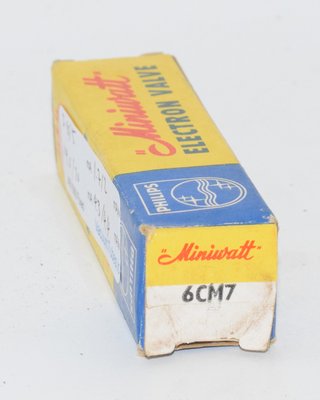
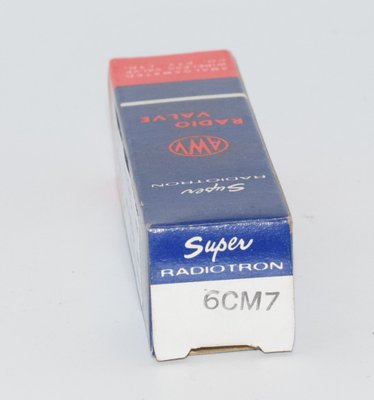
The 6CM7 is a dual-triode vacuum tube that emerged during the mid-20th century as a versatile component in both consumer and professional audio equipment. Manufactured by various tube makers including RCA (under their Radiotron brand) and other prominent manufacturers, the 6CM7 represents a significant development in triode technology, offering improved performance characteristics over earlier designs.
The tube was developed to meet the demands of audio amplification circuits requiring moderate power handling with excellent linearity. The 6CM7 gained particular prominence in the 1950s and 1960s, becoming a staple in guitar amplifiers, hi-fi equipment, and professional audio applications. The Radiotron AWV variant mentioned in historical records represents a premium version of this tube, manufactured to exacting standards for critical applications.
While the 6CM7 never achieved the ubiquity of tubes like the 12AX7 or EL84, it developed a dedicated following among audio engineers and enthusiasts who appreciated its specific sonic and electrical characteristics.
2. Technical Specifications and Design
Basic Parameters
- Tube Type: Dual Triode
- Base Type: Noval (9-pin)
- Heater Voltage: 6.3V AC or DC
- Heater Current: 0.45A per triode (approximately 0.9A total)
- Maximum Plate Voltage: 330V
- Maximum Plate Dissipation: 2.5W per triode
- Amplification Factor (μ): Approximately 17-20
- Plate Resistance (rp): Approximately 7,700 ohms per triode
- Transconductance (gm): Approximately 2.2 mA/V per triode
Structural Design
The 6CM7 features a dual-triode configuration housed in a standard noval glass envelope with nine pins. Each triode section is independently functional, allowing for flexible circuit configurations including phase-splitting, push-pull amplification, or independent amplification stages.
The tube's construction emphasizes thermal stability and low microphonics through careful electrode geometry. The heater design provides even heating across both triode sections, minimizing hum and drift. The moderate plate dissipation rating (2.5W per triode) positions it between low-power signal tubes and higher-power output tubes, making it suitable for intermediate amplification stages or modest power output applications.
Electrical Characteristics
The 6CM7 demonstrates relatively linear amplification characteristics with a moderate amplification factor. This combination makes it particularly suitable for applications requiring good linearity without excessive gain. The plate resistance of approximately 7,700 ohms provides good impedance matching with typical audio transformer primary impedances.
The tube exhibits stable operation across a wide range of bias points, though optimal performance typically occurs at bias levels between -2V and -4V grid bias. The relatively low plate resistance compared to high-mu triodes results in lower output impedance, beneficial for driving subsequent stages or output transformers.
3. Applications and Usage
Historical Applications
The 6CM7 found widespread use in several key applications during its heyday:
- Guitar Amplifiers: Particularly in phase-splitter and driver stages of tube guitar amps, where its moderate gain and good linearity proved ideal
- Hi-Fi Amplifiers: In both preamplifier and power amplifier stages of high-fidelity audio equipment
- Professional Audio: In mixing consoles, microphone preamplifiers, and mastering equipment
- Radio Receivers: As intermediate frequency (IF) and audio amplification stages
- Test Equipment: In oscilloscope amplifiers and other laboratory instruments
Modern Audio Applications
Contemporary use of the 6CM7 remains primarily concentrated in the vintage audio and guitar amplifier restoration communities. Audiophiles and tube amp enthusiasts continue to seek 6CM7s for several reasons:
- Vintage Amplifier Restoration: Replacing worn original tubes in classic guitar amps and hi-fi equipment
- Custom Amplifier Design: Boutique amplifier manufacturers incorporate 6CM7s in specialized designs targeting specific sonic characteristics
- Tube Rolling: Audio enthusiasts experiment with different 6CM7 variants to achieve tonal variations in their equipment
- Collectors and Archivists: Enthusiasts maintaining and operating vintage audio equipment value original or period-correct tube complements
4. Sound Characteristics of the 6CM7
Tonal Profile
The 6CM7 is widely regarded in the audio community for producing a warm, musical sound with excellent midrange presence. The tube's moderate amplification factor and plate resistance contribute to a naturally smooth response that many listeners describe as refined and engaging.
Users frequently characterize the 6CM7 as having:
- Warm Midrange: A slightly emphasized middle frequency region that brings vocal and instrumental detail forward without harshness
- Natural Compression: Subtle dynamic compression that enhances sustain and presence without obvious pumping
- Smooth Treble: Extended high-frequency response that remains musical rather than analytical or fatiguing
- Solid Bass: Good low-frequency definition with moderate punch and authority
Harmonic Characteristics
The 6CM7 produces predominantly even-order harmonics, particularly second and fourth harmonics, which are generally perceived as musically pleasant and transparent. This harmonic signature contributes to the tube's reputation for adding subtle color to audio signals while maintaining clarity and detail.
The distortion characteristics remain low at typical operating levels, with graceful degradation when driven harder—an important consideration for guitar amplifier applications where controlled overdrive is desirable.
Noise and Microphonics
Well-manufactured 6CM7s (such as the Radiotron AWV variant) exhibit low noise floors and minimal microphonic tendencies. This makes them suitable for sensitive preamplification stages where noise performance is critical. The tube's heater design minimizes AC hum, an important consideration in audio applications.
Frequency Response
The 6CM7 demonstrates excellent frequency response characteristics across the audible spectrum. Properly configured in appropriate circuits, the tube can deliver essentially flat response from below 20Hz to well beyond 20kHz, with the specific response shaped primarily by circuit design rather than tube limitations.
5. Use in the Audio Community
Tube Rolling and Experimentation
The 6CM7 occupies an interesting niche in the tube-rolling community. While less universally applicable than the 12AX7, those equipment owners who have 6CM7s in their systems often report significant sonic changes when experimenting with different manufacturers and production eras.
Enthusiasts have noted that:
- RCA Radiotron versions (particularly the AWV variant) are highly sought for their consistent performance and musical character
- European manufacturers' 6CM7s often exhibit slightly different sonic signatures, with some preferring the slightly more aggressive character of certain brands
- NOS (New Old Stock) 6CM7s command premium prices in the collector market, reflecting their desirability among discerning listeners
- The tube's relatively low availability compared to common types makes experimentation more deliberate and intentional
Guitar Amplifier Community
Among guitar amplifier enthusiasts, the 6CM7 maintains a strong reputation for phase-splitter and driver stage applications. The tube's ability to deliver good gain with musical distortion characteristics makes it particularly valued in vintage amplifier designs.
Custom amplifier builders often specify 6CM7s for:
- Phase-splitter stages in push-pull amplifier designs
- Driver stages feeding output tubes
- Preamp stages in high-gain designs where musicality is prioritized
- Tone-shaping circuits where the tube's harmonic characteristics contribute to the overall sound
Hi-Fi and Audiophile Applications
In the high-fidelity community, 6CM7s appear most frequently in:
- Vintage integrated amplifiers and preamplifiers from the 1950s-1970s
- Custom tube preamplifiers designed by boutique manufacturers
- Restoration and optimization projects where original tube complements are maintained or improved
- Experimental designs exploring minimalist tube amplifier topologies
Audiophile forums frequently discuss the 6CM7's contribution to overall system sound, with users reporting that careful selection of quality examples can meaningfully improve system performance in the applications where they're used.
Availability and Market Dynamics
The 6CM7 remains moderately available in the used and NOS markets, though less common than universal types like the 12AX7 or EL84. This relative scarcity has contributed to price appreciation, with quality examples commanding respect in the collector market.
The Radiotron AWV variant specifically is highly sought, representing a premium manufacturing standard that appeals to both vintage equipment restorers and high-end audio enthusiasts willing to invest in optimal tube quality.
6. Equivalent or Substitute Types
Direct Equivalents
- 6N6P (Soviet equivalent): Similar specifications and characteristics, though with slightly different electrical parameters
- ECM7 (European designation): Essentially equivalent to the 6CM7 with same specifications
- 6CG7: Similar triode with slightly higher plate resistance and amplification factor; can substitute in many applications
Functional Alternatives
- 12CM7: 12.6V heater version with identical triode characteristics; requires heater wiring modifications
- 6N6P-DR (Soviet): Ruggedized version with enhanced reliability; slightly different sonic character
- ECC83/12AX7: Higher gain alternative for preamp applications; different sonic characteristics
Substitution Considerations
While some tubes can functionally substitute for the 6CM7, the specific electrical and sonic characteristics of the original tube are often important to the overall performance of equipment designed around it. Direct substitution should be approached with caution, particularly in critical applications, with attention to:
- Plate voltage and dissipation ratings
- Heater current requirements
- Gain characteristics and their effect on circuit operation
- Sonic implications of different tube types
Conclusion
The 6CM7 represents an important chapter in vacuum tube history, delivering a combination of technical capability and sonic character that continues to appeal to audio enthusiasts and professionals more than six decades after its introduction. Whether in vintage equipment restoration, custom amplifier design, or experimental audio applications, the 6CM7 maintains relevance through its proven performance and distinctive tonal characteristics.
The Radiotron AWV variant exemplifies the manufacturing quality that made these tubes respected in professional and consumer applications alike. For those seeking to understand, restore, or optimize vintage audio equipment, or for enthusiasts exploring tube rolling possibilities, the 6CM7 deserves consideration as a tube offering genuine sonic and technical merit.