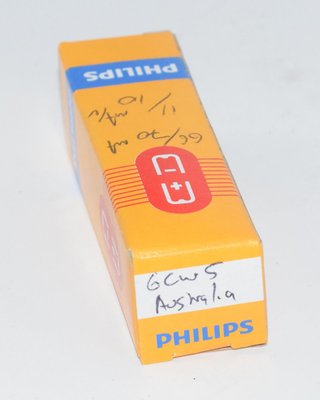
Introduction and History
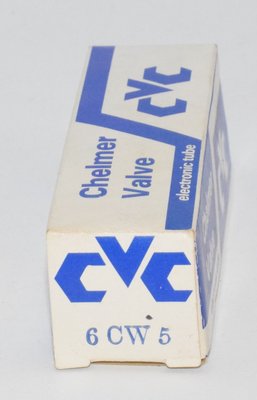
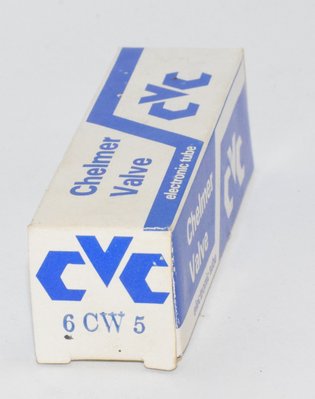
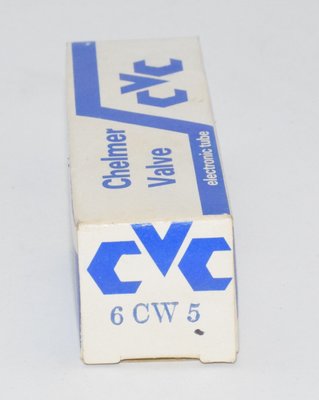
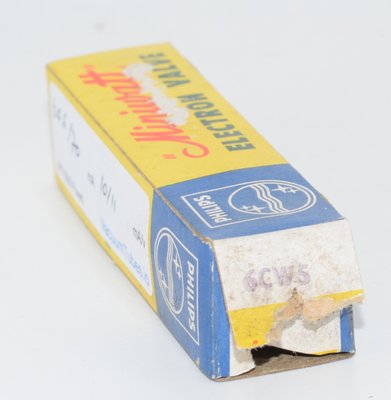
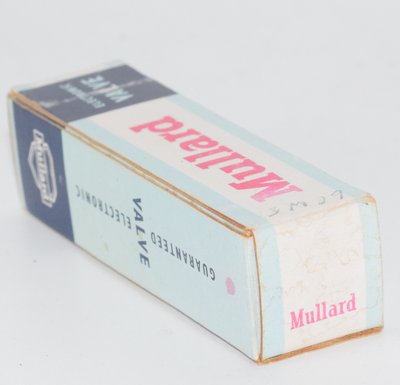
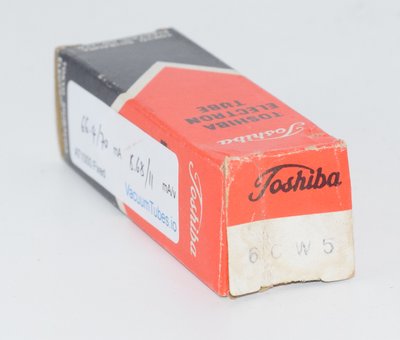
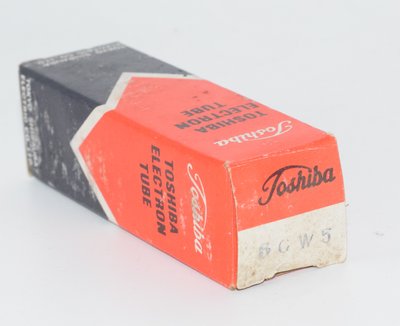
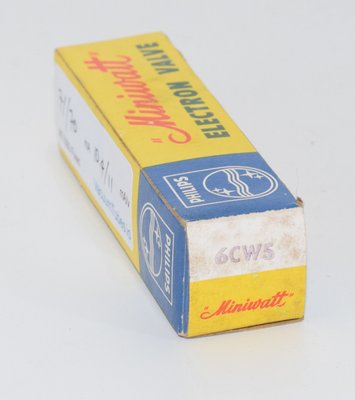
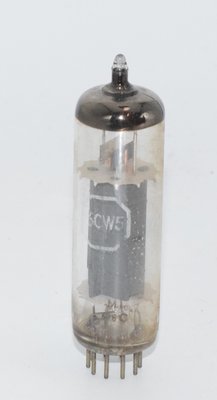
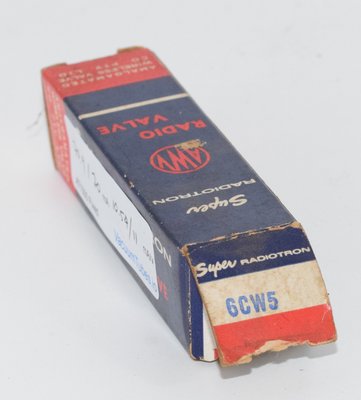
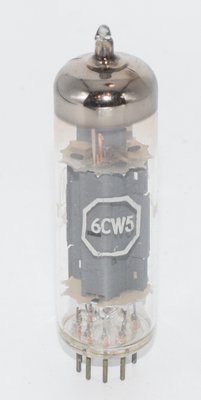
The 6CW5, known in European nomenclature as the EL86, is a miniature power pentode originally developed for vertical-deflection amplifier service in both color and black-and-white television receivers. Manufactured by major valve producers including Philips, Mullard, Toshiba, AWV (Super Radiotron) Australia, and Chelmer Valve, the 6CW5/EL86 emerged during the 1950s as part of the broad family of noval-based power pentodes designed for the expanding television market.
The tube was designed to deliver substantial output power from relatively modest supply voltages, making it well-suited to the vertical output stages of television sets where high peak currents and significant plate dissipation were required during the scanning cycle. Its European designation, EL86, follows the Mullard-Philips naming convention where "E" denotes a 6.3V heater, "L" indicates a power pentode for audio or deflection use, and "86" places it in the noval 9-pin miniature series.
While the 6CW5/EL86 was conceived as a television component, its robust construction, high transconductance, and favorable operating characteristics have earned it a dedicated following in the audio community, where it serves as an affordable and capable output tube in single-ended and push-pull amplifier designs.
Related types with different heater ratings include the 8CW5/XL86 (8V heater), 10CW5/LL86 (10.6V heater), and 15CW5/PL84 (15V heater). All are identical to the 6CW5/EL86 except for heater voltage and current specifications.
Technical Specifications and Design
Heater / Filament
| Parameter | 6CW5/EL86 | 8CW5/XL86 | 10CW5/LL86 | 15CW5/PL84 |
|---|---|---|---|---|
| Heater Voltage (ac/dc) | 6.3 V | 8 V | 10.6 V | 15 V |
| Heater Current | 0.76 A | 0.6 A | 0.45 A | 0.3 A |
| Heater Warm-up Time | — | — | 11 seconds | — |
Heater-Cathode Voltage
- Peak value: ±330 max volts
- Average value: ±220 max volts
Direct Interelectrode Capacitances
- Grid No.1 to Plate: 0.6 pF
- Grid No.1 to Heater: 0.25 max pF
- Grid No.1 to Cathode, Heater, Grid No.2, and Grid No.3: 13 pF
- Plate to Cathode, Heater, Grid No.2, and Grid No.3: 6.8 pF
Maximum Ratings — Class A₁ or Class AB₁ Amplifier (Design-Maximum Values)
| Parameter | Value | Unit |
|---|---|---|
| Plate Voltage | 275 | volts |
| Plate Supply Voltage | 600 | volts |
| Grid No.2 Voltage | 220 | volts |
| Grid No.2 (Screen-Grid) Supply Voltage | 600 | volts |
| Cathode Current | 110 | mA |
| Plate Dissipation | 14 | watts |
| Grid No.2 Input | 2.1 | watts |
| Peak Grid No.2 Input | 7 | watts |
Typical Operating Characteristics — Class A₁ or AB₁ Amplifier
| Parameter | Value | Unit |
|---|---|---|
| Plate Voltage | 170 | volts |
| Grid No.2 Voltage | 170 | volts |
| Grid No.1 (Control-Grid) Voltage | −12.5 | volts |
| Mu Factor (Grid No.2 to Grid No.1) | 8 | — |
| Plate Resistance (Approx.) | 26,000 | ohms |
| Transconductance | 11,000 (11.0 mA/V) | µmhos |
| Plate Current | 70 | mA |
| Grid No.2 Current | 3.5 | mA |
Application Data — Single-Ended Class A
| Parameter | Value | Unit |
|---|---|---|
| Plate Voltage (Va) | 170 | volts |
| Screen Voltage (Vg2) | 170 | volts |
| Grid No.1 Voltage (Vg1) | −12.5 | volts |
| Plate Current (Ia) | 70.0 | mA |
| Screen Current (Ig2) | 3.5 | mA |
| Load Impedance (Ra) | 2,400 | ohms |
| Power Output | 5.6 | watts |
| Total Harmonic Distortion | 10 | % |
Maximum Ratings — Vertical-Deflection Amplifier (525-line, 30-frame system)
| Parameter | Value | Unit |
|---|---|---|
| Plate Voltage | 275 | volts |
| Peak Positive-Pulse Plate Voltage | 2200 | volts |
| Grid No.2 Voltage | 275 | volts |
| Peak Negative-Pulse Grid No.1 Voltage | 250 | volts |
| Peak Cathode Current | 240 | mA |
| Average Cathode Current | 110 | mA |
| Plate Dissipation | 12 | watts |
| Grid No.2 Input | 2.1 | watts |
Maximum Circuit Values
- Grid No.1-Circuit Resistance: 1 megohm (Class A₁ amplifier); 2.2 megohms (vertical-deflection amplifier)
Note: Pulse duration must not exceed 6% of a vertical scanning cycle (1.2 milliseconds).
Physical Construction
- Base Type: Noval (B9A) — 9-pin miniature
- Envelope / Outline: Section 6G (miniature glass envelope)
- Socket: Miniature 9-contact socket required
- Mounting: Vertical or horizontal
Pin Configuration (9CV Base)
| Pin | Connection |
|---|---|
| 1 | Internal Connection (IC) |
| 2 | Grid No.1 (Control Grid, G1) |
| 3 | Cathode (K) / Grid No.3 (Suppressor Grid) |
| 4 | Heater (H) |
| 5 | Heater (H) |
| 6 | Internal Connection (IC) |
| 7 | Plate (P, Anode) |
| 8 | Internal Connection (IC) |
| 9 | Grid No.2 (Screen Grid, G2) |
Important Note: Pins 1, 6, and 8 are internal connections and must not be connected to external circuitry. The suppressor grid (Grid No.3) is internally connected to the cathode at pin 3.
Applications and Usage
Original Television Applications
The 6CW5/EL86 was primarily designed for use as a vertical-deflection amplifier in television receivers. In this role, the tube drives the vertical deflection yoke, generating the sawtooth current waveform necessary to scan the electron beam vertically across the CRT face. The tube's ability to handle high peak plate voltages (up to 2200V) and peak cathode currents (240 mA) made it ideally suited for this demanding application.
In the vertical deflection circuit, the 6CW5 operates under conditions quite different from conventional audio amplification. The tube must handle large signal swings with significant reactive loads, and the plate dissipation rating is derated to 12 watts in this service to account for the non-linear operating conditions.
Audio Amplifier Applications
Despite its television origins, the 6CW5/EL86 has found significant application in audio amplifier circuits:
- Single-Ended (SE) Amplifiers: At the standard operating point of 170V plate and screen voltage with −12.5V grid bias, the 6CW5 delivers 5.6 watts of output power into a 2,400-ohm load impedance in single-ended Class A operation. This power level is well-suited for driving efficient loudspeakers in domestic listening environments.
- Push-Pull Amplifiers: In Class AB₁ push-pull configuration, a pair of 6CW5s can deliver approximately 10–15 watts of output power with significantly reduced distortion compared to single-ended operation.
- Low-Voltage Amplifiers: The 6CW5's ability to operate effectively at relatively low plate voltages (170V) makes it attractive for compact amplifier designs where high-voltage power supplies may be impractical or undesirable.
Design Considerations
The 6CW5 draws a substantial heater current of 0.76A, which must be factored into power supply design. The relatively high transconductance of 11,000 µmhos (11.0 mA/V) means the tube is quite sensitive to grid voltage changes, requiring only modest drive levels to achieve full output. The plate resistance of 26,000 ohms is moderate for a power pentode, contributing to reasonable damping factor when used with appropriate output transformers.
The maximum plate dissipation of 14 watts in amplifier service provides a comfortable margin above the typical operating point, where the tube dissipates approximately 12 watts (170V × 70mA). Designers should ensure adequate ventilation, particularly in enclosed chassis designs.
Sound Characteristics
The 6CW5/EL86 has developed a reputation among audiophiles and tube amplifier enthusiasts for a distinctive sonic signature that sets it apart from more commonly used output pentodes:
Tonal Character
The 6CW5/EL86 is frequently described as having a warm, rich midrange with a slightly forward presentation that brings vocals and acoustic instruments to life. The tube's high transconductance contributes to a sense of immediacy and dynamic responsiveness that listeners find engaging, particularly at lower listening levels where the tube operates well within its linear region.
Bass Response
In single-ended configurations, the 6CW5 produces bass that is characteristically full and rounded rather than tightly controlled. The moderate plate resistance of 26,000 ohms means that the damping factor is largely determined by the output transformer and feedback network. With well-designed transformers, the bass can be surprisingly articulate for a tube of this class. Some builders report that the 6CW5 delivers a more authoritative low end than the EL84/6BQ5 at similar power levels, likely owing to its higher plate current capability.
Treble and Air
The high-frequency performance of the 6CW5 is generally described as smooth and extended without harshness. The tube does not exhibit the sometimes aggressive or "spitty" treble that can characterize some pentodes driven hard. In triode-strapped operation, the top end becomes even more refined, though at the cost of reduced output power.
Distortion Character
At the rated operating point, the 6CW5 produces 10% THD at full output (5.6W) in single-ended Class A. The distortion spectrum is predominantly second-harmonic in single-ended operation, which listeners perceive as a pleasant warmth or fullness. At moderate listening levels (1–3 watts), distortion drops considerably, and the tube operates in a highly linear region. In push-pull configurations, the even-order harmonics cancel, yielding a cleaner, more neutral presentation.
Dynamics and Transient Response
The 6CW5's high transconductance and relatively low plate resistance (for a pentode) contribute to excellent transient response and micro-dynamic detail. The tube tracks signal changes quickly, lending a sense of liveliness and presence to the sound. This characteristic makes it particularly well-suited for jazz, vocal, and chamber music reproduction where subtle dynamic shadings are important.
Pentode vs. Triode-Strapped Operation
Many audio builders experiment with triode-strapping the 6CW5 (connecting the screen grid to the plate through a suitable resistor). In triode mode, the tube offers lower output power (typically 2–3 watts) but with significantly reduced distortion and a lower output impedance. The sonic character in triode mode is described as more refined and "tube-like," with a sweeter top end and more controlled bass, though with less dynamic punch than pentode operation.
Comparison to Similar Tubes
Compared to the ubiquitous EL84/6BQ5, the 6CW5/EL86 is often described as having a bigger, more robust sound with greater authority in the bass and a slightly warmer tonal balance. Where the EL84 can sound tight and punchy, the EL86 tends toward a more expansive, relaxed presentation. Compared to the EL34 or 6L6, the 6CW5 naturally lacks the sheer power and headroom of these larger tubes, but within its power envelope, it offers a compelling and musically satisfying performance.
Equivalent or Substitute Types
| Type | Equivalence | Notes |
|---|---|---|
| EL86 | Direct equivalent | European designation for the same tube. Fully interchangeable with 6CW5 in all respects. |
| CV5094 | Direct equivalent | British military (CV) designation. Identical specifications; may be built to tighter tolerances for military use. |
| 8CW5 / XL86 | Identical except heater | 8V heater at 0.6A. NOT directly interchangeable without heater circuit modification. |
| 10CW5 / LL86 | Identical except heater | 10.6V heater at 0.45A. NOT directly interchangeable without heater circuit modification. |
| 15CW5 / PL84 | Identical except heater | 15V heater at 0.3A. Designed for series-string heater chains in AC/DC television sets. NOT directly interchangeable. |
Important: Only the EL86 and CV5094 are true drop-in replacements for the 6CW5. The 8CW5, 10CW5, and 15CW5 variants require heater supply modifications and should not be substituted without appropriate circuit changes. All variants share identical electrode structures and electrical characteristics apart from heater ratings.
Notable Characteristics
- High Transconductance: At 11,000 µmhos (11.0 mA/V), the 6CW5 has exceptionally high transconductance for a power pentode of its class, meaning it requires very little grid drive voltage to produce full output. This simplifies driver stage requirements and can allow direct coupling from medium-mu triodes.
- Low Operating Voltage: The standard operating point of only 170V on both plate and screen makes the 6CW5 one of the lowest-voltage power pentodes capable of delivering meaningful audio output power. This characteristic makes it attractive for safety-conscious designs and for use with readily available, lower-cost power transformers.
- High Plate Dissipation: The 14-watt plate dissipation rating is generous for a noval-based miniature tube, exceeding that of the EL84 (12W) and approaching medium-power octal types.
- Internal Connections on Pins 1, 6, and 8: These pins are used for internal connections within the tube structure and must not be connected to external circuitry. This is an important consideration when designing PCB layouts or wiring socket connections.
- High Peak Voltage Capability: The 2200V peak positive-pulse plate voltage rating (in vertical deflection service) demonstrates the robust construction of the tube's plate structure, providing excellent reliability margins in audio applications where peak voltages are far lower.
- Generous Grid-Circuit Resistance: The 1 megohm maximum grid-circuit resistance in Class A₁ amplifier service allows the use of high-value grid resistors, simplifying coupling and bias network design.
- Heater-Cathode Voltage Rating: The ±330V peak and ±220V average heater-cathode voltage ratings provide excellent margins for circuits where the cathode may be elevated significantly above ground potential.
- Suppressor Grid Internally Connected: Grid No.3 (suppressor) is internally tied to the cathode, which simplifies socket wiring but prevents the use of the suppressor grid for modulation or gating purposes.
Usage in the Audio Community
The 6CW5/EL86 occupies an interesting niche in the world of tube audio. While it never achieved the mainstream popularity of the EL84, EL34, or 6L6 in commercial audio equipment, it has developed a loyal following among DIY amplifier builders and boutique amplifier manufacturers for several compelling reasons:
DIY and Hobbyist Amplifier Projects
The 6CW5/EL86 is a favorite among DIY tube amplifier builders, particularly those constructing their first projects. The low operating voltage of 170V significantly reduces the hazard level compared to amplifiers using 300–500V supplies, while still delivering a musically useful 5.6 watts in single-ended Class A. Numerous published designs and online resources document successful 6CW5-based amplifier projects, ranging from simple single-ended designs to more elaborate push-pull configurations.
The tube's high transconductance means that a single 12AX7 or 12AU7 dual triode can serve as both the input voltage amplifier and phase splitter in a push-pull design, keeping the total tube count and parts cost low.
Availability and Cost
Because the 6CW5/EL86 was produced in enormous quantities for the television industry by manufacturers worldwide — including Philips, Mullard, Toshiba, AWV/Super Radiotron (Australia), and Chelmer Valve — NOS (New Old Stock) examples remain relatively plentiful and affordable compared to more sought-after audio tubes. This makes the 6CW5 an economical choice for experimenters and for those who want to enjoy tube sound without the premium pricing associated with tubes like the EL34 or KT88.
Boutique and Custom Amplifiers
Several boutique amplifier manufacturers have recognized the 6CW5/EL86's potential and have incorporated it into commercial designs. These amplifiers typically target the desktop audio, bedroom hi-fi, and high-efficiency speaker markets where 5–15 watts of output power is more than sufficient. The tube's warm, engaging sound character and the "discovery factor" of using a lesser-known tube type add to the appeal of these products.
Pairing with High-Efficiency Speakers
The 6CW5/EL86 is particularly well-matched with high-efficiency loudspeakers (95 dB/W/m and above), including single-driver designs, horn-loaded systems, and open-baffle configurations. With such speakers, the 5.6-watt single-ended output provides ample volume for typical domestic listening rooms, and the tube's dynamic qualities and tonal richness are showcased to their best advantage.
Guitar Amplifier Applications
Some guitar amplifier builders have experimented with the 6CW5/EL86 as an output tube in low-wattage practice and recording amplifiers. The tube's warm overdrive characteristics and the ease with which it can be driven into saturation (due to its high transconductance and low bias voltage) make it suitable for achieving natural tube distortion at manageable volume levels. The 5–6 watt output range is ideal for studio recording and small venue performance.
Manufacturer Variations
Among collectors and audiophiles, certain manufacturer variants of the 6CW5/EL86 are preferred for their sonic qualities:
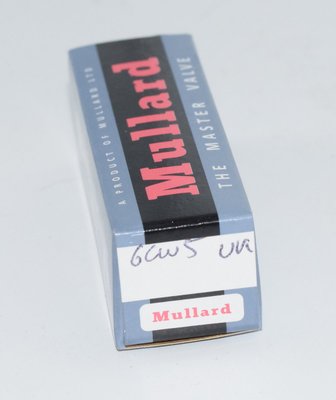
- Mullard (UK): Highly regarded for warm, musical sound with excellent build quality. Mullard-made examples are among the most sought-after.
- Philips/Miniwatt: Consistent quality with a balanced tonal presentation. Philips Miniwatt branded tubes from various factories (including Australian production) are well-respected.
- AWV Super Radiotron (Australia): Australian-made examples, often produced in the Philips/Mullard tradition, are considered excellent quality and sometimes appear in Philips-branded boxes.
- Toshiba (Japan): Japanese production examples are noted for clean construction and reliable performance.
- Chelmer Valve: UK-based Chelmer Valve supplied tested and selected tubes, often sourced from major European manufacturers, providing a quality-assured option.
Circuit Design Tips from the Community
Experienced builders in the audio community offer several practical recommendations for getting the best performance from the 6CW5/EL86:
- Use a well-designed output transformer with a primary impedance of approximately 2,400 ohms for single-ended operation, as specified in the datasheet.
- The low bias voltage of −12.5V makes cathode bias straightforward — a cathode resistor of approximately 180 ohms (bypassed with a quality electrolytic capacitor) will establish the correct operating point at 170V plate voltage.
- For triode-strapped operation, connect the screen grid to the plate through a 100–470 ohm resistor to limit screen current during transients.
- Pay attention to the internal connection pins (1, 6, and 8) — ensure these are not inadvertently connected to ground or other circuit nodes.
- Despite the 14W maximum plate dissipation rating, operating the tube conservatively at 10–12W will extend tube life significantly.