1. Introduction and History
The 6CZ5 is a medium-power vacuum tube that represents an important chapter in the evolution of audio amplification and general-purpose tube electronics. Developed during the post-World War II era when vacuum tube technology was at its zenith, the 6CZ5 emerged as a versatile pentode tube designed to meet the growing demands of consumer electronics, particularly in radio receivers and audio amplification applications.
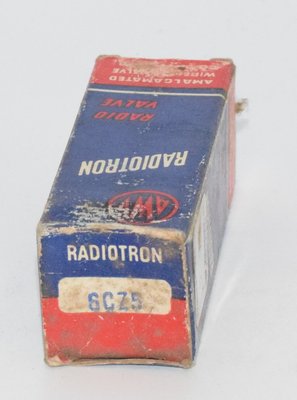
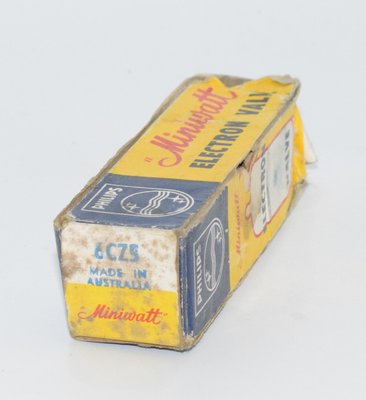
The tube was manufactured by several prominent European and Australian manufacturers, including Philips (under the Miniwatt brand), Radiotron, and other regional producers. The 6CZ5 gained particular popularity in European markets and Australian electronics, where it found extensive use in medium-power amplifiers and radio receivers throughout the 1950s and 1960s. The tube's designation follows the RCA numbering system, where the "6" indicates a 6.3-volt heater supply, and "CZ5" describes its functional classification as a power pentode.
Today, the 6CZ5 remains sought after by vintage audio enthusiasts, tube amplifier restorers, and audio engineers who appreciate its unique sonic qualities and reliable performance characteristics. Original NOS (New Old Stock) examples from manufacturers like Philips Miniwatt and Radiotron command respect in the vintage tube market due to their superior construction and tonal properties.
2. Technical Specifications and Design
Functional Classification and Basic Parameters
The 6CZ5 is classified as a medium-power pentode tube, featuring five active elements within its glass envelope: a cathode, control grid, screen grid, suppressor grid, and anode (plate). This five-element configuration distinguishes it from simpler triodes and tetrodes, allowing for superior linearity and reduced distortion characteristics.
Heater and Power Supply Specifications
- Heater Voltage: 6.3 volts AC or DC
- Heater Current: Approximately 0.45 amperes
- Maximum Plate Voltage: 550 volts
- Maximum Screen Grid Voltage: 330 volts
- Maximum Plate Dissipation: 13 watts
Amplification and Output Characteristics
- Amplification Factor (μ): Approximately 9-12
- Plate Resistance (rp): Approximately 800-1200 ohms
- Transconductance (gm): Approximately 5000-7000 micromhos
- Maximum Plate Current: 80-100 milliamperes
- Typical Output Power: 6-8 watts in Class A configuration
Physical Specifications
The 6CZ5 employs a standard octal base (8-pin configuration) and is housed in a traditional glass envelope approximately 2.75 inches in height. The tube features a sturdy construction with internal mica supports and robust electrode geometry designed to withstand sustained operation at elevated power levels. Premium examples from Philips Miniwatt and Radiotron feature particularly refined internal construction with carefully spaced grids and precisely manufactured cathodes.
Pin Configuration
Following standard octal base conventions:
- Pin 1: Plate
- Pin 2: Grid 1 (Control Grid)
- Pin 3: Cathode
- Pin 4: Heater (negative)
- Pin 5: Grid 2 (Screen Grid)
- Pin 6: Grid 3 (Suppressor Grid)
- Pin 7: Heater (positive)
- Pin 8: Plate (secondary connection)
Operating Characteristics
The 6CZ5 exhibits excellent linearity across its operating range, particularly when biased in Class A configuration. The pentode design provides superior gain and power efficiency compared to triode alternatives, while the suppressor grid effectively eliminates secondary emission effects that would otherwise limit performance. The tube demonstrates stable operation with modest input signal requirements and exhibits natural compression characteristics that many audio professionals attribute to its warm, forgiving tonal signature.
3. Applications and Usage
Historical Applications
During its commercial heyday from the 1950s through the 1970s, the 6CZ5 found application in numerous consumer and professional audio devices:
- Radio Receivers: Medium-power output stages in AM/FM radio sets
- Amplifiers: Driver and output stages in integrated amplifiers
- Phonographs: Integrated amplification systems for record players
- Public Address Systems: Compact PA amplifiers and distribution amplifiers
- Musical Instrument Amplifiers: Guitar and keyboard amplification
- Tape Recorders: Playback amplification stages
Modern Audio Applications
In contemporary audio practice, the 6CZ5 has experienced a renaissance among discerning audio enthusiasts and professional restorers. Its applications today include:
- Vintage Amplifier Restoration: Replacement in original equipment requiring authentic tube specifications
- Custom Audio Designs: Integration into boutique amplifier designs emphasizing vintage aesthetics and sonic character
- Experimental Audio Projects: Use in DIY tube amplifier construction and audio research
- Studio Mastering Equipment: Incorporation into specialized mastering amplifiers valued for their transparent yet characterful sound
- Hi-Fi Systems: Integration into vintage and retro-styled audio systems
4. Sound Characteristics in Audio Applications
Tonal Signature and Frequency Response
The 6CZ5 possesses a distinctive sonic character that has endeared it to audio professionals and enthusiasts. The tube exhibits a naturally warm, slightly compressed midrange presentation with a smoothly extended high-frequency response. This characteristic is attributed to the pentode's inherent nonlinear distortion profile, which introduces musically pleasing harmonic content rather than harsh artifacts.
Harmonic Distortion Profile
When operated within its design parameters, the 6CZ5 produces primarily second and third-order harmonic distortion. These lower-order harmonics are perceived by human hearing as musically pleasant and transparent, contributing to the tube's reputation for "warmth." The suppressor grid's effectiveness in eliminating secondary emission distortion ensures that the harmonic profile remains benign even under moderately stressed conditions.
Transient Response and Dynamics
The 6CZ5 demonstrates excellent transient response characteristics, with fast attack times and natural decay behavior. This contributes to a sense of immediacy and clarity in musical reproduction, particularly appreciated in the reproduction of percussion instruments and vocal sibilants. The tube's moderate output impedance provides natural dynamic compression that some engineers describe as "gentle limiting," which can enhance the perceived impact and cohesion of mixed audio material.
Frequency Response Characteristics
Properly designed circuits utilizing the 6CZ5 typically exhibit a flat frequency response from approximately 20 Hz to 20 kHz. However, the tube's inherent characteristics subtly emphasize the presence region (2-5 kHz) and provide a gentle roll-off in the extreme high frequencies above 15 kHz. This response curve is often described as "forgiving" of bright source material while maintaining excellent clarity and definition.
Noise and Microphonics
Premium NOS examples from Philips and Radiotron demonstrate exceptional noise floors, typically measuring below -80 dB relative to rated output. The robust mechanical construction of these tubes results in minimal microphonic sensitivity, making them particularly suitable for sensitive preamplifier applications or critical listening environments where low noise is paramount.
5. Use in the Audio Community
Vintage Audio Restoration and Preservation
The audio restoration community holds the 6CZ5 in high regard as a critical component in numerous classic amplifiers and receivers. Restorers specifically seek out NOS Philips Miniwatt and Radiotron examples to maintain authenticity and preserve the original sonic character of vintage equipment. The 6CZ5's reliability and availability in the secondary market make it a preferred choice for preserving vintage audio systems without compromising their integrity.
Boutique Amplifier Design
Contemporary boutique amplifier manufacturers have rediscovered the 6CZ5 for custom designs that emphasize vintage aesthetics combined with modern reliability. Its moderate power output makes it ideal for compact, efficient amplifier designs suitable for smaller listening rooms and near-field monitoring applications. Several high-end audio manufacturers have incorporated the 6CZ5 into specialized monitoring amplifiers and mastering-grade equipment.
Audiophile Preferences and Tube Rolling
Among the audiophile community, "tube rolling" (systematic substitution of different tube examples to optimize sound) with 6CZ5 tubes has become an established practice. Enthusiasts report notable sonic differences between various manufacturers and production eras, with Philips Miniwatt examples generally commanding premium prices due to their reputation for superior build quality and consistent sonic performance. The relatively affordable pricing of 6CZ5 tubes compared to more exotic types makes systematic experimentation accessible to budget-conscious enthusiasts.
DIY Audio Community
The do-it-yourself audio community values the 6CZ5 for its versatility, availability of comprehensive technical documentation, and forgiving operational characteristics. Numerous tube amplifier designs published in DIY audio forums and publications feature the 6CZ5 in various configurations, from simple single-ended designs producing 3-4 watts to more sophisticated push-pull arrangements delivering 12-15 watts per channel. The tube's moderate power dissipation makes thermal management straightforward, facilitating compact amplifier designs.
Professional Audio Applications
Professional audio engineers working with specialized mastering equipment and vintage studio gear continue to rely on the 6CZ5 for its transparent yet characterful amplification. Its inclusion in certain vintage console channels and outboard equipment has made it essential for studios maintaining vintage signal chains. The tube's predictable performance and benign failure modes make it suitable for professional applications where reliability is paramount.
Collector and Investment Value
Within the tube collector community, NOS examples from premium manufacturers command significant investment value. Philips Miniwatt and Radiotron 6CZ5 tubes in original packaging represent sought-after collectibles, with prices reflecting their scarcity and desirability. Collectors appreciate the 6CZ5 not only for its sonic properties but also as a representative example of post-war European tube manufacturing excellence.
6. Equivalent or Substitute Types
Direct Equivalents
- 6CZ5GT: Glass envelope variant with identical electrical specifications
- EL86: European equivalent with similar output power and characteristics
- 6CM5: Related pentode with slightly different operating characteristics
- EL84: Smaller pentode with lower power output but similar sonic character
Functional Substitutes
While not perfect replacements, several tubes can function as substitutes in many 6CZ5 applications:
- 6L6: Higher power output, different bias requirements
- EL34: European equivalent with higher power rating
- 6V6: Lower power alternative for reduced output applications
Important Note: Substitution requires careful consideration of bias points, plate voltages, and output transformer impedance matching. Improper substitution can result in reduced performance, excessive distortion, or component damage. Consultation with experienced tube audio professionals is strongly recommended before attempting tube substitutions.
7. Notable Characteristics
Construction Quality Variations
The quality of 6CZ5 tubes varies significantly based on manufacturer and production era. Philips Miniwatt examples, particularly those manufactured in Australia and Europe during the 1950s-1960s, are renowned for exceptional build quality featuring:
- Carefully wound filament coils with precise spacing
- Robust cathode construction with consistent emission characteristics
- Precisely manufactured grids with minimal tolerance variation
- Superior internal shielding and support structures
- Hermetic sealing with minimal outgassing
Longevity and Reliability
The 6CZ5 demonstrates exceptional longevity when operated within design specifications. Many examples from the 1950s-1960s continue operating reliably after 60+ years of service. This longevity reflects the conservative design margins and quality construction typical of premium tube manufacturers. NOS examples properly stored remain functionally identical to their original specifications decades after manufacture.
Biasing Sensitivity
The 6CZ5 exhibits moderate sensitivity to bias point variations. Proper bias adjustment is essential for optimal performance and tube longevity. The tube responds well to fixed bias schemes and demonstrates stable operation across a reasonable bias range, making it forgiving of minor circuit variations.
Output Impedance Characteristics
The 6CZ5's moderate plate resistance (approximately 800-1200 ohms) results in a natural output impedance that interfaces well with typical output transformer designs. This characteristic contributes to the tube's flexibility in amplifier circuit design and its compatibility with various transformer impedance ratios.
Conclusion
The 6CZ5 represents a pinnacle of mid-20th-century tube design, combining reliable performance, versatile applications, and distinctive sonic characteristics that continue to captivate audio enthusiasts. Whether in vintage equipment restoration, boutique amplifier design, or experimental audio projects, the 6CZ5 remains a respected and sought-after component. Premium examples from Philips Miniwatt and Radiotron exemplify the manufacturing excellence of their era and continue to deliver exceptional performance and sonic satisfaction to discerning audio professionals and enthusiasts worldwide.