Introduction and History
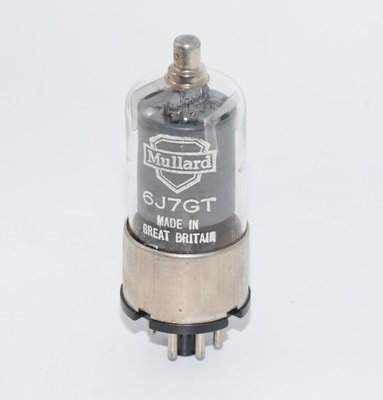
The 6J7GT is a sharp-cutoff pentode vacuum tube designed primarily for service as a biased detector and high-gain amplifier of radio or audio frequency signals. Introduced in the late 1930s as part of the "GT" (Glass Tubular) miniaturization movement, the 6J7GT represented a significant step forward in reducing the physical size of receiver tubes while maintaining the excellent electrical performance of its predecessors.
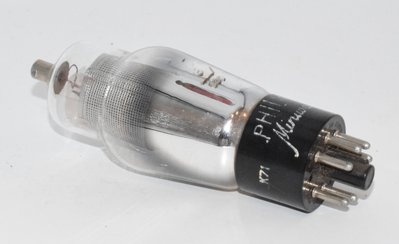
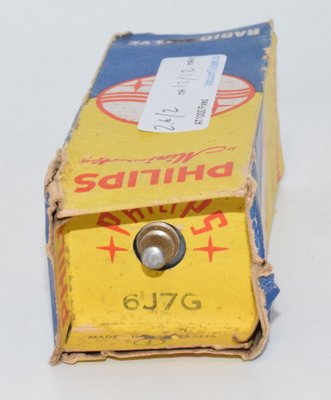
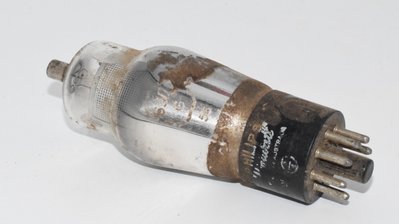
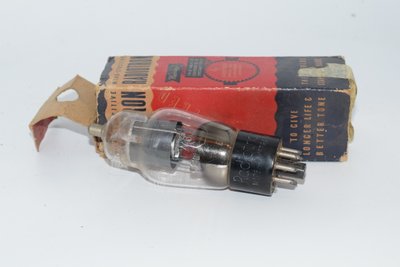
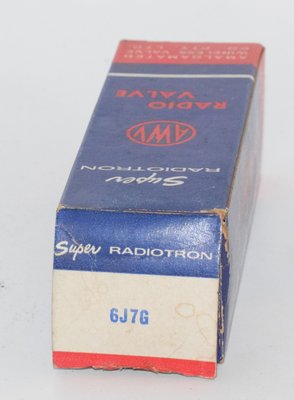
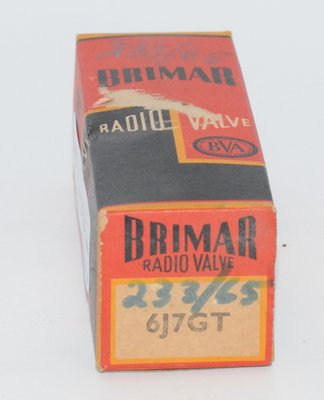
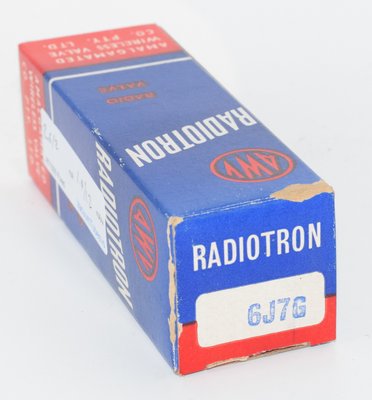
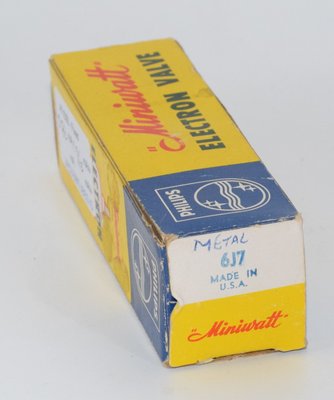
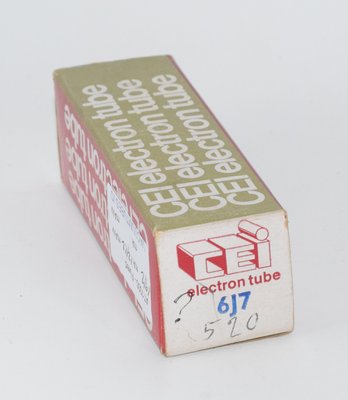
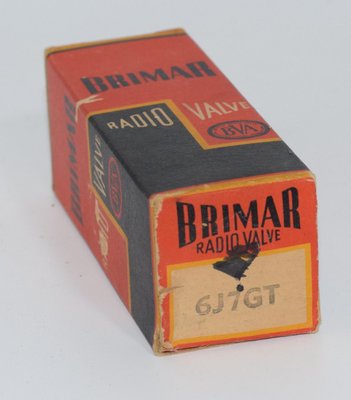
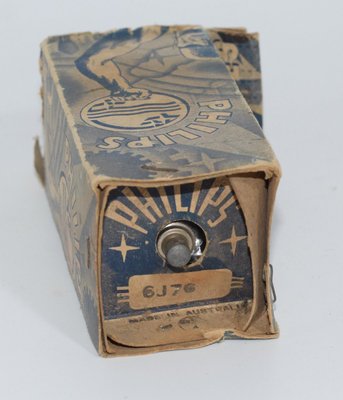
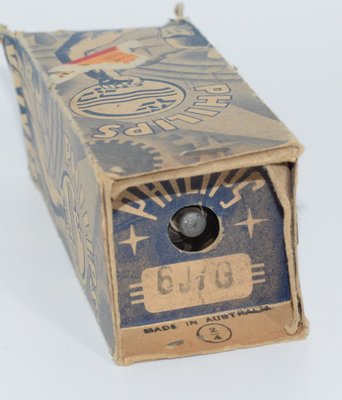
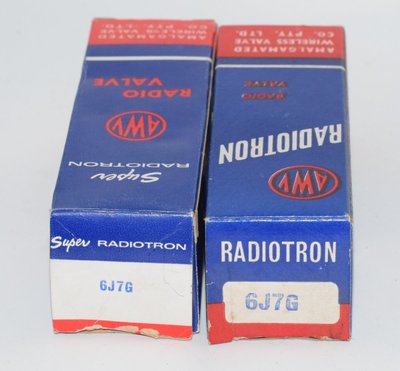
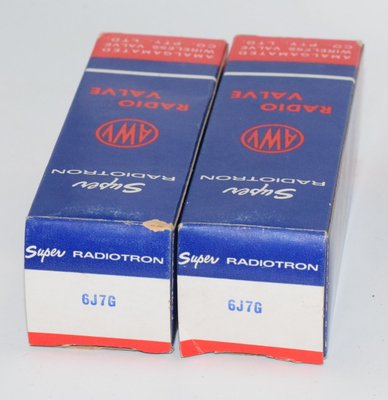
The tube was manufactured by numerous companies throughout the golden age of vacuum tubes, including Hytron Corporation of Salem, Massachusetts, Mullard, Brimar, Philips Miniwatt (Australia), RCA, Sylvania, and many others. The Hytron datasheet, dated March 1939 (B-2 3-39), provides one of the earliest and most detailed specifications for this type.
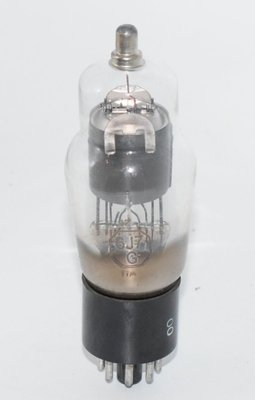
The 6J7GT belongs to the cathode-type pentode family and features an internal shield connected to the No. 1 base pin, providing excellent screening between the input and output circuits. This internal shielding was a key design feature that made the tube particularly well-suited for high-gain applications where minimizing stray coupling was essential. The Hytron 6J7GT was manufactured as a glass tube equipped with a small octal base and could be used interchangeably with the 6J7G glass tube.
As part of the Hytron "Bantam" series, the 6J7GT was available in both standard GT form and in a ceramic-base "GTX" variant designated for high-frequency circuits. The ceramic-base versions offered improved dynamic characteristics at higher frequencies and were specially selected and subjected to rigid testing. These ceramic-base tubes featured metal shields contacting the metal base ring or shell, connected to the #1 or ground pin, making them interchangeable with metal tube equivalents.
Technical Specifications and Design
Heater Ratings
| Parameter | Value |
|---|---|
| Heater Voltage | 6.3 Volts AC or DC |
| Heater Current | 0.3 Ampere |
Note: Voltage between heater and cathode should be kept at a minimum if direct connection is not possible.
Physical Characteristics
| Parameter | Value |
|---|---|
| Bulb Type | T-9C |
| Base Type | Small Octal (8-pin) |
| Internal Shield | Yes, connected to Pin 1 |
| Maximum Overall Length | 3-5/16 inches (approx.) |
| Maximum Diameter | 1-5/16 inches (approx.) |
| Mounting Position | Vertical, base down (recommended) |
Pin Configuration (Bottom View)
| Pin | Connection |
|---|---|
| Pin 1 | Inner Shield / Shell |
| Pin 2 | Heater |
| Pin 3 | Plate |
| Pin 4 | Screen Grid (G2) |
| Pin 5 | Suppressor Grid (G3) |
| Pin 6 | Not Connected |
| Pin 7 | Heater |
| Pin 8 | Cathode |
| Top Cap | Control Grid (G1) |
The control grid connection is brought out to a top cap, which provides superior isolation from other electrode connections and minimizes grid-to-plate capacitance — a critical design feature for high-gain RF and detector applications.
Amplifier Operation — Class A
| Parameter | Condition 1 | Condition 2 | Condition 3 | Condition 4 |
|---|---|---|---|---|
| Plate Voltage | 100 V | — | 250 V Max. | — |
| Screen Voltage | 100 V | — | **100 V | — |
| ***Grid Voltage | -3 V | — | -3 V | — |
| Suppressor | Connected to Cathode at Socket | |||
| Plate Current | 2.0 mA | — | 2.0 mA | — |
| Screen Current | 0.5 mA | — | 0.5 mA | — |
| Plate Resistance | 1.5 Megohm Min. | |||
| Amplification Factor | 1185 | — | 1500 Min. | — |
| Mutual Conductance | 1185 µmhos | — | 1225 µmhos | — |
| *Grid Voltage (Cathode Current Cut-Off) | -7 V | — | -7 V Approx. | — |
* Voltage for Cathode Current Cut-Off.
** Screen Voltage = 125 Max. Volts.
*** Grid Circuit Resistance must not exceed 1.0 Megohm.
Biased Detector Operation
The 6J7GT excels in biased detector service, with the Hytron datasheet providing four distinct operating conditions:
| Parameter | Cond. 1 | Cond. 2 | Cond. 3 | Cond. 4 |
|---|---|---|---|---|
| *Plate Supply Voltage | 250 V | 250 V | 250 V | 250 V |
| Screen Voltage | 50 V | 33 V | 100 V | 100 V |
| Grid Voltage | -2 V | -1.7 V | -3.9 V | -4.3 V |
| Cathode Resistor | 3000 Ω | 8000 Ω | 4000 Ω | 10,000 Ω |
| Suppressor | Connected to Cathode at Socket | |||
| Cathode Current (Zero Signal) | 0.65 mA | 0.21 mA | 0.97 mA | 0.43 mA |
| Plate Resistor | 0.25 MΩ | 0.50 MΩ | 0.25 MΩ | 0.50 MΩ |
| Blocking Condenser | 0.03 µf | 0.03 µf | 0.03 µf | 0.03 µf |
| Grid Resistor of Following Tube | 0.25 MΩ | 0.25 MΩ | 0.25 MΩ | 0.25 MΩ |
| **RMS RF Signal | 1.18 V | 1.21 V | 1.38 V | 1.37 V |
* Effective plate voltage will be this value minus the voltage drop in the plate resistor.
** 20% Modulation. Output voltage for each set of conditions 17 peak audio volts at grid of following tube.
Direct Interelectrode Capacitances (with shield can)
| Capacitance | Value |
|---|---|
| Grid No. 1 to Plate | 0.005 µµf Max. |
| Grid No. 1 to All Other Electrodes | 4.3 µµf |
| Plate to All Other Electrodes | 9.0 µµf |
The extraordinarily low grid-to-plate capacitance of just 0.005 µµf (picofarads) maximum is one of the 6J7GT's most notable specifications, achieved through the internal shield design. This makes the tube exceptionally stable in high-gain amplifier circuits.
Note: For characteristic curves, the Hytron datasheet refers to the type 6J7G. Maximum plate dissipation should be confirmed against the specific manufacturer's datasheet being used, as this value is not explicitly stated in the Hytron data provided; typical values for the 6J7 family are in the range of 2.0 to 2.5 watts.
Applications and Usage
The 6J7GT was designed as a versatile sharp-cutoff pentode with several primary applications:
Biased Detector
The tube's primary intended application was as a biased detector in superheterodyne radio receivers. The sharp-cutoff characteristic made it ideal for this service, providing clean detection with minimal distortion. The Hytron datasheet provides four different biased detector operating conditions, reflecting the tube's flexibility in this role across different receiver designs.
High-Gain Audio Amplifier
With an amplification factor of 1185 to 1500 (minimum) and mutual conductance of 1185–1225 µmhos, the 6J7GT was capable of delivering substantial voltage gain in audio preamplifier stages. The very high plate resistance of 1.5 Megohm minimum meant that the tube behaved almost as an ideal current source, making it well-suited for resistance-coupled amplifier circuits.
RF and IF Amplifier
The extremely low grid-to-plate capacitance (0.005 µµf maximum) made the 6J7GT suitable for radio frequency amplification, though its sharp-cutoff characteristic meant it was not ideal for AGC-controlled stages (the remote-cutoff 6K7GT was preferred for that application).
Oscillator Service
The tube could also serve as a local oscillator in superheterodyne receivers, though this was a secondary application.
Instrument and Test Equipment
The high gain and excellent shielding of the 6J7GT made it popular in laboratory instruments, voltmeters (particularly VTVM circuits), and other test equipment where high input impedance and stable gain were required.
Military Applications
The tube saw extensive military use during World War II, as evidenced by its numerous military designations including VT91, VT91A, VT74(RAF), and multiple CV (Common Valve) numbers. It was used in military radio receivers, communications equipment, and various electronic warfare systems.
Sound Characteristics
The 6J7GT, when employed in audio circuits, possesses a distinctive sonic character that has earned it a dedicated following among vintage audio enthusiasts and certain segments of the audiophile community:
Tonal Qualities
As a sharp-cutoff pentode operating in high-gain voltage amplifier stages, the 6J7GT tends to produce a sound that is often described as detailed and articulate, with a slightly forward midrange presentation. The very high plate resistance and amplification factor contribute to a sound that emphasizes harmonic complexity and micro-detail retrieval.
Harmonic Structure
Like most pentodes, the 6J7GT generates a more complex harmonic spectrum than equivalent triode stages, with both even and odd harmonics present in the distortion signature. This gives the tube a character that some listeners describe as "lively" or "present," though it can also be perceived as slightly less smooth than pure triode stages. When driven into mild overload, the odd-order harmonics become more prominent, lending a brighter, more aggressive edge compared to triode clipping.
Noise Performance
The internal shielding and top-cap grid connection contribute to excellent noise performance when the tube is properly implemented. Well-selected specimens can achieve very low microphonic noise, making the 6J7GT suitable for high-gain phono preamplifier and microphone preamplifier stages where signal levels are extremely low.
Dynamic Behavior
The sharp-cutoff characteristic means the tube transitions relatively abruptly from conduction to cutoff, which gives it a precise, well-defined dynamic response. This contrasts with remote-cutoff (variable-mu) pentodes like the 6K7GT, which have a more gradual and compressed dynamic behavior. In audio applications, this translates to a sense of immediacy and transient clarity.
Triode-Strapped Operation
Many audio enthusiasts connect the 6J7GT's screen grid to the plate (triode-strapping) to obtain a triode-like sound with reduced gain but lower distortion and a more even harmonic spectrum. In this configuration, the tube takes on a warmer, smoother character while still retaining some of the detail and presence that characterizes its pentode operation. The resulting triode has characteristics somewhat similar to the 6J5GT triode, though with different operating parameters.
Manufacturer Variations
Different manufacturers' versions of the 6J7GT are known to exhibit subtle sonic differences. Mullard-made examples are often praised for a slightly warmer, more rounded midrange. Brimar versions are noted for clarity and neutrality. Philips Miniwatt (Australian) production is sometimes described as having excellent detail with a slightly leaner tonal balance. Hytron examples, being among the earliest production, are valued for their robust construction and reliable, consistent sound.
Equivalent and Substitute Types
Close/Identical Substitutes (Direct Drop-In Replacements)
| Type | Notes |
|---|---|
| 6J7 | Metal envelope version; electrically identical, different physical form |
| 6J7G | Larger ST-shaped glass envelope; electrically identical, direct interchange per Hytron datasheet |
| ARP16 | British military designation |
| CV1074 | British Common Valve designation |
| CV1935 | British Common Valve designation |
| CV1936 | British Common Valve designation |
| CV1937 | British Common Valve designation |
| VT74 (RAF) | RAF military designation |
| VT91 | US military designation |
| VT91A | US military designation, selected grade |
Different Rating Substitutes (NOT Direct Drop-In)
The following types are functionally similar but have different ratings, pinouts, or base types and should not be treated as direct replacements without circuit modification:
| Type | Notes |
|---|---|
| EF36 | European equivalent with different base/pinout; similar electrical characteristics |
| EF37A | Improved European version; different base, often considered superior for audio |
| VR56 / CV1056 | British service designation for EF36 |
| OM5, OM5A, OM5B | Philips designations; different base configuration |
| CV358 | British Common Valve designation for a related type |
| CV1404 | British Common Valve designation |
| CV5080 | British Common Valve designation |
| 5A157D | Alternative designation |
| 12J7GT | 12.6V heater version; requires different heater supply, otherwise similar characteristics |
Important: The 12J7GT is electrically similar in all respects except heater voltage (12.6V at 0.15A versus 6.3V at 0.3A). It can be substituted only if the heater supply is adjusted accordingly.
Notable Characteristics
Exceptional Internal Shielding
The 6J7GT's internal shield, connected to Pin 1, provides outstanding isolation between the control grid and plate circuits. The resulting grid-to-plate capacitance of just 0.005 µµf maximum is remarkably low and was a key selling point for the tube. This level of shielding made external shield cans less critical, though they were still recommended for optimal performance in sensitive circuits.
Top-Cap Grid Connection
The control grid is brought out through a top cap rather than through the base pins. While this adds mechanical complexity and requires a special grid clip, it provides superior isolation from other electrode connections and was essential for achieving the tube's extremely low interelectrode capacitances.
Sharp-Cutoff Characteristic
Unlike the variable-mu (remote-cutoff) 6K7GT, the 6J7GT has a sharp-cutoff characteristic with cathode current cutoff occurring at approximately -7 volts grid bias. This makes it unsuitable for AGC-controlled stages but ideal for fixed-bias applications such as detectors and audio amplifiers where consistent gain is desired.
High Amplification Factor
With an amplification factor (µ) of 1185 to 1500 minimum (depending on operating conditions), the 6J7GT offers very high voltage gain capability. Combined with its mutual conductance of approximately 1225 µmhos, it provides an excellent balance of gain and bandwidth for most applications.
Ceramic-Base "Bantam" Variants
Hytron offered the 6J7GT in a ceramic-base "GTX" variant specifically designed for high-frequency circuits. These ceramic-base "Bantams" had the same physical dimensions and identical static characteristics as the standard GT series but offered improved dynamic characteristics at higher frequencies due to the low-loss ceramic base material. These were specially selected and subjected to rigid testing, making them premium components for demanding applications.
Versatile Biased Detector
The Hytron datasheet provides four distinct sets of biased detector operating conditions, demonstrating the tube's flexibility in this application. The ability to operate with cathode resistors ranging from 3,000 to 10,000 ohms and screen voltages from 33 to 100 volts gave circuit designers considerable latitude in optimizing performance for specific receiver designs.
Usage in the Audio Community
Vintage Amplifier Restorations
The 6J7GT appears in numerous vintage amplifier and preamplifier designs from the late 1930s through the 1950s. Audio restorers frequently seek out NOS (New Old Stock) examples from premium manufacturers such as Mullard, Brimar, and Philips Miniwatt for use in restoring these classic circuits to their original performance. The tube was commonly found in the preamplifier and tone control stages of early high-fidelity equipment.
Microphone Preamplifiers
The 6J7GT's high gain and low noise characteristics have made it a popular choice in both vintage and modern microphone preamplifier designs. Recording engineers and DIY audio builders appreciate the tube's ability to amplify very low-level microphone signals with minimal added noise, particularly when high-quality NOS specimens are used. The top-cap grid connection, while mechanically inconvenient, provides excellent isolation that benefits low-level signal handling.
Phono Preamplifiers
Similar to its use in microphone preamps, the 6J7GT has found application in phono preamplifier stages where its high gain is advantageous for amplifying the very small signals from moving-magnet and moving-coil cartridges. Some vintage phono stages used the 6J7GT in pentode mode for maximum gain, while others triode-strapped it for lower noise and a more refined harmonic character.
Guitar Amplifier Modifications
While not a standard guitar amplifier tube, the 6J7GT has been adopted by some boutique amplifier builders and modification enthusiasts who appreciate its high-gain pentode characteristics for creating unique preamp voicings. The sharp-cutoff characteristic provides a distinctive clipping behavior that differs from the more common 12AX7 triode preamp stages.
DIY and Hobbyist Projects
The 6J7GT remains popular in the DIY audio community for experimental amplifier and preamplifier projects. Its relatively simple operating requirements, wide availability as NOS stock, and the ability to operate it in both pentode and triode-strapped configurations make it an educational and versatile tube for hobbyists exploring vacuum tube circuit design. The tube's well-documented characteristics and the availability of original manufacturer data facilitate accurate circuit design.
Tube Rolling and Collecting
Collectors and tube rollers seek out 6J7GT specimens from different manufacturers to compare their sonic characteristics. Mullard, Brimar, Philips Miniwatt (Australia), Hytron, RCA, Sylvania, and various European manufacturers all produced this type, each with subtle construction differences that can influence sound quality. Military-spec versions (VT91, CV-series) are particularly prized for their tighter manufacturing tolerances and rigorous quality control. The multiple CV designations (CV1074, CV1935, CV1936, CV1937) suggest that British military procurement recognized quality differences between production batches or manufacturers, making specific CV-marked tubes desirable to collectors.
Availability and Market
As of the current era, the 6J7GT is no longer in production but remains available as NOS from various vintage tube dealers. Prices vary significantly based on manufacturer, condition, and testing results. Premium brands such as Mullard and Brimar command higher prices, while more common American-made examples remain relatively affordable. The tube's multiple equivalent designations (6J7, 6J7G, and various military types) expand the pool of available substitutes for audio applications.