1. Introduction and History
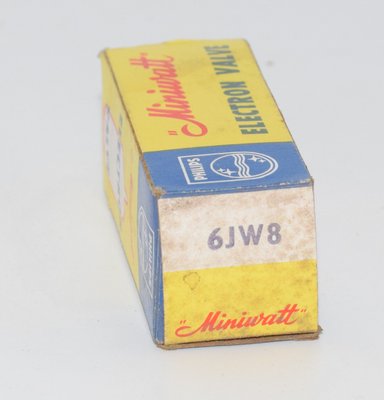
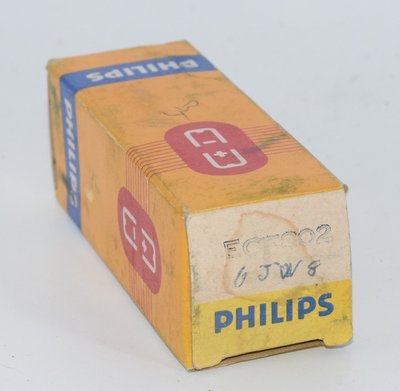
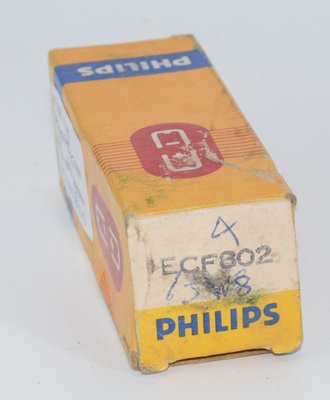
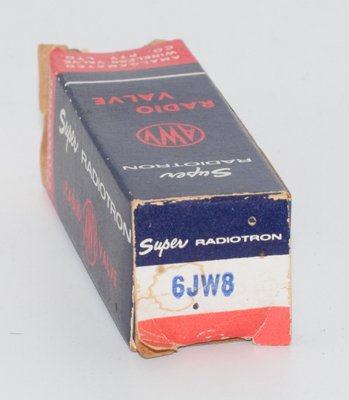
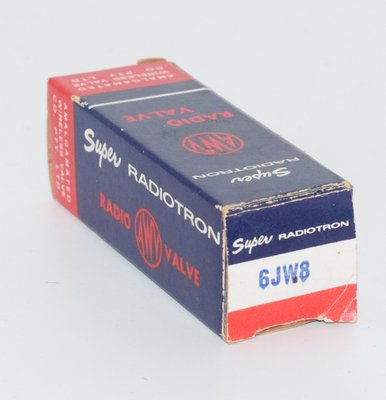
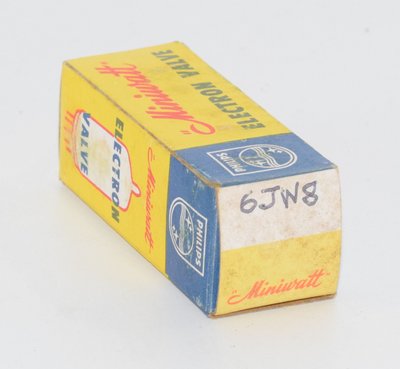
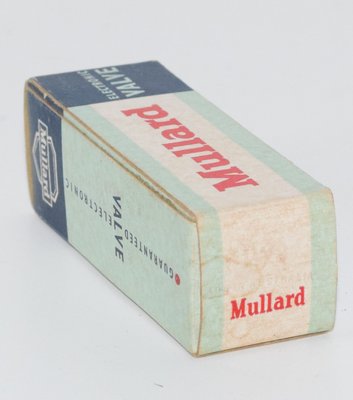
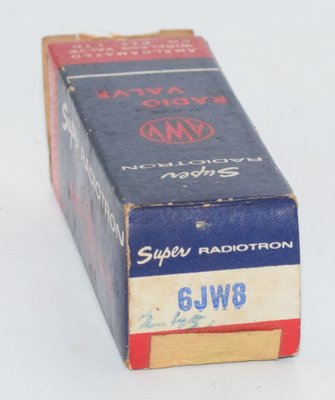
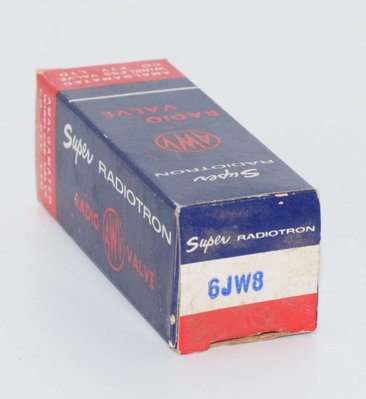
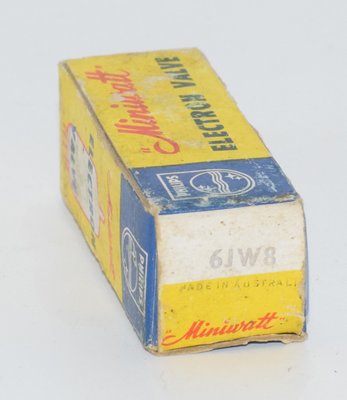
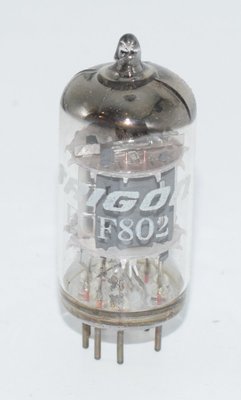
The 6JW8, known in European nomenclature as the ECF802, is a miniature compound vacuum tube containing a medium-mu triode and a sharp-cutoff pentode within a single glass envelope. Developed during the late 1950s for use in television receiver circuits, the 6JW8/ECF802 was designed primarily as a horizontal-oscillator and frequency-control tube in both color and black-and-white television sets. It was manufactured by a wide range of companies including RCA, Philips, Mullard, AWV (Amalgamated Wireless Valve Company) under the Super Radiotron brand, and Philips Miniwatt Australia, among others.
The tube belongs to the noval (9-pin miniature) family of receiving tubes that became the standard platform for television and high-frequency applications in the post-war era. Its combination of a medium-mu triode section with a sharp-cutoff pentode section in one envelope made it an economical and space-efficient solution for circuits requiring both an oscillator and an amplifier or mixer stage. While originally designed for television service, the 6JW8/ECF802 has found a devoted following in the audio community, particularly among DIY amplifier builders and headphone amplifier enthusiasts who appreciate its unique sonic characteristics.
2. Technical Specifications and Design
General Information
| Parameter | Value |
|---|---|
| Tube Type | Medium-Mu Triode / Sharp-Cutoff Pentode |
| Base Type | Noval (B9A) — 9-pin miniature |
| Outline | Section 6B (miniature glass envelope) |
| Socket | 9-contact miniature |
| Mounting | Any position |
Heater Ratings
| Parameter | 6JW8 / ECF802 | 5JW8 | 6LX8 / LCF802 | 9JW8 / PCF802 | Units |
|---|---|---|---|---|---|
| Heater Voltage (ac/dc) | 6.3 | 4.7 | 6 | 9 | volts |
| Heater Current | 0.43 | 0.6 | 0.45 | 0.3 | ampere |
| Heater Warm-up Time (Average) | 11 | 11 | — | — | seconds |
Types 5JW8, 6LX8/LCF802, and 9JW8/PCF802 are identical with the 6JW8/ECF802 except for heater ratings.
Heater-Cathode Voltage
| Parameter | Value | Units |
|---|---|---|
| Peak value | ±200 max | volts |
| Average value | 100 max | volts |
Direct Interelectrode Capacitances (Approx.)
| Parameter | Value | Units |
|---|---|---|
| Triode Unit: | ||
| Grid to Plate | 2.2 | pF |
| Grid to Cathode and Heater | 3 | pF |
| Plate to Cathode and Heater | 2 | pF |
| Pentode Unit: | ||
| Grid No.1 to Plate | 0.08 max | pF |
| Grid No.1 to Cathode, Heater, Grid No.2, Grid No.3, and Internal Shield | 8 | pF |
| Plate to Cathode, Heater, Grid No.2, Grid No.3, and Internal Shield | 3.2 | pF |
| Pentode Grid No.1 to Triode Plate | 0.012 max | pF |
| Pentode Plate to Triode Plate | 0.24 max | pF |
Pin Configuration (9AE Base)
| Pin | Connection |
|---|---|
| 1 | PT (Triode Plate) |
| 2 | G1P (Pentode Grid 1 / Control Grid) |
| 3 | G2P (Pentode Grid 2 / Screen Grid) |
| 4 | H (Heater) |
| 5 | H (Heater) |
| 6 | PP (Pentode Plate) |
| 7 | IS (Internal Shield) / KP (Pentode Cathode) / G3P (Pentode Grid 3 / Suppressor) |
| 8 | KT (Triode Cathode) |
| 9 | GT (Triode Grid) |
Maximum Ratings — Class A1 Amplifier (Design-Maximum Values)
| Parameter | Triode Unit | Pentode Unit | Units |
|---|---|---|---|
| Plate Voltage | 330 | 330 | volts |
| Grid No.2 (Screen-Grid) Voltage | — | 330 | volts |
| Grid No.1 (Control-Grid) Voltage: Positive-bias value | 0 | 0 | volts |
| Grid No.1 (Control-Grid) Voltage: Negative-bias value | 50 | 50 | volts |
| Plate Dissipation | 1.1 | 4 | watts |
| Grid No.2 Input | — | 1.7 | watts |
Characteristics — Triode Unit
| Parameter | Value | Units |
|---|---|---|
| Plate Voltage | 200 | volts |
| Grid No.1 Voltage | −2 | volts |
| Amplification Factor (μ) | 70 | — |
| Plate Resistance (Approx.) | 0.0175 megohm (17,500 ohms) | megohm |
| Transconductance | 4000 | μmhos |
| Plate Current | 4 | mA |
| Grid No.1 Voltage (Approx.) for plate current of 20 μA | −5 | volts |
Characteristics — Pentode Unit
| Parameter | Condition 1 | Condition 2 | Units |
|---|---|---|---|
| Plate Voltage | 60 / 125 | 200 | volts |
| Grid No.2 Voltage | 125 | 200 | volts |
| Grid No.1 Voltage | 0 / −1 | −2.9 | volts |
| Plate Resistance (Approx.) | 0.1 | 0.15 | megohm |
| Transconductance | 11500 | 10700 | μmhos |
| Plate Current | 51• / 22 | 22 | mA |
| Grid No.2 Current | 14• / 4 | 4 | mA |
| Grid No.1 Voltage (Approx.) for plate current of 20 μA | — / −5.5 | −9 | volts |
• These values can be measured by a method involving a recurrent waveform such that the maximum ratings of the tube will not be exceeded.
Maximum Circuit Values
| Parameter | Value | Units |
|---|---|---|
| Grid No.1 Circuit Resistance: | ||
| For fixed-bias operation | 0.5 (Triode) / 0.25 (Pentode) | megohm |
| For cathode-bias operation | 1 (Triode) / 1 (Pentode) | megohm |
3. Applications and Usage
The 6JW8/ECF802 was originally designed for television receiver applications, where its dual-section construction served multiple circuit functions:
- Horizontal Oscillator: The triode section was commonly employed as the horizontal oscillator in television sets, generating the horizontal sweep frequency.
- Frequency Control: Working in conjunction with AFC (Automatic Frequency Control) circuits, the tube maintained stable horizontal synchronization in both color and black-and-white receivers.
- Video Amplifier: The pentode section, with its high transconductance of up to 11,500 μmhos, was well-suited for wideband video amplification.
- IF Amplifier: The sharp-cutoff characteristic of the pentode section made it suitable for intermediate frequency amplification stages.
- General-Purpose Amplification: The combination of a medium-mu triode (μ = 70) and a high-gm pentode in one envelope made it versatile for various amplification tasks.
Beyond its original television applications, the 6JW8/ECF802 has been adopted for use in audio preamplifiers, headphone amplifiers, and experimental audio circuits where its unique combination of sections offers design flexibility.
4. Sound Characteristics
The 6JW8/ECF802 has developed a reputation in the audio community for a distinctive and appealing sonic signature, particularly when used in preamplifier and headphone amplifier circuits:
- Triode Section: The medium-mu triode (μ = 70) with its moderate plate resistance of approximately 17,500 ohms delivers a sound that is often described as warm yet detailed. The amplification factor sits in a sweet spot — high enough to provide meaningful gain in a single stage, yet not so high as to introduce the thinness sometimes associated with very high-mu triodes. Users report a smooth, slightly warm midrange with good clarity and a natural, unforced presentation.
- Pentode Section: With its exceptionally high transconductance of 10,700–11,500 μmhos, the pentode section is capable of delivering substantial gain with excellent bandwidth. When used in audio circuits, the pentode section tends to produce a lively, dynamic sound with extended high-frequency response. In triode-strapped configuration (screen tied to plate), the pentode section takes on a more refined, harmonically rich character while still maintaining excellent detail retrieval.
- Overall Tonal Character: Audiophiles who have experimented with the 6JW8/ECF802 generally describe it as having a balanced tonal signature — neither overly warm nor clinical. The tube is praised for its ability to render micro-dynamics convincingly and for a sense of air and spaciousness in the soundstage. The relatively low plate dissipation ratings (1.1W triode, 4W pentode) mean the tube operates in a gentle, low-stress manner in most audio circuits, which some listeners associate with a relaxed, fatigue-free listening experience.
- Noise Performance: The internal shielding between sections and the low interelectrode capacitances (pentode grid-to-plate of only 0.08 pF max) contribute to low noise floor performance, making the tube suitable for high-gain preamplifier stages where noise is a critical concern.
It should be noted that sonic impressions are inherently subjective and heavily dependent on circuit topology, operating point, passive component selection, and associated equipment. The descriptions above represent a consensus of commonly reported observations from the audio community.
5. Equivalent or Substitute Types
The following types are directly interchangeable with the 6JW8, differing only in heater ratings:
| Type | Heater Voltage | Heater Current | Notes |
|---|---|---|---|
| ECF802 | 6.3V | 0.43A | European designation; electrically identical to 6JW8 |
| 5JW8 | 4.7V | 0.6A | Identical except for heater ratings |
| 6LX8 / LCF802 | 6V | 0.45A | Identical except for heater ratings; very close to 6JW8 heater voltage |
| 9JW8 / PCF802 | 9V | 0.3A | Identical except for heater ratings; designed for series-string heater chains |
The 6LX8/LCF802 is the closest substitute for the 6JW8/ECF802, with only a 0.3V difference in heater voltage (6.0V vs. 6.3V) and nearly identical heater current (0.45A vs. 0.43A). In many circuits, these can be used interchangeably without modification.
The 9JW8/PCF802 is the series-string heater version, designed for AC/DC television sets where tube heaters are connected in series. It requires a 9V heater supply but is otherwise electrically identical in all other respects.
Important: The 6JW8/ECF802 should not be confused with the 6JV8 (high-mu triode / sharp-cutoff pentode), which has a different internal structure, different amplification factor, and different operating characteristics despite sharing a similar noval base and compound tube configuration.
6. Notable Characteristics
- High Pentode Transconductance: At 10,700–11,500 μmhos, the pentode section of the 6JW8 offers exceptionally high transconductance for a receiving tube of this class, making it capable of significant voltage gain in a single stage.
- Versatile Triode Section: The medium-mu triode (μ = 70) with 4,000 μmhos transconductance provides a useful balance between gain and linearity, suitable for oscillator, amplifier, and cathode-follower applications.
- Low Interelectrode Capacitances: The pentode section's grid-to-plate capacitance of only 0.08 pF maximum, combined with the very low coupling capacitance between sections (pentode grid No.1 to triode plate: 0.012 pF max), ensures excellent isolation and minimal unwanted interaction between the two tube sections.
- Internal Shielding: The tube features internal shielding connected to pin 7 (shared with pentode cathode and suppressor grid), providing effective isolation between the triode and pentode sections.
- Separate Cathodes: The triode and pentode sections have independent cathodes (pins 8 and 7 respectively), allowing each section to be biased independently — a significant advantage for audio circuit designers.
- Moderate Heater Power: At 6.3V and 0.43A (approximately 2.7 watts heater dissipation), the tube is economical in terms of heater power consumption.
- Wide Manufacturer Base: The 6JW8/ECF802 was produced by numerous manufacturers worldwide including RCA, Philips, Mullard, AWV/Super Radiotron, Amperex, Siemens, Telefunken, and various Eastern European factories, ensuring good availability of NOS (New Old Stock) specimens.
- 11-Second Warm-up Time: The average warm-up time of 11 seconds is typical for miniature receiving tubes of this era.
7. Usage in the Audio Community
While the 6JW8/ECF802 was never designed as an audio tube, it has attracted a dedicated following among audio enthusiasts and DIY builders for several reasons:
Headphone Amplifiers
The 6JW8/ECF802 has become particularly popular in hybrid headphone amplifier designs. The triode section, with its medium mu of 70 and moderate plate resistance of 17,500 ohms, serves well as a voltage amplifier stage driving a solid-state output buffer. The pentode section can be used as an additional gain stage or, when triode-strapped, as an alternative voicing option. Several commercial and DIY headphone amplifier designs have featured this tube, taking advantage of its dual-section construction to implement a complete two-stage preamplifier in a single tube.
Preamplifier Circuits
Audio experimenters have used the 6JW8/ECF802 in line-stage preamplifiers and phono stages. The high transconductance of the pentode section makes it particularly attractive for phono preamplifier input stages where high gain and low noise are required. The triode section can serve as a cathode follower output stage, providing low output impedance to drive long interconnect cables or low-impedance loads.
Guitar Amplifiers
Some boutique guitar amplifier builders have experimented with the 6JW8/ECF802 as a preamp tube, attracted by the tonal possibilities of its two distinct sections. The pentode section can provide high-gain overdrive characteristics, while the triode section offers a cleaner, more traditional tube tone. This versatility within a single envelope appeals to builders seeking unique voicing options.
Availability and Cost
One of the practical advantages of the 6JW8/ECF802 for audio use is its relative abundance and affordability in the NOS market. Because millions were manufactured for the television industry and the tube was never in high demand among audiophiles (unlike the 12AX7 or 6SN7), NOS examples from premium manufacturers such as Philips, Mullard, Siemens, and Telefunken can often be obtained at reasonable prices. This makes tube rolling — the practice of swapping different manufacturer's tubes to find preferred sonic characteristics — an accessible and affordable pursuit.
Tube Rolling Notes
Audio enthusiasts report noticeable sonic differences between manufacturers:
- Philips/Mullard (Heerlen, Blackburn): Often described as warm and musical with a rich midrange.
- Siemens/Telefunken: Typically characterized as more detailed and analytical with tighter bass.
- RCA: Generally described as having a balanced, slightly warm American sound.
- AWV/Super Radiotron (Australian): These Philips-affiliated tubes are considered comparable to European Philips production and are sought after by collectors.
As with all tube rolling observations, these characterizations are subjective and should be taken as general guidance rather than absolute descriptions. Circuit design, operating conditions, and associated components will have a far greater impact on overall sound quality than tube brand selection alone.
Design Considerations for Audio Use
Engineers and builders working with the 6JW8/ECF802 in audio applications should note the following:
- The maximum plate dissipation of the triode section is only 1.1 watts — operating points must be chosen carefully to stay within this limit.
- The pentode section's maximum plate dissipation of 4 watts provides more headroom for audio output stages, though it remains a small-signal tube.
- The maximum grid-circuit resistance values (0.5 megohm fixed-bias / 1 megohm cathode-bias for the triode; 0.25 megohm fixed-bias / 1 megohm cathode-bias for the pentode) must be respected to prevent grid emission problems and ensure tube longevity.
- The separate cathodes allow independent biasing of each section, enabling optimized operating points for each stage in a two-stage audio circuit.
- The heater-cathode voltage rating of ±200V peak / 100V average must be observed, particularly in circuits with elevated cathode voltages.