Introduction and History
The 6L6 is one of the most iconic and influential vacuum tubes ever produced. Introduced by RCA in 1936, it was the first commercially successful beam power tube, representing a landmark achievement in vacuum tube design. The tube was developed by engineers Otto Schade and Harley Iams at RCA, who applied the beam-forming plate concept licensed from the Marconi-Osram Valve Company (MOV) in Britain, where the KT66 was being developed along similar principles.
The beam power tube concept was revolutionary because it achieved pentode-like power output efficiency while significantly reducing the distortion characteristics associated with conventional pentodes. By using beam-forming plates to concentrate the electron stream into dense sheets, the 6L6 effectively suppressed secondary emission from the plate without requiring a physical suppressor grid, resulting in cleaner power delivery and more favorable distortion characteristics.
As noted in the RCA Receiving Tube Manual, the metal type 6L6 and glass type 6L6GC "are used in the output stage of audio amplifying equipment, especially units designed to have ample reserve of power-delivering ability." The manual further notes that "these tubes, like other power-handling tubes, should be adequately ventilated" and that "Type 6L6GC can be used in place of type 6L6 and may be supplied with pin 1 omitted."
The 6L6 quickly became the standard output tube for professional audio equipment, public address systems, jukebox amplifiers, and cinema sound systems throughout the late 1930s and 1940s. Its influence on the development of the electric guitar amplifier cannot be overstated — the tube became the heart of the Fender amplifier sound beginning in the late 1940s and remains central to American guitar amplifier design to this day.
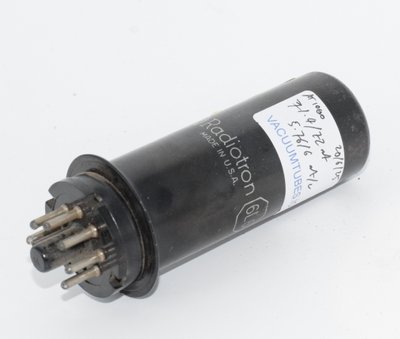
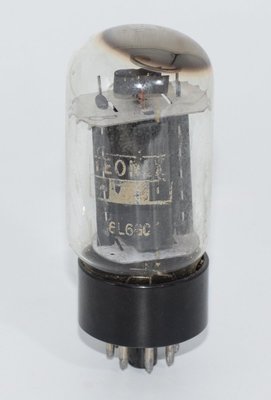
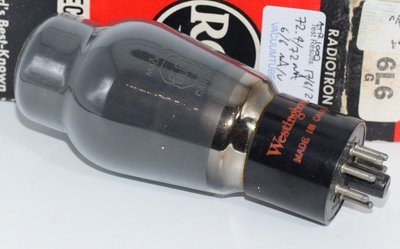
Over its production lifetime, the 6L6 has been manufactured in numerous envelope styles and ratings, from the original metal envelope (6L6) through various glass versions (6L6G, 6L6GT, 6L6GA, 6L6GB) to the enhanced 6L6GC, which remains in production today from multiple manufacturers worldwide.
Technical Specifications and Design
General Description
The 6L6 is a beam power tube designed for use in audio output stages. It features an indirectly heated cathode, a control grid (Grid No.1), a screen grid (Grid No.2), and beam-forming plates that serve the function of a suppressor grid. The original 6L6 was produced in a metal envelope (Outlines section 4, per RCA), while later variants used various glass envelopes.
Heater Ratings
| Parameter | Value |
|---|---|
| Heater Voltage (ac/dc) | 6.3 volts |
| Heater Current | 0.9 ampere |
| Heater-Cathode Voltage (6L6, peak) | ±180 max volts |
| Heater-Cathode Voltage (6L6GC, peak) | ±200 max volts |
| Heater-Cathode Voltage (6L6GC, average) | 100 max volts |
Base and Envelope
- Base Type: Octal (8-pin)
- Socket: Requires octal socket
- Outline (6L6 metal): Section 4 (per RCA)
- Outline (6L6GC glass): Section 19D (per RCA)
Pin Configuration (Octal Base, 7AC)
| Pin | Connection |
|---|---|
| Pin 1 | No connection (6L6 metal: shell/shield; 6L6GC may omit pin 1) |
| Pin 2 | Heater (H) |
| Pin 3 | Plate (P) |
| Pin 4 | Grid No.2 / Screen Grid (G2) |
| Pin 5 | Grid No.1 / Control Grid (G1) |
| Pin 7 | Heater (H) |
| Pin 8 | Cathode (K) / Grid No.3 (G3, internally connected) |
Direct Interelectrode Capacitances (Approximate)
| Parameter | 6L6 | 6L6GC |
|---|---|---|
| Grid No.1 to Plate | 0.4* pF | 0.6 pF |
| Grid No.1 to Cathode, Heater, Grid No.2, and Grid No.3 | 10* pF | 10 pF |
| Plate to Cathode, Heater, Grid No.2, and Grid No.3 | 12* pF | 6.5 pF |
* With pin 1 connected to pin 8 (6L6 metal type).
Maximum Ratings (Design-Maximum Values) — Class A₁ Amplifier
| Parameter | 6L6 (Design-Center) | 6L6GC (Design-Maximum) |
|---|---|---|
| Plate Voltage | 360 volts | 500 volts |
| Grid No.2 (Screen-Grid) Voltage | 270 volts | 450 volts |
| Plate Dissipation | 19 watts | 30 watts |
| Grid No.2 Input | 2.5 watts | 5 watts |
Typical Operating Conditions — Class A₁ Single-Ended Amplifier
| Parameter | Value |
|---|---|
| Plate Voltage | 350 volts |
| Grid No.2 (Screen) Voltage | 250 volts |
| Grid No.1 (Control-Grid) Voltage | −18.0 volts |
| Plate Current (zero-signal) | 54.0 mA |
| Grid No.2 Current (zero-signal) | 2.5 mA |
| Cathode-Bias Resistor (Rk) | 300 ohms |
| Transconductance (gm) | 5.2 mA/V (5200 µmhos) |
| Load Resistance (Ra) | 33,000 ohms |
| Plate-to-Plate / Output Load (Zout) | 4,200 ohms |
| Maximum-Signal Power Output | 11.0 watts |
| Total Harmonic Distortion | 15% |
Typical Operating Conditions — Push-Pull Class A₁ Amplifier
| Parameter | Condition 1 | Condition 2 |
|---|---|---|
| Plate Voltage | 270 volts | 360 volts |
| Grid No.2 Voltage | 270 volts | 270 volts |
| Plate Current (per tube, zero-signal) | 72.5 mA | 50.0 mA |
| Grid No.2 Current (per tube, zero-signal) | 8.5 mA | 9.5 mA |
| Cathode-Bias Resistor (shared) | 125 ohms | 250 ohms |
| Effective Load Resistance (plate-to-plate) | 5,000 ohms | 9,000 ohms |
| Maximum-Signal Power Output | 18.5 watts | 24.0 watts |
| Total Harmonic Distortion | 4.0% | 4.0% |
Typical Operating Conditions — Push-Pull Class A₁ (Triode Connection)
| Parameter | Value |
|---|---|
| Plate Voltage | 325 volts |
| Plate Current (per tube, zero-signal) | 42.0 mA |
| Cathode-Bias Resistor (shared) | 375 ohms |
| Effective Load Resistance (plate-to-plate) | 8,000 ohms |
| Maximum-Signal Power Output | 6.0 watts |
| Total Harmonic Distortion | 0.6% |
Typical Operating Conditions — Push-Pull Class AB₂ Amplifier
| Parameter | Value |
|---|---|
| Plate Voltage | 360 volts |
| Grid No.2 Voltage | 270 volts |
| Grid No.1 Voltage | −22.5 volts |
| Plate Current (per tube, zero-signal) | 69.0 mA |
| Grid No.2 Current (per tube, zero-signal) | 8.0 mA |
| Effective Load Resistance (plate-to-plate) | 6,600 ohms |
| Maximum-Signal Power Output | 26.5 watts |
| Total Harmonic Distortion | 1.8% |
Additional RCA Datasheet Operating Points (from attached PDF, 6L6GC)
The RCA Receiving Tube Manual provides extensive data for the 6L6GC variant, which offers higher voltage and dissipation ratings:
Class A₁ Single-Ended (6L6GC)
| Parameter | Condition 1 | Condition 2 | Condition 3 |
|---|---|---|---|
| Plate Voltage | 250 volts | 300 volts | 350 volts |
| Grid No.2 Voltage | 250 volts | 200 volts | 250 volts |
| Grid No.1 Voltage | −14 volts | −12.5 volts | −18 volts |
| Peak AF Grid No.1 Voltage | 14 volts | 12.5 volts | 18 volts |
| Zero-Signal Plate Current | 72 mA | 48 mA | 54 mA |
| Maximum-Signal Plate Current | 79 mA | 55 mA | 66 mA |
| Zero-Signal Grid No.2 Current | 5 mA | 2.5 mA | 2.5 mA |
| Maximum-Signal Grid No.2 Current | 7.3 mA | 4.7 mA | 7 mA |
| Plate Resistance (Approx.) | 22,500 ohms | 35,000 ohms | 33,000 ohms |
| Transconductance | 6,000 µmhos | 5,300 µmhos | 5,200 µmhos |
| Load Resistance | 2,500 ohms | 4,500 ohms | 4,200 ohms |
| Total Harmonic Distortion | 10% | 11% | 15% |
| Maximum-Signal Power Output | 6.5 watts | 6.5 watts | 10.8 watts |
Class A₁ Triode Connection (6L6GC)
| Parameter | Value |
|---|---|
| Plate Voltage | 250 volts |
| Grid No.1 Voltage | −20 volts |
| Peak AF Grid No.1 Voltage | 20 volts |
| Zero-Signal Plate Current | 40 mA |
| Maximum-Signal Plate Current | 44 mA |
| Plate Resistance (Approx.) | 1,700 ohms |
| Amplification Factor | 8 |
| Transconductance | 4,700 µmhos |
| Load Resistance | 5,000 ohms |
| Total Harmonic Distortion | 5% |
| Maximum-Signal Power Output | 1.4 watts |
Note: Grid No.2 connected to plate for triode connection.
Push-Pull Class AB₁ (6L6GC, values for two tubes)
| Parameter | Condition 1 | Condition 2 |
|---|---|---|
| Plate Voltage | 360 volts | 360 volts |
| Grid No.2 Voltage | 270 volts | 270 volts |
| Grid No.1 Voltage | −22.5 volts | −22.5 volts |
| Peak AF Grid-No.1-to-Grid-No.1 Voltage | 45 volts | 45 volts |
| Zero-Signal Plate Current | 88 mA | 88 mA |
| Maximum-Signal Plate Current | 132 mA | 140 mA |
| Effective Load Resistance (plate-to-plate) | 6,600 ohms | 3,800 ohms |
| Total Harmonic Distortion | 2% | 2% |
| Maximum-Signal Power Output | 26.5 watts | 18 watts |
Push-Pull Class AB₂ (6L6GC, values for two tubes)
| Parameter | Condition 1 | Condition 2 |
|---|---|---|
| Plate Voltage | 360 volts | 360 volts |
| Grid No.2 Voltage | 270 volts | 225 volts |
| Grid No.1 Voltage | −22.5 volts | −18 volts |
| Peak AF Grid-No.1-to-Grid-No.1 Voltage | 45 volts | 52 volts |
| Zero-Signal Plate Current | 88 mA | 78 mA |
| Maximum-Signal Plate Current | 140 mA | 142 mA |
| Effective Load Resistance (plate-to-plate) | 3,800 ohms | 6,000 ohms |
| Total Harmonic Distortion | 1.8% | 2% |
| Maximum-Signal Power Output | 18 watts | 31 watts |
Maximum Circuit Values
| Parameter | 6L6GC |
|---|---|
| Grid-No.1-Circuit Resistance (fixed-bias) | 0.1 megohm |
| Grid-No.1-Circuit Resistance (cathode-bias) | 0.5 megohm |
Note: In push-pull circuits where Grid No.2 of each tube is connected to a tap on the plate winding of the output transformer, the maximum screen-grid supply voltage rating is 500 volts for the 6L6GC.
Applications and Usage
The 6L6 was designed primarily as an audio output tube and has been employed in an extraordinarily wide range of applications since its introduction:
Original Design Applications
- Audio Output Stages: The primary application, delivering substantial power output with relatively low distortion in both single-ended and push-pull configurations. A push-pull pair of 6L6s can deliver from 18.5 watts (Class A₁) to over 26.5 watts (Class AB₁) in pentode mode, or a refined 6.0 watts at only 0.6% THD in triode mode.
- Public Address Systems: The tube's robust power output and reliability made it a standard in PA amplifiers throughout the 1940s-1960s.
- Cinema Sound: Major cinema sound systems relied on banks of 6L6 tubes for their main amplification chains.
- Jukebox Amplifiers: The Wurlitzer and Seeburg jukeboxes of the 1940s and 1950s commonly used 6L6 output stages.
- Radio Transmitters: The 6L6 found use as an RF oscillator and amplifier in low-power transmitter applications, particularly in the related 807 beam tetrode configuration.
- Industrial Equipment: Servo amplifiers, instrument amplifiers, and various industrial control systems employed the 6L6.
Guitar Amplifier Applications
The 6L6 became synonymous with the "American" guitar amplifier sound. Leo Fender adopted the tube for his earliest amplifier designs, and it has remained the standard output tube for Fender amplifiers including:
- Fender Twin Reverb (typically four 6L6GC tubes)
- Fender Deluxe Reverb (two 6V6GT, though some models used 6L6)
- Fender Bassman (two 6L6 in early models, later variants with four)
- Fender Super Reverb
- Fender Showman
- Mesa/Boogie Mark series and Rectifier series
- Numerous boutique amplifier designs
Hi-Fi Audio Applications
The 6L6 has been used extensively in high-fidelity amplifier designs, from the classic Williamson-type amplifiers of the late 1940s to modern audiophile designs. The tube's versatility in both pentode/ultralinear and triode modes makes it attractive for hi-fi applications where the designer can choose between higher power output (pentode/ultralinear) and lower distortion (triode).
Sound Characteristics
The 6L6 has a distinctive sonic signature that has made it one of the most beloved output tubes in audio history. Its sound characteristics vary significantly depending on the operating mode and circuit topology:
Pentode/Beam Power Mode
In its native beam power configuration, the 6L6 is widely described as having a clean, clear, and articulate sound with excellent note definition. The tonal character is often described as:
- Tight, controlled low end: The 6L6 produces bass that is firm and well-defined rather than loose or boomy. This characteristic is particularly valued in guitar amplifiers for maintaining clarity with complex chords.
- Scooped midrange: Compared to EL34/6CA7 tubes, the 6L6 tends to have a slightly recessed midrange, contributing to its characteristic "American" sound. This scooped quality gives the tone a more open, spacious feel.
- Sparkling, extended highs: The 6L6 is known for its bright, shimmering high-frequency response. The treble is detailed and present without being harsh, often described as "glassy" or "crystalline."
- Excellent headroom: The tube maintains its clean character at relatively high power levels before the onset of clipping, making it ideal for clean guitar tones and hi-fi applications.
- Musical overdrive: When pushed into distortion, the 6L6 produces a smooth, compressed overdrive that is less aggressive than EL34-based amplifiers. The clipping characteristic transitions gradually, producing even-order harmonics that are perceived as warm and musical.
Triode Mode
When operated in triode connection (screen grid tied to plate), the 6L6 takes on a markedly different character:
- Warmer, more liquid midrange: The triode connection brings out a richer, more harmonically complex midrange.
- Reduced power output but lower distortion: As the RCA data shows, triode push-pull operation yields 6.0 watts at only 0.6% THD — remarkably low distortion for a power tube stage.
- More "tube-like" character: The triode mode emphasizes the second harmonic, giving the sound a warmer, more traditionally "tubey" quality.
- Lower damping factor: The reduced plate resistance in triode mode (approximately 1,700 ohms vs. 22,500+ ohms in pentode) results in a different interaction with the loudspeaker, often perceived as a more "organic" or "breathing" quality.
Ultralinear Mode
Many hi-fi amplifiers operate the 6L6 in ultralinear mode (screen grid connected to a tap on the output transformer primary), which provides a sonic compromise between pentode and triode:
- More power than triode mode with lower distortion than full pentode operation
- A balanced tonal character that combines pentode clarity with triode warmth
- Often described as the "best of both worlds" for hi-fi applications
Comparison with Other Output Tubes
Compared to the British EL34, the 6L6 is generally perceived as cleaner, brighter, and more "hi-fi" sounding, while the EL34 is considered warmer, more midrange-focused, and more aggressive when overdriven. Compared to the smaller 6V6, the 6L6 offers more headroom, tighter bass, and a more authoritative overall presentation, while the 6V6 is often considered sweeter and more intimate at lower volumes.
Equivalent or Substitute Types
Close/Identical Substitutes (Direct Drop-In Replacements)
The following types are essentially identical to the original 6L6 in electrical characteristics and can be used as direct replacements:
- 6L6G — Glass envelope version of the 6L6, same electrical specifications
- 6L6GT — Glass tubular (smaller) envelope version, same electrical specifications
- CV1286 — British military designation, equivalent to 6L6
- CV1947 — British military designation, equivalent to 6L6
- CV1948 — British military designation, equivalent to 6L6
- VT115 — US military designation for 6L6
- VT115A — US military designation, improved version
Different Rating Substitutes (NOT Direct Drop-In — Verify Compatibility)
The following types are related to the 6L6 but have different maximum ratings, construction, or operating parameters. They may be usable in some 6L6 circuits but require verification of bias, voltage, and dissipation compatibility:
- 6L6GA — Improved version with slightly different ratings
- 6L6GB — Further improved version with higher ratings
- 6L6GC — Significantly enhanced version with higher maximum plate voltage (500V vs. 360V), higher plate dissipation (30W vs. 19W), and higher screen voltage (450V vs. 270V). The 6L6GC is the most common modern production type and can generally replace earlier 6L6 types, but circuits designed for the 6L6GC should not use original 6L6 tubes without verifying that ratings are not exceeded.
- 6L6WGA, 6L6WGB, 6L6WGC — Ruggedized military versions with enhanced construction
- EL37 — Mullard equivalent with different base characteristics; verify compatibility
- 5881 (6L6WGB) — A widely used military/industrial variant with slightly lower maximum ratings than the 6L6GC but more robust construction. Often used as a substitute in guitar amplifiers.
- KT66 — The British MOV/GEC beam power tube developed in parallel with the 6L6. While often discussed as an equivalent, the KT66 has different characteristics and is not a direct drop-in in all circuits.
- 7027A — An enhanced version used in some Ampeg amplifiers; different pin connections for the screen grid.
- CV2796, CV2817, CV3618, CV586 — Various British military designations for 6L6 family variants
- SV6L6GC — Svetlana production version
- 807 — Related beam tetrode with plate cap connection (different physical configuration); electrically similar but NOT a socket-compatible replacement
Important Note: When substituting tubes, always verify that the replacement tube's maximum ratings meet or exceed the circuit requirements, and that bias conditions are appropriate. The 6L6GC's higher ratings make it a safe replacement for earlier 6L6 types in most circuits, but the reverse is not necessarily true.
Notable Characteristics
Beam-Forming Plate Design
The 6L6's most significant technical innovation is its use of beam-forming plates rather than a conventional suppressor grid. These plates are connected internally to the cathode and serve to concentrate the electron stream into dense beams that pass between the screen grid wires. This beam concentration creates a virtual suppressor — a region of low potential between the screen grid and plate that effectively suppresses secondary emission without the need for a physical third grid. This design results in higher efficiency and lower distortion compared to conventional pentodes.
Versatility of Operating Modes
The 6L6 is remarkably versatile in its operating configurations. As demonstrated by the RCA data, it can operate effectively in:
- Single-ended Class A₁ (pentode): 11.0 watts output
- Push-pull Class A₁ (pentode): 18.5 to 24.0 watts output
- Push-pull Class A₁ (triode): 6.0 watts at only 0.6% THD
- Push-pull Class AB₁: 26.5 watts output at 1.8% THD
- Push-pull Class AB₂: Up to 31 watts (6L6GC)
- Ultralinear configurations (with appropriate output transformer)
This wide range of operating modes, combined with the significant variation in power output and distortion characteristics, makes the 6L6 one of the most flexible output tubes available.
Transconductance and Sensitivity
With a transconductance of 5,200 µmhos (5.2 mA/V) in typical operating conditions, the 6L6 offers good sensitivity — it requires relatively modest drive voltage to achieve full output. This makes it compatible with a wide range of driver tubes and simplifies amplifier design.
Longevity and Reliability
The 6L6 family, particularly the ruggedized military variants (6L6WGB/5881, 6L6WGC), is known for excellent reliability and long service life when operated within ratings. The tube's robust construction and conservative design margins have contributed to its enduring popularity in professional applications where reliability is paramount.
Evolution of the Type
The progression from the original 6L6 (19W plate dissipation, 360V max plate) to the 6L6GC (30W plate dissipation, 500V max plate) represents a significant enhancement in capability while maintaining backward compatibility. This evolution has allowed the tube type to remain relevant across decades of amplifier design, from the modest power requirements of 1930s radio receivers to the demanding conditions of modern high-power guitar amplifiers.
Usage in the Audio Community
Guitar Amplification
The 6L6 is arguably the single most important tube in the history of the electric guitar. It defines the "American" guitar amplifier sound, in contrast to the EL34-based "British" sound. The tube is central to:
- Fender amplifiers: From the earliest Fender Professional and Deluxe models through the iconic Twin Reverb, Bassman, and Super Reverb, the 6L6 (and its GC variant) has been the standard Fender output tube. The clean headroom, sparkling highs, and tight bass of the 6L6 are fundamental to the Fender sound.
- Mesa/Boogie amplifiers: Randall Smith's Mesa/Boogie designs, from the original Mark I through the modern Mark V and Rectifier series, rely heavily on 6L6GC tubes. The Mesa approach often pushes the tubes harder, exploiting the 6L6's smooth overdrive characteristics.
- Boutique amplifiers: Countless boutique amplifier builders use the 6L6 as their output tube of choice, including designs from Two-Rock, Dumble-inspired builders, and many others.
- Country, jazz, blues, and rock: The 6L6's clean headroom makes it the preferred choice for country guitarists who need pristine cleans, while its smooth overdrive character serves blues and rock players well. Jazz guitarists appreciate its articulate note definition.
Hi-Fi and Audiophile Applications
The 6L6 has experienced a significant resurgence in the audiophile community:
- Single-ended triode (SET) amplifiers: While not as common as 300B or 2A3 tubes in SET designs, the 6L6 in triode mode offers an interesting alternative with its own distinctive sonic character.
- Push-pull hi-fi amplifiers: The 6L6 in push-pull triode or ultralinear configuration is used in numerous audiophile amplifier designs. The push-pull triode configuration's 0.6% THD at 6 watts makes it attractive for high-efficiency speaker systems.
- Vintage restoration: Many classic hi-fi amplifiers from the 1950s and 1960s used 6L6 output tubes, and the restoration and enjoyment of these amplifiers drives continued demand.
- DIY audio: The 6L6 is one of the most popular tubes for DIY amplifier projects due to its wide availability, extensive documentation, reasonable cost, and forgiving operating characteristics.
Tube Rolling and NOS Market
The audio community actively engages in "tube rolling" — comparing different manufacturers' versions of the 6L6 for sonic differences. Highly sought-after versions include:
- RCA 6L6 (metal envelope): The original, prized for its warm, smooth character and historical significance.
- RCA 6L6GC (black plate): Considered by many to offer the definitive 6L6 sound with excellent dynamics and tonal balance.
- GE 6L6GC: Known for a slightly brighter, more detailed sound compared to RCA versions.
- Sylvania 6L6GC (green print): Valued for a balanced tonal character with good midrange presence.
- Tung-Sol 6L6GC: Both vintage and modern reissue versions are popular, known for a full, rich sound.
- Mullard EL37: While not a direct equivalent, it is sometimes used in 6L6 circuits and is prized for its distinctively warm, liquid midrange.
New-old-stock (NOS) examples of premium 6L6 variants command significant prices in the collector market, with rare versions such as early RCA metal-envelope 6L6s or Sylvania green-print 6L6GCs fetching premium prices.
Current Production
The 6L6GC remains in active production from several manufacturers, ensuring continued availability for both guitar amplifier and hi-fi applications:
- JJ Electronic (Slovakia) — Produces the JJ 6L6GC, widely used in guitar amplifiers
- Electro-Harmonix / New Sensor (Russia) — Produces 6L6GC under multiple brand names including Electro-Harmonix, Tung-Sol (reissue), Mullard (reissue), and Svetlana
- Shuguang / Psvane (China) — Various 6L6GC versions including premium audiophile grades
- TAD (Tube Amp Doctor) — Selected and tested versions from various manufacturers
The continued production of the 6L6GC by multiple manufacturers worldwide is a testament to the enduring importance of this tube type in both the guitar amplifier and audiophile communities. Nearly nine decades after its introduction, the 6L6 remains one of the most widely used and beloved vacuum tubes in the world.