1. Introduction and History
The 6L6G is one of the most iconic vacuum tubes in electronics history, representing a significant advancement in audio amplification technology when it was introduced by Radio Corporation of America (RCA) in 1936. As the first beam power tetrode commercially available in the United States, the 6L6G revolutionized audio amplification by offering higher power output and improved efficiency compared to earlier triode designs.
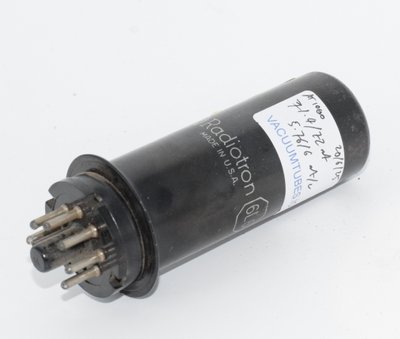
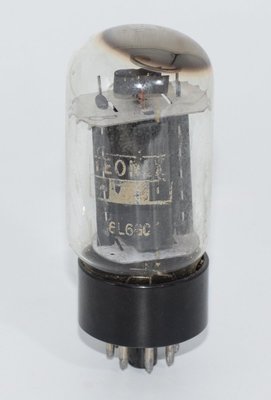
The 'G' in the designation refers to the glass envelope style, which features a ST-16 (shoulder type) glass bulb. The 6L6G was developed as an improvement over earlier power tubes, utilizing a beam-forming plate design that reduced screen grid current and improved efficiency. This innovative design allowed the tube to deliver more power while maintaining lower distortion levels.
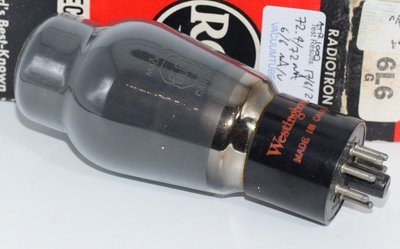
The 6L6G was widely manufactured throughout the vacuum tube era by companies including RCA, General Electric, Sylvania, Westinghouse, and many others. The Westinghouse Canada variant is particularly sought after by collectors and audio enthusiasts for its build quality and sonic characteristics.
2. Technical Specifications and Design
The 6L6G is a beam power tetrode with the following key specifications:
- Heater/Filament: 6.3V at 0.9A
- Plate (Anode) Voltage: 350V typical, 500V maximum
- Screen Grid Voltage: 250V typical, 350V maximum
- Plate Dissipation: 19-21.5W (depending on manufacturer specifications)
- Power Output: Approximately 19-26.5W in Class AB1 push-pull configuration
- Transconductance: 5,200-6,000 micromhos (μmhos)
- Base: Octal (8-pin)
- Height: Approximately 4.75 inches (120mm)
- Diameter: Approximately 2 inches (51mm)
The 6L6G's design incorporates beam-forming plates that direct the electron flow from the cathode to the plate into concentrated beams. This beam-forming structure, combined with precise spacing of the screen grid wires aligned with the control grid wires, creates virtual suppressor grids through space charge effects. This ingenious design allows the tube to overcome the secondary emission problems that plagued earlier tetrodes without requiring an actual suppressor grid as in pentodes.
The large glass envelope provides adequate cooling for the internal elements and helps prevent arcing at high voltages. The internal structure typically consists of a cylindrical plate (anode) surrounding the screen grid, control grid, and indirectly heated cathode.
3. Applications and Usage
The 6L6G found widespread use in numerous applications, including:
Audio Amplification
The 6L6G became a staple in guitar amplifiers, particularly in American-made amplifiers from manufacturers like Fender. The tube's warm, rich harmonic character and ability to produce a smooth overdrive when pushed made it ideal for musical instrument amplification. Many classic Fender amplifiers from the 1950s and 1960s used the 6L6G and its variants.
In hi-fi applications, the 6L6G was commonly employed in push-pull configurations to deliver clean, powerful audio reproduction for home stereo systems.
Public Address Systems
The robust power handling capabilities of the 6L6G made it suitable for public address amplifiers where reliability and sufficient volume were essential.
Radio Transmitters
Due to its power handling capabilities, the 6L6G was also used in small radio transmitters and as a modulator tube in amateur radio equipment.
Industrial Applications
The tube found use in various industrial control systems, oscillators, and other applications requiring reliable power handling.
Typical Operating Conditions
In a typical Class A single-ended amplifier configuration, the 6L6G might operate with:
- Plate voltage: 250-350V
- Screen voltage: 250V
- Grid bias: -14 to -18V
- Plate current: 54-72mA
- Power output: 6.5-10W
In Class AB1 push-pull configuration (two tubes):
- Plate voltage: 360-400V
- Screen voltage: 270-300V
- Grid bias: -22.5 to -25V
- Power output: 26.5-34W
4. Equivalent or Substitute Types
The 6L6G belongs to a family of tubes that evolved over time with various improvements and form factors. Direct equivalents and substitutes include:
- 6L6: The original metal-envelope version
- 6L6GA: A shorter glass envelope variant
- 6L6GB: Similar to the GA but with slightly different specifications
- 6L6GC: Higher-rated version with increased plate dissipation (30W) and higher maximum voltages
- 5881: A ruggedized version developed for military applications, with similar characteristics
- KT66: British equivalent with slightly different characteristics, often considered superior for hi-fi applications
- 7027: Enhanced version with higher power capabilities
- KT88/6550: Higher-powered tubes in the same family, though not direct substitutes without circuit modifications
When substituting tubes, it's important to consider that while these tubes share the same pin configuration and general characteristics, differences in plate dissipation ratings, bias requirements, and gain factors may necessitate circuit adjustments for optimal performance and safety.
5. Notable Characteristics
Sound Quality
The 6L6G is renowned for its warm, full-bodied sound with rich even-order harmonics. It produces a characteristic American tone with solid bass response, smooth midrange, and well-controlled highs. When pushed into overdrive, it tends to compress in a musical way that has made it a favorite among guitarists seeking a dynamic, responsive tone.
Reliability and Durability
The 6L6G is generally considered a robust and reliable tube when operated within its specifications. The Westinghouse Canada NOS (New Old Stock) variants are particularly valued for their durability and consistent performance. Well-made 6L6G tubes can last thousands of hours in properly designed circuits.
Collectibility
Vintage 6L6G tubes, especially those from reputable manufacturers like Westinghouse Canada, RCA, Tung-Sol, and GE, have become collectible items. Their distinctive ST-16 glass bulb shape and glowing filaments give them an aesthetic appeal beyond their technical function.
Modern Production
While the original 6L6G with its large glass envelope is no longer in mainstream production, modern equivalents in the 6L6 family (particularly the 6L6GC) are still manufactured by companies like Tung-Sol, Electro-Harmonix, JJ Electronic, and Svetlana. These modern tubes maintain the essential characteristics of the original design while incorporating modern manufacturing techniques.
Technical Distinctions
The 6L6G's beam-forming plate design represents an elegant engineering solution that delivers pentode-like performance without the additional complexity and cost of a true pentode structure. This design innovation contributed to the tube's historical significance and enduring popularity.
The Westinghouse Canada NOS 6L6G tubes are particularly prized for their construction quality, consistent performance characteristics, and robust reliability. Audio enthusiasts often note their balanced tonal qualities and excellent dynamic response when used in vintage or modern tube amplifiers.