Introduction and History
The 6L6GB is a beam power tetrode belonging to the legendary 6L6 family, one of the most important and influential vacuum tube lineages in audio and electronic history. The original 6L6 was introduced by RCA in 1936 and represented a revolutionary advancement in power tube design, employing beam-forming plates to direct electron flow and suppress secondary emission — achieving pentode-like efficiency with lower distortion characteristics. The 6L6 was the first true beam power tube to reach widespread commercial production and fundamentally changed amplifier design for decades to come.
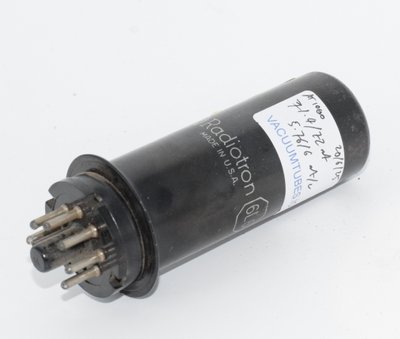
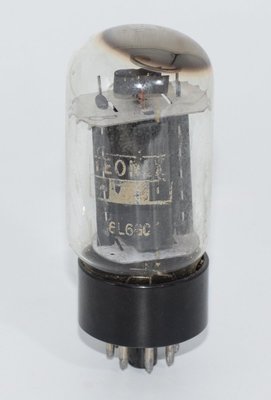
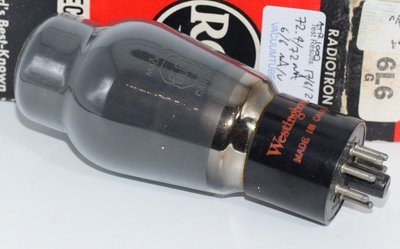
The 6L6GB represents a specific iteration within the 6L6 family tree, featuring a glass envelope of the "B" type — a shorter, more compact glass bottle compared to the earlier 6L6G (which used the larger ST-shaped or shouldered glass envelope). The "G" designation indicates a glass envelope (as opposed to the original metal-cased 6L6), while the "B" suffix denotes the particular glass shape and, importantly, a specific set of maximum ratings that distinguish it from other family members. The 6L6GB was designed to offer reliable performance in a compact form factor, with ratings that sit between the more conservative early types and the later, more robust 6L6GC.
The 6L6GB occupies a historically significant position as a transitional type. It offered improved construction over the 6L6G and 6L6GA while predating the higher-rated 6L6GC that would eventually become the dominant variant. Its maximum plate voltage of 360 volts and plate dissipation of 19 watts place it firmly in the medium-power category, making it suitable for a wide range of audio amplifier designs, instrument amplifiers, and industrial applications of its era. Understanding the 6L6GB's specific ratings is critical for anyone restoring vintage equipment or designing amplifiers around this particular variant, as its limits are notably lower than the later 6L6GC.
Technical Specifications and Design
Heater / Filament
| Parameter | Value |
|---|---|
| Heater Voltage | 6.3 V |
| Heater Current | 0.9 A |
| Heater Type | Indirectly heated cathode (unipotential) |
Maximum Ratings (Absolute Values)
| Parameter | Value |
|---|---|
| Maximum Plate Voltage (Va max) | 360 V |
| Maximum Screen Grid Voltage (Vg2 max) | 270 V |
| Maximum Plate Dissipation (Pa max) | 19.0 W |
| Maximum Screen Grid Dissipation (Pg2 max) | 2.5 W |
Typical Operating Conditions — Class A Single-Ended
| Parameter | Value |
|---|---|
| Plate Voltage (Va) | 350 V |
| Screen Grid Voltage (Vg2) | 250 V |
| Control Grid Voltage (Vg1) | -18.0 V |
| Plate Current (Ia) | 54.0 mA |
| Screen Current (Ig2) | 2.5 mA |
| Plate Resistance (Ra) | 33,000 Ω |
| Transconductance (gm) | 5.2 mA/V |
| Cathode Resistor (Rk) | 300 Ω |
| Load Impedance (Zout) | 4,200 Ω |
| Power Output | 11.0 W |
| Total Harmonic Distortion | 15% |
Note: The 15% THD figure represents the maximum output at the onset of significant clipping in single-ended Class A operation. Practical listening levels will exhibit considerably lower distortion.
Typical Operating Conditions — Class A Push-Pull (Pentode Mode)
| Parameter | Condition 1 | Condition 2 |
|---|---|---|
| Plate Voltage (Va) | 270 V | 360 V |
| Screen Grid Voltage (Vg2) | 270 V | 270 V |
| Plate Current per tube (Ia) | 72.5 mA | 50.0 mA |
| Screen Current per tube (Ig2) | 8.5 mA | 9.5 mA |
| Cathode Resistor (Rk, shared) | 125 Ω | 250 Ω |
| Load Impedance, plate-to-plate (Zout) | 5,000 Ω | 9,000 Ω |
| Power Output (pair) | 18.5 W | 24.0 W |
| Total Harmonic Distortion | 4.0% | 4.0% |
Typical Operating Conditions — Class A Push-Pull (Triode Mode)
| Parameter | Value |
|---|---|
| Plate Voltage (Va) | 325 V |
| Plate Current per tube (Ia) | 42.0 mA |
| Cathode Resistor (Rk, shared) | 375 Ω |
| Load Impedance, plate-to-plate (Zout) | 8,000 Ω |
| Power Output (pair) | 6.0 W |
| Total Harmonic Distortion | 0.6% |
Typical Operating Conditions — Class AB2 Push-Pull
| Parameter | Value |
|---|---|
| Plate Voltage (Va) | 360 V |
| Screen Grid Voltage (Vg2) | 270 V |
| Control Grid Voltage (Vg1) | -22.5 V |
| Plate Current per tube (Ia) | 69.0 mA |
| Screen Current per tube (Ig2) | 8.0 mA |
| Load Impedance, plate-to-plate (Zout) | 6,600 Ω |
| Power Output (pair) | 26.5 W |
| Total Harmonic Distortion | 1.8% |
Physical Characteristics
| Parameter | Value |
|---|---|
| Base Type | Octal (8-pin) |
| Envelope | Glass (compact "B" type bottle) |
| Mounting Position | Any |
| Tube Type | Beam Power Tetrode |
Pin Configuration (Octal Base, Bottom View)
| Pin | Connection |
|---|---|
| Pin 1 | No connection (key) |
| Pin 2 | Heater |
| Pin 3 | Plate (Anode) |
| Pin 4 | Screen Grid (Grid No. 2) |
| Pin 5 | Control Grid (Grid No. 1) |
| Pin 6 | No connection |
| Pin 7 | Heater |
| Pin 8 | Cathode (internally connected to beam-forming plates) |
Note: The beam-forming plates (suppressor equivalent) are internally connected to the cathode. This is standard for the 6L6 family on the octal base.
Key Electrical Characteristics Summary
The 6L6GB exhibits a transconductance of 5.2 mA/V under typical Class A single-ended conditions (Va = 350V, Vg2 = 250V, Vg1 = -18V). Its plate resistance of 33,000 Ω in pentode mode is characteristic of beam power tubes, providing a moderate damping factor when used with typical output transformers. The amplification factor (μ) can be derived from the relationship μ = gm × rp, yielding approximately 172 under these conditions. Note: The exact amplification factor should be confirmed against the specific manufacturer's datasheet for the 6L6GB variant, as μ can vary slightly between family members and operating points.
Applications and Usage
The 6L6GB was designed as a versatile beam power tube suitable for audio frequency power amplification, and it found use across a broad spectrum of applications:
Audio Power Amplification
The primary application for the 6L6GB is as an output tube in audio power amplifiers. Its operating conditions support several configurations:
- Single-Ended Class A: Delivering approximately 11 watts with a 4,200 Ω load at 350V plate voltage. This configuration is favored by audiophiles seeking the characteristic single-ended harmonic signature.
- Push-Pull Class A (Pentode): A pair of 6L6GBs can deliver 18.5 to 24 watts depending on operating voltages, with distortion around 4% — a practical and popular configuration for hi-fi amplifiers.
- Push-Pull Class A (Triode): With screen tied to plate, a pair delivers approximately 6 watts at a remarkably low 0.6% THD — an exceptionally clean operating mode prized by purist audiophiles.
- Push-Pull Class AB2: For maximum power extraction, a pair can deliver 26.5 watts at only 1.8% THD with 360V plate and 270V screen voltages. This mode requires a driver stage capable of supplying grid current on signal peaks.
Musical Instrument Amplifiers
The 6L6 family has been central to the sound of American guitar amplifiers since the late 1930s. The 6L6GB appeared in numerous amplifiers during its production era, particularly in designs from the late 1940s through the 1950s. Its 360V maximum plate voltage and 19W plate dissipation must be carefully respected in these applications — many later amplifier designs that were updated to use the higher-rated 6L6GC cannot safely accept a 6L6GB as a direct substitute without circuit modifications.
Public Address and Commercial Audio
The 6L6GB was widely used in PA systems, jukebox amplifiers, theater sound systems, and commercial audio equipment where moderate power output with reasonable efficiency was required.
Industrial and Military Applications
Various members of the 6L6 family, including ruggedized versions, served in military communications equipment, radar modulators, and industrial control systems. The military specification MIL-E-1/99 covers the 807 (a related beam power tube), and similar specifications governed military-grade 6L6 variants.
Sound Characteristics
The 6L6GB shares the fundamental sonic DNA of the 6L6 family while possessing subtle characteristics that distinguish it from its siblings, particularly the later and more commonly encountered 6L6GC.
General Tonal Character
The 6L6 family is widely described as having a characteristically "American" sound — clean, full-bodied, and balanced across the frequency spectrum. Compared to the EL34/6CA7 family (which is often described as having a more "British" midrange-forward character), the 6L6 tends toward a broader, more scooped tonal balance with extended bass response and crystalline highs.
Pentode Mode Characteristics
In pentode (beam tetrode) mode, the 6L6GB delivers:
- Bass Response: Deep, well-defined low frequencies with good authority. The 6L6 family is renowned for its tight, punchy bass that provides a solid foundation without becoming muddy or bloated.
- Midrange: Smooth and slightly recessed compared to EL34-type tubes. The midrange is articulate and detailed without being aggressive or forward. This characteristic contributes to the "clean headroom" quality that the 6L6 family is famous for.
- Treble: Bright, clear, and extended with a shimmering quality. The high-frequency response is open and airy, contributing to the sense of detail and sparkle that defines the 6L6 sound.
- Distortion Character: When driven into clipping, the 6L6GB produces a blend of even and odd harmonics. The onset of distortion is relatively gradual, providing a smooth transition from clean to overdriven tones. The harmonic distortion curves from the datasheet show that 2nd and 3rd harmonics are the dominant components, with higher-order harmonics remaining relatively low until the tube is driven hard.
Triode Mode Characteristics
When operated in triode mode (screen grid connected to plate), the 6L6GB exhibits dramatically different behavior. The remarkably low 0.6% THD at 6 watts output in push-pull Class A triode mode speaks to the inherent linearity of this configuration. In triode mode, listeners and engineers report:
- A warmer, more intimate presentation with reduced high-frequency extension
- Lower output impedance providing better speaker damping
- A more "direct" and immediate sound quality
- Exceptionally low distortion that appeals to classical music and acoustic instrument reproduction
6L6GB vs. 6L6GC Sonic Differences
Audiophiles who have compared the 6L6GB directly against the 6L6GC often note that the GB variant, when operated within its ratings, can sound slightly sweeter and more refined in the midrange. This is likely attributable to the lower operating voltages and currents that keep the tube further from its limits, operating in a more linear region of its characteristic curves. The lower plate dissipation rating of 19 watts (versus 30 watts for the 6L6GC) means the 6L6GB is typically run at more conservative operating points, which can contribute to a perception of greater smoothness and less grain.
Dynamic Response
The 6L6GB exhibits good dynamic range and transient response. Its beam power design provides efficient electron focusing, contributing to a sense of speed and articulation in the sound. The tube responds well to playing dynamics, making it particularly expressive in guitar amplifier applications where touch sensitivity is valued.
Equivalent and Substitute Types
The 6L6 family encompasses numerous variants with differing maximum ratings. It is critical to understand that while these types share the same basic pinout and general characteristics, they are NOT all direct drop-in replacements for one another due to significant differences in maximum voltage and dissipation ratings.
Different Rating Substitutes (NOT Direct Drop-In)
The following types are related to the 6L6GB but have different maximum ratings. Substitution requires careful verification that the circuit's operating conditions fall within the substitute tube's ratings:
| Type | Notes |
|---|---|
| 6L6 | Original metal-envelope version. Different maximum ratings; verify circuit compatibility. |
| 6L6G | Glass ST-shaped envelope version. Generally lower or similar ratings to 6L6GB. |
| 6L6GA | Revised glass version. Ratings may differ; check datasheet. |
| 6L6GC | Higher-rated version (30W plate dissipation, 500V max plate). Can generally replace a 6L6GB in circuits designed for the GB, but a 6L6GB CANNOT safely replace a 6L6GC in circuits that exploit the GC's higher ratings. |
| 6L6GT | Tubular glass envelope version. Ratings typically similar to or lower than 6L6GB; verify specifications. |
| 6L6WGA | Military ruggedized version of the 6L6GA. |
| 6L6WGB | Military ruggedized version of the 6L6GB. Most directly compatible. |
| 6L6WGC | Military ruggedized version of the 6L6GC. Higher ratings. |
| 5881 | Often considered a ruggedized 6L6 variant with ratings close to the 6L6GB (19-23W plate dissipation depending on manufacturer). One of the closer substitutes in terms of ratings. |
| KT66 | British beam tetrode with similar characteristics but different construction and somewhat different sonic character. Pin-compatible but not identical in specifications. |
| EL37 | Mullard type; related but with different characteristics. Verify compatibility carefully. |
| SV6L6GC | Svetlana/New Sensor production 6L6GC. Higher ratings than 6L6GB. |
Military and CV Equivalents
| Designation | Notes |
|---|---|
| CV1286 | British military designation for a 6L6 family member |
| CV1947 | British military designation |
| CV1948 | British military designation |
| CV2796 | British military designation |
| CV2817 | British military designation |
| CV3618 | British military designation |
| CV586 | British military designation |
| VT115 | US military designation |
| VT115A | US military designation |
| STR387 | Special test/ruggedized type |
| STR415 | Special test/ruggedized type |
Critical Warning: When substituting any 6L6 family member for a 6L6GB, always verify that the circuit's plate voltage, screen voltage, and operating currents fall within the substitute tube's maximum ratings. The 6L6GB's 360V maximum plate voltage and 19W plate dissipation are significantly lower than the 6L6GC's 500V and 30W ratings. Installing a 6L6GB in a circuit designed for a 6L6GC can result in tube failure, damage to the amplifier, or dangerous operating conditions.
Notable Characteristics
The Beam Power Principle
Like all members of the 6L6 family, the 6L6GB employs beam-forming plates — internal metal structures that focus the electron stream into concentrated beams directed at the plate. This beam-forming action creates a virtual suppressor grid effect, suppressing secondary emission from the plate without requiring a physical suppressor grid (as used in true pentodes). The result is higher power efficiency and lower distortion compared to conventional pentodes, with particularly well-behaved plate characteristic curves showing a sharp knee and flat saturation region.
Rating Hierarchy Within the 6L6 Family
Understanding where the 6L6GB sits in the family hierarchy is essential:
- 6L6 (metal): Original type, moderate ratings
- 6L6G: Glass envelope version of the original
- 6L6GA: Revised ratings
- 6L6GB: 360V plate, 270V screen, 19W dissipation — the subject of this article
- 6L6GC: The "big brother" — 500V plate, 300V screen, 30W dissipation
The 6L6GB represents a middle ground in the family — more capable than the earliest variants but significantly more limited than the 6L6GC. This makes proper identification of the tube type critical in any restoration or design project.
Triode Mode Excellence
One of the most remarkable specifications of the 6L6GB is its performance in push-pull triode mode: 6 watts output at only 0.6% THD. This extraordinarily low distortion figure — achieved without any negative feedback — makes the 6L6GB in triode mode one of the cleanest-sounding output tube configurations available. For context, many highly regarded triode output tubes struggle to achieve distortion figures this low at comparable power levels.
Class AB2 Performance
The Class AB2 push-pull configuration deserves special mention: 26.5 watts at 1.8% THD from a pair of tubes rated at only 19 watts plate dissipation each is an impressive achievement. The AB2 mode, where grid current flows during part of the signal cycle, extracts maximum power from the tubes while maintaining remarkably low distortion. However, this mode requires a robust, low-impedance driver stage capable of supplying the grid current demanded during positive grid voltage excursions.
Screen Grid Sensitivity
The 6L6GB's screen grid dissipation limit of only 2.5 watts demands careful attention in circuit design. The screen supply must be well-regulated or properly decoupled, and appropriate screen grid resistors should be used to prevent excessive screen dissipation, particularly during signal transients or if the plate load is momentarily removed (as can happen with speaker disconnection in an audio amplifier).
Usage in the Audio Community
Vintage Hi-Fi Restoration
The 6L6GB appears in numerous vintage hi-fi amplifiers from the late 1940s and 1950s, including designs from manufacturers such as Fisher, Scott, Eico, Heathkit, and others. Restorers of these amplifiers face the challenge of sourcing genuine 6L6GB tubes, as new-old-stock (NOS) supplies have become increasingly scarce and expensive. When original 6L6GBs cannot be found, the 5881 is often considered the closest substitute in terms of ratings, though the 6L6GC can also be used provided the circuit's operating voltages are within the GB's ratings (which they will be, since the circuit was designed for the GB's limits).
Guitar Amplifier Applications
In the guitar amplifier world, the 6L6 family defines the "American clean" sound. Early Fender amplifiers and many other American-made guitar amps used various 6L6 family members. The 6L6GB was found in amplifiers from the transitional period before the 6L6GC became the standard. Guitar players seeking authentic vintage tone from this era specifically seek out 6L6GB tubes, as the slightly different construction and operating characteristics contribute to a subtly different feel and response compared to modern 6L6GC production tubes.
It is important to note that many modern guitar amplifiers are designed around the 6L6GC's higher ratings (particularly plate voltages of 400-490V). These amplifiers cannot safely use a 6L6GB, as the 360V maximum plate voltage would be exceeded. Players must verify their amplifier's operating voltages before attempting to use 6L6GB tubes.
DIY and Custom Amplifier Building
The 6L6GB is an attractive choice for DIY amplifier builders who want to work with moderate voltages. The 360V maximum plate voltage means that power supply designs can be simpler and safer, using lower-voltage capacitors and transformers. A push-pull pair delivering 18.5 to 26.5 watts provides ample power for home listening, and the triode mode option of 6 watts at 0.6% THD is particularly appealing for builders pursuing the ultimate in low-distortion sound.
Several popular DIY amplifier designs are well-suited to the 6L6GB's ratings:
- Push-pull Class A pentode designs at 270V plate voltage, delivering 18.5 watts into a 5,000 Ω plate-to-plate load
- Push-pull Class A triode designs at 325V, delivering 6 watts of ultra-clean power into an 8,000 Ω load
- Push-pull Class AB2 designs at 360V for maximum power extraction of 26.5 watts
- Single-ended Class A designs for the ultimate in simplicity, delivering 11 watts
The Collector's Perspective
Among tube collectors and audiophiles, NOS 6L6GB tubes from premium manufacturers (RCA, GE, Sylvania, Tung-Sol, and others) are sought-after items. Different manufacturers' versions are believed to have subtly different sonic signatures due to variations in internal construction, materials, and manufacturing tolerances. RCA-made 6L6GBs are particularly prized, as RCA was the originator of the 6L6 design and their production quality was consistently high.
Modern Production
While the 6L6GB itself is no longer in production, the 6L6GC continues to be manufactured by several companies including JJ Electronic, Electro-Harmonix/New Sensor (under various brand names including Svetlana, Tung-Sol reissue, and Mullard reissue), and others such as the Teonex 6L6GC. These modern 6L6GC tubes can be used in circuits designed for the 6L6GB, as their higher ratings encompass the GB's operating envelope. However, purists maintain that vintage NOS 6L6GB tubes possess a sonic character that modern production tubes do not fully replicate, attributing this to differences in materials, construction techniques, and the generally tighter manufacturing tolerances of the original production era.
Practical Recommendations for Audio Use
For those wishing to use the 6L6GB in audio applications, the following guidelines are recommended:
- Always verify plate voltage: Never exceed 360V on the plate. Measure actual operating voltages under load, not just the power supply's no-load voltage.
- Respect screen dissipation: The 2.5W screen limit is easily exceeded. Use appropriate screen resistors (typically 470Ω to 1kΩ) and ensure proper screen supply regulation.
- Bias carefully: In fixed-bias designs, set the bias so that quiescent plate dissipation does not exceed approximately 70-80% of the 19W maximum to ensure tube longevity.
- Consider triode mode: If ultimate sound quality at moderate power levels is the goal, the push-pull triode configuration offers extraordinary performance — 6 watts at 0.6% THD without feedback is difficult to surpass.
- Match tubes: For push-pull operation, matched pairs are essential for minimum distortion and balanced operation. This is particularly important in Class AB2 operation where the tubes are driven harder.