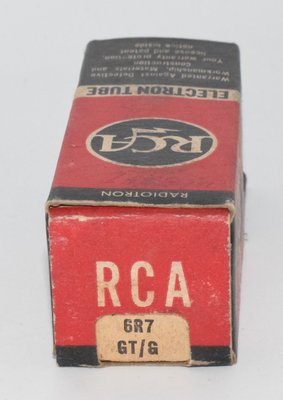
Introduction and History
The 6R7GT is a dual-triode vacuum tube that emerged during the golden age of vacuum tube electronics in the mid-20th century. Developed primarily for radio and audio applications, this tube represents a significant advancement in compact tube design, allowing manufacturers to incorporate multiple amplification stages in a single envelope. The "GT" designation indicates a "glass tubular" construction, which became standard for consumer electronics during the 1940s and 1950s.
The 6R7GT was manufactured by numerous tube companies including RCA, Mullard, Telefunken, and Sylvania, making it a widely available and reliable component. Its development coincided with the expansion of high-fidelity audio equipment and radio receiver design, where space efficiency and performance were paramount concerns. The tube remained in production through the 1960s and early 1970s, though in declining quantities as solid-state electronics began to dominate the market.
Technical Specifications and Design
Physical Characteristics
- Tube Type: Dual Triode
- Envelope: Glass Tubular (GT)
- Base Type: 9-pin Noval base (B9A)
- Height: Approximately 3.125 inches (79.4mm)
- Diameter: Approximately 0.875 inches (22.2mm)
- Weight: Approximately 1.2 ounces (34 grams)
Electrical Specifications
- Heater Voltage: 6.3V AC/DC
- Heater Current: 0.45A per triode (0.9A total)
- Maximum Plate Voltage: 550V DC
- Maximum Grid Voltage: -50V DC
- Amplification Factor (μ): Approximately 20
- Plate Resistance (rp): Approximately 7,700 ohms
- Transconductance (gm): Approximately 2,600 micromhos
- Maximum Plate Dissipation: 1.75W per triode
Pin Configuration
The 6R7GT utilizes a standard 9-pin Noval base with the following pinout:
- Pin 1: Plate (Triode 1)
- Pin 2: Grid (Triode 1)
- Pin 3: Cathode (Triode 1)
- Pin 4: Heater
- Pin 5: Heater
- Pin 6: Plate (Triode 2)
- Pin 7: Grid (Triode 2)
- Pin 8: Cathode (Triode 2)
- Pin 9: No connection (NC)
Design Features
The 6R7GT features a relatively high amplification factor, making it suitable for voltage amplification stages. The dual-triode configuration allows for flexible circuit design, enabling engineers to implement phase-splitter circuits, differential amplifiers, or independent amplification stages within a single tube. The moderate plate resistance and good transconductance characteristics provide reasonable output impedance for driving subsequent stages or output transformers.
The tube's heater design allows operation on standard 6.3V supplies commonly found in audio equipment and radio receivers. The relatively low heater current consumption (0.9A total) made it practical for equipment with limited power supply capacity. The robust construction and moderate operating parameters contribute to the tube's longevity and reliability in properly designed circuits.
Applications and Usage
Historical Applications
The 6R7GT found widespread use in mid-century audio equipment and radio receivers. Common applications included:
- Radio Receivers: Intermediate frequency (IF) amplification and audio preamplification stages in AM/FM tuners
- Audio Amplifiers: Voltage amplification and phase-splitting in tube amplifier designs
- Preamplifiers: Microphone and line-level preamplification in professional and consumer audio equipment
- Mixing Consoles: Channel amplification and summing stages in vintage mixing equipment
- Test Equipment: Laboratory amplifiers and signal generators requiring stable, linear amplification
Modern Audio Applications
Today, the 6R7GT experiences renewed interest among vintage audio enthusiasts and tube audio designers. Modern applications include:
- Vintage Equipment Restoration: Replacement of original tubes in restored radio receivers and amplifiers
- Custom Tube Amplifier Design: Use in boutique and hand-crafted amplifier projects emphasizing vintage aesthetics and sound
- High-Fidelity Audio Systems: Integration into tube preamps and integrated amplifiers for audiophile applications
- Experimental Electronics: Educational projects and hobbyist builds exploring tube technology
- Vintage Synthesizers: Some vintage synthesizer designs incorporated 6R7GT tubes in audio signal paths
Sound Characteristics of the 6R7GT
Sonic Profile
The 6R7GT is renowned in audio circles for producing a warm, musical sound characteristic of mid-gain triode stages. The tube exhibits several distinctive sonic attributes:
Frequency Response and Tonality
The 6R7GT delivers a relatively neutral frequency response with a subtle emphasis in the midrange, typical of triode-based amplification. Audio enthusiasts often describe the tube's sound as "warm" and "smooth," with particular strengths in vocal and acoustic instrument reproduction. The tube's moderate amplification factor results in lower distortion compared to high-mu triodes, contributing to its clarity and definition.
The upper midrange and treble response is generally clean and articulate without harshness, making the 6R7GT particularly suitable for systems where excessive brightness or grain would be undesirable. The bass response remains tight and controlled, though not as extended as some modern solid-state designs.
Harmonic Distortion Characteristics
When operated within its design parameters, the 6R7GT produces primarily second and third-order harmonic distortion, which many audio enthusiasts consider musically pleasant and non-fatiguing. The distortion profile is relatively low for a triode of its class, making it suitable for critical listening applications. The harmonic structure becomes increasingly complex at higher signal levels, which some listeners appreciate for adding perceived "body" and "presence" to the sound.
Transient Response and Dynamics
The 6R7GT demonstrates good transient response with quick attack characteristics and smooth decay. The tube maintains dynamic contrast well across the audible spectrum, preserving the natural dynamics of acoustic instruments and vocals. The moderate output impedance requires proper impedance matching with following stages but allows for excellent control over the signal.
Noise and Microphonics
Well-manufactured examples of the 6R7GT, particularly NOS (New Old Stock) units from reputable manufacturers like RCA, exhibit low microphonic characteristics. The dual-triode configuration with separate cathodes allows for independent biasing, which can minimize crosstalk between stages when properly implemented. Noise floor is typically low, making the tube suitable for preamplification applications where noise performance is critical.
Break-in and Aging Characteristics
The 6R7GT typically requires 20-50 hours of operation to fully stabilize sonically. New or recently powered-up tubes may exhibit slightly harder, more clinical sound that gradually softens and becomes more musical with use. The aging process is generally gradual, with most tubes maintaining consistent sonic characteristics throughout their operational life when operated within specifications.
The 6R7GT in the Audio Community
Enthusiast Following
The 6R7GT has cultivated a dedicated following among tube audio enthusiasts and vintage equipment collectors. Online forums, audio clubs, and tube retailers regularly feature discussions and trading of 6R7GT tubes, particularly NOS examples from respected manufacturers. The tube's combination of reasonable cost, availability, and distinctive sonic character has made it a popular choice for DIY amplifier builders and audio experimenters.
Use in Contemporary Amplifier Design
Modern tube amplifier designers frequently incorporate the 6R7GT in preamp and small-signal stages of new equipment designs. Boutique amplifier manufacturers value the tube for its proven reliability, well-documented characteristics, and the vintage aesthetic it imparts to audio systems. The 6R7GT appears in various configurations including:
- Differential amplifier stages in tube preamps
- Phase-splitter circuits in push-pull output stages
- Microphone preamplifier stages in professional audio equipment
- Tone control and EQ circuits in integrated amplifiers
- Line-level buffer stages in high-impedance audio systems
Tube Rolling and Sonic Exploration
The 6R7GT is a popular choice for "tube rolling"—the practice of substituting different tube types or brands to explore sonic variations. Audiophiles appreciate the noticeable sonic differences between various manufacturers and production eras. RCA tubes are often praised for their warmth and musicality, while European examples from Mullard and Telefunken are valued for their detailed, refined character. This variability has created an active secondary market for vintage 6R7GT tubes.
Restoration and Vintage Equipment Community
Collectors and restorers of vintage audio equipment frequently seek quality 6R7GT tubes to return classic amplifiers and receivers to original specifications. The tube's long production run and widespread use mean many vintage audio systems require this tube type for proper restoration. The audio community values original or period-correct tube complements for both sonic and historical authenticity reasons.
Pricing and Availability
The 6R7GT remains reasonably priced compared to many other tube types, typically ranging from $15-50 USD depending on brand, condition, and NOS status. This accessibility has contributed to its popularity among budget-conscious audio enthusiasts and hobbyists. Premium examples from sought-after manufacturers command higher prices, with rare variants potentially reaching $100 or more.
Educational Value
Audio engineering students and tube electronics enthusiasts often use the 6R7GT in educational projects and experiments. The tube's moderate parameters, robust construction, and straightforward operation make it ideal for learning tube circuit design principles. Many tube audio textbooks and design guides reference the 6R7GT as an example of practical triode amplification.
Equivalent or Substitute Types
Direct Equivalents
- 6N7GT: Russian equivalent with very similar specifications, often considered sonically comparable
- 6R7:
- 6R7G: Earlier glass design variant with identical electrical specifications
- 6R7M: Military variant with tighter specifications and enhanced reliability
Functional Alternatives
- 12AX7: Higher amplification factor alternative for applications requiring greater voltage gain
- 6SN7GT: Dual triode with lower amplification factor but higher current capacity; suitable for driver stages
- 6N6P: Russian equivalent with comparable specifications
- ECC83/12AX7: Higher-gain alternative for preamp applications
- 6J5GT: Single triode with similar characteristics; two units can replace one 6R7GT
Substitution Considerations
While some tubes may function as substitutes, direct replacement should only occur with electrically equivalent types. Substituting higher-gain tubes like the 12AX7 may result in excessive gain, increased distortion, and potential instability. Conversely, lower-gain alternatives may provide insufficient amplification. Any tube substitution should be verified against the original equipment schematic and tested for proper operation before extended use.
Notable Characteristics
Reliability and Longevity
The 6R7GT is recognized as one of the more reliable tube types from the mid-century era. Properly manufactured examples often achieve 10,000+ hours of operation. The robust construction, moderate operating parameters, and well-proven design contribute to exceptional longevity. Many vintage amplifiers and receivers from the 1950s-1960s still contain functioning original 6R7GT tubes.
Manufacturing Quality Variations
The 6R7GT was produced by numerous manufacturers across different countries, resulting in notable quality variations. RCA tubes are highly valued for consistent quality and pleasant sonic characteristics. Mullard examples are prized for detailed, refined sound. Telefunken tubes command premium prices for their perceived superior construction and sonic properties. Sylvania tubes offer good value with solid performance. Soviet-era 6N7GT equivalents provide budget-friendly alternatives with acceptable performance.
Vintage Appeal and Collectibility
The 6R7GT holds appeal for tube collectors due to its historical significance, attractive glass envelope design, and sonic reputation. Mint-condition NOS examples from premium manufacturers have become increasingly collectible. The tube's appearance, with its characteristic GT envelope and glowing filament, contributes to its aesthetic appeal in equipment with visible tube windows.
Operational Flexibility
The independent triode design allows for flexible circuit implementation. Both triodes can be used in parallel for increased current capacity, in series for increased voltage gain, or independently for separate functions. This flexibility has made the 6R7GT attractive to circuit designers seeking compact, efficient designs.
Conclusion
The 6R7GT represents a significant achievement in mid-century tube design, combining practical engineering with reliable performance and pleasant sonic characteristics. Its enduring presence in vintage audio equipment and continued use in contemporary tube amplifier design testify to its fundamental soundness. Whether serving as a replacement in restored vintage equipment or as a component in new boutique audio designs, the 6R7GT continues to deliver the warm, musical sound that defines the tube audio experience. For audio enthusiasts exploring tube electronics, the 6R7GT offers an excellent entry point, combining affordability, availability, and proven sonic merit.