Home > Articles > 6SJ7 Vacuum Tube: Technical Specifications, Applications, and Characteristics

6SJ7 Vacuum Tube: Technical Specifications, Applications, and Characteristics

Comprehensive technical guide to the 6SJ7 pentode vacuum tube covering specifications, applications, substitutes, and notable characteristics.

1. Introduction and History

The 6SJ7 is a metal-enclosed sharp-cutoff pentode vacuum tube that was introduced in the late 1930s by RCA. It became one of the most widely used pentodes in the American radio industry during the golden age of vacuum tube electronics. As part of the octal-based metal tube series that revolutionized the industry, the 6SJ7 represented an improvement over earlier glass envelope designs with its compact metal shell that provided superior shielding from electromagnetic interference.

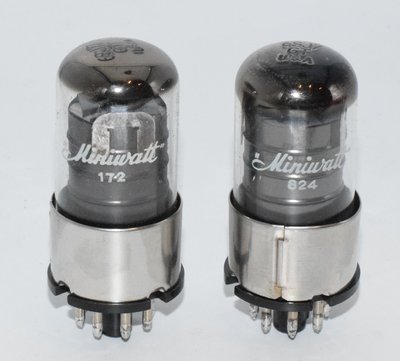
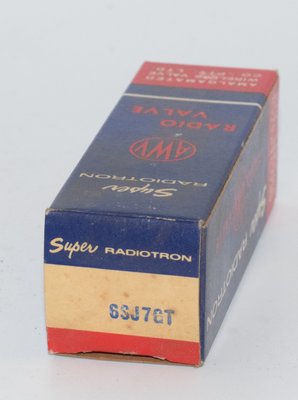
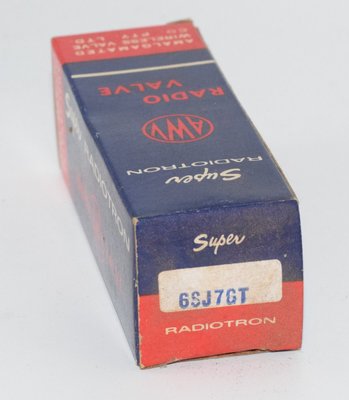
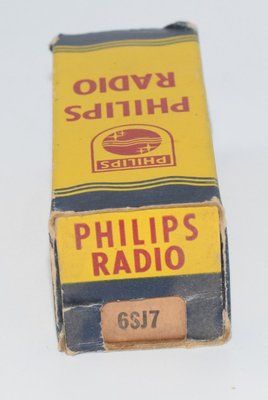
The tube was developed primarily for high-gain audio and radio frequency amplification applications. Philips, along with other major manufacturers including RCA, Sylvania, and GE, produced the 6SJ7 in significant quantities throughout the 1940s-1960s. The Philips USA version, particularly the NOS (New Old Stock) variants, are highly regarded by audio enthusiasts for their consistent quality and performance characteristics.

2. Technical Specifications and Design

Physical Characteristics:

  • Base: Octal (8-pin)
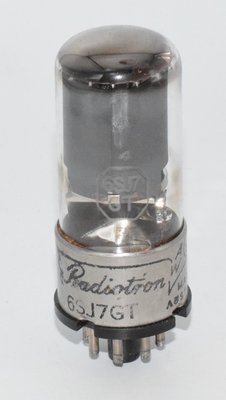
  • Envelope: Metal shell with characteristic silver/gray finish
  • Height: Approximately 3 inches (76mm)
  • Diameter: Approximately 1.25 inches (32mm)
  • Pin Configuration: Pin 1 (Shell), Pin 2 (Heater), Pin 3 (Plate), Pin 4 (Screen Grid), Pin 5 (Suppressor Grid), Pin 6 (Control Grid), Pin 7 (Heater), Pin 8 (Cathode)

Electrical Parameters:

  • Heater Voltage: 6.3V AC/DC
  • Heater Current: 0.3A
  • Plate Voltage (maximum): 300V
  • Screen Grid Voltage (maximum): 300V
  • Plate Dissipation (maximum): 2.5W
  • Screen Dissipation (maximum): 1.0W
  • Transconductance: Approximately 1650 μmhos
  • Plate Resistance: Approximately 1 megohm
  • Amplification Factor: Approximately 1500

Design Features:

The 6SJ7 employs a sharp-cutoff pentode design, featuring five active elements: cathode, control grid, screen grid, suppressor grid, and plate (anode). The sharp-cutoff characteristic means the tube exhibits a nearly linear relationship between grid voltage and plate current over its operating range, making it suitable for applications requiring minimal distortion.

The metal shell construction provides excellent shielding against external electromagnetic interference, a significant advantage over glass tubes in sensitive radio frequency applications. The suppressor grid, connected to the cathode internally, prevents secondary emission effects that could otherwise cause instability in pentode operation.

3. Applications and Usage

The 6SJ7 found extensive use in a variety of electronic equipment from the late 1930s through the 1960s, including:

Audio Applications:

  • Preamplifier stages in high-fidelity audio equipment
  • Microphone preamplifiers
  • Phase inverter circuits
  • Voltage amplification stages in guitar amplifiers
  • Audio mixing consoles and professional recording equipment

Radio Frequency Applications:

  • RF and IF amplifier stages in AM/FM receivers
  • Signal detection and amplification in communications equipment
  • Test equipment and signal generators
  • Early television receiver circuits

Instrumentation:

  • Oscilloscopes
  • Frequency counters
  • Audio analyzers
  • Industrial control systems

In typical audio applications, the 6SJ7 is configured with a plate voltage between 250-300V and screen voltage between 100-150V. For maximum gain with acceptable distortion characteristics, a cathode resistor of approximately 2.7kΩ is often used, sometimes bypassed with a capacitor for higher gain at the expense of increased distortion.

4. Equivalent or Substitute Types

Several tubes can serve as direct or near-direct replacements for the 6SJ7:

Direct Equivalents:

  • 6SJ7GT/G - Glass envelope version with identical electrical characteristics
  • 6SJ7WGT - Military/industrial ruggedized version
  • VT-116 - Military designation for the 6SJ7
  • CV1091 - British military designation

Close Substitutes (may require minor circuit adjustments):

  • 6J7 - Earlier version with similar characteristics but slightly different pinout
  • 6SH7 - Similar pentode with higher transconductance
  • 7J7 - Loctal base equivalent
  • EF37A - European equivalent with somewhat different characteristics
  • 6SK7 - Remote-cutoff version (not ideal for all applications due to different grid characteristics)

When substituting, care must be taken to ensure that the replacement tube's characteristics are compatible with the circuit design, particularly regarding gain, bias requirements, and input/output impedances.

5. Notable Characteristics

The 6SJ7 exhibits several distinctive characteristics that made it popular in its heyday and continue to make it sought after by audio enthusiasts and vintage equipment restorers:

Audio Performance:

  • High Gain - The tube provides excellent voltage amplification, making it ideal for preamplifier stages.
  • Low Noise - Particularly in selected or matched specimens, the 6SJ7 can exhibit remarkably low noise for a pentode of its era.
  • Distinctive Harmonic Character - When driven into mild saturation, it produces even-order harmonics that many audiophiles find musically pleasing.

Technical Considerations:

  • Microphonics - Some specimens can be prone to microphonic behavior (converting mechanical vibration to electrical signals), requiring careful mounting in sensitive audio applications.
  • Miller Effect - The tube exhibits relatively low grid-to-plate capacitance, reducing Miller effect issues in high-frequency applications.
  • Shielding - The metal envelope provides excellent shielding against electromagnetic interference, a significant advantage in sensitive RF circuits.

Collectibility and Modern Usage:

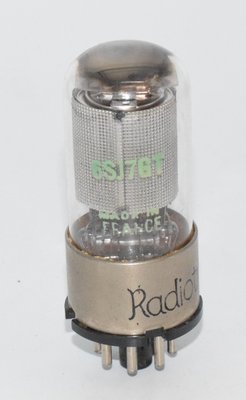
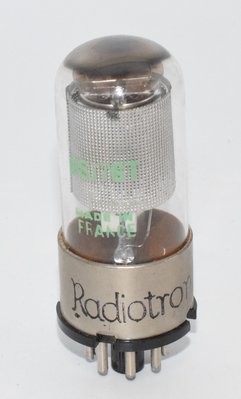
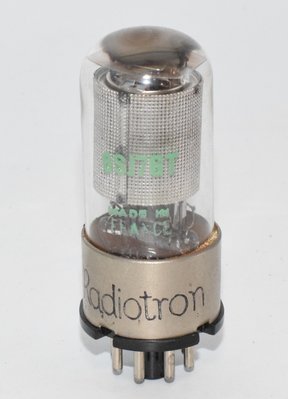
Philips USA NOS specimens of the 6SJ7, particularly those that test at 100% on tube testers like the AVO, are highly sought after by audio enthusiasts and vintage equipment restorers. The writing on the base typically indicates date codes, factory information, or military inspection marks, which can add to the tube's provenance and collectible value.

In modern usage, the 6SJ7 continues to find application in high-end audio equipment, particularly in boutique guitar amplifiers and audiophile preamplifiers where its distinctive sonic signature is valued. Some contemporary tube audio designers incorporate the 6SJ7 specifically for its ability to impart a warm, vintage character to audio signals when properly implemented.

The 6SJ7's legacy extends beyond its technical specifications – it represents an era of American electronic manufacturing excellence and continues to be appreciated for both its historical significance and ongoing utility in specialized audio applications.

Available 6SJ7 Tubes

The following products are 6SJ7 tubes or equivalent substitutes currently in stock.