Introduction and History
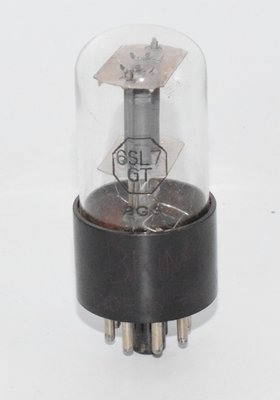
The 6SL7GT is a high-mu twin triode vacuum tube that became one of the most important small-signal amplifier valves of the 20th century. Introduced in the early 1940s as part of the American octal-based tube family, the 6SL7GT was designed as a high-gain voltage amplifier companion to the lower-mu 6SN7GT. Together, these two tubes formed the backbone of countless audio amplifier designs, radio receivers, and military electronics from World War II through the 1960s.
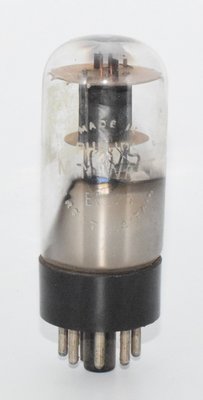
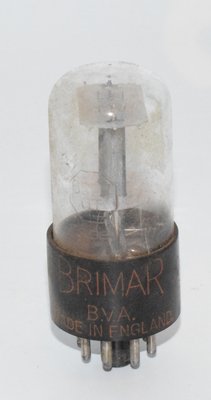
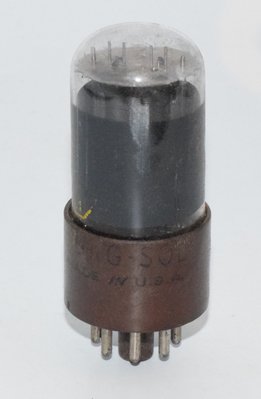
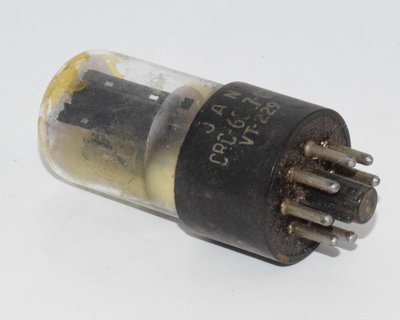
The tube was manufactured by virtually every major valve producer worldwide, including RCA, Sylvania, Tung-Sol, Brimar (Standard Telephones and Cables), Mullard, and many others. Its military designation was VT-229 (JAN specification), reflecting its widespread adoption in wartime equipment where reliable, high-gain voltage amplification was essential. The Brimar Application Report VAD/513.2, issued in March 1950 by Standard Telephones and Cables Pty. Ltd., provides one of the most thorough technical treatments of this valve, covering its use as a normal amplifier, resistance-capacity coupled amplifier, cascade amplifier, and paraphase amplifier.
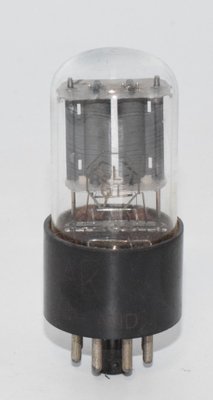
The 6SL7GT belongs to the GT (Glass Tubular) envelope family, using a T9-GT bulb mounted on a moulded International Octal base. Each triode unit within the envelope is a separate structure, sharing only the heater connections. This independence of the two sections makes the valve exceptionally versatile — the two triode units can be used for entirely different functions, or cascaded together for very high overall gain.
The "6" in the designation indicates a 6.3-volt heater, "SL" denotes the specific tube type within the RCA naming convention (with the "S" family indicating twin triodes), "7" is the sequential design number, and "GT" specifies the glass tubular envelope style. The tube has characteristics somewhat similar to the 6O7G/GT, as noted in the Brimar datasheet.
Technical Specifications and Design
Heater Ratings
| Parameter | Value |
|---|---|
| Heater Voltage | 6.3 V |
| Heater Current (Nominal) | 0.3 A |
| Max. DC Heater-Cathode Potential | 250 V |
| Cathode Type | Indirectly-heated oxide-coated |
Maximum Ratings (Each Triode Unit)
| Parameter | Value |
|---|---|
| Max. Plate Voltage | 300 V |
| Max. Plate Dissipation | 1.0 W |
| Max. Cathode Current | 8 mA |
Note: The Brimar datasheet specifies a maximum plate voltage of 250 V, while the TDSL reference data indicates 300 V. Different manufacturers published slightly different absolute maximum ratings. Designers should consult the specific manufacturer's datasheet for the tubes they are using and apply appropriate derating.
Typical Operating Conditions — Class A Amplifier
| Parameter | Value |
|---|---|
| Heater Voltage | 6.3 V |
| Plate Voltage | 250 V |
| Grid Voltage | −2 V |
| Amplification Factor (μ) | 70 |
| Plate Impedance (rp) | 44,000 Ω |
| Mutual Conductance (gm) | 1.6 mA/V |
| Plate Current | 2.3 mA |
Interelectrode Capacitances (Approximate, Without Shield)
| Capacitance | First Triode Unit | Second Triode Unit |
|---|---|---|
| Grid-Plate (Cga) | 3.4 pF | 3.5 pF |
| Grid-Cathode (Cgk) | 2.15 pF | 2.15 pF |
| Plate-Cathode (Cak) | 0.9 pF | 0.9 pF |
| Heater-Cathode | 4.0 pF | 3.6 pF |
Inter-Unit Capacitances
| Between | Value |
|---|---|
| Plate (1) — Plate (2) | 1.4 pF |
| Grid (1) — Grid (2) | 0.25 pF |
| Grid (1) — Plate (2) | 0.45 pF |
| Grid (2) — Plate (1) | 0.35 pF |
Physical Dimensions
| Parameter | Value |
|---|---|
| Max. Overall Length | 3-5/16 inches (approx. 84 mm) |
| Max. Diameter | 1-5/16 inches (approx. 33 mm) |
| Max. Seated Height | 2-3/4 inches (approx. 70 mm) |
| Envelope | T9-GT glass tubular |
| Base | International Octal 8-pin (Intermediate shell) |
Pin Connections (International Octal Base)
| Pin | Connection | Section |
|---|---|---|
| Pin 1 | Grid | Second Triode Unit |
| Pin 2 | Plate | Second Triode Unit |
| Pin 3 | Cathode | Second Triode Unit |
| Pin 4 | Grid | First Triode Unit |
| Pin 5 | Plate | First Triode Unit |
| Pin 6 | Cathode | First Triode Unit |
| Pin 7 | Heater | Common |
| Pin 8 | Heater | Common |
Note that the two triode units share only the heater connections. Each unit has its own independent grid, plate, and cathode, allowing maximum flexibility in circuit design.
Applications and Usage
Resistance-Capacity Coupled Amplifier
The 6SL7GT is described in the Brimar datasheet as "very suitable" for use as a resistance-capacity coupled amplifier. The high amplification factor of 70 makes it an excellent voltage amplifier stage. The datasheet provides comprehensive operating data at two supply voltages:
Plate Supply Voltage 100 V
With plate loads ranging from 0.10 to 0.50 megohms and grid leaks from 0.25 to 1.0 megohms, voltage gains of 17 to 23 are achievable with output voltages of approximately 19–21 volts peak. Cathode resistor values range from 4,000 to 8,000 ohms depending on the specific load configuration.
Plate Supply Voltage 250 V
At the higher supply voltage, performance improves significantly. With plate loads from 0.10 to 0.50 megohms, voltage gains of 40 to 55 are achievable with output voltages of 42–64 volts peak. Cathode resistor values range from 2,000 to 6,000 ohms. The Brimar datasheet provides a detailed worked example: with a 250 V supply, 100,000 ohm plate load, and 500,000 ohm grid leak, the stage gain calculates to approximately 43, yielding a peak output of 43 volts (30 volts r.m.s.).
Cascade Resistance-Capacity Coupled Amplifier
The two triode units of the 6SL7GT can be used in cascade for very high overall gain. The Brimar datasheet notes that precautions are necessary to avoid instability: separate bias resistors must be suitably decoupled for each cathode (not a common resistor), grid and plate leads should not be unduly long or close together, and adequate plate supply voltage decoupling is required. Under optimal conditions, an overall gain of the order of 2,500 is achievable with an output of approximately 50 volts peak and a frequency response within 12 dB from 50 cycles to 20 Kc/s.
The Brimar application circuit (Ref. No. 313.55) shows six different operating conditions with plate loads from 0.1 to 0.47 megohms, achieving voltage gains from 1,550 to 2,750 at 1 Kc/s, with maximum RMS output voltages of 45 to 53 volts.
Paraphase Amplifier
The 6SL7GT is particularly well-suited for generating push-pull output from a single-ended input without the need for a transformer. The Brimar datasheet describes two paraphase circuit configurations:
Normal Paraphase (Ref. No. 313.57)
In this circuit, one triode unit is fed from the output of the other unit in order to reverse the phase, with the input being adjusted so that the gain is the same from both outputs. This configuration can deliver approximately 125 volts peak push-pull output for an input of 3.0 volts peak. Under Condition 1 (Rp = 220,000 Ω, Rk = 1,500 Ω), the voltage gain at 1 Kc/s is 49 with a maximum grid-to-grid output of 96 volts r.m.s. Under Condition 2 (Rp = 100,000 Ω, Rk = 680 Ω), the gain is 41 with 90 volts r.m.s. output.
Plate-Cathode Load Phase Splitter (Ref. No. 313.56)
In this configuration, the push-pull output is obtained by dividing the load into two equal parts — one half in the plate circuit and one half in the cathode circuit of the same triode unit. This unit provides no voltage gain but produces balanced push-pull outputs. The other triode unit serves as a straight amplifier before it. This circuit delivers approximately 75 volts peak push-pull output for an input of 1.5 volts peak, with a voltage gain of 51 at 1 Kc/s and a maximum grid-to-grid output of 52 volts r.m.s. The frequency response shows only −0.1 dB at 20 Kc/s and −4.7 dB at 50 c/s compared with 1 Kc/s.
Other Applications
Beyond audio amplification, the 6SL7GT found extensive use in:
- Radio receivers: As an audio preamplifier and driver stage
- Military equipment: Designated VT-229 under JAN (Joint Army-Navy) specifications for use in military communications and radar equipment
- Test equipment: As a high-gain voltage amplifier in oscilloscopes and signal generators
- Industrial electronics: In control circuits and instrumentation amplifiers
- Early computing: In various signal conditioning and amplification roles
Sound Characteristics
The 6SL7GT has earned a devoted following among audiophiles and recording engineers for its distinctive sonic qualities. As a high-mu triode with an amplification factor of 70, it imparts a particular character to audio signals that many listeners find highly musical and engaging.
Tonal Signature
The 6SL7GT is widely regarded as producing a warm, smooth, and richly detailed sound. Compared to its miniature 9-pin successor, the 12AX7/ECC83, the 6SL7GT is often described as having a more open, spacious, and three-dimensional presentation. The larger octal envelope and separate triode structures contribute to lower interelectrode capacitances between sections (grid-to-grid coupling of only 0.25 pF), which audiophiles believe results in less crosstalk and a cleaner, more transparent sound.
Frequency Response Character
The relatively high plate impedance of 44,000 ohms means that the 6SL7GT's frequency response is more sensitive to load impedance than lower-mu types. With appropriate circuit design, the tube delivers excellent midrange clarity and a sweet, extended treble that avoids harshness. The bass response, while not as authoritative as lower-impedance types like the 6SN7GT, is well-defined and musical. The Brimar datasheet's cascade amplifier data shows that with careful component selection, the frequency response can be maintained within reasonable limits from 50 Hz to 20 kHz.
Harmonic Distortion Profile
Like all triodes, the 6SL7GT produces predominantly even-order harmonics (primarily second harmonic), which the human ear perceives as warm and pleasant. The Brimar datasheet provides an insightful analysis of distortion characteristics: in the worked example at 250 V supply with a 100,000 ohm plate load, the stage gain varies from 46 at −0.5 V grid bias to 38.5 at −2.5 V, meaning the positive peaks of the signal output will be approximately 16% less than the negative peaks. This asymmetric clipping behavior is characteristic of single-ended triode stages and contributes to the tube's musical quality.
Microphonics and Noise
Due to its high gain, the 6SL7GT can be susceptible to microphonic noise — mechanical vibrations that are picked up by the tube's internal structure and converted into electrical signals. Premium-grade versions (such as the 6SL7WGT military specification) feature enhanced construction to minimize this effect. In critical audio applications, careful tube selection and the use of vibration-dampening socket mounts are recommended.
Manufacturer Variations
Audiophiles note significant sonic differences between manufacturers and production eras:
- RCA: Often described as having a warm, full-bodied midrange with smooth highs — a classic "American" sound
- Sylvania: Praised for clarity, detail retrieval, and a slightly more forward presentation
- Tung-Sol: Valued for excellent dynamics, tight bass, and a lively, engaging character. The round-plate versions are particularly sought after
- Brimar (STC): Known for a refined, slightly warm British character with excellent resolution
- Mullard: Appreciated for a rich, lush midrange and smooth treble, typical of the Mullard house sound
Equivalent and Substitute Types
Close/Identical Substitutes (Direct Drop-In Replacements)
| Type | Notes |
|---|---|
| 6SL7 | Same tube without the GT envelope designation; electrically identical |
| 6SL7GTY | Ruggedized version; direct replacement |
| 6SU7GTY | Selected/premium grade; direct replacement |
| 6113 | Industrial/computer-grade equivalent |
| CV1985 | British military (CV) designation for the 6SL7GT |
| VT-229 | US military (JAN) designation |
| 6H9M / 6Н9М | Soviet equivalent; verify pinout compatibility* |
| 6N9C / 6Н9С | Soviet equivalent; verify pinout compatibility* |
| 6N9M / 6Н9М | Soviet equivalent; verify pinout compatibility* |
| 6N9S / 6Н9С | Soviet equivalent; verify pinout compatibility* |
*Soviet equivalents are listed as close substitutes but designers should verify exact pinout and operating parameter compatibility, as Soviet tube standards occasionally differ in detail from Western types.
Different Rating Substitutes (NOT Direct Drop-In)
| Type | Key Difference |
|---|---|
| 12SL7 / 12SL7GT | 12.6 V heater (series-string operation); otherwise similar characteristics. Requires different heater supply. |
| 6SL7WA / 6SL7WGT | Military ruggedized versions with tighter specifications and enhanced construction. May have different maximum ratings. |
| 6188 | Premium/selected grade with tighter tolerances; may have different maximum ratings |
| CV3985 | British military specification with potentially different ratings |
| CV924 / VT-289 | Related type with different ratings; not a direct substitute |
Comparison with the 12AX7/ECC83
The 6SL7GT is often compared to the miniature 9-pin 12AX7/ECC83, which eventually replaced it in many applications. While the 12AX7 offers a higher amplification factor (typically 100 vs. 70 for the 6SL7GT) and a more compact form factor, the 6SL7GT's separate triode structures, lower inter-section capacitance, and octal base construction are considered advantages in high-fidelity audio applications. The two types are not interchangeable without circuit modifications due to different base types, pinouts, heater requirements, and operating parameters.
Notable Characteristics
High Amplification Factor
With a μ of 70, the 6SL7GT provides significantly more gain per stage than its companion tube, the 6SN7GT (μ ≈ 20). This high gain comes at the cost of higher plate impedance (44,000 Ω vs. approximately 7,700 Ω for the 6SN7GT), which makes the 6SL7GT more sensitive to load impedance and less suitable as a driver for low-impedance loads.
Low Power Consumption
The 6SL7GT draws only 0.3 amperes of heater current at 6.3 volts, and each triode section operates at only 2.3 mA plate current under typical conditions. The maximum plate dissipation of 1.0 watt per section means the tube runs cool and has excellent longevity. This low power consumption made it ideal for battery-operated and portable equipment.
Separate Triode Structures
Unlike some dual triodes where the two sections share structural elements, each triode unit in the 6SL7GT is a completely separate structure. This design choice results in very low inter-unit capacitances (grid-to-grid: 0.25 pF, plate-to-plate: 1.4 pF) and minimal interaction between sections. This independence is particularly valuable when the two sections are used for different functions, such as amplification and phase inversion.
Versatile Operating Range
The Brimar datasheet demonstrates the tube's versatility across a wide range of operating conditions. At plate supply voltages from 100 V to 250 V, with plate loads from 100 kΩ to 500 kΩ, the tube delivers useful gain in every configuration. The comprehensive resistance-capacity coupled amplifier tables provide designers with ready-made operating points for virtually any application requirement.
Cascade Gain Potential
When both triode sections are cascaded, the 6SL7GT can achieve overall voltage gains on the order of 2,500 — an impressive figure from a single tube envelope. The Brimar datasheet documents gains up to 2,750 at 1 Kc/s under optimal conditions, with maximum RMS output voltages of 45 to 53 volts.
Usage in the Audio Community
High-Fidelity Preamplifiers
The 6SL7GT remains one of the most popular tubes for high-fidelity preamplifier designs. Its high gain allows single-stage RIAA phono preamplification, and its smooth, musical character makes it ideal for line-stage amplification. Many boutique and DIY preamplifier designs are built around the 6SL7GT, taking advantage of its octal base (which provides a more secure and lower-resistance connection than miniature 9-pin sockets) and its separate triode sections (which allow a complete stereo preamplifier channel in a single tube, or a mono channel with two gain stages).
Phase Splitter and Driver Applications
In push-pull amplifier designs, the 6SL7GT excels as a combined voltage amplifier and phase splitter. The Brimar datasheet's detailed paraphase amplifier circuits demonstrate this application thoroughly. Many classic and modern push-pull amplifier designs use the 6SL7GT to drive power tubes such as the 6L6, EL34, 6V6, or KT88. The plate-cathode load phase splitter configuration is particularly popular for its simplicity and excellent balance.
Headphone Amplifiers
The 6SL7GT has found a significant niche in the headphone amplifier market. Its high gain and low power consumption make it well-suited for driving headphones, either directly through output transformers or as a voltage amplifier stage preceding a dedicated headphone output stage. Several commercially successful headphone amplifiers feature the 6SL7GT prominently, and the tube-rolling possibilities (swapping between different manufacturer's tubes to alter the sound character) are a major attraction for headphone enthusiasts.
Guitar Amplifiers
While less common than the 12AX7 in guitar amplifiers due to its octal base requiring more chassis space, the 6SL7GT is used in some boutique and custom guitar amplifier designs. Players and builders who prefer the 6SL7GT cite its smoother overdrive characteristics, more open and dynamic clean tones, and the perceived superiority of the octal tube construction. Some vintage amplifiers originally designed with the 6SL7GT are highly prized by collectors and players.
Tube Rolling and Collecting
The 6SL7GT is one of the most actively collected and "rolled" tube types in the audio community. Vintage examples from the 1940s and 1950s — particularly early production RCA, Sylvania, and Tung-Sol tubes — command premium prices. Key features that collectors look for include:
- Round plates vs. flat plates: Early production tubes often featured round (cylindrical) plate structures, which many audiophiles prefer for their sound quality
- Bottom getter vs. top getter: The position and style of the getter assembly can indicate production era and is associated with different sonic characteristics
- Military JAN (VT-229) markings: Military-specification tubes were built to tighter tolerances and are highly valued
- Matched sections: Tubes with closely matched triode sections are preferred for phase splitter and balanced applications
Modern Production
While original production of the 6SL7GT ceased decades ago, the tube remains available as new-old-stock (NOS) from various dealers. Some current manufacturers have resumed production of 6SL7-type tubes to meet ongoing demand from the audio community. However, many audiophiles continue to prefer vintage NOS examples from established manufacturers such as RCA, Sylvania, Tung-Sol, Brimar, and Mullard, believing these offer superior construction quality and sonic performance.
Notable Commercial Products
The 6SL7GT appears in numerous commercial audio products, both vintage and contemporary. It is featured in preamplifiers, integrated amplifiers, headphone amplifiers, and phono stages from manufacturers ranging from large established companies to small artisan builders. The tube's enduring popularity is a testament to its excellent audio performance and the unique sonic character that continues to captivate listeners more than 80 years after its introduction.