1. Introduction and History
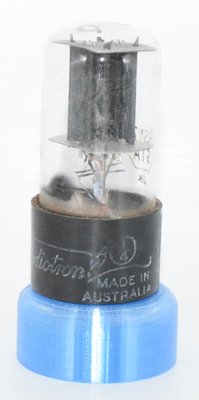
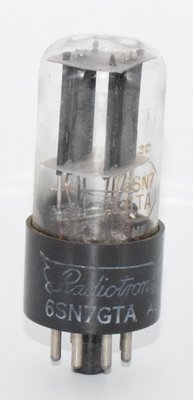
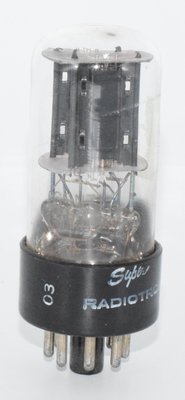
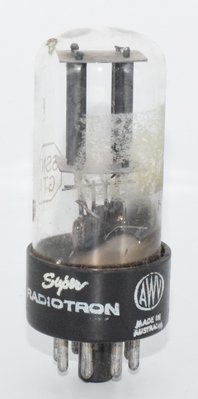
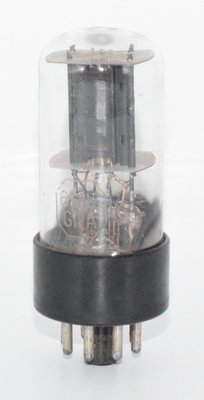
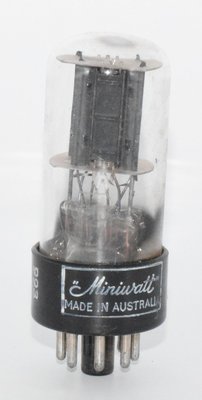
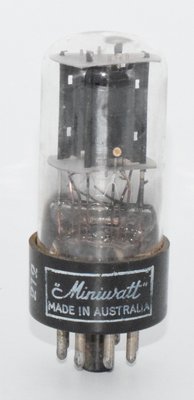
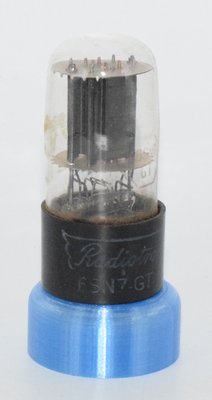
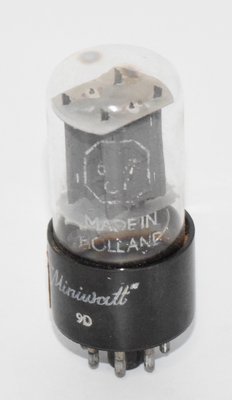
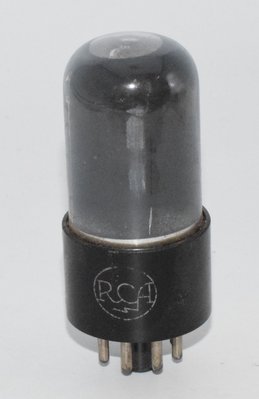
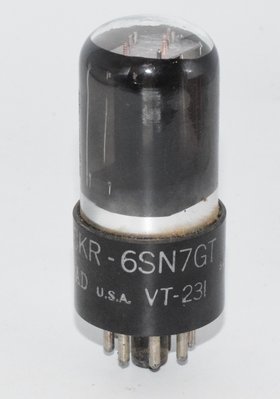
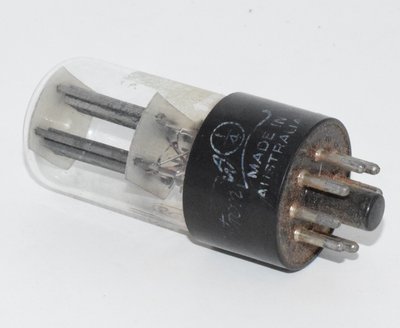
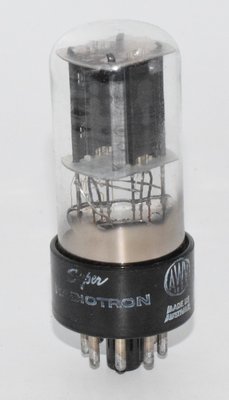
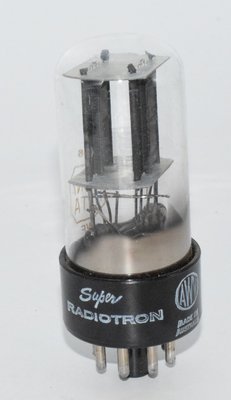
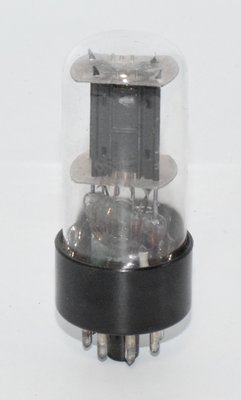
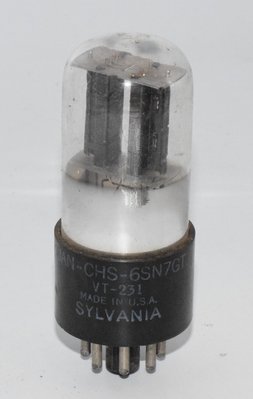
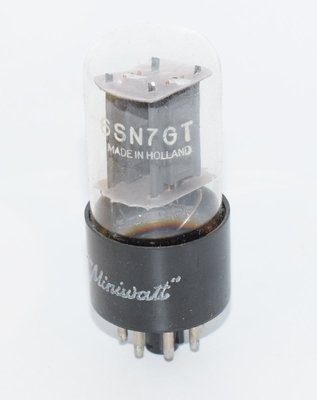
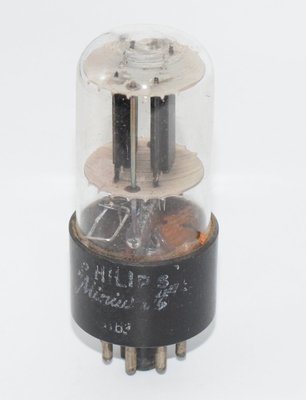
The 6SN7 is one of the most celebrated dual-triode vacuum tubes ever manufactured, and it holds a revered position in both the history of electronics and the modern audio community. Introduced in the early 1940s by major American manufacturers including RCA, Sylvania, and Ken-Rad, the 6SN7GT was designed as a medium-mu dual triode intended for use as a voltage amplifier, phase inverter, and driver stage in a wide variety of electronic equipment.
The 6SN7 belongs to the octal-base family of tubes and was developed as an improved successor to the earlier 6F8G, which shared similar electrical characteristics but used a larger single-ended envelope with a top cap grid connection. By moving to the more compact GT (Glass Tubular) envelope and bringing all connections through the octal base, the 6SN7GT offered greater convenience, improved shielding, and easier circuit layout.
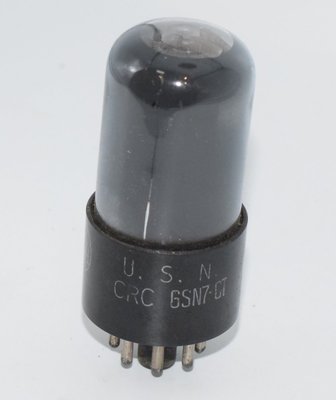
During World War II, the 6SN7GT found extensive use in military electronics, radar systems, and computing equipment. Its reliability and versatile electrical characteristics made it a workhorse of the era. After the war, it became a staple in high-fidelity audio amplifiers, television receivers, and test equipment. Legendary audio designers — including those at companies like Cary Audio, Audio Research, and Atma-Sphere — have built iconic amplifier designs around this tube.
Over the decades, several improved variants were introduced:
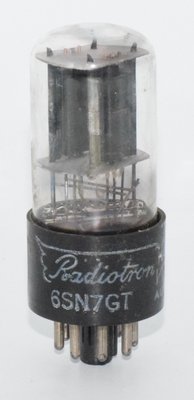
- 6SN7GT — The original version, with a maximum plate supply voltage of 300V.
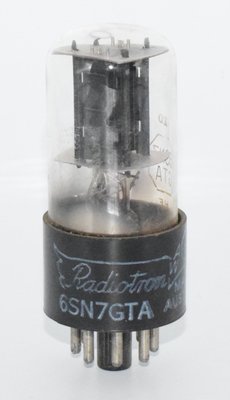
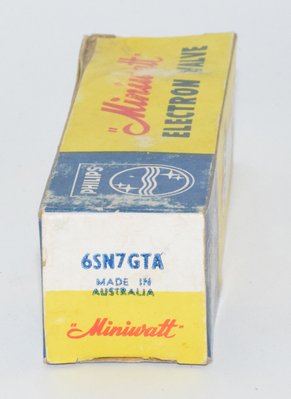
- 6SN7GTA — An improved version allowing a higher plate supply voltage of up to 450V, with enhanced ratings for certain operating conditions.
- 6SN7GTB — A further refinement with 450V plate supply capability and improved controlled warm-up heater characteristics to reduce surge currents.
- 5692 — A premium, long-life industrial/military variant manufactured by RCA (and others), with tighter tolerances, matched sections, and a rated lifespan of 10,000 hours, though with a reduced plate dissipation rating of 3.5W per plate.
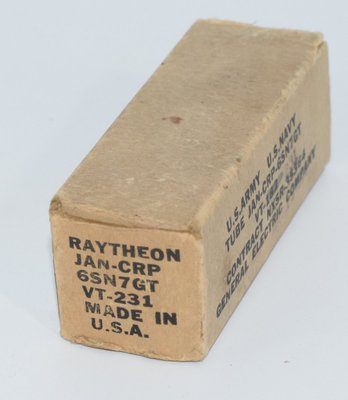
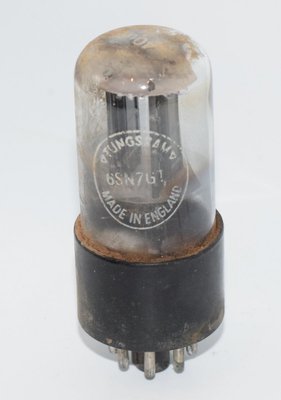
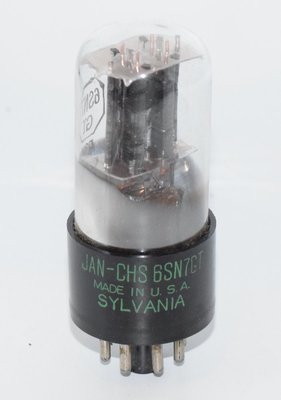
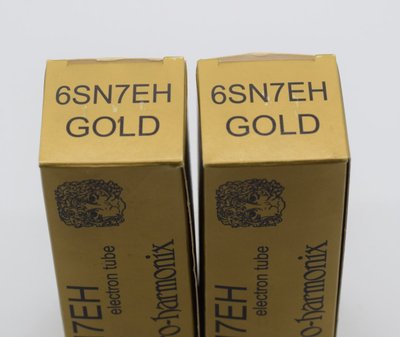
Today, the 6SN7 remains in active production by manufacturers such as Electro-Harmonix (6SN7EH), JJ Electronic, Psvane, Shuguang, and others. Vintage examples from RCA, Sylvania, Tung-Sol, Ken-Rad, and Raytheon are highly sought after by audiophiles and command premium prices on the collector market.
2. Technical Specifications and Design
The following specifications are for the standard 6SN7GT unless otherwise noted. All values are referenced against established manufacturer datasheets (primarily RCA, Sylvania, and GE). Where variants differ, the differences are noted.
General Description
| Tube Type | Dual Triode (two independent triode sections in one envelope) |
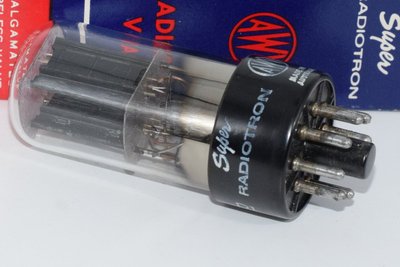
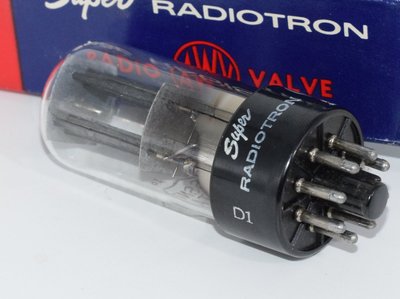
| Base Type | Octal (International Octal, 8-pin) |
| Envelope Type | GT (Glass Tubular), T-12 bulb shape (some early versions used ST-12 shoulder bulb) |
| Mounting Position | Any (designed for universal mounting) |
| Overall Length | Approximately 75–80 mm (excluding pins); varies slightly by manufacturer |
| Maximum Diameter | Approximately 38 mm (T-12 envelope) |
Heater Ratings
| Heater Voltage (Eh) | 6.3V |
| Heater Current (Ih) | 0.6A (both sections combined) |
| Heater Configuration | Parallel-connected internal heater (pins 4 and 8 are the heater connections, with pin 7 serving as the heater center-tap on some versions) |
Maximum Ratings (Per Section) — 6SN7GT
| Maximum Plate Voltage | 300V |
| Maximum Plate Supply Voltage (B+) | 300V |
| Maximum Plate Dissipation (per plate) | 5.0W |
| Maximum Combined Plate Dissipation (both sections) | 7.5W |
| Maximum Cathode Current (per section) | 20 mA |
| Maximum Peak Plate Current | 50 mA (per section) |
| Maximum Grid Circuit Resistance (Rg) | 1.0 MΩ (fixed bias); 1.0 MΩ (cathode bias) — confirm against specific manufacturer datasheet, as some list 0.5 MΩ for fixed bias |
Maximum Ratings — Variants
| Parameter | 6SN7GT | 6SN7GTA | 6SN7GTB | 5692 |
|---|---|---|---|---|
| Max Plate Voltage | 300V | 300V | 300V | 300V |
| Max Plate Supply Voltage (B+) | 300V | 450V | 450V | 300V |
| Max Plate Dissipation (per plate) | 5.0W | 5.0W | 5.0W | 3.5W |
| Max Combined Plate Dissipation | 7.5W | 7.5W | 7.5W | 7.0W |
| Controlled Warm-Up Heater | No | No | Yes | No |
Note: The 6SN7GTA and 6SN7GTB allow higher plate supply voltages (up to 450V) through the use of series dropping resistors, but the actual voltage appearing at the plate should not exceed 300V under typical operating conditions. Always consult the specific manufacturer's datasheet for the exact variant you are using.
Typical Operating Characteristics (Per Section)
The following are typical Class A1 operating conditions as specified in the RCA datasheet:
| Plate Voltage (Eb) | 250V |
| Grid Voltage (Ec1) | −8V |
| Plate Current (Ib) | 9 mA |
| Amplification Factor (μ) | 20 |
| Transconductance (gm) | 2,600 μmhos (2.6 mA/V) |
| Plate Resistance (rp) | 7,700 Ω (7.7 kΩ) |
These three parameters are interrelated by the fundamental equation: μ = gm × rp (i.e., 20 ≈ 2.6 mA/V × 7.7 kΩ).
Grid Bias Range
The grid bias for the 6SN7GT varies with plate voltage. At typical operating points:
- At Eb = 250V: Ec1 = −8V (Ib ≈ 9 mA)
- At Eb = 300V: Ec1 = −12V to −15V (depending on desired operating point)
- At Eb = 100V: Ec1 = −2V to −4V
The tube is designed for Class A1 operation, meaning the grid should never be driven positive with respect to the cathode under normal signal conditions.
Pin-Out (Octal Base — Bottom View)
| Pin Number | Connection |
|---|---|
| Pin 1 | Grid 1 (Triode Section 1) |
| Pin 2 | Plate 1 (Triode Section 1) |
| Pin 3 | Cathode 1 (Triode Section 1) |
| Pin 4 | Heater |
| Pin 5 | Plate 2 (Triode Section 2) |
| Pin 6 | Grid 2 (Triode Section 2) |
| Pin 7 | Cathode 2 (Triode Section 2) — also serves as heater center-tap on some versions |
| Pin 8 | Heater |
Note: The octal base includes a central keyed locating spigot that ensures correct orientation when inserting the tube into its socket. Pin numbering is viewed from the bottom of the tube (pin side). On some versions, Pin 7 doubles as the heater center-tap, which is relevant when using the 12.6V heater variant (12SN7GT).
3. Applications and Usage
The 6SN7 is one of the most versatile dual-triode tubes ever designed. Its balanced combination of moderate gain (μ = 20), relatively low plate resistance, and generous plate dissipation capability makes it suitable for a wide range of circuit functions:
Audio Applications
- Voltage Amplifier / Preamplifier Stage: The 6SN7 provides clean, linear voltage gain with excellent signal-handling capability. Its moderate mu of 20 is ideal for high-fidelity preamplifier stages where low distortion is more important than high gain.
- Phase Inverter / Phase Splitter: The dual-triode construction makes the 6SN7 ideal for split-load (cathodyne), long-tailed pair, and other phase-inverter topologies used to drive push-pull output stages. The matched sections within a single envelope help ensure balanced drive signals.
- Driver Stage: With its relatively low plate resistance and ability to deliver reasonable current swings, the 6SN7 excels as a driver for power output tubes such as the 300B, 2A3, 6L6, EL34, KT88, and others.
- Line Stage Amplifier: Many high-end line-stage preamplifiers use the 6SN7 as their primary gain element, taking advantage of its linearity and sonic character.
- Headphone Amplifier: The 6SN7's low plate resistance and current capability make it suitable for directly driving high-impedance headphones in OTL (output-transformerless) designs.
Non-Audio Applications (Historical)
- Television Receivers: Widely used as vertical oscillator, sync separator, and AGC amplifier stages in early television sets.
- Radar and Military Electronics: Employed in timing circuits, multivibrators, and signal processing stages during WWII and beyond.
- Computing: Used in early electronic computers as flip-flop circuits and logic elements.
- Test Equipment: Found in oscilloscopes, signal generators, and other laboratory instruments as amplifier and buffer stages.
4. Sound Characteristics
The 6SN7 is widely regarded by audiophiles and audio engineers as one of the finest-sounding small-signal tubes ever produced. Its sonic reputation is a key reason for its enduring popularity, and it is often described in the following terms:
General Sonic Character
- Warmth and Body: The 6SN7 is consistently praised for its rich, full-bodied midrange. Compared to the popular 12AX7/ECC83 (which has a much higher mu of 100), the 6SN7 delivers a more relaxed, natural, and three-dimensional presentation. The lower gain means less feedback is typically needed in circuit designs, which many listeners associate with a more open and uncompressed sound.
- Smoothness and Liquidity: The 6SN7 is known for a smooth, liquid quality — particularly through the midrange and upper frequencies. Sibilance and harshness are notably absent in well-designed 6SN7 circuits. Vocals, in particular, are often described as having a lifelike, palpable presence.
- Excellent Dynamics: Despite its smoothness, the 6SN7 does not sacrifice dynamic contrast. Its relatively low plate resistance and generous current capability allow it to deliver punchy, authoritative transients — a quality that distinguishes it from higher-mu, higher-impedance miniature dual triodes.
- Soundstage and Imaging: Audiophiles frequently note the 6SN7's ability to present a wide, deep, and well-defined soundstage. Instrument separation and spatial cues are rendered with clarity and precision.
- Bass Performance: The low plate resistance contributes to tight, well-controlled bass response. The 6SN7 avoids the sometimes "woolly" or loose bass character associated with some higher-impedance tube types.
- Transparency: While warm, the 6SN7 is not overly colored. It strikes a balance between euphonic richness and transparency that many listeners find ideal for high-fidelity reproduction.
Sonic Variations by Brand and Era
One of the great pleasures of the 6SN7 for tube enthusiasts is the wide range of sonic flavors available across different manufacturers and production eras:
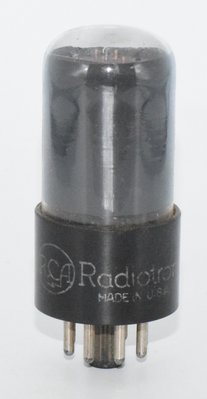
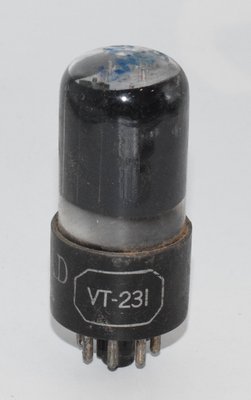
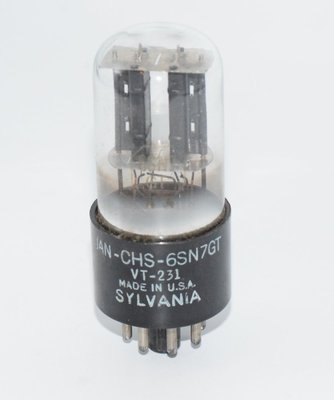
- RCA (Red Base, Grey Glass, VT-231): Often described as warm, smooth, and romantic, with a lush midrange. The famous "red base" variants are among the most sought-after.
- Sylvania (Chrome Top, Bad Boy, W-metal, Green Label): Typically characterized by greater detail, clarity, and a slightly more forward presentation compared to RCA. Excellent top-end extension.
- Tung-Sol (Round Plate, Mouse Ears): The round-plate Tung-Sol 6SN7GT is legendary for its holographic soundstage, rich harmonics, and exceptional midrange beauty. Among the most expensive vintage variants.
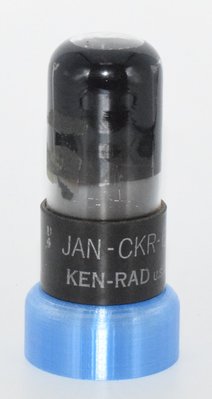
- Ken-Rad (VT-231, Black Glass): Known for a bold, dynamic, and slightly darker sound with powerful bass. The "black glass" VT-231 versions are highly prized.
- Raytheon: Generally clean, neutral, and well-balanced. Good all-rounders.
- Electro-Harmonix 6SN7EH: A current-production tube that offers a clean, clear, and well-balanced sound. It provides a reliable and consistent modern alternative to vintage tubes, with good detail retrieval and a neutral-to-slightly-warm tonal balance. An excellent starting point for those exploring 6SN7-based equipment.
5. Equivalent or Substitute Types
The following tubes are generally considered interchangeable with the 6SN7GT, though important differences are noted:
Direct Equivalents (Drop-In Replacements)
| Type | Notes |
|---|---|
| 6SN7GTA | Direct replacement. Higher plate supply voltage rating (450V B+). Fully compatible. |
| 6SN7GTB | Direct replacement. Higher plate supply voltage rating (450V B+) and controlled warm-up heater. Fully compatible. |
| 5692 | Premium long-life variant. Direct plug-in replacement, but note the reduced plate dissipation rating of 3.5W per plate (vs. 5W for the standard 6SN7GT). Ensure the circuit does not exceed 3.5W per section if using this type. |
| 6SN7W / 6SN7WGT | Military-grade version with ruggedized construction. Direct replacement. |
| VT-231 | WWII military designation for the 6SN7GT. Electrically identical. |
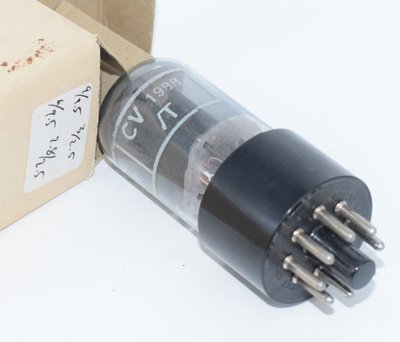
| CV1988 | British military (CV) designation equivalent to the 6SN7GT. Direct replacement. |
| B65 | British commercial equivalent. Electrically similar; verify base compatibility (most use the standard octal base). |
| ECC32 | Mullard type. Similar characteristics but not an exact electrical equivalent — the ECC32 has somewhat different operating parameters (higher mu, different bias points). It will physically fit an octal socket, but circuit adjustments may be needed. Not a guaranteed drop-in replacement. |
| ECC33 | Mullard type. Closer to the 6SN7 electrically than the ECC32, but still not an exact match. Verify operating conditions before substituting. |
Related Types (Not Direct Replacements)
| Type | Notes |
|---|---|
| 12SN7GT | Electrically identical triode sections, but with a 12.6V / 0.3A heater (vs. 6.3V / 0.6A). The 12SN7GT has a center-tapped heater, meaning its internal heater sections can be wired in series for 12.6V operation or in parallel for 6.3V operation. Do not simply plug a 12SN7GT into a 6SN7 socket without verifying that the heater circuit is configured correctly — in a standard 6.3V circuit, the heater center-tap (Pin 7) must be properly connected to allow parallel heater operation. |
| 6F8G | Predecessor to the 6SN7 with similar electrical characteristics, but uses a different envelope (ST-12/14) and has a top-cap grid connection for one section. Requires an adapter or different socket wiring. Not a plug-in replacement. |
| 6CG7 / 6FQ7 | 9-pin miniature (noval base) dual triode with similar electrical characteristics to the 6SN7 (μ ≈ 20, gm ≈ 2,600 μmhos). Sometimes described as the "miniature 6SN7." Requires a different socket (9-pin noval vs. 8-pin octal) and cannot be directly substituted without an adapter. Some amplifiers offer adapter sockets for this swap. |
6. Notable Characteristics
- Exceptional Linearity: The 6SN7's transfer characteristics are remarkably linear for a triode, resulting in very low harmonic distortion — predominantly second-harmonic, which is musically consonant and perceived as pleasant by most listeners.
- Robust Construction: The octal-base format and GT envelope provide a physically sturdy tube that is resistant to microphonics compared to many miniature types. The larger electrode structures also contribute to lower noise.
- Matched Sections: While manufacturing tolerances vary, the 6SN7 generally offers reasonably well-matched triode sections within a single envelope, which is important for phase-inverter and balanced circuit applications. Premium types like the 5692 offer tighter matching specifications.
- Low Microphonics: The larger physical structure and heavier electrode mass of the 6SN7 generally result in lower susceptibility to microphonic noise compared to miniature 9-pin dual triodes like the 12AU7 or 12AT7.
- Heater-to-Cathode Voltage: The maximum heater-to-cathode voltage for the 6SN7GT is typically rated at ±100V (DC) or 100V (peak AC). This is an important consideration in circuits where the cathode is elevated significantly above ground potential. Confirm this value against the specific manufacturer's datasheet for your variant.
- Collectibility: Vintage 6SN7 tubes — particularly rare variants like the Tung-Sol round plate, RCA red base, Sylvania "Bad Boy," and Ken-Rad VT-231 black glass — are among the most collectible and valuable audio tubes in existence. Prices for premium vintage examples can range from $100 to over $500 per tube.
- Longevity: Standard 6SN7GT tubes have an expected lifespan of approximately 5,000 hours under normal operating conditions. The premium 5692 variant is rated for 10,000 hours. Actual lifespan depends heavily on operating conditions, particularly plate dissipation and cathode current.
7. Usage in the Audio Community
The 6SN7 occupies a unique and exalted position in the audio community. It is arguably the most popular octal dual-triode among audiophiles, and its influence on high-end audio design is profound.
Amplifier Designs
Numerous acclaimed amplifier designs are built around the 6SN7:
- Atma-Sphere: The legendary OTL (Output Transformerless) amplifiers from Atma-Sphere, including the MA-1 and M-60, use banks of 6SN7 tubes as driver stages. These amplifiers are renowned for their speed, transparency, and natural sound.
- Cary Audio: The Cary SLP-05 preamplifier and various Cary power amplifiers use the 6SN7 as a key gain and driver element. Dennis Had's designs at Cary helped popularize the 6SN7 in the modern high-end audio era.
- Audio Research: Several Audio Research preamplifiers and amplifiers have employed the 6SN7, including the Reference series.
- Schiit Audio: The Schiit Freya preamplifier uses the 6SN7 in its tube buffer stage, introducing a new generation of audiophiles to this classic tube type at an accessible price point.
- DIY Community: The 6SN7 is enormously popular in the DIY audio community. Classic circuits like the Aikido line stage, various SRPP (Shunt Regulated Push-Pull) designs, and mu-follower topologies frequently employ the 6SN7. Its forgiving nature, wide operating range, and excellent sound make it ideal for home builders.
Tube Rolling
"Tube rolling" — the practice of swapping different brands and vintages of a given tube type to alter or optimize the sound of an amplifier — is perhaps more popular with the 6SN7 than with any other tube type. The wide variety of available brands, vintages, and construction types (round plates, flat plates, T-plates, black glass, chrome domes, etc.) provides an almost endless palette of sonic flavors for the enthusiast to explore.
The Electro-Harmonix 6SN7EH is a popular current-production option that serves as an excellent baseline tube for rolling experiments. It is well-built, consistent, and sonically neutral, making it a reliable reference point against which vintage tubes can be compared. Many audiophiles begin with the 6SN7EH and then explore vintage options as their tastes and budgets allow.
Headphone Amplifiers
The 6SN7 has found a strong following in the headphone amplifier community. Designs from Bottlehead (Crack with Speedball upgrade, using adapter), Woo Audio (WA6, WA22), and numerous DIY projects use the 6SN7 to drive headphones. The tube's low output impedance (relative to other small-signal triodes), current delivery capability, and rich sonic character make it well-suited to this application.
Preamplifiers
The 6SN7 is perhaps most widely used as a preamplifier tube. Its moderate gain of 20 is well-suited to line-level applications, providing enough amplification to drive power amplifiers to full output without the excess gain (and associated noise) of higher-mu types. The result is a quiet, dynamic, and musically engaging preamplifier stage.
Current Production and Availability
The continued demand for the 6SN7 has ensured ongoing production from several manufacturers:
- Electro-Harmonix 6SN7EH (Russia) — Widely available, consistent quality, and good sonic performance. An excellent choice for everyday use and as a reliable replacement tube.
- JJ Electronic 6SN7 (Slovakia) — Another popular current-production option with a warm, smooth character.
- Psvane 6SN7-SE (China) — A premium current-production tube with high build quality and refined sonics.
- Shuguang 6SN7 / CV181 (China) — Available in various grades, including premium "Treasure" series versions.
- Tung-Sol 6SN7GTB (Reissue) (Russia, New Sensor) — A reissue bearing the Tung-Sol name, offering solid performance at a reasonable price.
Community and Culture
The 6SN7 has inspired a passionate community of enthusiasts who share knowledge, reviews, and experiences on forums such as Head-Fi, AudiogoN, DIYAudio, and various audiophile groups. Detailed comparisons of different 6SN7 variants — complete with descriptions of internal construction, date codes, and sonic impressions — are a staple of these communities. The tube's combination of historical significance, sonic excellence, and collectible variety makes it a uniquely engaging component in the world of high-fidelity audio.
Disclaimer: While every effort has been made to ensure the accuracy of the specifications presented in this article, vacuum tube specifications can vary between manufacturers and production runs. Always consult the specific manufacturer's datasheet for the exact tube you are using, particularly when designing new circuits or operating tubes near their maximum ratings. When in doubt, derate conservatively to ensure reliability and longevity.