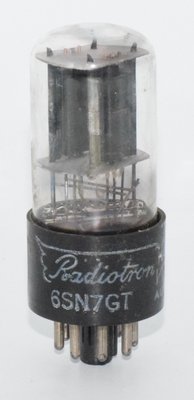
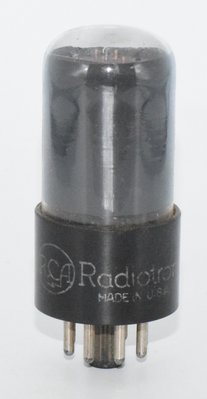
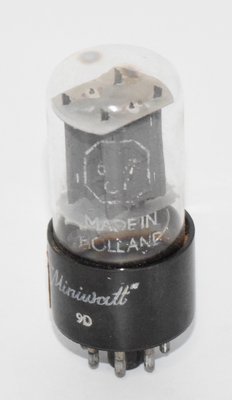
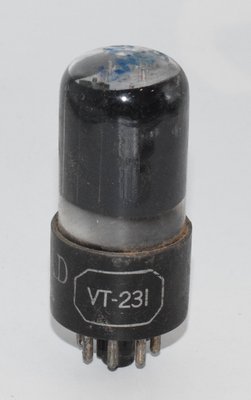
1. Introduction and History
The 6SN7GT is a medium-mu dual triode vacuum tube that has earned legendary status in the world of audio electronics. Introduced in the early 1940s, it quickly became one of the most important and widely used signal-level tubes in both military and civilian applications. The tube was developed as an octal-based improvement over earlier dual triode designs, offering two independent triode sections in a single glass envelope with excellent linearity and low distortion characteristics.
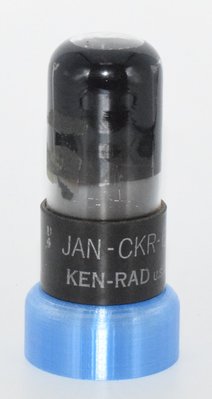
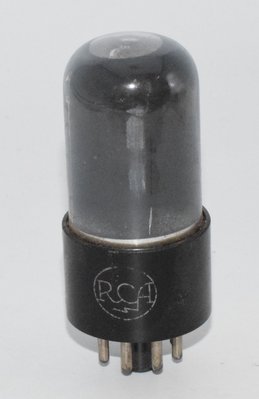
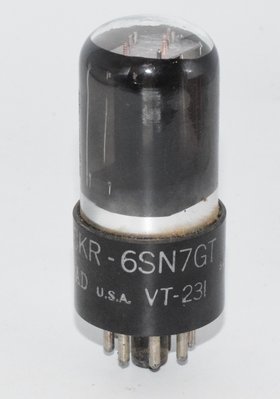
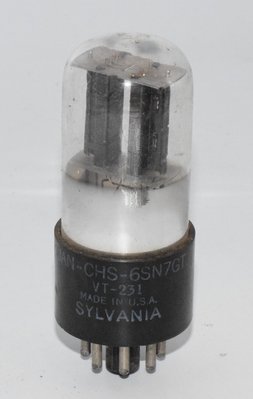
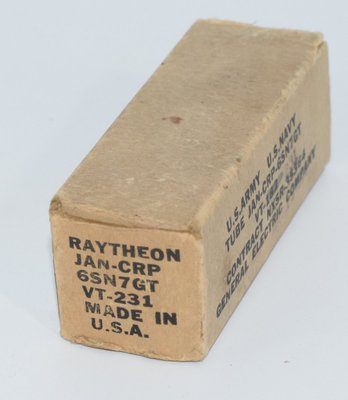
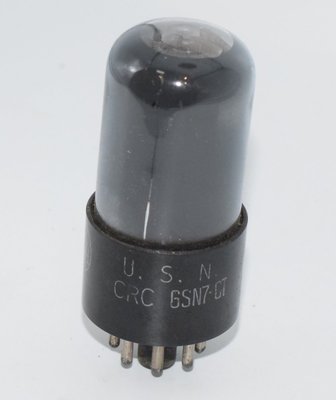
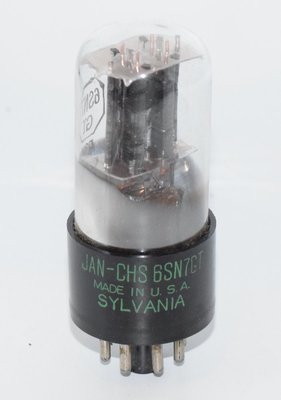
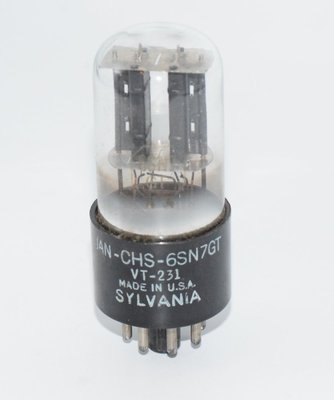
The 6SN7GT's origins are deeply intertwined with World War II. Under the Joint Army-Navy (JAN) designation system, it was assigned the military type number VT-231. Major American manufacturers including Sylvania (producing JAN-CHS-6SN7GT / VT-231 variants), RCA, Ken-Rad, and Raytheon (producing JAN-CRP variants) all manufactured the tube in enormous quantities for the war effort. These wartime production tubes, built to exacting military standards, are today among the most sought-after variants by audiophiles and collectors.
The tube's design lineage can be traced to the earlier 6J5 single triode — the 6SN7GT essentially places two 6J5-equivalent triode sections into one octal envelope. This consolidation offered significant advantages in terms of chassis space, reduced socket count, and simplified wiring in complex circuits. After the war, the 6SN7GT became a cornerstone of high-fidelity audio amplifier design, appearing in countless preamplifiers, phase splitters, and driver stages throughout the golden age of vacuum tube audio in the 1950s and 1960s.
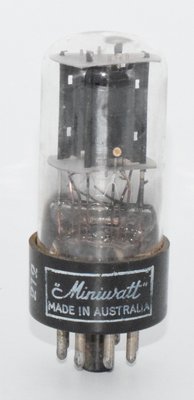
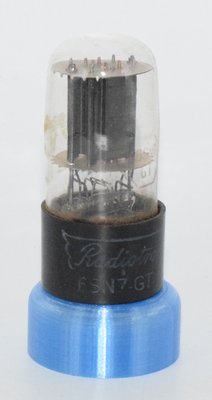
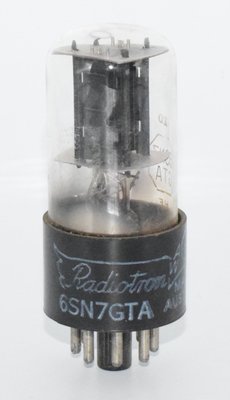
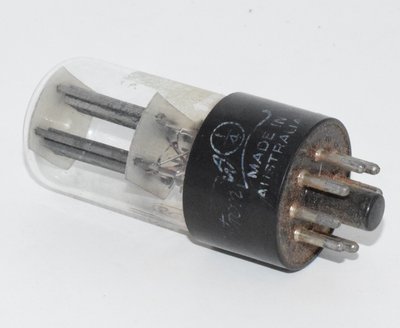
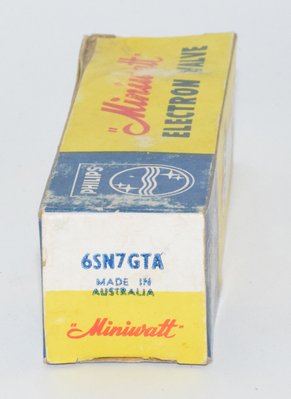
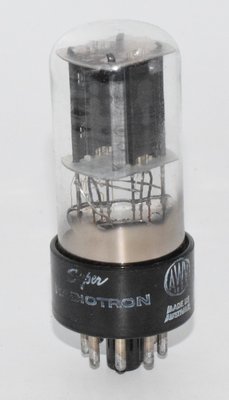
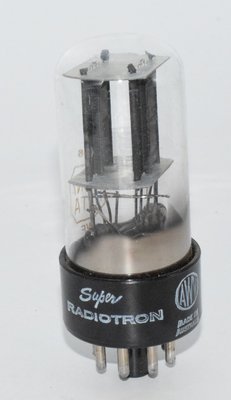
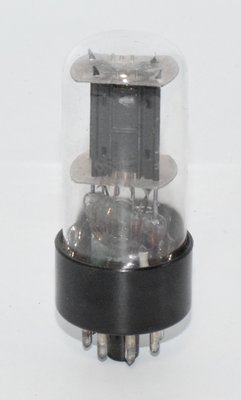
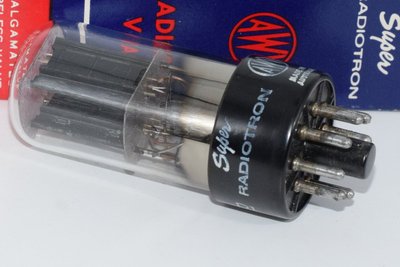
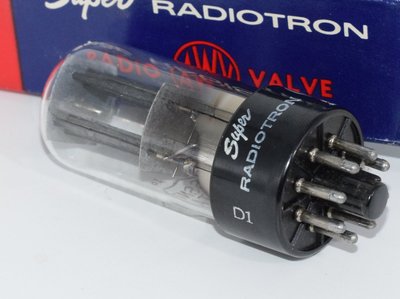
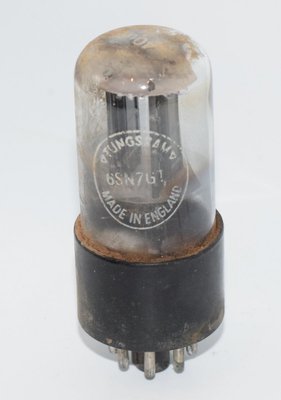
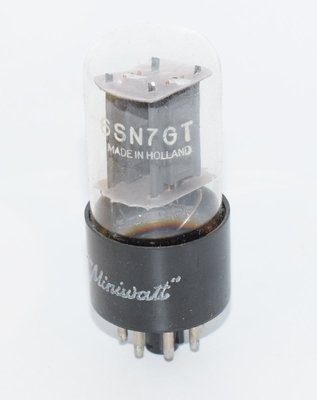
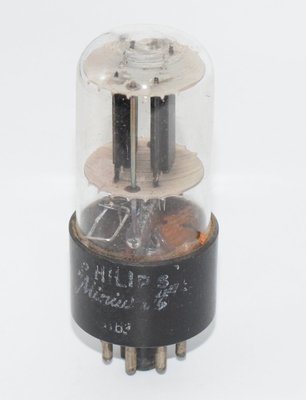
Production of the 6SN7GT spanned the globe. Beyond the major American manufacturers, the tube was produced by Philips Miniwatt in Belgium and the Netherlands, Super Radiotron (AWV) in Australia, Tungsram in the UK, Haltron/STC in the UK, Mazda/Miniwatt in Brussels, and numerous other manufacturers worldwide. Each production source developed its own internal construction variations — from smooth black plates to ribbed grey plates, from round micas to ladder-step micas — creating a rich tapestry of variants that tube enthusiasts study and debate to this day.
The 6SN7GT remains in active production today from manufacturers in Russia and China, and is arguably the single most important octal dual triode in the audiophile world. Its combination of excellent electrical characteristics, musical sonics, and robust construction has ensured its enduring relevance more than eight decades after its introduction.
2. Technical Specifications and Design
Heater / Filament
| Heater Voltage (Vh) | 6.3 V |
| Heater Current (Ih) | 0.6 A |
| Heater Configuration | Parallel (series operation possible with 12SN7GT at 12.6 V / 0.3 A) |
Interelectrode Capacitances (per section)
| Grid-to-Cathode (Cgk) | 2.6 pF |
| Plate-to-Cathode (Cak) | 0.8 pF |
| Grid-to-Plate (Cga) | 4.1 pF |
Maximum Ratings (per section)
| Maximum Plate Voltage | 300 V (for 6SN7GT; note that the later 6SN7GTA/GTB variants are rated to 450 V) |
| Maximum Plate Dissipation | 5.0 W per plate (combined maximum for both sections typically 7.5 W) |
| Maximum Cathode Current | 20 mA per section |
| Maximum Heater-Cathode Voltage | ±200 V |
Note: The combined plate dissipation limit of 7.5 W for both sections together is a critical constraint that distinguishes the original 6SN7GT from the later GTA and GTB versions. Designers must ensure that the total dissipation of both triode sections does not exceed this value. Individual section maximum plate dissipation values and combined limits should be confirmed against the specific manufacturer's datasheet being used, as slight variations exist between manufacturers.
Typical Operating Characteristics (per section)
| Amplification Factor (μ) | 20 |
| Transconductance (gm) | 2,600 µmhos (2.6 mA/V) |
| Plate Resistance (rp) | 7,700 Ω |
These values are typically specified at a plate voltage of 250 V and a grid bias of -8 V, yielding a plate current of approximately 9 mA. The relationship μ = gm × rp holds: 2,600 × 10⁻⁶ × 7,700 ≈ 20.
Typical Operating Point (Class A1 Voltage Amplifier)
| Plate Supply Voltage | 250 V |
| Grid Bias (Vgk) | -8 V |
| Plate Current (Ib) | 9 mA |
| Plate Resistance (rp) | 7,700 Ω |
| Transconductance (gm) | 2,600 µmhos |
| Amplification Factor (μ) | 20 |
The grid bias range for the 6SN7GT typically spans from 0 V to approximately -20 V depending on plate voltage. At lower plate voltages (e.g., 100 V), bias values of -2 V to -4 V are common; at higher plate voltages approaching 300 V, bias values of -10 V to -15 V may be used. The tube should always be operated in the grid-negative (Class A1) region for voltage amplifier service, meaning no grid current flows.
Physical Construction
| Base Type | Octal (International Octal, 8-pin) |
| Envelope Type | GT (Glass Tubular) — T-9 bulb shape (approximately 1-1/8" / 29 mm diameter) |
| Mounting Position | Any |
| Overall Length | Approximately 4-3/8" (111 mm) maximum |
| Seated Height | Approximately 3-5/16" (84 mm) maximum |
Pin-Out (Bottom View of Octal Base)
| Pin | Connection |
|---|---|
| Pin 1 | Triode 1 — Plate (Anode) |
| Pin 2 | Triode 1 — Grid |
| Pin 3 | Triode 1 — Cathode |
| Pin 4 | No Connection (or internal shield in some variants) |
| Pin 5 | Triode 2 — Plate (Anode) |
| Pin 6 | Triode 2 — Grid |
| Pin 7 | Triode 2 — Cathode |
| Pin 8 | Heater |
| Key (center) | Heater (return) |
The heater connections are between Pin 8 and the center key pin of the octal base. The two triode sections are electrically independent, sharing only the common heater supply.
3. Applications and Usage
The 6SN7GT is one of the most versatile dual triodes ever produced, finding application across an extraordinarily wide range of circuit functions:
Audio Applications
- Voltage Amplifier / Preamplifier Stage: The 6SN7GT's moderate mu of 20, combined with its low plate resistance and relatively high transconductance, makes it an outstanding voltage amplifier. Its linearity across a wide operating range produces exceptionally low harmonic distortion without requiring heavy negative feedback.
- Phase Splitter / Phase Inverter: Both cathodyne (split-load) and long-tailed pair configurations are commonly implemented with the 6SN7GT. The matched characteristics of the two internal triode sections make it particularly well-suited for balanced phase-splitter duty in push-pull amplifier designs.
- Driver Stage: The tube's ability to deliver reasonable voltage swing with low output impedance makes it an excellent driver for power tubes such as the 300B, 2A3, 6L6, EL34, KT88, and 845. Many of the world's finest single-ended triode (SET) and push-pull amplifiers use the 6SN7GT as their driver tube.
- Line Stage Amplifier: Numerous high-end preamplifier designs use the 6SN7GT as the primary gain stage, taking advantage of its musical characteristics and sufficient gain for line-level signal amplification.
- Headphone Amplifier: The 6SN7GT can directly drive high-impedance headphones in some circuit topologies, and is widely used as the gain/driver stage in dedicated tube headphone amplifiers.
Non-Audio Applications
- Oscillator Circuits: Used in various oscillator configurations during WWII and in post-war test equipment.
- Multivibrator and Timing Circuits: The dual triode configuration is naturally suited to flip-flop and multivibrator circuits.
- Regulated Power Supplies: Used as error amplifiers and voltage reference stages in regulated power supply designs.
- Early Computing: The 6SN7GT saw use in early electronic computers and digital switching circuits, where its two triode sections could function as a bistable flip-flop — the basic memory element of early electronic computers.
- Television Circuits: Widely used in vertical and horizontal oscillator and sweep circuits in early television receivers.
- Military Equipment: Extensive use in radar systems, communications equipment, and fire control systems during WWII and the Korean War era, as evidenced by the large quantities produced under JAN specifications (VT-231).
4. Sound Characteristics
The 6SN7GT has earned a near-mythical reputation in the audio community for its sonic qualities. While subjective descriptions of tube sound must always be taken in context — the circuit topology, associated components, power supply quality, and specific tube variant all play significant roles — there is remarkable consensus among audiophiles and audio engineers regarding the 6SN7GT's tonal character:
General Sonic Signature
The 6SN7GT is widely regarded as one of the finest-sounding small-signal tubes ever manufactured. Its sound is frequently described as rich, full-bodied, and three-dimensional, with a natural warmth that avoids the clinical sterility sometimes associated with miniature 9-pin tubes like the 12AU7 or 12AT7. The tube presents music with a sense of ease and liquidity that many listeners find deeply engaging and emotionally satisfying.
Frequency Response Character
- Bass: The 6SN7GT is praised for producing deep, well-controlled bass with excellent weight and authority. The low plate resistance (7,700 Ω) contributes to strong bass damping and articulation. Bass notes have a satisfying solidity and texture that many listeners describe as "tactile" or "visceral."
- Midrange: This is where the 6SN7GT truly excels. The midrange is consistently described as lush, harmonically rich, and extraordinarily natural. Vocals — both male and female — are rendered with a palpable presence and emotional immediacy. The tube's moderate amplification factor of 20 contributes to a midrange that is detailed without being analytical or forward.
- Treble: High frequencies are presented with a smooth, extended character that avoids harshness or grain. The 6SN7GT delivers treble detail with a natural decay and air that creates a convincing sense of acoustic space. The relatively low interelectrode capacitances (Cga of 4.1 pF) help maintain good high-frequency performance.
Spatial and Dynamic Qualities
The 6SN7GT is renowned for its ability to create a wide, deep, and holographic soundstage. Instrument placement within the stereo image is precise and stable, with excellent separation between individual voices and instruments. The tube's dynamic capabilities are impressive for a small-signal type — it handles both micro-dynamics (subtle inflections and shadings) and macro-dynamics (large orchestral crescendos) with grace and composure.
Variant-Specific Sound Differences
Experienced listeners note significant sonic differences between manufacturers and production eras:
- Sylvania VT-231 (1940s): Often considered the benchmark, prized for exceptional clarity, detail retrieval, and a beautifully balanced tonal presentation. The "Bad Boy" bottom-getter variants are particularly sought after.
- Ken-Rad VT-231 Black Glass: Known for a darker, more romantic tonal balance with exceptionally rich bass and a lush, velvety midrange. These are among the most coveted and expensive variants.
- RCA (various eras): Generally characterized by a warm, smooth, and musical presentation with excellent tonal balance. The "grey glass" and "red base" variants are particularly valued.
- Raytheon VT-231: Noted for excellent detail and a slightly more analytical presentation compared to RCA or Ken-Rad, with very good dynamics and transient response.
- Tungsram (UK production): Large-plate variants are noted for their unique tonal character, with a European voicing that differs subtly from American production.
- Super Radiotron / AWV (Australia): The smooth black plate variants are described as "rare and beautiful sounding," with a distinctive tonal character that has developed a devoted following among collectors.
- Philips Miniwatt (Belgium/Netherlands): European production variants offer a refined, detailed sound with excellent imaging. The rare smooth black plate versions (possibly manufactured by Super Radiotron Australia and relabeled) are highly prized.
Comparison to Miniature Equivalents
When compared to the 9-pin miniature dual triodes that eventually supplanted it in commercial equipment (12AU7, 12AT7, 12AX7), the 6SN7GT is almost universally preferred by audiophiles for its more spacious, relaxed, and three-dimensional presentation. The larger physical structure of the octal tube — with greater electrode spacing and larger cathode surface area — is believed to contribute to its superior sonic characteristics, though the exact mechanisms remain a subject of debate among engineers.
5. Equivalent or Substitute Types
Close / Identical Substitutes (Direct Drop-In Replacements)
The following types are essentially identical to the 6SN7GT and can be used as direct, drop-in replacements without any circuit modifications:
| Type | Notes |
|---|---|
| 6SN7 | Earlier designation without the "GT" envelope suffix; electrically identical. |
| VT-231 | Joint Army-Navy (JAN) military designation for the 6SN7GT. Wartime production to military specifications; often considered superior in quality and consistency. |
| 6SN7WGT | Ruggedized military version with enhanced vibration and shock resistance. Electrically identical; mechanically superior. |
| 6SN7WGTA | Ruggedized military version of the GTA variant. Compatible with 6SN7GT circuits (higher ratings than required are not a problem). |
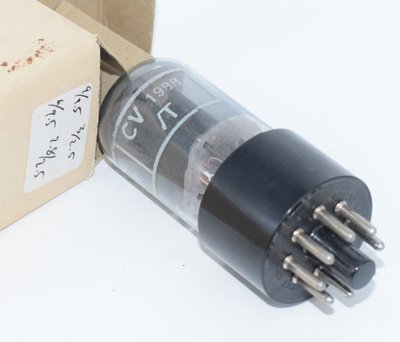
| CV1986 | British military (CV) designation equivalent to 6SN7GT. |
| CV1988 | British military (CV) designation equivalent to 6SN7GT. |
| CV3627 | British military (CV) designation equivalent to 6SN7GT. |
| 13D2 | European equivalent designation; electrically identical and pin-compatible. |
Different Rating Substitutes (NOT Direct Drop-In — Use with Caution)
The following types share the same pinout and basic function but have different electrical ratings. They may work in some circuits but are not guaranteed drop-in replacements in all applications:
| Type | Key Differences |
|---|---|
| 6SN7GTA | Higher maximum plate voltage rating (450 V vs. 300 V) and higher combined plate dissipation. Can generally be used in place of a 6SN7GT, but a 6SN7GT should not necessarily be used in a circuit designed specifically for GTA ratings. Same pinout. |
| 6SN7GTB | Further improved version with higher ratings similar to GTA. Same pinout; same caveat as GTA regarding substitution direction. |
| 12SN7GT | 12.6 V heater (0.3 A) instead of 6.3 V. Same pinout and same triode characteristics, but requires a 12.6 V heater supply. NOT a drop-in replacement in 6.3 V heater circuits without heater supply modification. |
| 12SN7GTA | 12.6 V heater version of the GTA. Same caveats as 12SN7GT. |
| 8SN7GTB | 8.4 V heater. Same triode characteristics but different heater voltage. NOT a drop-in replacement without heater supply modification. |
| CV925 | British military type with different ratings. Not a guaranteed drop-in substitute. |
Important Note on Substitution: While the 6SN7GTA and 6SN7GTB can generally be used in circuits designed for the 6SN7GT (since their higher ratings exceed the original requirements), the reverse substitution — using a 6SN7GT in a circuit designed for GTA/GTB ratings — may exceed the 6SN7GT's maximum plate voltage or dissipation limits and should be avoided. Always verify that the circuit's operating conditions fall within the substitute tube's maximum ratings.
6. Notable Characteristics
Exceptional Linearity
The 6SN7GT exhibits remarkably linear plate characteristics (Ia/Va curves) across its normal operating range. This inherent linearity means that the tube produces very low harmonic distortion even without negative feedback, and the distortion that does occur is predominantly low-order (second harmonic), which is perceived as musically pleasant rather than harsh. This characteristic is fundamental to the tube's reputation for natural, unforced sound quality.
Robust Construction
The octal-based GT envelope provides a physically robust package that is resistant to microphonic vibration — a significant advantage over smaller miniature tubes. The larger electrode structures and greater inter-electrode spacing contribute to both reliability and sonic performance. Military-specification variants (VT-231, 6SN7WGT) were built to withstand extreme environmental conditions and are prized for their exceptional longevity.
Matched Sections
The two triode sections within a single 6SN7GT envelope are generally well-matched in terms of transconductance and plate current, making the tube particularly suitable for balanced circuit topologies such as long-tailed pair phase splitters and differential amplifiers. However, matching between sections varies by manufacturer and production era, and critical applications may require testing and selection for closely matched sections.
Heater-Cathode Interaction
The 6SN7GT's heater-cathode voltage rating of ±200 V is adequate for most applications but must be observed carefully in circuits where the cathode is elevated significantly above ground potential. This is particularly relevant in series-regulated power supply circuits and some cascode configurations.
Collector's Value and Variant Identification
The 6SN7GT has become one of the most collected and studied vacuum tubes in the world. Experienced collectors can identify manufacturer, production era, and specific internal construction variants by examining plate structure (smooth vs. ribbed, T-plates vs. round plates), getter type and position (top vs. bottom, D-getter vs. halo), glass type (clear vs. smoked/black), mica spacer design, and base markings. Certain rare variants — such as Ken-Rad black glass VT-231s, Sylvania "Bad Boy" bottom-getters, and Super Radiotron smooth black plates — command premium prices that can exceed several hundred dollars per tube.
Microphonics Considerations
While generally less microphonic than miniature tubes, the 6SN7GT can still exhibit microphonic behavior, particularly in high-gain preamplifier applications. The degree of microphonics varies significantly between manufacturers and individual specimens. Damping rings and vibration-isolating socket mounts are commonly employed in critical applications. The ruggedized 6SN7WGT variant was specifically designed to address microphonics in military equipment subject to vibration and shock.
Warm-Up and Stabilization
The 6SN7GT, like all indirectly heated cathode tubes, requires a warm-up period for the cathode to reach operating temperature. Typical warm-up time is 30–60 seconds for basic operation, though many audiophiles report that the tube's sound continues to improve and stabilize over a period of 15–30 minutes as thermal equilibrium is fully established throughout the tube's structure.
7. Usage in the Audio Community
The 6SN7GT occupies a position of unparalleled reverence in the audiophile community. It is, without exaggeration, the most celebrated and widely discussed small-signal tube among audio enthusiasts, and its influence on high-end audio design is profound and enduring.
Preamplifier Designs
The 6SN7GT is the tube of choice for many of the world's most respected preamplifier designs. Companies such as Cary Audio, Atma-Sphere, Supratek, deHavilland, Modwright, Schiit Audio, and many others have built flagship preamplifiers around the 6SN7GT. The tube's moderate gain (mu of 20) is well-suited to line-stage preamplifier duty, where excessive gain can actually be detrimental to noise performance and volume control resolution. Notable designs include the Atma-Sphere MP-1 and MP-3, the Cary SLP-05, the Supratek Chardonnay and Cabernet, and the Schiit Freya+.
Power Amplifier Driver Stages
The 6SN7GT serves as the driver and/or phase splitter tube in numerous iconic power amplifier designs. It is the standard driver tube for 300B single-ended triode amplifiers, where its ability to deliver sufficient voltage swing with low distortion is critical to overall amplifier performance. It also appears in the driver stages of push-pull amplifiers using KT88, 6550, EL34, and other power tubes. Classic amplifier designs from manufacturers like Audio Research, Conrad-Johnson, VTL, Cary, and many boutique builders rely on the 6SN7GT in their signal chains.
Headphone Amplifiers
The tube headphone amplifier market has embraced the 6SN7GT enthusiastically. Designs from Bottlehead (Crack with Speedball upgrade using adapter), Woo Audio, Eddie Current, Feliks Audio, and others use the 6SN7GT as a gain and/or driver stage. The tube's sonic characteristics — particularly its rich midrange and holographic imaging — are especially appreciated in the intimate listening experience that headphones provide.
DIY and Kit Building
The 6SN7GT is enormously popular in the DIY audio community. Its straightforward operating requirements, forgiving nature, and excellent sonics make it an ideal tube for hobbyist builders. Numerous published circuit designs, kit amplifiers, and online resources are available for builders of all skill levels. The tube's octal base is easy to wire and the socket is mechanically robust, further adding to its appeal for home constructors.
Tube Rolling Culture
Perhaps no other tube type has inspired as passionate and extensive a "tube rolling" culture as the 6SN7GT. Audiophiles routinely invest significant time and money in acquiring and comparing different manufacturer variants, seeking the perfect sonic match for their system and musical preferences. Online forums such as Head-Fi, AudiogoN, and various dedicated tube audio communities feature thousands of pages of discussion comparing the sonic characteristics of different 6SN7GT variants.
The hierarchy of desirability among NOS (New Old Stock) 6SN7GT variants is well-established, though individual preferences vary:
- Top Tier (Most Sought-After): Sylvania VT-231 "Bad Boy" (bottom getter, chrome dome), Ken-Rad VT-231 black glass, Tung-Sol 6SN7GT round plate, RCA "red base" 5692
- High Tier: RCA grey glass VT-231, Raytheon VT-231, National Union VT-231, Sylvania 6SN7W metal base
- Mid Tier: Various 1950s production from RCA, Sylvania, GE, CBS-Hytron, Philips Miniwatt, Tungsram
- Rare/Exotic: Super Radiotron (AWV) smooth black plates, Philips Miniwatt Belgium smooth black plates, Haltron/STC UK production
Current Production
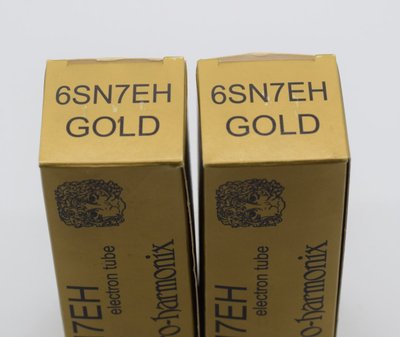
For those who prefer not to rely on increasingly scarce and expensive NOS tubes, current production options are available. Manufacturers including Electro-Harmonix (New Sensor/Sovtek), Shuguang (China), Psvane, and Linlai produce new 6SN7GT-type tubes. While opinions vary on how these compare to the best NOS examples, current production tubes offer consistent availability and reasonable pricing. Some premium current-production variants, particularly from Psvane and Linlai, have received favorable reviews from audiophiles.
Market and Pricing
The market for NOS 6SN7GT tubes is robust and well-established. Common 1950s–1960s production examples from major manufacturers can be found for $30–$80 per tube, while premium variants such as wartime VT-231 types from Sylvania, Ken-Rad, and RCA can command $150–$500 or more per tube depending on condition, testing results, and provenance. Truly rare variants — such as Ken-Rad black glass VT-231 matched pairs or Tung-Sol round plate examples — can exceed $500 per tube. The Australian Super Radiotron smooth black plate variants and certain European production types are also commanding increasingly high prices as their rarity becomes more widely recognized.
The 6SN7GT's Enduring Legacy
The 6SN7GT's position in the audio community is secure. As long as vacuum tube audio continues to thrive — and all indications suggest it will for the foreseeable future — the 6SN7GT will remain the gold standard for octal dual triode performance. Its combination of excellent measured performance, outstanding subjective sound quality, and the rich variety of available NOS variants ensures that it will continue to inspire passionate devotion among audiophiles, engineers, and music lovers for generations to come.