Introduction and History
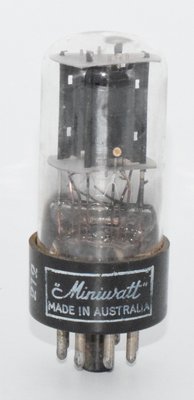
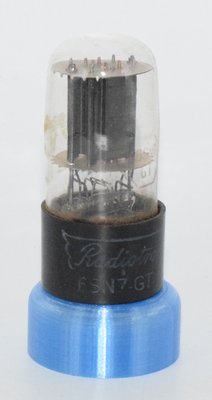
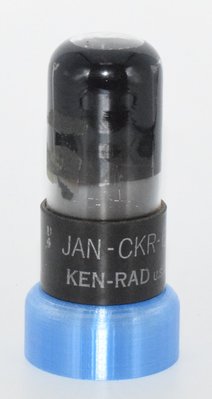
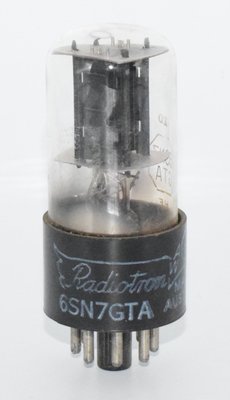
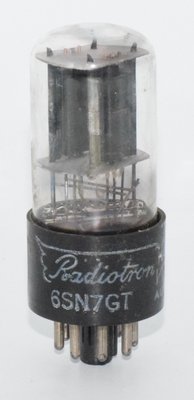
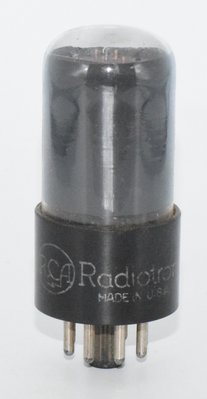
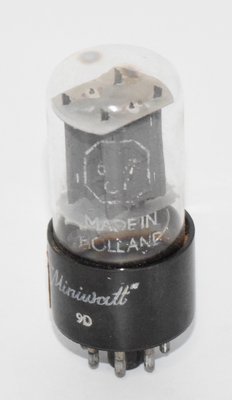
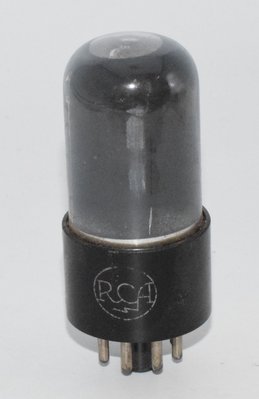
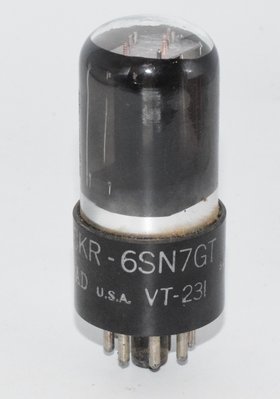
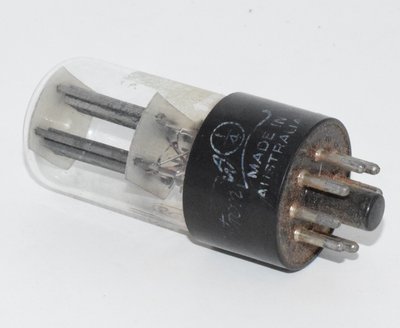
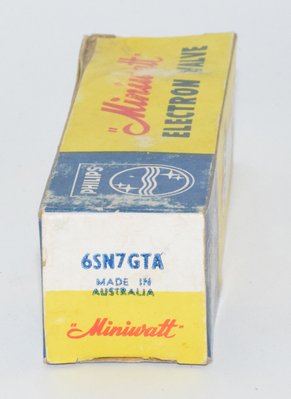
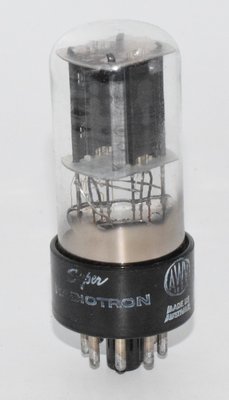
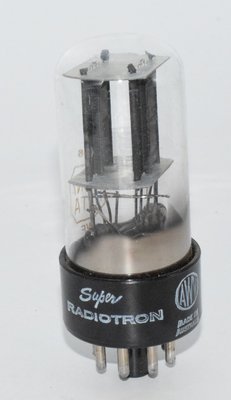
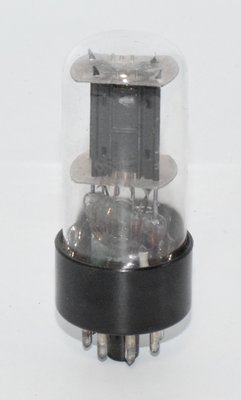
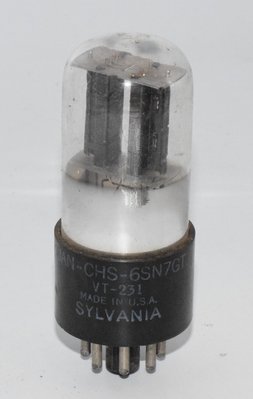
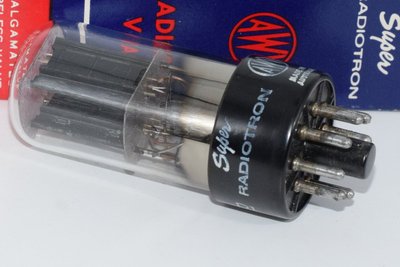
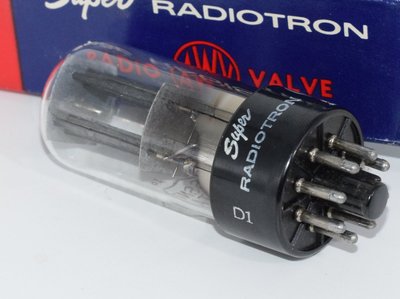
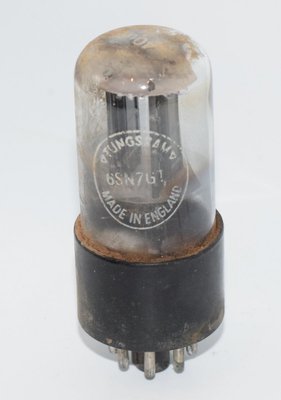
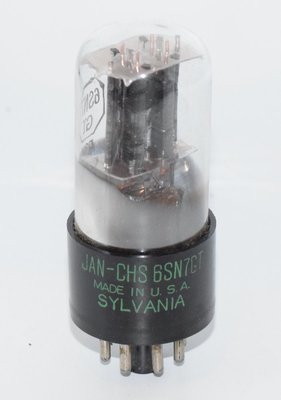
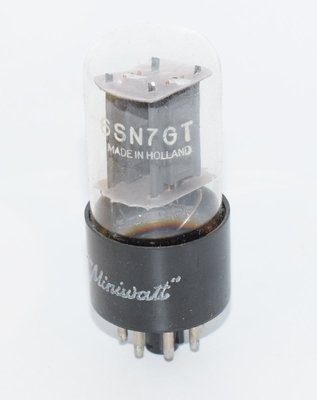
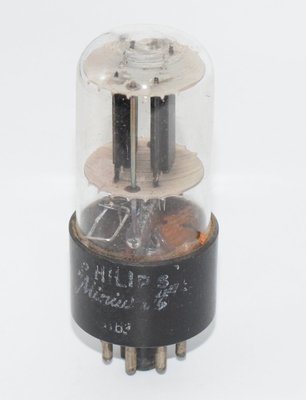
The 6SN7GTA is a medium-mu twin triode vacuum tube that occupies a legendary position in the pantheon of audio valves. Developed as an improved version of the original 6SN7GT, the 6SN7GTA was introduced in the late 1940s and became one of the most widely used dual triodes in both professional and consumer electronics throughout the 1950s and beyond. The tube was manufactured by virtually every major valve producer worldwide, including General Electric, RCA, Sylvania, Tung-Sol, Ken-Rad, Raytheon, and Hytron in the United States, as well as international producers such as Mullard, Brimar, Philips Miniwatt, and Amalgamated Wireless Valve (AWV) under the Super Radiotron brand in Australia.
The 6SN7 family traces its lineage back to the pre-war 6SN7GT, which itself was an octal-based evolution of earlier medium-mu triodes. The "GTA" suffix denotes a specific improvement in the tube's design: the 6SN7GTA is electrically and physically identical to the 6SN7GTB except for heater and heater warm-up time ratings. According to the General Electric datasheet ET-T899, the 6SN7GTB exhibits a controlled heater warm-up characteristic with a specified warm-up time of 10.5 seconds, making it especially suited for television receivers employing series-connected heaters. The 6SN7GTA, sharing all other electrical characteristics, was the standard parallel-heater version without this controlled warm-up specification.
Originally designed for a wide variety of general-purpose amplifier and phase-inverter applications, the 6SN7GTA also found extensive use as a blocking oscillator, multivibrator, and vertical-deflection amplifier in television receivers. Its balanced dual-triode structure, generous plate dissipation ratings, and excellent linearity made it a natural choice for high-fidelity audio equipment, where it remains in active production and high demand to this day.
Technical Specifications and Design
General Description
The 6SN7GTA is a medium-mu twin triode featuring two independent triode sections sharing a common envelope and heater. The cathode is of the coated unipotential type. Each section can be operated independently, making the tube extremely versatile in circuit design.
Heater Ratings
| Parameter | 6SN7GTA |
|---|---|
| Heater Voltage (AC or DC) | 6.3 V |
| Heater Current | 0.6 A |
| Heater Power | 3.78 W |
Note: The 12SN7GTA is the 12.6-volt heater version (0.3 A), identical in all other respects.
Direct Interelectrode Capacitances (Without External Shield)
| Parameter | Section 1 | Section 2 |
|---|---|---|
| Grid to Plate (Cga) | 4.0 µµF | 3.8 µµF |
| Input (Cgk) | 2.2 µµF | 2.6 µµF |
| Output (Cak) | 0.7 µµF | 0.7 µµF |
The TDSL reference data lists the following representative capacitances: Cgk = 2.6 pF, Cak = 0.8 pF, Cga = 4.1 pF, which are consistent with the GE datasheet values for Section 2 (with minor rounding differences typical between measurement standards).
Characteristics and Typical Operation — Class A₁ Amplifier (Each Section)
| Parameter | Condition 1 | Condition 2 | Condition 3 |
|---|---|---|---|
| Plate Voltage | 90 V | 250 V | 250 V |
| Grid Voltage | 0 V | −12.5 V | −8 V |
| Amplification Factor (µ) | 20 | 20 | 20 |
| Plate Resistance (rp) | 6,700 Ω | 7,700 Ω | — |
| Transconductance (gm) | 3,000 µmhos | 2,600 µmhos | — |
| Plate Current | 10.0 mA | 1.3 mA | 9.0 mA |
| Grid Voltage for Ib = 10 µA | — | — | −18 V |
The TDSL reference data confirms the key operating point at Va = 90 V, Vg1 = 0 V: Ia = 10.0 mA, Ra = 6,700 Ω, Sm = 3.0 mA/V, which is fully consistent with the GE datasheet.
Maximum Ratings — Design-Center Values (Each Section Unless Otherwise Noted)
Class A Amplifier Service
| Parameter | Rating |
|---|---|
| DC Plate Voltage | 450 V |
| Peak Negative Grid Voltage | 250 V |
| Plate Dissipation, Each Plate | 5.0 W* |
| Total Plate Dissipation, Both Plates | 7.5 W* |
| DC Cathode Current | 20 mA |
| Peak Cathode Current | 70 mA |
| Grid Circuit Resistance (Fixed Bias) | 1.0 MΩ |
| Grid Circuit Resistance (Cathode Bias) | 1.0 MΩ |
* In stages operating with grid-leak bias, an adequate cathode-bias resistor or other suitable means is required to protect the tube in the absence of excitation.
Vertical-Deflection Amplifier Service
| Parameter | Rating |
|---|---|
| DC Plate Voltage | 450 V |
| Peak Positive Pulse Plate Voltage | 1500 V (Absolute Maximum) |
| Peak Negative Grid Voltage | 250 V |
| Plate Dissipation, Each Plate | 5.0π W |
| Total Plate Dissipation, Both Plates | 7.5π W |
| DC Cathode Current | 20 mA |
| Peak Cathode Current | 70 mA |
Vertical-Oscillator Service
| Parameter | Rating |
|---|---|
| DC Plate Voltage | 450 V |
| Peak Negative Grid Voltage | 400 V |
| Plate Dissipation, Each Plate | 5.0 W |
| Total Plate Dissipation, Both Plates | 7.5 W |
| DC Cathode Current | 20 mA |
| Peak Cathode Current | 70 mA |
| Grid Circuit Resistance (Fixed or Cathode Bias) | 2.2 MΩ |
Horizontal-Oscillator Service
| Parameter | Rating |
|---|---|
| DC Plate Voltage | 450 V |
| Peak Negative Grid Voltage | 600 V |
| Plate Dissipation, Each Plate | 5.0 W |
| Total Plate Dissipation, Both Plates | 7.5 W |
| DC Cathode Current | 20 mA |
| Peak Cathode Current | 300 mA |
| Grid Circuit Resistance (Fixed or Cathode Bias) | 2.2 MΩ |
Heater-Cathode Voltage Limits
| Condition | Rating |
|---|---|
| Heater Positive w.r.t. Cathode — DC Component | 100 V |
| Heater Positive w.r.t. Cathode — Total DC and Peak | 200 V |
| Heater Negative w.r.t. Cathode — Total DC and Peak | 200 V |
Physical and Mechanical Specifications
| Parameter | Specification |
|---|---|
| Base | B8-6, Intermediate Shell Octal 8-Pin; or B8-58, Short Intermediate Shell Octal 8-Pin |
| Envelope | T-9, Glass |
| Mounting Position | Any |
| Maximum Overall Length | 3-15/16 inches |
| Maximum Seated Height | 2-3/4 inches |
| Maximum Diameter | 1-5/8 inches |
| Bulb Outline | RETMA 9-11 or 9-41 |
Pin Connections (RETMA 8BD Base — Bottom View)
| Pin | Connection |
|---|---|
| Pin 1 | Grid (Section 2) |
| Pin 2 | Plate (Section 2) |
| Pin 3 | Cathode (Section 2) |
| Pin 4 | Grid (Section 1) |
| Pin 5 | Plate (Section 1) |
| Pin 6 | Cathode (Section 1) |
| Pin 7 | Heater |
| Pin 8 | Heater |
Class A Resistance-Coupled Amplifier Data (Each Section)
The GE datasheet provides comprehensive resistance-coupled amplifier data for plate supply voltages of 90, 180, and 300 volts with various load resistor combinations. Representative examples at Ebb = 300 V:
| Rp (MΩ) | Rs (MΩ) | Rg1 (MΩ) | Rk (Ω) | Gain | Eo (V RMS) |
|---|---|---|---|---|---|
| 0.10 | 0.10 | 0.10 | 1800 | 14 | 40 |
| 0.10 | 0.24 | 0.10 | 2200 | 15 | 51 |
| 0.24 | 0.24 | 0.10 | 4300 | 15 | 44 |
| 0.24 | 0.51 | 0.10 | 5100 | 15 | 54 |
| 0.51 | 0.51 | 0.10 | 6800 | 16 | 40 |
| 0.51 | 1.0 | 0.10 | 7500 | 16 | 45 |
Notes: Eo is maximum RMS voltage output for 5% total harmonic distortion. Gain measured at 2.0 volts RMS output. For zero-bias data, generator impedance is negligible.
Applications and Usage
The 6SN7GTA was designed as a versatile medium-mu twin triode suitable for an exceptionally wide range of applications:
Original Design Applications
- General-Purpose Voltage Amplifier: With an amplification factor of 20 and relatively low plate resistance, the 6SN7GTA provides excellent voltage gain with low distortion in resistance-coupled amplifier stages.
- Phase Inverter/Phase Splitter: The dual-triode structure makes it ideal for split-load (cathodyne), long-tailed pair, and floating paraphase phase-inverter circuits, providing balanced drive signals for push-pull output stages.
- Blocking Oscillator: Used extensively in television vertical and horizontal timebase circuits.
- Multivibrator: Both free-running and monostable configurations for timing and switching applications.
- Vertical-Deflection Amplifier: With peak positive pulse plate voltage ratings up to 1500 V, the tube was well-suited for TV vertical output stages.
- Cathode Follower: The low plate resistance and moderate mu make it an excellent cathode follower with low output impedance, useful as a buffer or impedance-matching stage.
Audio Applications
- Preamplifier Voltage Gain Stages: One or both triode sections used as high-gain, low-noise voltage amplifiers in phono stages, line stages, and microphone preamplifiers.
- Driver Stage for Power Tubes: Providing sufficient voltage swing to drive power output tubes such as the 300B, 2A3, 6L6, EL34, KT88, and 845.
- SRPP (Shunt-Regulated Push-Pull): Both sections stacked in a mu-follower or SRPP configuration for improved linearity and power supply rejection.
- Direct-Coupled Amplifiers: Used in DC-coupled topologies where its moderate plate voltage rating and predictable characteristics are advantageous.
- Headphone Amplifiers: The 6SN7GTA has sufficient current capability to directly drive high-impedance headphones, and with appropriate output coupling, can drive lower-impedance loads as well.
Sound Characteristics
The 6SN7GTA is widely regarded as one of the finest-sounding small-signal tubes ever produced, and its sonic qualities have earned it a devoted following among audiophiles, recording engineers, and amplifier designers. While subjective descriptions of tube sound must always be taken in context — the circuit topology, associated components, and operating point all profoundly influence the final result — there is remarkable consensus about the 6SN7GTA's tonal character.
Tonal Balance and Timbre
The 6SN7GTA is consistently described as possessing a rich, full-bodied, and harmonically complex midrange that gives vocals and acoustic instruments a palpable sense of presence and realism. Unlike the more common 12AX7/ECC83 miniature dual triode, which can sometimes sound thin or edgy at higher gain settings, the 6SN7GTA delivers a more relaxed, three-dimensional presentation with greater tonal density. The bass response is typically described as warm, well-controlled, and weighty — not bloated or loose, but with a satisfying solidity that anchors the musical foundation. The treble is smooth and extended, with a natural sweetness that avoids the grain or glare sometimes associated with lesser tubes.
Dynamics and Transient Response
One of the 6SN7GTA's most praised attributes is its dynamic capability. With a plate dissipation rating of 5 watts per section (7.5 watts total) and peak cathode current capability of 70 mA, it has considerably more headroom than miniature dual triodes. This translates into a sense of effortless dynamic swing — the tube handles transient peaks with authority and composure, maintaining its tonal character even under demanding signal conditions. Micro-dynamics are rendered with finesse, revealing subtle inflections in musical performance that lesser tubes may obscure.
Spatial Presentation
The 6SN7GTA is renowned for its ability to create a wide, deep, and precisely defined soundstage. Imaging is typically described as holographic, with instruments and voices occupying distinct positions in three-dimensional space. This spatial quality is one of the primary reasons the tube is preferred over miniature alternatives in high-end preamplifier designs.
Harmonic Distortion Character
When driven into mild distortion, the 6SN7GTA produces predominantly even-order harmonics (primarily second harmonic), which are perceived as musically consonant and pleasing. This is a characteristic shared by most triode tubes, but the 6SN7GTA's particular balance of harmonics is often described as especially musical and natural. The transition from clean to clipped signal is gradual and graceful — the "soft clipping" behavior that is a hallmark of well-designed triode circuits.
Manufacturer Variations
Different manufacturers' 6SN7GTA tubes exhibit distinct sonic signatures, which has fueled an active market in NOS (New Old Stock) tubes:
- RCA (USA): Often described as warm, smooth, and slightly romantic, with excellent bass weight and a lush midrange.
- Sylvania (USA): Tends toward a more detailed, transparent presentation with slightly more extended treble and tighter bass.
- Tung-Sol (USA): Prized for exceptional dynamics, clarity, and a particularly vivid, three-dimensional soundstage. Round-plate versions are especially sought after.
- Ken-Rad (USA): Known for a bold, punchy sound with strong bass and dynamic impact.
- Super Radiotron / AWV (Australia): Australian-made examples under the Radiotron and Philips Miniwatt brands are valued for their build quality and are described as having a refined, balanced sound with good detail retrieval.
- Mullard / Brimar (UK): British-made equivalents tend toward a warmer, more romantic tonal balance with exceptional midrange liquidity.
Equivalent or Substitute Types
Close/Identical Substitutes (Direct Drop-In Replacements)
The following types are electrically identical or nearly identical to the 6SN7GTA and can be used as direct replacements without circuit modification:
| Type | Notes |
|---|---|
| 6SN7 | Original type designation; electrically identical. |
| 6SN7GT | Earlier version; electrically identical. Some early GT types may have slightly different maximum ratings — verify against specific manufacturer data. |
| 6SN7GTB | Electrically identical to the 6SN7GTA except for controlled heater warm-up time (10.5 seconds). Fully interchangeable in audio applications. |
| 6SN7WGT | Ruggedized military version. Electrically identical; built to higher mechanical standards. |
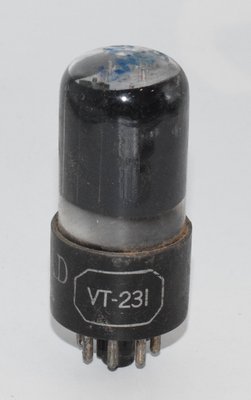
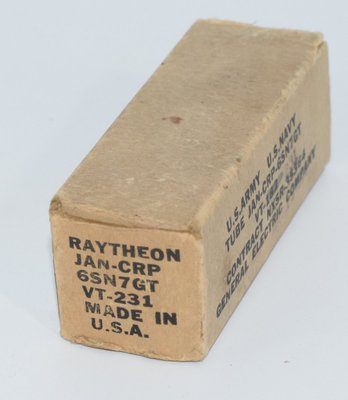
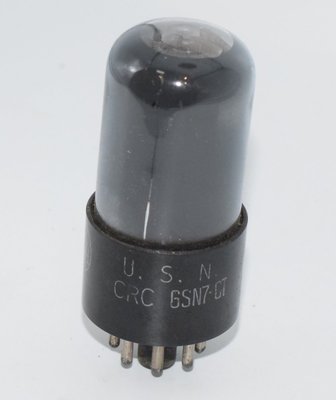
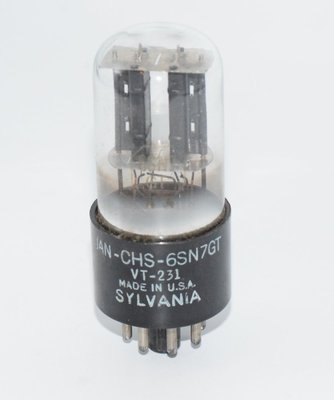
| VT-231 | US military designation for the 6SN7GT family. Highly prized by audiophiles for their wartime build quality. |
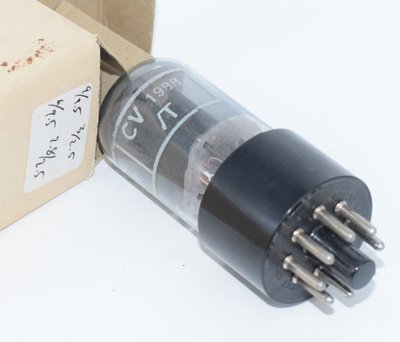
| CV1986 | British military equivalent. |
| CV1988 | British military equivalent. |
| CV3627 | British military equivalent. |
| 13D2 | European equivalent designation. |
Different Rating Substitutes (NOT Direct Drop-In)
The following types are related but differ in heater voltage or other ratings and cannot be used as direct replacements without circuit modification:
| Type | Key Difference |
|---|---|
| 12SN7GT / 12SN7GTA | 12.6 V heater at 0.3 A (vs. 6.3 V at 0.6 A). Requires different heater supply. Otherwise electrically identical. |
| 6SN7WGTA | Ruggedized military version with potentially different ratings. Verify specifications before substitution. |
| 8SN7GTB | 8.4 V heater version. Requires different heater supply voltage. |
| CV925 | British military type with different ratings. Not a direct drop-in. |
Important Note: The 6SN7 family should not be confused with the 6SL7 (higher mu, ~70, higher plate resistance) or the 12AU7/12AT7/12AX7 miniature dual triodes, which have different pinouts (9-pin miniature vs. octal), different electrical characteristics, and are not interchangeable.
Notable Characteristics
Exceptional Linearity
The 6SN7GTA's plate characteristics exhibit remarkably even spacing across a wide range of operating conditions, indicating excellent linearity. This is clearly visible in the average plate characteristics curves from the GE datasheet. The combination of a moderate amplification factor (µ = 20), relatively low plate resistance (approximately 6,700–7,700 Ω depending on operating point), and high transconductance (2,600–3,000 µmhos) results in a tube that can deliver substantial voltage gain with very low distortion.
Generous Power Handling
With 5 watts of plate dissipation per section and 7.5 watts total, the 6SN7GTA can handle significantly more power than miniature dual triodes such as the 12AU7 (approximately 2.75 W total) or 12AX7 (approximately 1.2 W total). This additional headroom translates directly into better dynamic performance and lower distortion at equivalent signal levels.
High Maximum Plate Voltage
The 450-volt maximum DC plate voltage rating provides designers with considerable flexibility in choosing operating points. This high voltage rating, combined with the generous dissipation limits, allows the tube to deliver large voltage swings — essential when driving power triodes like the 300B or 2A3 that require substantial grid drive.
Dual Independent Sections
The two triode sections are completely independent (sharing only the heater), allowing them to be used in entirely different circuit functions. This makes the 6SN7GTA extraordinarily versatile — a single tube can serve as both a voltage amplifier and a phase inverter, or as a gain stage and a cathode follower buffer.
Controlled Warm-Up (GTB Version)
As noted in the GE datasheet, the 6SN7GTB variant features a controlled heater warm-up characteristic (10.5 seconds), designed to minimize heater voltage surges when used in series-connected heater strings with other 600-milliampere tubes. While this is primarily relevant to television receiver design, it is worth noting for completeness. The 6SN7GTA does not specify this controlled warm-up time.
Robust Construction
The octal base and T-9 glass envelope provide a mechanically robust package that is resistant to microphonics — an important consideration in high-gain audio applications. The tube can be mounted in any position, adding to its versatility in equipment design.
Usage in the Audio Community
The Preeminent Preamplifier Tube
In the high-end audio community, the 6SN7GTA and its family variants have achieved an almost mythical status. Many audiophiles and amplifier designers consider the 6SN7 family to be the finest dual triode ever made for audio preamplification, and it is the tube of choice in numerous acclaimed preamplifier designs. The preference for the 6SN7 over miniature alternatives like the 12AU7 or 12AX7 is based on its superior linearity, greater dynamic headroom, lower noise floor in well-designed circuits, and — most importantly to many listeners — its more natural, three-dimensional, and musically engaging sound quality.
Iconic Amplifier Designs
The 6SN7GTA features prominently in many legendary and contemporary audio designs:
- Cary Audio SLP-05 and SLP-98: These highly regarded preamplifiers use multiple 6SN7 tubes in their gain and output stages, and are frequently cited as reference-quality designs.
- Atma-Sphere MP-1 and MP-3: Ralph Karsten's acclaimed preamplifiers are built around the 6SN7, exploiting its linearity in balanced, differential circuit topologies.
- Schiit Audio Freya+: A more affordable entry point that has introduced many audiophiles to the 6SN7's sonic qualities.
- Audio Research Reference Series: Several models in Audio Research's flagship line have employed 6SN7 tubes.
- Don Sachs Preamplifier: A highly regarded custom design built specifically around the 6SN7's strengths.
- Supratek Preamplifiers: Mick Maloney's Australian-made designs are legendary in audiophile circles for their use of the 6SN7 in innovative circuit topologies.
Driver Tube in Power Amplifiers
The 6SN7GTA is extensively used as a driver and phase-splitter tube in push-pull and single-ended power amplifiers. Its ability to deliver large, clean voltage swings makes it an ideal driver for demanding output tubes. Classic and modern amplifiers using 300B, 2A3, 845, 211, EL34, KT88, KT120, and KT150 output tubes frequently employ the 6SN7 in their driver stages. The tube's moderate gain (µ = 20) is often considered ideal — high enough to provide useful amplification, but low enough to maintain excellent linearity and avoid the need for excessive negative feedback.
Headphone Amplifiers
The 6SN7GTA has found a dedicated following in the headphone amplifier community. Its relatively low plate resistance and ability to deliver meaningful current make it capable of driving many headphone types directly or through a simple output stage. Designs like the Bottlehead Crack (with modifications), various DIY OTL (Output Transformerless) headphone amplifiers, and commercial offerings from companies like Woo Audio and Eddie Current showcase the tube's capabilities in this application.
The NOS Market
The market for NOS (New Old Stock) 6SN7GTA tubes is one of the most active and passionate in the entire vacuum tube collecting world. Certain variants command extraordinary prices:
- Tung-Sol 6SN7GT Round Plate (VT-231): Among the most sought-after, with matched pairs commanding several hundred dollars.
- Ken-Rad VT-231: Prized for their distinctive sound and increasingly rare.
- Sylvania 6SN7W (metal base): Military-grade construction with exceptional performance.
- RCA Red Base 5692: A premium long-life version with 10,000-hour rated life.
- Super Radiotron / AWV (Australia): Australian-made 6SN7GTA tubes from Amalgamated Wireless Valve under the Radiotron and Philips Miniwatt brands are collected and valued for their quality construction and distinctive sonic character.
Current Production
Recognizing the sustained demand from the audio community, several manufacturers continue to produce or have resumed production of 6SN7-type tubes:
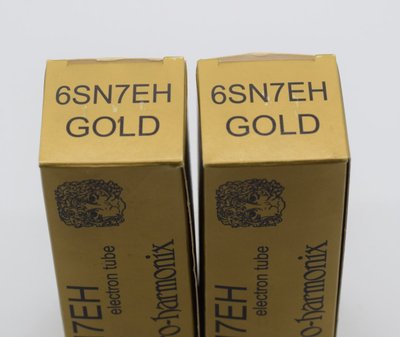
- Electro-Harmonix 6SN7: A widely available and affordable current-production option.
- Tung-Sol 6SN7GTB (New Sensor/Electro-Harmonix reissue): A reissue bearing the Tung-Sol name, manufactured in Russia.
- Shuguang / Psvane (China): Various grades including premium "Treasure" series tubes that aim to replicate the qualities of the best NOS examples.
- Sophia Electric: Premium 6SN7 tubes targeting the high-end audio market.
- Linlai: Chinese manufacturer producing 6SN7 variants that have received positive reception in the audio community.
Tube Rolling
"Tube rolling" — the practice of swapping different brands and vintages of compatible tubes to alter or optimize the sound of an amplifier — is perhaps more popular with the 6SN7 family than with any other tube type. The wide variety of manufacturers, vintages, and construction variations (round plates, flat plates, T-plates, bottom getters, top getters, black glass, clear glass, etc.) provides an almost endless palette of sonic flavors for the enthusiast to explore. Many audiophile forums maintain extensive threads comparing the sonic characteristics of dozens of 6SN7 variants, and the pursuit of the "perfect" 6SN7 is a passionate hobby for many.
Summary
The 6SN7GTA stands as one of the most important and beloved vacuum tubes in audio history. Its combination of excellent electrical characteristics, robust construction, sonic excellence, and extraordinary versatility has ensured its continued relevance more than seven decades after its introduction. Whether in a vintage restoration, a modern high-end preamplifier, or a DIY headphone amplifier project, the 6SN7GTA continues to deliver the musical magic that has made it a cornerstone of tube audio.