1. Introduction and History
The 6U7G is a medium-power vacuum tube that emerged during the golden age of radio and audio electronics in the 1940s. Developed as an improvement over earlier rectifier and power tube designs, the 6U7G found widespread use in radio receivers, amplifiers, and various industrial applications throughout the mid-20th century. The tube's designation follows the RCA numbering system, where "6" indicates a 6.3-volt heater, "U" denotes the tube's functional class, and "7" represents the internal structure configuration.
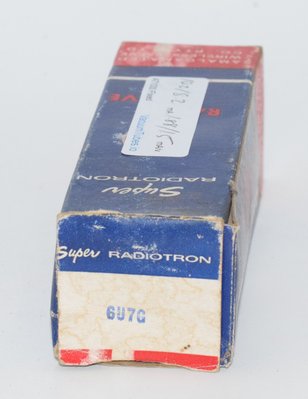
The 6U7G was manufactured by several prestigious vacuum tube manufacturers, including RCA (Radiotron brand), Philips (Miniwatt line), and Sylvania, among others. The tube represents a significant advancement in reliability and performance compared to its predecessors, making it a highly sought-after component for vintage audio equipment restoration and modern tube audio enthusiasts.
2. Technical Specifications and Design
Basic Specifications
- Heater Voltage: 6.3V AC
- Heater Current: 0.45A
- Plate Voltage (Maximum): 330V
- Plate Current (Maximum): 60mA
- Plate Dissipation: 7.5W maximum
- Filament Type: Thoriated tungsten
- Base Type: Octal (8-pin)
- Overall Height: Approximately 2.75 inches (70mm)
Functional Characteristics
The 6U7G is classified as a sharp-cutoff pentode, featuring five active elements: a cathode, control grid, screen grid, suppressor grid, and anode (plate). This configuration provides excellent amplification characteristics and superior control over electron flow compared to triodes and tetrodes.
Typical Operating Parameters:
- Plate Voltage: 250V (typical)
- Screen Grid Voltage: 100-150V
- Suppressor Grid Connection: Internally connected to cathode
- Grid Bias: -2 to -4V
- Amplification Factor (μ): Approximately 2,000
- Plate Resistance: 0.8-1.2 megohms
- Transconductance (gm): 1,600-2,000 micromhos
Construction and Materials
The 6U7G features a robust construction with a mica-supported plate structure and carefully engineered electrode spacing. The tube employs a thoriated tungsten filament, which provides excellent emission characteristics and extended tube life. The glass envelope is made from borosilicate glass, providing durability and thermal stability. The octal base ensures secure connections and proper tube alignment in standard sockets.
3. Applications and Usage
Historical Applications
During its heyday, the 6U7G was employed in numerous applications:
- Radio Receivers: As an intermediate frequency (IF) amplifier stage in AM and FM radio receivers
- Voltage Amplification: In audio preamplifier stages of tube amplifiers
- Industrial Equipment: In control circuits and measurement instrumentation
- Military Electronics: In communications equipment and radar systems
Modern Audio Applications
Today, the 6U7G remains highly valued in the vintage and boutique audio community. Audiophiles and tube enthusiasts seek NOS (New Old Stock) examples for:
- Tube Amplifier Restoration: Replacing worn original tubes in vintage amplifiers and preamplifiers
- Custom Audio Projects: Building hand-crafted tube amplifiers and preamps with vintage specifications
- High-Fidelity Systems: Upgrading signal path components in audiophile-grade equipment
- Vintage Radio Restoration: Restoring classic radio receivers to original specifications and performance
4. Sound Characteristics of the 6U7G
Tonal Profile
The 6U7G is renowned among tube audio enthusiasts for its distinctive sonic characteristics. Tubes from this era, particularly examples from premium manufacturers like RCA Radiotron and Philips Miniwatt, are celebrated for delivering a warm, natural midrange with excellent harmonic coherence. The tube exhibits a smooth, slightly rounded treble response that many listeners find more forgiving and musical than modern solid-state components.
Harmonic Distortion Characteristics
One of the 6U7G's most appealing qualities is its harmonic distortion signature. The tube tends to produce predominantly second and third-order harmonics under normal operating conditions, which are generally perceived as pleasant and musical rather than harsh or fatiguing. This characteristic is often described as "tube sweetness" and contributes to the tube's enduring popularity in audio applications.
Dynamic and Transient Response
The 6U7G demonstrates excellent transient response with quick attack characteristics and smooth decay. The tube handles dynamic peaks without harshness, contributing to a sense of ease and musicality in audio reproduction. This makes it particularly suitable for vocal and acoustic music reproduction, where natural dynamics and tonal accuracy are paramount.
Frequency Response
While the 6U7G's frequency response extends from below 20Hz to well beyond 20kHz, the tube naturally exhibits a gentle roll-off in the extreme upper frequencies. This characteristic can be perceived as either a limitation or an advantage, depending on application and personal preference. Many vintage audio designers intentionally exploited this characteristic to reduce high-frequency noise and grain without sacrificing clarity.
Comparative Sonic Characteristics
Compared to modern tubes, the 6U7G offers a distinctly vintage character. It lacks the clinical precision of modern designs but compensates with musicality and a sense of three-dimensionality in the soundstage. Audio reviewers often note that quality NOS examples deliver exceptional value for money, rivaling much more expensive modern tubes in subjective listening tests.
5. Audio Community Usage and Preferences
Collector and Enthusiast Market
The 6U7G occupies a special place in the tube audio community. Serious audiophiles and tube collectors actively seek NOS examples, particularly those manufactured by premium makers like RCA (especially "Super Radiotron" variants), Philips Miniwatt Australia, and Sylvania. The scarcity of genuine NOS stock has created a robust secondary market where premium examples command significant prices.
Preferred Manufacturers
Tubes bearing specific manufacturer pedigrees are particularly valued:
- RCA Radiotron (especially Super Radiotron variants): Considered the gold standard by many audiophiles, known for consistency and superior sound quality
- Philips Miniwatt Australia: Highly regarded for construction quality and sonic performance, particularly prized by international collectors
- Sylvania: Respected for reliability and balanced sonic characteristics
- GE (General Electric): Solid performers known for durability
Applications in Modern Tube Audio Design
Contemporary tube audio designers employ the 6U7G in several contexts:
- Preamplifier Design: As a voltage amplification stage in high-end tube preamps, where its low noise and excellent gain characteristics shine
- Phono Preamps: In moving-magnet and moving-coil phono stages, where its gentle harmonic character preserves vinyl's organic qualities
- Line Stages: As the primary gain stage in minimalist tube preamps
- Restoration Projects: In authentic restoration of vintage amplifiers and receivers
Audio Community Perspectives
The tube audio community generally regards the 6U7G with high esteem. Online forums, audio magazines, and tube retailers frequently highlight the 6U7G as an excellent choice for those seeking to experience authentic vintage tube sound without the expense of rarer tubes like the 12AX7 or ECC83. Many audiophiles report that a quality NOS 6U7G can deliver surprising improvements in clarity, musicality, and overall system coherence when substituted in compatible equipment.
The tube's affordability relative to rarer types, combined with its genuine sonic merits, has made it a popular choice for budget-conscious audiophiles and those beginning their journey into tube audio. Simultaneously, serious collectors appreciate it as a historically important tube with genuine sonic credentials.
6. Equivalent or Substitute Types
Direct Equivalents
- 6U7: Early variant without the "G" suffix, functionally identical
- 6U7GT: Metal tube variant of the same design
Functional Substitutes
While not pin-compatible drop-in replacements, the following tubes offer similar amplification characteristics and may work in some applications with circuit modifications:
- 6SJ7: Similar pentode with comparable gain and impedance characteristics
- 6SK7: Remote-cutoff pentode with similar electrical characteristics
- 6AK5: Smaller pentode with similar gain characteristics (lower power dissipation)
Important Substitution Notes
Direct substitution should only be attempted with pin-compatible equivalents. Attempting to substitute different tube types without professional guidance and circuit verification can result in equipment damage or unsafe operation. When restoring vintage equipment, using original tube types is always recommended for authenticity and optimal performance.
7. Notable Characteristics
- Reliability: The 6U7G demonstrates exceptional longevity when operated within specifications, with many examples remaining functional after 70+ years
- Low Microphonics: Compared to some other pentodes, the 6U7G exhibits relatively low microphonic sensitivity, making it suitable for preamplifier applications
- Noise Performance: Quality examples exhibit low noise floors, making them suitable for sensitive audio applications
- Availability: While NOS stock is diminishing, the 6U7G remains more readily available than many rare vintage tubes
- Affordability: Compared to premium audio tubes, the 6U7G remains reasonably priced, making it accessible to enthusiasts
- Versatility: The tube's electrical characteristics make it suitable for numerous applications across audio and general electronics
Conclusion
The 6U7G represents a pinnacle of mid-century vacuum tube design, combining robust engineering with genuine sonic merit. Whether in vintage radio restoration, high-end audio applications, or as part of a tube collector's holdings, the 6U7G continues to deliver reliable performance and musical sound quality. For those exploring tube audio or restoring vintage equipment, the 6U7G offers an excellent entry point into the world of vacuum tube electronics, delivering authentic vintage character without the premium pricing of rarer tubes.
The enduring popularity of the 6U7G in the audio community attests to its fundamental soundness of design and genuine sonic qualities. As tube audio experiences a renaissance among discerning listeners, the 6U7G remains a respected and sought-after component, worthy of consideration for any serious tube audio application.