Introduction and History
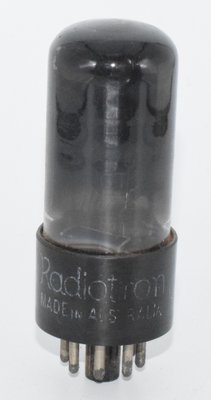
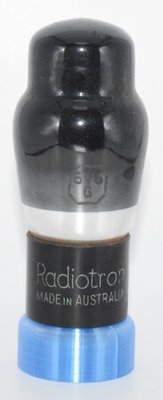
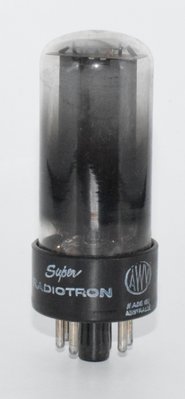
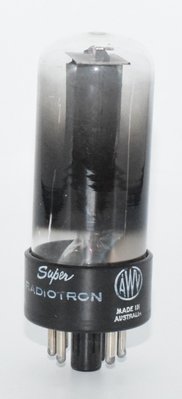
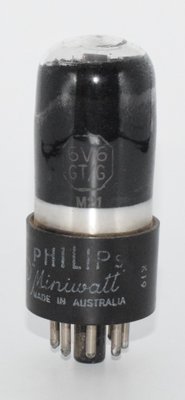
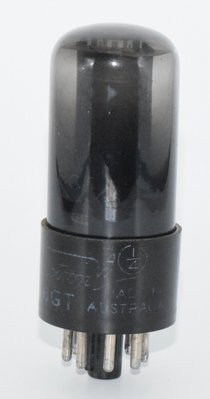
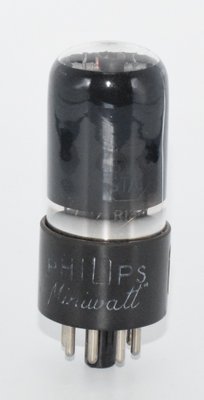
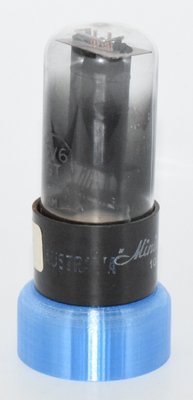
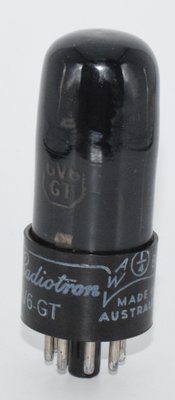
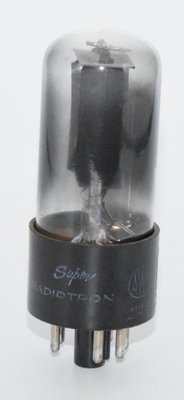
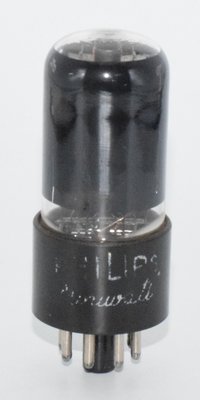
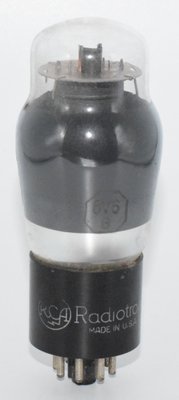
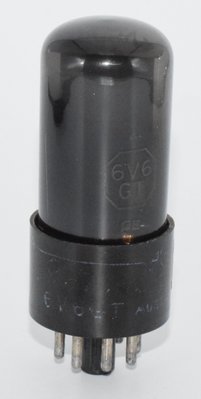
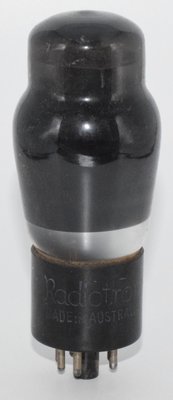
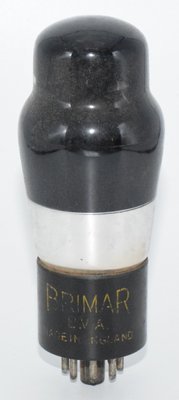
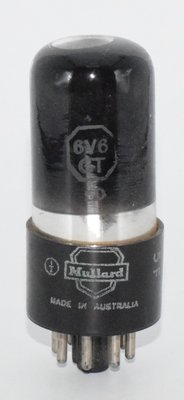
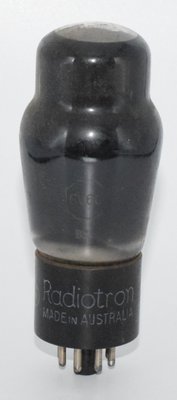
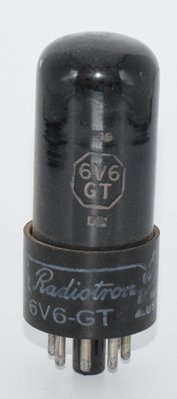
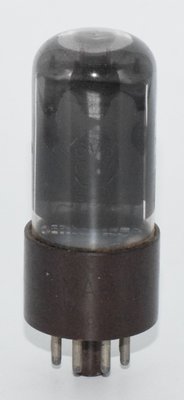
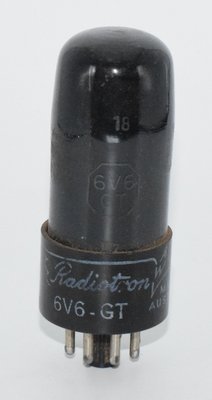
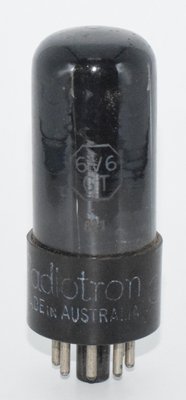
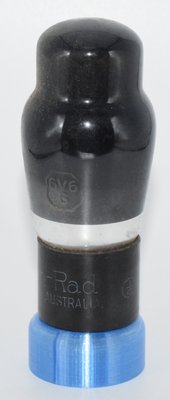
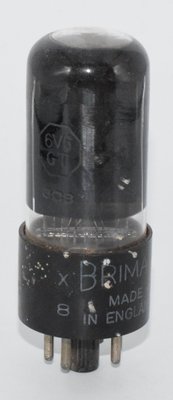
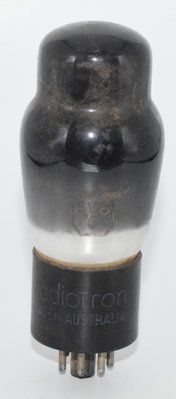
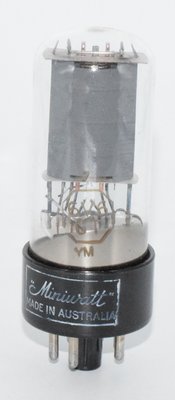
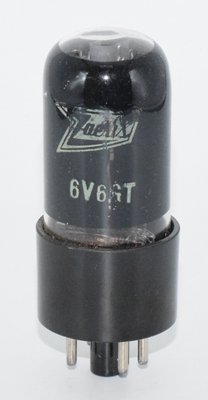
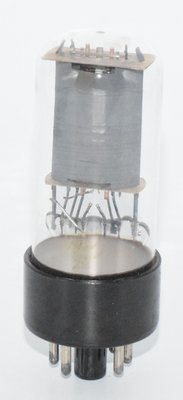
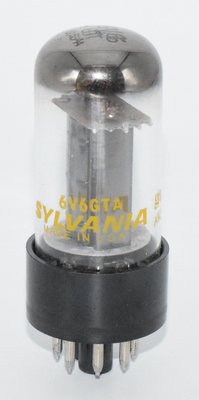
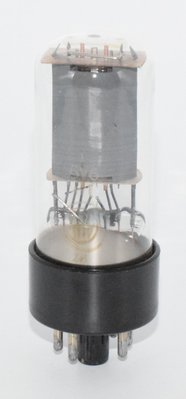
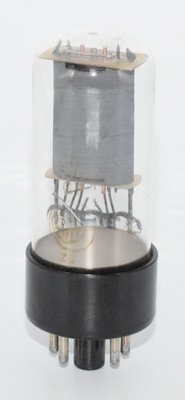
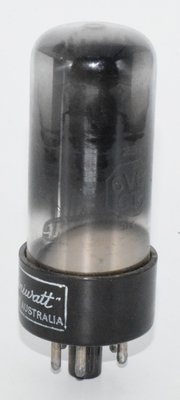
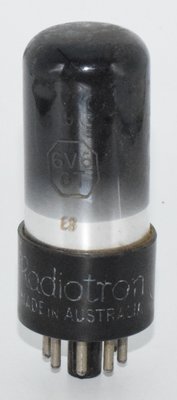
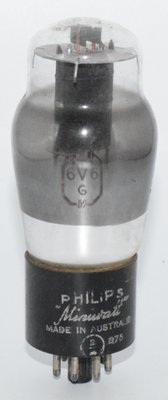
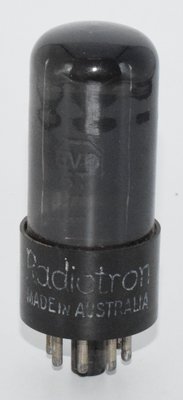
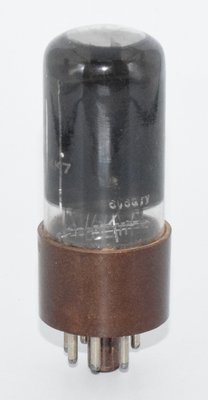
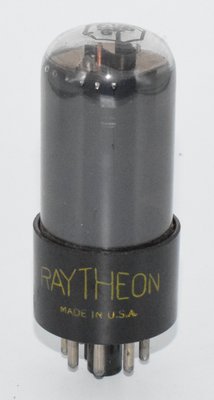
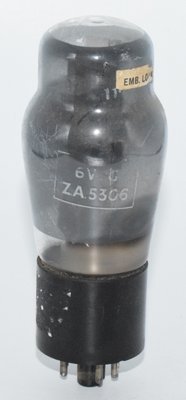
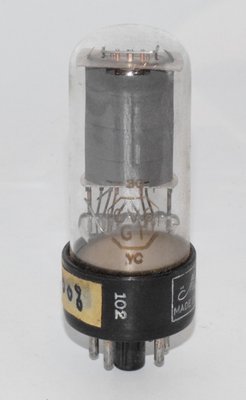
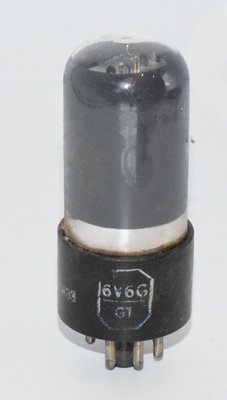
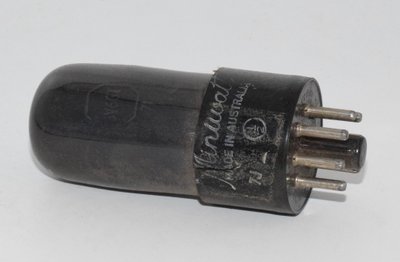
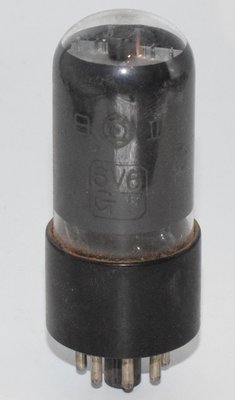
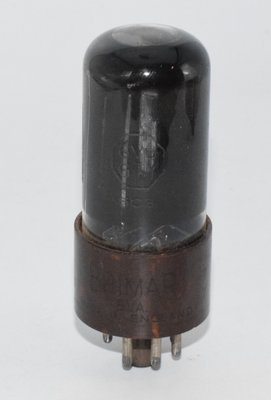
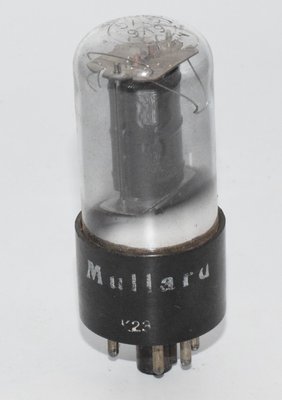
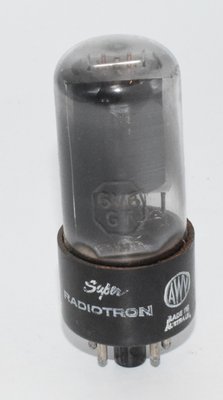
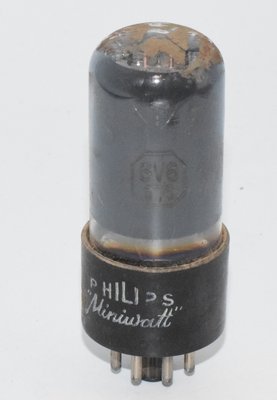
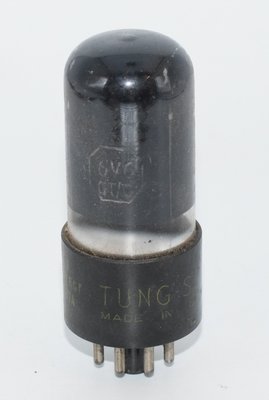
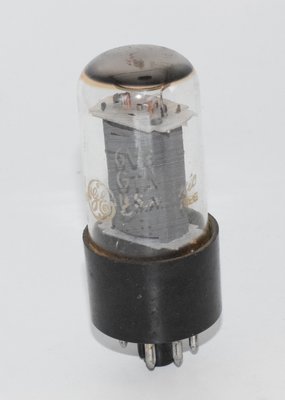
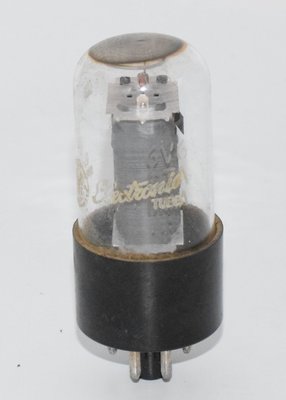
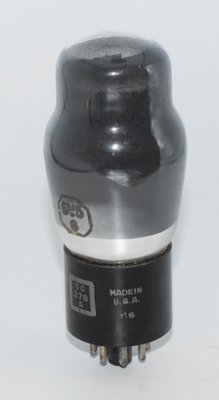
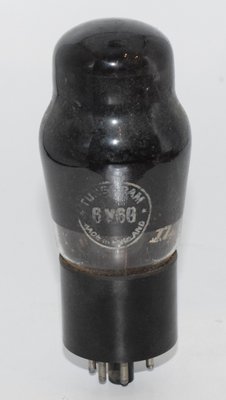
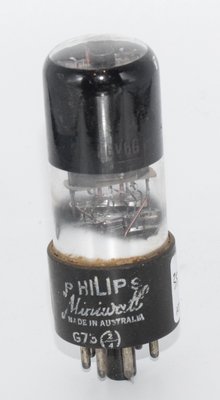
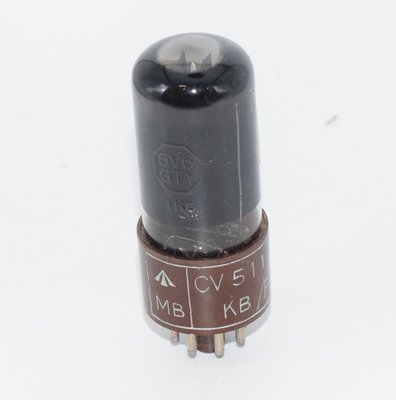
The 6V6G is a beam power amplifier tube (valve) that stands as one of the most beloved and enduring designs in the history of vacuum tube audio. Introduced in the late 1930s by RCA, the 6V6 family was designed to deliver high power sensitivity and substantial power output with comparatively low supply voltages — a significant engineering achievement at the time. The 'G' suffix denotes the glass envelope version with the distinctive large 'coke bottle' or shouldered glass bulb (ST-type envelope), which gives the 6V6G its iconic and highly collectible appearance.
The 6V6 was originally developed as a more affordable and lower-powered alternative to the 6L6, targeting consumer radio receivers, small public address systems, and home entertainment equipment. Where the 6L6 was designed for higher-power professional applications, the 6V6 found its niche in AC and storage battery operated receivers where its combination of modest heater current draw (0.45 amperes), low required supply voltages, and respectable power output made it ideal.
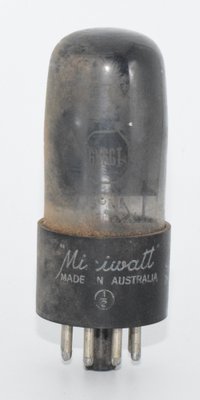
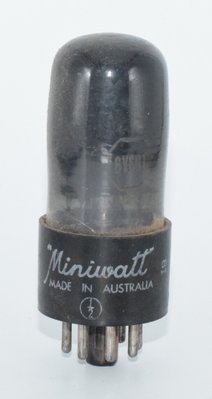
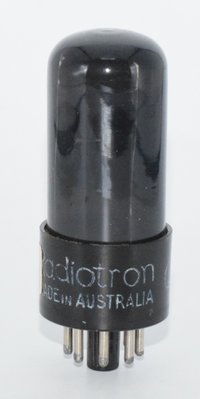
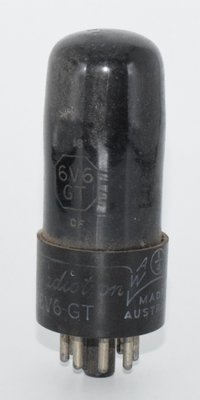
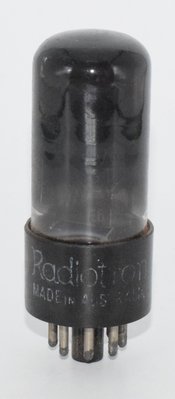
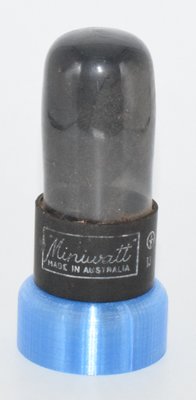
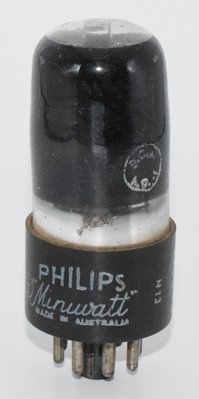
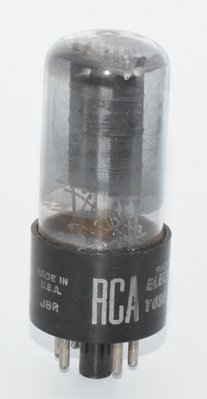
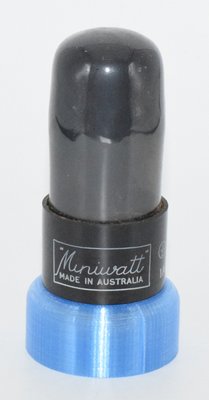
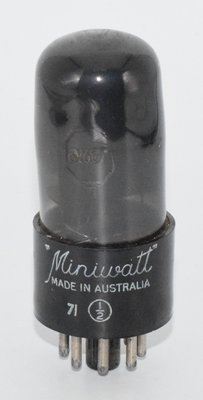
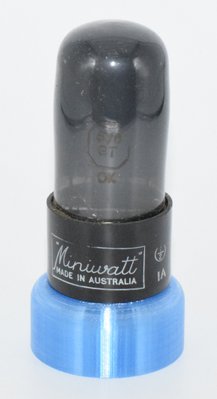
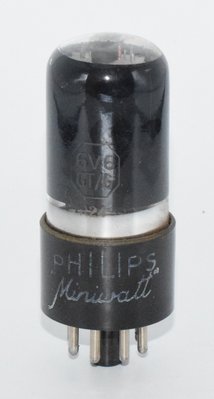
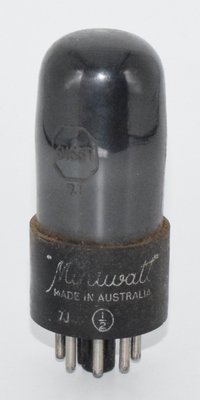
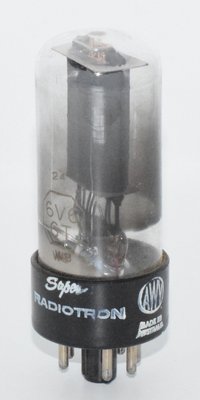
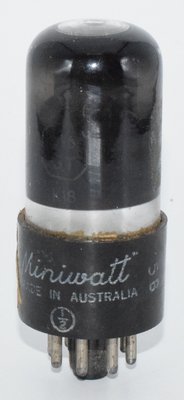
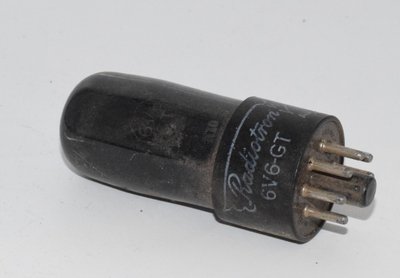
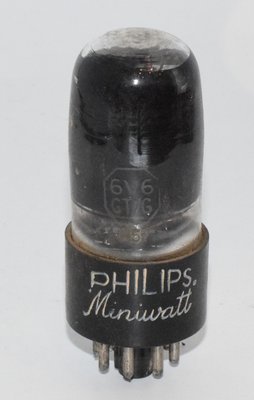
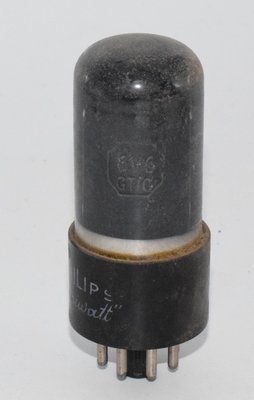
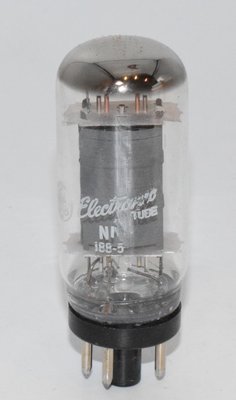
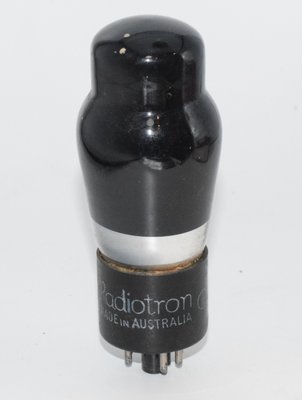
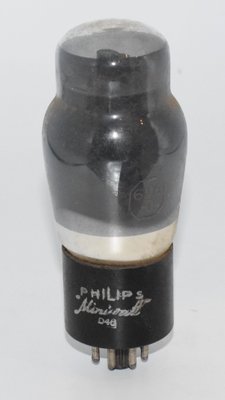
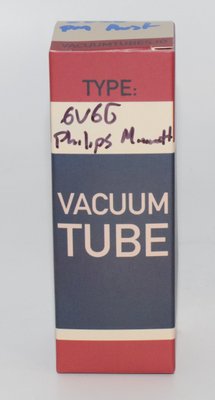
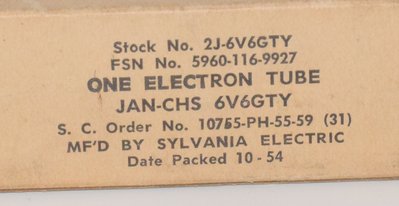
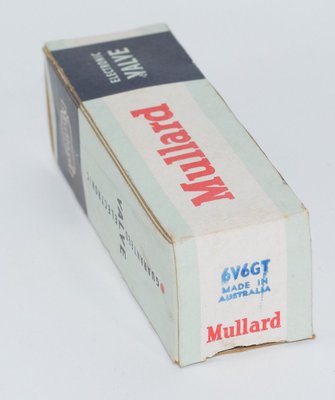
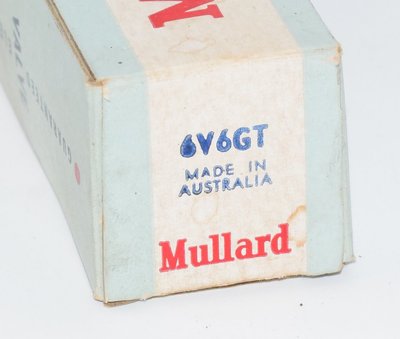
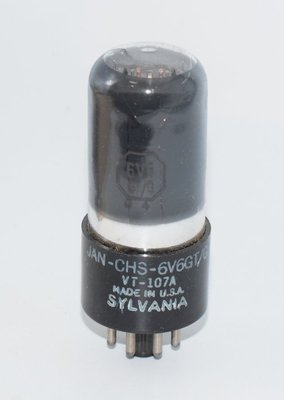
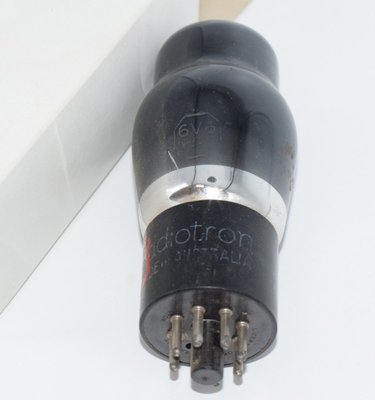
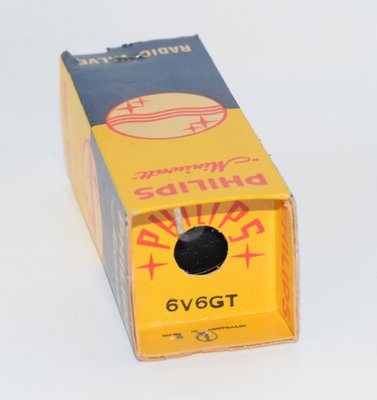
The tube was manufactured by virtually every major tube maker worldwide, including RCA, Tung-Sol, Sylvania, Ken-Rad, National Union, and Raytheon in the United States; Mullard, Brimar, and GEC in the United Kingdom; Philips Miniwatt and Radiotron (AWV/STC) in Australia; Tungsram in Hungary/UK; and many others. The 6V6G specifically — the large glass bottle version — was the earliest production form, preceding the smaller 6V6GT/G and 6V6GT variants that appeared as wartime miniaturization and material conservation drove envelope size reductions.
During World War II, the 6V6 family saw extensive military service, receiving the military designations VT-107 and VT-227. Its reliability and versatility made it a staple in military communications equipment, further cementing its reputation for ruggedness.
The Tung-Sol datasheet from June 1941 describes the 6V6 and 6V6GT/G as "beam power amplifiers, designed for service in the output stage of AC and storage battery operated receivers. They have high power sensitivity and high power output with comparatively low supply voltages." This succinct description captures the tube's essential design philosophy perfectly.
Technical Specifications and Design
General Characteristics
| Parameter | Value |
|---|---|
| Tube Type | Beam Power Amplifier (Tetrode) |
| Cathode Type | Unipotential (Indirectly Heated) |
| Base | Octal (7-pin, 7AC base for metal shell; G-7AC for glass) |
| Envelope | Glass Bulb, ST-type ("Coke Bottle") |
| Mounting | Vertical or Horizontal |
Heater Ratings
| Parameter | Value |
|---|---|
| Heater Voltage | 6.3 Volts (AC or DC) |
| Heater Current | 0.45 Ampere |
Maximum Ratings (Absolute Maximum Values)
| Parameter | Value |
|---|---|
| Maximum Plate Voltage | 350 Volts |
| Maximum Screen (G2) Voltage | 315 Volts |
| Maximum Plate Dissipation | 14.0 Watts |
| Maximum Screen Dissipation | 2.2 Watts |
Note: The Tung-Sol 1941 datasheet lists slightly more conservative ratings of 315V maximum plate voltage, 285V maximum screen voltage, 12W maximum plate dissipation, and 2W maximum screen dissipation. The higher ratings (350V plate, 315V screen, 14W plate, 2.2W screen) are from later TDSL/manufacturer consolidated data and represent the 6V6G's full rated capability. Designers should consult the specific manufacturer's datasheet for the production variant in use.
Key Electrical Characteristics (at Eb=250V, Ec2=250V, Ec1=-12.5V)
| Parameter | Value |
|---|---|
| Plate Resistance (rp) | approximately 52,000 Ohms |
| Transconductance (gm) | 4,100 µmhos (4.1 mA/V) |
| Zero-Signal Plate Current | 45 mA |
| Zero-Signal Screen Current | 4.5 mA (nominal) |
Note: The amplification factor (µ) is not explicitly stated in the reference datasheet. It can be calculated from µ = gm × rp, which at the 250V/250V operating point yields approximately µ = 4.1 × 10⁻³ × 52,000 ≈ 213. However, this value should be confirmed against additional manufacturer data, as beam tetrode µ varies significantly with operating conditions.
DC Grid Resistance Limits
The DC resistance in the grid circuit, under maximum rated conditions, should not exceed 0.5 megohm for self-bias operation and 0.1 megohm for fixed bias operation.
Typical Operating Conditions — Single Tube, Class A1 Amplifier
| Parameter | Condition 1 | Condition 2 | Condition 3 |
|---|---|---|---|
| Plate Voltage | 180 V | 250 V | 315 V |
| Screen Voltage | 180 V | 250 V | 225 V |
| Control Grid Voltage | -8.5 V | -12.5 V | -13.0 V |
| Peak AF Signal Voltage | 8.5 V | 12.5 V | 13.0 V |
| Zero-Signal Plate Current | 29 mA | 45 mA | 34.0 mA |
| Zero-Signal Screen Current (nom.) | 3 mA | 4.5 mA | 2.2 mA |
| Maximum-Signal Plate Current | 30 mA | 47 mA | 35 mA |
| Maximum-Signal Screen Current (nom.) | 4 mA | 7 mA | 6 mA |
| Plate Resistance (approx.) | 58,000 Ω | 52,000 Ω | 77,000–80,000 Ω |
| Transconductance | 3,700 µmhos | 4,100 µmhos | 3,750 µmhos |
| Load Resistance | 5,500 Ω | 5,000 Ω | 8,500 Ω |
| Total Harmonic Distortion | 8% | 8% | 12% |
| Power Output | 2.0 W | 4.5 W | 5.5 W |
Typical Operating Conditions — Push-Pull, Class AB1 Amplifier (Values for 2 Tubes)
| Parameter | Condition 1 | Condition 2 |
|---|---|---|
| Plate Voltage | 250 V | 285 V |
| Screen Voltage | 250 V | 285 V |
| Control Grid Voltage | -15.0 V | -19.0 V |
| Peak AF Signal Voltage (grid to grid) | 30 V | 38 V |
| Zero-Signal Plate Current | 70 mA | 70 mA |
| Zero-Signal Screen Current (nom.) | 5.0 mA | 4.0 mA |
| Maximum-Signal Plate Current | 79 mA | 92 mA |
| Maximum-Signal Screen Current (nom.) | 13 mA | 13.5 mA |
| Plate Resistance (approx.) | 66,000 Ω | 65,000 Ω |
| Transconductance | 3,750 µmhos | 3,600 µmhos |
| Effective Load Resistance (plate to plate) | 10,000 Ω | 8,000 Ω |
| Total Harmonic Distortion | 5% | 3.5% |
| Power Output | 10 W | 14 W |
Note: In the push-pull AB1 configuration, the plate current and screen current values listed are for two tubes at zero signal.
Pin Configuration (Octal Base — Bottom View)
| Pin | Connection |
|---|---|
| Pin 1 | No Connection (NC) — on glass versions; Shell on metal 6V6 |
| Pin 2 | Heater (H) |
| Pin 3 | Plate (P) |
| Pin 4 | Screen Grid (G2/Gs) |
| Pin 5 | Control Grid (G1/G) |
| Pin 6 | No Connection (NC) |
| Pin 7 | Heater (H) |
| Pin 8 | Cathode (K) |
The 6V6G uses the standard octal base (G-7AC designation for glass envelope types). The key guide pin on the octal base ensures correct orientation in the socket.
Applications and Usage
The 6V6G was designed primarily as an output tube for audio power amplification, and its applications span a remarkably wide range:
- Consumer Radio Receivers: The 6V6's original and most widespread application. Its ability to deliver meaningful power output from relatively low B+ supply voltages made it the standard output tube in millions of home radio receivers throughout the late 1930s, 1940s, and 1950s.
- Public Address Systems: Small to medium PA amplifiers frequently used push-pull pairs of 6V6 tubes to deliver 10–14 watts of clean audio power, sufficient for many commercial and institutional applications.
- Guitar Amplifiers: The 6V6 became one of the defining tubes of American guitar amplifier tone. Fender used the 6V6 extensively in models such as the Deluxe, Princeton, Champ, and various tweed-era amplifiers. These amplifiers became legendary for their rich, warm overdrive characteristics.
- Record Players and Phonograph Amplifiers: Many console and tabletop record players of the 1940s and 1950s used single-ended or push-pull 6V6 output stages.
- Military Communications Equipment: Under designations VT-107 and VT-227, the 6V6 served in numerous military radio transmitters and receivers during World War II and beyond.
- Jukeboxes: Many Wurlitzer, Seeburg, and Rock-Ola jukeboxes of the 1940s and 1950s employed 6V6 output tubes in their amplifier sections.
- Hi-Fi Amplifiers: In the early hi-fi era, the 6V6 was a popular choice for budget and mid-range home audio amplifiers, often in push-pull configurations delivering 10–14 watts.
- Battery-Operated Equipment: The tube's low heater current of 0.45A made it suitable for equipment powered by storage batteries, an important consideration in the era before rural electrification was complete.
Sound Characteristics
The 6V6G has earned a devoted following among audiophiles, guitar players, and recording engineers for its distinctive and highly musical sonic character. Its sound is often described in the following terms:
Clean Tones
At low to moderate signal levels, the 6V6G produces a sound that is characteristically warm, sweet, and harmonically rich without being overly colored. Compared to the larger 6L6, the 6V6 has a more intimate, smaller-scale presentation with a pronounced midrange warmth that many listeners find deeply engaging. The bass response, while not as tight or extended as larger beam tetrodes, has a pleasant roundness and fullness that suits vocal reproduction and acoustic instruments beautifully.
The treble response is smooth and gently rolled off at the extremes, avoiding the sometimes clinical or harsh quality of more modern output tubes. This natural high-frequency softening contributes to the tube's reputation for being exceptionally easy on the ears during extended listening sessions.
Overdrive and Distortion Character
When pushed into overdrive — whether in a guitar amplifier or a hi-fi amplifier driven beyond its clean headroom — the 6V6G produces what many consider to be among the most musically pleasing distortion of any output tube. The clipping characteristic is soft and gradual, with a strong emphasis on even-order harmonics (particularly the second harmonic) that the human ear perceives as warm and musical rather than harsh or grating.
Guitar players particularly prize the 6V6's breakup character: it transitions from clean to overdriven in a smooth, dynamic, and touch-responsive manner. The distortion has a creamy, singing quality with excellent note definition even at high gain levels. This is the sound that defined countless classic recordings from the 1950s and 1960s.
Dynamic Response
The 6V6G is noted for its excellent dynamic sensitivity — it responds expressively to variations in playing dynamics or signal level. This quality, sometimes described as "sag" in guitar amplifier parlance, gives the tube a lively, breathing quality that players and listeners find highly expressive. The relatively modest power output means the tube reaches its sweet spot at lower volume levels than larger output tubes, making it practical for home and studio use.
The 6V6G Specifically
Among the 6V6 family variants, the 6V6G with its large glass envelope is often considered by collectors and audiophiles to have the most refined and open sound. Whether this is attributable to the larger internal geometry, different manufacturing tolerances of the era, or simply the romance of the beautiful coke bottle glass is debated. NOS (New Old Stock) examples from premium manufacturers such as RCA, Tung-Sol, Ken-Rad, and National Union command premium prices and are highly sought after for their perceived sonic superiority.
Equivalent or Substitute Types
The 6V6 family encompasses several variants that are generally interchangeable, along with some related types:
Direct/Identical Substitutes (Drop-in Replacements)
| Type | Notes |
|---|---|
| 6V6 | Metal shell version; electrically identical, different envelope |
| 6V6GT | Smaller T-9 glass envelope; electrically identical, most common variant |
| 6V6GTA | Improved GT version with higher ratings; direct substitute |
| 6V6GTY | Further improved GT version; direct substitute |
| 6V6Y | Ruggedized variant; direct substitute |
| 5871 | Industrial/military equivalent |
| 6AY5 | Equivalent type |
| 7184 | Equivalent type |
| CV509 | British military designation; equivalent |
| CV510 | British military designation; equivalent |
| CV511 | British military designation; equivalent |
| VT-107 | US military designation |
| VT-227 | US military designation |
| 6P6S (6П6С) | Soviet equivalent; generally interchangeable but verify pin compatibility and ratings |
| OSW3106 | Equivalent type |
Different Rating Substitutes (NOT Direct Drop-in)
| Type | Notes |
|---|---|
| 7408 | Loctal base version; different socket required, NOT a drop-in replacement |
Note: While the 6V6GTA and 6V6GTY variants are drop-in replacements, they were manufactured to improved specifications and may have slightly higher maximum ratings. The GTA and GTY versions are often preferred for reliability in demanding applications. The original 6V6G with its large glass envelope is physically larger than the GT variants and requires adequate clearance in the chassis.
Notable Characteristics
- Beam Power Design: The 6V6G uses beam-forming plates rather than a suppressor grid to direct electron flow and suppress secondary emission from the plate. This beam power tetrode design, shared with the 6L6, results in higher power efficiency and lower distortion compared to conventional pentodes of similar size.
- Exceptional Efficiency at Low Voltages: One of the 6V6's most notable engineering achievements is its ability to deliver useful power output at plate voltages as low as 180V (2.0 watts) while scaling up to 5.5 watts at 315V in single-ended Class A1 operation. This voltage flexibility made it invaluable in the era of varied power supply designs.
- Push-Pull Performance: In push-pull Class AB1 configuration, a pair of 6V6G tubes can deliver up to 14 watts at 285V with only 3.5% total harmonic distortion — an impressive figure that made it competitive with larger, more expensive output tubes for many applications.
- Self-Bias Friendly: The 6V6G works exceptionally well with cathode (self) bias, simplifying amplifier design and improving reliability. The moderate bias voltages required (-8.5V to -19V depending on operating conditions) are easily achieved with standard cathode resistor values.
- The Coke Bottle Envelope: The 6V6G's large ST-type glass envelope is not merely aesthetic — the larger internal volume allows for greater spacing between elements, potentially reducing microphonic effects and providing better heat dissipation. The glass envelope also allows visual inspection of the tube's operation, including plate color (an indicator of dissipation level).
- Collectibility: NOS 6V6G tubes, particularly from manufacturers such as RCA, Tung-Sol, Ken-Rad, and National Union, are among the most collectible and valuable vintage audio tubes. Smoked glass, clear glass, and various internal construction variations are avidly catalogued and traded by collectors.
- Transconductance Variation: The transconductance ranges from 3,600 to 4,100 µmhos depending on operating point, with the highest gm achieved at the 250V/250V operating condition. This moderate transconductance contributes to the tube's smooth, non-aggressive character.
Usage in the Audio Community
Guitar Amplifiers
The 6V6 is arguably the most important output tube in the history of American guitar amplification. Leo Fender's early amplifier designs — including the legendary Tweed Deluxe (Model 5E3), Princeton, and Champ — were built around the 6V6, and these amplifiers defined the sound of rock and roll, blues, country, and jazz guitar for generations. The Tweed Deluxe, with its push-pull pair of 6V6 tubes delivering approximately 12 watts, is considered by many guitarists to be the finest-sounding guitar amplifier ever made.
The 6V6's relatively low power output is actually an advantage in guitar applications: it allows the player to drive the output stage into its sweet-sounding overdrive at manageable volume levels. This characteristic made 6V6-based amplifiers the preferred choice for studio recording, where controllable volume and rich harmonic content are paramount.
Modern boutique amplifier builders continue to design around the 6V6, and companies such as Fender, Victoria, Carr, and many others produce current-production amplifiers using this tube. The 6V6G specifically — the large glass version — is sometimes used in premium boutique amplifiers for both its sonic qualities and its visual appeal.
Hi-Fi and Audiophile Applications
In the audiophile community, the 6V6G has experienced a significant renaissance. Single-ended (SE) amplifiers using a single 6V6G per channel, typically delivering 2–5.5 watts depending on operating conditions, have become popular among enthusiasts who pair them with high-efficiency loudspeakers. These low-power SE amplifiers are prized for their directness, immediacy, and holographic soundstaging — qualities that many audiophiles find more engaging than the higher power output of larger amplifiers.
Push-pull 6V6 amplifiers delivering 10–14 watts remain popular as well, offering a practical balance of power and sonic refinement. Many DIY (do-it-yourself) audio enthusiasts choose the 6V6 as their first amplifier project due to its forgiving nature, moderate voltage requirements, and the wealth of published circuit designs available.
Notable commercial audiophile amplifiers using the 6V6 include designs from manufacturers such as Decware and various small-production builders. The tube's compatibility with a wide range of circuit topologies — single-ended, push-pull, ultralinear, and triode-strapped — gives designers considerable flexibility in voicing their amplifiers.
Triode-Strapped Operation
A popular technique in the audiophile community is to operate the 6V6G in triode mode by connecting the screen grid (pin 4) to the plate (pin 3), either directly or through a small resistor. This reduces power output significantly but lowers distortion and gives the tube a more linear, triode-like character with reduced output impedance. Many audiophiles prefer this mode for its purity and directness, accepting the lower power output as a worthwhile trade-off when using efficient speakers.
NOS vs. Current Production
The audio community draws a strong distinction between NOS (New Old Stock) 6V6G tubes and current-production equivalents. Original 6V6G tubes from the 1940s and 1950s — particularly those from RCA (Radiotron), Tung-Sol, Ken-Rad, Sylvania, and National Union — are considered sonically superior by many enthusiasts and command prices ranging from $50 to several hundred dollars per tube depending on brand, condition, and testing results.
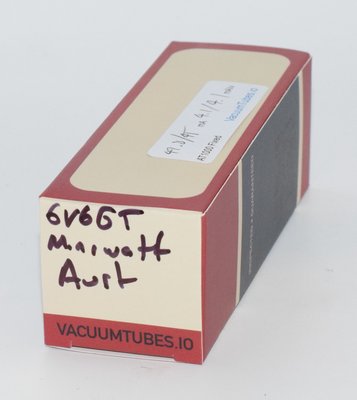
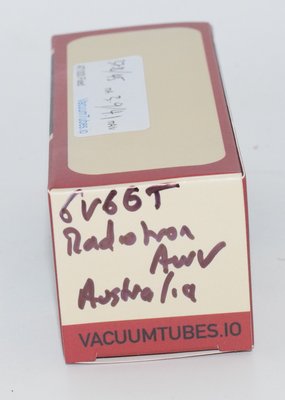
Current-production 6V6GT tubes are available from manufacturers including JJ Electronic, Electro-Harmonix (New Sensor), Tung-Sol (reissue), and Sovtek. While these modern tubes are reliable and affordable, the original 6V6G with its large glass envelope is no longer in production, making NOS examples increasingly scarce and valuable. Australian-made examples from Radiotron (AWV) and Philips Miniwatt are particularly prized in the collector market.
The 6V6G in Recording
Recording engineers have long appreciated the 6V6's sonic character. Small 6V6-based amplifiers are frequently used in professional recording studios for guitar tracking, where their rich harmonic content and touch-responsive dynamics translate beautifully to recorded media. The tube's natural compression characteristics — a gentle, musical limiting of dynamic peaks — can reduce the need for external compression in the signal chain, resulting in a more organic and natural recorded sound.