1. Introduction and History
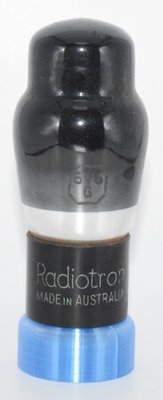
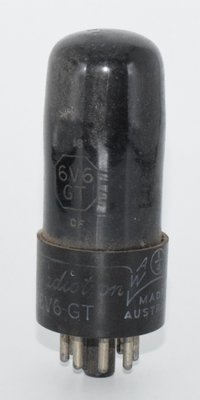
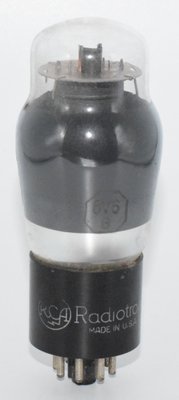
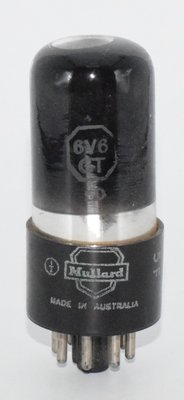
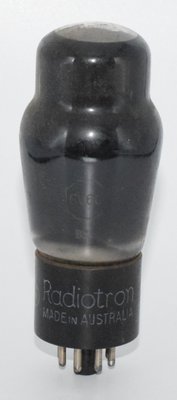
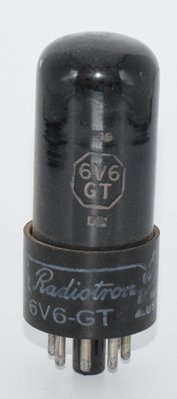
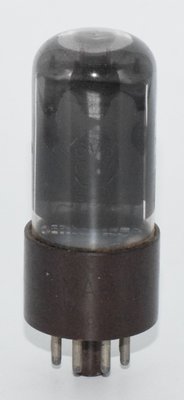
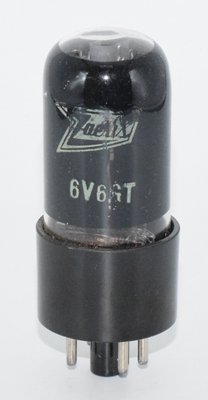
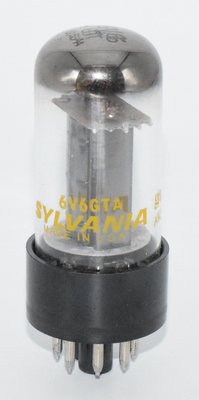
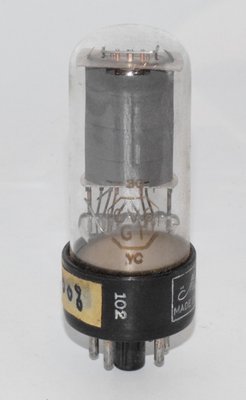
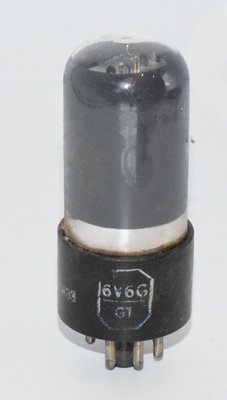
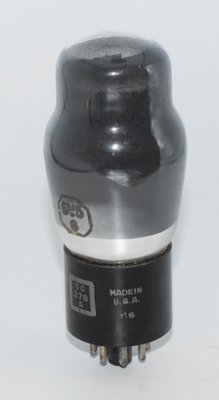
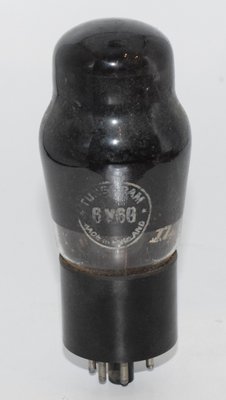
The 6V6GT is one of the most celebrated beam power tetrodes in the history of vacuum tube electronics. Introduced by RCA in 1937 as a more affordable and compact alternative to the 6L6, the 6V6 quickly became one of the most widely produced output tubes of the 20th century. Its original designation was simply the 6V6, housed in the larger shouldered glass "G" envelope. The "GT" suffix denotes the smaller, tubular glass envelope (Glass Tubular) that became the standard production form during and after World War II, offering the same electrical performance in a more compact and rugged package.
The 6V6 family was designed to fill a gap in the market for a medium-power output tube that could deliver meaningful audio power without the higher plate voltages and larger output transformers required by the 6L6. With a maximum plate dissipation of 14 watts, the 6V6GT was ideally suited for table radios, console phonographs, public address systems, and small guitar amplifiers — applications where 4 to 14 watts of audio output was more than sufficient.
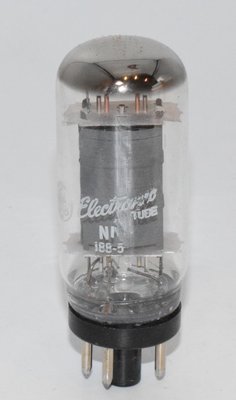
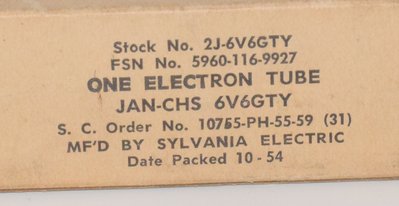
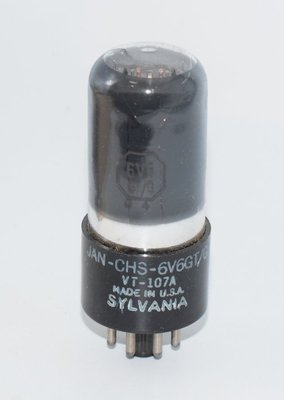
During World War II, the 6V6GT was produced in enormous quantities under the JAN (Joint Army-Navy) specification as the VT-107A, finding use in military communications equipment. This wartime production by manufacturers such as Sylvania, Tung-Sol, RCA, Ken-Rad, and National Union resulted in some of the finest examples of the type ever made, and these NOS (New Old Stock) military-grade tubes are highly prized by collectors and audiophiles today.
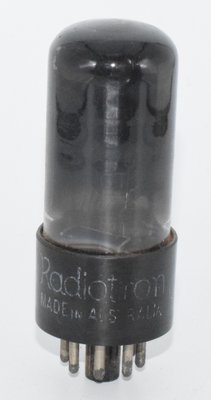
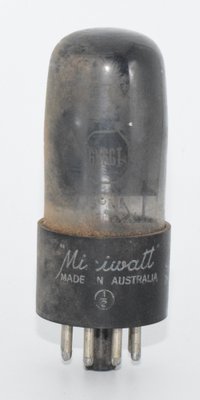
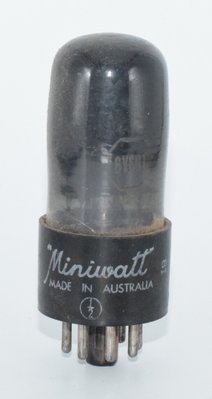
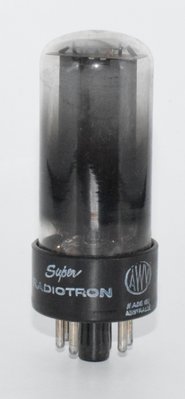
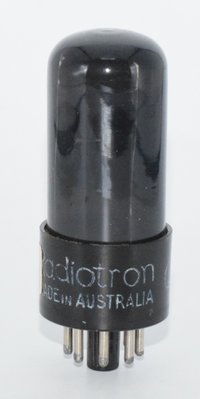
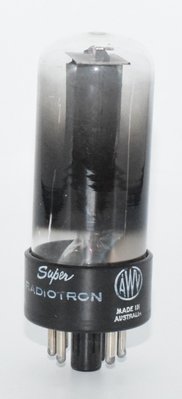
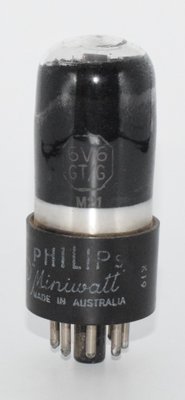
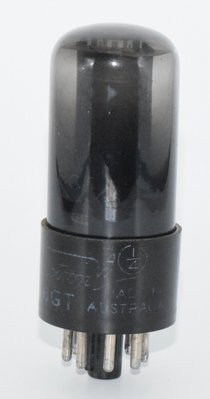
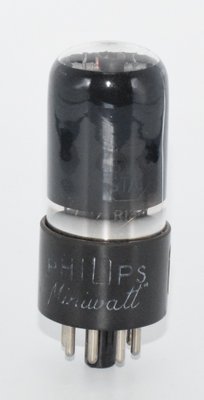
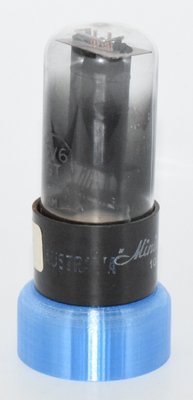
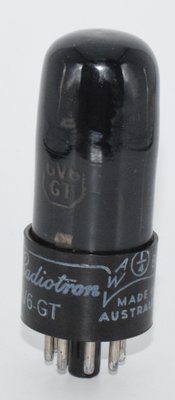
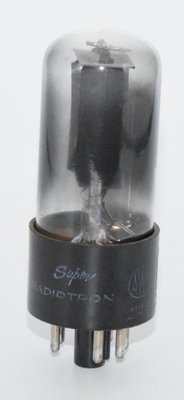
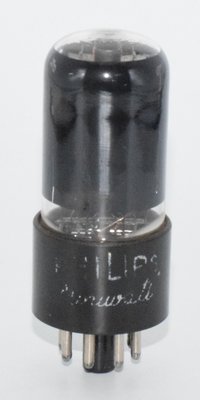
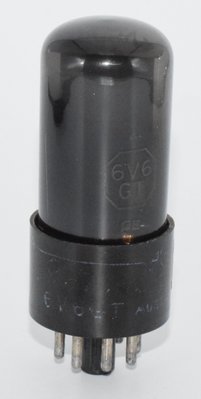
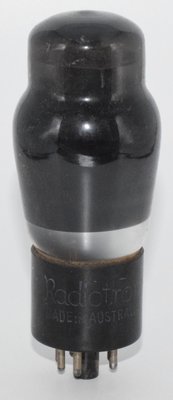
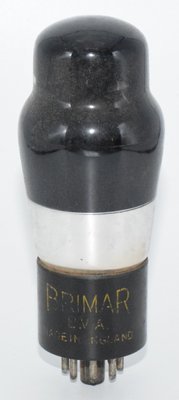
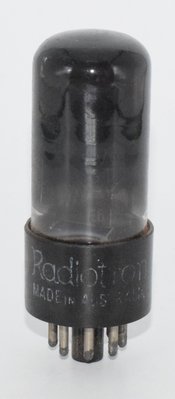
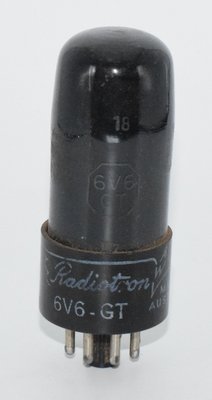
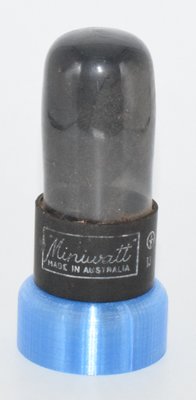
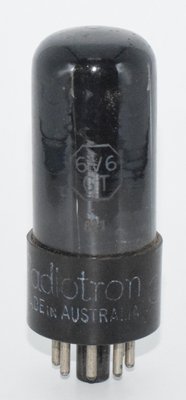
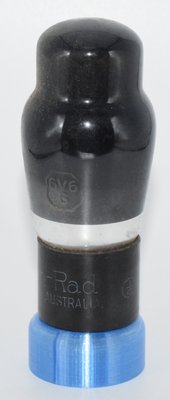
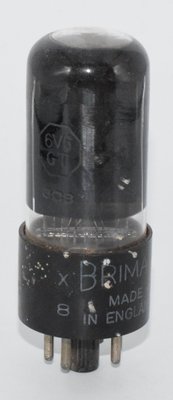
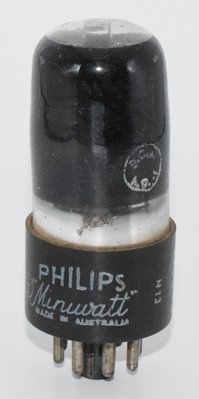
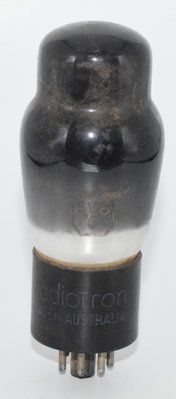
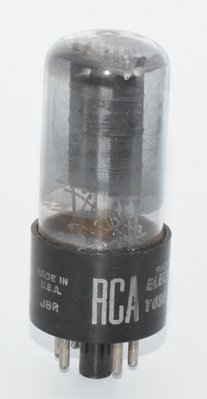
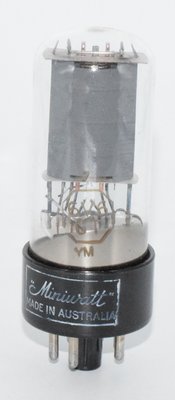
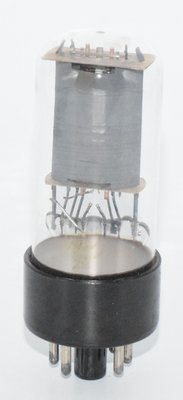
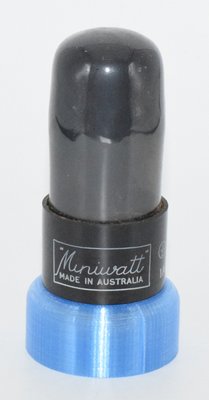
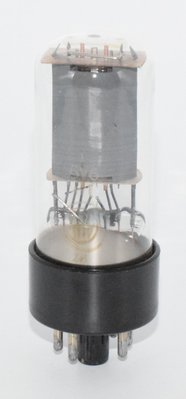
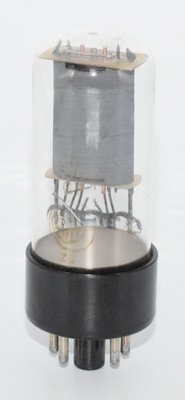
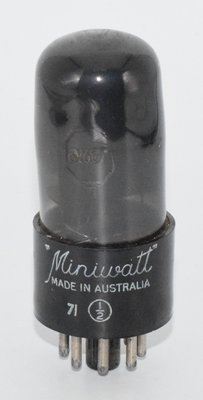
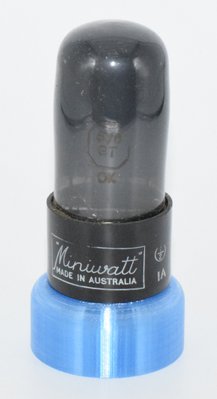
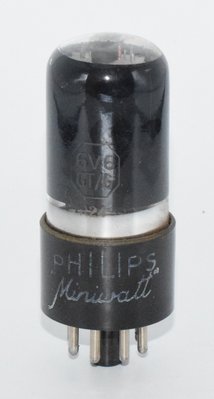
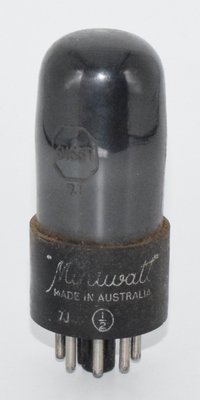
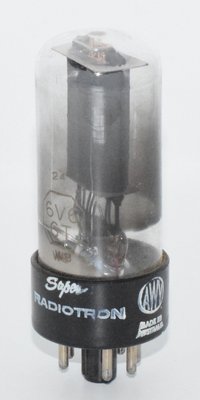
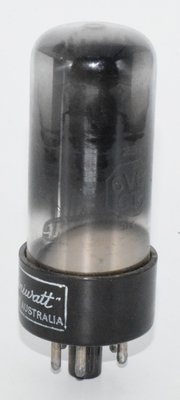
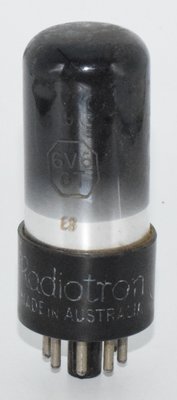
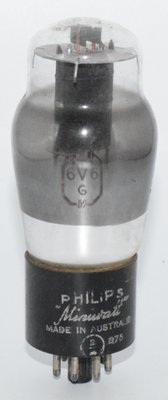
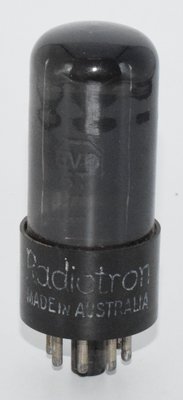
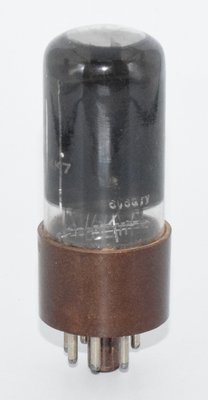
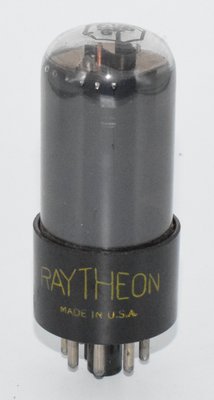
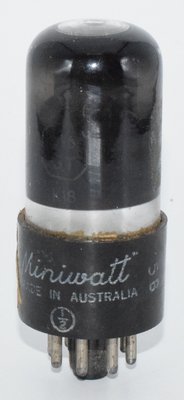
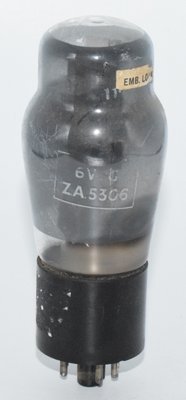
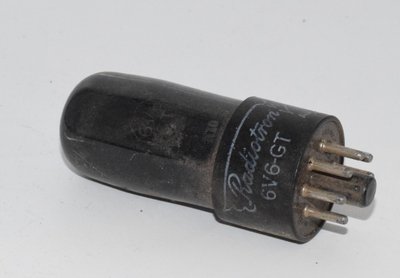
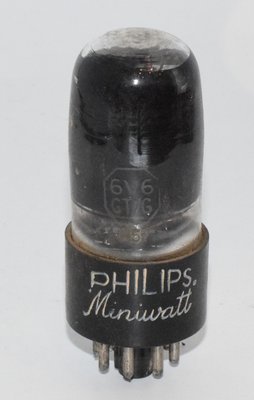
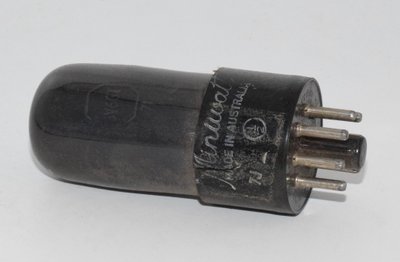
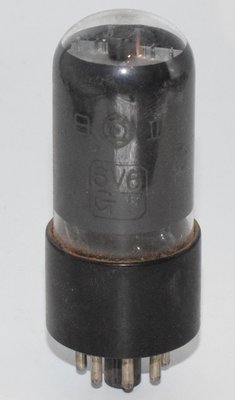
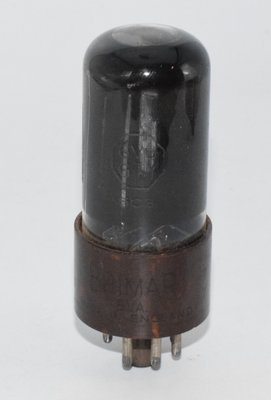
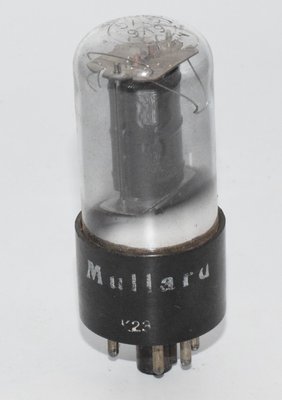
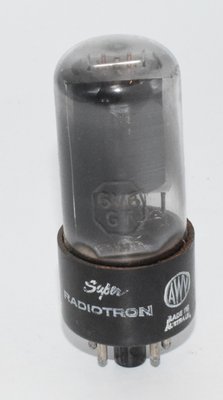
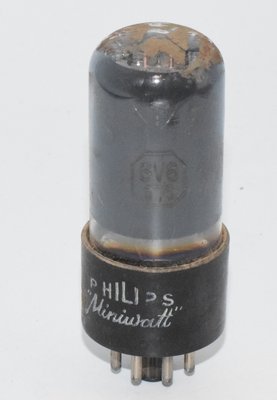
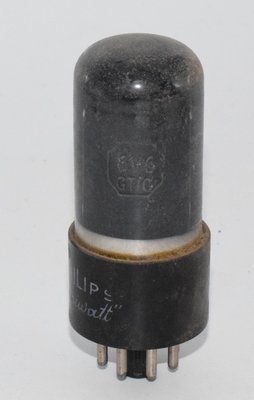
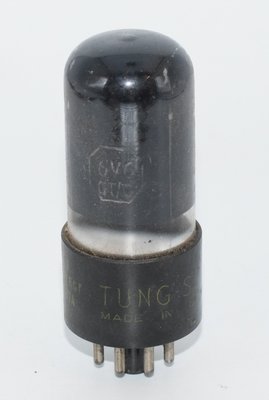
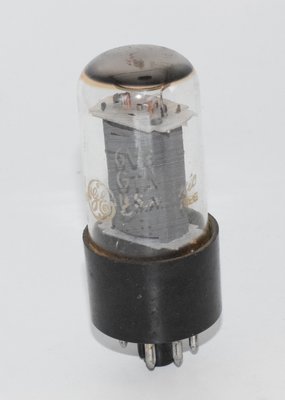
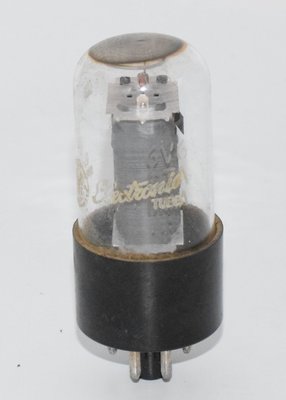
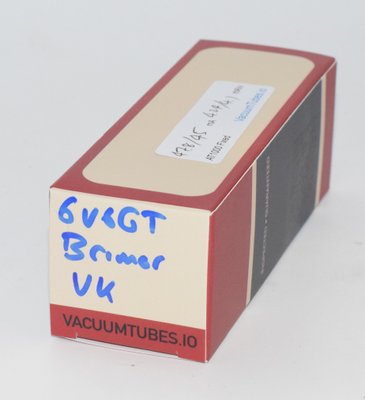
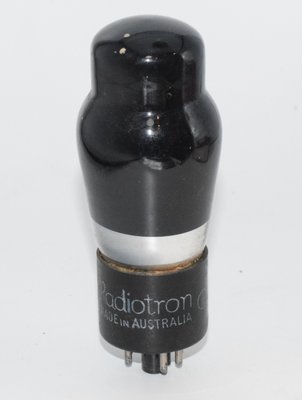
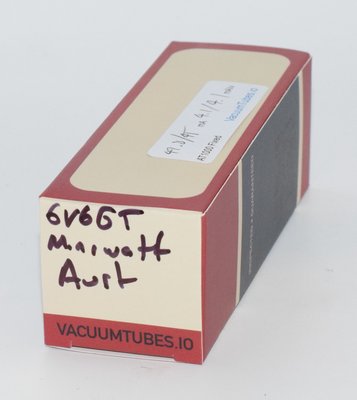
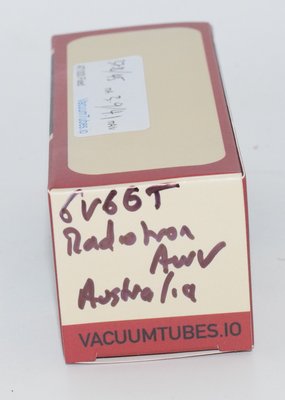
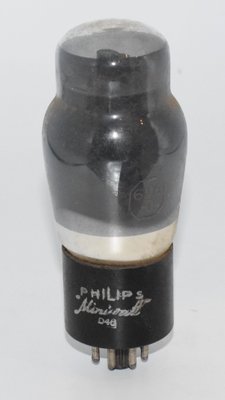
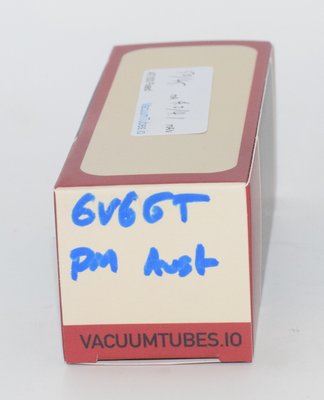
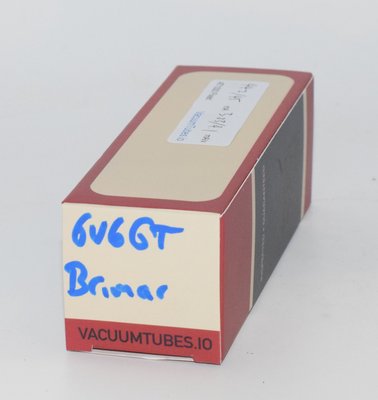
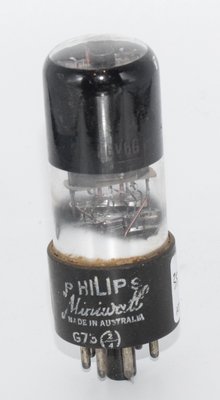
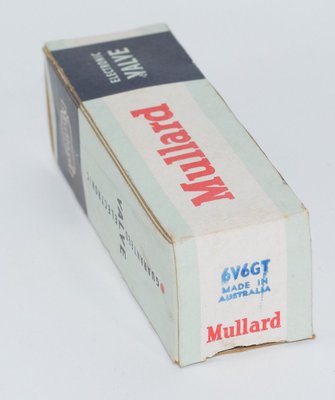
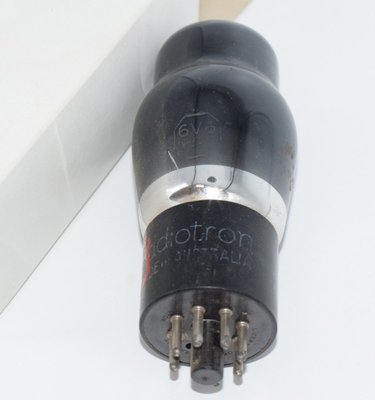
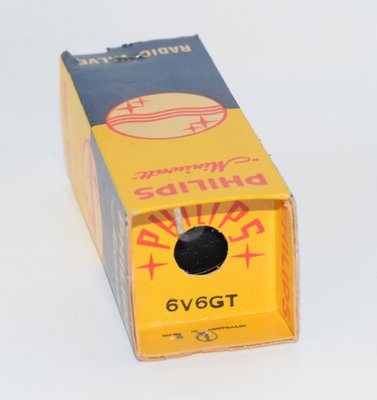
The tube was manufactured globally by virtually every major valve producer: RCA, Sylvania, Tung-Sol, GE, and Raytheon in the United States; Mullard and Brimar in the United Kingdom; Philips Miniwatt in the Netherlands and Australia; Radiotron/AWV (Amalgamated Wireless Valve Company) in Australia; Hitachi in Japan; and numerous others across Europe and Asia. This worldwide production legacy means that the 6V6GT exists in a remarkable variety of internal constructions, glass shapes, and sonic characteristics — from the tall-bottle Australian Philips Miniwatt variants to the compact Brimar UK production, from the legendary Tung-Sol round-plate versions to the Sylvania "chrome dome" military types.
The 6V6GT remains in production today from manufacturers such as JJ Electronic (Slovakia), Electro-Harmonix and Tung-Sol (reissue, Russia), and Shuguang (China), ensuring its continued availability for new amplifier designs and vintage equipment restoration.
2. Technical Specifications and Design
General Description
The 6V6GT is a beam power tetrode (beam-forming plate type) designed for use as an audio-frequency power amplifier. It features an indirectly heated cathode, a control grid (g1), a screen grid (g2), beam-forming plates internally connected to the cathode, and a plate (anode). The beam-forming plate structure concentrates the electron stream into dense beams, providing pentode-like output characteristics with lower distortion than a true pentode at equivalent power levels.
Heater / Filament
| Parameter | Value |
|---|---|
| Heater Voltage (Vh) | 6.3 V |
| Heater Current (Ih) | 0.45 A |
| Heater Type | Indirectly heated cathode |
Maximum Ratings (Absolute Maximum Values)
| Parameter | Value |
|---|---|
| Maximum Plate Voltage (Va max) | 350 V |
| Peak Plate Voltage (Va peak) | 1,200 V |
| Maximum Screen Grid Voltage (Vg2 max) | 315 V |
| Maximum Plate Dissipation (Pa max) | 14.0 W |
| Maximum Screen Grid Dissipation (Pg2 max) | 2.2 W |
| Maximum Cathode Current (Ik max) | 40.0 mA |
Typical Operating Characteristics
The 6V6GT is specified for several standard operating conditions. The following tables present verified datasheet values for single-ended (Class A) and push-pull (Class AB1) configurations.
Class A Single-Ended Operation — Condition 1 (High Voltage)
| Parameter | Value |
|---|---|
| Plate Voltage (Va) | 315 V |
| Screen Grid Voltage (Vg2) | 225 V |
| Control Grid Voltage (Vg1) | −13.0 V |
| Plate Current (Ia) | 34.0 mA |
| Screen Current (Ig2) | 2.2 mA |
| Plate Resistance (rp) | 80,000 Ω |
| Transconductance (gm / S) | 3.75 mA/V |
| Load Impedance (Zout) | 8,500 Ω |
| Power Output (Pout) | 5.5 W |
| Total Harmonic Distortion (THD) | 12% |
Class A Single-Ended Operation — Condition 2 (Standard)
| Parameter | Value |
|---|---|
| Plate Voltage (Va) | 250 V |
| Screen Grid Voltage (Vg2) | 250 V |
| Control Grid Voltage (Vg1) | −12.5 V |
| Plate Current (Ia) | 45.0 mA |
| Screen Current (Ig2) | 4.5 mA |
| Plate Resistance (rp) | 50,000 Ω |
| Transconductance (gm / S) | 4.1 mA/V |
| Load Impedance (Zout) | 5,000 Ω |
| Power Output (Pout) | 4.5 W |
Class A Single-Ended Operation — Condition 3 (Low Voltage)
| Parameter | Value |
|---|---|
| Plate Voltage (Va) | 180 V |
| Screen Grid Voltage (Vg2) | 180 V |
| Control Grid Voltage (Vg1) | −8.5 V |
| Plate Current (Ia) | 29.0 mA |
| Screen Current (Ig2) | 3.0 mA |
| Plate Resistance (rp) | 50,000 Ω |
| Transconductance (gm / S) | 3.7 mA/V |
| Load Impedance (Zout) | 5,500 Ω |
| Power Output (Pout) | 2.0 W |
Class AB1 Push-Pull Operation — Condition 1 (High Power)
| Parameter | Value |
|---|---|
| Plate Voltage (Va) | 285 V |
| Screen Grid Voltage (Vg2) | 285 V |
| Control Grid Voltage (Vg1) | −19.0 V |
| Plate Current (Ia) — two tubes, zero signal | 70.0 mA |
| Screen Current (Ig2) — two tubes, zero signal | 4.0 mA |
| Plate-to-Plate Load (Ra) | 70,000 Ω (i.e., 8,000 Ω per tube reflected) |
| Transconductance (gm / S) | 3.6 mA/V |
| Load Impedance (Zout) | 8,000 Ω |
| Power Output (Pout) | 14.0 W |
| Total Harmonic Distortion (THD) | 3.5% |
Class AB1 Push-Pull Operation — Condition 2 (Standard)
| Parameter | Value |
|---|---|
| Plate Voltage (Va) | 250 V |
| Screen Grid Voltage (Vg2) | 250 V |
| Control Grid Voltage (Vg1) | −15.0 V |
| Plate Current (Ia) — two tubes, zero signal | 70.0 mA |
| Screen Current (Ig2) — two tubes, zero signal | 5.0 mA |
| Plate-to-Plate Load (Ra) | 60,000 Ω |
| Transconductance (gm / S) | 3.75 mA/V |
| Load Impedance (Zout) | 10,000 Ω |
| Power Output (Pout) | 10.0 W |
Derived Parameters (Typical at 250V/250V Class A Condition)
| Parameter | Value |
|---|---|
| Amplification Factor (μ) | Approximately 205 (calculated as μ = gm × rp = 4.1 mA/V × 50,000 Ω) |
| Transconductance (gm) | 4,100 µmhos (4.1 mA/V) |
| Plate Resistance (rp) | 50,000 Ω |
Note: The amplification factor μ of approximately 205 is derived from the verified gm and rp values. Some datasheets may list slightly different μ values depending on the exact operating point. This is consistent with the high plate resistance typical of beam tetrodes operating as pentodes.
Physical Construction
| Parameter | Detail |
|---|---|
| Base Type | Octal (International Octal, IO, 8-pin) |
| Envelope Type | GT (Glass Tubular) — T-9 glass envelope |
| Mounting Position | Any (designed for universal mounting) |
| Overall Length | Approximately 82–90 mm (varies by manufacturer) |
| Maximum Diameter | Approximately 29–32 mm (T-9 envelope) |
Pin-Out (Octal Base — Bottom View)
| Pin Number | Connection |
|---|---|
| Pin 1 | No connection (key) |
| Pin 2 | Heater |
| Pin 3 | Plate (Anode) |
| Pin 4 | Screen Grid (g2) |
| Pin 5 | Control Grid (g1) |
| Pin 6 | No connection |
| Pin 7 | Heater |
| Pin 8 | Cathode (internally connected to beam-forming plates) |
| Metal Shell | Connected internally to Pin 1 (or no connection, varies by manufacturer) |
Note: The beam-forming plates are internally connected to the cathode (Pin 8) and are not brought out to a separate pin. Some early datasheets show Pin 1 connected to the shell/shield; in the GT envelope this is typically a no-connection or internal shield tie. Always verify with the specific manufacturer's datasheet for your production variant.
3. Applications and Usage
The 6V6GT has been employed in an extraordinarily wide range of applications since its introduction in 1937:
Consumer Audio
- Table and console radios: The 6V6GT was the standard output tube in millions of AM and FM radio receivers produced from the late 1930s through the 1960s. Its modest power requirements and ability to deliver 4–5 watts of single-ended output made it ideal for domestic radio sets.
- Phonograph amplifiers: Record players and console phonographs frequently used single 6V6GT output stages or push-pull pairs for higher fidelity reproduction.
- Television audio: Many early television receivers used the 6V6GT as the audio output tube.
- Hi-Fi amplifiers: In the early high-fidelity era, push-pull 6V6GT circuits delivering 10–14 watts were considered adequate for home listening, and numerous kit amplifiers (Heathkit, Eico, Dynaco, etc.) used this tube.
Musical Instrument Amplification
- Guitar amplifiers: This is perhaps the most famous modern application of the 6V6GT. Classic amplifiers including the Fender Deluxe, Fender Princeton, Fender Champ (single-ended), Gibson GA-5, and many Valco/Supro models used 6V6GT output tubes. These amplifiers, typically producing 5–15 watts, are revered for their rich, harmonically complex overdrive characteristics.
- Harmonica amplifiers: Blues harmonica players prize small 6V6GT-based amplifiers for their warm, compressed tone.
Public Address and Communications
- PA systems: Small public address amplifiers for schools, churches, and businesses commonly used push-pull 6V6GT output stages.
- Military communications: During WWII, the 6V6GT (as VT-107A) was used extensively in military radio transmitters and receivers, intercom systems, and field communications equipment.
- Intercoms and paging systems: Industrial and commercial intercom systems frequently employed the 6V6GT.
Other Applications
- Oscillator service: The 6V6GT was sometimes used as an RF oscillator in test equipment and signal generators.
- Voltage regulator: In some circuits, the 6V6GT served as a series-pass element in regulated power supplies.
4. Sound Characteristics
The 6V6GT occupies a unique and beloved position in the tonal landscape of vacuum tube audio. Its sound character is distinct from both the larger 6L6 family and the smaller single-ended triodes, and it has earned a devoted following among audiophiles, guitar players, and amplifier designers alike.
General Tonal Character
The 6V6GT is universally described as possessing a warm, sweet, and harmonically rich sound. Compared to the 6L6, which tends toward a cleaner, more powerful, and more "American" sound, the 6V6GT is often characterized as having a more intimate, vocal, and textured quality. It sits in a tonal middle ground — warmer and more colored than a 6L6, but with more headroom and clarity than a small triode like the 6AQ5.
Clean Tones
At low to moderate volume levels, the 6V6GT produces a clean tone that is round, full-bodied, and slightly warm. The midrange is particularly noteworthy — it has a lush, present quality that gives vocals and acoustic instruments a natural, lifelike character. The bass response is tight but not overly deep, and the treble is smooth without being dull. Audiophiles often describe the clean sound as having a gentle, euphonic quality that adds a subtle richness to the source material without obvious coloration.
Overdrive and Distortion Character
This is where the 6V6GT truly shines and where its reputation in the guitar world was forged. When pushed into overdrive, the 6V6GT produces a smooth, creamy, and highly musical distortion that is rich in even-order harmonics (particularly second and fourth harmonics). The transition from clean to overdriven is gradual and graceful — there is no harsh "cliff" where the sound suddenly becomes aggressive. Instead, the tube compresses gently, adding increasing layers of harmonic complexity as it is driven harder.
Guitar players describe the overdriven 6V6GT tone as having a "sag" or "bloom" quality — the notes seem to swell slightly before sustaining, creating a dynamic, responsive feel under the fingers. This compression characteristic is partly due to the tube's relatively modest power handling; the output transformer and power supply interact with the tube's characteristics to create a dynamically expressive playing experience.
Frequency Response Character
- Bass: Warm and present but not boomy. The 6V6GT does not have the deep, authoritative bass extension of a 6L6 or KT66, but its low-frequency reproduction is musical and well-defined. In guitar amplifiers, this translates to a bass response that stays tight even at high gain settings.
- Midrange: This is the 6V6GT's strongest suit. The midrange is rich, complex, and forward without being nasal or honky. It has a vocal quality that makes it exceptionally flattering for voice reproduction in hi-fi applications and for guitar leads that need to cut through a mix.
- Treble: Smooth, sweet, and never harsh. The high-frequency response rolls off gently, which contributes to the tube's reputation for being "forgiving" of bright or harsh source material. In guitar applications, this means the 6V6GT tames ice-pick highs while retaining clarity and sparkle.
Dynamic Response
The 6V6GT is praised for its excellent dynamic sensitivity. It responds expressively to variations in playing dynamics (for guitar) or signal level (for hi-fi), making it feel "alive" and interactive. The natural compression that occurs as the tube approaches its power limits adds a musical quality that solid-state devices and even some larger tubes struggle to replicate.
Comparison to Related Tubes
- vs. 6L6: The 6V6GT is warmer, more midrange-focused, and breaks up earlier and more sweetly. The 6L6 is cleaner, more powerful, with deeper bass and more headroom.
- vs. EL84 (6BQ5): Both are medium-power tubes with a reputation for sweet overdrive, but the 6V6GT is generally described as warmer and rounder, while the EL84 has a brighter, more "chimey" top end with a slightly more aggressive edge when overdriven.
- vs. 6AQ5: The 6AQ5 is essentially a miniature version of the 6V6 concept, but the 6V6GT is generally considered to have a fuller, more refined sound with better bass response and a more complex harmonic structure.
Variations by Manufacturer
Experienced listeners note significant tonal differences between 6V6GT tubes from different manufacturers and eras:
- RCA (USA): Often described as the "reference" 6V6GT sound — balanced, warm, with excellent clarity.
- Tung-Sol (USA, vintage): Particularly the round-plate versions, prized for a rich, three-dimensional midrange and smooth top end. Among the most sought-after variants.
- Sylvania (USA): Known for a slightly brighter, more detailed sound with excellent dynamics. The "chrome dome" and "green letter" variants are highly regarded.
- Mullard / Brimar (UK): Tend toward a warmer, more liquid sound with a lush midrange character typical of British valve production.
- Philips Miniwatt (Australia): The tall-bottle variants are noted for a full, warm sound with good bass extension. Highly collectible.
- JJ Electronic (current production): Generally considered a good modern option with a warm, slightly dark character.
- Electro-Harmonix / New Sensor (current production): Brighter and more open than the JJ, with a more modern voicing.
5. Equivalent or Substitute Types
The following tubes are verified as close or identical substitutes for the 6V6GT and can generally be used as direct replacements without circuit modification:
Direct / Identical Substitutes
| Type | Notes |
|---|---|
| 6V6 | Original metal-envelope version. Electrically identical; different physical envelope (metal can). |
| 6V6G | Shouldered glass ("coke bottle") envelope version. Electrically identical; larger physical size. |
| 6V6GTA | Improved GT version with higher ratings for some parameters. Direct drop-in replacement; may offer slightly improved reliability. |
| 6V6GTY | Further improved/ruggedized version. Direct drop-in replacement. |
| 6V6Y | Ruggedized variant. Direct drop-in replacement. |
| 5871 | Industrial/military equivalent. Direct drop-in replacement. |
| 6AY5 | Equivalent type. Direct drop-in replacement. |
| 7184 | Equivalent type. Direct drop-in replacement. |
| CV509 | British military (CV) designation for the 6V6GT family. Direct replacement. |
| CV510 | British military (CV) designation. Direct replacement. |
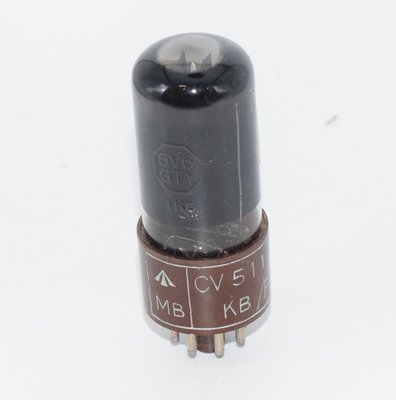
| CV511 | British military (CV) designation (Brimar). Direct replacement. |
| VT-107 / VT-107A | US military designation (WWII era). Electrically identical; often premium quality due to military specifications. Also designated VT227. |
| VT227 | US military designation. Direct replacement. |
| OSW3106 | Equivalent designation. Direct replacement. |
| WT2100082 | Equivalent designation. Direct replacement. |
| WTT123 | Equivalent designation. Direct replacement. |
| 6P6C (6П6С) | Soviet/Russian equivalent. Generally considered a direct substitute, though some sources note minor differences in construction and maximum ratings. Verify specific datasheet ratings before use in critical applications. |
Different Rating Substitutes (NOT Direct Drop-In)
| Type | Notes |
|---|---|
| 7408 | Related type with different ratings. Not a direct drop-in replacement — circuit modifications or re-biasing may be required. Consult datasheets for both types before substituting. |
Important Substitution Notes
While the 6V6GT is sometimes discussed in the same context as the 6L6 or EL34, these are not interchangeable types. The 6L6 has significantly different operating parameters, higher power capability, and different bias requirements. Similarly, the EL84/6BQ5 uses a 9-pin miniature (Noval) base and is not physically or electrically compatible. Never substitute these types without proper circuit redesign.
6. Notable Characteristics
Beam Power Tetrode Design
The 6V6GT uses beam-forming plates rather than a suppressor grid to direct the electron stream. This beam power design, pioneered by the MOV/EMI engineers and licensed to RCA, creates a virtual suppressor effect by concentrating electrons into dense beams that suppress secondary emission from the plate. This results in higher power efficiency and lower distortion compared to a conventional pentode of similar size, and contributes significantly to the tube's musical character.
Relatively Low Maximum Ratings
With a maximum plate voltage of 350V, maximum screen voltage of 315V, and maximum plate dissipation of 14W, the 6V6GT is a relatively modest tube by output stage standards. This is actually one of its greatest strengths in audio applications — the tube reaches its "sweet spot" of gentle compression and harmonic saturation at power levels that are practical for home listening and small venue performance. The 40mA maximum cathode current limit should be carefully observed, particularly in self-biased circuits where aging tubes may draw excessive current.
Screen Grid Sensitivity
The 6V6GT's screen grid dissipation limit of only 2.2W requires careful attention in circuit design. Excessive screen voltage or inadequate screen dropping resistance can quickly destroy the tube. This is a common failure mode in vintage equipment where filter capacitors have degraded, allowing excessive B+ voltage to reach the screen grid. A properly sized screen grid dropping resistor (typically 470Ω to 1kΩ) is essential for tube longevity.
Self-Bias vs. Fixed Bias
The 6V6GT works exceptionally well in cathode-biased (self-biased) circuits, which is one reason for its popularity in simple amplifier designs. A typical cathode bias resistor of 250–470Ω (bypassed with a 25µF electrolytic capacitor) provides stable, automatic biasing that compensates for tube aging and variation between specimens. Fixed-bias operation allows slightly more output power but requires matched tubes and periodic bias adjustment.
Triode-Connected Operation
The 6V6GT can be operated in triode mode by connecting the screen grid (Pin 4) to the plate (Pin 3), typically through a small resistor (100–470Ω). In triode mode, the tube produces approximately 1–2 watts of single-ended output with significantly lower distortion and a more linear, triode-like character. This configuration is popular in audiophile single-ended triode (SET) amplifiers where ultimate power is less important than tonal purity.
Ultra-Linear Operation
In push-pull configurations, the 6V6GT responds well to ultra-linear (distributed load) operation, where the screen grids are connected to taps on the output transformer primary (typically at 40–43% of the primary winding). This provides a compromise between pentode-mode power and triode-mode linearity, and was used in several classic hi-fi amplifier designs.
Microphonics
Like most tubes of its era, the 6V6GT can be susceptible to microphonic behavior — mechanical vibrations causing audible noise in the output. This varies significantly between manufacturers and individual specimens. NOS military-grade tubes (VT-107A) were typically built to tighter mechanical tolerances and tend to be less microphonic. In guitar amplifier applications, some degree of microphonic behavior can actually contribute to the amp's "lively" feel and feedback characteristics.
Longevity and Reliability
The 6V6GT is generally a long-lived and reliable tube when operated within its ratings. Typical service life in a properly designed circuit is 3,000–10,000 hours, depending on operating conditions. The most common failure modes are cathode emission decline (gradual loss of output), screen grid failure (often due to excessive dissipation), and inter-electrode shorts (particularly in older tubes with contaminated internal elements).
7. Usage in the Audio Community
Guitar Amplifiers — The 6V6GT's Greatest Legacy
The 6V6GT is arguably the most important tube in the history of American guitar amplifier design. Its association with Fender amplifiers alone would secure its place in music history, but its influence extends far beyond a single manufacturer.
Classic Fender Amplifiers
- Fender Champ (5C1, 5E1, 5F1, AA764): The iconic single-ended 6V6GT amplifier, producing approximately 5 watts. Used by countless recording artists for its pure, sweet overdrive tone at manageable volume levels. The Champ is widely considered one of the greatest recording amplifiers ever made.
- Fender Princeton (5E2, 5F2, AA964): Single 6V6GT in early versions, push-pull pair in later versions. A studio favorite for its clear, articulate clean tone and smooth overdrive.
- Fender Deluxe (5E3, 6G3, AB763): Push-pull 6V6GT pair producing approximately 12–15 watts. The tweed 5E3 Deluxe is one of the most cloned and celebrated guitar amplifiers in history, prized for its interactive dynamics and rich, complex overdrive.
- Fender Vibrolux: Push-pull 6V6GT with vibrato/tremolo circuit.
Other Notable Guitar Amplifiers
- Gibson GA-5 / Skylark: Single-ended 6V6GT practice amp with a devoted following.
- Supro / Valco amplifiers: Various models using 6V6GT output tubes, famously associated with Jimmy Page's early Led Zeppelin recordings.
- Rickenbacker amplifiers: Several models used 6V6GT output stages.
- Numerous boutique amplifiers: Modern builders such as Carr, Victoria, Allen, TopHat, Swart, and many others produce 6V6GT-based amplifiers that draw on the classic circuit topologies while incorporating modern refinements.
Hi-Fi and Audiophile Applications
The 6V6GT has experienced a significant renaissance in the audiophile community, driven by the single-ended triode (SET) and low-power amplifier movements:
- Single-ended amplifiers: Both in pentode/beam tetrode mode (4–5.5W) and triode-connected mode (1–2W), the 6V6GT is used in numerous audiophile SET and SE pentode amplifier designs. These are typically paired with high-efficiency speakers (95dB+ sensitivity) in near-field or small-room listening setups.
- Push-pull hi-fi amplifiers: Classic designs delivering 10–14 watts in push-pull are enjoying renewed interest, particularly among enthusiasts who find modern high-powered amplifiers unnecessary for their listening habits. The Dynaco SCA-35 integrated amplifier (which used a pair of 6V6GTA tubes) is a classic example.
- DIY audio community: The 6V6GT is one of the most popular tubes for DIY amplifier projects due to its forgiving nature, wide availability, reasonable cost, and the abundance of well-documented circuit designs. Websites, forums, and publications dedicated to DIY tube audio feature countless 6V6GT amplifier projects ranging from simple single-ended designs to sophisticated push-pull and ultra-linear configurations.
- Headphone amplifiers: The 6V6GT's modest power output makes it well-suited for driving high-impedance headphones, and several commercial and DIY headphone amplifier designs use this tube.
The NOS Market
Vintage NOS 6V6GT tubes command significant premiums in the audio market, with prices varying dramatically based on manufacturer, era, and specific construction variant:
- Most sought-after: Tung-Sol round-plate (1940s), RCA red-base, Sylvania "chrome dome" JAN, Ken-Rad VT-107A, early Mullard UK production.
- Highly regarded: Brimar CV511, Philips Miniwatt (Australian tall-bottle), GE 5-star, Raytheon military.
- Good value NOS: Later production RCA, Sylvania, GE; Australian Radiotron/AWV; Hitachi Japan.
Matched pairs of premium NOS 6V6GT tubes can sell for $100–$400+ USD depending on the variant, while common NOS examples typically range from $20–$60 each. The strong demand for NOS tubes has also driven the market for current-production alternatives.
Current Production
Several manufacturers currently produce the 6V6GT, ensuring its continued availability:
- JJ Electronic (Slovakia): The JJ 6V6S is a popular and affordable current-production option, known for reliability and a warm tonal character.
- Electro-Harmonix (Russia/New Sensor): Produces a 6V6GT that is widely used in reissue and boutique amplifiers.
- Tung-Sol (reissue, Russia/New Sensor): A reissue bearing the historic Tung-Sol name, generally well-regarded for guitar amplifier use.
- Sovtek (Russia/New Sensor): Budget-friendly option commonly found as OEM tubes in production amplifiers.
- Shuguang (China): Various 6V6 variants produced for the global market.
- Psvane (China): Premium Chinese production with attention to vintage construction techniques.
Community and Culture
The 6V6GT has fostered a vibrant community of enthusiasts who share a passion for this tube's unique qualities. Online forums, social media groups, and dedicated websites feature extensive discussions about the merits of different 6V6GT variants, optimal circuit designs, bias settings, and speaker pairings. The tube's accessibility — both in terms of cost and the simplicity of circuits that use it — makes it an ideal entry point for newcomers to the world of vacuum tube audio, while its nuanced tonal characteristics provide endless exploration for experienced enthusiasts.
Whether driving a vintage Fender Deluxe on a blues club stage, powering a lovingly assembled single-ended hi-fi amplifier in a listening room, or glowing quietly in a restored 1940s console radio, the 6V6GT remains one of the most versatile, musical, and enduringly popular vacuum tubes ever created. Its combination of modest power, sweet tonality, and forgiving operating characteristics ensures that it will continue to be cherished by musicians, audiophiles, and electronics enthusiasts for generations to come.