1. Introduction and History
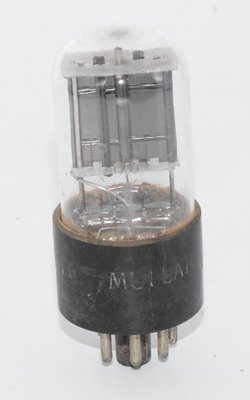
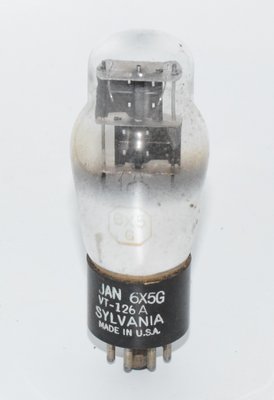
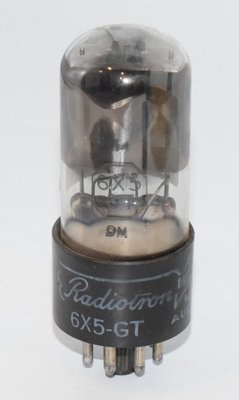
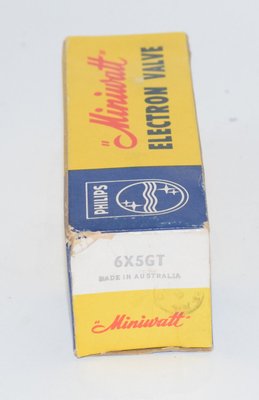
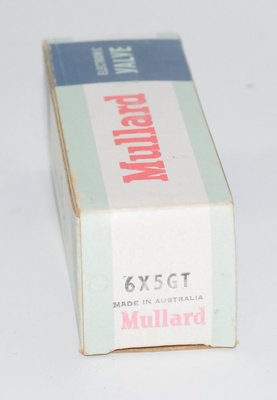
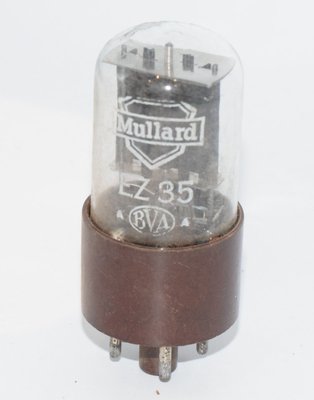
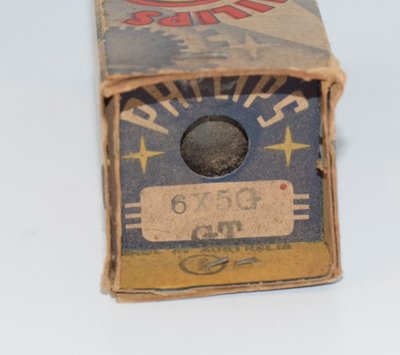
The 6X5G is a medium-duty vacuum tube rectifier that has been a staple in audio and electronic equipment since its introduction in the 1940s. Manufactured by prominent tube makers including Sylvania, RCA, Mullard, and Telefunken, the 6X5G represents a significant evolution in rectifier tube technology, offering improved performance over earlier designs while maintaining reasonable cost-effectiveness.
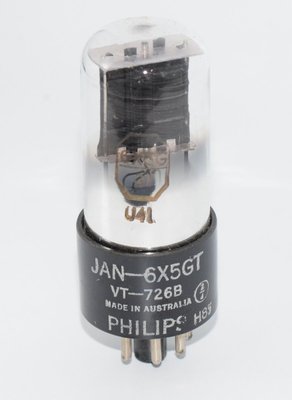
The tube designation "6X5G" follows the RCA nomenclature system, where the "6" indicates a 6.3-volt heater supply, "X5" denotes the tube type and function, and "G" signifies the octal base configuration. The VT-126A military designation indicates its use in military applications during and after World War II. The 6X5G became particularly popular in mid-range audio amplifiers, radio receivers, and test equipment throughout the 1950s and 1960s, and continues to be valued by audio enthusiasts and vintage equipment restorers today.
2. Technical Specifications and Design
Physical and Electrical Characteristics
Base Type: Octal (8-pin)
Heater Specifications:
- Voltage: 6.3V AC or DC
- Current: 0.6A nominal
- Power Consumption: 3.78W
Maximum Ratings:
- Peak Inverse Voltage (PIV): 2,800V
- DC Output Current: 250mA maximum
- Plate Dissipation: 18W per plate
- Filament to Cathode Voltage: 330V maximum
Typical Operating Conditions (Full-Wave Rectification):
- Input Voltage (RMS, per plate): 1,200V
- Output Current: 150mA
- Output Voltage (DC): Approximately 850V
- Transformer Secondary Voltage: 1,400V center-tapped
Internal Construction
The 6X5G contains two independent rectifier diode systems within a single envelope, allowing full-wave rectification without requiring a center-tapped transformer (though center-tapped designs are standard). Each rectifier section consists of a heated cathode and a plate, with the filament serving as the cathode. The dual-diode configuration enables efficient conversion of AC to DC with minimal ripple when properly filtered.
The tube features a robust construction with thoriated tungsten filaments, which provide superior emission characteristics and longer operational life compared to oxide-coated cathodes. The octal base provides secure mechanical connection and reliable electrical contact, with pin assignments as follows:
- Pin 1: Plate 1
- Pin 2: Cathode (Filament)
- Pin 3: Plate 2
- Pin 4: Not used (No connection)
- Pin 5: Cathode (Filament)
- Pin 6: Filament
- Pin 7: Filament
- Pin 8: Cathode (Filament)
Electrical Performance Characteristics
Forward Voltage Drop: Approximately 15V at 150mA output current, significantly lower than earlier rectifier tubes, reducing power loss and heat generation.
Regulation: The 6X5G exhibits good voltage regulation characteristics, maintaining relatively stable output voltage across varying load conditions from 50mA to 250mA.
Recovery Time: Fast recovery time minimizes reverse current, making it suitable for high-frequency applications and reducing transformer stress.
Leakage Current: Typically less than 0.1mA at maximum inverse voltage, ensuring reliable operation in critical applications.
3. Applications and Usage
Audio Equipment Applications
The 6X5G has been extensively used as the primary rectifier tube in numerous classic audio amplifiers, including:
- Tube Amplifiers: Integrated amplifiers and preamplifiers from manufacturers such as Mullard, Leak, Marantz, and McIntosh
- Guitar Amplifiers: Mid-range and high-end amplifiers requiring stable, low-noise power supply rectification
- Hi-Fi Equipment: Vintage receivers, tuners, and integrated amplifiers from the 1950s-1970s
- Studio Equipment: Professional microphone preamps and mastering equipment
Other Electronic Applications
- Radio receivers (AM/FM)
- Test and measurement equipment
- Industrial power supplies
- Vintage medical equipment
- Telecommunications apparatus
4. Sound Characteristics in Audio Applications
Sonic Signature
The 6X5G is renowned among audio enthusiasts for contributing a warm, smooth character to the power supply of tube amplifiers. Unlike solid-state rectifiers, the 6X5G provides natural rectification that many listeners perceive as more musical and less fatiguing during extended listening sessions.
Specific Sonic Attributes
Harmonic Character: The tube's rectification process imparts subtle harmonic coloration that adds richness and body to the midrange, particularly noticeable in vocals and acoustic instruments.
Dynamic Response: Equipment using 6X5G rectification typically exhibits slightly softer initial transient attack compared to solid-state rectifiers, which some describe as more forgiving and organic.
Noise Floor: When properly implemented with adequate filtering, the 6X5G maintains an exceptionally low noise floor, contributing to improved clarity in quiet passages and better resolution of fine musical details.
Frequency Response Characteristics: The tube's natural rectification curve can slightly affect the power supply's interaction with output transformers, subtly influencing frequency response in the bass region, often perceived as slightly warmer and fuller.
Tube Aging Effects: As 6X5G tubes age, they typically exhibit gradual softening of the high-frequency response while maintaining bass extension, which some listeners find increasingly pleasant over time, though replacement becomes necessary when performance degrades significantly.
Comparative Sonic Performance
Compared to solid-state rectification, amplifiers using 6X5G tubes typically demonstrate:
- Reduced perceived harshness in the upper midrange and treble
- Greater perceived three-dimensionality in stereo imaging
- Improved sustain and decay characteristics in musical notes
- More natural compression during dynamic peaks
- Enhanced harmonic complexity and tonal richness
5. The 6X5G in the Audio Community
Vintage Audio Restoration
The 6X5G remains one of the most sought-after rectifier tubes among vintage audio restorers and enthusiasts. Its availability and proven reliability make it the default choice for restoring classic tube amplifiers and receivers from the 1950s-1970s era. Restorers often prioritize obtaining NOS (new old stock) 6X5G tubes from reputable manufacturers like Sylvania, Mullard, or RCA, as these are believed to offer superior sonic characteristics compared to modern production tubes.
High-End Audio Market
In contemporary high-end audio, the 6X5G has experienced a resurgence in popularity. Boutique amplifier manufacturers, including companies specializing in SET (Single-Ended Triode) and push-pull tube amplifiers, frequently incorporate 6X5G rectification in their designs. The tube's reputation for sonic warmth and reliability has made it a standard specification in amplifiers ranging from $3,000 to $15,000+.
DIY and Hobbyist Community
The DIY tube amplifier community highly values the 6X5G for several reasons:
- Availability: Relatively common compared to many other rectifier tubes, with numerous suppliers maintaining inventory
- Cost-Effectiveness: More affordable than premium rectifiers like the 5U4 or 274B, making it accessible for budget-conscious builders
- Reliability: Proven track record with minimal failure rates when operated within specifications
- Documentation: Extensive technical literature and design examples available online and in vintage equipment
- Sonic Reputation: Widely regarded as offering excellent value for money in terms of sound quality
Tube Rolling and Experimentation
The 6X5G is a popular choice for "tube rolling" experiments—the practice of substituting different tube types to evaluate sonic differences. Audio enthusiasts often compare various 6X5G variants from different manufacturers and production eras, noting subtle differences in tonal character, dynamics, and noise floor. This has created a robust secondary market for NOS 6X5G tubes, with prices ranging from $15 to $80+ per tube depending on manufacturer, condition, and testing results.
Tube Comparison Culture
Within online audio forums and communities, extensive discussions and comparisons document perceived sonic differences between:
- Different manufacturers (Sylvania vs. RCA vs. Mullard, etc.)
- Production eras (1940s vs. 1950s vs. 1960s)
- Military-grade vs. commercial variants
- Branded vs. house-brand versions
These discussions have established a hierarchy of perceived quality, with certain Sylvania and Mullard variants commanding premium prices due to their reputation for exceptional sonic performance.
Professional Audio Applications
Beyond consumer audio, the 6X5G continues to be used in professional and semi-professional contexts:
- Mastering Studios: High-end mastering equipment often incorporates 6X5G rectification for its perceived transparency and musicality
- Recording Studios: Microphone preamps and mixing console power supplies in boutique facilities
- Musical Instrument Amplification: High-end guitar and bass amplifier manufacturers specify 6X5G tubes
- Measurement Equipment: Vintage audio test equipment valued for its accuracy and reliability
Investment and Collectibility
Certain variants of the 6X5G, particularly early Sylvania and Mullard examples, have become minor collector's items. NOS examples in original packaging can appreciate in value, especially rare variants or those with desirable construction characteristics (such as specific getter designs or filament construction). This has created a secondary market where informed collectors seek out specific production variants.
5. Notable Characteristics
Reliability and Longevity
The 6X5G is renowned for exceptional reliability when operated within specifications. Properly designed equipment using 6X5G rectification often exhibits tube life exceeding 10,000 hours, with many examples operating reliably beyond 15,000 hours. This longevity makes it an economical choice for regular use, with replacement costs amortized over years of operation.
Thermal Characteristics
The 6X5G operates at moderate temperatures compared to heavy-duty rectifiers, generating less heat and reducing thermal stress on surrounding components. This allows for more compact amplifier designs and reduces cooling requirements, making it suitable for both open-chassis and enclosed designs.
Low Voltage Drop
At 15V typical forward drop, the 6X5G exhibits significantly lower voltage loss than earlier rectifier designs, improving power supply efficiency and reducing wasted power dissipation as heat. This characteristic was a major advancement in rectifier tube technology.
Versatility
The 6X5G's specifications make it suitable for a wide range of applications, from modest 50mA loads to demanding 250mA applications. This versatility has contributed to its widespread adoption across numerous equipment categories.
Interchangeability Considerations
While the 6X5G is generally robust, careful attention to heater supply voltage (6.3V ±5%) is essential. Overvoltage can significantly reduce tube life, while undervoltage may result in inadequate rectification. Some equipment designed for 6.3V heater supplies can accommodate alternative rectifiers, but the 6X5G remains the preferred choice for original restoration.
6. Equivalent or Substitute Types
Direct Equivalents
6X5GT: Identical electrical specifications with a different base type (GT = glass envelope with octal base). Functionally equivalent to the 6X5G.
VT-126A: Military designation for the same tube, with identical specifications and performance characteristics.
Alternative Rectifiers with Similar Ratings
5U4G/5U4GB: Heavy-duty rectifier with higher current rating (400mA), larger envelope, and different pin configuration. Suitable for higher-power applications but not pin-compatible.
EZ81 (Mullard equivalent): European miniature rectifier with similar current rating but different heater voltage (6.3V) and pin configuration.
GZ34: European equivalent with higher current capability (250mA) and different base type.
Solid-State Substitutes
Modern solid-state rectifier kits are available for retrofitting 6X5G sockets, using high-voltage diodes with filtering. However, audio enthusiasts generally prefer the tube version for its sonic characteristics, and most restoration work maintains original tube rectification.
Substitution Cautions
Direct substitution should only be attempted with electrically equivalent tubes. Improper substitution can result in:
- Inadequate rectification and excessive ripple
- Transformer overload and potential failure
- Reduced amplifier performance and reliability
- Potential safety hazards from excessive voltage
Conclusion
The 6X5G vacuum tube represents a significant achievement in rectifier tube design, combining reliable performance, reasonable cost, and sonic characteristics highly valued by audio enthusiasts. Its continued popularity in vintage audio restoration, high-end amplifier design, and DIY projects demonstrates the enduring appeal of tube-based power supplies. Whether restoring classic equipment or designing new amplifiers, the 6X5G remains an excellent choice for applications requiring stable, low-noise rectification with musical sonic character. For those seeking authentic vintage sound or exploring tube audio for the first time, the 6X5G offers an accessible entry point into the world of tube-based audio amplification.