Introduction and History
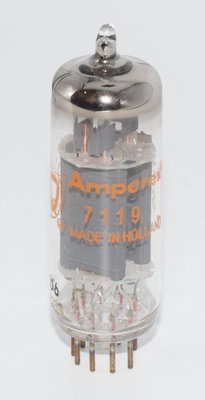
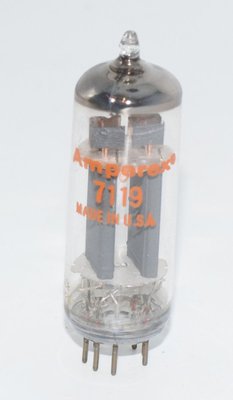
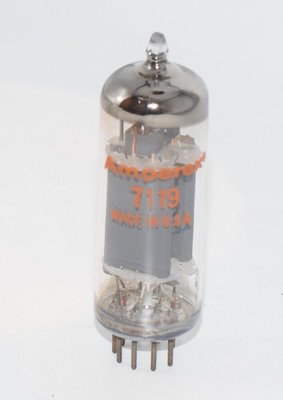
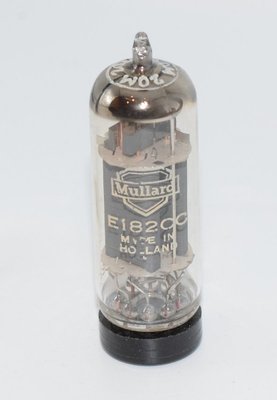
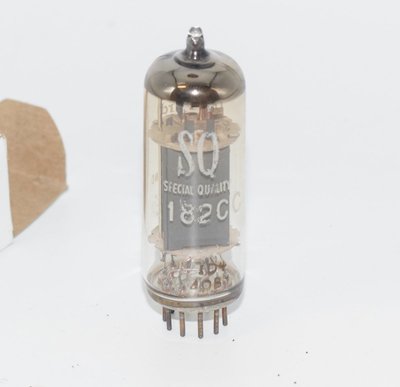
The 7119, also known by its European designation E182CC, is a special quality double triode vacuum tube originally designed for demanding electronic computer circuits. Registered under JEDEC release #2382 on February 9, 1959, with datasheet documentation dating from October 10, 1958, the 7119 was manufactured by several prominent companies including Amperex (both Holland and New York production facilities), Philips, and Rogers Electronic Tubes & Components of Canada.
The tube was engineered to maintain its emission capabilities after long periods of operation under cut-off conditions — a critical requirement for the digital switching circuits of early computers where tubes would spend extended periods in either fully conducting or fully cut-off states. The datasheet explicitly notes that the 7119 is not intended to be used in circuits critical as to hum, microphony, and noise, which is an important caveat that has interesting implications for its later adoption by the audio community.
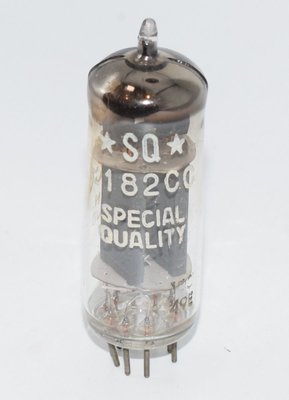
As a member of the "Special Quality" (SQ) family of European tubes, the E182CC was built to tighter tolerances and higher reliability standards than standard commercial types. The "E" prefix denotes a 6.3V heater voltage, "182" is the type designation number, and "CC" indicates a double triode with separate cathodes. This premium construction quality, combined with its robust electrical characteristics, eventually attracted the attention of audio designers and enthusiasts who found its high transconductance and generous plate dissipation ratings ideal for demanding audio applications.
Technical Specifications and Design
General Description
- Type: Special Quality Double Triode
- Cathode: Coated, unipotential (indirectly heated, separate cathodes for each section)
- Base: E 9-1 (Noval, 9-pin miniature)
- Basing Designation: 9H
- Bulb: T6 ½
- Outline: 6 – 3
- Mounting Position: Any
Heater Data
| Parameter | Series | Parallel |
|---|---|---|
| Heater Voltage | 12.6 V | 6.3 V |
| Heater Current | 320 mA | 640 ±35 mA |
The heater can be operated in either series (12.6V) or parallel (6.3V) configuration. Pin 8 serves as the heater mid-tap, which is connected to the junction between the two heater sections for series operation or left connected for parallel operation.
Pin Configuration (Bottom View of Base)
| Pin Number | Element |
|---|---|
| 1 | Plate (Triode No. 2) |
| 2 | Grid (Triode No. 2) |
| 3 | Cathode (Triode No. 2) |
| 4 | Heater |
| 5 | Heater |
| 6 | Cathode (Triode No. 1) |
| 7 | Grid (Triode No. 1) |
| 8 | Heater Mid-Tap |
| 9 | Plate (Triode No. 1) |
Typical Characteristics (per section)
| Parameter | Condition 1 | Condition 2 |
|---|---|---|
| Plate Voltage | 120 V | 150 V |
| Grid Voltage | −2 V | −14 V |
| Plate Current | 36 mA | max. 0.2 mA |
| Transconductance (gm) | 15,000 µmhos | — |
| Amplification Factor (µ) | 24 | — |
From the amplification factor (µ = 24) and transconductance (gm = 15,000 µmhos), the plate resistance (rp) can be calculated as:
rp = µ / gm = 24 / 0.015 = 1,600 ohms
This remarkably low plate resistance is one of the defining characteristics of the 7119 and contributes significantly to its performance as a driver tube.
Maximum Ratings (Absolute Limits, Each Section)
| Parameter | Rating |
|---|---|
| Plate Voltage | 300 V max. |
| Plate Voltage Without Current | 600 V max. |
| Plate Dissipation (per section) | 4.5 W max. |
| Total Plate Dissipation (both sections) | 8 W max. |
| Negative Grid Voltage | 100 V max. |
| Peak Negative Grid Voltage (pulse, 10 µsec at 1% duty cycle) | 200 V max. |
| Positive Grid Voltage | 1 V max. |
| Peak Positive Grid Voltage (pulse, 10 µsec at 1% duty cycle) | 30 V max. |
| Grid Current | 8 mA max. |
| Peak Grid Current (pulse, 10 µsec at 1% duty cycle) | 200 mA max. |
| Peak Cathode Current (pulse, 10 µsec at 1% duty cycle) | 400 mA max. |
| Cathode Current | 60 mA max. |
| Grid Circuit Resistance with Automatic Bias | 1 MΩ max. |
| Grid Circuit Resistance with Fixed Bias | 0.5 MΩ max. |
| Peak Heater-to-Cathode Voltage (pulse, 10 µsec at 1% duty cycle) | 200 V max. |
| DC Component of Heater-to-Cathode Voltage | 120 V max. |
| Bulb Temperature | 160 °C max. |
Note: Tube life and reliability of performance will be enhanced by operation at lower temperatures.
Direct Interelectrode Capacitances
| Parameter | Triode No. 1 | Triode No. 2 |
|---|---|---|
| Plate to Cathode and Heater | 1.1 µµF | 1.0 µµF |
| Grid to Cathode and Heater | 5.8 µµF | 5.8 µµF |
| Plate to Grid | 3.9 µµF | 4.0 µµF |
| Cathode to Heater | 3.7 µµF | 3.7 µµF |
| Between the Triode Sections | |
|---|---|
| Plate to Plate | 0.6 µµF |
| Grid to Grid | max. 0.15 µµF |
Characteristic Range Values for Equipment Design
| Parameter | Condition | Initial Min. | Initial Max. | End of Life Min. | End of Life Max. |
|---|---|---|---|---|---|
| Plate Current | Plate voltage 90V, Grid current 250 µA | 41 mA | 62 mA | 24 mA | — |
| Plate Current | Plate voltage 120V, Neg. grid voltage −2V | 26 mA | 45 mA | — | — |
| Plate Current | Plate voltage 150V, Neg. grid voltage −14V | — | 0.2 mA | — | — |
| Transconductance | Plate voltage 120V, Cathode resistor 55Ω | 11,200 µmhos | 18,800 µmhos | 5,600 µmhos | — |
| Negative Grid Current | Plate voltage 120V, Neg. grid voltage −2V, Grid series resistor 0.1 MΩ | — | 0.2 µA | — | 1 µA |
| Cathode to Heater Leakage | Cathode to heater voltage (cathode pos) 200V, series resistor 1 MΩ | — | 15 µA | — | 30 µA |
| Insulation Resistance Between Electrodes | — | 100 MΩ | — | 20 MΩ | — |
Applications and Usage
The 7119 / E182CC was originally designed for electronic computer circuits, where its key attributes were:
- Long-term emission stability: The tube maintains its emission capabilities after extended periods of operation under cut-off conditions, essential for digital switching applications.
- High transconductance: At 15,000 µmhos, the 7119 offers exceptional gain capability for a medium-mu triode.
- Generous plate dissipation: 4.5 watts per section (8 watts total) allows for robust operating conditions.
- High peak current capability: Peak cathode current of 400 mA and peak grid current of 200 mA (at 10 µsec, 1% duty cycle) made it suitable for pulse and switching circuits.
- High heater-to-cathode voltage rating: 120V DC and 200V peak allows operation in series heater strings common in computer equipment.
Beyond its original computer applications, the 7119 found use in:
- Voltage amplifier stages in high-performance audio preamplifiers
- Driver stages for power tubes, where its low plate resistance and high transconductance provide excellent drive capability
- Headphone amplifiers, where a single section can drive low-impedance headphones directly
- Cathode follower circuits, where the low plate resistance yields very low output impedance
- SRPP (Shunt Regulated Push-Pull) and µ-follower circuits
- Regulated power supplies as series pass or error amplifier elements
- Industrial instrumentation requiring stable, long-life amplification
Sound Characteristics
Despite the manufacturer's explicit warning that the 7119 is "not intended to be used in circuits critical as to hum, microphony, and noise," this tube has been widely adopted in audio applications where its sonic qualities are highly valued. The sound character of the 7119 / E182CC is frequently described by audiophiles and engineers as follows:
- Dynamic and authoritative: The high transconductance of 15,000 µmhos and low plate resistance of approximately 1,600 ohms give the 7119 an unusually powerful and controlled presentation. Bass response is often described as tight, deep, and well-defined — a direct consequence of the tube's ability to deliver current quickly and maintain control over the signal.
- Forward and detailed midrange: The 7119 tends to present midrange frequencies with a slightly forward, vivid character. Vocal reproduction is often praised for its clarity and presence, with fine textural details rendered with precision.
- Extended but not harsh treble: High frequencies are generally described as well-extended with good air and sparkle, though some listeners note that the 7119 can sound slightly more analytical or "solid-state-like" compared to softer-sounding triodes such as the 6922/E88CC.
- Excellent transient response: The combination of high gm and low rp translates to fast, clean transients. Percussive instruments and plucked strings are rendered with snap and immediacy.
- Wide, stable soundstage: When used in well-designed circuits, the 7119 can produce a spacious and precisely defined soundstage with excellent imaging.
- Robust, "muscular" character: Compared to the more delicate and airy presentation of tubes like the 6DJ8/ECC88 family, the 7119 is often described as having a more powerful, full-bodied sound with greater weight and authority.
The sonic character can vary somewhat between manufacturers and production eras. Amperex Holland production (Heerlen factory) examples are generally considered the most desirable, offering a slightly warmer and more refined presentation. Amperex New York (actually produced at various facilities) tubes are also well-regarded. The specific internal construction, getter type, and plate material all contribute to subtle sonic differences between production runs.
It should be noted that the manufacturer's warning about hum and microphony is relevant — the 7119 can be more microphonic than dedicated audio tubes like the E88CC, and careful mounting and vibration isolation may be necessary in sensitive gain stages. Some builders use damping rings or silicone tube dampers to mitigate microphonic tendencies.
Equivalent or Substitute Types
The 7119 has a limited number of true equivalents due to its unique combination of high transconductance, high plate dissipation, and separate cathode construction:
- E182CC: This is the direct European Pro-Electron designation for the same tube. The 7119 (JEDEC) and E182CC (European) are fully identical and completely interchangeable. Tubes may be found branded as either designation depending on the intended market.
- Amperex E182CC / 7119: Manufactured in both Holland (Heerlen, Netherlands) and the United States (New York). Both are genuine equivalents, though collectors and audiophiles often prefer the Holland-made versions.
Related but NOT Directly Interchangeable Types
The following tubes share the same 9-pin noval base and double triode configuration but have significantly different electrical characteristics. They should not be substituted without circuit modifications:
- 6922 / E88CC: Same pinout but very different characteristics. The 6922 has a µ of approximately 33, gm of about 12,500 µmhos, and maximum plate dissipation of only 1.8W per section. The 7119's much higher plate dissipation (4.5W vs 1.8W) and different bias requirements mean direct substitution could damage the 6922 or result in improper operating conditions.
- 6DJ8 / ECC88: Similar pinout but lower ratings than the 6922. Even less suitable as a direct substitute.
- E288CC: A related Philips special quality type with some similarities but different specifications. Not a direct substitute.
- 5687: Another high-transconductance double triode sometimes compared to the 7119, but it has a different pinout and different electrical characteristics (µ ≈ 17.5, gm ≈ 10,500 µmhos). Not pin-compatible.
- 6N6P (6Н6П): A Soviet-era double triode sometimes suggested as a substitute. While it shares some general characteristics, it is not a verified direct equivalent and specifications differ. Use with caution and verify circuit compatibility.
Important: Due to the 7119's high plate dissipation rating and high transconductance, substituting lower-rated tubes (such as the 6922) into circuits designed for the 7119 can result in excessive plate dissipation and premature tube failure. Always verify that the substitute tube's maximum ratings are not exceeded by the circuit's operating conditions.
Notable Characteristics
- Exceptional transconductance: At 15,000 µmhos, the 7119 has one of the highest transconductance figures of any noval-based double triode. This is approximately 20% higher than the already-impressive 6922/E88CC and nearly 50% higher than the 5687.
- Very low plate resistance: The calculated rp of approximately 1,600 ohms makes the 7119 an outstanding candidate for cathode follower and driver applications where low output impedance is critical.
- High plate dissipation: At 4.5 watts per section (8 watts total for both sections), the 7119 can handle significantly more power than most noval double triodes. This provides generous headroom for audio applications.
- Separate cathodes: Each triode section has its own independent cathode connection, allowing maximum flexibility in circuit design. The sections can be biased independently and used in completely different circuit configurations.
- Computer-grade reliability: Built to withstand the demanding conditions of early computer service, including long periods at cut-off, the 7119 exhibits excellent long-term stability and longevity.
- Wide transconductance spread: The characteristic range values show initial transconductance can vary from 11,200 to 18,800 µmhos (with a 55Ω cathode resistor at 120V plate voltage). This wide spread means that matched pairs may be desirable for balanced circuit applications. End-of-life minimum is specified at 5,600 µmhos.
- Versatile heater configuration: The center-tapped heater allows operation at either 6.3V (parallel) or 12.6V (series), accommodating a wide range of power supply designs.
- High heater current: At 640 mA (parallel), the 7119 draws more heater current than many noval double triodes (the 6922 draws only 300 mA). Power supply design must account for this higher heater demand.
- Microphony considerations: As noted in the datasheet, the 7119 was not designed for circuits critical to hum, microphony, and noise. This is an important consideration for high-gain audio applications.
- Robust pulse handling: Peak cathode current of 400 mA and peak grid current of 200 mA (at 10 µsec, 1% duty cycle) demonstrate the tube's ability to handle demanding transient conditions.
Usage in the Audio Community
The 7119 / E182CC has developed a devoted following in the audio community, particularly among headphone amplifier enthusiasts and preamplifier designers. Its adoption in audio is a fascinating example of a tube designed for one purpose (digital computing) finding a second life in an entirely different application.
Headphone Amplifiers
The 7119 is perhaps most celebrated in the headphone amplifier community. Its combination of high transconductance, low plate resistance, and generous plate dissipation makes it exceptionally well-suited for driving headphones. Several notable headphone amplifier designs feature the 7119:
- Bottlehead Crack (with modifications): While the stock Crack uses a 12AU7, modified versions can accommodate the 7119 with appropriate circuit changes, yielding improved drive capability for low-impedance headphones.
- Custom OTL (Output Transformerless) designs: The low plate resistance of the 7119 makes it a natural choice for OTL headphone amplifiers, where the tube must drive relatively low-impedance loads directly.
- Hybrid amplifiers: Some hybrid designs use the 7119 as a voltage gain stage feeding a solid-state output buffer, combining tube character with solid-state current delivery.
Preamplifier Applications
The 7119 is used in high-end preamplifier designs where its high gain and current delivery capabilities are advantageous:
- Line-stage preamplifiers: The high µ of 24 combined with high gm allows for substantial voltage gain with excellent linearity.
- Phono stages: While the microphony warning should be heeded, some designers have successfully used the 7119 in phono preamplifier circuits with careful mechanical isolation.
- Buffer stages: The low output impedance achievable in cathode follower configuration makes the 7119 excellent for driving long cable runs or low-impedance loads.
Driver Stage Applications
The 7119's ability to swing significant voltage while delivering current makes it an outstanding driver for power output tubes:
- Driving 300B and 2A3 triodes: These directly-heated triodes require substantial grid voltage swing, which the 7119 can provide with ease.
- Driving EL34, KT88, and 6L6 beam tetrodes/pentodes: The 7119's current delivery capability ensures clean, undistorted drive signals even at high power levels.
Tube Rolling and Collecting
The 7119 / E182CC has become a sought-after collector's item in the audio community. Key variants include:
- Amperex Holland (Heerlen): Generally considered the most desirable production, identifiable by factory codes beginning with "∆" (delta) followed by date codes. These command premium prices on the used market.
- Amperex New York: US-branded tubes, sometimes manufactured in Holland and relabeled. Quality is generally excellent.
- Philips Miniwatt: European-market versions of the same Heerlen production, sometimes found at lower prices than Amperex-branded equivalents.
- Rogers: Canadian-market tubes, as documented in the reference datasheet. Less commonly encountered but of equivalent quality.
Prices for NOS (New Old Stock) 7119 / E182CC tubes have risen significantly as supplies dwindle. Matched pairs command particular premiums for use in balanced or push-pull circuit configurations. Buyers should be aware of counterfeit or relabeled tubes in the market and should purchase from reputable dealers who test and verify their stock.
Practical Considerations for Audio Use
Audio designers and hobbyists working with the 7119 should keep the following points in mind:
- Heater current: At 640 mA per tube (parallel operation), power supply design must accommodate the higher-than-average heater current draw.
- Microphony: Use damping rings, silicone tube dampers, or shock-mounted sockets in vibration-sensitive applications.
- Bias point selection: The wide transconductance spread (11,200 to 18,800 µmhos) means that circuit designs should be tolerant of tube-to-tube variation, or matched tubes should be specified.
- Not a drop-in for 6922/E88CC: Despite the same pinout, the significantly different operating characteristics mean that circuits designed for the 6922 family should not simply have 7119s installed without verifying that plate dissipation and other ratings remain within safe limits for both the tube and the circuit components.
- Thermal management: With up to 8 watts of total plate dissipation plus heater power, the 7119 runs hotter than many noval double triodes. Adequate ventilation is essential, and the maximum bulb temperature of 160°C should be respected.