Introduction and History
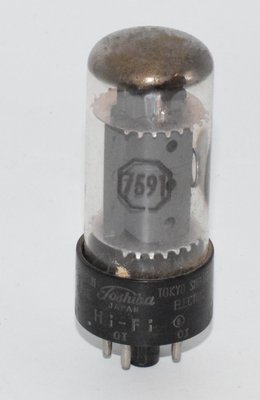
The 7591 is a beam-power vacuum tube that emerged in the 1950s as an evolution of earlier power tube designs. Developed to meet the demands of increasingly powerful audio amplifiers and electronic equipment, the 7591 represents a significant advancement in tube technology. The tube was designed with improved efficiency and higher power handling capabilities compared to its predecessors, making it particularly valuable for audio amplification applications.
The 7591 gained prominence during the golden age of tube amplifiers, particularly in the 1950s and 1960s, when it became a preferred choice for high-fidelity audio equipment manufacturers. Its combination of power output, efficiency, and reliability made it a staple in both consumer and professional audio equipment. The tube remains highly sought after by vintage audio enthusiasts and modern tube amplifier designers who appreciate its sonic characteristics.
Technical Specifications and Design
Basic Electrical Parameters
The 7591 is a beam-power pentode tube with the following key specifications:
- Tube Type: Beam-Power Pentode (Tetrode with beam-forming plates)
- Maximum Plate Voltage: 660V DC
- Maximum Plate Dissipation: 14 watts
- Maximum Screen Grid Voltage: 330V DC
- Heater Voltage: 6.3V AC/DC
- Heater Current: 0.9A
- Plate Resistance (rp): Approximately 800 ohms
- Amplification Factor (μ): Approximately 9
- Transconductance (gm): Approximately 9,500 microsiemens
Structural Design
The 7591 features a nine-pin noval base (similar to the 12AX7 pin configuration but with different internal construction). The tube employs a beam-power design, which uses beam-forming plates to focus the electron stream and improve efficiency. This design reduces secondary emission and allows for higher power output with better linearity compared to conventional pentodes.
The tube's construction includes:
- Cathode: Indirectly heated oxide-coated cathode
- Control Grid: Closely spaced grid for high amplification factor
- Screen Grid: Second grid providing additional acceleration
- Suppressor Grid: Beam-forming plates that suppress secondary emission
- Plate: Radiating plate designed for efficient heat dissipation
Output Characteristics
Under typical operating conditions, the 7591 can produce approximately 5-7 watts of audio power in single-ended configuration and 25-30 watts in push-pull configuration. The tube's output impedance typically ranges from 2,000 to 3,500 ohms, depending on operating point selection.
Applications and Usage
Audio Amplifier Applications
The 7591 found widespread use in several audio amplifier categories:
- Hi-Fi Amplifiers: Used in integrated amplifiers and power amplifiers from manufacturers like Marantz, McIntosh, and Dynaco
- Guitar Amplifiers: Featured in vintage Fender and other guitar amp designs
- Integrated Amplifiers: Common in compact, efficient designs for mid-power applications
- Portable Equipment: Used in some portable amplification systems due to its moderate power requirements
Electronic Equipment
Beyond audio, the 7591 was employed in:
- Industrial control equipment
- Test and measurement instruments
- Radio transmitter output stages
- Public address systems
Sound Characteristics
Tonal Profile
The 7591 is renowned among audio enthusiasts for its distinctive sonic signature. The tube produces a warm, slightly colored tone with excellent midrange presence. Musicians and audio engineers often describe the 7591's sound as having a natural compression that imparts musical cohesion to the overall presentation.
Harmonic Content
The 7591 exhibits a characteristic harmonic distortion pattern that many consider musically pleasing. When operated at moderate levels, it generates primarily second and third-order harmonics, which are perceived as warm and euphonic rather than fatiguing. At higher drive levels, the harmonic content becomes richer, adding character and presence to the signal.
Dynamic Response
The tube demonstrates excellent transient response with good attack characteristics and natural decay. This makes it particularly suitable for music reproduction, where dynamic accuracy is essential. The 7591's relatively low output impedance contributes to good control over loudspeakers and maintains tight bass response.
Frequency Response
The 7591 exhibits a relatively flat frequency response across the audio spectrum, though it tends to have a subtle presence peak in the upper midrange (around 2-4 kHz). The high-frequency extension is clean and open, while the low-frequency reproduction is full and authoritative without excessive bloat.
Comparison to Other Power Tubes
Compared to the 6L6, the 7591 offers greater efficiency and slightly lower distortion at equivalent power levels. Versus the EL34, the 7591 produces less harmonic complexity but operates at lower plate voltages, making it suitable for more compact amplifier designs. The tube sits in a sweet spot between efficiency and sonic character.
Usage in the Audio Community
Vintage Equipment Restoration
The 7591 is highly prized by vintage audio enthusiasts engaged in restoring classic amplifiers from the 1950s and 1960s. Restoration specialists specifically seek out quality 7591 tubes to return vintage equipment to original specifications, as the tube's sound is integral to the authentic vintage amplifier experience.
Modern Tube Amplifier Design
Contemporary amplifier manufacturers continue to design new products utilizing the 7591, recognizing its sonic merits and proven reliability. Modern designs often pair 7591s in push-pull configurations to achieve 25-30 watts of clean, musical amplification. Boutique amplifier builders particularly favor the 7591 for mid-powered designs targeting discerning listeners.
Guitar Amplifier Community
In the guitar amplifier world, the 7591 maintains a dedicated following. Players appreciate the tube's natural compression and musical tone, particularly in vintage Fender and custom amplifier designs. The 7591 is considered an excellent choice for players seeking a balance between clean headroom and natural overdrive characteristics.
Audiophile Perspective
High-fidelity audio enthusiasts value the 7591 for its combination of technical performance and sonic character. The tube's ability to deliver accurate music reproduction while imparting a subtle, pleasant coloration makes it attractive to listeners who appreciate both precision and musicality. Many audiophiles consider well-matched pairs of NOS (New Old Stock) 7591s from reputable manufacturers to be essential components in their tube amplifier systems.
Tube Rolling and Experimentation
The 7591 is a popular choice for tube rolling—the practice of substituting different tube types to optimize amplifier sound. Many amplifier designs that originally used 6L6 tubes can accommodate 7591s, allowing users to explore sonic variations. This has contributed to sustained interest in the tube among the experimental audio community.
Availability and Pricing
Quality 7591 tubes, particularly NOS examples from respected Japanese manufacturers like Toshiba, command premium prices on the vintage tube market. The scarcity of original stock and the tube's continued demand have made it a valuable commodity. Modern production 7591s are available from several manufacturers, though many users prefer vintage examples for their perceived superior sound quality.
Equivalent or Substitute Types
Direct Equivalents
- 7591A: An improved version with higher maximum ratings and slightly better performance characteristics
- EL86: European equivalent with similar specifications and sound character
- 6L6GC: Can be used as a substitute in many applications, though with different sonic characteristics
Functional Alternatives
- EL34: Higher-powered alternative for applications requiring greater output
- 6V6: Lower-power alternative for compact designs
- 6L6: Earlier design with similar applications but different characteristics
Substitution Considerations
While some tubes can physically fit in 7591 sockets, substitution should be approached carefully. Different tubes have varying plate voltage requirements, impedance characteristics, and output capabilities. Always consult amplifier schematics and manufacturer recommendations before substituting tube types, as improper substitution can damage equipment or void warranties.
Notable Characteristics
Reliability and Longevity
The 7591 is known for exceptional reliability and long operational life. Well-manufactured examples regularly exceed 5,000 hours of operation, with some reaching 10,000 hours or more. This reliability contributed significantly to its popularity in professional and consumer equipment.
Heat Dissipation
The tube's design emphasizes efficient heat dissipation through a large radiating plate. This allows the 7591 to operate at high power levels without excessive heat generation, making it suitable for compact amplifier designs where thermal management is a concern.
Beam-Power Design Advantages
The beam-power configuration provides several advantages:
- Reduced secondary emission distortion
- Higher efficiency than conventional pentodes
- Better linearity across the operating range
- Improved power output for given plate voltage
- Lower output impedance
Bias Sensitivity
The 7591 exhibits moderate bias sensitivity, making it relatively forgiving of bias point variations. This characteristic made it attractive to amplifier designers, as it simplified biasing procedures and reduced the need for frequent bias adjustment.
Matching Importance
For push-pull amplifier designs, closely matched pairs of 7591s are essential for optimal performance. Mismatched tubes can result in unbalanced output, increased distortion, and potential transformer stress. Quality tube sellers typically provide matched pairs specifically graded for amplifier use.
Manufacturing and Sources
Original Manufacturers
The 7591 was manufactured by several respected tube makers including:
- Toshiba (Japan)
- RCA (United States)
- Mullard (United Kingdom)
- Telefunken (Germany)
- GE/Sylvania (United States)
Quality Considerations
Tubes from different manufacturers and production periods vary in quality and sonic characteristics. Japanese-manufactured 7591s from Toshiba are particularly prized for their reliability and sound quality. American-made examples from RCA and Sylvania are also highly regarded. Tubes manufactured in the 1950s and early 1960s are generally considered superior to later production examples.
Conclusion
The 7591 vacuum tube represents a significant achievement in tube amplifier technology, combining practical efficiency with musical sound characteristics that continue to appeal to audio enthusiasts nearly seven decades after its introduction. Whether in vintage equipment restoration, modern amplifier design, or experimental tube rolling, the 7591 remains a relevant and valued component in the audio world. Its warm tone, reliable operation, and versatile applications ensure that this classic tube will continue to be sought after by discerning listeners and audio professionals for years to come.