1. Introduction and History
The 7AN7 is a dual triode vacuum tube that represents an important development in mid-20th century tube electronics. Originally designed for both audio and general-purpose amplification applications, the 7AN7 emerged during the golden age of vacuum tube technology when manufacturers were optimizing designs for improved performance and reliability.
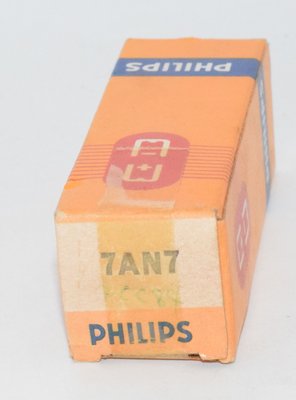
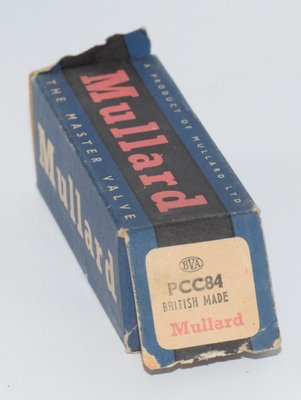
The tube is also known by its international designation PCC84, particularly in European markets where Philips and other manufacturers produced variants under this nomenclature. The 7AN7/PCC84 became a standard choice for audio engineers and equipment designers seeking a versatile, high-performance dual triode with excellent linearity and low noise characteristics.
Development of the 7AN7 occurred in the 1950s, coinciding with the rapid expansion of consumer electronics and professional audio equipment manufacturing. Its design reflects the engineering philosophy of that era: reliable construction, predictable performance, and compatibility with existing circuit designs.
2. Technical Specifications and Design
Physical Characteristics
The 7AN7 is housed in a standard 9-pin miniature tube envelope (also called a 9-pin noval base). The tube measures approximately 2.75 inches (70mm) in height with a diameter of about 0.69 inches (17.5mm). The construction features a robust internal structure with carefully spaced electrodes designed to minimize microphony and capacitive coupling.
Electrical Specifications
| Parameter | Specification |
|---|---|
| Tube Type | Dual Triode |
| Heater Voltage | 6.3V AC (nominal) |
| Heater Current | ~300mA per triode |
| Maximum Plate Voltage | 330V |
| Maximum Plate Dissipation | 1.0W per triode |
| Amplification Factor (μ) | ~17 |
| Plate Resistance (rp) | ~7,700 ohms |
| Transconductance (gm) | ~2.2 mA/V |
| Grid Bias (typical) | -2V to -3V |
Design Features
The 7AN7 incorporates two independent triode sections within a single envelope, each with its own cathode. This design allows for flexible circuit configurations including differential amplification, phase splitting, or dual independent amplification stages. The tube features:
- Low microphony construction: Carefully designed internal support structures minimize vibration-induced noise
- High transconductance: Enables efficient voltage amplification with moderate plate resistance
- Moderate amplification factor: The μ of approximately 17 provides good balance between gain and linearity
- Robust cathode structure: Designed for extended operational life with minimal drift
- Excellent frequency response: Suitable for audio applications from DC to several megahertz
Pin Configuration
The 7AN7 uses a 9-pin miniature base with the following pinout:
- Pin 1: Plate (Triode 1)
- Pin 2: Grid (Triode 1)
- Pin 3: Cathode (Triode 1)
- Pin 4: Heater
- Pin 5: Heater
- Pin 6: Plate (Triode 2)
- Pin 7: Grid (Triode 2)
- Pin 8: Cathode (Triode 2)
- Pin 9: (Not used / Shield)
3. Applications and Usage
Professional Audio Applications
The 7AN7 found widespread use in professional audio equipment throughout the 1950s and 1960s. Its primary applications included:
- Microphone preamplifiers: The low-noise characteristics made it ideal for sensitive audio signal amplification
- Line amplifiers: Used in broadcast and recording studio equipment for signal conditioning
- Mixing consoles: Employed in channel strips and summing amplifiers
- Tone control circuits: Utilized in equalizer designs where low distortion was essential
Consumer Audio Equipment
In consumer applications, the 7AN7 appeared in:
- High-fidelity preamplifiers and control units
- Integrated amplifiers (typically in the input stage)
- Tuner circuits for FM radio sections
- Tape recorder electronics
- Vintage audio test equipment
General-Purpose Electronics
Beyond audio, the 7AN7 served in various electronic applications requiring stable, low-noise amplification, including measurement instruments, control circuits, and oscillator designs.
4. Sound Characteristics in Audio Applications
Tonal Quality
The 7AN7 is renowned among tube enthusiasts for delivering a refined, transparent sound character. Key sonic attributes include:
- Clarity and detail: The tube's low noise floor and good linearity allow subtle musical details to emerge without coloration
- Smooth midrange: The moderate amplification factor and plate resistance contribute to a naturally smooth presentation in the critical midrange frequencies
- Extended frequency response: Both treble and bass are handled with authority, though the tube's inherent characteristics lend a slightly warm character to the overall presentation
- Minimal harmonic distortion: At normal operating levels, the 7AN7 produces primarily low-order harmonics, which are musically benign
Operational Characteristics Affecting Sound
Several design features influence the 7AN7's sonic performance:
- Low microphony: Results in a quiet background with minimal mechanical noise interference
- Stable bias characteristics: Provides consistent performance over extended listening sessions without drift
- Good current handling: Allows the tube to maintain composure during dynamic musical passages
- Moderate gain: Reduces the need for excessive feedback, which can affect sonic purity
Comparison to Other Dual Triodes
Compared to other common dual triodes, the 7AN7 offers a middle ground: more transparent and detailed than warmer tubes like the 12AX7, yet slightly more forgiving and musical than extremely linear designs. This balance makes it particularly valued in preamplifier applications where both accuracy and musicality are desired.
5. Notable Characteristics
Reliability and Longevity
The 7AN7 is known for exceptional reliability. Many examples from the 1950s-1960s remain in service today, often with minimal degradation. Contributing factors include:
- Robust internal construction with generous electrode spacing
- Conservative electrical ratings that allow for reliable operation with normal circuit design
- Stable cathode materials that resist poisoning and degradation
- Quality manufacturing standards, particularly from established makers like Philips, Mullard, and RCA
Availability and Collectibility
NOS (New Old Stock) 7AN7 tubes, particularly Philips UK variants, have become increasingly sought-after by audio enthusiasts and equipment restorers. The combination of proven performance, low noise, and the tube's role in classic audio equipment has elevated its status among collectors. Philips-manufactured examples are particularly prized for consistent quality and sonic performance.
Interchangeability
The 7AN7 and PCC84 are fully interchangeable, though subtle differences in sound may be detected between manufacturers. The tube's standardized specifications ensure reliable substitution in most applications, though some audiophiles report preference for specific manufacturing origins.
6. Equivalent or Substitute Types
Several tubes can serve as alternatives to the 7AN7, depending on circuit requirements:
- 12AX7 / ECC83: Higher gain dual triode; suitable for applications requiring more amplification but with different sonic characteristics
- 12AU7 / ECC82: Lower gain, higher current capability; useful in some audio circuits where the 7AN7's gain is excessive
- ECC88 / 6DJ8: Lower noise, higher frequency response; suitable for ultra-high-fidelity applications but with different operating characteristics
- PCC89: Similar design with slightly different specifications; can work in some applications
- 6N6P / 6N6PI: Russian equivalent with similar characteristics, though construction and reliability may vary
Note: Direct substitution should only be attempted after verifying circuit compatibility, as tube characteristics vary significantly and improper substitution can damage equipment or produce undesirable results.
7. Audio Community Usage and Reputation
Audiophile Recognition
Within the audio enthusiast community, the 7AN7 occupies a respected position as a "sleeper" tube—one that doesn't command the fame of the 12AX7 or ECC83 but is highly valued by those who have experienced its qualities. Audiophiles appreciate the 7AN7 for:
- Transparent, non-fatiguing sound character suitable for extended listening
- Excellent performance in vintage preamplifiers and control units
- Reliable availability (compared to some rare tubes) in quality NOS condition
- Reasonable pricing relative to performance and sonic quality
Restoration and Vintage Equipment
The 7AN7 is frequently encountered in restoration projects involving classic audio equipment from the 1950s-1970s. Restorers and vintage audio enthusiasts actively seek quality NOS examples to restore equipment to original specifications. The tube's presence in classic designs has created sustained demand among the vintage audio community.
Tube Rolling and Experimentation
In modern tube audio equipment designed for flexibility, some manufacturers and users employ 7AN7 tubes in applications originally designed for other dual triodes. The tube's forgiving nature and excellent sonic characteristics make it a popular choice for tube rolling experiments in preamplifiers and other audio components.
Professional Audio Revival
As analog recording and mastering have experienced a resurgence, professional audio engineers have renewed interest in classic tube designs. The 7AN7 appears in newly designed mastering equipment and high-end recording studios, valued for its combination of transparency and musicality.
Collector and Dealer Market
Philips UK NOS 7AN7 / PCC84 tubes have become particularly desirable to collectors and audio enthusiasts. The combination of Philips' manufacturing reputation, the tube's proven sonic qualities, and its historical significance has established it as a collectible item. Quality examples command premium prices in the vintage tube market, reflecting strong demand from the audio community.
Conclusion
The 7AN7 / PCC84 represents an excellent example of mid-century vacuum tube engineering, combining robust construction, predictable performance, and a refined sonic character that continues to appeal to audio enthusiasts decades after its original design. Whether encountered in vintage equipment restoration, used in modern tube audio designs, or collected for its historical and sonic significance, the 7AN7 remains a respected and sought-after dual triode that exemplifies the quality and reliability of classic tube technology.
Its reputation for low noise, stable operation, and transparent sound has secured its place in audio history and ensured continued appreciation among discerning listeners and audio professionals who understand and value the unique qualities that quality vacuum tubes bring to audio reproduction.