1. Introduction and History
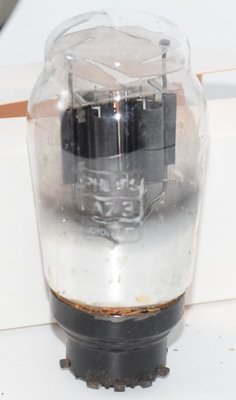
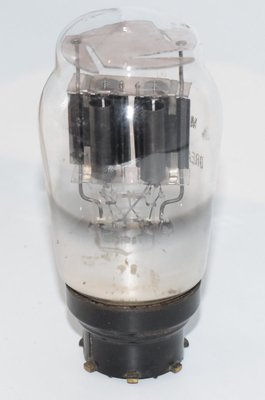
The AZ3 is a full-wave rectifier vacuum tube introduced in the 1930s by Philips (under their Miniwatt brand) and subsequently manufactured by various companies throughout Europe. Developed during the golden age of radio, this indirectly heated rectifier tube was designed to provide reliable DC power conversion in radio receivers and small amplifiers. The AZ3 became popular in European radio sets during the 1930s and 1940s, particularly in countries where Philips had a strong market presence.
As part of Philips' standardization efforts, the AZ3 featured the company's side-contact base (also known as the P8 or European side-contact base), which was common in European tube designs of the era. This distinguished it from American counterparts that typically used octal or other base types. The AZ3 played a significant role in the development of compact, efficient power supplies for consumer electronics before semiconductor rectifiers became widespread.
2. Technical Specifications and Design
The AZ3 is a dual-diode, full-wave rectifier tube with the following key specifications:
- Filament/Heater: 4.0 volts at 1.0 ampere (indirect heating)
- Maximum AC Voltage Per Plate: 300-350 volts RMS
- Maximum DC Output Current: 100 mA
- Internal Resistance: Approximately 175 ohms per plate
- Base Type: Side-contact (P8) with 8 pins
- Envelope: Glass, typically with a dome top
- Typical Voltage Drop: 40-50 volts at rated current
The AZ3's design features two separate diode plates surrounding a central cathode sleeve. The indirectly heated cathode provides more stable operation compared to directly heated filament types, allowing for better filtering and reduced hum in the power supply. The tube's internal construction is optimized to handle the peak inverse voltages encountered in rectification circuits while maintaining reliability over extended periods of operation.
The side-contact base, while somewhat prone to mechanical issues as noted in the product information ("loose base, just needs some super glue"), was designed to provide secure connections and good electrical contact in the radio chassis of the era.
3. Applications and Usage
The AZ3 was primarily used in the following applications:
- Radio Receivers: The tube was commonly employed in AC-powered radio sets, particularly in European designs from the 1930s and 1940s. It provided the necessary DC voltages for plate supplies and bias circuits.
- Small Amplifiers: Due to its 100 mA current capability, the AZ3 was suitable for power supplies in smaller audio amplifiers, including those found in radiograms and early hi-fi equipment.
- Test Equipment: Some test instruments and laboratory equipment of the era utilized the AZ3 for their internal power supplies.
In a typical circuit, the AZ3 would be connected in a full-wave rectifier configuration with a center-tapped power transformer. The two plates would connect to the ends of the transformer secondary winding, with the center tap providing the negative reference. The cathode would connect to the positive output, typically feeding into a filter network consisting of capacitors and chokes or resistors to smooth the pulsating DC into a stable supply voltage.
The tube's 4-volt heater was often powered from a dedicated winding on the power transformer, separate from other tube heaters in the equipment (which might operate at different voltages, commonly 6.3V).
4. Equivalent or Substitute Types
Several tubes can serve as replacements or equivalents for the AZ3, though base differences may require adapters or socket changes:
- AZ1/AZ4: Similar Philips rectifiers with slightly different specifications
- 5Y3GT/5Y3G: American octal-based full-wave rectifier with similar electrical characteristics, though requiring a different socket and possibly heater voltage adjustment
- 80/5Z3: Another octal-based alternative with comparable ratings
- EZ3: A later development with similar characteristics but a different heater voltage (6.3V)
- U50: British equivalent, though with some specification differences
- GZ32/5V4G: Higher-rated substitutes that can handle the AZ3's requirements but may need socket adaptation
When substituting tubes, care must be taken to ensure compatibility with the heater supply voltage and current, as well as making appropriate socket adaptations. In some cases, circuit modifications may be necessary to accommodate different voltage drops or other characteristics of substitute tubes.
5. Notable Characteristics
The AZ3 has several distinctive features and characteristics worth noting:
- Warm-Up Time: As an indirectly heated cathode tube, the AZ3 has a delay between heater power application and full emission capability. This characteristic was often utilized in designs to allow other tubes to warm up before high voltage was applied.
- Voltage Drop: The tube exhibits a voltage drop of approximately 40-50 volts across each diode at rated current, which must be accounted for in power supply design calculations.
- Mechanical Robustness: While the electrical characteristics of the AZ3 are generally reliable, the side-contact base can be a point of mechanical weakness, as evidenced by the mentioned loose base issue in the product information. This was a common issue with tubes using this base style.
- Visual Appearance: The AZ3 typically has a distinctive blue glow during operation due to the ionization of residual gases. This is normal and should not be confused with the purple glow that might indicate air leakage.
- Longevity: When operated within specifications, the AZ3 is known for good reliability and longevity, with many examples still functioning after 70+ years.
- Collector Value: As with many vintage vacuum tubes, the AZ3 has become a collector's item, particularly for restorers of vintage European radio equipment. Working examples in good condition are increasingly sought after.
The AZ3 represents an important chapter in vacuum tube development, bridging the gap between earlier directly heated rectifiers and later, more sophisticated designs. Its continued functionality after decades, as noted in the product information ("functions perfectly"), is a testament to the durability and quality of these vintage electronic components.