1. Introduction and History
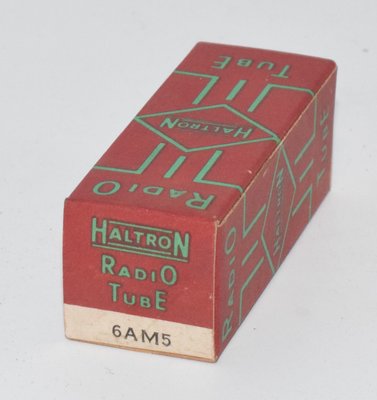
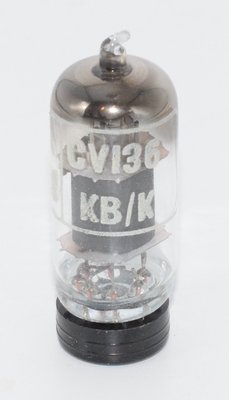
The CV136 is a British military-specification (Common Valve) designation for a miniature power pentode designed primarily for use in audio output stages, small transmitters, and military communications equipment. The CV numbering system was established by the UK Ministry of Defence to standardize valve procurement across manufacturers, ensuring interchangeability and consistent quality regardless of the original producer. The CV136 corresponds to the commercial type 6AM5, a miniature beam-power or power pentode that was developed in the late 1940s and early 1950s during the transition from octal to miniature valve designs.
The 6AM5 was produced by several manufacturers, including Mullard, Brimar, and other British and Commonwealth valve makers. Its compact B7G (miniature 7-pin) base made it well-suited for portable and space-constrained military equipment, where the ruggedness demanded by CV specifications was essential. The CV136 designation guaranteed that the valve met stringent military testing standards for vibration resistance, temperature tolerance, and long-term reliability.
While never as widely known as its larger cousins such as the EL84 or 6V6, the CV136/6AM5 occupies an interesting niche in valve history — a compact, efficient output pentode that has attracted renewed interest from the DIY audio community and collectors of unusual miniature valves.
2. Technical Specifications and Design
General Characteristics
| Parameter | Value |
|---|---|
| Tube Type | Power Pentode (miniature) |
| Base Type | Miniature 7-pin (B7G) |
| Envelope | Miniature glass (T-6½ or similar small glass envelope) |
| Mounting | Vertical or horizontal (consult application notes) |
| CV Designation | CV136 |
| Commercial Equivalent | 6AM5 |
Heater / Filament Ratings
| Parameter | Value |
|---|---|
| Heater Voltage (Vh) | 6.3 V |
| Heater Current (Ih) | approximately 0.45 A (⚠ this value should be confirmed against the original manufacturer datasheet; some sources suggest values in the 0.3–0.5 A range) |
Maximum Ratings (Absolute Maximum)
| Parameter | Value |
|---|---|
| Max Plate (Anode) Voltage (Va max) | 250 V (⚠ confirm against manufacturer datasheet) |
| Max Screen Grid Voltage (Vg2 max) | 250 V (⚠ confirm against manufacturer datasheet) |
| Max Plate Dissipation (Pa max) | approximately 4.5–5 W (⚠ confirm against manufacturer datasheet; this is typical for a miniature pentode of this class) |
| Max Screen Grid Dissipation | approximately 1.5–2 W (⚠ confirm against manufacturer datasheet) |
| Max Cathode Current | approximately 45 mA (⚠ confirm against manufacturer datasheet) |
Typical Operating Conditions (Class A1 Amplifier)
| Parameter | Typical Value |
|---|---|
| Plate Voltage (Va) | 200–250 V (⚠ confirm) |
| Screen Grid Voltage (Vg2) | 200–250 V (⚠ confirm) |
| Control Grid Bias (Vg1) | approximately −7 to −12 V (⚠ confirm) |
| Plate Current (Ia) | approximately 25–35 mA (⚠ confirm) |
| Transconductance (gm) | approximately 4–5 mA/V (⚠ confirm) |
| Amplification Factor (μ) | Not confirmed — should be referenced from manufacturer datasheet |
| Plate Resistance (rp) | Not confirmed — should be referenced from manufacturer datasheet |
| Power Output (Class A1) | approximately 1–2 W (⚠ confirm) |
Important Note: Many of the electrical ratings listed above are estimated based on the valve's class (miniature power pentode comparable to types like the 6AK5/6AQ5 family) and available fragmentary data. The CV136/6AM5 is a relatively obscure type, and complete datasheets are not widely available in digital archives. Users are strongly advised to obtain and consult the original manufacturer datasheet (Mullard, Brimar, or MOD specification) before designing circuits around this valve.
Pin-Out (B7G Base — Bottom View)
| Pin | Connection |
|---|---|
| Pin 1 | Grid 3 (Suppressor Grid) — or internally connected to cathode (confirm) |
| Pin 2 | Heater |
| Pin 3 | Plate (Anode) |
| Pin 4 | Grid 2 (Screen Grid) |
| Pin 5 | Grid 1 (Control Grid) |
| Pin 6 | Internal Connection (DO NOT USE — see note below) |
| Pin 7 | Heater / Cathode |
⚠ Critical Note: Pin 6 is an internal connection and must not be connected to any external circuit. This is confirmed in the TDSL reference data. Connecting external components to Pin 6 may damage the valve or cause unpredictable circuit behavior. The exact nature of this internal connection (likely an internal shield or tie point) should be verified against the original datasheet.
The above pinout is a best estimate based on standard B7G pentode configurations. Users must verify the exact pin assignments against the manufacturer datasheet before wiring, as non-standard pin arrangements are possible with this type.
3. Applications and Usage
The CV136/6AM5 was designed for several applications:
- Audio Output Stages: As a compact power pentode, the CV136 is suitable for small single-ended (SE) audio amplifier output stages, delivering modest power output in the 1–2 watt range in Class A1 operation. This makes it ideal for headphone amplifiers, small desktop amplifiers, and practice amplifiers.
- Military Communications Equipment: The CV136 designation indicates its primary intended use in British military radio equipment, where it served as an audio output valve in receivers, intercoms, and portable communications sets. The B7G miniature base was preferred for field equipment due to its compact size and superior vibration resistance compared to octal types.
- Portable and Mobile Equipment: The relatively low heater power consumption and compact form factor made the CV136 suitable for battery-operated or vehicular equipment where power efficiency and space were at a premium.
- Oscillator and RF Applications: Some miniature power pentodes of this class were also used as low-power oscillators or RF amplifiers in transmitter driver stages, though the CV136's primary role was in audio-frequency applications.
- Industrial and Test Equipment: The valve found use in various industrial control circuits and test instruments where a reliable, compact output stage was required.
4. Sound Characteristics
While the CV136/6AM5 is not among the most widely discussed audio valves, those who have built amplifiers around it report several distinctive sonic qualities:
- Sweet and Intimate Midrange: Like many small British military pentodes, the CV136 is noted for a warm, detailed midrange that lends itself well to vocal reproduction and acoustic instruments. The limited power output actually works in its favor here, as the valve operates comfortably within its linear region at low listening levels.
- Gentle, Musical Distortion Characteristics: When driven into mild overdrive, the CV136 produces a soft, musical clipping characteristic typical of pentode output stages. The distortion is predominantly second and third harmonic, which listeners perceive as warmth and richness rather than harshness.
- Detailed but Not Aggressive Treble: The high-frequency response is described as present and detailed without being overly bright or fatiguing — a quality often attributed to well-made British military valves with their tight manufacturing tolerances.
- Limited Bass Authority: Given its modest power output capability, the CV136 does not deliver the deep, controlled bass of larger output pentodes. Bass reproduction is pleasant and tuneful but lacks the slam and extension of higher-powered designs. This is a characteristic of the valve's power class rather than a deficiency.
- Excellent Low-Level Resolution: At quiet listening levels, the CV136 excels at resolving fine musical detail, making it an excellent candidate for headphone amplifiers and near-field listening setups where its limited power is not a constraint.
- Triode-Strapped Operation: When connected in triode mode (screen grid tied to plate), the CV136 takes on a more refined, linear character with reduced power output but lower distortion and a more "liquid" presentation that some listeners prefer for critical listening.
Overall, the CV136 is best described as a charming, musical-sounding valve that rewards careful circuit design and quality output transformers. It is not a powerhouse, but in the right application it can be genuinely engaging and satisfying.
5. Equivalent or Substitute Types
| Type | Relationship | Notes |
|---|---|---|
| 7D9 | Close / Identical Substitute | Confirmed as a close or identical substitute per TDSL reference data. Direct replacement in most circuits. Verify pinout compatibility before substitution. |
| 6AM5 | Commercial equivalent | The CV136 is the military-rated version of the 6AM5. Electrically identical; the CV136 may have tighter parameter tolerances and enhanced environmental ratings. |
Caution: Despite superficial similarities in name or class, the CV136/6AM5 should not be assumed interchangeable with other miniature pentodes such as the 6AK5, 6AU6, EL91, or 6AQ5 without careful comparison of pinout, heater ratings, and maximum ratings. The internal connection on Pin 6 is a particular concern — substituting a valve with a different Pin 6 assignment could cause circuit damage.
Some sources may list additional equivalents; however, only the 7D9 is confirmed as a genuine close/identical substitute based on verified reference data. Any other claimed equivalents should be verified against manufacturer datasheets before use.
6. Notable Characteristics
- Pin 6 Internal Connection: Perhaps the most important practical detail about the CV136 is that Pin 6 is an internal connection and must be left unconnected in the external circuit. This is unusual and can catch unwary builders off guard, particularly if they assume a standard B7G pentode pinout. Always verify before wiring.
- Military Build Quality: As a CV-specification valve, the CV136 was manufactured to demanding military standards. This typically means tighter parameter matching, enhanced vibration resistance, more rigorous burn-in testing, and longer expected service life compared to commercial equivalents. NOS (New Old Stock) CV136 valves are often found in excellent condition due to careful military storage practices.
- Relative Obscurity: The CV136 is not a mainstream audio valve, which means it is often available at lower prices than more popular types. This makes it attractive for experimenters and DIY builders looking for affordable, high-quality NOS valves.
- Compact Form Factor: The B7G miniature base and small glass envelope make the CV136 suitable for compact amplifier builds, including headphone amplifiers and small integrated designs where chassis space is limited.
- Collectibility: Military CV-designated valves have a dedicated collector following. The CV136, while not the rarest CV type, is sought after by collectors of British military electronics and by audio enthusiasts exploring unusual valve types.
7. Usage in the Audio Community
The CV136/6AM5 occupies a small but enthusiastic niche in the audio community:
DIY Headphone Amplifiers
The CV136's modest power output and sweet sonic character make it an excellent candidate for DIY headphone amplifier projects. Several designs have appeared on audio forums featuring the 6AM5/CV136 as an output valve, typically in single-ended Class A configurations driving medium to high-impedance headphones. The valve's compact size allows for attractively small amplifier builds.
Single-Ended (SE) Amplifiers
Audio hobbyists have built small SE amplifiers using the CV136, typically delivering 1–2 watts into efficient loudspeakers. These amplifiers are valued for desktop and near-field listening, where their intimate, detailed sound quality can be fully appreciated. Paired with high-efficiency speakers (95 dB/W/m or higher), a CV136-based SE amplifier can provide a surprisingly satisfying listening experience.
Experimental and Educational Projects
The CV136's availability as affordable NOS stock and its straightforward pentode design make it popular for educational projects and valve amplifier experimentation. Builders use it to explore pentode versus triode-strapped operation, ultralinear configurations (where the output transformer supports it), and various feedback topologies.
Guitar Practice Amplifiers
A small number of guitar amplifier builders have used the CV136/6AM5 in low-power practice amplifiers, where its musical overdrive characteristics and compact size are advantageous. These "bedroom" amplifiers allow players to achieve valve saturation at manageable volume levels.
Availability and Sourcing
NOS CV136 valves can be found through specialist valve dealers, military surplus outlets, and online auction sites. Suppliers such as those in High Wycombe (UK) have stocked NOS CV136/6AM5 tubes. Because the type is not in high demand compared to mainstream audio valves, prices tend to be reasonable, though availability can be sporadic. Buyers should look for valves in original military packaging, which typically indicates proper storage and handling.
Community Recommendations
Audio community members who have worked with the CV136 generally recommend:
- Using quality output transformers — the valve's sonic potential is heavily dependent on transformer quality
- Experimenting with both pentode and triode-strapped operation to find the preferred tonal balance
- Paying careful attention to the Pin 6 internal connection — do not wire anything to this pin
- Trying the valve in push-pull pairs for slightly higher power output (approximately 3–4 watts) while retaining the valve's characteristic sound
- Confirming all operating parameters against the original datasheet before building, given the limited availability of published data for this type
Final Thoughts
The CV136/6AM5 is a hidden gem in the world of miniature output pentodes. While it will never rival the EL34 or 6L6 for power or the 300B for single-ended prestige, it offers a uniquely charming and musical listening experience in well-designed low-power applications. For the adventurous audio hobbyist willing to explore beyond the mainstream valve types, the CV136 rewards with excellent build quality, affordable NOS availability, and a sound character that punches well above its modest power rating.