1. Introduction and History
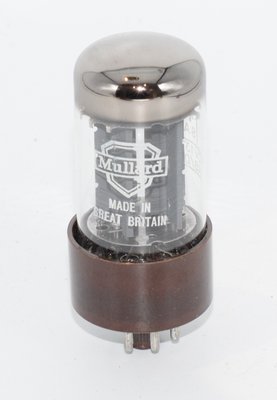
The CV1377 is the British military Common Valve (CV) designation for the celebrated GZ34 / 5AR4 full-wave rectifier tube. Developed by Mullard (the UK subsidiary of Philips) in the early 1950s, the GZ34 quickly became one of the most highly regarded indirectly-heated rectifier valves ever produced. The CV designation was assigned by the UK Ministry of Defence under its Common Valve Register, which catalogued valves approved for use in military and government equipment, ensuring strict quality control and interchangeability across suppliers.
The GZ34 was designed as a significant improvement over earlier rectifiers such as the 5U4G and 5V4G, offering higher current capability, lower voltage drop, and superior regulation — all in a compact octal-based envelope. Mullard's Blackburn factory in Lancashire, England, became the most famous source of these valves, and original Mullard-made CV1377/GZ34 tubes are now among the most sought-after and collectible rectifier valves in the world.
The CV1377 designation guaranteed that the valve met or exceeded the electrical and mechanical specifications required for military-grade reliability. Tubes bearing the CV1377 marking were typically subjected to more rigorous testing and tighter tolerances than their commercial counterparts, making them especially prized by audiophiles and amplifier builders today.
2. Technical Specifications and Design
General Description
The CV1377 is an indirectly-heated, full-wave vacuum rectifier designed for use in power supply circuits. It uses a single cathode with two anodes (plates) to provide full-wave rectification from a centre-tapped transformer secondary.
Heater / Filament Ratings
| Parameter | Value |
|---|---|
| Heater Voltage (Vh) | 5.0 V |
| Heater Current (Ih) | 1.9 A |
| Heater Type | Indirectly heated cathode |
Maximum Ratings (Absolute Maximum)
| Parameter | Value |
|---|---|
| Peak Inverse Voltage (PIV) | 1500 V (max) |
| Max RMS Voltage per Plate (capacitor input) | 450 V |
| Max RMS Voltage per Plate (choke input) | 550 V |
| Max DC Output Current (capacitor input) | 150 mA |
| Max DC Output Current (choke input) | 250 mA |
| Max Peak Plate Current (per plate) | 750 mA |
| Max Reservoir/Input Capacitor (capacitor input filter) | 60 µF |
Note: The CV1377/GZ34 is a rectifier valve and therefore does not have amplification factor (µ), transconductance (gm), or plate resistance (rp) ratings — these parameters apply to amplifying valves (triodes, pentodes, etc.), not rectifiers. Similarly, grid bias is not applicable as this valve has no control grid.
Typical Operating Conditions
| Parameter | Capacitor Input | Choke Input |
|---|---|---|
| AC Plate Voltage (RMS per plate) | 350 V | 450 V |
| DC Output Current | 150 mA | 250 mA |
| Approx. DC Output Voltage | ~390 V | ~400 V |
| Voltage Drop (approx.) | ~15 V at rated current | ~10 V at rated current |
Note: The remarkably low forward voltage drop of the GZ34/CV1377 — typically around 10–15 V at full rated current — is one of its defining characteristics and a major reason for its popularity. This is significantly lower than competing rectifiers such as the 5U4G (which drops approximately 45–50 V under similar conditions).
Physical Construction
| Parameter | Detail |
|---|---|
| Base Type | Octal (International Octal, IO) |
| Envelope Type | ST-16 bulb (early production) / Straight-sided tubular (later production) |
| Mounting | Vertical (base down preferred) |
| Overall Length | Approx. 110–120 mm (varies by manufacturer) |
| Max Diameter | Approx. 35–38 mm (straight-sided versions) |
Pin-Out (Octal Base — Bottom View)
| Pin | Connection |
|---|---|
| Pin 1 | No Connection (NC) |
| Pin 2 | Heater |
| Pin 3 | No Connection (NC) |
| Pin 4 | Plate 1 (Anode 1) |
| Pin 5 | No Connection (NC) |
| Pin 6 | Plate 2 (Anode 2) |
| Pin 7 | No Connection (NC) |
| Pin 8 | Heater / Cathode (common) |
Note: Pin 8 serves as both the heater return and the cathode connection. The centre-tap of the heater winding connects here, and the DC output (B+) is taken from this pin through the filter network. Consult the specific manufacturer datasheet for confirmation of internal shield connections on some variants.
3. Applications and Usage
The CV1377 / GZ34 / 5AR4 was designed primarily as a high-performance power supply rectifier for equipment requiring well-regulated, high-current DC supplies. Its applications include:
- High-fidelity audio amplifiers: The GZ34 became the rectifier of choice in many classic British and American hi-fi amplifiers from the 1950s onward, including designs by Leak, Quad, Radford, Dynaco, and many others.
- Guitar amplifiers: Widely used in Vox (AC30, AC15), Marshall, Hiwatt, and numerous boutique amplifier designs where its excellent regulation and high current capability are valued.
- Military and communications equipment: The CV1377 designation reflects its use in military radio receivers, transmitters, and test equipment where reliability and consistent performance were critical.
- Professional audio equipment: Used in studio mixing consoles, broadcast equipment, and professional preamplifiers of the valve era.
- Test and measurement instruments: Employed in laboratory power supplies and precision instruments requiring stable, low-ripple DC.
The GZ34's ability to deliver up to 250 mA (choke input) with minimal voltage drop made it suitable for powering amplifiers using multiple output tubes, such as push-pull pairs of EL34, KT66, 6L6, or 6V6 valves.
4. Sound Characteristics
While a rectifier tube does not directly process the audio signal, it profoundly influences the sonic character of a valve amplifier by shaping the power supply's behaviour. The CV1377 / GZ34 is widely regarded as one of the finest-sounding rectifier tubes, and audiophiles and engineers consistently describe its tonal qualities as follows:
- Tight, authoritative bass: The GZ34's exceptionally low internal resistance and minimal voltage drop result in excellent power supply regulation. This translates to firm, well-defined bass response with minimal sag — the low end remains controlled and punchy even during demanding musical passages.
- Dynamic and fast: Compared to directly-heated rectifiers like the 5U4G or 5Y3GT, the GZ34 provides a faster, more immediate transient response. The power supply recovers quickly from current demands, giving the amplifier a sense of speed and dynamic precision.
- Clean and transparent: The superior regulation means less power supply modulation, resulting in a cleaner, more transparent midrange. Detail retrieval is excellent, and the overall presentation is often described as "solid-state-like" in its clarity while retaining the warmth and dimensionality of valve amplification.
- Extended, airy treble: The stable B+ voltage contributes to a smooth, extended high-frequency response without the softening or rolling-off that can occur with higher-impedance rectifiers.
- Less "sag" than alternatives: Guitar players note that the GZ34 produces less power supply sag than tubes like the 5Y3GT or 5U4G. This makes it ideal for players who want a tighter, more immediate response, though some players specifically prefer the compression and sag of other rectifiers for blues or vintage rock tones.
- NOS Mullard character: Original Mullard-made CV1377/GZ34 tubes (especially the early "fat-base" and "brown-base" variants) are often described as having a particularly refined, three-dimensional soundstage with exceptional micro-detail and a slightly warm, musical character that distinguishes them from later production or modern reissues.
In summary, the CV1377/GZ34 is prized for delivering a power supply that is stable, quiet, and dynamic — qualities that allow the amplifying stages of the circuit to perform at their best.
5. Equivalent or Substitute Types
The following types are genuine direct equivalents of the CV1377 and can be used interchangeably without circuit modifications:
| Type Designation | Origin / Notes |
|---|---|
| 5AR4 | RETMA/EIA (American) designation — electrically and physically identical to GZ34/CV1377. |
| GZ34 | Mullard/Philips commercial designation — the original type from which CV1377 is derived. |
| CV1377 | UK military designation — this tube. |
| GZ37 | Mullard designation for a version with slightly different construction but essentially identical electrical characteristics. Note: Some sources list the GZ37 as having a slightly different maximum current rating; verify against the specific datasheet before substitution. |
Partial Substitutes (with caveats)
| Type | Notes |
|---|---|
| 5U4G / 5U4GB | Same octal base and 5V heater, but significantly higher voltage drop (~45–50 V) and different maximum ratings. Can be used in many GZ34 circuits but will result in lower B+ voltage and different sonic characteristics. Not a direct substitute — verify circuit compatibility. |
| 5V4G / 5V4GA | Similar application but lower current rating and higher voltage drop. Not a direct substitute. |
| 5Y3GT | Same base type but much lower current capability, higher voltage drop, and directly-heated cathode. Not recommended as a substitute without circuit modifications. |
| GZ32 | Rimlock base — electrically somewhat similar but physically incompatible. Not interchangeable. |
Important: When substituting rectifier tubes, always verify that the replacement tube's maximum voltage and current ratings are compatible with the circuit, and that the heater current draw does not exceed the power transformer's 5V winding capacity. The GZ34/CV1377 draws 1.9A from the heater supply, which is higher than some alternatives (e.g., 5Y3GT at 2.0A, 5U4G at 3.0A). Substituting a 5U4G for a GZ34 requires a transformer capable of supplying the additional heater current.
6. Notable Characteristics
- Indirectly heated cathode: Unlike many rectifiers of its era (5U4G, 5Y3GT), the GZ34/CV1377 uses an indirectly heated cathode. This provides a controlled warm-up period that applies B+ voltage gradually, reducing thermal shock to filter capacitors and other components — effectively providing a built-in "soft start" function.
- Exceptionally low voltage drop: The GZ34's forward voltage drop of approximately 10–15V at rated current is remarkably low for a valve rectifier, approaching the performance of solid-state diodes while retaining the benefits of tube rectification (gradual turn-on, natural current limiting).
- Outstanding regulation: The voltage difference between no-load and full-load conditions is minimal compared to other rectifier types, providing more stable operating conditions for the amplifier stages.
- Robust construction: Military-grade CV1377 specimens were built to withstand vibration, temperature extremes, and extended continuous operation. The Mullard construction typically features sturdy plate structures, well-supported cathode assemblies, and high-quality glass-to-metal seals.
- Long service life: Under proper operating conditions, GZ34/CV1377 tubes routinely achieve 10,000+ hours of service life. NOS military-tested examples are particularly long-lived.
- Slow-start protection: The indirectly heated cathode takes approximately 10–15 seconds to reach full emission, during which time the B+ voltage rises gradually. This characteristic protects electrolytic capacitors and extends the life of other tubes in the amplifier.
- Collector's value: Original Mullard-manufactured CV1377 and GZ34 tubes — particularly early production examples with the distinctive "fat base" construction, copper anode posts, or the Blackburn factory codes (e.g., codes beginning with "f" for the Blackburn plant) — command premium prices on the vintage tube market, often exceeding $150–$300 USD per tube depending on condition and vintage.
7. Usage in the Audio Community
The CV1377 / GZ34 / 5AR4 occupies a position of near-legendary status in the audio community, valued by both hi-fi audiophiles and guitar amplifier enthusiasts.
Hi-Fi and Audiophile Applications
In the audiophile world, the GZ34/CV1377 is considered the gold standard of rectifier tubes. It is used in:
- Classic amplifier restorations: Vintage Leak Stereo 20 and Stereo 60, Quad II, Radford STA-15 and STA-25, Dynaco ST-70, and Fisher amplifiers all originally specified the GZ34. Restorers and collectors seek out NOS CV1377/GZ34 tubes to maintain original performance and authenticity.
- Modern boutique amplifiers: Contemporary high-end amplifier manufacturers such as Audio Note, Shindo, Leben, Line Magnetic, and many others continue to design around the GZ34 rectifier, recognising its superior performance characteristics.
- DIY audio projects: The GZ34 is one of the most commonly specified rectifiers in DIY tube amplifier designs, featured in countless published schematics and kits.
- Tube rolling: Audiophiles frequently experiment with different brands and vintages of GZ34/5AR4 to fine-tune the sound of their systems. Mullard (Blackburn), Philips (Heerlen and Sittard), Amperex, Valvo, Siemens, and RCA-manufactured examples each have their own devoted following, with subtle sonic differences attributed to variations in construction and materials.
Guitar Amplifier Applications
The GZ34 is integral to the sound of several iconic guitar amplifiers:
- Vox AC30: Perhaps the most famous application, the AC30's characteristic chime, clarity, and dynamic response are partly attributable to the GZ34 rectifier's excellent regulation and low voltage drop.
- Vox AC15: Similarly relies on the GZ34 for its power supply.
- Marshall JTM45: Early examples used the GZ34 before transitioning to solid-state rectification.
- Hiwatt DR103: Some versions employed the GZ34.
- Boutique amplifiers: Matchless, Bad Cat, Dr. Z, TopHat, and many other boutique builders specify the 5AR4/GZ34 in their designs.
Guitar players value the GZ34 for its tight, responsive feel. Unlike rectifiers with more sag (such as the 5Y3GT), the GZ34 provides a firm, immediate playing response that suits clean tones, jangly rhythm playing, and articulate lead work. Players who prefer more compression and sag may opt for alternative rectifiers, but those seeking clarity and dynamics consistently choose the GZ34.
Current Production and Availability
Several manufacturers currently produce new GZ34/5AR4 tubes, including:
- JJ Electronic (Slovakia) — widely available and affordable
- Sovtek / Electro-Harmonix (Russia) — popular reissue
- Mullard reissue (manufactured by New Sensor) — branded as Mullard but made in Russia
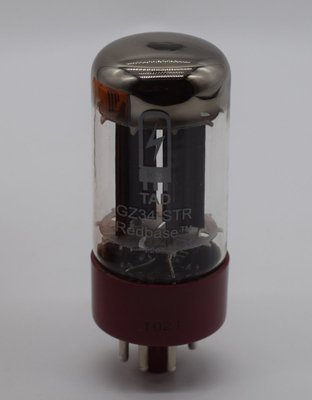
- TAD (Tube Amp Doctor) — selected and tested premium versions
- Psvane and Shuguang (China) — various quality tiers including premium "treasure" series
While current-production tubes are functional and reliable, many audiophiles and professional users maintain that original NOS (New Old Stock) Mullard CV1377/GZ34 tubes — particularly those from the 1950s and early 1960s — offer superior construction quality, longer life, and subtly better sonic performance. The premium pricing of NOS examples reflects this perception and the diminishing supply of genuine vintage stock.
Identification and Authentication
Due to the high value of genuine Mullard CV1377/GZ34 tubes, authentication is an important concern in the audio community. Key identification features of authentic Mullard production include:
- Mullard shield logo or "CV1377" military marking
- Blackburn factory date codes (two-letter codes where the first letter indicates the factory — "B" for Blackburn in early codes, later "f" or "R")
- Distinctive construction features: copper anode posts (early production), specific getter shapes and positions, and characteristic plate structures
- "Fat base" construction on early examples (thicker octal base)
Collectors and users are advised to purchase from reputable dealers who test tubes and can verify provenance, as counterfeit and re-labelled tubes are not uncommon in the market.