1. Introduction and History
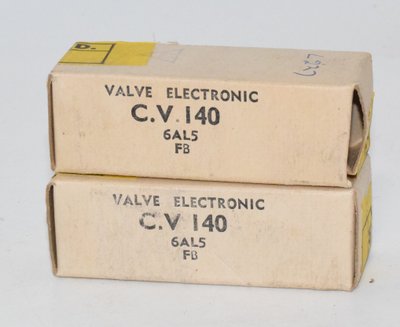
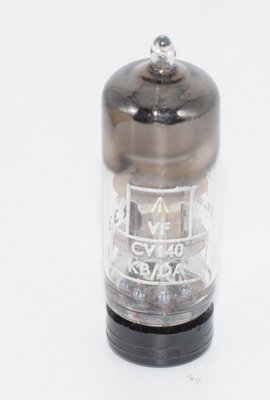
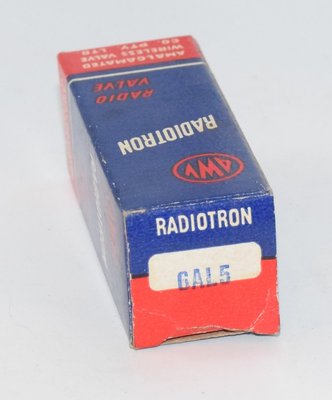
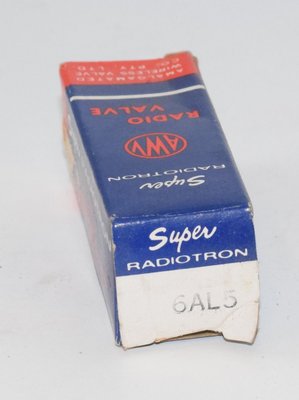
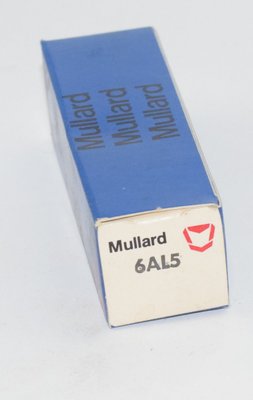
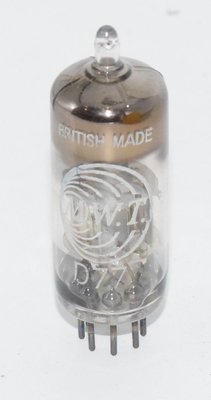
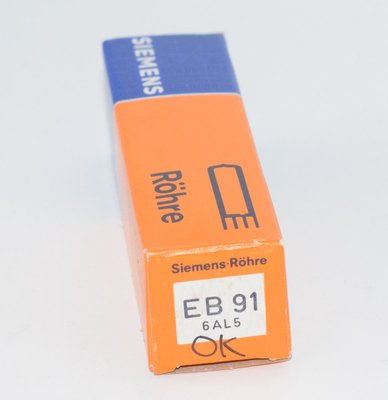
The CV140 is a British military-specification (Common Valve) designation for a miniature twin diode vacuum tube, widely known in the commercial world as the EB91 (Mullard/European designation) or 6AL5 (American designation). The "CV" prefix denotes its inclusion in the United Kingdom's Common Valve registry, a standardized system developed during and after World War II to ensure interchangeability of valves across military equipment from different manufacturers.
The CV140 belongs to the family of miniature double-diode valves that emerged in the late 1940s as part of the transition from octal-based tubes to the more compact B7G (miniature 7-pin) platform. This transition was driven by the need for smaller, more reliable components in both military and civilian electronics. The tube was manufactured by numerous British and European firms, including Mullard, Brimar, GEC, AEI (Associated Electrical Industries), and others, all producing to the same CV specification to guarantee consistent performance across suppliers.
The twin diode configuration made the CV140 an essential component in AM and FM radio receivers, radar systems, television sets, and various military communications equipment throughout the 1950s and 1960s. Its primary roles included signal detection, automatic gain control (AGC), FM discrimination, and various rectification tasks. The tube's compact size, reliable performance, and well-characterized behavior made it one of the most widely produced miniature diode types of the valve era.
2. Technical Specifications and Design
General Description
The CV140 is a miniature twin diode (double diode) housed in a compact glass envelope with a B7G (miniature 7-pin) base. It contains two independent diode sections sharing a common cathode heater assembly, allowing it to serve dual functions in a single envelope.
Heater Ratings
| Parameter | Value |
|---|---|
| Heater Voltage (Vh) | 6.3 V |
| Heater Current (Ih) | 0.3 A |
| Heater Power | ~1.89 W |
Maximum Ratings (per section)
| Parameter | Value |
|---|---|
| Peak Inverse Voltage (PIV) | 420 V (typical rating for 6AL5/EB91; confirm against specific CV140 military datasheet) |
| Maximum DC Output Current (per diode) | 9 mA (typical; confirm against specific CV140 datasheet) |
| Maximum Peak Plate Current (per diode) | 54 mA (typical; confirm against specific CV140 datasheet) |
| Maximum Plate Dissipation (per plate) | 1 W (typical for EB91/6AL5; should be confirmed) |
Note: As a diode, the CV140 does not have amplification factor (μ), transconductance (gm), plate resistance (rp), or grid bias specifications — these parameters apply only to triodes, pentodes, and other amplifying tubes. The CV140 has no control grid.
Inter-electrode Capacitances
| Parameter | Value |
|---|---|
| Anode-to-Cathode Capacitance (Cak), each section | 3.2 pF / 3.2 pF |
The matched capacitance values of 3.2 pF for both diode sections indicate good manufacturing symmetry, which is important for balanced detector and discriminator circuits.
Physical Construction
| Parameter | Detail |
|---|---|
| Base Type | B7G (Miniature 7-pin) |
| Envelope | Miniature glass (T-6½ typically) |
| Mounting Position | Any |
| Overall Length | ~55 mm (approx.; confirm against datasheet) |
| Maximum Diameter | ~19 mm (approx.; confirm against datasheet) |
Pin-out (B7G Base, Bottom View)
| Pin | Connection |
|---|---|
| Pin 1 | Diode 1 – Plate (Anode 1) |
| Pin 2 | Diode 1 – Cathode |
| Pin 3 | Heater |
| Pin 4 | Heater |
| Pin 5 | Diode 2 – Plate (Anode 2) |
| Pin 6 | No Connection (or internal shield, depending on manufacturer) |
| Pin 7 | Diode 2 – Cathode |
Note: The cathodes of both diode sections are typically connected internally to the heater/cathode assembly but brought out on separate pins (2 and 7), allowing independent circuit connections. Some sources show pins 2 and 7 tied internally; consult the specific manufacturer's datasheet for the exact internal configuration. The standard EB91/6AL5 pinout has separate cathode connections for each diode section.
Typical Operating Conditions (as AM Detector)
| Parameter | Value |
|---|---|
| Applied Signal Voltage | Up to several volts RMS |
| Load Resistance | 100 kΩ – 500 kΩ (typical) |
| DC Output | Dependent on signal level and load |
3. Applications and Usage
The CV140 was designed primarily for signal-level rectification and detection tasks rather than power rectification. Its principal applications include:
- AM Detection: One of the most common uses, where one diode section demodulates the AM signal while the second provides AGC (automatic gain control) voltage.
- FM Discrimination: Used in ratio detector and Foster-Seeley discriminator circuits for FM demodulation in radio and television receivers.
- Automatic Gain Control (AGC): Generating DC control voltages proportional to signal strength to regulate the gain of preceding IF amplifier stages.
- Noise Limiting / Clipping: Both diode sections can be configured as a balanced noise limiter or clipper circuit.
- DC Restoration: In television receivers, restoring the DC component of video signals.
- Low-level Rectification: General-purpose signal rectification in instrumentation, test equipment, and military electronics.
- Peak Detection: In metering circuits and level-sensing applications.
- Military Communications: The CV140 designation specifically indicates its qualification for use in British military equipment, where it served in radio receivers, radar systems, and electronic countermeasures equipment.
The twin diode configuration was particularly advantageous because it allowed two related functions (e.g., detection and AGC) to share a single tube socket, reducing component count, chassis space, and heater power consumption.
4. Sound Characteristics
While the CV140 is a diode and does not amplify signals in the traditional sense, it nonetheless has a measurable and audible impact on signal quality when used in audio-related circuits. Audiophiles and engineers who have worked with this tube in detector, rectification, and clipping applications note the following characteristics:
- Clean and Transparent Detection: When used as an AM detector, the CV140/EB91 is praised for its clean demodulation with minimal added distortion at moderate signal levels. The low inter-electrode capacitance (3.2 pF per section) contributes to good high-frequency response.
- Soft Clipping Behavior: Unlike semiconductor diodes, the CV140 exhibits a gradual, "soft" transition from non-conduction to conduction. This characteristic forward voltage curve produces a gentle, musically pleasing clipping behavior when the tube is used in limiter or clipper circuits. The onset of clipping is smooth rather than abrupt, which is perceived as warm and natural.
- Warm Harmonic Content: When driven into conduction in audio signal paths, the tube introduces predominantly even-order harmonics (primarily second harmonic), which are generally perceived as warm and pleasant. This is in contrast to the sharper, odd-harmonic-rich clipping of silicon diodes.
- Natural Compression: The non-linear transfer characteristic of the diode sections provides a subtle, natural compression effect that many listeners find musically appealing, particularly in guitar amplifier and studio processing applications.
- Low Noise: Well-made examples (particularly NOS military-grade CV140 specimens from manufacturers like Mullard, Brimar, and AEI) exhibit very low noise floors, making them suitable for sensitive detector stages where noise performance is critical.
- Vintage Character: In AM tuner applications, the CV140 contributes to the characteristic "warm" sound associated with vintage valve receivers, partly due to its gentle high-frequency roll-off compared to modern solid-state detectors.
It should be noted that the sonic impact of a diode tube is inherently more subtle than that of an amplifying tube (triode or pentode), as the diode does not provide voltage or current gain. Its influence is primarily in the character of its rectification curve and its behavior at signal transitions.
5. Equivalent or Substitute Types
Direct / Identical Substitutes (Drop-in Replacements)
The following types are electrically identical and pin-compatible with the CV140:
| Type | Notes |
|---|---|
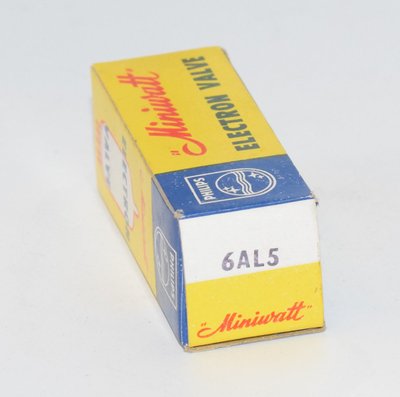
| 6AL5 | American (RETMA) designation; the most common commercial equivalent. Fully interchangeable. |
| EB91 | Mullard/European (Pro-Electron) designation. Identical tube. Widely available. |
| EAA91 | Alternative European designation for the same tube type. |
| 6D2 | Equivalent designation used in some markets. |
| D77 | European equivalent designation. |
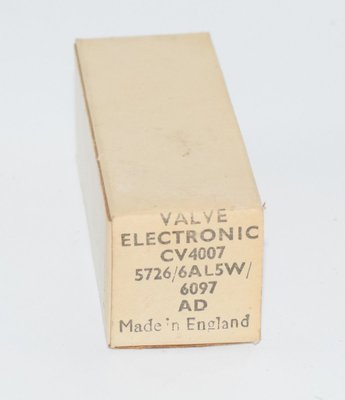
| CV283 | Another British CV-register designation for the same basic type. |
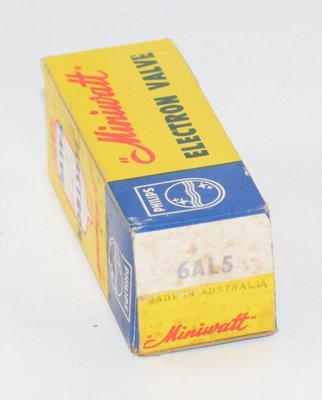
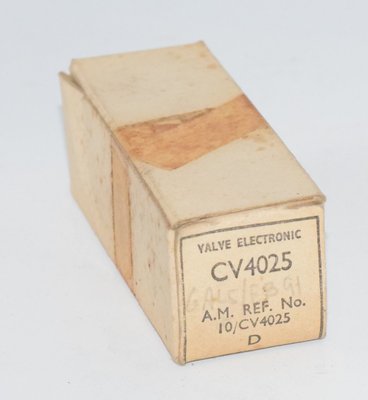
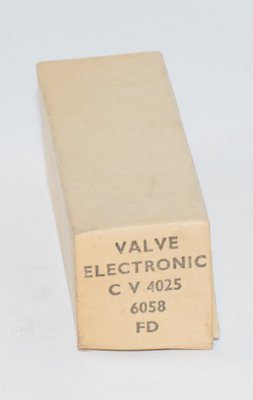
| CV4025 | British CV designation; typically a higher-reliability or tighter-tolerance version. |
| CV8200 | British CV designation; equivalent type. |
| CV10324 | British CV designation; equivalent type. |
| CV10328 | British CV designation; equivalent type. |
Related Types — NOT Direct Drop-in Replacements
The following types are related but differ in heater voltage, ratings, or specifications. They are not direct substitutes without circuit modifications:
| Type | Key Difference |
|---|---|
| 5726 | Ruggedized/military version of the 6AL5 with tighter specs; may be usable but check ratings carefully. |
| 6058 | Special-quality/long-life version; different rating tolerances. |
| CK5726 | Raytheon ruggedized version; similar to 5726. |
| CV5189 | Different rating specification. |
| CV8224 | Different rating specification. |
| CV8311 | Different rating specification. |
| E91AA | Special-quality European version; may have different heater or rating specs. |
| ED2 | Related type with different specifications. |
| M8212 | Mullard special-quality designation; enhanced specifications. |
| 12AL5 | 12.6 V heater — NOT compatible in 6.3 V heater circuits without modification. |
| 3AL5 | 3.15 V heater — NOT compatible in 6.3 V heater circuits without modification. |
Always verify heater voltage and current requirements before substituting any tube. The 12AL5 and 3AL5 in particular will be damaged or will not function correctly if used in a circuit designed for the 6.3 V CV140.
6. Notable Characteristics
- Military Pedigree: The CV140 designation indicates that the tube met stringent British military standards for reliability, consistency, and environmental tolerance. CV-registered tubes were typically subjected to more rigorous testing than their commercial counterparts, including vibration, temperature cycling, and extended life testing.
- Matched Diode Sections: The identical inter-electrode capacitance of 3.2 pF for both diode sections (as specified in the datasheet) indicates careful manufacturing to ensure balanced performance — critical for discriminator and ratio detector circuits where section-to-section matching directly affects demodulation accuracy.
- Low Capacitance: The 3.2 pF anode-to-cathode capacitance per section is quite low, enabling good performance at higher intermediate frequencies and contributing to minimal signal loading in detector circuits.
- Economical Heater: At 6.3 V / 0.3 A (1.89 W), the CV140 has a modest heater power requirement, making it efficient in multi-tube equipment where total heater current is a design consideration.
- Robust Construction: Military-grade CV140 tubes, particularly those from manufacturers like Mullard, Brimar, and AEI (Thron brand), are known for their robust construction and long service life. NOS (New Old Stock) examples from these manufacturers are particularly sought after.
- Versatile Configuration: The independent diode sections with separate cathode connections allow maximum circuit flexibility — the two diodes can be used independently, in series, in parallel, or in push-pull configurations.
- Wide Manufacturing Base: The CV140/EB91/6AL5 was produced by virtually every major tube manufacturer worldwide, including Mullard, Brimar, GEC, STC, AEI, Philips, Amperex, RCA, GE, Sylvania, Tung-Sol, Raytheon, and many others. This wide production base means NOS examples remain relatively available.
7. Usage in the Audio Community
Despite being a humble diode rather than a glamorous output tube, the CV140 and its equivalents have carved out a respected niche in the audio community:
Vintage Radio Restoration
The CV140/EB91/6AL5 is one of the most commonly encountered tubes in vintage AM/FM radio receivers from the 1950s and 1960s. Restorers of classic equipment from manufacturers like Leak, Rogers, Armstrong, and others frequently seek out quality NOS CV140 specimens to maintain original performance. The tube's role as the detector/AGC tube means it directly influences the received audio quality, making tube selection important for optimal sound.
Guitar Amplifier Modifications
Some guitar amplifier builders and modifiers use the CV140/6AL5 in creative ways:
- Tremolo circuits: The twin diode can be used in oscillator and modulation circuits for tube-based tremolo effects.
- Soft clipping stages: Wired as a clipping element in the signal path, the CV140 provides warm, tube-based overdrive character with its gentle clipping curve.
- Bias supply rectification: Used to rectify bias supply voltages in amplifier designs.
- Signal routing and switching: The diode sections can serve as signal gates in channel-switching or effects-loop circuits.
DIY Audio and Headphone Amplifiers
In the DIY audio community, the CV140/6AL5 occasionally appears in:
- Tube rectifier stages: For low-current power supply rectification in preamplifiers and headphone amplifiers where a "tube-rectified" supply is desired for its softer voltage regulation characteristics.
- Signal processing circuits: Peak limiters, compressors, and dynamic processors that exploit the tube's soft-knee rectification characteristic.
- Experimental detector circuits: Crystal radio enthusiasts and AM DXers sometimes use the CV140 as a powered detector for improved sensitivity and selectivity.
NOS Tube Preferences
Among collectors and users, certain manufacturer variants of the CV140/EB91/6AL5 are particularly prized:
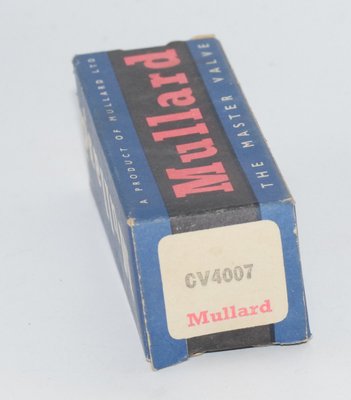
- Mullard CV140/EB91: Considered the gold standard by many, with excellent consistency and low noise. Blackburn-manufactured examples are especially valued.
- AEI/Thron CV140: Military-grade production with excellent build quality. The Thron brand (AEI's valve division) produced high-reliability tubes for professional and military applications.
- Brimar CV140: Another respected British manufacturer known for consistent, high-quality production.
- Amperex/Philips EB91: Dutch/American production with Philips heritage; well-regarded for audio applications.
Collectibility
While not among the most expensive or sought-after vintage tubes, the CV140 holds steady value in the collector market. Military-boxed examples with original MOD (Ministry of Defence) packaging and inspection stamps command a premium. The tube's affordability relative to more exotic types makes it an accessible entry point for those exploring vintage valve technology, and its military specification ensures a baseline of quality that commercial equivalents may not always match.
Practical Considerations for Audio Use
When selecting CV140 tubes for audio applications, users should be aware that:
- As a diode, the tube cannot be "biased" in the way amplifying tubes can — its operating point is determined entirely by the external circuit.
- Section-to-section balance is important for discriminator and balanced detector applications; testing both sections is recommended.
- Heater-to-cathode leakage can develop in aged specimens and may introduce hum in sensitive circuits — testing for this is advisable.
- The tube's relatively low maximum current ratings mean it is unsuitable for power supply rectification in amplifiers with significant current demands; it is a signal-level device.