1. Introduction and History
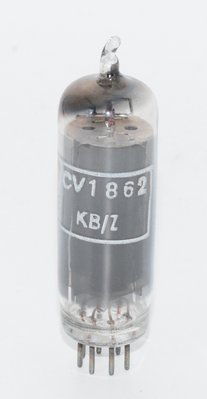
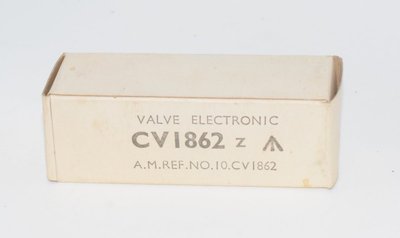
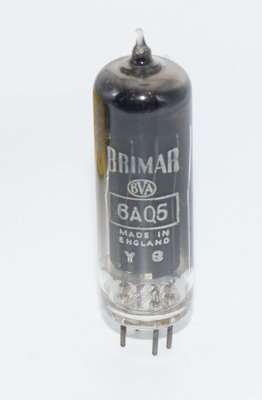
The CV1862 is a British military-specification (CV = Common Valve) designation for a miniature beam power tetrode designed for audio-frequency power output service. It is the UK military equivalent of the well-known 6AQ5 (American designation) and EL90 (European Mullard–Philips designation). The CV numbering system was established by the UK Ministry of Defence to ensure interchangeability and quality control across multiple manufacturers supplying valves for military and government equipment.
The 6AQ5 family was introduced in the late 1940s as a miniature replacement for the octal-based 6V6, offering comparable output power in a significantly smaller B7G (miniature 7-pin) envelope. This made it ideal for compact military communications equipment, portable radios, and later, small consumer audio amplifiers. The CV1862 designation ensured that valves meeting this specification — regardless of whether they were manufactured by Mullard, MOV (MO Valve Co, a GEC subsidiary), Brimar, or other approved UK suppliers — would perform to tightly controlled military parameters.
The MO Valve Co (Marconi-Osram Valve Company), a prominent UK manufacturer and part of the GEC group, was one of the key producers of the CV1862. Their production examples are now sought after by collectors and audio enthusiasts as NOS (New Old Stock) specimens, prized for their robust military-grade construction and consistent performance.
The CV1862 saw widespread use throughout the 1950s and 1960s in military radio transmitters and receivers, public address systems, intercommunication equipment, and a variety of industrial electronics. Its compact size, reasonable power output, and excellent reliability made it one of the most versatile small power tubes of its era.
2. Technical Specifications and Design
General Description
- Type: Beam power tetrode (pentode-connected)
- Function: Audio-frequency power amplifier output tube
- Base type: Miniature 7-pin (B7G / miniature button base)
- Envelope: T-6½ miniature glass envelope
- Mounting: Vertical or horizontal (consult manufacturer guidelines for specific derating if mounted horizontally)
Heater Ratings
- Heater voltage (Vh): 6.3 V
- Heater current (Ih): 0.45 A
- Heater type: Indirectly heated cathode, AC or DC operation
Typical Operating Conditions — Single-Ended Class A Amplifier
| Parameter | Value |
|---|---|
| Plate voltage (Va) | 250 V |
| Screen grid voltage (Vg2) | 250 V |
| Control grid voltage (Vg1) | −12.5 V |
| Plate current (Ia) | 45 mA |
| Screen grid current (Ig2) | 4.5 mA |
| Load resistance (Ra) | 5,000 Ω |
| Transconductance (gm / S) | 4.1 mA/V |
| Plate resistance (rp) | 52,000 Ω |
| Cathode bias resistor (Rk) | 250 Ω |
| Power output (Pout) | 4.5 W |
| Total harmonic distortion (THD) | 8% |
Derived and Maximum Ratings
- Amplification factor (μ): Approximately 213 (calculated as μ = gm × rp = 4.1 × 52 ≈ 213). Note: This is a derived value; the effective amplification factor in pentode mode is high but the tube is typically used with a defined load impedance rather than relying on μ directly.
- Maximum plate voltage: 275 V (typical maximum rating for the 6AQ5 family; confirm against specific CV1862 military specification sheet for exact ICAS/CCS limits)
- Maximum plate dissipation: 12 W (typical for the 6AQ5 type; should be confirmed against the CV1862 military data sheet)
- Maximum screen grid voltage: 275 V (typical; confirm against CV1862 specification)
- Maximum screen grid dissipation: 2.2 W (typical for 6AQ5; confirm)
- Maximum cathode current: 54 mA (typical; confirm)
- Grid bias range: 0 V to approximately −20 V depending on operating point and plate/screen voltages
Note: The absolute maximum ratings listed above are drawn from standard 6AQ5 datasheets (RCA, GE, Sylvania). The CV1862 military specification may impose tighter or slightly different limits. Users designing critical applications should consult the original CV1862 specification document (DEF-5011-series or equivalent) for definitive maximum ratings.
Pin-Out (B7G Base — Bottom View)
| Pin | Connection |
|---|---|
| 1 | Grid 1 (Control grid) |
| 2 | Cathode |
| 3 | Heater |
| 4 | Heater |
| 5 | Plate (Anode) |
| 6 | Grid 2 (Screen grid) |
| 7 | Grid 3 (Suppressor grid) — internally connected to cathode in beam tetrode versions |
Note: The beam-forming plates in the 6AQ5/EL90 serve the function of a suppressor grid and are internally connected to the cathode. Pin 7 connects to this internal tie point. The key guide (gap between pins 1 and 7) provides orientation.
Physical Dimensions (Approximate)
- Overall length: ~65 mm (2.56 inches)
- Maximum diameter: ~22 mm (0.87 inches)
- Seated height: ~52 mm (2.05 inches)
3. Applications and Usage
The CV1862 was designed primarily as an audio-frequency power output tube, but its versatility extended to several other applications:
- Single-ended audio amplifiers: Delivering 4.5 W of output power in Class A operation, the CV1862 was widely used in small radios, intercoms, and portable PA systems. This power level is more than adequate for driving efficient loudspeakers in domestic or field environments.
- Push-pull audio amplifiers: A pair of CV1862 tubes in push-pull Class AB1 configuration can deliver approximately 8.5–10 W of audio output with significantly reduced distortion compared to single-ended operation. This was a common configuration in mid-range consumer hi-fi amplifiers and military communications equipment.
- Military communications: The CV1862's military heritage meant it was extensively used in radio transmitter modulators, receiver audio output stages, and intercom systems across British and NATO military equipment.
- Industrial electronics: Servo amplifiers, control systems, and instrumentation amplifiers employed the CV1862 where modest power output and high reliability were required.
- Guitar amplifiers: Several small practice amplifiers and recording amplifiers used the 6AQ5/EL90 family, offering a tone character reminiscent of the larger 6V6 but in a more compact package.
4. Sound Characteristics
The CV1862 / 6AQ5 / EL90 family occupies an interesting sonic niche that has earned it a dedicated following among audiophiles and guitar amplifier enthusiasts. Here is how its tonal qualities are typically described:
- Warm and smooth midrange: Like its larger cousin the 6V6, the CV1862 produces a characteristically warm, rounded midrange that is musical and engaging. The midrange is often described as having a "golden" quality — present without being aggressive.
- Sweet, controlled treble: The high-frequency response is smooth and naturally rolled off at the extremes, avoiding the sometimes harsh or "glassy" top end associated with some beam tetrodes. This makes the CV1862 forgiving with bright source material and sibilant recordings.
- Modest but tuneful bass: Given its relatively modest power output, deep bass authority is limited compared to larger output tubes like the EL34 or 6L6. However, the bass it does produce is well-defined and musical rather than bloated or loose. In single-ended configurations, the bass has a characteristic warmth and slight softness that many SET (Single-Ended Triode/Tetrode) enthusiasts find appealing.
- Harmonic richness: When driven into mild overdrive, the CV1862 produces predominantly even-order harmonics (2nd and 4th), which the ear perceives as pleasant and musical. This characteristic is shared with the 6V6 family and is one reason these tubes are favoured for guitar amplification.
- Dynamic expression: Despite its small size, the CV1862 is praised for its dynamic responsiveness — it reacts well to transients and preserves the micro-dynamics in music that convey emotion and realism.
- Overdrive character: In guitar amplifier applications, the CV1862 breaks up smoothly and progressively, producing a creamy, compressed overdrive that is ideal for blues, jazz, and classic rock tones. The breakup character is often compared favourably to the 6V6, with slightly more compression and a tighter feel due to the lower headroom.
- Military-grade specimens: CV1862 tubes manufactured to military specifications (particularly those by MO Valve Co and Mullard) are often noted for slightly tighter, more controlled sound compared to commercial 6AQ5 equivalents — likely a result of tighter manufacturing tolerances and superior materials.
Overall, the CV1862 is best described as a "miniature 6V6" in sonic character — warm, musical, and forgiving, with a sweetness that belies its modest specifications. It excels in intimate listening environments and low-to-moderate volume applications where its tonal charm can be fully appreciated.
5. Equivalent or Substitute Types
Direct / Identical Substitutes (Drop-in Replacements)
The following types are considered electrically identical and pin-compatible with the CV1862. They can be substituted directly without circuit modifications:
| Type | Notes |
|---|---|
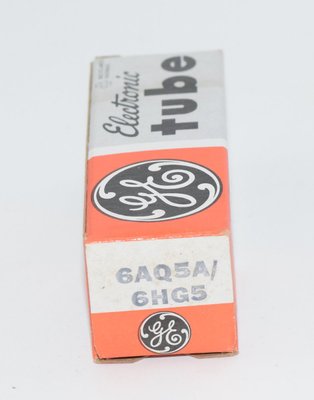
| 6AQ5 | Standard American (RETMA) designation. The most common commercial equivalent. |
| 6AQ5A | Improved version with tighter specifications; fully interchangeable. |
| EL90 | European (Mullard–Philips) designation. Identical electrically and mechanically. |
| BPM04 | Alternative European designation; identical type. |
| CK6005 | Raytheon designation; identical to 6AQ5. |
| CV8229 | Another UK CV-series designation covering the same valve type. |
| M8245 | Mullard military/professional designation; identical to EL90/6AQ5 but manufactured to tighter tolerances. |
| N727 | Alternative designation; electrically identical. |
Related Types — NOT Direct Drop-in Replacements
The following types are related to the CV1862 but have different ratings, construction, or specifications. They may require circuit adjustments and should not be treated as direct substitutes without careful evaluation:
| Type | Notes |
|---|---|
| 6005 | Ruggedized version of the 6AQ5 with different maximum ratings. |
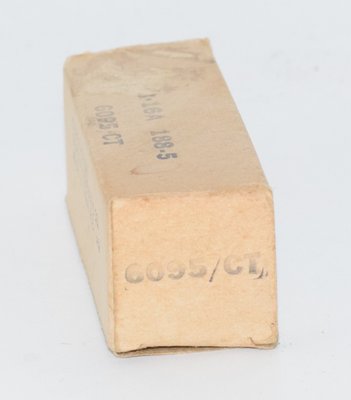
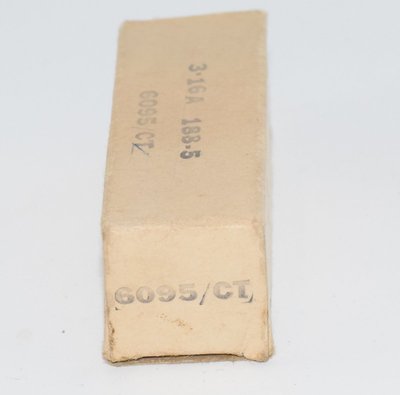
| 6095 | Industrial/ruggedized variant; different operating parameters. |
| 6669 | Special-purpose variant with modified ratings. |
| 6AQ5W | Military ruggedized version ("W" suffix denotes MIL-spec ruggedized); may have different maximum ratings and mechanical specifications. |
| 6BM5 | Related type with different bias and operating conditions. |
| 6L31 | Variant with different characteristics; not a direct substitute. |
| CV3972 | Different CV specification covering a related but not identical type. |
| CV4019 | Different CV specification; verify ratings before substitution. |
| CV5190 | Different CV specification; not a direct drop-in. |
6. Notable Characteristics
- Compact powerhouse: The CV1862 delivers a remarkable 4.5 W from a tube barely larger than a thumb. This power density was exceptional for its era and remains impressive even by modern standards for vacuum tube designs.
- Military build quality: As a CV-specification valve, the CV1862 was manufactured to stringent military standards including enhanced vibration resistance, tighter parameter tolerances, extended life testing, and rigorous quality control. This makes genuine CV1862 specimens particularly reliable and long-lasting.
- Self-bias simplicity: With a cathode bias resistor of just 250 Ω, the CV1862 is exceptionally easy to implement in self-biased circuits. This simplicity made it popular in equipment where field serviceability was important — a soldier or technician could replace a tube without any bias adjustment.
- Efficient screen operation: The screen current of only 4.5 mA at full rated conditions indicates efficient beam-forming plate design, minimizing wasted power in the screen circuit and reducing demands on the power supply.
- High plate resistance: The 52,000 Ω plate resistance is characteristic of a pentode/beam tetrode and means the tube behaves as a near-ideal current source. This makes it sensitive to the output transformer's reflected impedance and means that transformer quality significantly impacts performance.
- Versatile operating range: While the reference data specifies 250 V operation, the 6AQ5 family operates well at reduced voltages (down to approximately 150 V plate supply), making it suitable for portable battery-operated equipment with B+ supplies derived from vibrator power supplies or DC-DC converters.
- MO Valve Co production: The MO Valve Company (Marconi-Osram) examples of the CV1862 are particularly prized among collectors. MOV was known for excellent quality control and robust construction, and their CV1862 production is considered among the finest examples of this tube type.
7. Usage in the Audio Community
The CV1862 and its commercial equivalents (6AQ5, EL90) have carved out a distinctive niche in the modern audio community, appealing to several different groups of enthusiasts:
Single-Ended Amplifier Builders
The CV1862 is a popular choice for DIY single-ended amplifier projects. Its 4.5 W output is well-matched to high-efficiency loudspeakers (95 dB/W/m and above), and the simple self-bias arrangement with a 250 Ω cathode resistor makes circuit design straightforward. Many builders appreciate that a complete stereo amplifier can be built with just four tubes — two CV1862 output tubes and two small-signal triodes (such as the 12AX7 or 12AU7) for voltage amplification and phase splitting.
Desktop and Nearfield Listening
With the growing popularity of desktop hi-fi and nearfield listening setups, the CV1862's modest power output has become an asset rather than a limitation. Paired with efficient bookshelf speakers, a CV1862-based amplifier provides an intimate, detailed, and musically engaging listening experience that is perfectly suited to small rooms and close-range listening positions.
Guitar Amplifier Community
Small guitar amplifiers using the 6AQ5/EL90 have a devoted following among players who value low-wattage "bedroom" and recording amplifiers. The CV1862's smooth overdrive characteristics and 6V6-like tonal palette make it ideal for blues, jazz, and roots music. Several boutique amplifier builders offer 6AQ5-based designs, and the CV1862 military-spec version is often recommended as a premium upgrade tube for these amplifiers.
Vintage Equipment Restoration
The CV1862 is frequently encountered in vintage British military and industrial equipment. Restorers of vintage military radios, intercom systems, and test equipment seek out NOS CV1862 tubes to maintain originality and ensure correct performance. The availability of NOS stock from MO Valve Co and other UK manufacturers makes this feasible, though supplies are gradually diminishing.
Tube Rolling and Comparison
Audio enthusiasts who own 6AQ5-based equipment often engage in "tube rolling" — comparing different manufacturers' versions of the same tube type. The CV1862 (particularly MO Valve Co examples) is frequently cited as a top-tier option in these comparisons, with listeners noting its tighter bass, smoother treble, and more refined overall presentation compared to standard commercial 6AQ5 tubes. The M8245 (Mullard professional grade) is another highly regarded variant in these comparisons.
Availability and Pricing
As of the 2020s, NOS CV1862 tubes remain available through specialist vintage tube dealers, though prices have increased as stocks diminish. Military-specification tubes from reputable manufacturers like MO Valve Co command a premium over standard commercial 6AQ5 tubes. The wide range of equivalent types (6AQ5, 6AQ5A, EL90) ensures that compatible tubes remain readily available from multiple sources, including current production from manufacturers in Russia, China, and Slovakia.
Recommended Circuit Topologies
In the audio community, the CV1862 is most commonly used in the following configurations:
- Single-ended Class A: 250 V B+, 5,000 Ω output transformer primary, 250 Ω cathode bias resistor — delivering 4.5 W per channel. This is the "classic" configuration per the manufacturer's data.
- Push-pull Class AB1: A pair of CV1862 tubes with approximately 8,000–10,000 Ω plate-to-plate load, delivering 8.5–10 W with significantly lower distortion than single-ended operation.
- Ultra-linear: Some builders experiment with ultra-linear connection (screen grids connected to output transformer taps at 40–43% of the primary), which can reduce distortion and lower the effective plate resistance, though output power may be slightly reduced.
- Triode-strapped: Connecting the screen grid directly to the plate converts the CV1862 to triode operation, reducing output power to approximately 1–1.5 W but significantly lowering distortion and output impedance. This configuration is favoured by purist SET enthusiasts who prioritize tonal purity over power.