1. Introduction and History
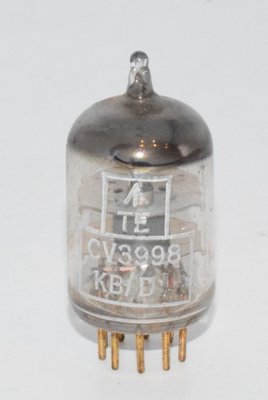
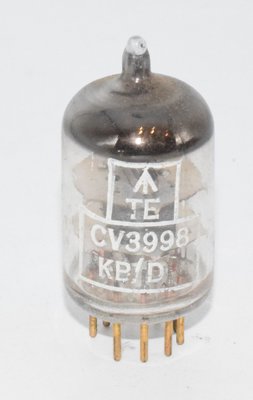
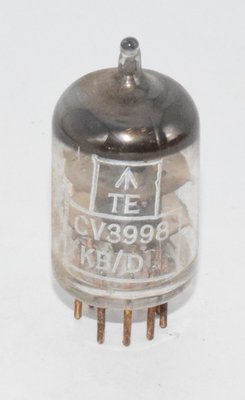
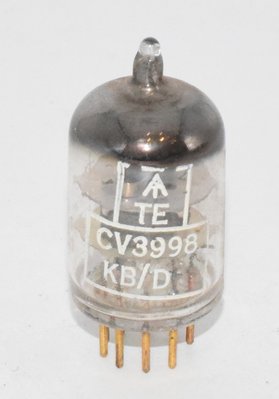
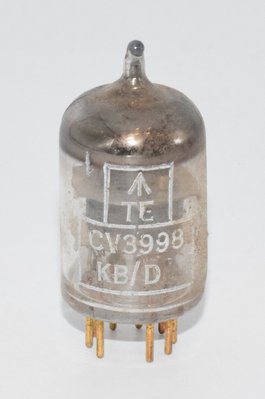
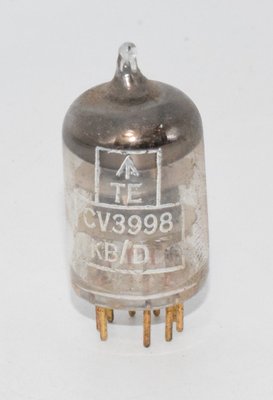
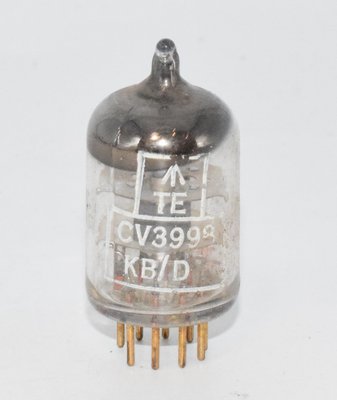
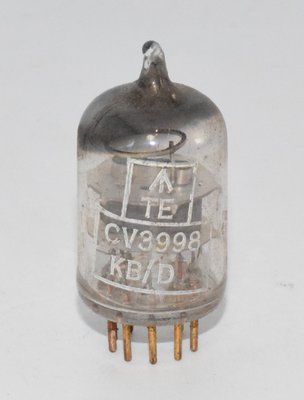
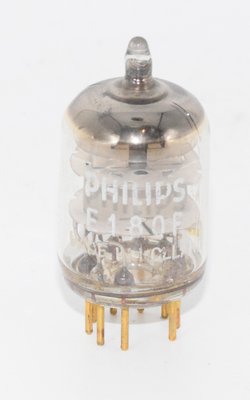
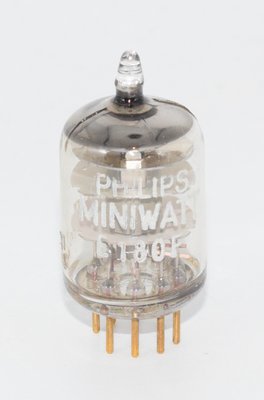
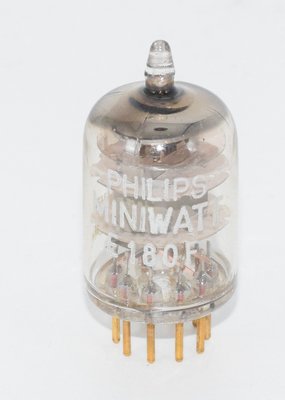
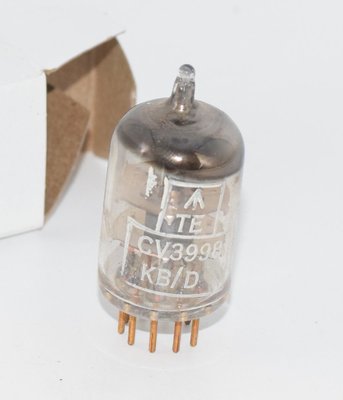
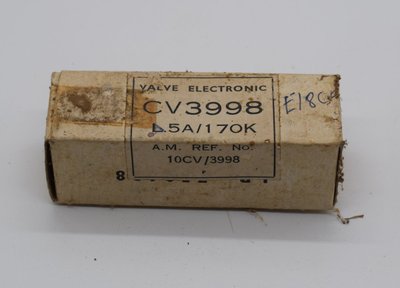
The CV3998 is the British military (Common Valve) designation for the E180F, a high-performance sharp-cutoff pentode developed by Philips/Mullard in the late 1950s. The E180F belongs to the prestigious Philips "E" series of professional-grade valves, designed to meet the most demanding standards of reliability, low noise, and consistent performance. The "CV" (Common Valve) numbering system was used by the UK Ministry of Defence to standardize valve procurement across military and government applications, ensuring that tubes from different manufacturers met identical performance criteria.
The E180F was a landmark design because it employed frame-grid construction — a revolutionary manufacturing technique pioneered by Philips/Mullard in which the control grid is wound on a rigid rectangular frame rather than the traditional helical wire-on-post method. This allowed for much tighter grid-to-cathode spacing and far more precise grid geometry, resulting in exceptionally high transconductance, low noise, and excellent high-frequency performance in a compact envelope.
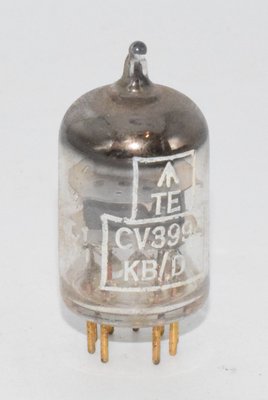
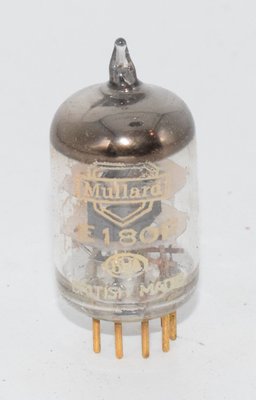
Mullard's Mitcham factory in Surrey, England, was a primary production site for the CV3998/E180F, and tubes manufactured there — particularly those from the early 1960s with gold-plated pins — are among the most sought-after examples by collectors and audiophiles today. The Mitcham plant was renowned for its rigorous quality control, and CV-rated tubes underwent additional screening and testing beyond standard commercial production.
The E180F was designed primarily for use in wideband amplifiers, instrumentation, test equipment, and professional audio applications where low noise and high gain were paramount. Its frame-grid construction gave it performance characteristics that far exceeded conventional pentodes of similar size.
2. Technical Specifications and Design
Heater / Filament
| Heater Voltage (Vf) | 6.3 V |
| Heater Current (If) | approximately 450 mA (0.45 A) |
Note: The E180F is an "E" series tube with a 6.3V heater. The heater current of ~450 mA is consistent with Philips/Mullard datasheets and should not be confused with lower-current types.
Maximum Ratings (Absolute Maximum Values)
| Maximum Anode (Plate) Voltage (Va max) | 250 V |
| Maximum Screen Grid Voltage (Vg2 max) | 150 V |
| Maximum Anode Dissipation (Pa max) | 1.5 W * |
| Maximum Screen Grid Dissipation (Pg2 max) | 0.6 W |
| Maximum Cathode Current (Ik max) | 25 mA |
* Note: Some sources and datasheets cite the maximum anode dissipation as 1.2 W rather than 1.5 W. Designers should consult the specific manufacturer's datasheet for the production variant in use and apply appropriate derating. The lower figure (1.2 W) provides a more conservative design margin.
Typical Operating Conditions and Characteristics
| Anode Voltage (Va) | 120–250 V (typical operating point ~150 V) |
| Screen Grid Voltage (Vg2) | 80–150 V (typical ~120 V) |
| Control Grid Voltage (Vg1) | -1 V to -3 V (typical bias ~ -1.3 V to -2 V depending on operating point) |
| Anode Current (Ia) | ~10–15 mA at typical operating conditions |
| Transconductance (gm) | approximately 16–18 mA/V (typically quoted as ~16.5 mA/V at standard operating conditions) |
| Amplification Factor (μ) | approximately 500–700 (varies with operating point; confirm against specific datasheet) |
| Plate Resistance (rp) | approximately 30–45 kΩ (varies with operating point) |
The exceptionally high transconductance of 16–18 mA/V is a direct result of the frame-grid construction, which permits very close grid-to-cathode spacing. This figure is remarkably high for a miniature pentode and is one of the defining characteristics of the E180F family.
Physical Construction
| Base Type | B9A (Noval, 9-pin miniature) |
| Envelope | Miniature glass, approximately 20 mm diameter × 55 mm tall (excluding pins) |
| Mounting | Vertical or horizontal (with appropriate socket) |
| Construction | Frame-grid pentode with internal electrostatic shield |
Pin-Out (B9A Base — Bottom View)
| Pin | Connection |
|---|---|
| Pin 1 | Internal shield / Screen (connected internally) |
| Pin 2 | Heater |
| Pin 3 | Heater |
| Pin 4 | Cathode |
| Pin 5 | Suppressor Grid (G3) |
| Pin 6 | Anode (Plate) |
| Pin 7 | Screen Grid (G2) |
| Pin 8 | Internal connection |
| Pin 9 | Control Grid (G1) |
Note: Pin 1 serves as an internal electrostatic shield and is typically connected to ground or the cathode in circuit designs. Pin 8 is an internal connection and should not be externally wired. Always verify the pinout against the manufacturer's datasheet before circuit implementation.
3. Applications and Usage
The CV3998/E180F was designed for and widely used in the following applications:
- Wideband amplifiers: The high transconductance and frame-grid construction make the E180F ideal for wideband video and IF amplifiers, where gain-bandwidth product is critical.
- Low-noise preamplifiers: The tube's inherently low noise figure made it a natural choice for sensitive measurement equipment, laboratory instrumentation, and professional audio front-end stages.
- Military and government electronics: Under the CV3998 designation, the tube was used in radar systems, communications receivers, electronic warfare equipment, and other defence applications requiring high reliability and consistent performance.
- Test and measurement equipment: Oscilloscopes, spectrum analyzers, and precision voltmeters from manufacturers such as Hewlett-Packard, Tektronix, and Marconi Instruments employed the E180F in critical gain stages.
- Professional audio equipment: Broadcast mixing consoles, studio microphone preamplifiers, and high-quality tape recorder electronics used the E180F where the lowest possible noise and highest gain were required.
- Nuclear instrumentation: The tube's low noise and high gain made it suitable for photomultiplier preamplifiers and pulse amplifiers in nuclear physics research.
4. Sound Characteristics
The CV3998/E180F has developed a devoted following among audiophiles and recording engineers, who describe its sonic qualities in glowing terms:
- Exceptional clarity and detail: The frame-grid construction and high transconductance translate into an extraordinarily transparent and revealing sound. Micro-details in recordings — room ambience, the decay of reverb tails, subtle tonal inflections — are rendered with remarkable precision.
- Low noise floor: One of the most immediately noticeable characteristics. The E180F provides an exceptionally quiet background, allowing low-level musical details to emerge from silence. This "black background" quality is frequently cited by users as a primary reason for choosing this tube.
- Extended and airy treble: The wideband design of the E180F gives it a naturally extended high-frequency response. Audiophiles describe the treble as "shimmering," "crystalline," and "effortlessly open" without the harshness or grain sometimes associated with lesser pentodes.
- Fast transient response: The high transconductance and low internal capacitances result in excellent transient attack and decay. Percussive instruments, plucked strings, and dynamic vocal passages are reproduced with lifelike speed and impact.
- Neutral tonal balance: Unlike some audio tubes that impose a warm or colored character, the E180F is generally described as tonally neutral and accurate. It does not add excessive warmth or euphonic coloration, making it prized in applications where fidelity to the source is paramount.
- Excellent dynamics: Despite its relatively modest power dissipation rating, the E180F handles dynamic swings with authority when used within its linear operating range. The tube conveys both macro-dynamics (large-scale orchestral crescendos) and micro-dynamics (subtle variations in playing intensity) with equal finesse.
- Mullard Mitcham production: Tubes specifically manufactured at the Mullard Mitcham plant, particularly those from the early 1960s with gold-plated pins, are considered by many to represent the pinnacle of E180F production. These are often described as having a slightly richer midrange and more refined treble compared to later or non-UK production examples.
It should be noted that the E180F's sonic character is highly dependent on the circuit topology and operating point chosen by the designer. In pentode mode, the tube offers maximum gain and bandwidth but can sound somewhat analytical to some ears. When operated in triode mode (screen grid tied to anode), the sound becomes warmer and more harmonically rich, though gain and bandwidth are reduced. Some designers employ ultralinear or cascode configurations to achieve a balance between the two extremes.
5. Equivalent or Substitute Types
| Type | Relationship | Notes |
|---|---|---|
| E180F | Direct equivalent (commercial designation) | CV3998 is the UK military-rated version of the E180F. Electrically and physically identical; CV-rated examples have undergone additional quality screening. |
| 6688 | Approximate American equivalent | The 6688 is the US industrial/military designation for a tube closely based on the E180F. While broadly interchangeable, there may be minor specification differences between manufacturers. Verify datasheet details before substitution in critical applications. |
| 7788 | Related type | Another American designation in the same family. Similar performance characteristics but verify specific ratings and pinout before substitution. |
| E280F | Higher-rated variant | A related Philips type with higher maximum ratings. Not a direct drop-in substitute — check all specifications carefully. |
Types That Are NOT Suitable Substitutes
The following tubes are sometimes mentioned in connection with the E180F but are not recommended as direct substitutes:
- EF86 / 6267: While the EF86 is also a low-noise pentode on a B9A base, it is a fundamentally different design. The EF86 uses conventional (non-frame-grid) construction, has substantially different operating parameters (lower transconductance, different maximum ratings), and a different pinout. It is not interchangeable with the E180F/CV3998 and should not be used as a substitute.
- EF184 / 6EJ7: Although also a frame-grid pentode, the EF184 has different operating parameters and is designed for different applications (primarily TV IF amplifiers). Not a direct substitute.
Always verify pin-for-pin compatibility, heater requirements, and maximum ratings before substituting any tube type. Even among "equivalent" types, production variations between manufacturers can affect performance in sensitive circuits.
6. Notable Characteristics
- Frame-grid construction: The defining feature of the E180F. The precision frame grid allows grid wire spacing as fine as 50 μm (0.05 mm), resulting in transconductance figures that were extraordinary for the era and remain impressive by any standard. This construction technique was one of Mullard/Philips' most significant contributions to valve technology.
- Internal electrostatic shield: The E180F incorporates an internal shield (connected to Pin 1) that provides excellent isolation between the input and output sections of the tube. This reduces feedback capacitance and improves stability in high-gain circuits, while also reducing susceptibility to external electromagnetic interference.
- Exceptional consistency: CV-rated tubes were manufactured and tested to tighter tolerances than commercial equivalents. This makes matched pairs and sets of CV3998 tubes particularly valuable for balanced or push-pull circuit topologies where tube matching is critical.
- Long service life: Military-rated tubes were designed for extended operational life under demanding conditions. Well-preserved NOS (New Old Stock) CV3998 tubes from the 1960s routinely test at or above 100% of their original emission specifications, a testament to the quality of materials and manufacturing processes used.
- Gold-plated pins: Many Mullard Mitcham-produced CV3998 tubes feature gold-plated base pins. Beyond their aesthetic appeal, gold plating provides superior electrical contact, resistance to corrosion, and long-term reliability — particularly important in military and professional applications where equipment might be stored for extended periods before deployment.
- Microphony resistance: The rigid frame-grid construction inherently provides better resistance to microphonic noise compared to conventional grid structures. This is a significant advantage in audio applications, particularly in high-gain phono stages and microphone preamplifiers where mechanical vibration can be problematic.
- Low operating voltages: Despite its high performance, the E180F operates at relatively modest voltages (typical anode voltage of 150V, screen voltage of 120V), making power supply design straightforward and reducing stress on associated components.
7. Usage in the Audio Community
The CV3998/E180F has earned a distinguished reputation in the high-end audio community, where it is employed in a variety of applications:
Phono Preamplifiers
Perhaps the most celebrated application of the E180F in audio is as a phono stage amplifier. The tube's combination of high gain, low noise, and excellent linearity makes it exceptionally well-suited to amplifying the tiny signals from moving-coil and moving-magnet phono cartridges. Several renowned phono preamplifier designs feature the E180F, including:
- Custom-built phono stages by boutique audio manufacturers
- DIY designs published in audio journals and online forums
- Modified versions of classic circuits where the E180F replaces less capable pentodes
Microphone Preamplifiers
Recording engineers and studio equipment designers value the E180F for microphone preamplifier circuits. The tube's low noise figure and high gain allow it to amplify the output of condenser and ribbon microphones with minimal added noise, preserving the full dynamic range and tonal character of the source.
Line-Stage Preamplifiers
Some high-end preamplifier designs use the E180F in line-stage applications, taking advantage of its high transconductance to achieve substantial voltage gain in a single stage. This can simplify circuit topology and reduce the number of gain stages required, potentially improving transparency.
DAC Output Stages
In hybrid digital-to-analog converter designs, the E180F is sometimes used as a tube output buffer or gain stage following the DAC chip. This application leverages the tube's linearity and sonic refinement to add a degree of analog warmth and dimensionality to the digital signal path.
Headphone Amplifiers
The E180F appears in some boutique headphone amplifier designs, where its high gain and low noise are advantageous for driving high-impedance headphones with excellent signal-to-noise ratio.
Collectibility and Market
NOS CV3998 tubes, particularly those manufactured by Mullard at the Mitcham plant in the early 1960s with gold-plated pins, command premium prices on the vintage tube market. These are considered reference-grade tubes by many audiophiles, and matched pairs or quads can fetch substantial sums. Key factors affecting value include:
- Manufacturing origin: Mullard Mitcham production is most highly prized, followed by other Philips-affiliated factories (Heerlen, Blackburn).
- Date codes: Early 1960s production (1960–1965) is generally preferred, as this period is considered the peak of Mullard's manufacturing quality.
- Pin type: Gold-plated pins command a premium over standard tin-plated pins.
- Test results: Tubes that test at 100% or above on calibrated testers (such as the AVO valve tester) are most desirable.
- Matching: Closely matched pairs and sets are essential for balanced circuits and command higher prices.
Circuit Design Considerations for Audio Use
When designing audio circuits around the CV3998/E180F, engineers should keep the following points in mind:
- Operating point selection: The relatively low maximum anode dissipation (1.2–1.5 W) requires careful bias point selection to ensure the tube operates within its safe area while maintaining optimal linearity.
- Screen grid supply: A well-regulated, low-noise screen grid supply is essential for achieving the tube's full noise performance. Noisy or poorly regulated screen supplies will degrade the signal-to-noise ratio.
- Pentode vs. triode mode: The choice between pentode and triode operation involves a trade-off between gain/bandwidth and harmonic distortion character. Pentode mode offers maximum gain (~500–700×) with predominantly odd-order harmonics, while triode mode reduces gain substantially but produces a more even-order harmonic spectrum that many listeners find more musically pleasing.
- Cascode configurations: The E180F is an excellent candidate for cascode circuits, where it can deliver both high gain and low distortion. The cascode topology also reduces the Miller effect, extending high-frequency bandwidth.
- Shielding: Despite the internal shield, external shielding of the tube socket and surrounding wiring is recommended in high-gain audio applications to minimize hum and interference pickup.
Disclaimer: While every effort has been made to ensure the accuracy of the specifications presented in this article, designers and engineers should always consult the original manufacturer's datasheet for the specific production variant of the CV3998/E180F being used. Specifications can vary between manufacturers and production batches. The amplification factor (μ) and plate resistance (rp) values cited above are approximate and vary significantly with operating conditions; these should be confirmed against published characteristic curves for the specific operating point of interest.