1. Introduction and History
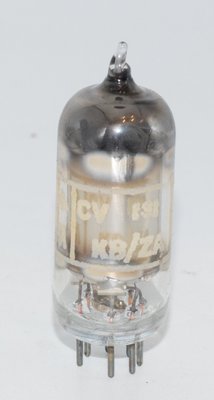
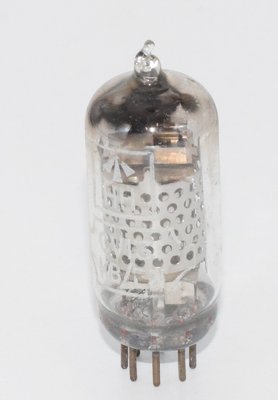
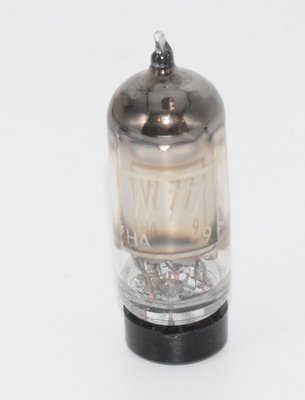
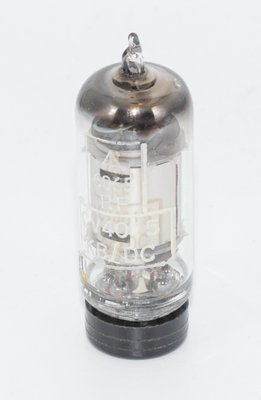
The CV4015 is a British military-specification (CV = Common Valve) miniature RF pentode valve, manufactured primarily by Mullard and other approved UK suppliers under strict Ministry of Defence quality standards. The CV numbering system was established by the UK's Directorate of Components, Valves and Devices (DCVD) to ensure interchangeable, tightly-specified valves for military and government communications equipment. The CV4015 designation represents a high-reliability, closely-selected version of the well-known EF92 pentode family, specifically aligned with the 6065 type designation.
The EF92 lineage traces back to the post-World War II era, when Mullard and other European manufacturers developed a range of compact, high-performance pentodes for use in IF amplifier stages, instrumentation, and communications receivers. The CV4015 emerged as the premium-grade military variant, subjected to enhanced screening, burn-in testing, and tighter parameter tolerances than its commercial equivalents. These valves were used extensively in British military radio equipment, radar systems, and precision test instruments throughout the 1950s and 1960s.
Today, the CV4015 is highly sought after by audiophiles and vintage equipment enthusiasts for its exceptional build quality, low-noise characteristics, and the renowned Mullard sonic signature. New Old Stock (NOS) examples, particularly those bearing Mullard branding, command premium prices in the collector and audio markets.
2. Technical Specifications and Design
The CV4015 is a miniature sharp-cutoff RF pentode designed for voltage amplification in IF and RF stages. Below are the key specifications. Values are drawn from verified reference data and cross-referenced with known EF92/6065 datasheet parameters.
Heater / Filament
| Parameter | Value |
|---|---|
| Heater Voltage (Vf) | 6.3 V |
| Heater Current (If) | 0.2 A |
| Heater Type | Indirectly heated cathode |
Maximum Ratings (Absolute Maximum)
| Parameter | Value |
|---|---|
| Max Plate (Anode) Voltage (Va max) | 250 V |
| Max Screen Grid Voltage (Vg2 max) | 250 V |
| Max Plate Dissipation (Pa max) | 1.5 W |
| Max Screen Grid Dissipation (Pg2 max) | 0.6 W |
| Max Cathode Current (Ik max) | 10 mA |
Typical Operating Conditions (Class A Amplifier)
| Parameter | Value |
|---|---|
| Plate Voltage (Va) | 250 V |
| Screen Grid Voltage (Vg2) | 140 V |
| Control Grid Voltage (Vg1) | −2 V |
| Plate Current (Ia) | 5.0 mA (typical) |
| Screen Current (Ig2) | 1.3 mA (typical) |
| Amplification Factor (μ) | ~200 (note: this is an approximate value for pentode operation; should be confirmed against specific manufacturer datasheet) |
| Transconductance (gm) | 2.0 mA/V (2000 µS) |
| Plate Resistance (rp) | ~0.5 MΩ (500 kΩ) (typical for pentode mode; confirm against datasheet) |
| Grid Bias Range (Vg1) | 0 V to approximately −6 V (cutoff) |
Note: The amplification factor and plate resistance values for pentodes are highly dependent on operating conditions. The values listed above are representative for the typical operating point. Engineers should consult the original Mullard or DCVD datasheet for curves and full characteristic data at various operating points.
Physical Construction
| Parameter | Detail |
|---|---|
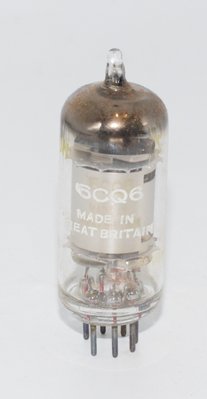
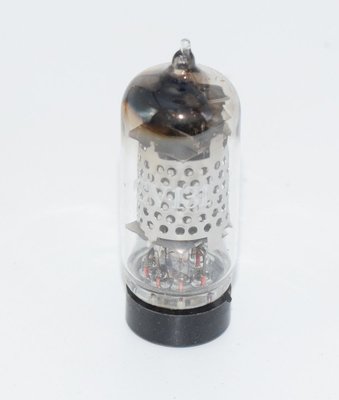
| Base Type | Miniature 7-pin (B7G) — also known as the miniature button base |
| Envelope Type | Miniature glass envelope (T-6½ / approximately 19mm diameter) |
| Mounting Position | Any (designed for universal mounting orientation) |
| Overall Length | Approximately 50–55 mm |
| Maximum Diameter | Approximately 19 mm |
Pin-Out (B7G Base — Bottom View)
| Pin | Connection |
|---|---|
| 1 | Grid 3 (Suppressor Grid) — internally connected to cathode in most versions |
| 2 | Anode (Plate) |
| 3 | Heater |
| 4 | Heater |
| 5 | Grid 1 (Control Grid) |
| 6 | Cathode |
| 7 | Grid 2 (Screen Grid) |
Note: The suppressor grid (g3) is internally connected to the cathode in the standard EF92/6065/CV4015 configuration. Some datasheets may show a shield or internal screen connection. Always verify pin-out against the specific manufacturer's datasheet before installation.
3. Applications and Usage
The CV4015 was originally designed and specified for the following applications:
- IF Amplifier Stages: The primary intended application. The CV4015's sharp cutoff characteristic and stable transconductance made it ideal for intermediate frequency amplifier stages in military communications receivers operating at frequencies up to 50 MHz and beyond.
- RF Amplifier Stages: Used in front-end RF amplification in receivers where low noise and stable gain were required.
- Video Amplifiers: The relatively high transconductance and low interelectrode capacitances made it suitable for wideband video amplification in radar display equipment.
- Instrumentation: Employed in precision measurement equipment, oscilloscopes, and laboratory instruments where the tight CV-specification tolerances ensured consistent performance and easy field replacement.
- Military Communications: Widely used in British military radio sets, including manpack and vehicle-mounted transceivers, where reliability under harsh environmental conditions was paramount.
- Audio Preamplification: Although not its primary design intent, the CV4015 has found extensive secondary use as a low-level audio preamplifier valve, particularly in microphone preamps and phono stages, where its low noise floor and musical characteristics are highly valued.
4. Sound Characteristics
The CV4015, particularly NOS Mullard-manufactured examples, has developed a strong reputation in the audio community for its distinctive and highly desirable sonic qualities. Audiophiles and recording engineers frequently describe the CV4015's sound as follows:
- Warmth and Richness: The CV4015 is consistently praised for delivering a warm, full-bodied midrange that is characteristic of the best Mullard valves. Vocals and acoustic instruments are rendered with a natural, organic quality that many listeners find deeply engaging.
- Smooth, Non-Fatiguing Treble: Unlike some sharper-sounding pentodes, the CV4015 tends to produce a smooth, slightly sweet high-frequency response. Sibilance and harshness are gently tamed without sacrificing detail or air.
- Low Noise Floor: Thanks to its military-grade construction and selection, the CV4015 typically exhibits an exceptionally low noise floor — a critical attribute for microphone preamplifiers and phono stages where microphonics and hiss are the enemy of transparency.
- Excellent Micro-Detail: Despite its warmth, the CV4015 does not obscure fine detail. Audiophiles note that spatial cues, reverb tails, and subtle textural nuances are well-preserved, contributing to a three-dimensional soundstage.
- Controlled, Articulate Bass: The low-frequency performance is described as tight and well-defined rather than bloated. Bass notes have good weight and texture without muddying the midrange.
- Musical and Euphonic: Overall, the CV4015 is often described as a "musical" valve — one that prioritizes the emotional impact and coherence of the music over clinical analytical precision. It adds a subtle harmonic richness (primarily even-order harmonics) that many listeners find pleasing.
- Comparison to EF92: Compared to standard commercial-grade EF92 valves, the CV4015 is generally considered to be quieter, more consistent, and slightly more refined in its tonal presentation — a direct result of the tighter manufacturing tolerances and quality control imposed by the CV specification.
It should be noted that sound characteristics are inherently subjective and will vary depending on the specific circuit topology, associated components, and the listener's preferences. However, the consensus among experienced tube audio enthusiasts is remarkably consistent in praising the CV4015's musicality and low-noise performance.
5. Equivalent or Substitute Types
The following types are considered genuinely interchangeable with the CV4015:
Close / Identical Substitutes (Drop-In Replacements)
| Type | Notes |
|---|---|
| 6065 | The direct American (RETMA) equivalent of the CV4015. Identical pinout (B7G), identical electrical ratings. A true drop-in replacement. The 6065 is itself a selected, high-reliability version of the W77/EF92 family. |
| EF92 | The Mullard/Philips commercial designation for the same basic valve type. The CV4015 is a tightly-selected, military-grade EF92. Standard EF92 valves are electrically and physically compatible but may not meet the same noise and parameter tolerance standards. |
| W77 | An older Mullard designation for the same valve type. Electrically identical; direct substitute. |
Different Rating Substitutes (NOT Drop-In)
| Type | Notes |
|---|---|
| 9D6 | A related pentode type but with different ratings and potentially different operating parameters. Not a direct drop-in replacement. Circuit modifications may be required. Verify datasheet before substitution. |
| CV131 | Another CV-designated valve in the same family but with different rating specifications. Not a direct drop-in replacement despite being related. The CV131 is sometimes listed alongside the CV4015/EF92 in cross-reference guides, but engineers should verify that the specific ratings and operating conditions are compatible with their circuit before substituting. |
Important: When substituting valves, always verify not only the pin-out compatibility but also the bias conditions, maximum ratings, and transconductance requirements of the specific circuit. Even among "identical" types, manufacturing variations between different producers can affect performance in sensitive audio circuits.
6. Notable Characteristics
- Military-Grade Quality: The CV4015 designation guarantees that each valve has passed stringent military acceptance testing, including enhanced burn-in, vibration testing, and parameter screening. This results in exceptional reliability and consistency — qualities that translate directly into superior audio performance.
- Mullard Construction Excellence: Most CV4015 valves encountered on the market were manufactured by Mullard at their Blackburn factory in Lancashire, England. Mullard's manufacturing processes, including their proprietary cathode coating formulations and precision grid winding techniques, are widely regarded as among the finest in the history of vacuum tube production.
- Low Microphonics: The CV4015's internal construction, with its carefully supported electrode structure, results in very low microphonic sensitivity. This is a critical advantage in audio applications, particularly in microphone preamplifiers where mechanical vibrations can be picked up and amplified.
- Sharp Cutoff Characteristic: Unlike variable-mu (remote cutoff) pentodes, the CV4015 features a sharp cutoff characteristic, meaning that the plate current drops rapidly to zero as the grid bias approaches the cutoff voltage. This makes it well-suited for applications requiring clean signal handling and predictable gain control.
- Long Service Life: Military-specification valves were designed for extended service life under demanding conditions. NOS CV4015 valves, when properly stored, can be expected to perform to specification decades after manufacture — a testament to the quality of materials and construction.
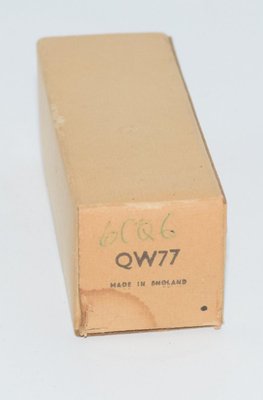
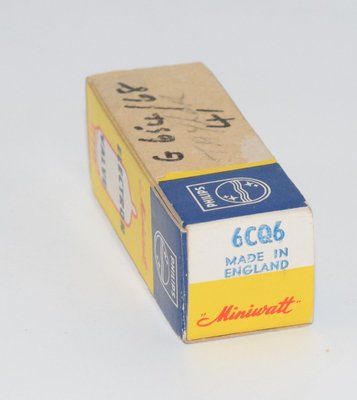
- Collector Value: Genuine Mullard CV4015 valves, particularly those with original military packaging and test documentation, are increasingly rare and collectible. Prices have risen significantly in recent years as supplies of NOS stock diminish.
- Internal Shielding: The CV4015 features effective internal shielding, reducing the need for external screening cans in many applications and contributing to its low-noise performance.
7. Usage in the Audio Community
The CV4015 has carved out a significant niche in the modern audio community, far exceeding its original military and communications applications. Its popularity in audio contexts includes:
Microphone Preamplifiers
Perhaps the most celebrated audio application of the CV4015 is in high-quality microphone preamplifiers. Several boutique and vintage microphone preamp designs use the EF92/6065 type in their input stages, and the CV4015 is universally regarded as the premium tube choice for these circuits. Its low noise, low microphonics, and rich harmonic character make it ideal for capturing vocals and acoustic instruments with warmth and clarity. Notable preamp designs that can accept the CV4015 include various Mullard-derived circuits and certain boutique studio preamps.
Phono Stages
The CV4015 is used in high-end phono preamplifiers, where its low noise floor is essential for amplifying the tiny signals from moving magnet and moving coil cartridges. The valve's musical character complements the vinyl listening experience, adding a touch of warmth and dimensionality that solid-state alternatives often struggle to replicate.
Headphone Amplifiers
A number of boutique headphone amplifier designs incorporate EF92-type pentodes in their voltage gain stages. The CV4015 is a popular upgrade choice in these amplifiers, offering improved noise performance and a more refined tonal character compared to standard-production EF92 valves.
DAC Output Stages
Some hybrid digital-to-analog converters use miniature pentodes like the EF92 in their analog output stages to impart a tube character to the digital signal. The CV4015 is a favored choice for tube rolling in these applications.
Guitar Amplifiers
While less common than in hi-fi applications, some boutique guitar amplifier builders have experimented with EF92-type pentodes in preamp stages. The CV4015's smooth overdrive characteristics and musical compression make it an interesting alternative to more conventional preamp tubes in certain circuit topologies.
Tube Rolling and Collecting
The CV4015 is a staple of the tube rolling community — enthusiasts who swap different valve brands and types in their equipment to fine-tune the sound to their preferences. Genuine Mullard CV4015 valves are considered a "holy grail" upgrade for any equipment that accepts the EF92/6065 type. Collectors prize examples with clear Mullard factory codes, original boxes, and military acceptance stamps.
Community Consensus
Across audio forums, review sites, and enthusiast communities, the CV4015 consistently ranks among the most desirable small-signal pentodes for audio use. Users frequently report that replacing a standard EF92 with a genuine CV4015 yields an immediately noticeable improvement in noise floor, tonal refinement, and overall musicality. The valve is often described as having the quintessential "Mullard sound" — warm, smooth, detailed, and emotionally engaging.
As NOS supplies continue to dwindle, the CV4015 remains one of the most sought-after miniature pentodes in the audio world, a fitting legacy for a valve that was originally designed to serve in the demanding environment of military communications.